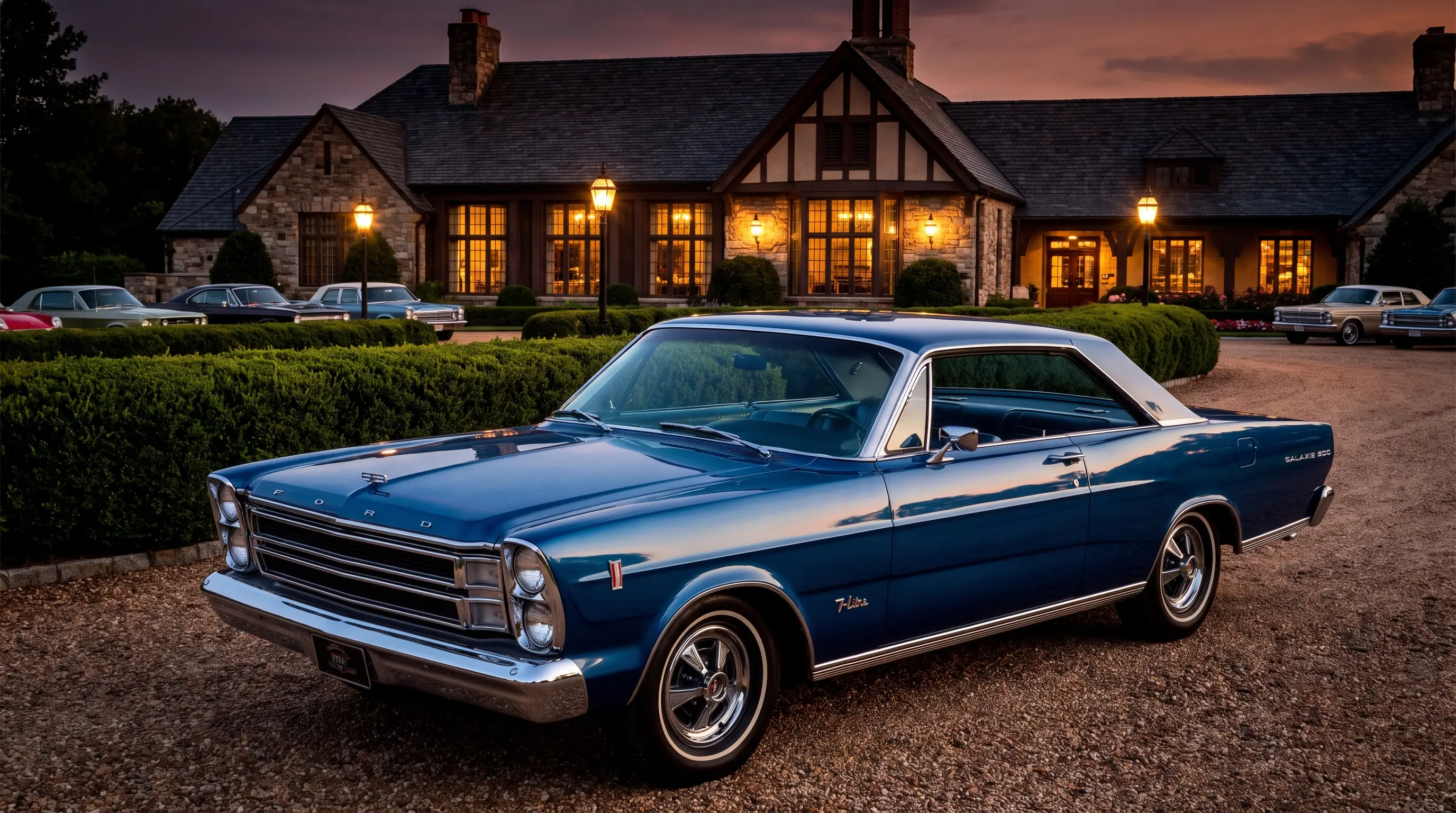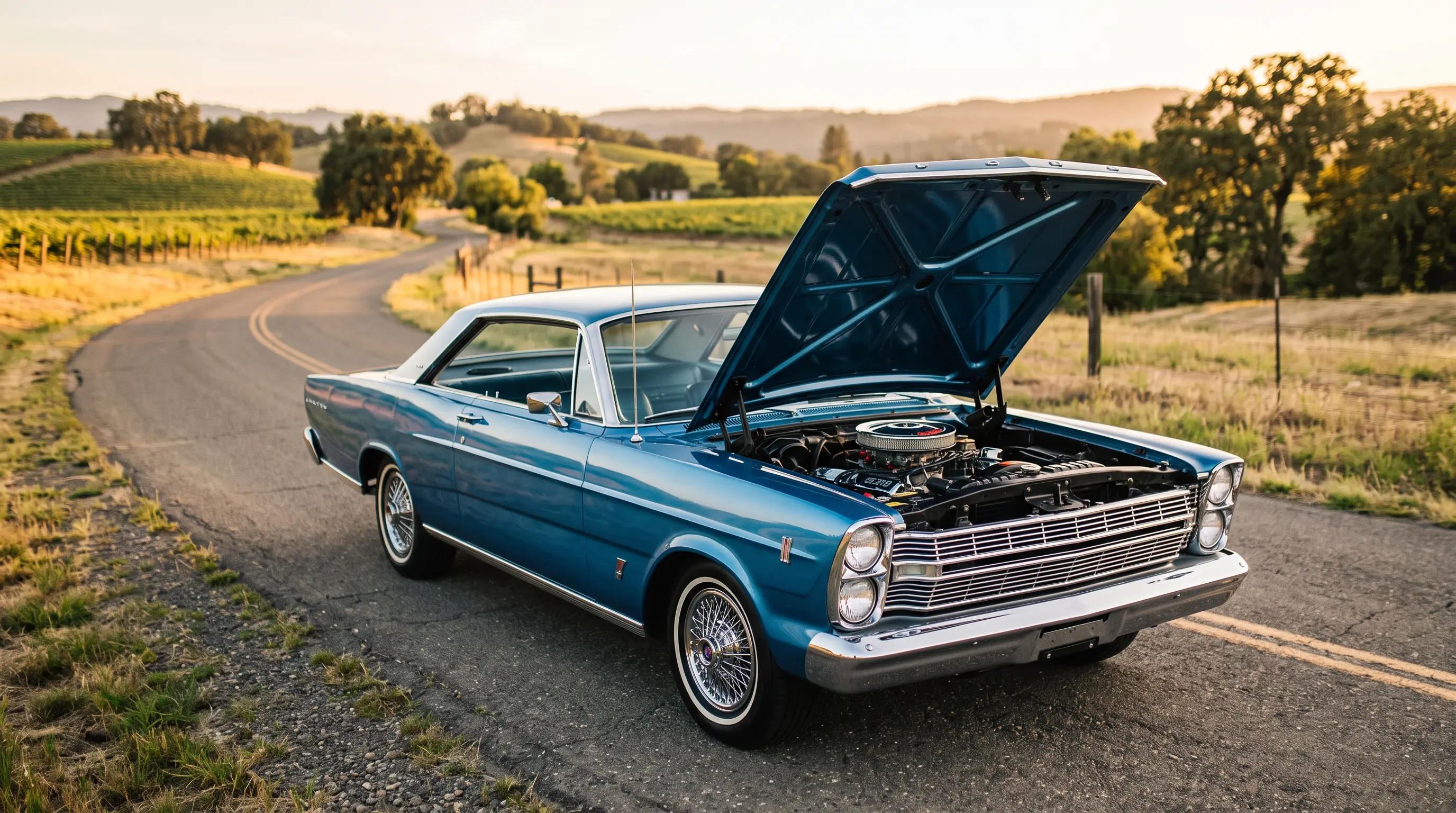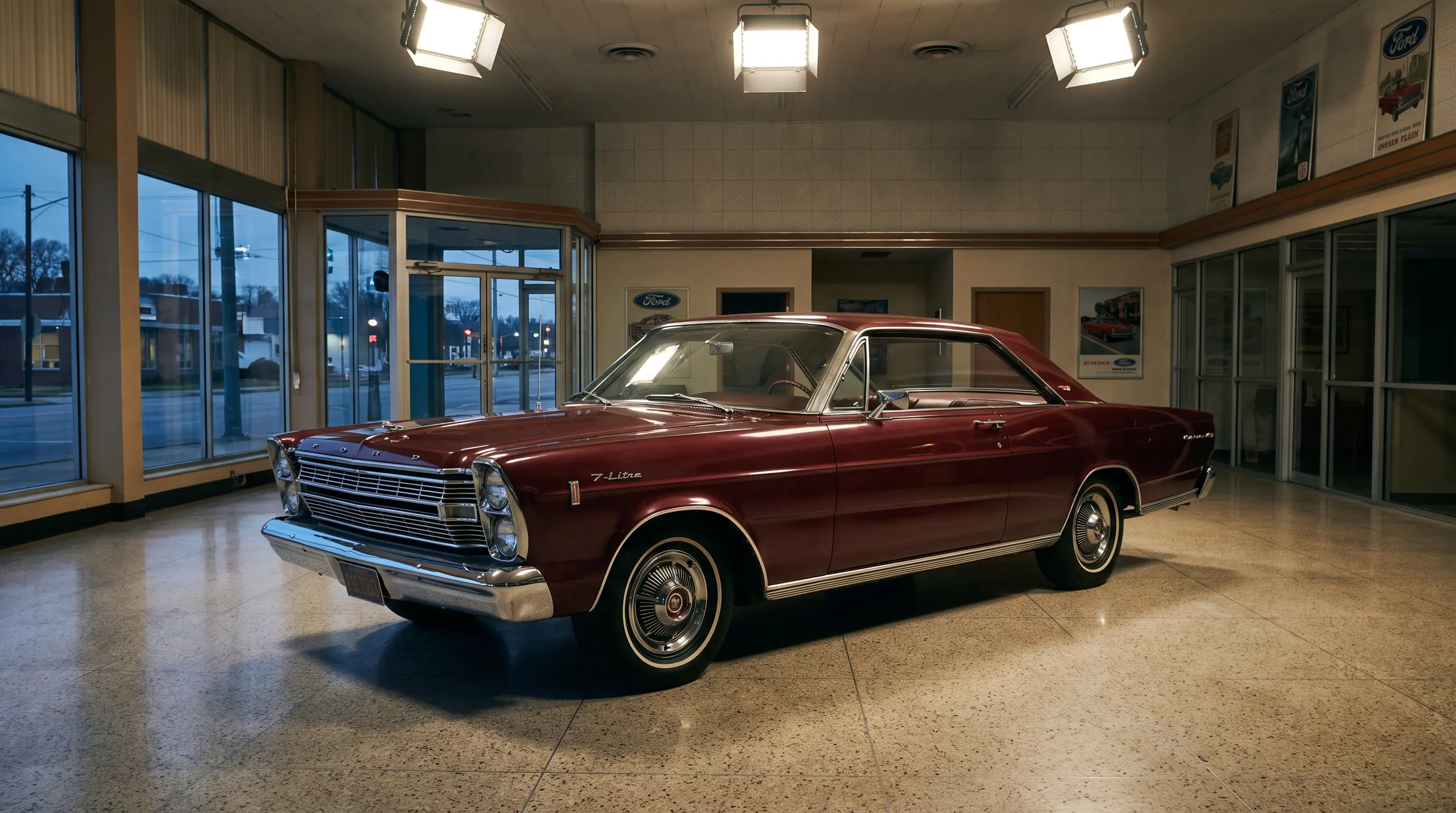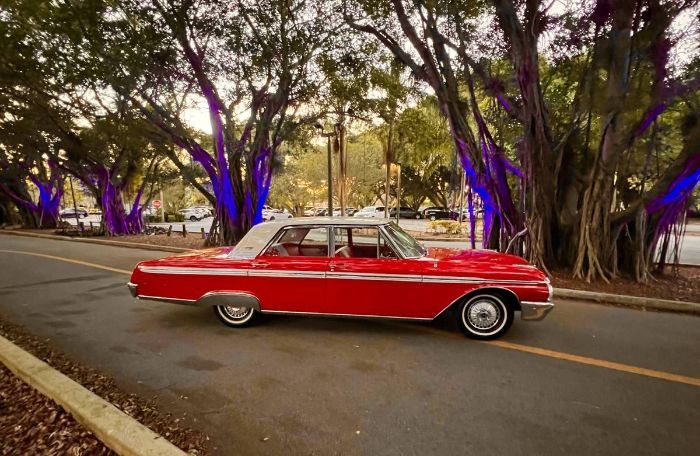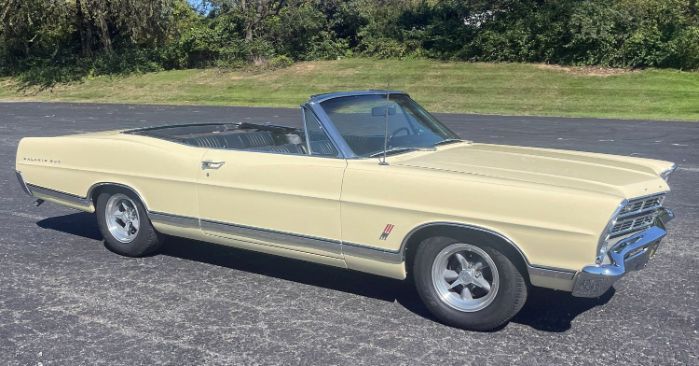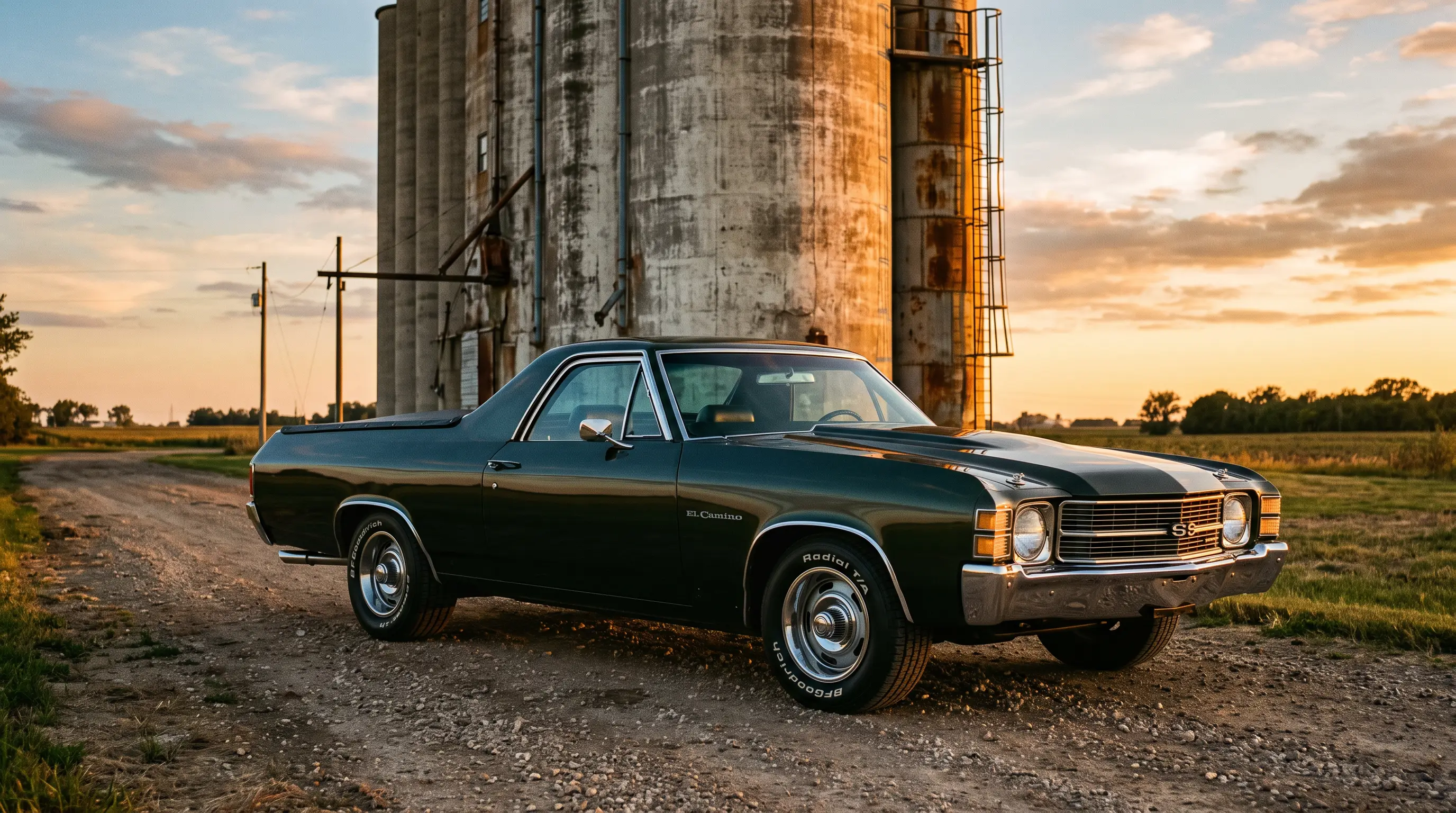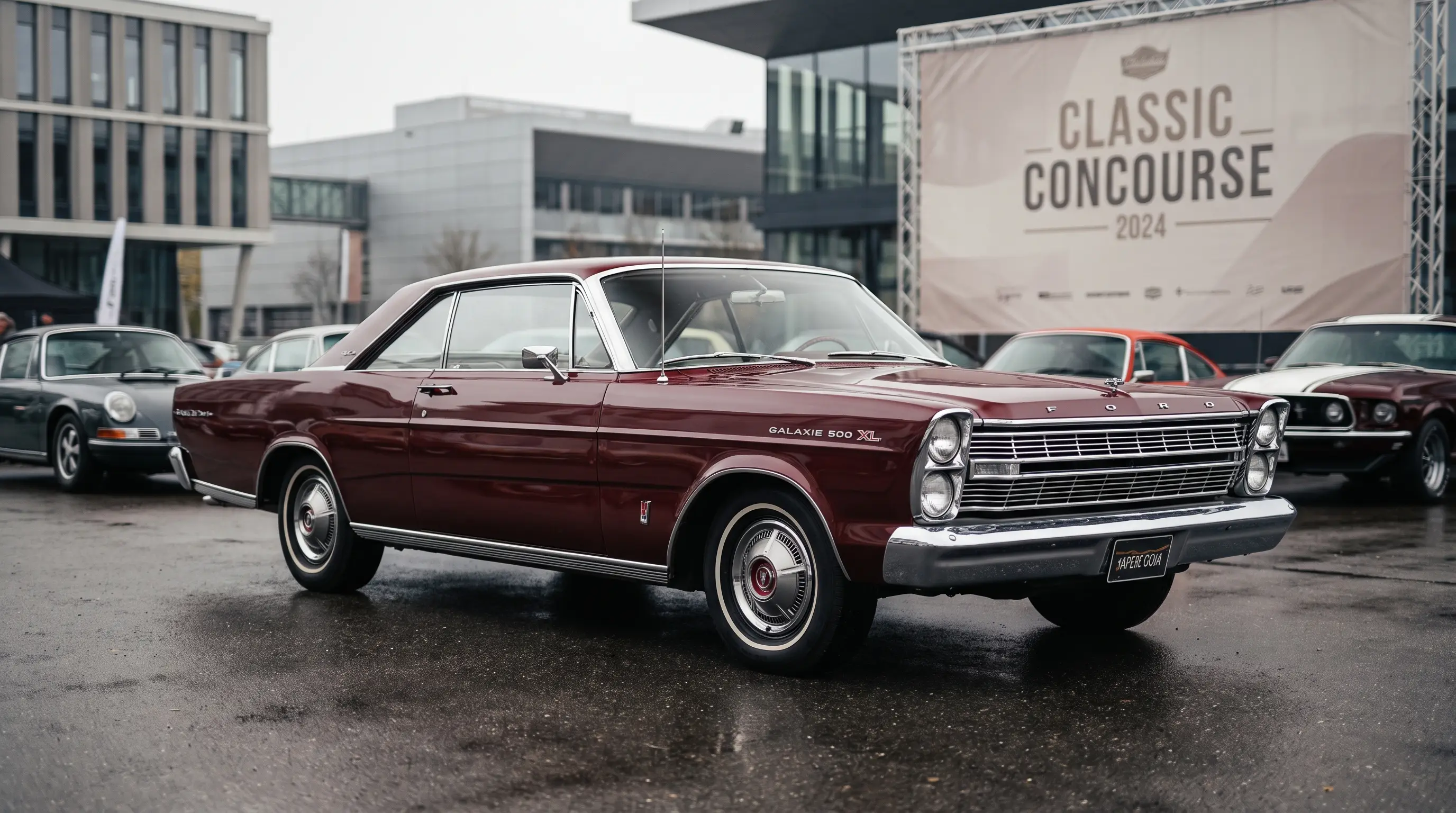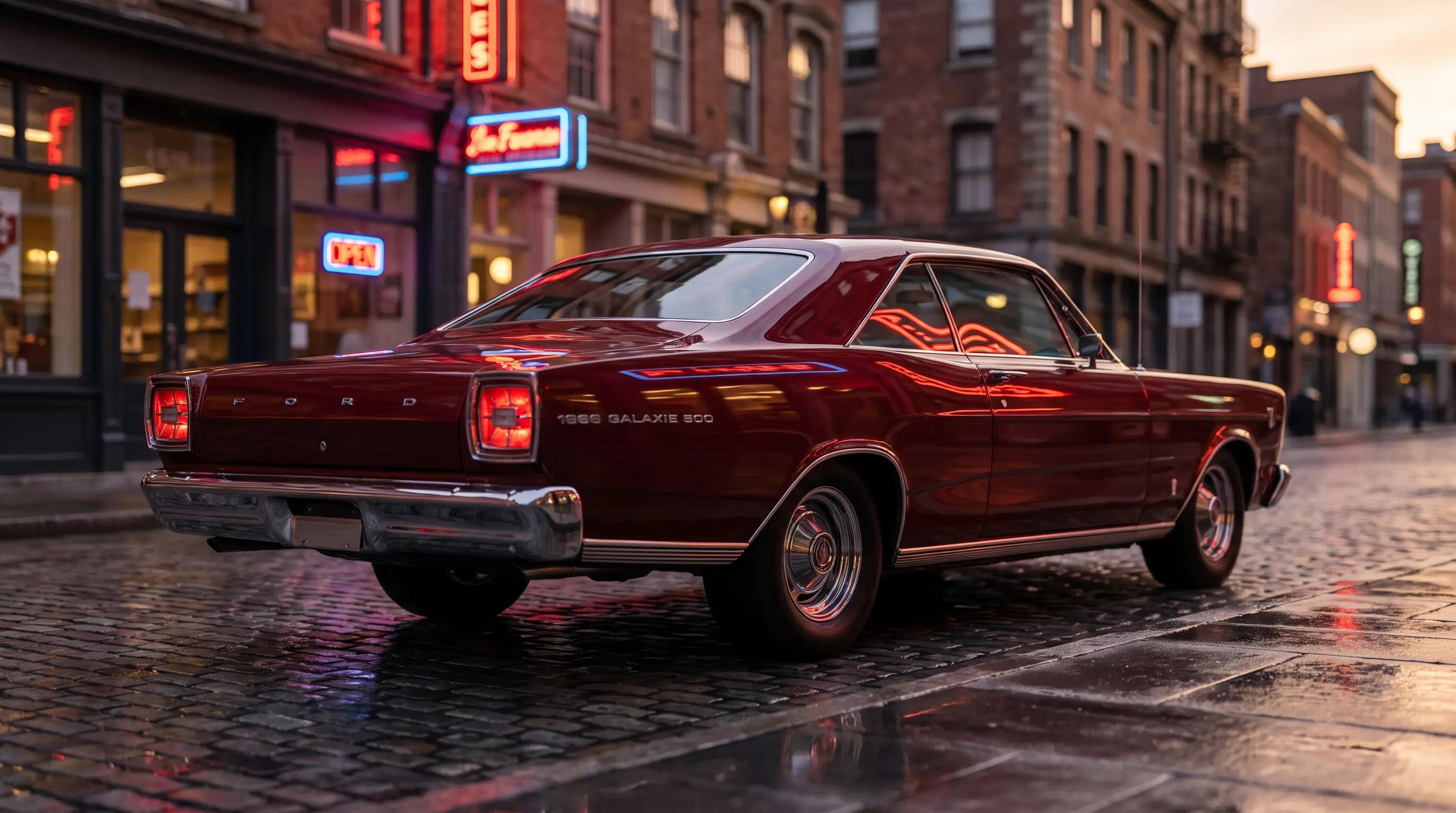
Look at a 1965 Galaxie next to its 1966 replacement and the family resemblance is obvious, but so is the difference. The Ford Galaxie 1966 restyle coke bottle look pulled the body's sides in through the doors and pushed them back out over the rear wheels, creating the pinched-waist, flared-hip profile that designers of the era borrowed from a soda bottle silhouette and applied across nearly every full-size American car. Ford's version of that theme gave the Galaxie a lower, wider stance without changing the fundamental platform underneath, and the effect reshaped how the entire lineup read from the curb.
What "coke-bottle" actually describes
The term refers to a specific styling technique where a car's beltline, the horizontal crease running along the doors, narrows visually somewhere around the middle of the body before flaring back outward toward the rear fenders. On the 1966 Galaxie, that meant the doors appeared to tuck inward compared to the front fenders and the rear quarter panels, creating a sculpted, almost hourglass profile when viewed from the side. It was a deliberate departure from the flatter, more rectilinear panels that had defined full-size Fords earlier in the decade, and it moved the Galaxie toward a more sculptural, three-dimensional design language that competitors were also chasing at the same time.
How the restyle changed the car's presence
Beyond the beltline treatment, the 1966 redesign brought a longer hood, a more sharply defined rear fender flare, and a fresh grille and taillight treatment that updated the car's face without abandoning the basic Galaxie identity buyers already recognized. The net effect was a car that looked lower and wider even though the underlying dimensions changed only modestly year over year. That perception mattered enormously in a market where full-size sedans competed largely on visual presence in the showroom, and Ford's designers understood that a car reading as more athletic, even a two-ton family sedan, translated directly into showroom traffic. For the full account of how this restyled body fit into the rest of the 1966 model year lineup, engines, trims, and all, read the background we put together on the entire year.
Ford was not working alone
The coke-bottle treatment was not a Ford invention exclusive to the Galaxie. General Motors and Chrysler were pursuing similar body-side sculpting across their own full-size and mid-size lines through the mid-1960s, and the shared direction reflected a broader industry shift in how designers thought about surfacing sheet metal. What made Ford's execution notable was how it married the new shape to the Galaxie's existing role as the company's mainstream full-size offering. The car needed to look modern enough to compete but restrained enough not to alienate buyers who wanted a Galaxie specifically because it was not flashy. Ford threaded that needle by applying the coke-bottle flare with a lighter hand than some competitors, keeping the overall silhouette clean rather than aggressively muscular.
| Design element | 1966 Galaxie treatment |
|---|---|
| Beltline | Pinched at doors, flared over rear wheels |
| Front end | Redesigned grille, longer hood proportion |
| Rear | New taillight treatment, flared quarter panels |
| Body styles affected | All Galaxie trims shared the new body |
Why the 1966 body still reads well today
Collectors and stylists looking back at full-size Fords from this era consistently point to the 1966 Galaxie as one of the cleaner executions of the coke-bottle theme, in part because Ford avoided piling on extra chrome trim or two-tone paint schemes that could have overwhelmed the sculpted surface. A single-color car with minimal added brightwork lets the body's own contours do the visual work, which is exactly how the design was intended to be seen. That restraint is part of why unrestored or carefully restored 1966 Galaxies still photograph well today, decades after the styling trend that shaped them fell out of fashion. The proportions hold up because they were never dependent on trends layered on top, just the sheet metal itself.
This restyle also set up the visual identity the Galaxie would carry into the following model years, with later updates refining details, grille textures, taillight lenses, minor trim, rather than replacing the fundamental coke-bottle theme wholesale. That continuity matters to anyone researching the lineage of a specific car, since a 1966 body shares more with 1967 than with the 1965 model it directly replaced. Buyers cross-shopping different model years within the same platform generation, including flagship variants like the 7-Litre, may also find worth a look too useful for understanding how trim level interacted with this new body, since the same coke-bottle sheet metal underpinned every trim from the base Galaxie through the top-of-range flagship, only the badges and interior appointments changed between them.
"Ford did not overdo the coke-bottle shape the way some competitors did. They let the surface speak for itself, and that restraint is exactly why a clean 1966 Galaxie still looks right parked next to modern cars instead of looking dated the way some flashier 1960s designs do."
- Tom Ramirez
Reading the shape in person
Anyone shopping for an original example today should pay close attention to how well the body panels have held their factory contours, since the coke-bottle profile depends on precise panel alignment to read correctly. A car with sagging doors or replaced quarter panels that do not match factory flare loses exactly the visual effect Ford's designers spent so much effort creating. The easiest way to check is to stand at the rear three-quarter angle and sight down the beltline from the door handles back toward the taillights. On a factory-correct body, that line should flow smoothly outward without a visible step or ripple where a quarter panel meets the door skin. Any interruption in that flow usually points to prior collision repair or a replacement panel that was not fitted with the same attention to the original crease.
Paint color plays a role too, though not one Ford's designers necessarily intended. Lighter colors tend to flatten the visual depth of the coke-bottle sculpting under direct sun, while darker single-tone finishes let shadow lines along the beltline show the contour more dramatically. Buyers who fell in love with a photograph of a dark-colored 1966 Galaxie and then see a white or pale-colored example in person sometimes feel underwhelmed, not because the shape changed but because the paint is doing less work to reveal it. That is worth keeping in mind before ruling out a car based on photos alone.
Those hunting for a well-preserved example can shop classic Galaxie listings and judge the body lines in person, which is the only reliable way to tell a factory-correct profile from a car that has been reshaped by decades of repair work.