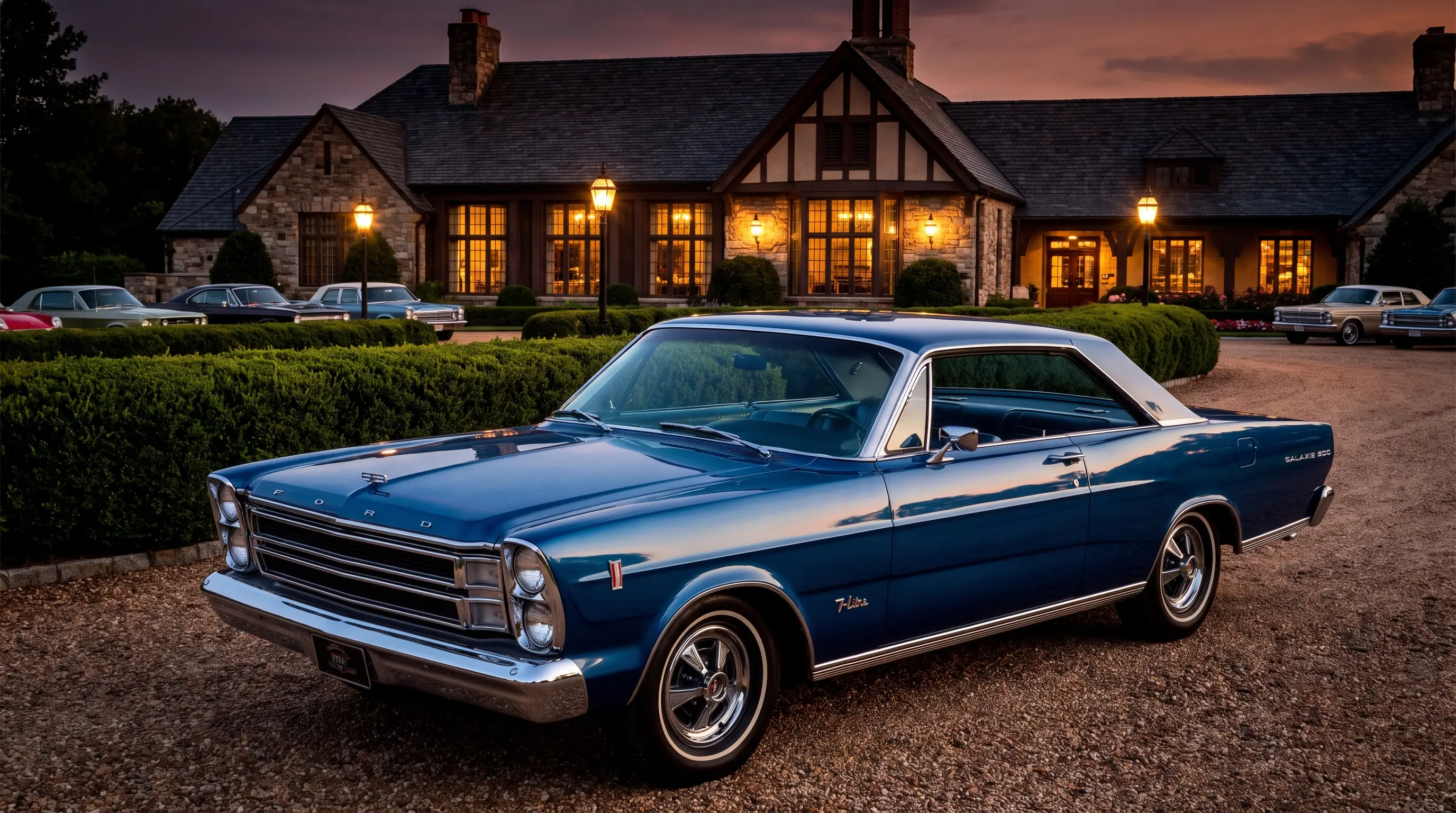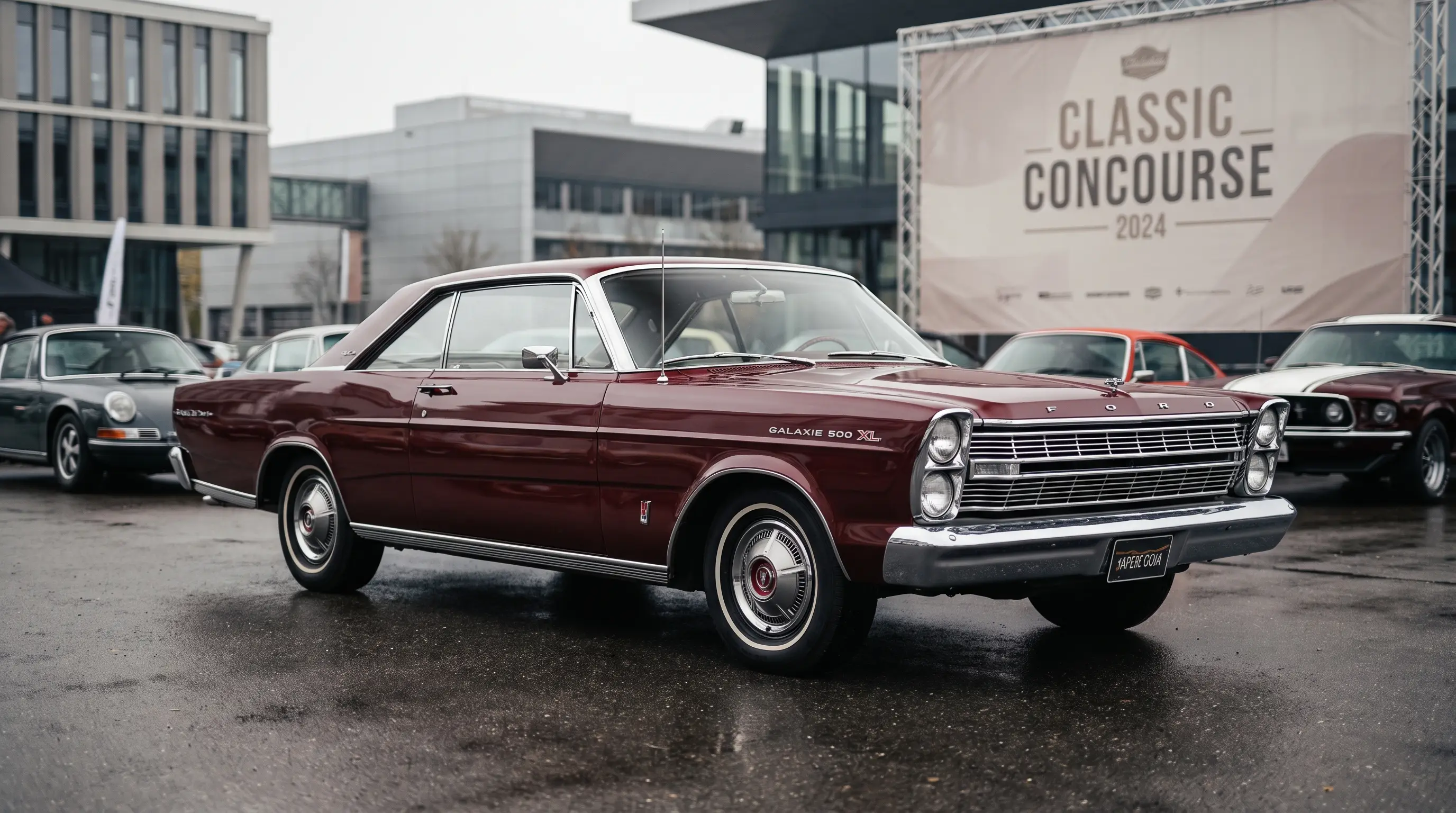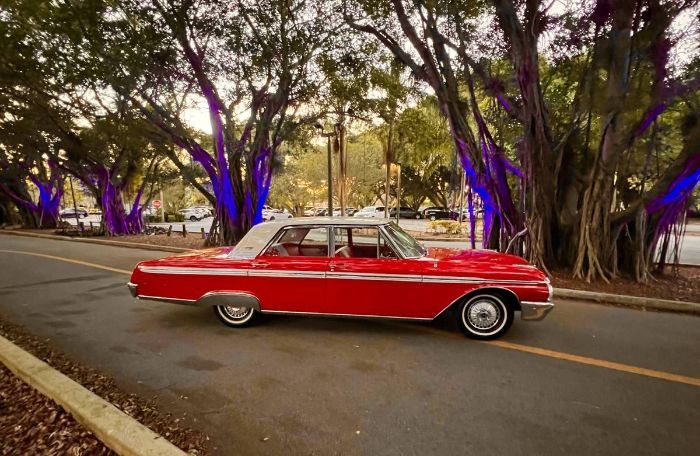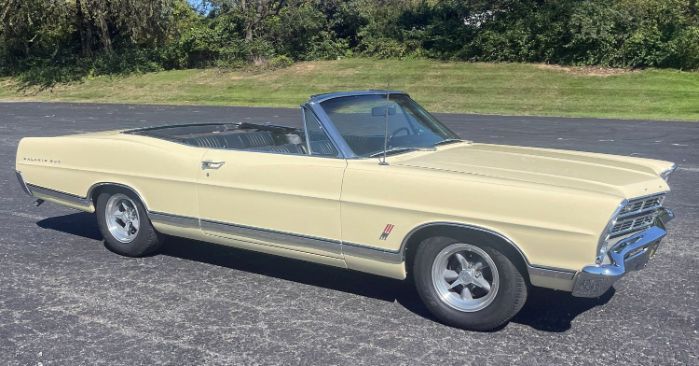
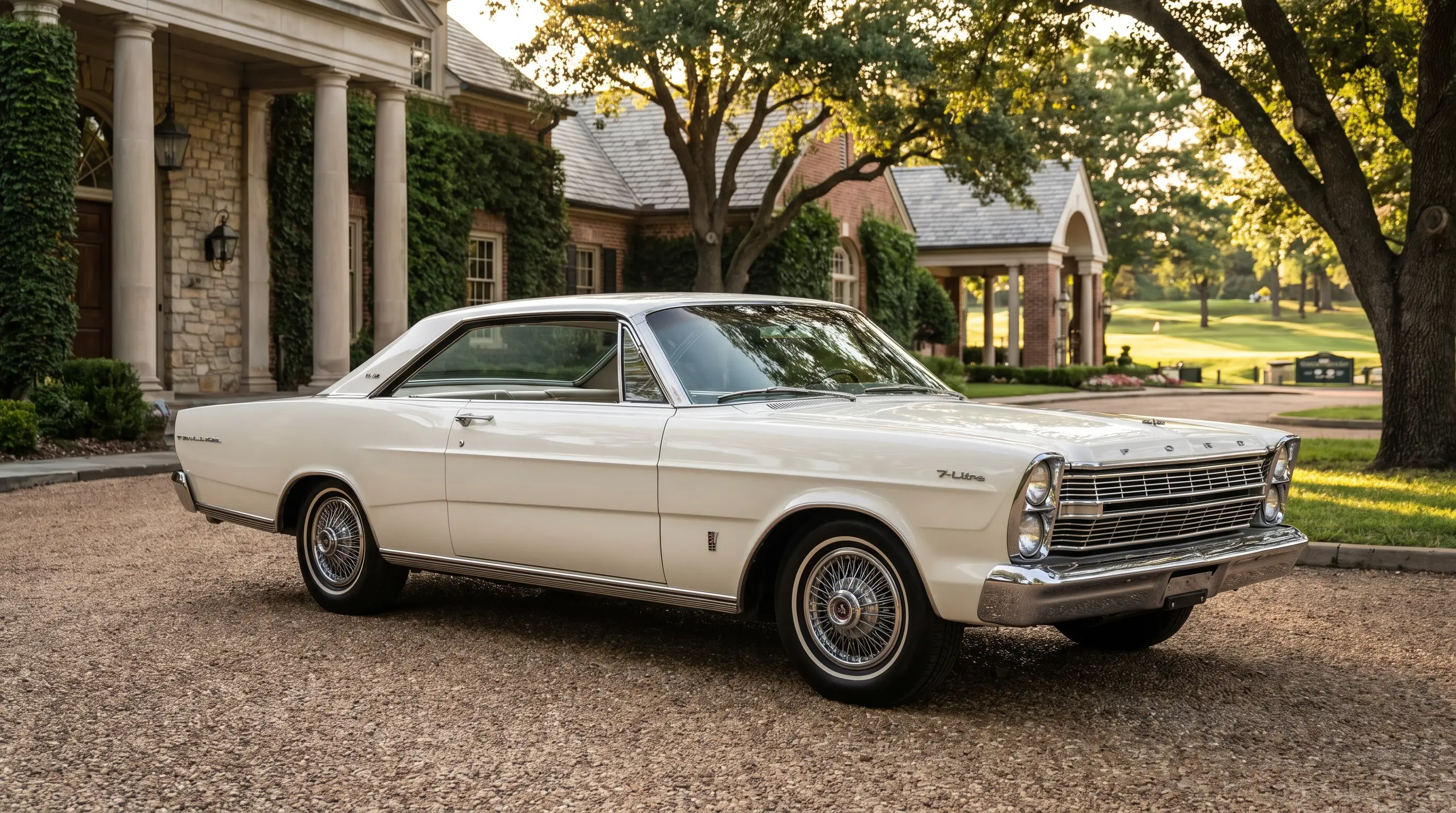
Ford never called it a muscle car, and in 1966 the paperwork agreed. The Ford Galaxie 1966 7 Litre flagship sat above the 500 XL on the order form as the quiet answer to a question nobody at Ford wanted to ask out loud: what do you sell a man who wants a 428 but refuses to be seen buying one. The 7-Litre solved that by wrapping the biggest engine in the passenger-car lineup inside trim that looked like it belonged at a country club, not a stoplight.
Name game: what "7-Litre" actually meant
The badge itself was a translation exercise. Ford's engineers measured the standard engine at 428 cubic inches, ran the metric conversion, rounded it off, and stamped "7 Litre" onto the front fenders and trunk lid. It reads like a European flourish bolted onto a full-size American sedan, and that contrast was the point. Ford had watched Pontiac sell sophistication with the 2+2 and decided the Galaxie needed its own version of continental math applied to Detroit iron. Nobody at the dealership was fooled about the origin of the number, but the badge did its job. It told the man cross-shopping a Buick Wildcat that this Ford was not the taxi-spec Galaxie his neighbor drove.
For the full breakdown of how the 1966 range came together, from base Galaxie through 500, 500 XL, LTD, and this flagship, our 1966 ford galaxie history covers the whole model year in one place.
The engine underneath the badge
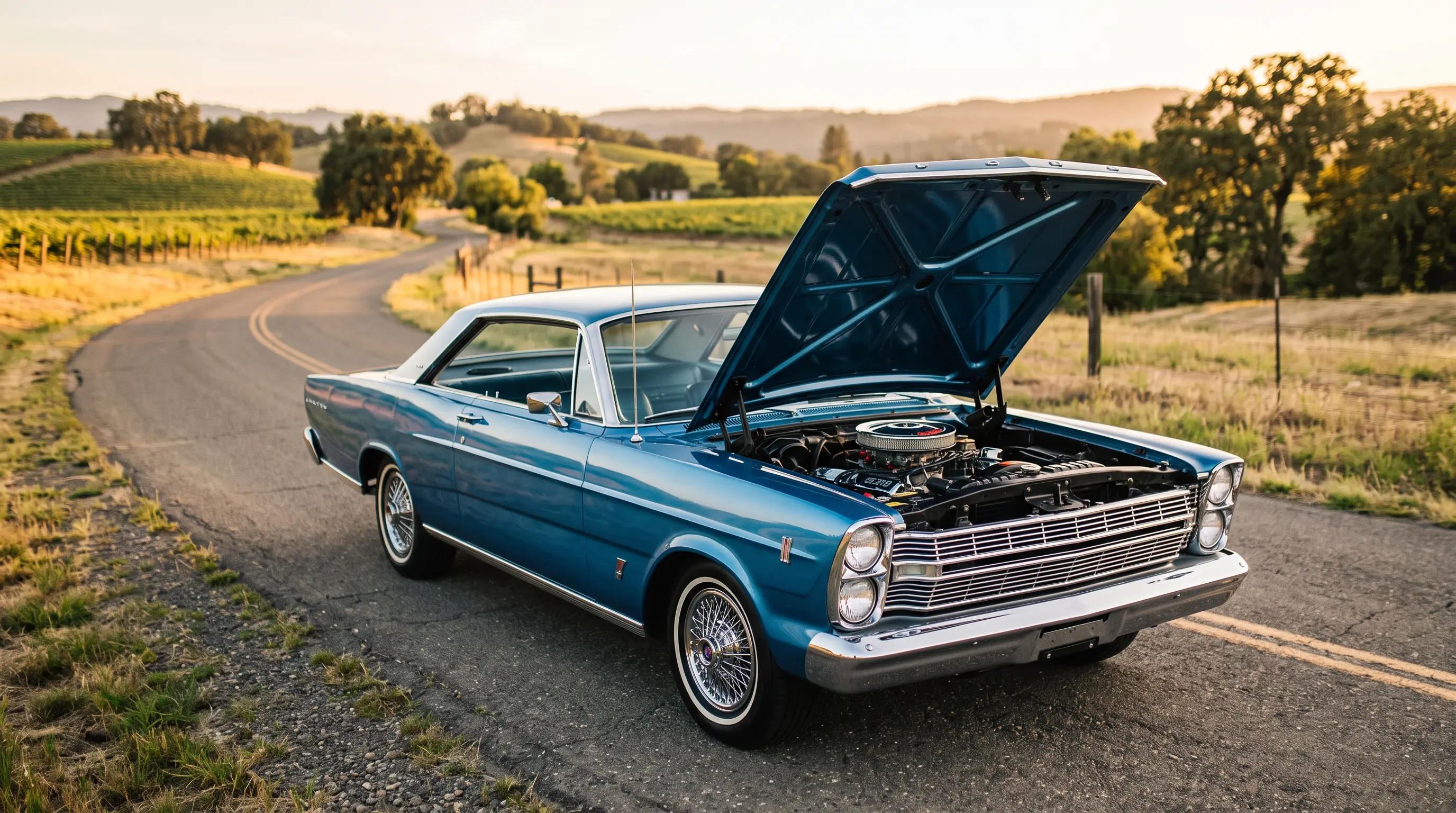
Under that trunk badge sat the FE-series 428, standard equipment on every 7-Litre built. Ford fitted it with a single four-barrel carburetor (the Q-code version) and rated it at 345 horsepower, the only output the civilian 428 came in that year, there was no lesser two-barrel version of the engine hiding underneath the badge. Ford backed the engine with a Cruise-O-Matic transmission as standard fitment, not an afterthought. That detail mattered. Ford was not selling a stripped-down drag special with a big motor stuffed in for bragging rights. The 7-Litre was engineered as a package, big-block torque paired with a transmission and suspension calibrated to make 4,000-plus pounds of Galaxie feel composed rather than overwhelmed. Company literature from the period leaned on words like "effortless" rather than "quickest," and that framing was deliberate marketing, not corporate modesty. For the mechanical side of that same 428, including how it actually drove, our team covers a related story worth reading alongside this one.
Standard equipment: buying the top of the range
Ford loaded the 7-Litre with items that were optional or unavailable elsewhere in the Galaxie catalog. Bucket seats and a center console came standard in both the hardtop and convertible body styles, which Ford limited the 7-Litre badge to exclusively. There was no 7-Litre sedan, no 7-Litre wagon. Ford reserved the name for the two body styles where a buyer was most likely to be shopping on style as much as substance. Power steering, power front disc brakes, and a heavier-duty suspension all came bundled in, along with 7-Litre specific badging, wheel covers, and interior trim that separated the car visually from a lesser Galaxie 500 wearing the same sheet metal.
| Spec | 1966 Galaxie 7-Litre |
|---|---|
| Standard engine | 428 cubic inch FE V8, 345 hp (4-bbl Q-code, only configuration offered) |
| Transmission | Cruise-O-Matic, standard |
| Body styles offered | Hardtop coupe, convertible only |
| Standard interior | Bucket seats, center console |
Production numbers and how rare it really is
The 7-Litre was never a volume seller, and Ford did not expect it to be. Positioned above the 500 XL and priced accordingly, it drew a narrow slice of Galaxie buyers willing to pay for the top trim without wanting the flash of a specialty car. Total 7-Litre production for 1966 landed at roughly 11,000 cars across both body styles combined, a fraction of the nearly 600,000 Galaxies Ford built that model year across the full range. That scarcity is exactly why the badge draws attention from collectors today. It is a factory 428 car hiding in plain sight, distinguishable mainly by trim and badging rather than scoops or stripes, which means plenty of clean examples get passed over by buyers who do not know what the fender script signifies.
Ford discontinued the 7-Litre name after two model years, folding its equipment approach into later LTD and XL trims that pursued the same buyer with different badges. That short run adds to the appeal for collectors who specialize in one-and-two-year trim packages, where the story is compact and the documentation trail is easier to verify than on a nameplate that ran for a decade.
"The 7-Litre gets overlooked because it does not look like a performance car, and that was the whole design brief. Ford built a 428 into a car that could sit in a country club parking lot without raising an eyebrow, and forty years later, people still miss what is parked in front of them."
- Tom Ramirez
Buying one today
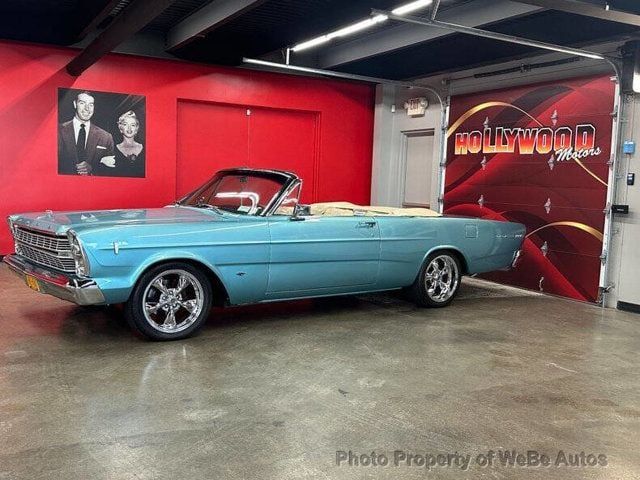
Because the 7-Litre relied on badging and trim rather than dramatic styling to signal its status, verifying an original example takes more than a glance. Trim tags, the fender script, and the standard bucket seat and console configuration are the fastest checks, since a base Galaxie 500 with a 428 swapped in later will not carry the correct trim code even if the badges get added afterward. Buyers serious about a documented, numbers-correct 7-Litre should expect to do homework on trim tags before writing a check, and that homework pays off. A verified 7-Litre convertible in good condition remains one of the more attainable ways to own a genuine big-block Ford from the peak of the Total Performance era, and current Galaxies for sale now occasionally include one worth a closer look.
Parts availability helps the case too. Because the 428 shares much of its architecture with other FE-family engines used across Ford's lineup through the late 1960s, a 7-Litre owner is not chasing unobtainable internals the way an owner of some low-production specialty engine might be. Reproduction trim pieces, badges, and interior components have followed the broader collector interest in full-size 1966 Fords, so a project car missing console trim or fender script is not the dead end it would have been two decades ago. What remains harder to source is documentation. Because the 7-Litre was never marketed as a standalone performance model the way the GT or Mustang were, period brochures and dealer literature calling out the trim specifically are thinner on the ground, and owners who track down a factory build sheet or window sticker tend to hold onto that paperwork carefully once they have it.