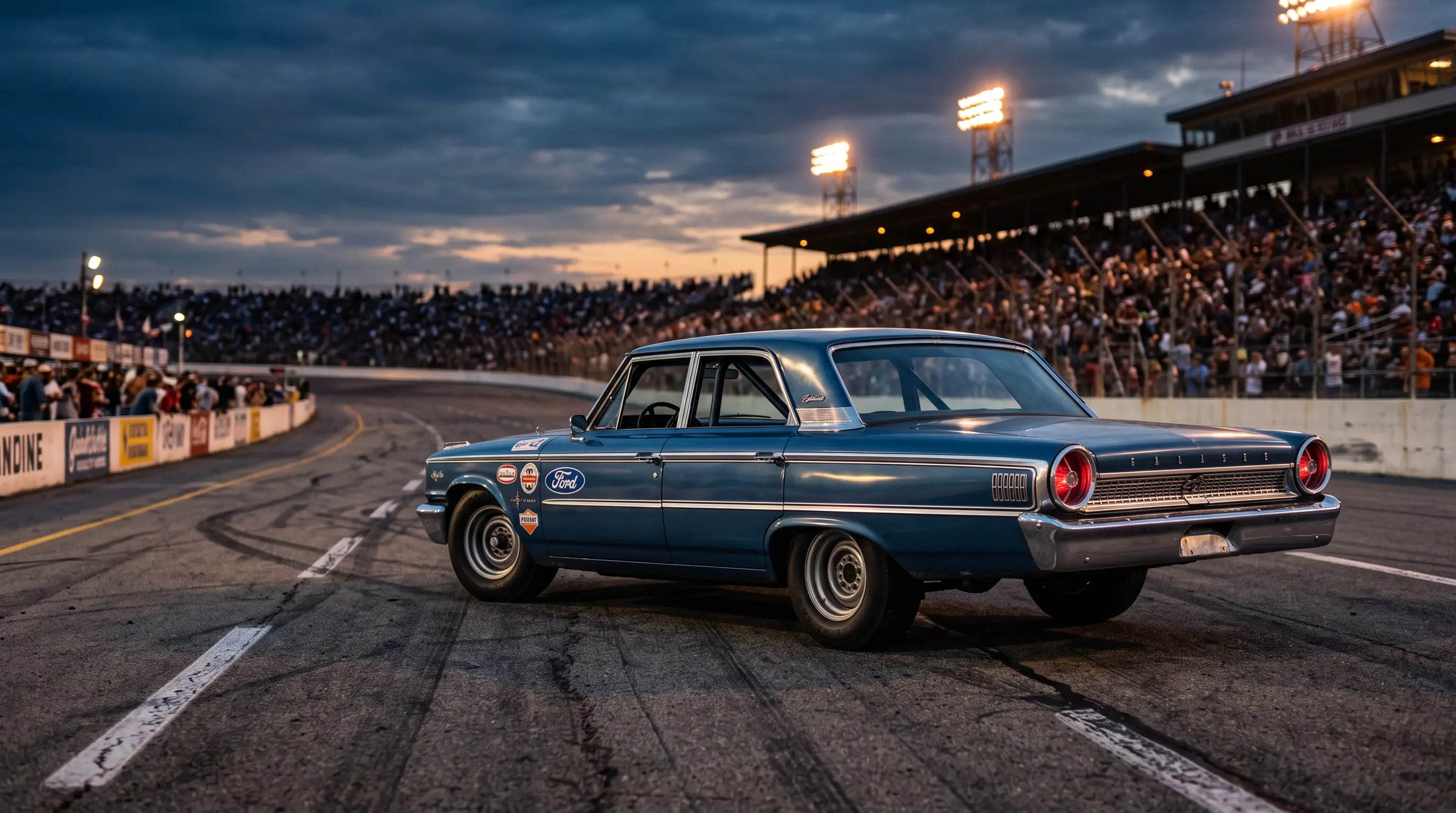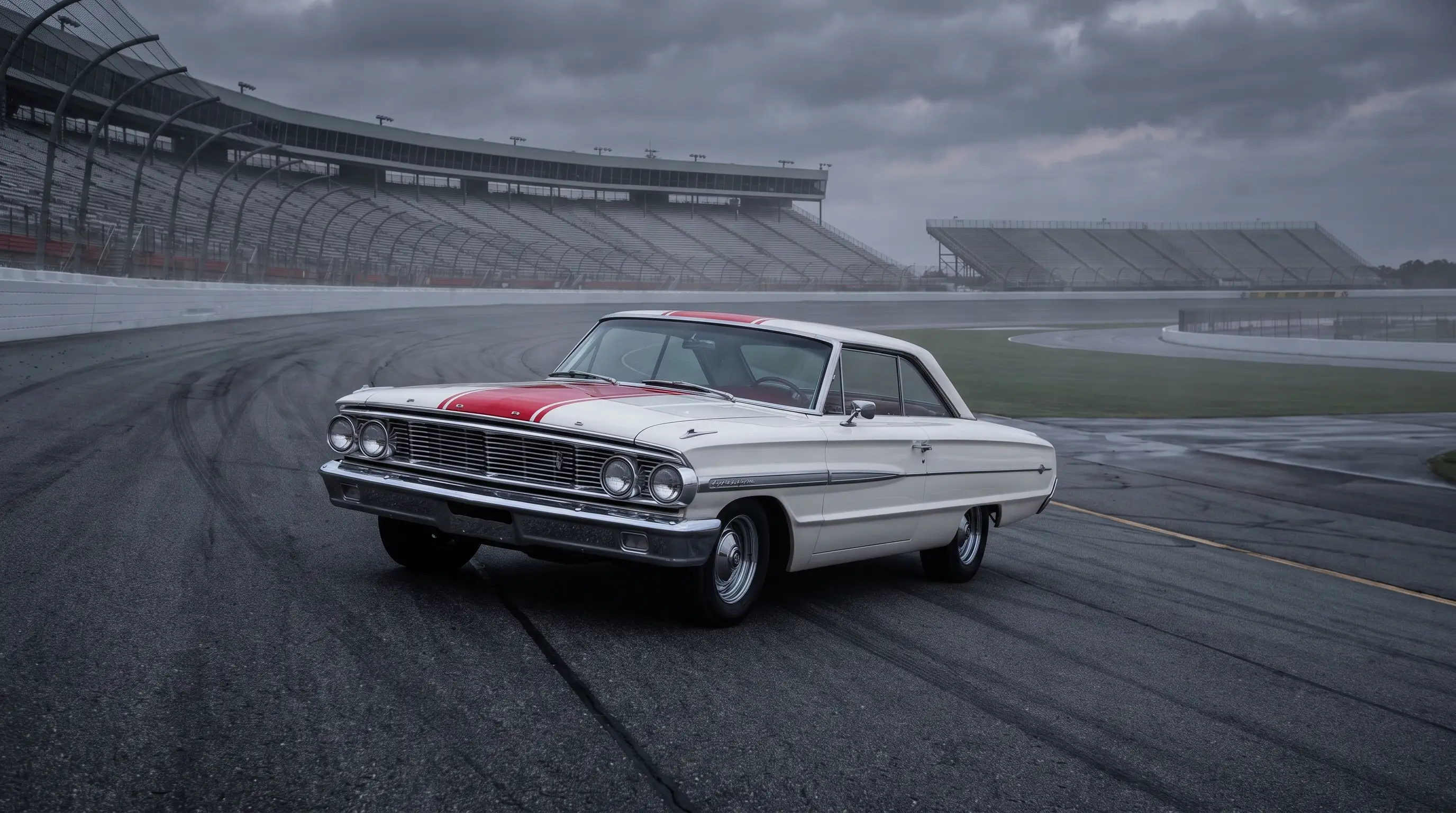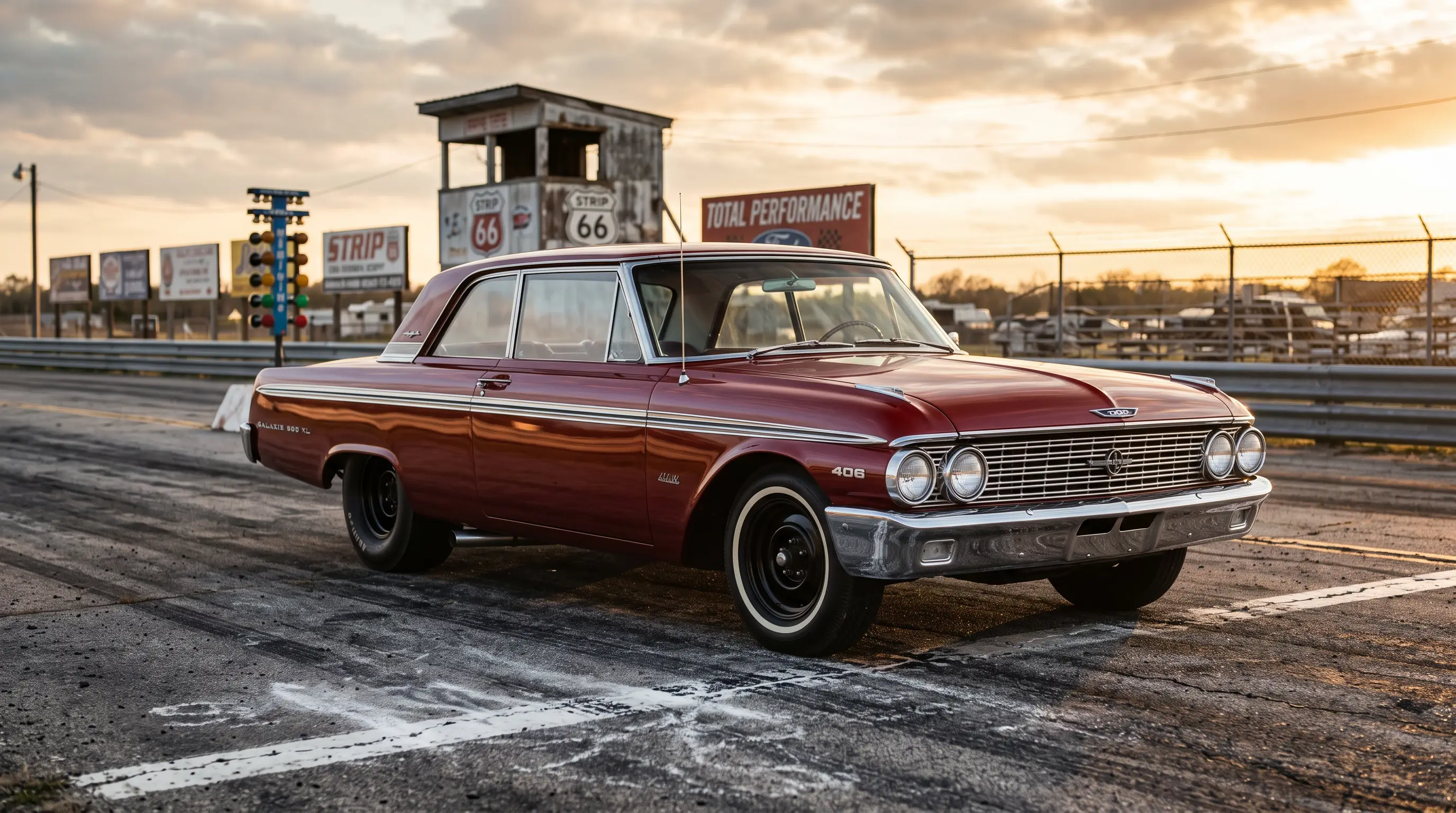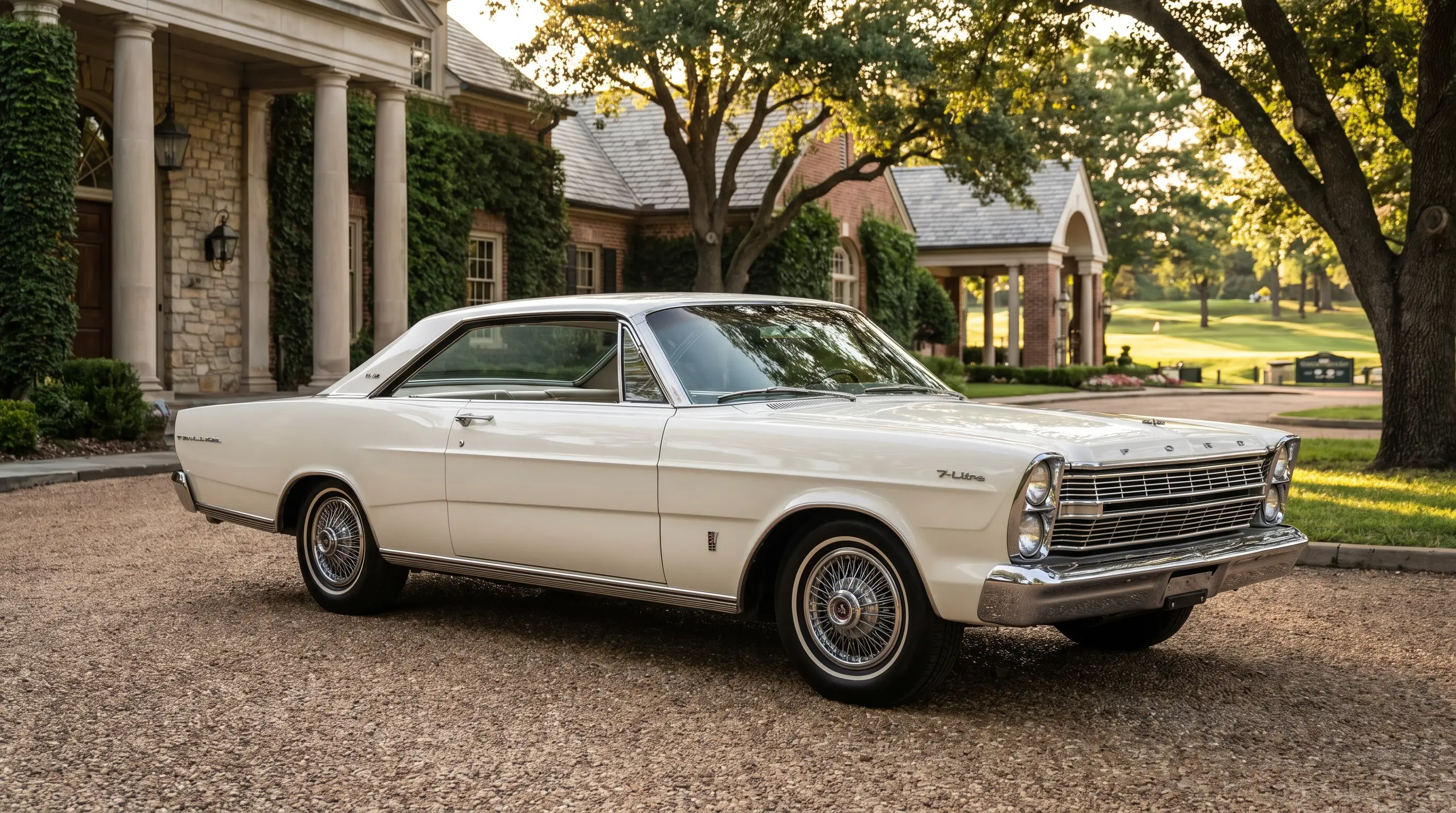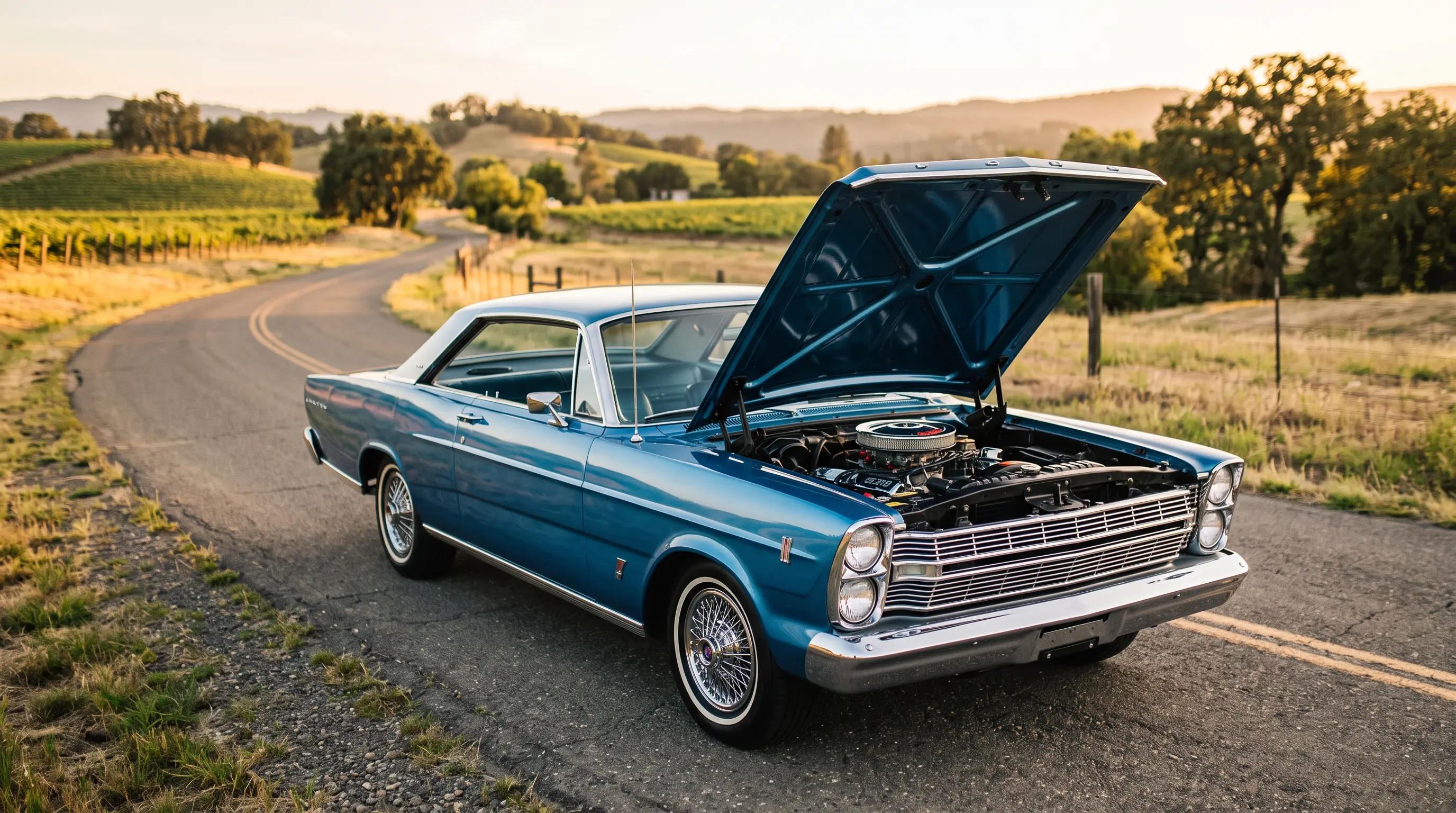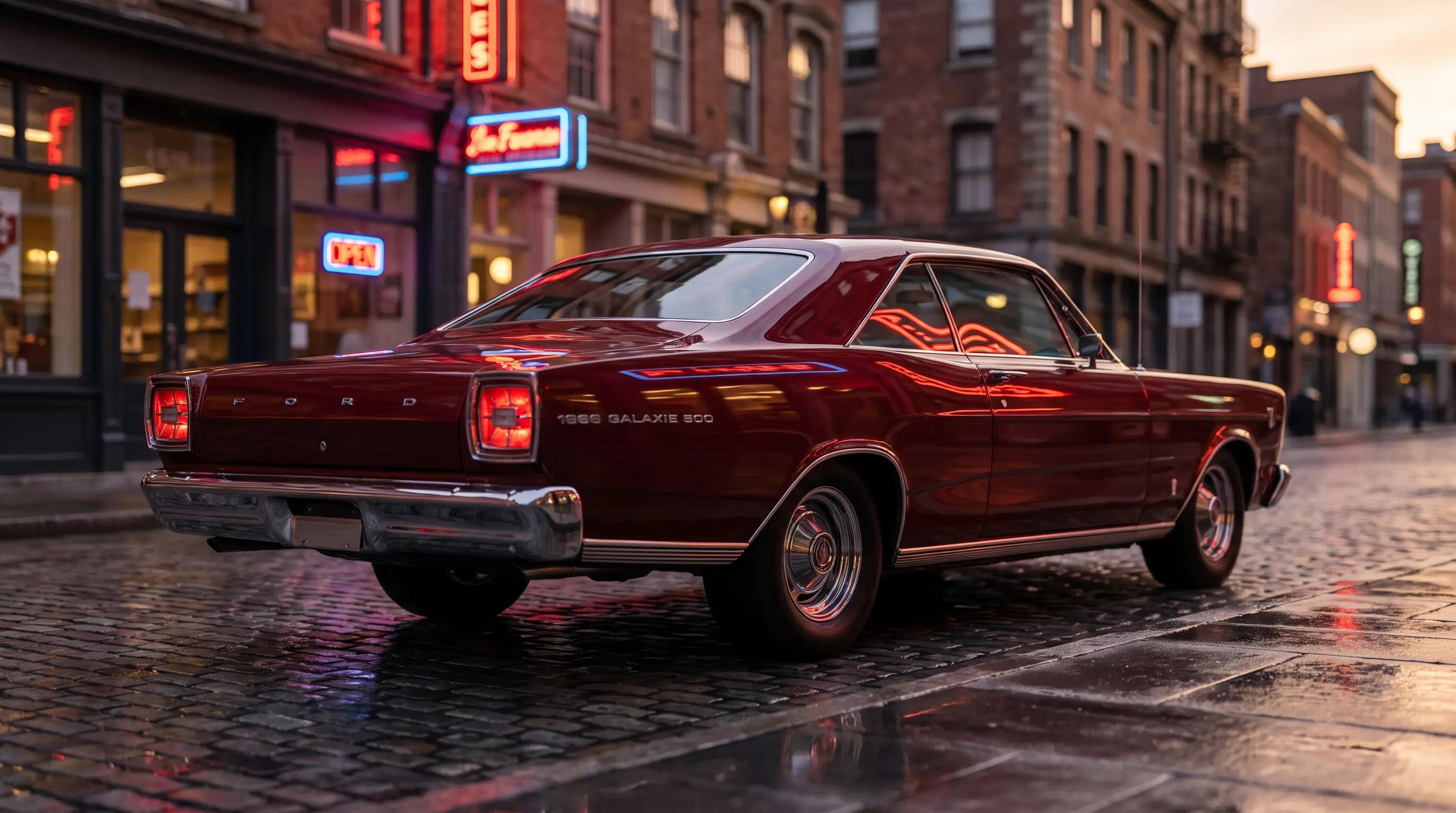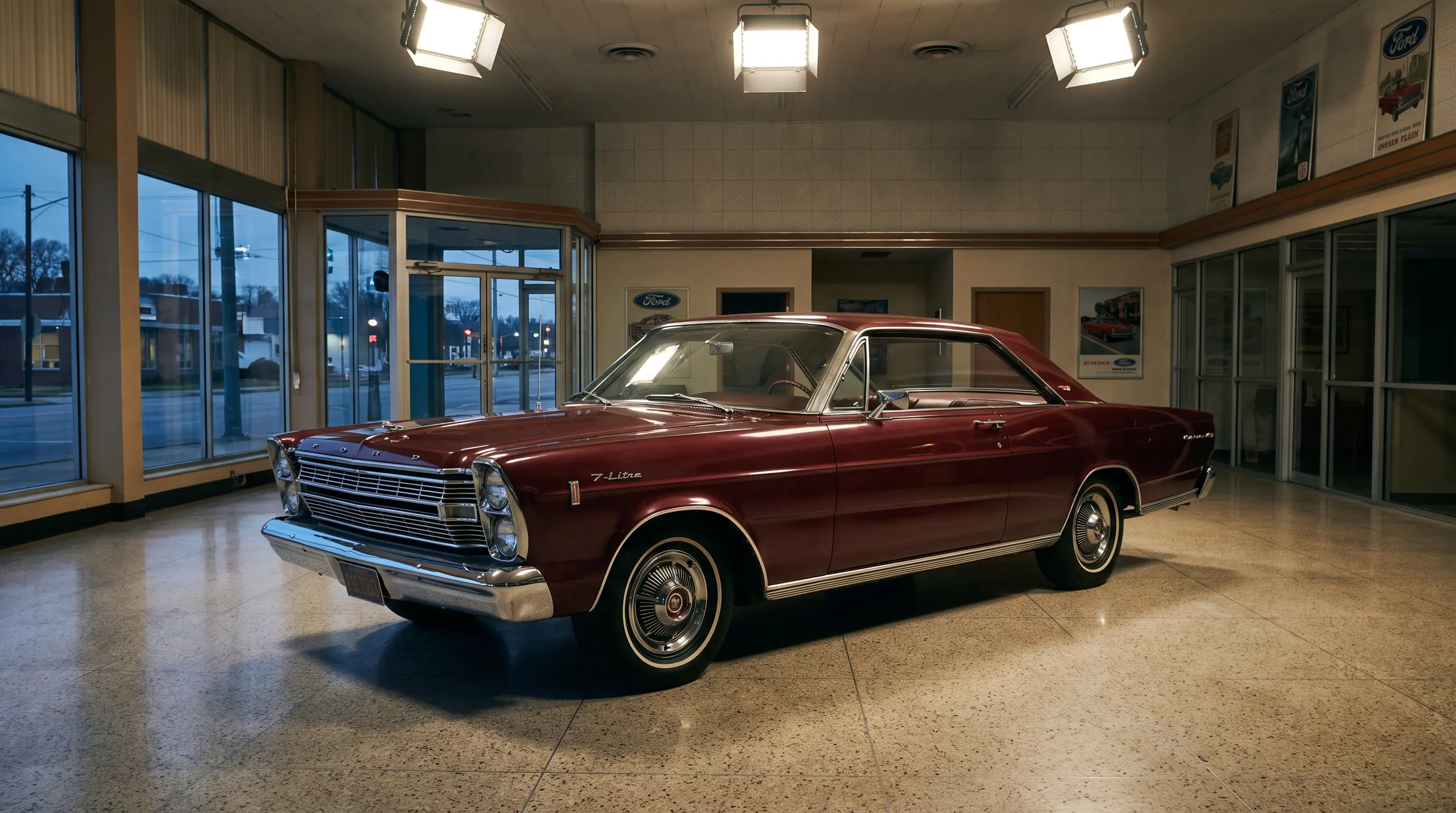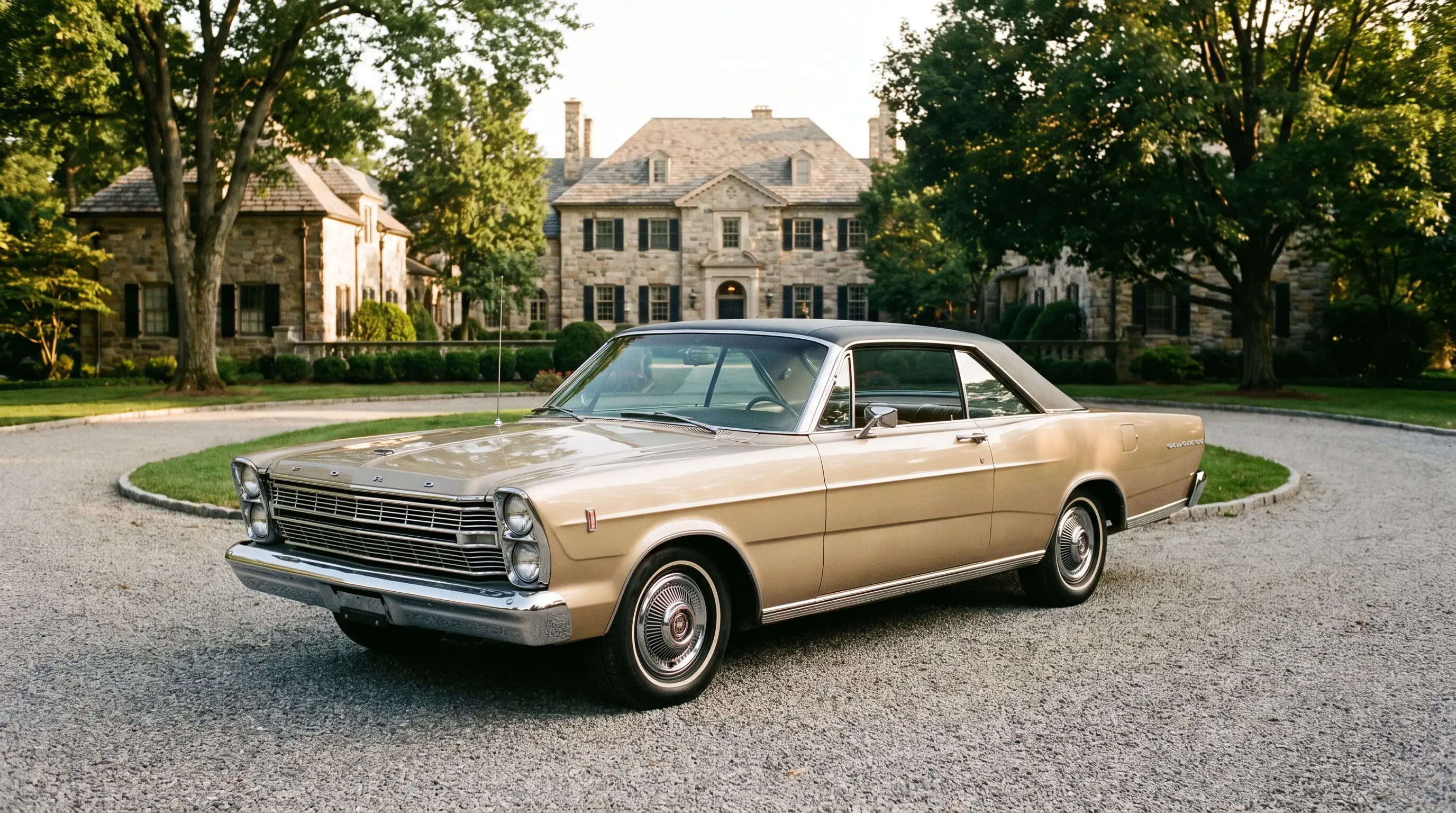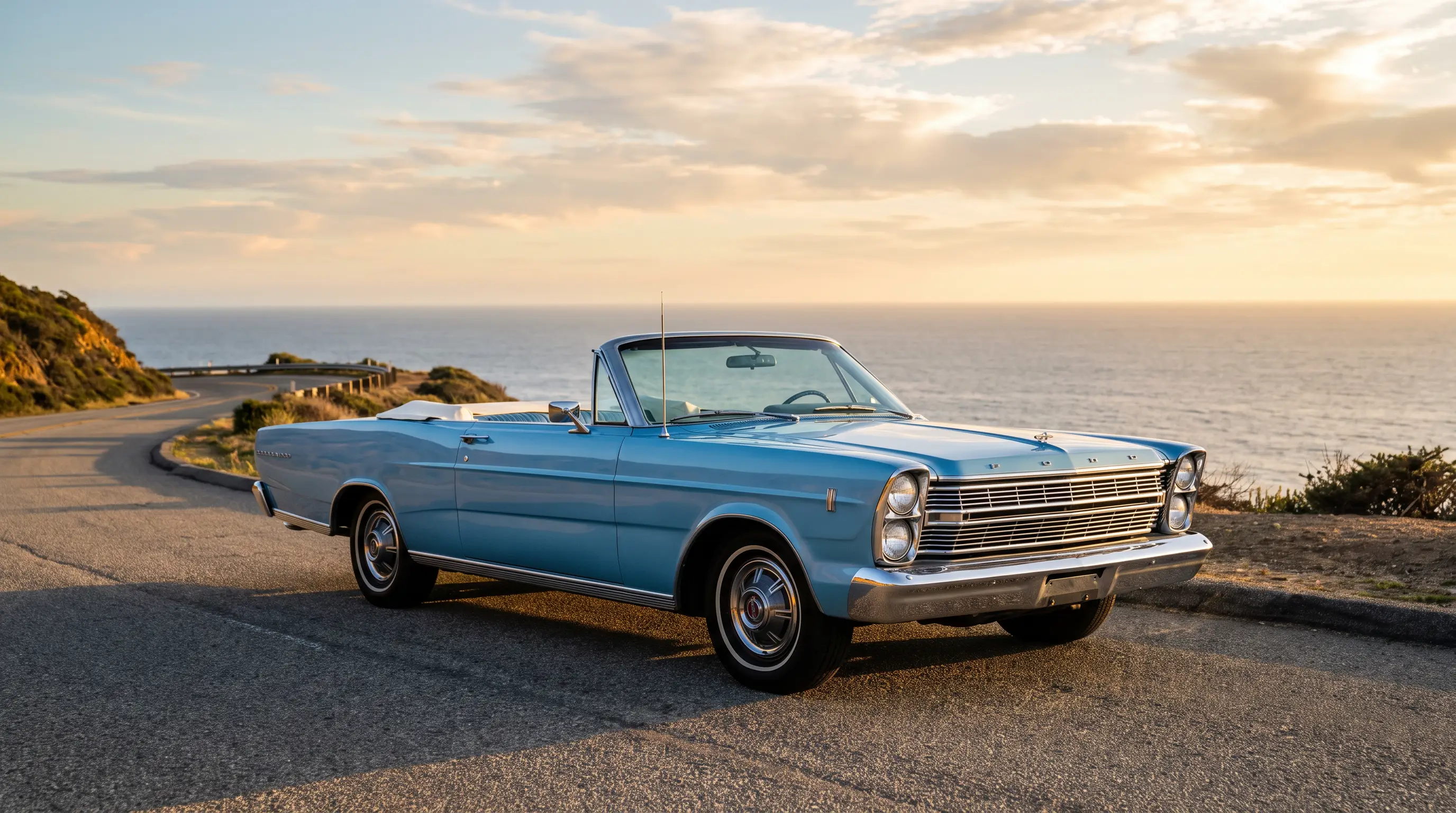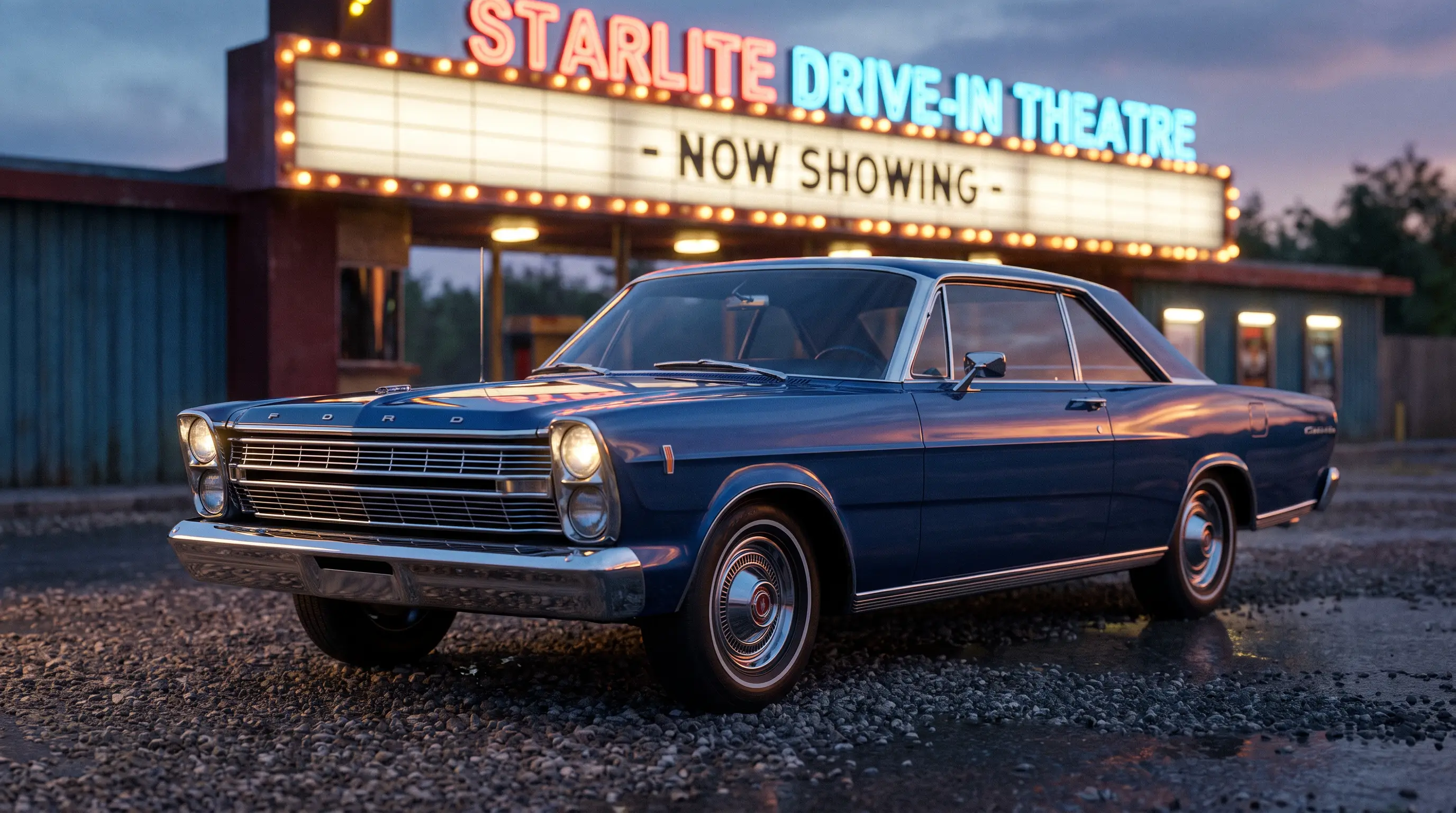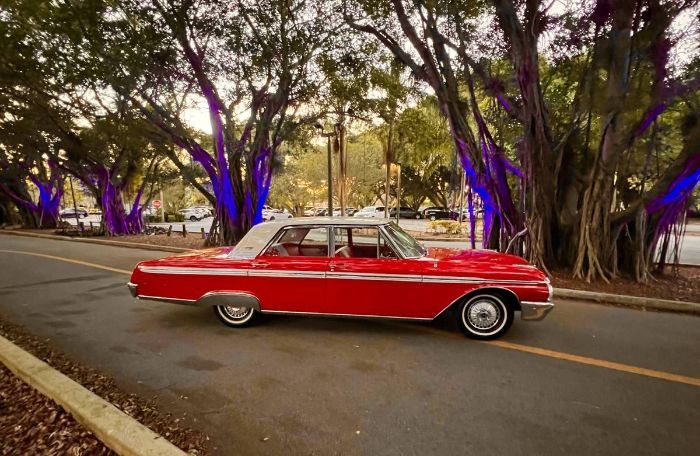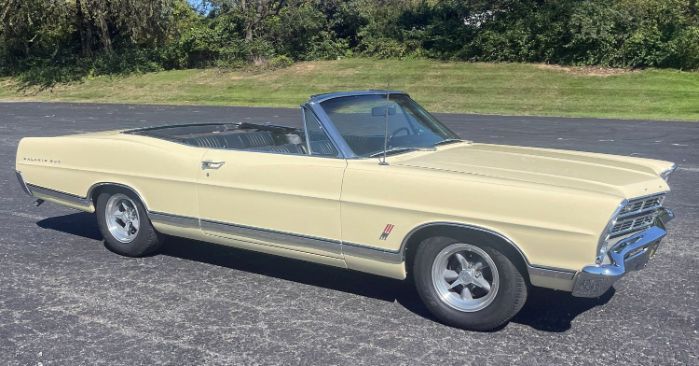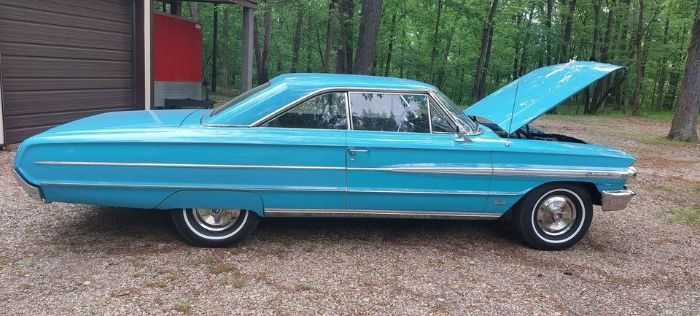
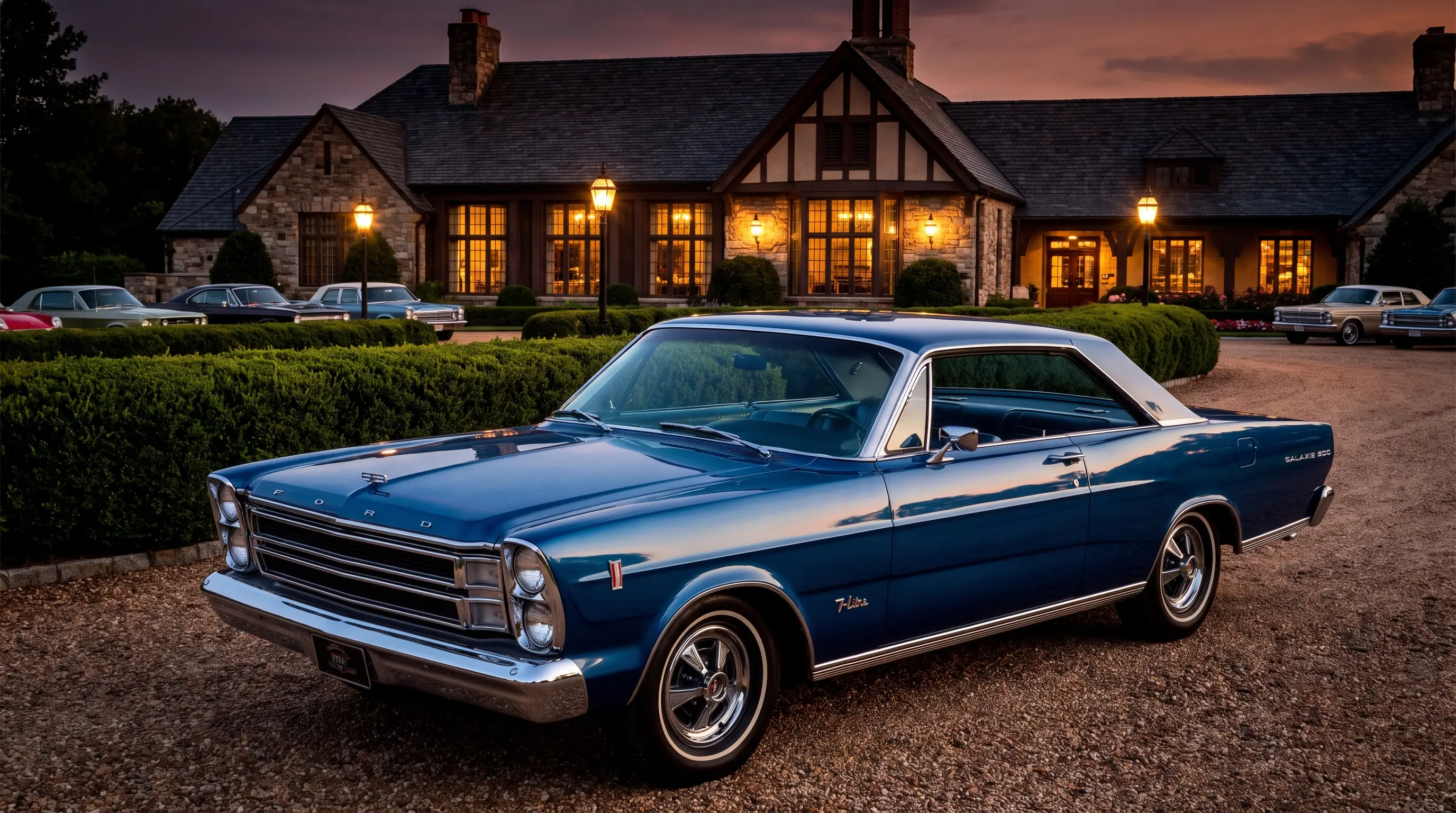
The 1966 ford galaxie is where the model stopped chasing the racetrack and started chasing the country club. That is the whole story in one sentence. The full-size Ford of the mid-1960s traded its stock car ambitions for quiet, comfort, and a longer options list, and the sales numbers say the buyers approved. The 7-Litre gave the performance crowd something to hold onto, but the real momentum was moving toward the LTD and the luxury it promised. Anyone who tells you these were still racing cars first has the timeline backward.
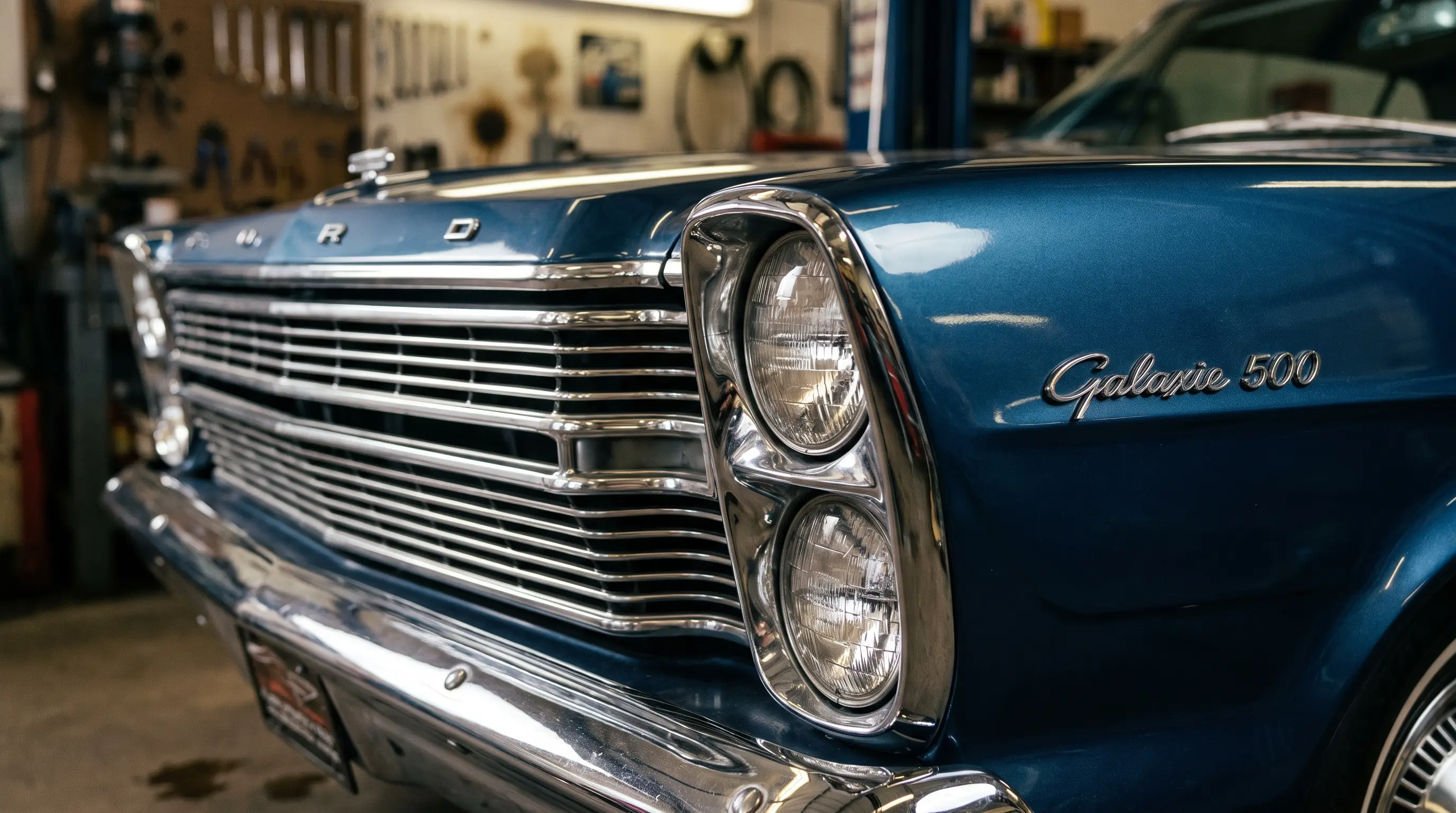
Look at what changed and the shift is obvious. The 1965 redesign brought a new body, stacked headlights, and a coil-spring rear suspension that replaced the old leaf setup. The 1966 cars carried that platform forward and pushed the luxury message harder. This was a deliberate pivot, not a drift. Ford read the market, saw where the money was, and moved the Galaxie toward it.
The redesign that reset the car
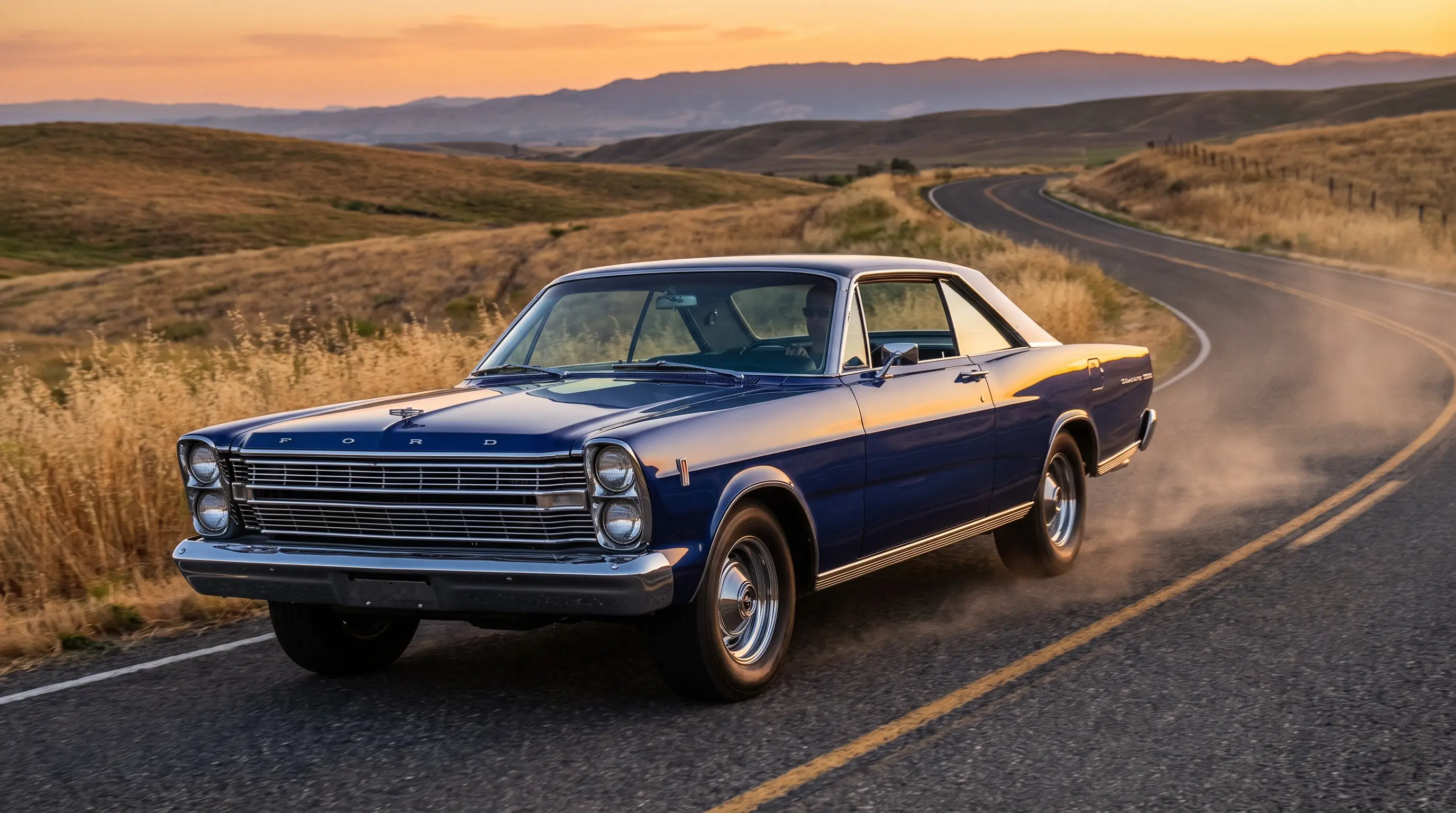
The 1965 model year gave the full-size Ford a clean-sheet body, and it was a big change. Out went the old rear leaf springs. In came a coil-spring rear suspension that made the car ride softer and quieter. The stacked headlight front end was new, and it gave the Galaxie a more formal face that suited the direction Ford was taking. The 1966 cars refined this platform rather than replacing it, so the two years belong together as a single chapter.
This matters because the redesign was about comfort, not speed. A softer rear end is a luxury decision. The whole package pointed at buyers who wanted a big, smooth, quiet car, and Ford built exactly that. If you want the longer arc of how the model reached this point, there is more on the ford galaxie in our full retrospective, linked as more on the ford galaxie. The short version is simple. The car grew up and calmed down.
The 7-Litre and one last performance card
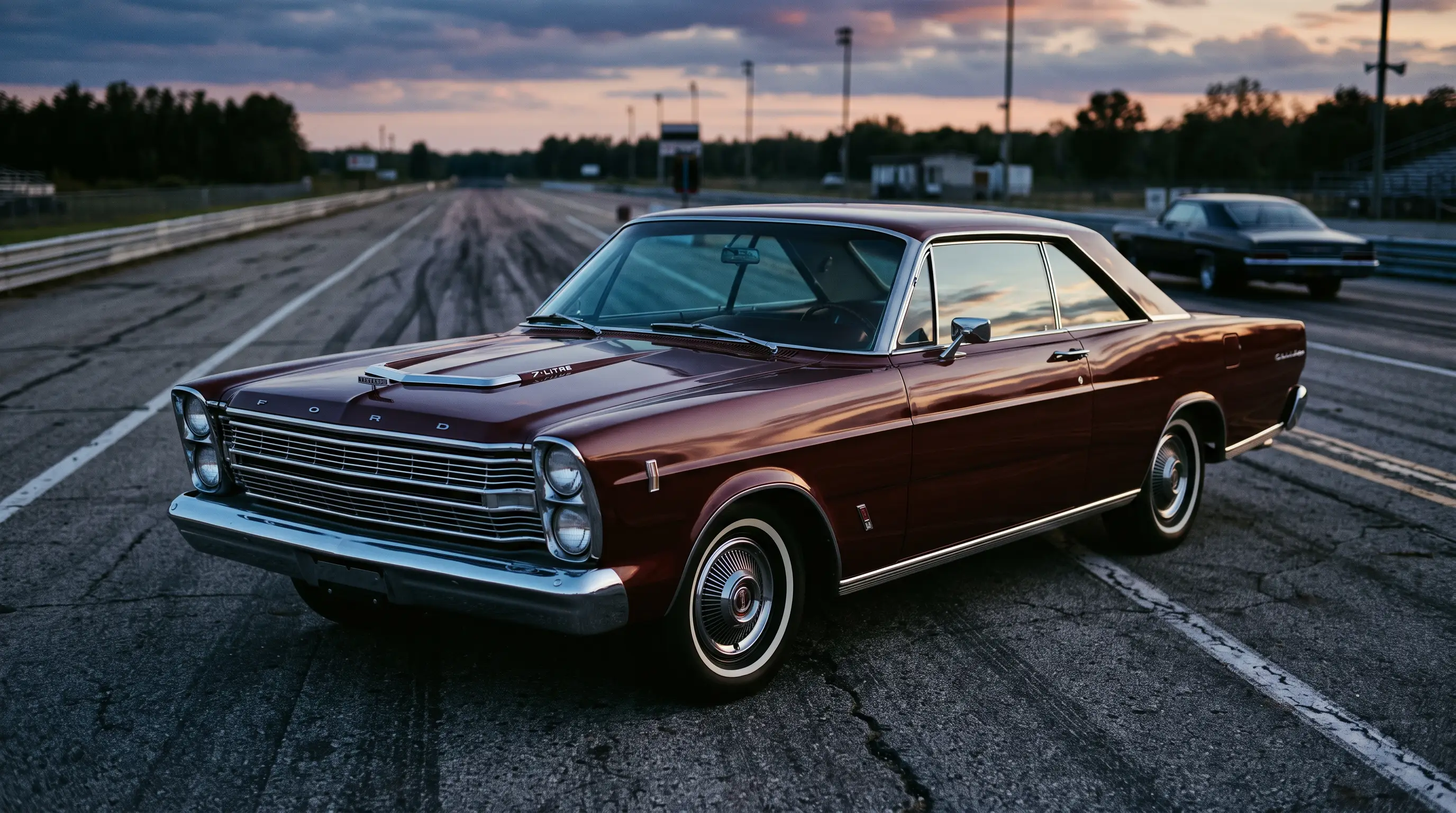
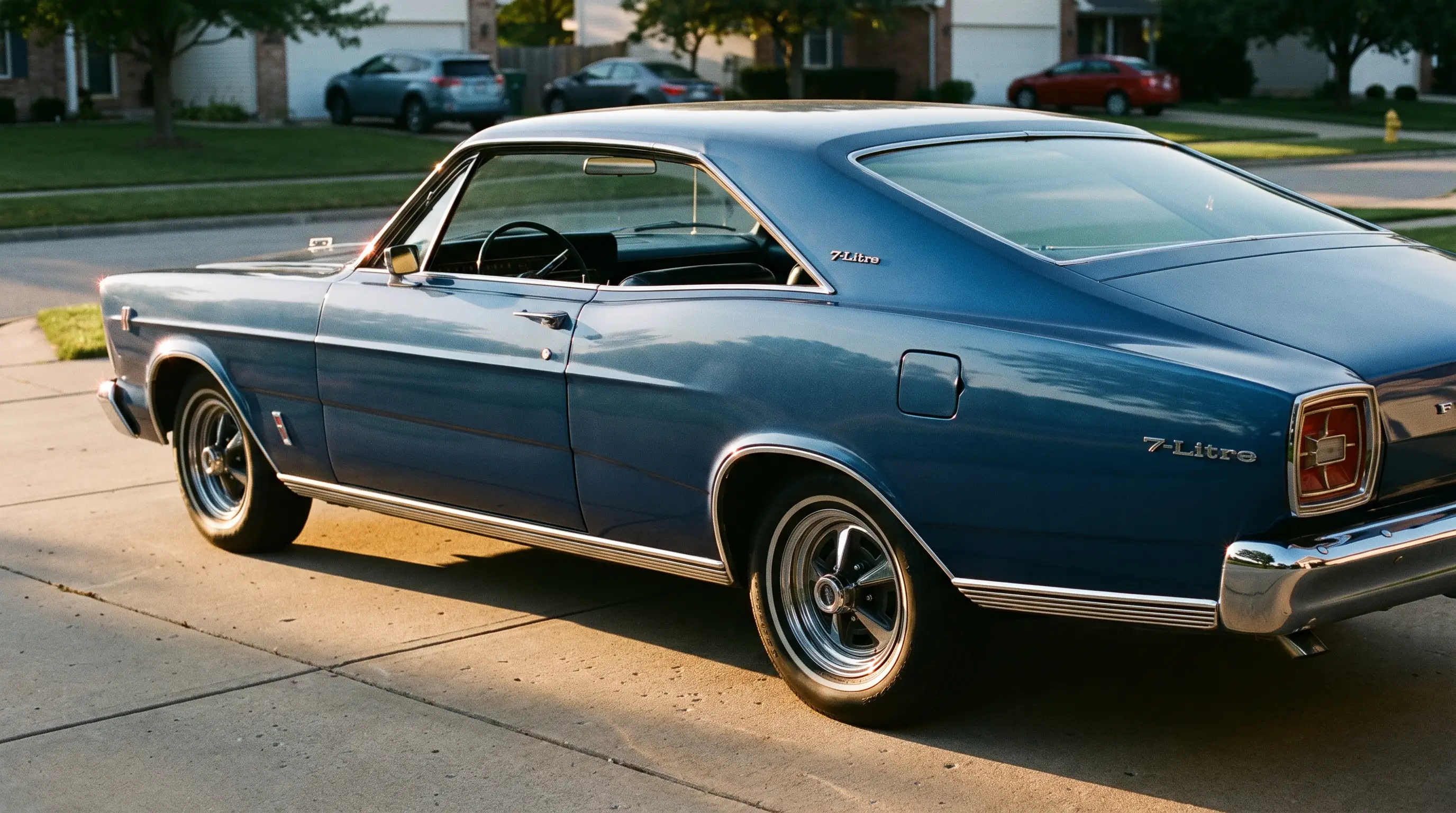
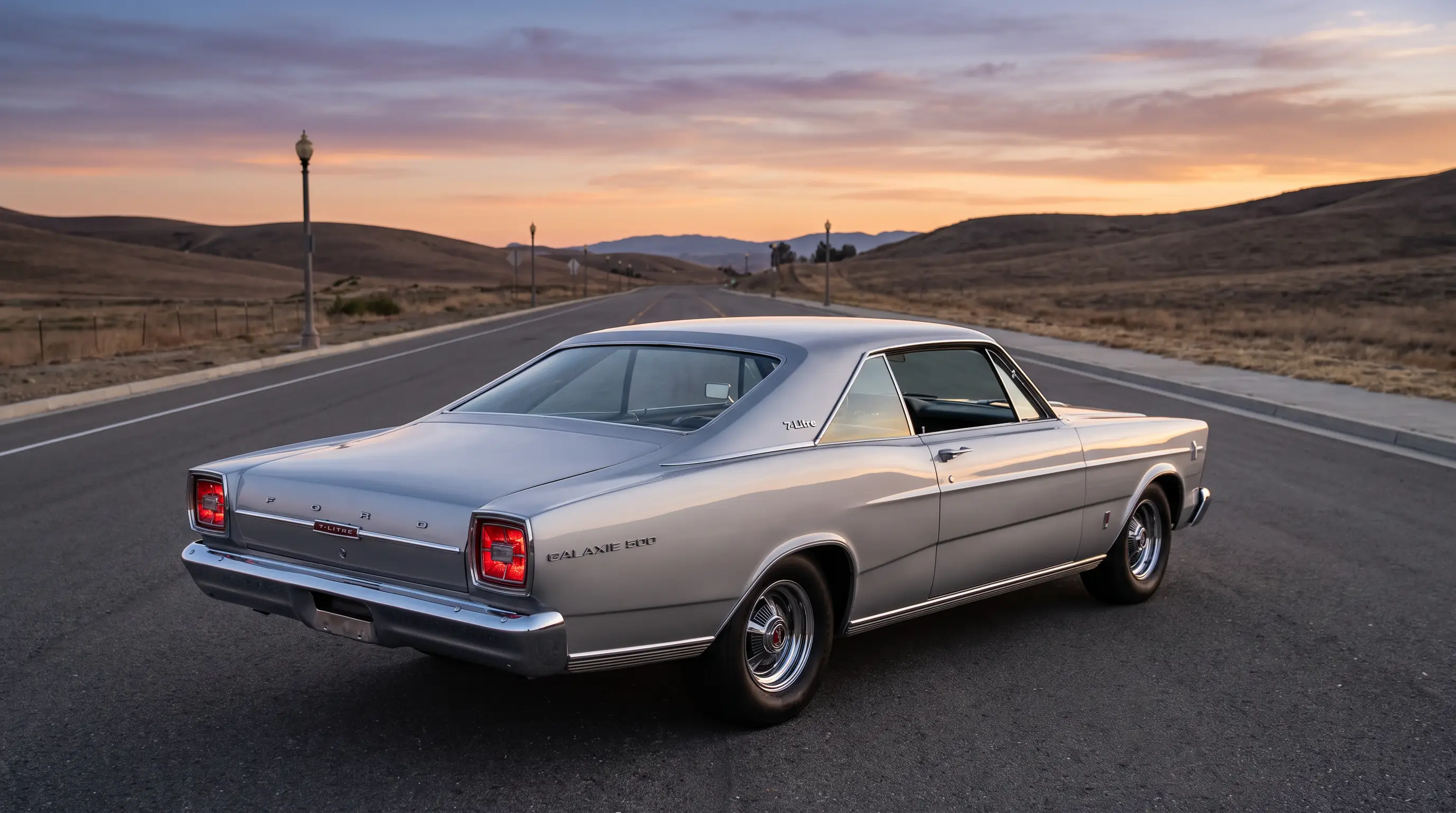
Ford did not abandon performance entirely. For 1966 it offered the Galaxie 500 7-Litre, built around a 428 cubic inch big block officially dubbed the Thunderbird 7-Litre V8. The name told you the displacement in metric terms, roughly seven liters, and it was aimed at buyers who wanted a full-size car with real punch and a touch of exclusivity. It came as a hardtop and a convertible, and it sat above the ordinary Galaxie 500 as a distinct model.
Here is the blunt part. The 7-Litre was a good car, but it was not a stock car homologation special like the 427 machines of a few years earlier. It was a luxury-performance model, tuned for effortless speed rather than track dominance. The 428 made 345 hp at 4,600 rpm and 462 lb-ft of torque at 2,800 rpm from a milder, hydraulic-lifter build, smoother and more street-friendly than the solid-lifter, high-winding 427, and that was the point. This engine was built to move a heavy, well-equipped car with authority, not to win on Sunday.
The LTD and the luxury turn
The real story of this era is the LTD. Ford introduced it for 1965 as the top full-size trim, and it moved fast. The pitch was luxury at a Ford price, and the marketing leaned hard on quietness. Ford famously claimed the LTD was quieter inside than a Rolls-Royce, a comparison built on a controlled sound test that made headlines. Ford commissioned the acoustics firm Bolt, Beranek and Newman to measure cabin noise at 20, 40, and 60 mph and used the results to back the claim. The point landed. Buyers wanted a hushed, well-trimmed big car, and the LTD delivered it.
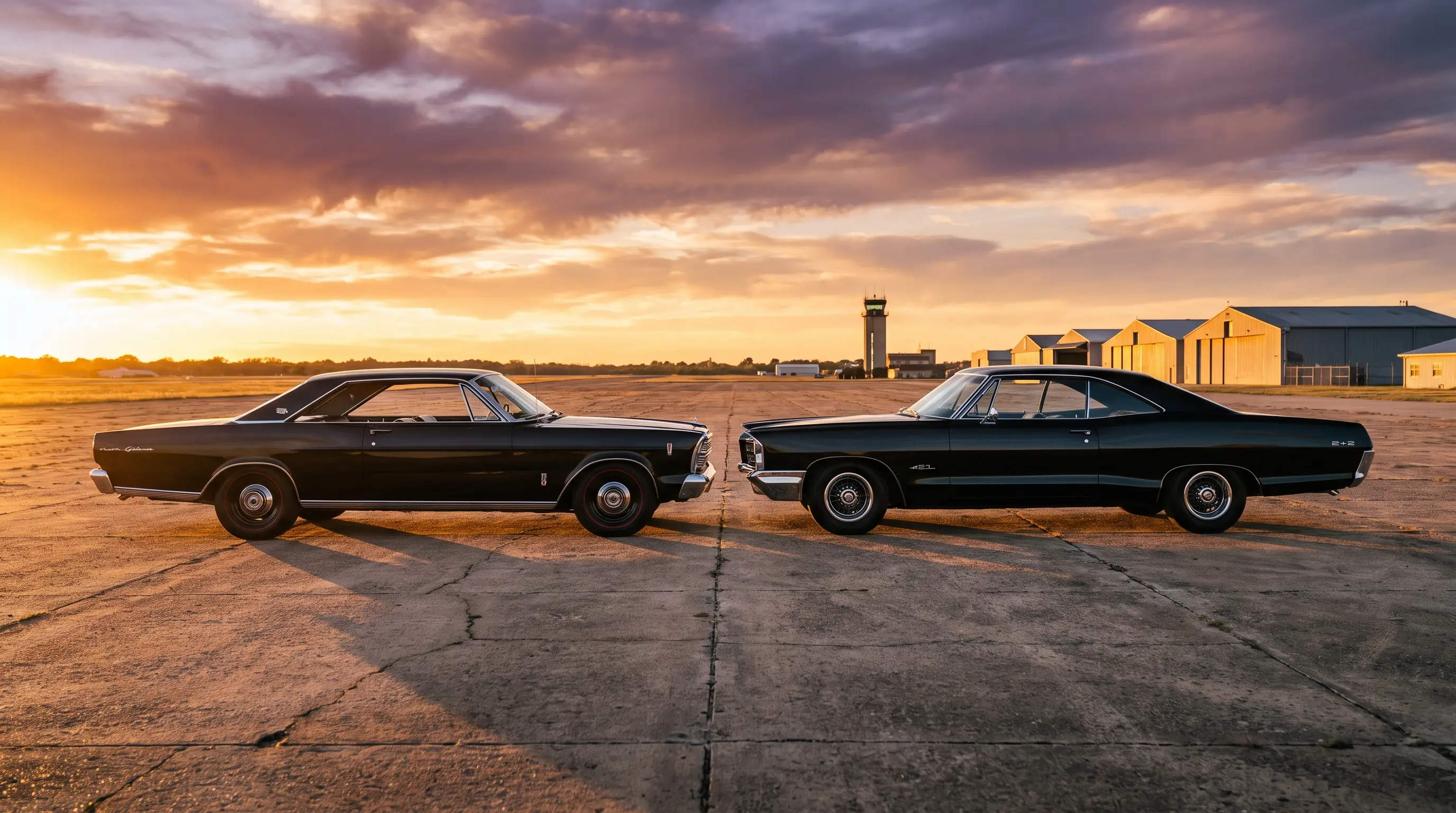
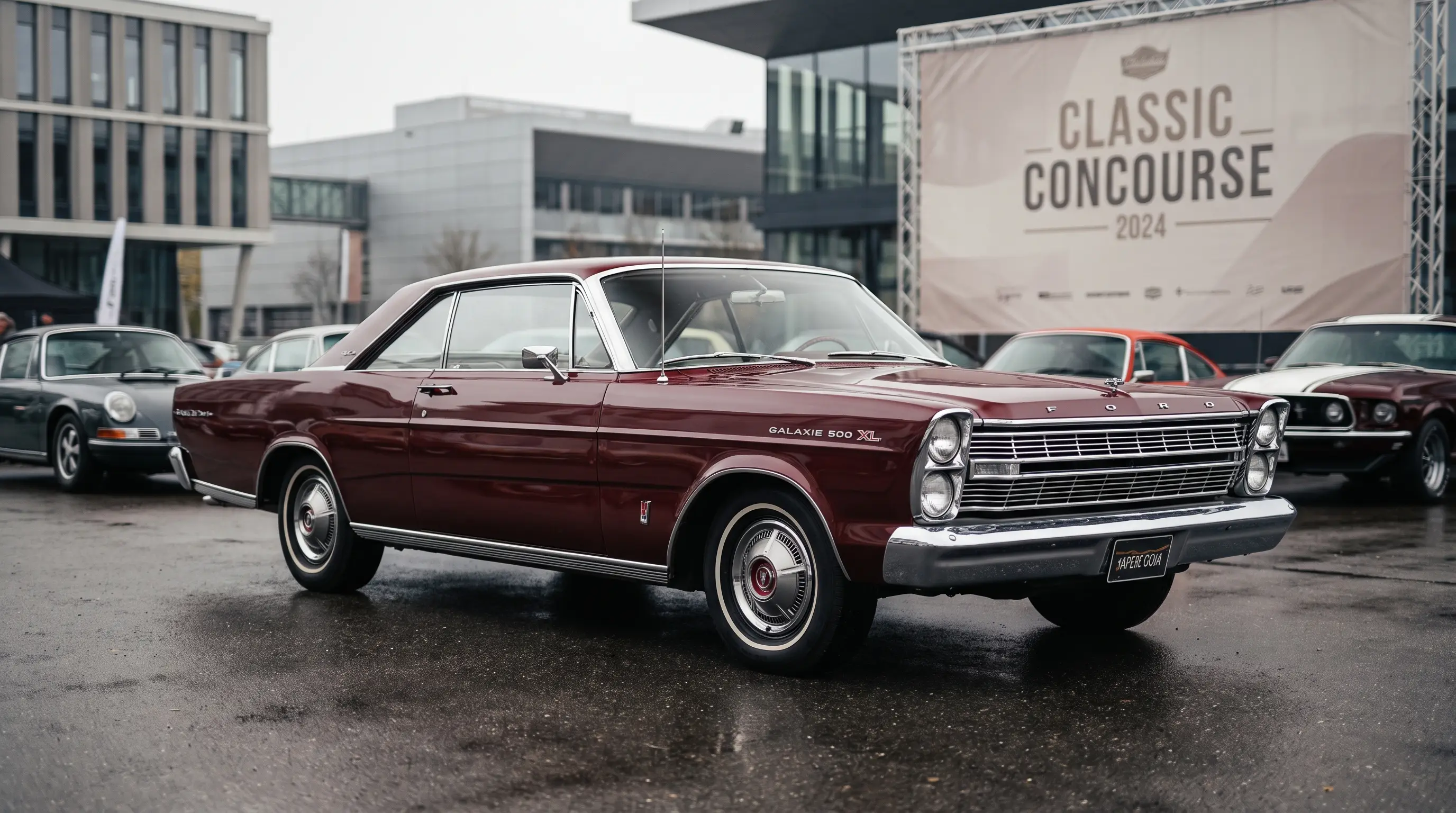
The LTD's rise tells you where the Galaxie was headed. Within a few years the LTD would grow into its own line and pull the full-size Ford further upmarket, but the seeds were right here in the mid-1960s. The Galaxie 500 remained the volume car, the XL held the sporting corner, the 7-Litre covered performance, and the LTD topped it off with luxury. That lineup is a snapshot of a company covering every base, with the weight clearly moving toward the plush end.
| Attribute | Detail |
|---|---|
| Platform | 1965 redesign, carried into 1966 |
| Rear suspension | Coil springs, replacing the older leaf setup |
| Performance model | Galaxie 500 7-Litre, 428 big block, 345 hp / 462 lb-ft |
| Luxury flagship | LTD, introduced for 1965 |
| Design cue | Stacked headlights, formal front end |
The comfort case, stated plainly
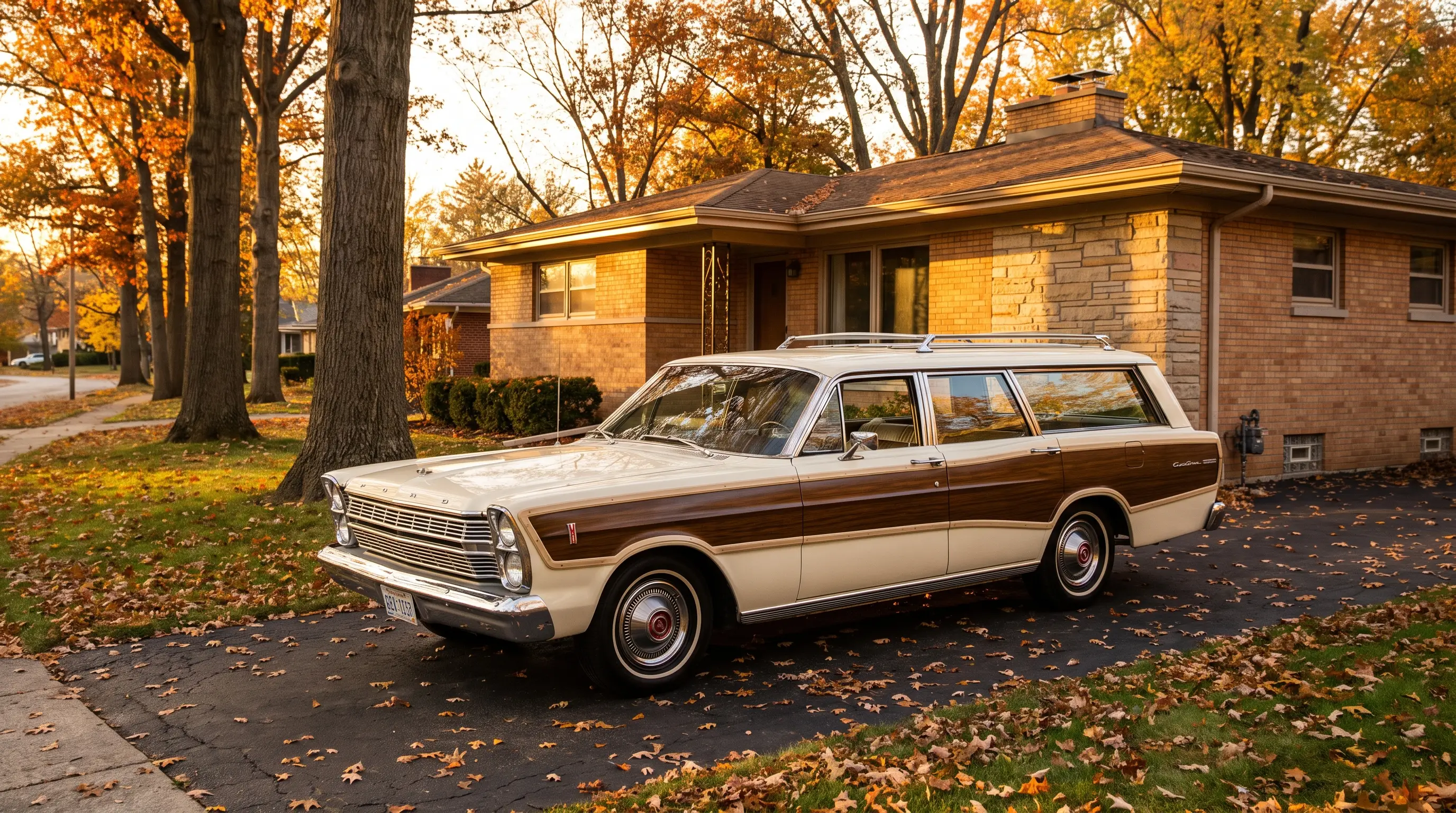
Here is what the 1966 Galaxie actually does well. It rides quietly. It seats a family in comfort. It covers long distances without drama. Those are real virtues, and the market spent decades pretending they did not count because they were not fast. That was a mistake. A car does not have to win races to be good, and the mid-1960s full-size Ford was very good at the job it was built for.
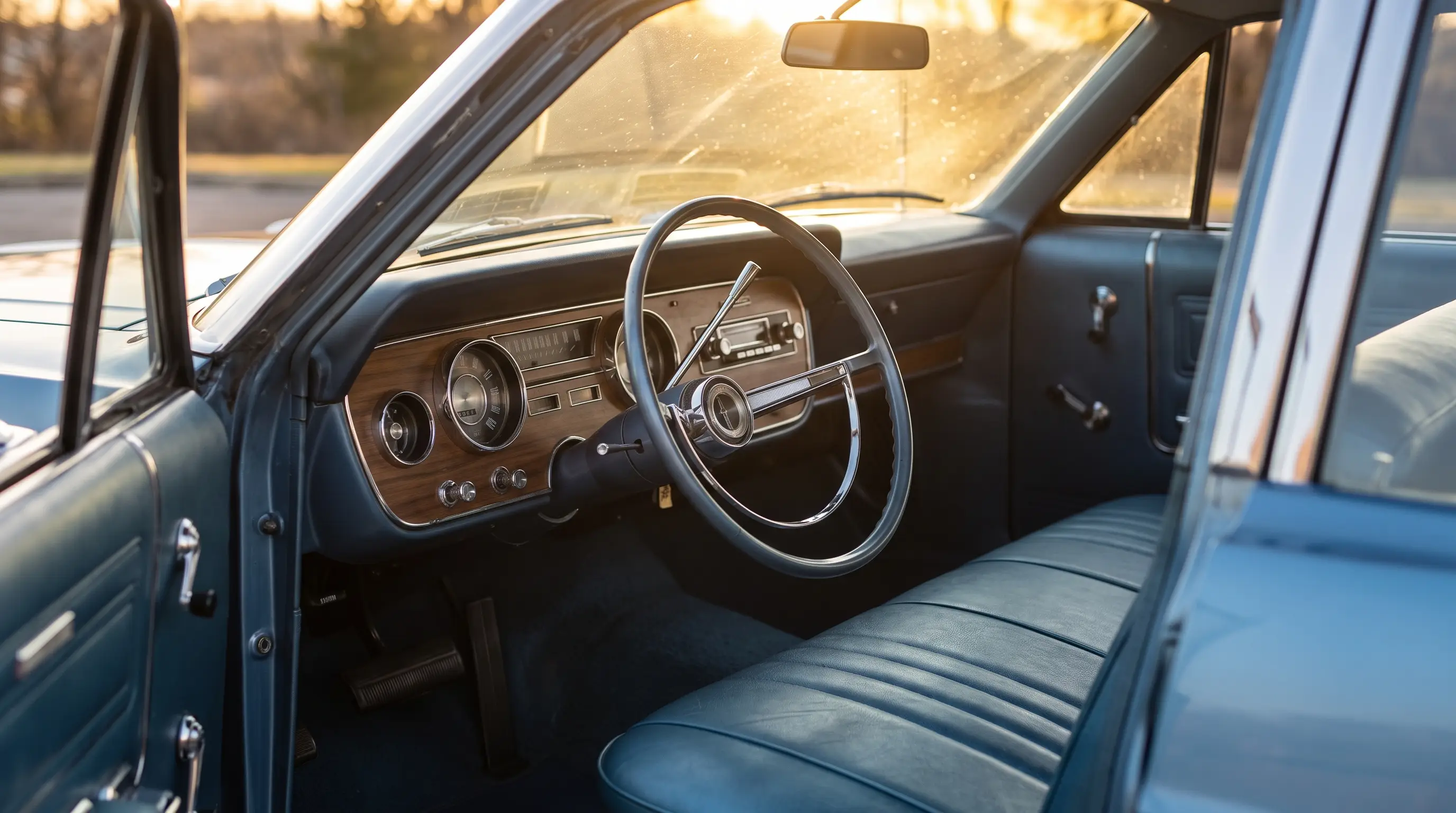
The interior tells the story. Ford loaded these cars with the conveniences of the day, from power options to better upholstery grades as you climbed the trim ladder toward the LTD. The cabin was roomy and hushed, and the whole experience was tuned to feel expensive. That was the pitch, and the engineering backed it up. When you sit in a clean LTD from this era, the appeal is immediate and it has nothing to do with acceleration.
People forget that comfort sold in enormous numbers while performance sold in small ones. The full-size luxury Ford was a volume success precisely because it delivered what most buyers wanted. Judged on its own terms, the 1966 car is a strong piece of work. Judged as a would-be muscle car, it disappoints, but that comparison was never fair to begin with.
The size is part of the appeal and part of the compromise. This is a long, wide, heavy car. It fills a modern parking space and then some. On an open road that mass turns into stability and quiet, which is the whole point. In a tight garage or a crowded lot it turns into a chore. Buyers who understand that trade going in tend to love these cars. Buyers who expect a nimble weekend toy come away disappointed. The car has not changed. The expectations are what get people into trouble, and setting them correctly is the single best thing you can do before buying one.
How it drives, no exaggeration
Drive a 1966 Galaxie and adjust your expectations first. The coil-spring rear gives a soft, settled ride that soaks up bad pavement well. The steering is light and slow by modern standards. The brakes need respect, because this is a heavy car and the era's stopping hardware was not its strong point. None of that is a criticism. It is just what a big American car of the mid-1960s feels like, and the Galaxie does it about as well as anything in its class.
The 7-Litre changes the character without changing the mission. The 428 gives the car easy, quiet thrust, the kind that builds speed before you notice. It is not a snappy engine. It is a torquey one, rated at 462 lb-ft, and it suits the heavy body perfectly. A standard Galaxie 500 with a smaller V8 asks less of you and gives less back, which is fine for a cruiser. The point is to match the car to the drive you actually plan to do. Most owners cover miles, not quarter-miles, and the Galaxie was built for exactly that.
What the numbers say about survivors
The market treats these cars honestly. The 7-Litre models carry a premium because they are the performance version and they were built in smaller numbers than the standard Galaxie 500. The convertibles, in any trim, sit above the hardtops. The plain sedans are affordable and always will be, because Ford built full-size cars by the hundreds of thousands and the ordinary ones are still common, while only around 11,000 7-Litres were built for 1966, a small fraction of that volume. That is not an insult. It is just supply and demand doing its job.
If you want a mid-1960s Galaxie, decide what you actually value first. A 7-Litre gets you the era's performance story and the better resale. A clean LTD gets you the luxury pitch that defined the moment, usually for less money. A straight Galaxie 500 hardtop gets you the look and the smooth ride at the lowest cost. All three are honest choices. When you are ready to shop, you can find a classic Galaxie and see how those trims stack up against each other on price.
"People want to call the 1966 Galaxie a muscle car. It is not. It is a quiet luxury cruiser with one fast option. Judge it on what it is, and it holds up fine."
- Dan Reeves
Where this chapter fits
The 1966 Galaxie closes a specific loop. The model started the decade with racing ambitions and ended the middle of it as a comfortable, quiet family flagship with a luxury trim on top. That is a bigger change than the styling alone suggests. The performance era got the headlines, but the luxury era got the sales, and the sales are what kept the nameplate alive into the 1970s.
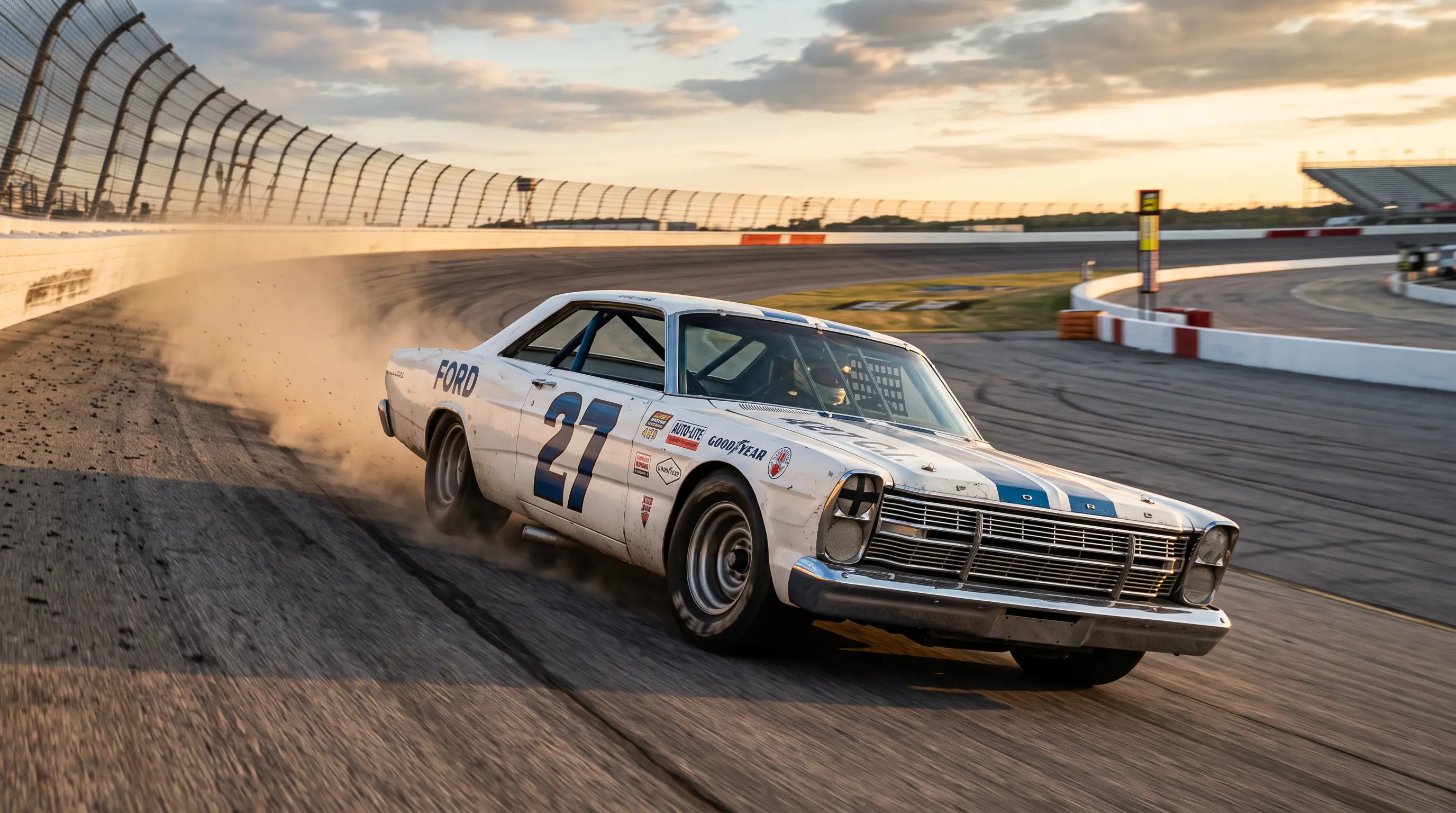
To see how far the car traveled, it helps to look back at the early-decade cars that carried the sporting message before the LTD changed the priorities. Those earlier models are more from this era in spirit but a different mission entirely, and you can read more from this era in the story of the model's earlier performance years, linked as more from this era. Put the two chapters side by side and the pivot is impossible to miss. Same nameplate, different car, different customer.
Sources and notes
- Curbside Classic: 1966 Ford Galaxie 500 7-Litre - The Truth About Cars
- Car of the Week: 1966 Ford Galaxie 500 7-Litre convertible - Old Cars Weekly
- Ford's 1965-68 Galaxie Was Quieter Than a Rolls - Hagerty Media
- 1965 Ford - Quieter Than Rolls-Royce! - Mac's Motor City Garage
- 1966 Production Numbers - 7litre.org
- Ford Galaxie - Wikipedia