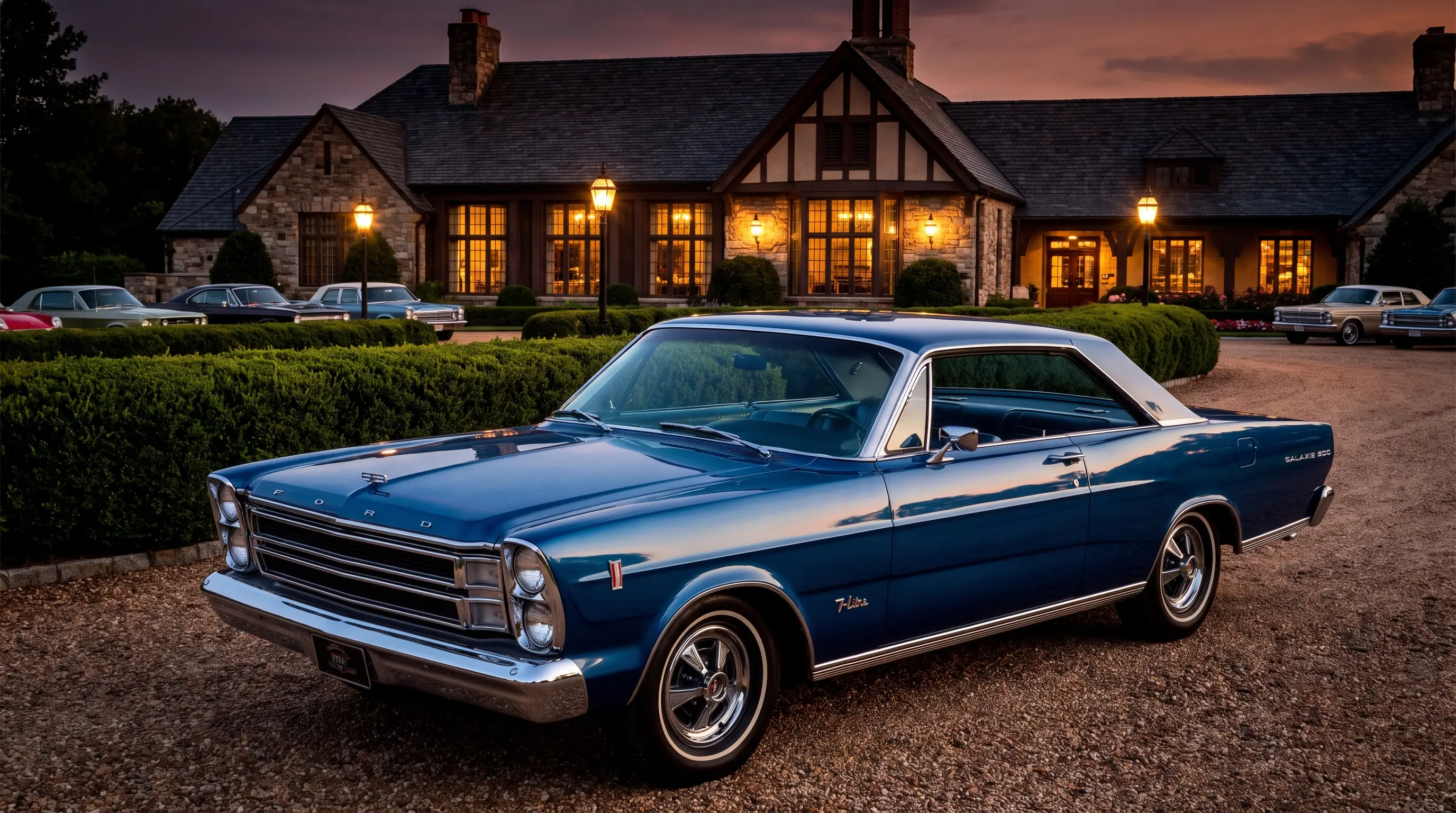
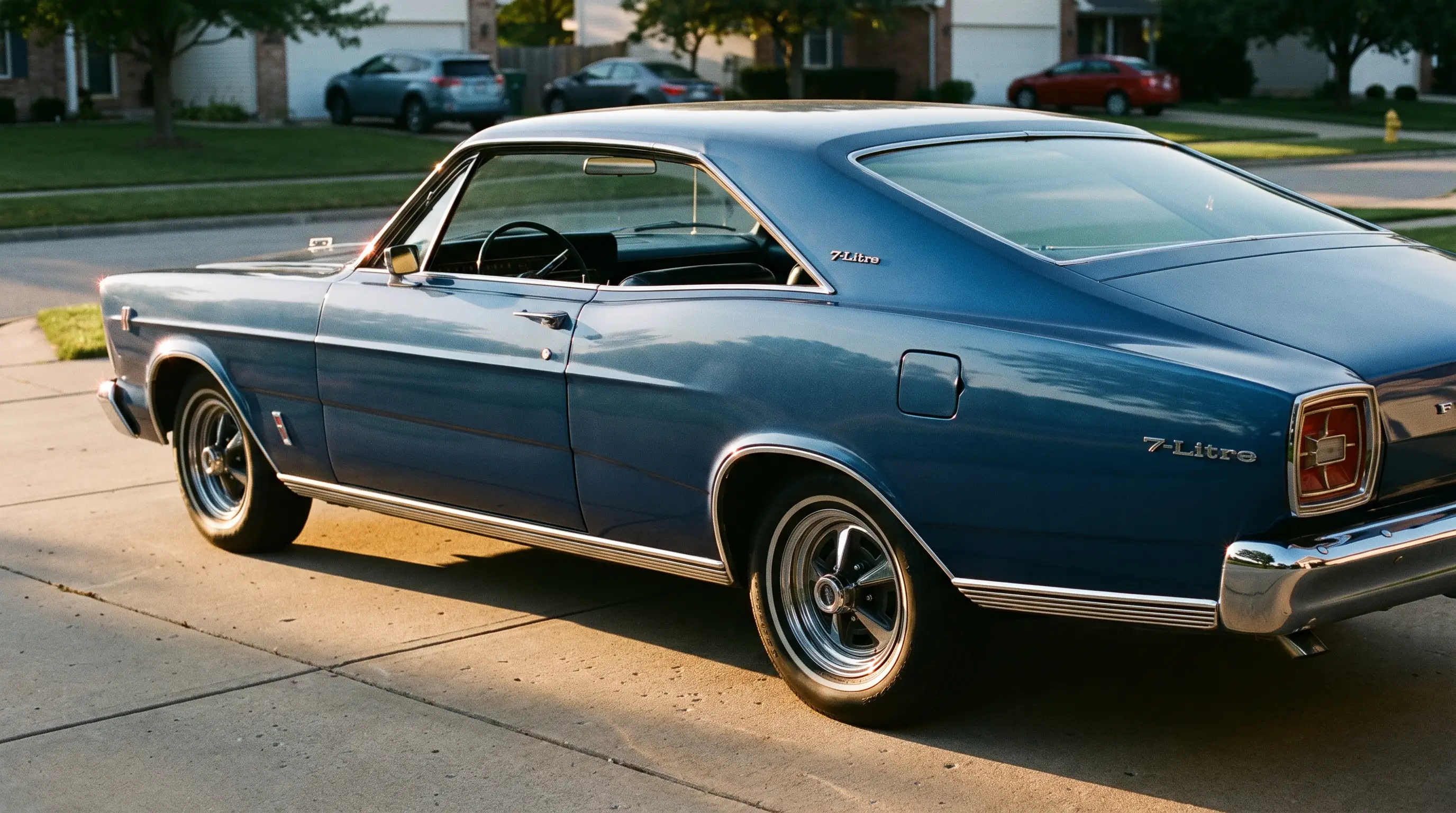
Every collector market has cars that are rare because almost nobody bought them, and cars that are rare because almost nobody kept them. The 1966 Ford Galaxie 7-Litre is the second kind, and that distinction is exactly why the 1966 Galaxie 7-Litre rarity narrative deserves more scrutiny than it usually gets. This wasn't a low-volume flop nobody wanted. It was a genuinely appealing flagship that got driven, traded, and eventually thinned out by ordinary attrition, the same way most full-size performance cars from the era were.
What the 7-Litre actually was
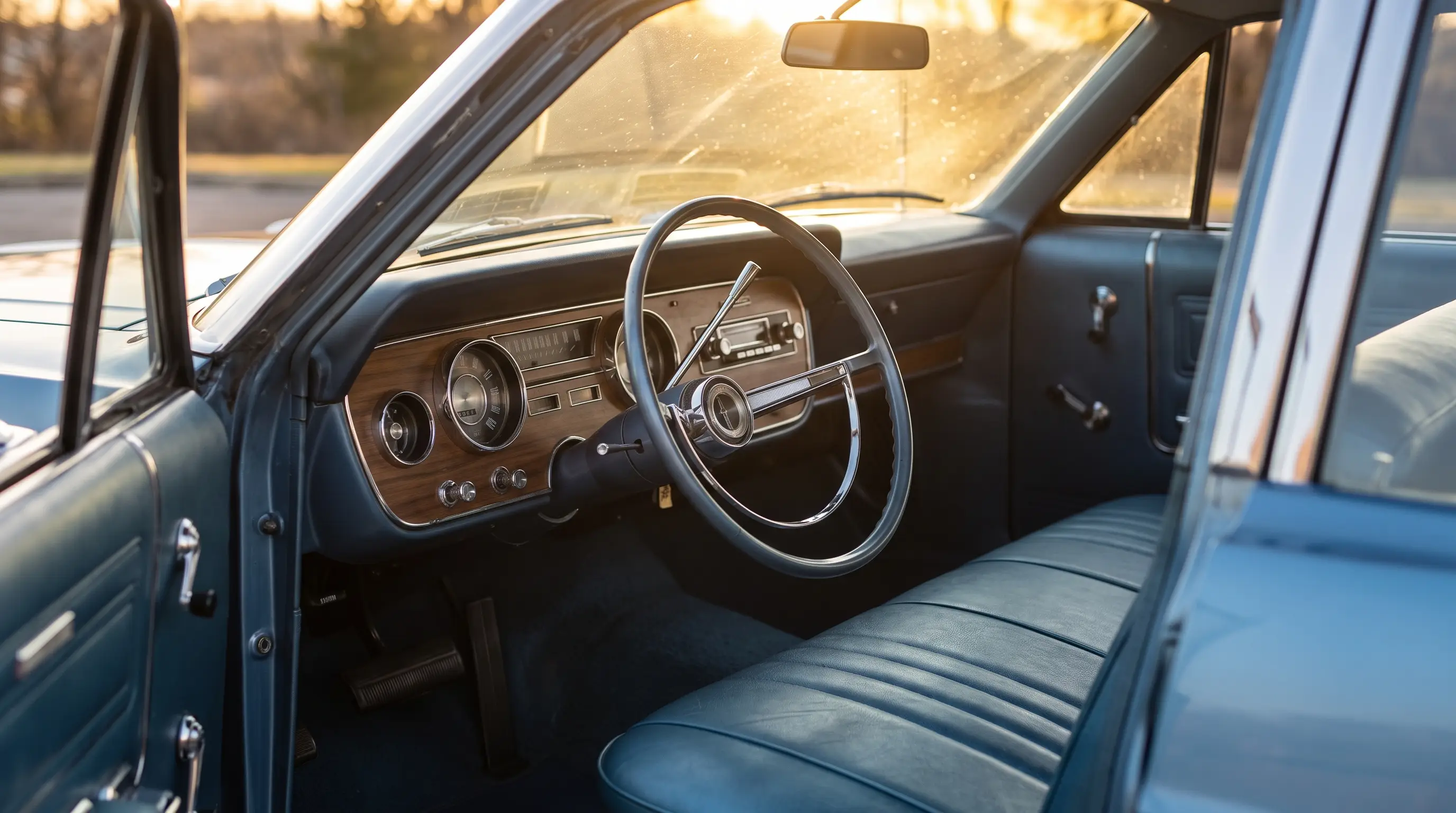
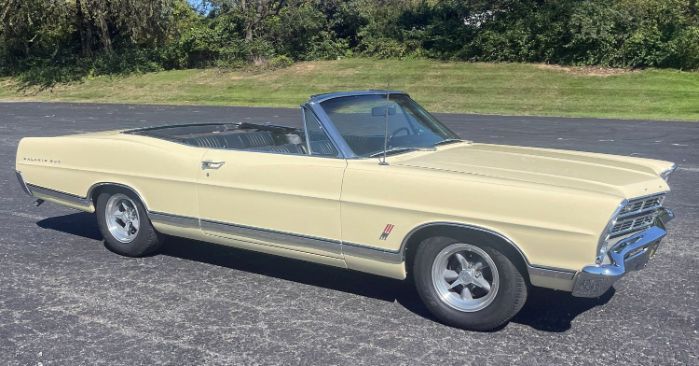
Ford introduced the 7-Litre badge for 1966 as the top of the Galaxie range, built around the 428 cubic inch V8, a name chosen because 428 cubic inches converts to roughly seven liters of displacement, and Ford wanted a number that read well on a fender badge. Standard output was rated at 345 horsepower, paired with a Cruise-O-Matic transmission as standard equipment, bucket seats, a center console, and a level of trim that separated it visually from a garden-variety Galaxie 500. It wasn't a stripped-down muscle car special. It was a full-size, well-equipped performance flagship, closer in spirit to a personal luxury coupe with genuine power underneath than to a drag strip special.
That positioning matters for how you assess one today. A 7-Litre buyer in 1966 wasn't cross-shopping a GTO. They were cross-shopping a well-optioned full-size coupe from another manufacturer, and choosing the Ford because it offered real performance without giving up comfort. Appraise it against that competitive set, not against a muscle car benchmark it was never built to compete in.
| Spec | 1966 Galaxie 7-Litre |
|---|---|
| Engine | 428 cubic inch V8 |
| Advertised horsepower | 345 hp |
| Standard transmission | Cruise-O-Matic three-speed automatic |
| Body styles | Two-door hardtop, convertible |
| Standard interior | Bucket seats, center console |
Why survival, not production, is the real number
Production figures for the 7-Litre were never enormous to begin with, but the number that actually determines value today is survival rate, and that figure is worse than most people assume. These were expensive, heavy, thirsty cars in an era when gas prices and insurance costs eventually turned full-size performance flagships into daily drivers that got used hard and then quietly scrapped once the next generation of cars arrived. A 7-Litre wasn't precious in 1972. It was a six-year-old car with a big, thirsty engine, exactly the profile that got traded in rather than preserved.
That's the honest read on rarity here. Low remaining numbers aren't proof of an exclusive limited edition, they're proof of an unglamorous truth: most cars like this simply didn't survive long enough to become collectible. Treat any seller's framing of "rare" with the same skepticism you'd apply to any other unverified claim, and ask for the paperwork that actually supports it.
The convertible question
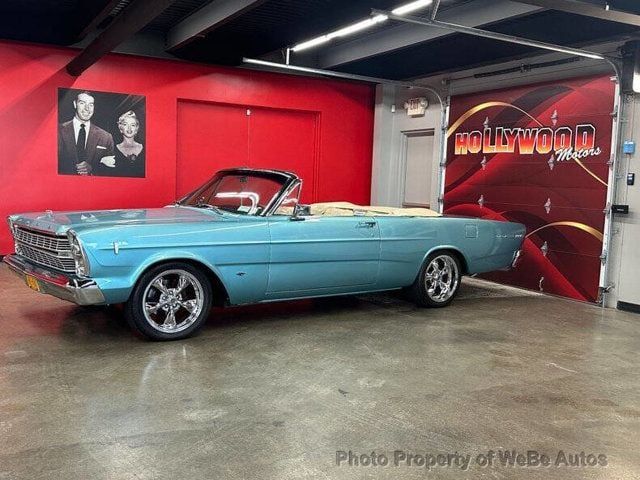
The 7-Litre convertible deserves a separate mention because it changes the risk calculation entirely. Convertibles in any performance flagship tend to survive at lower rates than hardtops, worn out by exposure, top mechanisms that eventually failed and got parked rather than repaired, and a general tendency for open cars to see harder weekend use than closed coupes. A genuine 7-Litre convertible with matching numbers and original top mechanism is a meaningfully scarcer proposition than the hardtop, and pricing between the two body styles should reflect that gap more than casual market chatter usually suggests it does.
The documentation problem
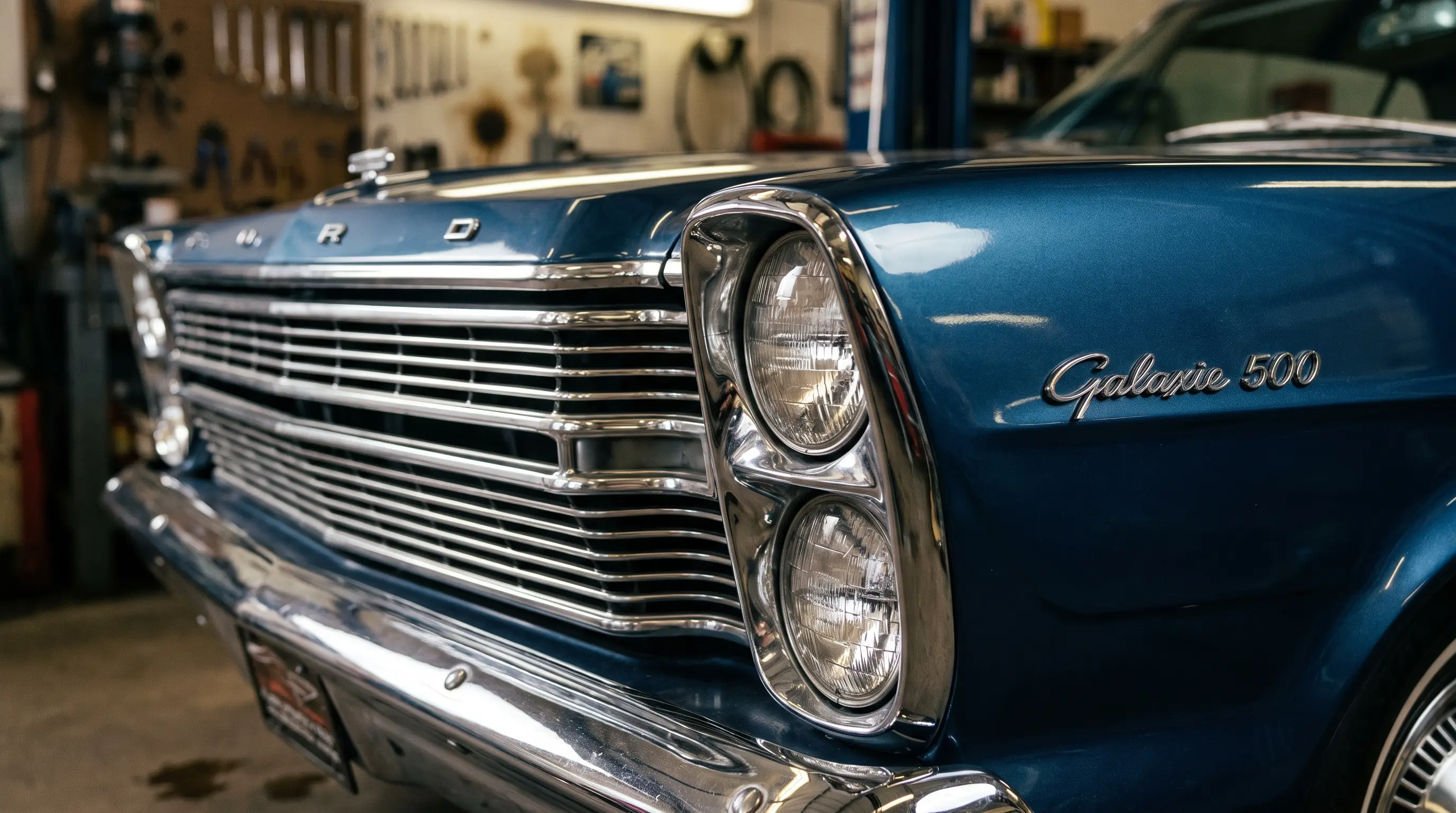
Because the 7-Litre shared so much sheet metal and trim with lesser Galaxies, verifying an original one comes down almost entirely to paperwork and casting numbers, not visual impression. A Marti Report or equivalent factory build documentation is close to essential here, not optional, because a well-executed clone with a correct-looking badge set and a period-style engine can fool a casual inspection. The premium a genuine, documented 7-Litre commands over an undocumented "looks right" car is significant enough that skipping this step is a real financial risk, not a formality.
Ask specifically for build sheet data confirming the original engine and trim combination, and be wary of any seller who treats that request as an inconvenience rather than a reasonable ask. A confident, honest seller of a genuine car should have no issue producing it. A cautious buyer should also budget for independent verification rather than relying solely on a seller's own paperwork, since documents can be separated from the car they originally described over decades of ownership changes.
"Rare is not the same as valuable, and valuable is not the same as documented. With a 7-Litre, you need all three before you write a check, and most cars on the market only have one of them."
- Marcus Feld
How a 7-Litre depreciates differently than you'd expect
Most collector cars follow a fairly predictable curve: bottom out in value sometime in the eighties or nineties, then climb steadily as the generation that grew up around them reaches peak buying power. The 7-Litre's curve looks similar on paper but with a flatter middle section, because it never had a dedicated enthusiast community pushing values the way muscle car specific badges did. It rode along on general full-size Ford appreciation rather than its own dedicated collector base for a long stretch. That's changing now as more buyers discover the car specifically, but it means the price history on a 7-Litre is a less reliable predictor of future value than it would be for, say, a documented GT350 from the same year.
What that means practically is that a 7-Litre bought today is still priced closer to its fundamentals, condition, documentation, originality, than to hype-driven auction results. That's a genuinely useful position for a buyer to be in, provided they understand they're buying a car whose story is still being written into the wider collector consciousness rather than one that's already fully priced in.
Where the 7-Litre sits in the market today
Compared to Galaxie's more famous 427-powered NASCAR-adjacent siblings, the 7-Litre occupies a quieter, less hyped corner of the market, and that's actually part of its appeal to a certain kind of buyer. Less bidding-war heat, less speculative price inflation, and a genuine flagship story that most casual collectors overlook in favor of the racing engines. That gap between recognition and actual rarity is where patient buyers tend to find better value, provided they do the documentation work rather than trusting a fender badge on faith.
For the wider context of how the 7-Litre fits into the rest of the 1966 lineup, the full story covers the year's full range of trims and engines side by side. And if a documented example, badges, casting numbers, and paperwork all lining up, is what you're hunting for, there's real value in browsing classic Galaxie for sale listings with a specific eye toward the ones that can actually prove their history.
Sources and notes
- 1966 Ford Galaxie 500 7-Litre specs - Automobile Catalog
- 428 Power: 1966 Ford Galaxie 7 Litre - Barn Finds
- 7-Litres Of V8 Power: 1966 Ford Galaxie - Barn Finds
- 1966 Ford Full Size Cars Fact Sheet - Over-Drive Magazine
- 1966 Ford Galaxie Specifications & Dimensions - Conceptcarz
- 1966 Ford Galaxie 500 428 - Carfolio