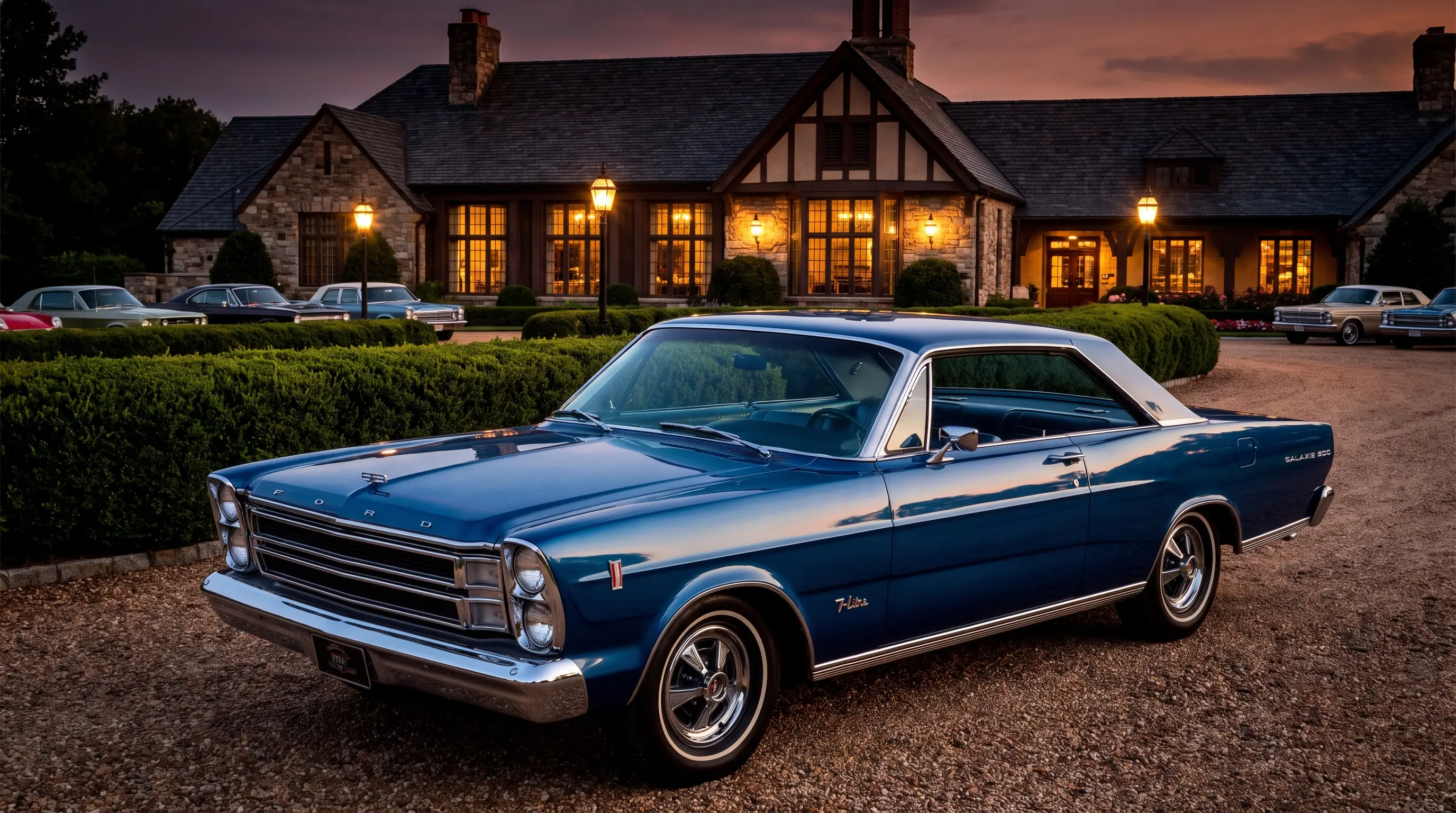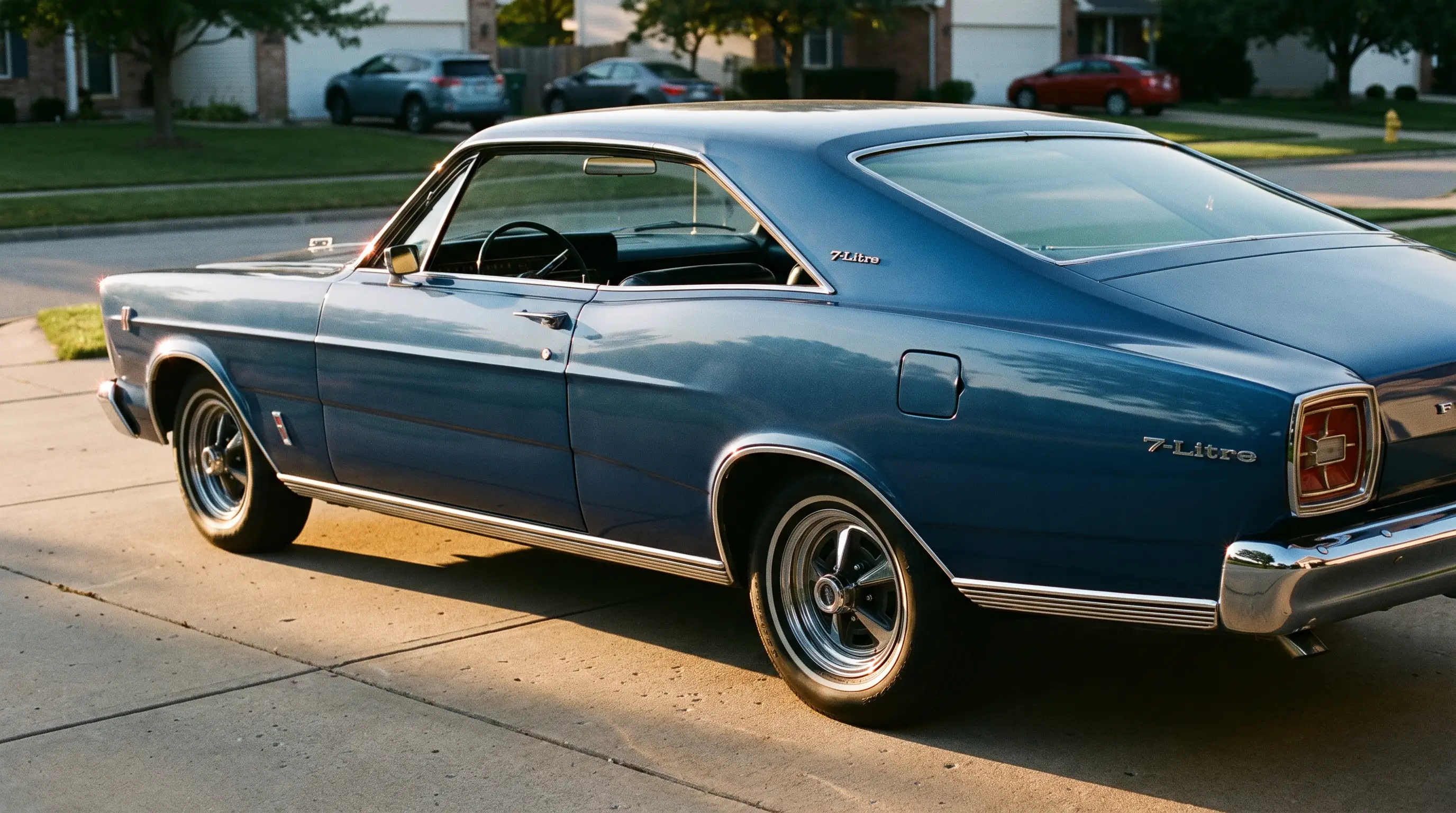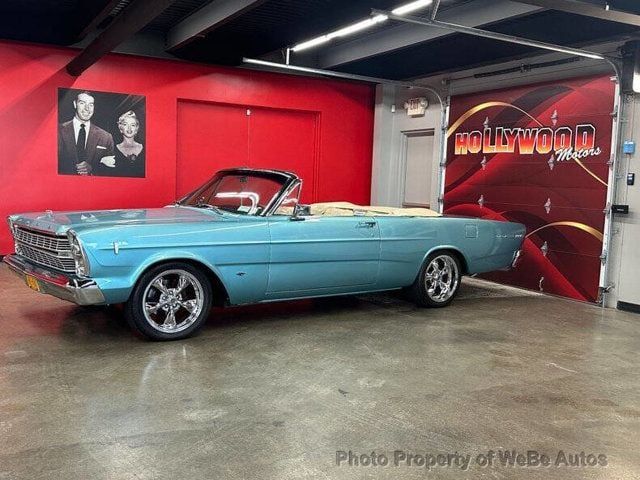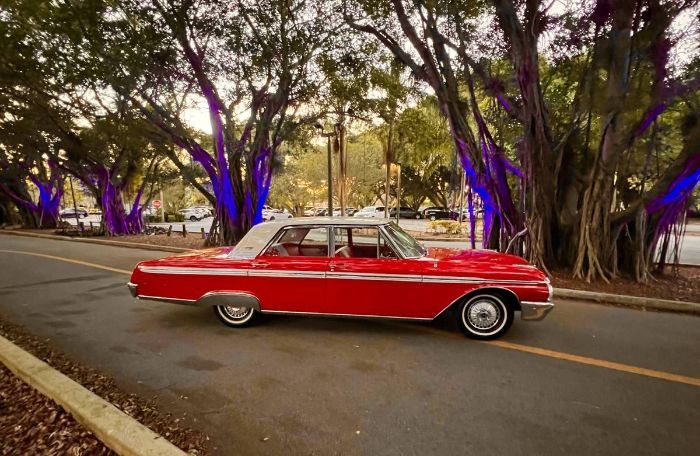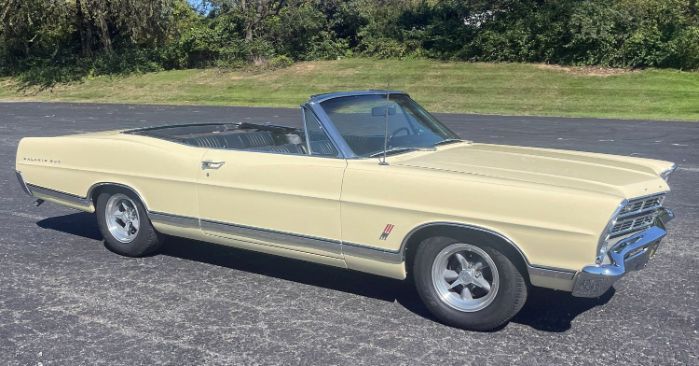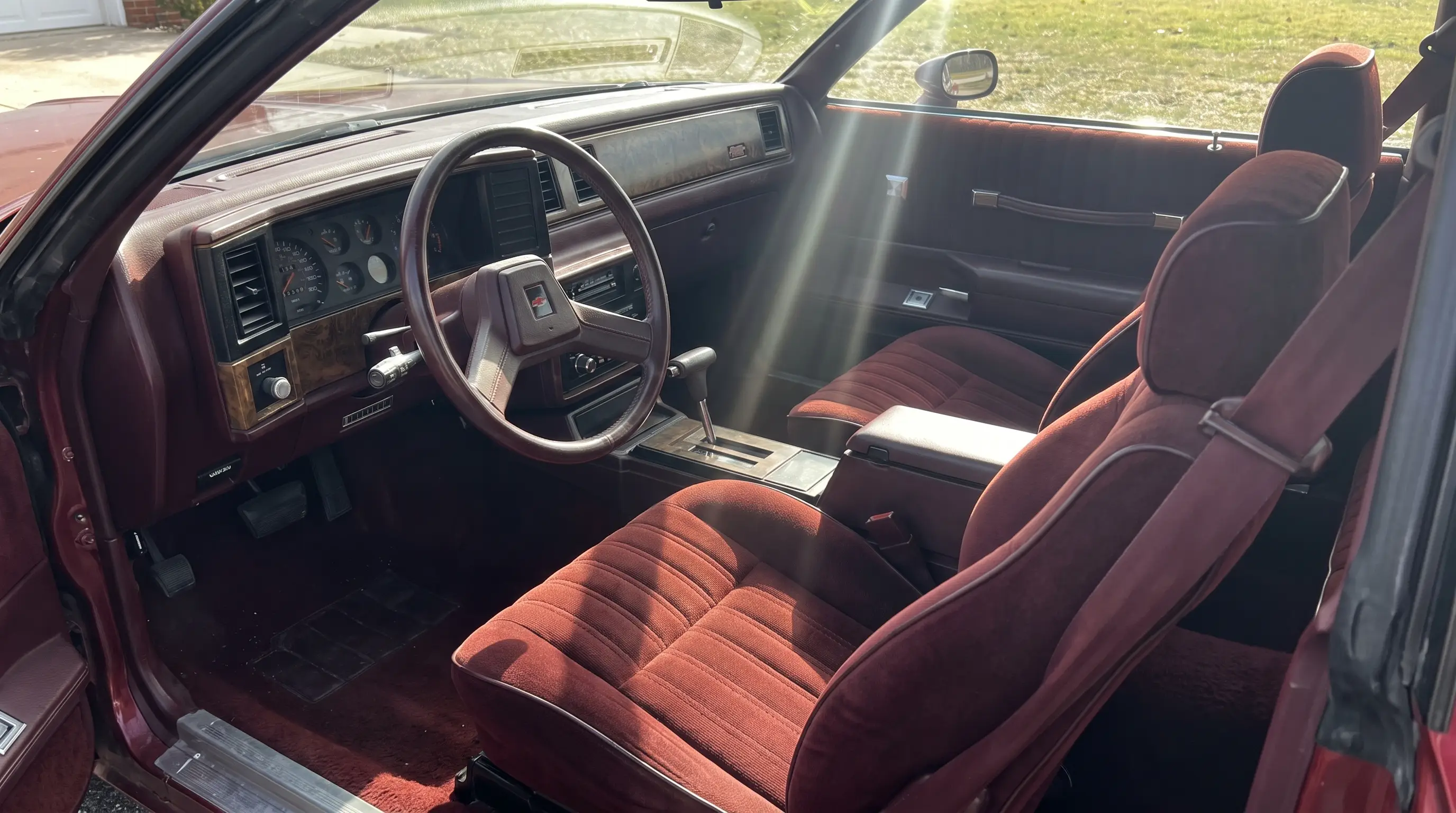
A woman in a photograph from a 1966 Ford dealer brochure sits behind the wheel of a Galaxie 500, one hand resting on the wheel, the other on a leather-look armrest, and she is not looking at the road. She is looking at the dashboard the way people once looked at a new kitchen appliance, with a kind of quiet pride that a machine could be built this comfortable. That is the story the 1966 Ford Galaxie's interior was actually selling. Not speed, not styling, comfort, and comfort was a harder thing to photograph than a tail fin, so Ford leaned on people instead of chrome to sell it.
The living room theory of the American sedan
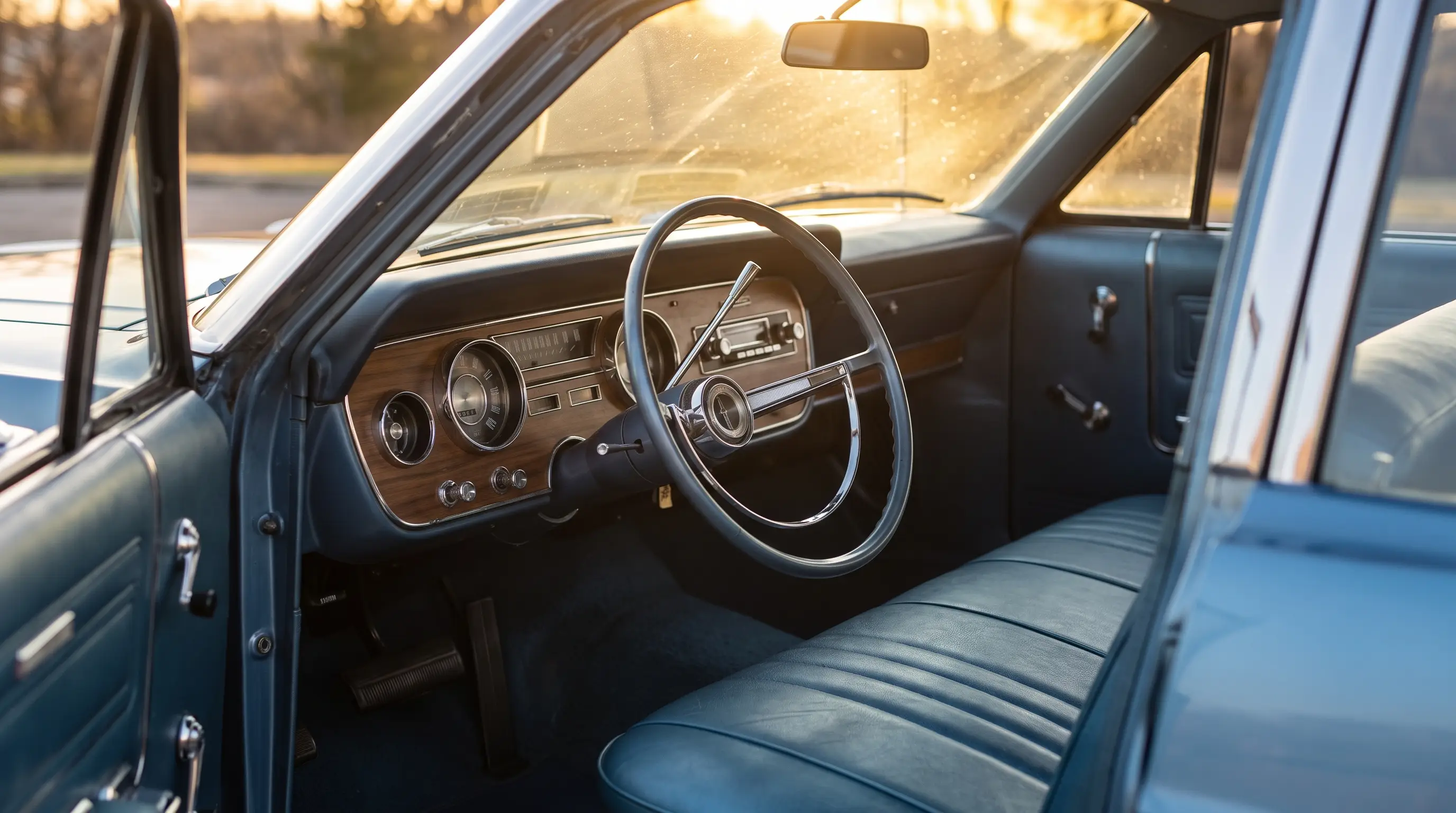
By 1966 Ford had spent several years pushing the idea that a full-size car's cabin should feel like an extension of the house it was parked in front of. Cloth and vinyl combinations in the Galaxie 500 were chosen to resemble upholstered furniture more than automotive trim, and the bench seat in a Galaxie sedan was wide enough that three adults could ride abreast without anyone's shoulder touching a door panel. This wasn't an accident of packaging, it was the point. A family that bought a Galaxie in 1966 was buying a room that happened to move at highway speed.
The dashboard reinforced the same idea in a quieter way. Simple, horizontal, no clutter of gauges competing for attention, just a speedometer, a fuel gauge, and controls arranged so a driver's hand found them without looking down. Nothing about the layout demanded expertise. That was deliberate. A Galaxie owner in 1966 was not expected to be a car person, only a person who wanted to get somewhere in quiet, in comfort, without drama.
What "quiet" actually meant in 1966
Ford's engineers spent real effort on sound insulation that year, thicker door seals, additional padding under the carpet, rubber isolators between the body and frame designed to absorb road noise before it reached the passenger compartment. The company's advertising for the Galaxie's LTD sibling leaned hard on a specific, startling claim: quieter than a Rolls-Royce. That line ran in a famous 1965 television spot, backed by decibel testing of Fords against actual Rolls-Royces and verified through the United States Auto Club, and the same quiet-ride pitch carried into 1966 advertising for the LTD and top-trim Galaxies. Whether or not the marketing oversold the point, the engineering behind it was real, and it's part of why a well-kept 1966 Galaxie interior still feels notably calm on a modern highway compared to some of its contemporaries.
| Interior feature | 1966 Galaxie 500 |
|---|---|
| Standard seating | Bench seat, front and rear |
| Available upholstery | Cloth and vinyl combinations |
| Optional seating | Bucket seats with center console on XL models |
| Dashboard layout | Horizontal, simplified gauge cluster |
| Available comfort options | Power windows, power seats, air conditioning |
The XL's different conversation
Step up to the Galaxie 500 XL and the comfort story shifted tone slightly, from living room to something closer to a den. Bucket seats, a floor-mounted shifter for cars ordered with a manual or console automatic, and trim details meant to signal that this particular Galaxie buyer wanted a sportier feeling cabin without giving up the insulation and hush of the sedan underneath. It's a small distinction but it mattered to the person cross-shopping a Galaxie 500 sedan against an XL coupe in 1966. One was built to disappear around you, the other was built to remind you it was there.
Comfort as a family decision, not a driver's decision
Read enough dealer literature from 1966 and a pattern emerges: Ford rarely pitched the Galaxie's comfort features to the driver alone. The copy talks about children asleep in the back seat, about a wife's reading light, about a family covering distance without anyone complaining. That framing tells you who Ford believed was actually making the purchase decision in a suburban household that year, and it wasn't necessarily the person behind the wheel. The Galaxie's interior had to satisfy an entire car full of opinions, not just one driver's preference for a firm seat and a tachometer.
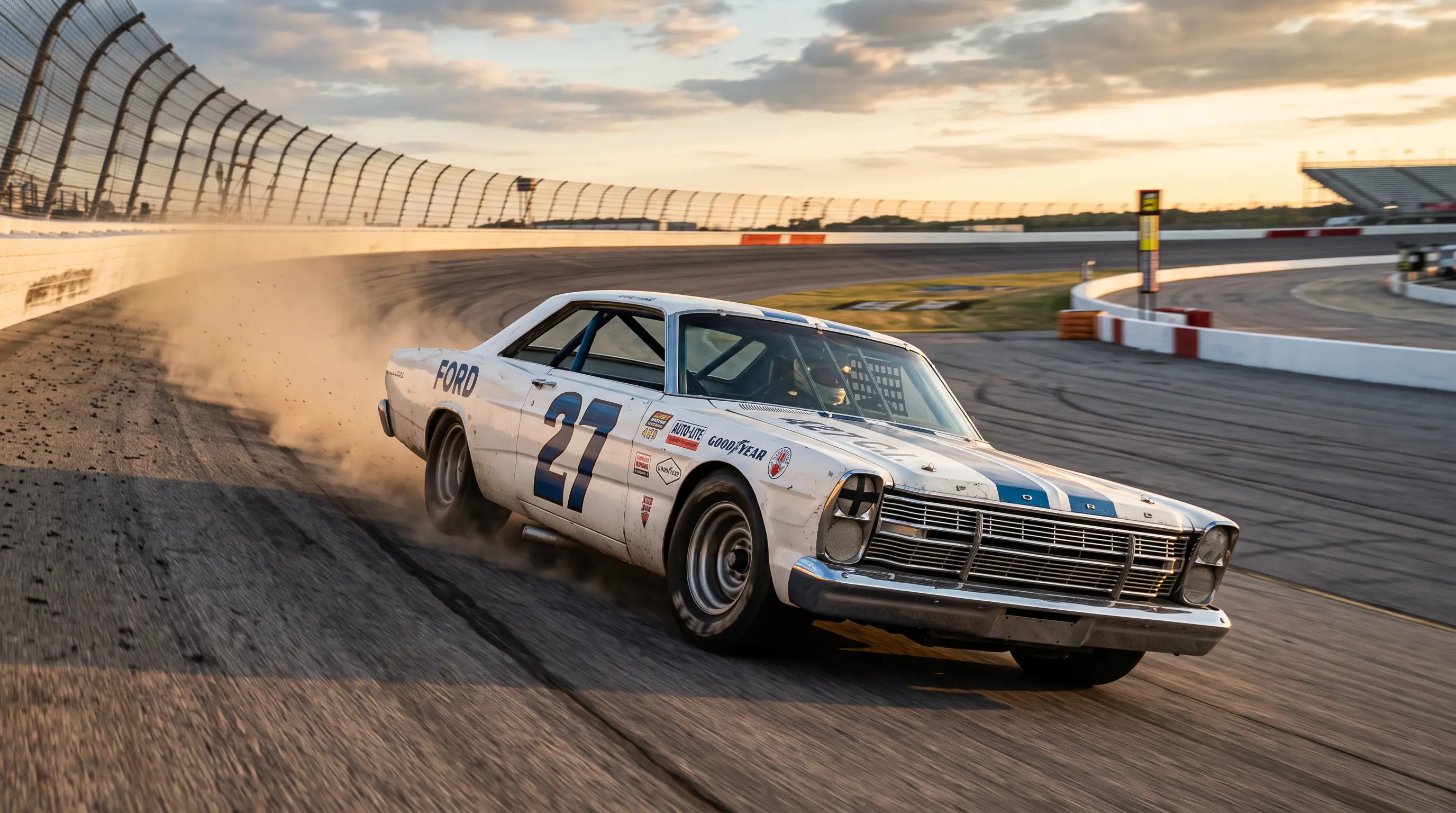
It's easy, looking back from a performance-obsessed hobby today, to skip past this part of the Galaxie's story in favor of the 427 and the NASCAR wins. But the interior comfort pitch is the 1966 ford galaxie story just as much as the racetrack is, maybe more, because it's the version of the car that actually sold in volume to families who never once cared about a quarter-mile time.
"Nobody kept a family car for twenty years because it was fast. They kept it because it was the quiet place at the end of a long day, and the 1966 Galaxie understood that better than people give it credit for."
- Nora Beckett
Small details that carried the whole idea
Look past the seats and the dashboard and the comfort story keeps showing up in smaller places. Door panels padded thick enough to double as an armrest without feeling hollow. A trunk lined rather than left as bare sheet metal, so a family's luggage didn't rattle across a bare floor on a long trip. Courtesy lights positioned so a parent could find a dropped toy in the back seat without waking a sleeping child. None of these details sold a single magazine cover, and none of them showed up in a horsepower chart, but together they explain why a 1966 Galaxie felt like a considered object rather than a collection of parts bolted together to hit a price point.
Even the ventilation system reflected the same thinking. Ford's flow-through design for the era pulled air through the cabin and out through vents near the rear window, a detail meant to keep the interior fresh on a hot afternoon without every window rolled down and the accompanying wind noise undoing all that sound insulation work. It's a small piece of engineering that only mattered because someone at Ford decided comfort meant more than a soft seat, it meant the whole environment inside the car working together.
What survives, and what doesn't
Original interiors from 1966 are fragile in specific ways. Vinyl dashboards crack under decades of sun long before the sheet metal shows its age, and the foam under bench seat covers compresses unevenly, leaving a car that looks original from three feet away but sits noticeably lopsided once you're in it. A cabin that still smells faintly of old vinyl and carpet rather than aftermarket reproduction materials is one of the quieter tells of an unrestored, honestly preserved car, and it's worth more to some buyers than a fresh repaint ever will be.
For anyone drawn back to this era after reading about the comfort details rather than the horsepower figures, the full story of the Galaxie nameplate covers how that living room philosophy carried across generations of the car, long after 1966 itself had passed. And if a real one, dashboard intact and bench seat still holding its shape, is what you're after, there are classic Galaxies on the market worth a closer look before the good original interiors get harder to find.
Sources and notes
- Ford's 1965-68 Galaxie Was Quieter Than a Rolls - Hagerty Media
- 10 Things Everyone Forgot About The 1965 Ford Galaxie And LTD - HotCars
- 1966 Ford Full Size Cars Fact Sheet - Over-Drive Magazine
- Car of the Week: 1966 Ford Galaxie 500 7-Litre convertible - Old Cars Weekly
- 1966 Ford Galaxie - Conceptcarz
- The 1966 Ford Galaxie 500: A Full-Size American Legend