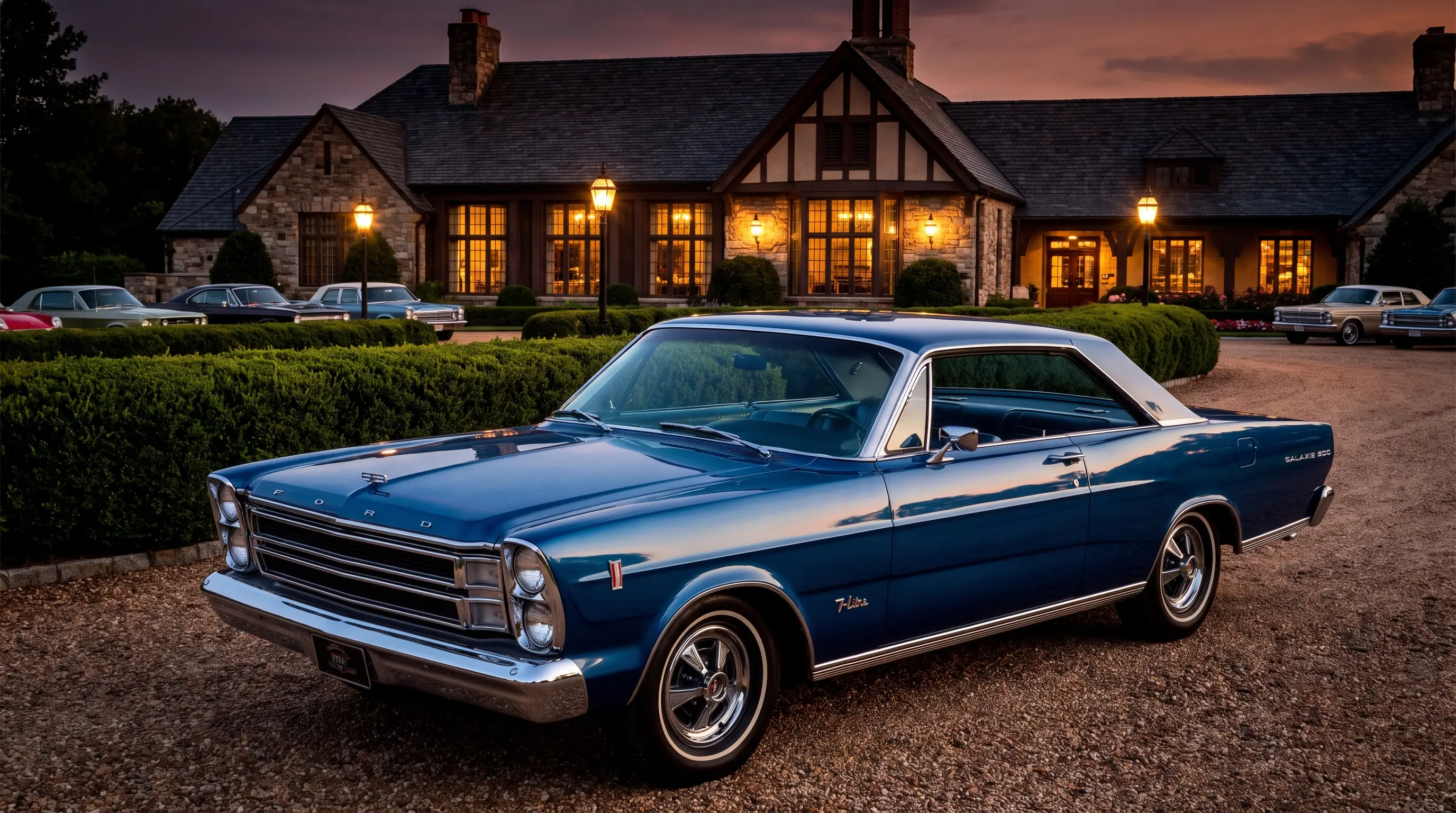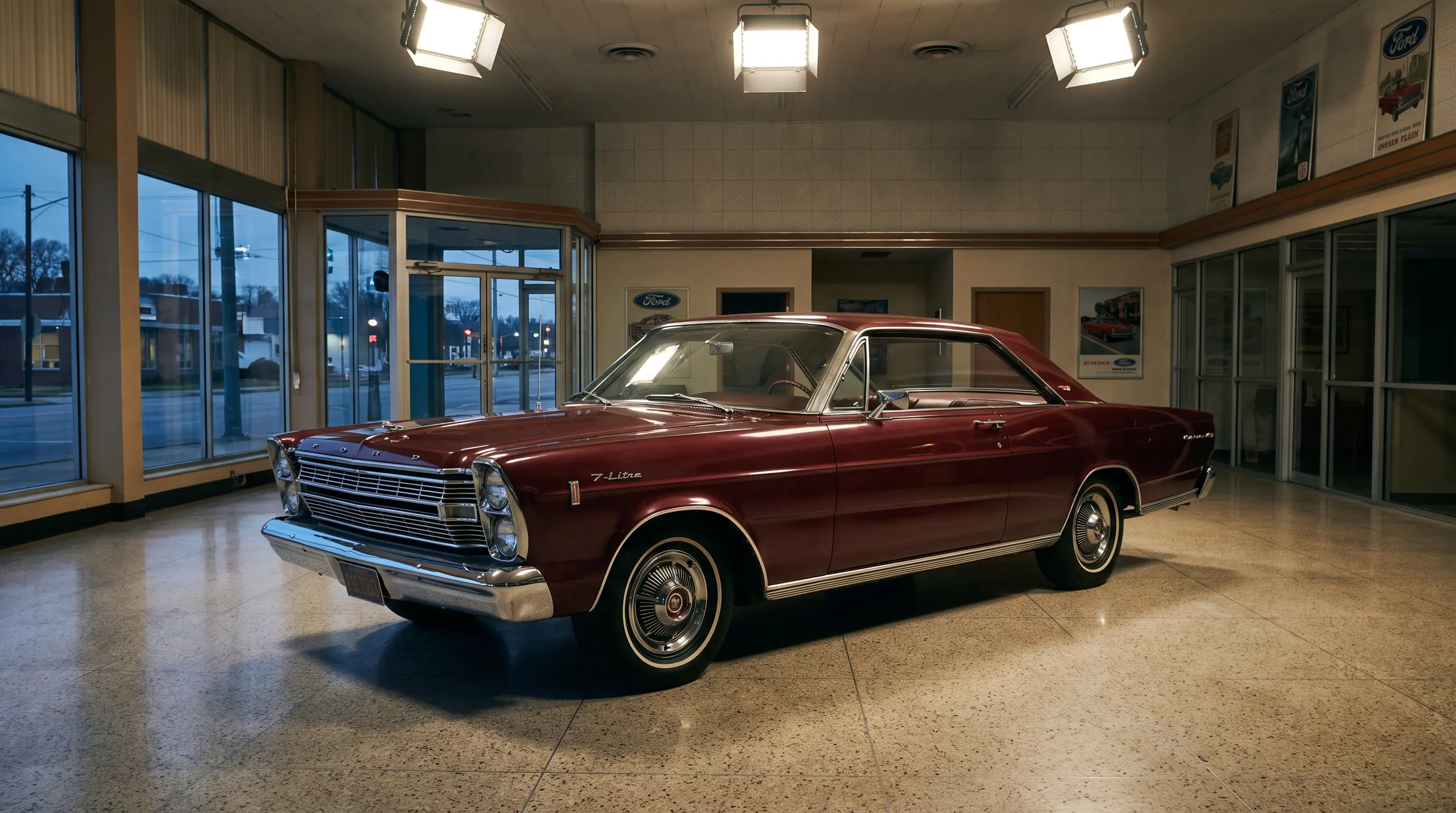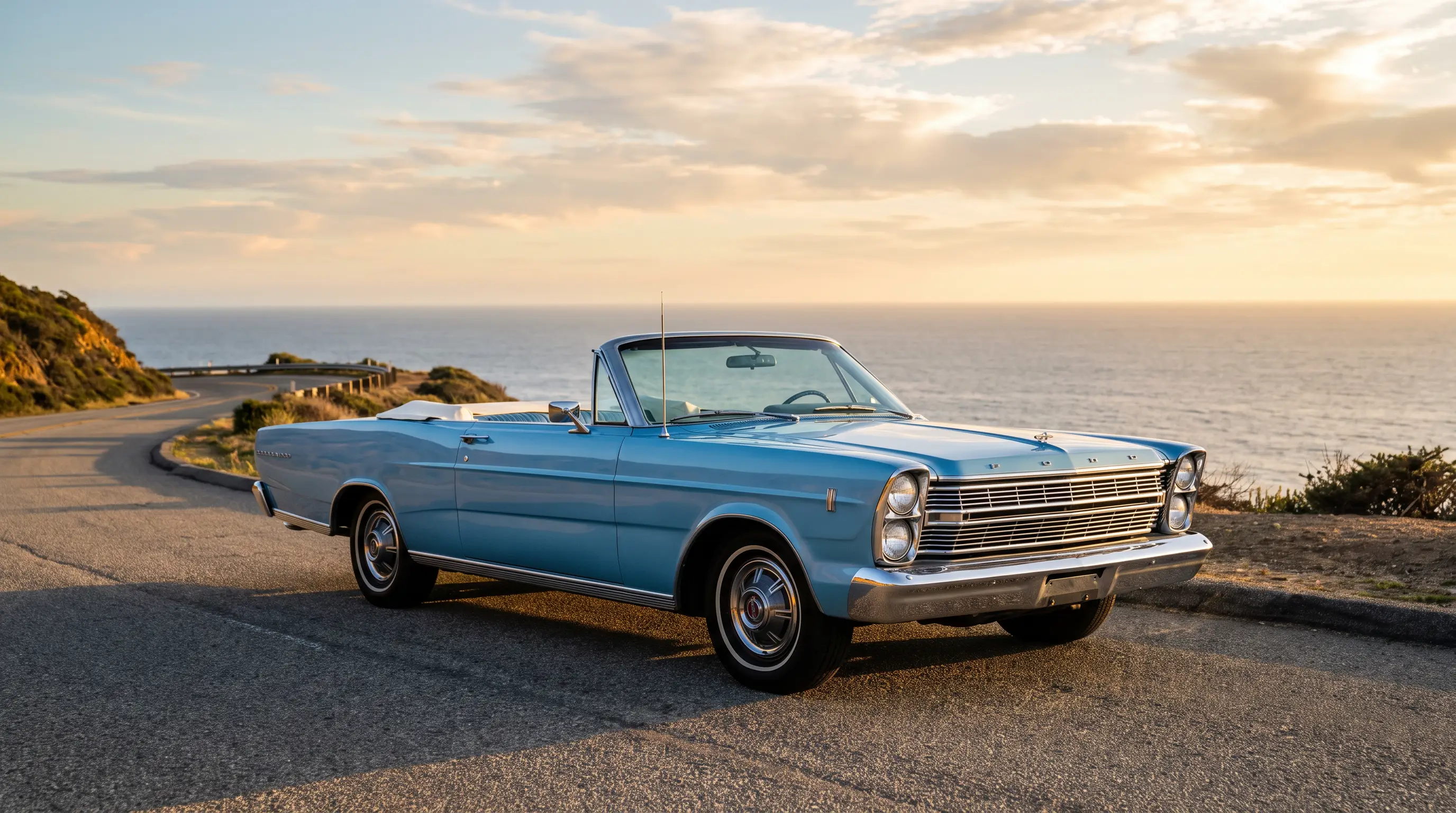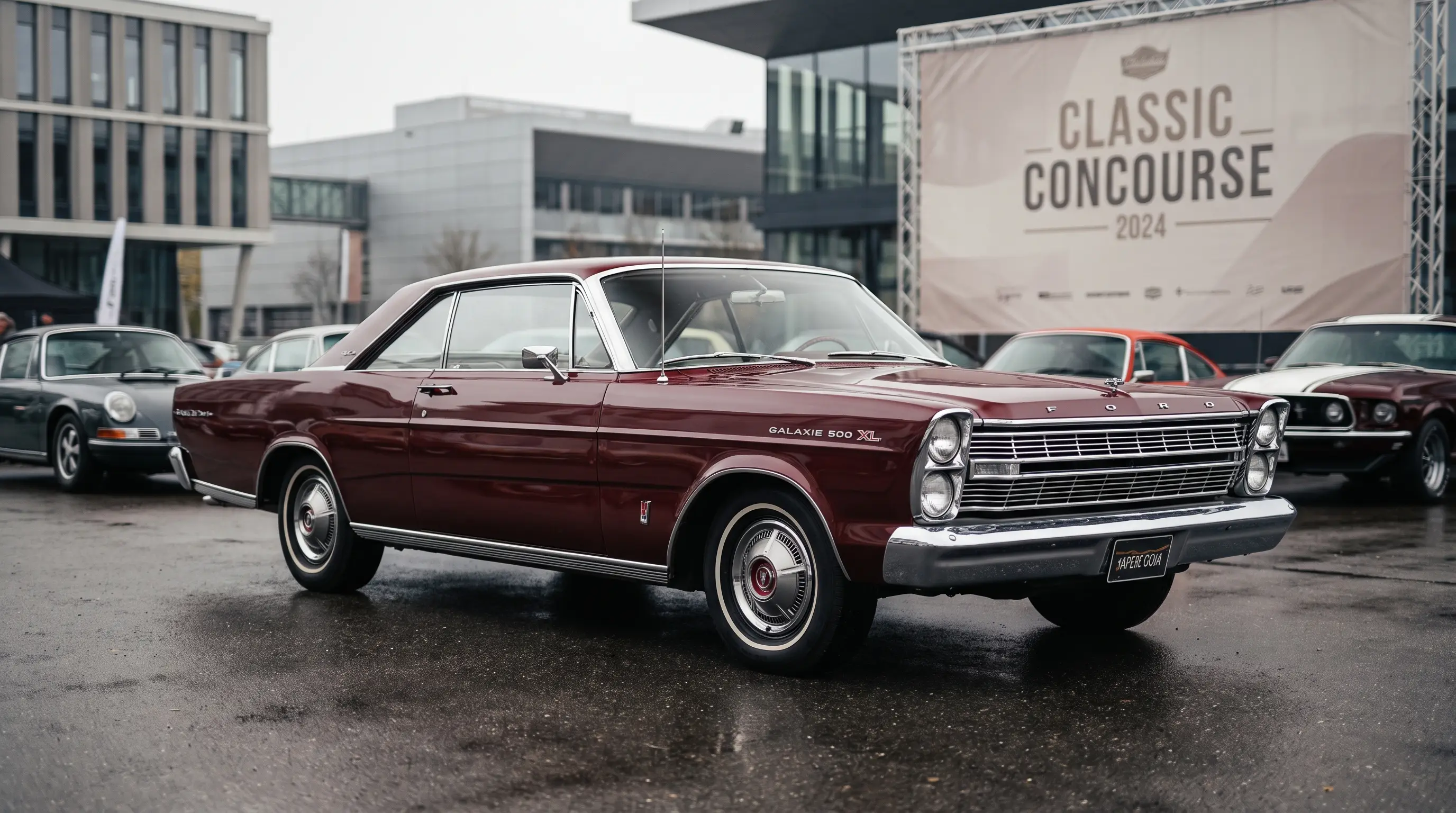
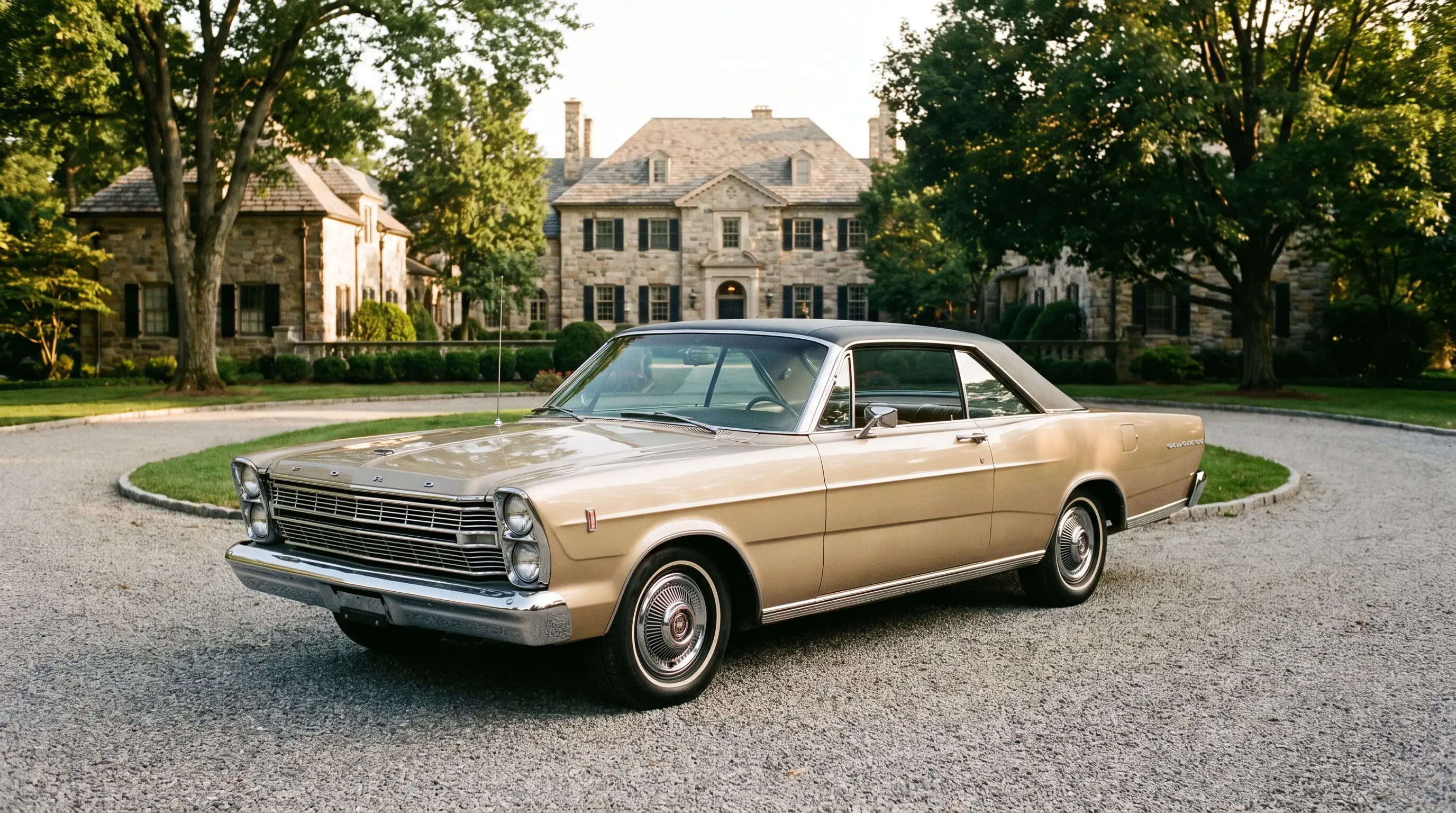
A fellow at a swap meet a few years back told me his father traded in a perfectly good Galaxie 500 in 1966 for what he swore was "basically the same car" with a fancier name. He was wrong, and he was also onto something. The Ford Galaxie 1966 LTD luxury ascent is one of those stories the car club circuit tells better than any brochure ever did, because it is really a story about how quickly a trim package can outgrow its parent nameplate if Ford lets it.
Where the LTD actually started
The LTD debuted for the 1965 model year as a top trim package within the Galaxie lineup, not a standalone model. It rode on the same full-size platform, wore Galaxie badging alongside its own LTD script, and offered a noticeably plusher interior than a standard Galaxie 500, think more sound insulation, richer upholstery, and trim details aimed squarely at buyers who wanted the size and presence of a full-size Ford without the more workaday feel of a base Galaxie. By 1966, the LTD had a full model year of sales data behind it, and Ford's own numbers made the direction obvious. Buyers wanted this level of comfort more than anyone at Ford had originally predicted, and the LTD's share of Galaxie-family sales climbed accordingly, with combined 1966 LTD sales landing somewhere in the neighborhood of 100,000 cars, a small fraction of overall Galaxie-family volume but a striking number for a trim package barely a year old, and well ahead of the roughly 11,000 buyers who chose the performance-oriented 7-Litre that same year.
Why the club circuit calls it a "coup"
Ask around at any Ford club meet and you will hear the LTD's rise described the same way, as the quiet trim package that ended up eating the Galaxie nameplate's lunch. That is not far from what actually happened. The LTD's success through 1966 set the stage for Ford to spin it off as its own separate model line starting in 1967, at which point "LTD" stopped being a Galaxie trim and became a nameplate in its own right, eventually anchoring Ford's full-size luxury offering for years afterward. The 1966 model year is the last one where you can point to an LTD and correctly call it a Galaxie LTD rather than simply an LTD, and that distinction matters to anyone tracing the lineage carefully.
What actually separated an LTD from a Galaxie 500
The differences were more about hushing the ride than adding horsepower. Extra sound deadening, upgraded upholstery choices not available on lesser trims, additional brightwork, and a general softening of the driving experience defined the LTD's appeal. Engine choices largely mirrored what was available across the rest of the Galaxie range, meaning an LTD buyer was not necessarily choosing a bigger engine, they were choosing a quieter, more comfortable way to sit in the same basic car. That is a subtler kind of upsell than the horsepower-driven pitch behind something like the 7-Litre, and it worked on an entirely different type of buyer, one shopping comfort and prestige rather than performance.
| Feature | Galaxie 500 | Galaxie LTD |
|---|---|---|
| Sound insulation | Standard | Upgraded |
| Upholstery options | Standard cloth/vinyl choices | Premium options exclusive to LTD |
| Badging | Galaxie 500 script | Galaxie LTD script, unique trim |
| Positioning | Mainstream full-size | Luxury-focused top trim |
Club members who collect the lineage of full-size 1960s Fords often treat 1966 as a hinge point for exactly this reason. It is the last year you can hold a single car in your hands and see the whole transition frozen mid-motion, Galaxie badge, LTD script, one trim package about to become its own brand. For the full context of how the LTD fit alongside every other 1966 trim, from base Galaxie through the 7-Litre flagship, where this started lays out the complete year.
"Every club has a guy who insists the LTD was always its own model. It was not, not in 1966, and that is exactly why the cars from this one year get passed around at meets like a piece of trivia nobody quite believes until they see the trim tag themselves."
- Wayne Coburn
What the LTD's rise says about Ford's buyers
Ford's own sales trends through the mid-1960s told a story the company could not ignore. Buyers across the full-size segment were increasingly willing to pay more for comfort and prestige even without a bigger engine underneath, and the LTD's climb inside the Galaxie lineup was the clearest signal of that shift landing on Ford's own sales floor. This was not unique to Ford. Chevrolet's Caprice followed a nearly identical path around the same period, launching as an Impala trim option before graduating into its own nameplate, evidence that the entire industry was reading the same signal from customers at roughly the same time. Full-size buyers wanted a quiet, well-appointed car more than they wanted another few horsepower, and manufacturers who had spent years chasing performance bragging rights suddenly found their most profitable trim packages were the plush ones, not the fast ones.
For Ford specifically, that meant the LTD's success through 1966 was not a fluke born of one good sales year. It reflected a genuine and lasting shift in what full-size car buyers valued, one that would go on to define an entire category of American luxury sedans built on mainstream platforms rather than dedicated luxury architecture. The Galaxie name eventually receded as the LTD nameplate took over that role entirely, but 1966 remains the year you can watch that handoff happening in real time, one comfort feature and one sales report at a time.
Talk to enough longtime Ford people and the LTD's ascent gets framed as an accident nobody at Ford quite planned for, a trim package that grew faster than the corporate org chart expected. Whether or not that is literally true, it captures something real about how the LTD moved from an option box to its own identity in barely two model years, faster than most nameplates manage in a decade.
Finding one and knowing what you have
Because the 1966 LTD sits at this exact hinge point in Ford's naming history, verifying one takes a bit more care than checking for badges alone. The trim tag and factory documentation will confirm whether a car left the assembly line configured as a genuine Galaxie LTD rather than a later parts-bin combination assembled to look the part. Club circles put real value on getting this right, since a documented 1966 LTD carries a specific, short-lived piece of Ford's naming history that a 1967 LTD, however nice, simply does not. Anyone hunting for one should treat the trim tag as the final word, not the badge on the trunk. Those exploring current inventory can look at classic Galaxie for sale and ask specifically about LTD documentation before assuming a listing photo tells the whole story.