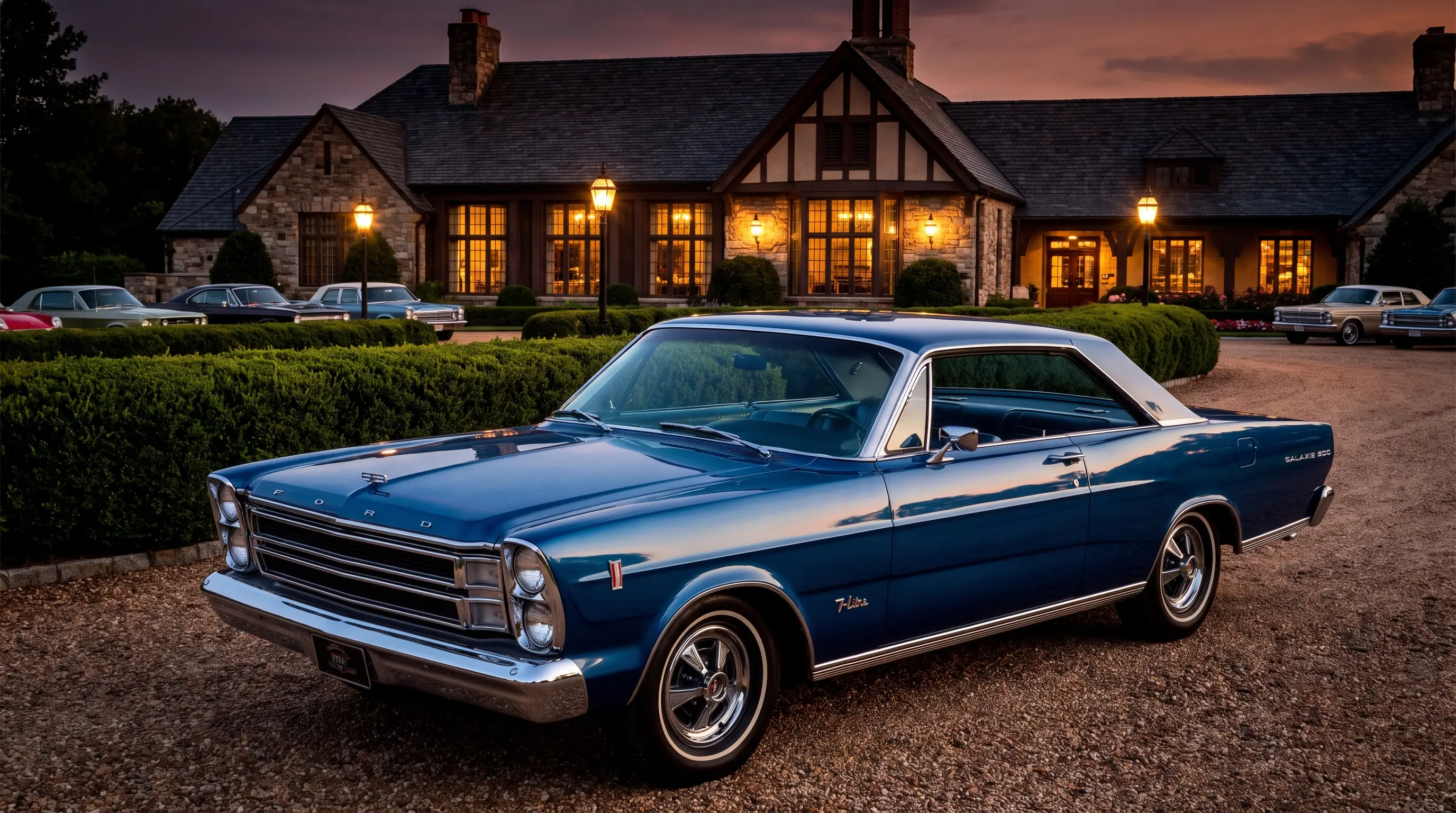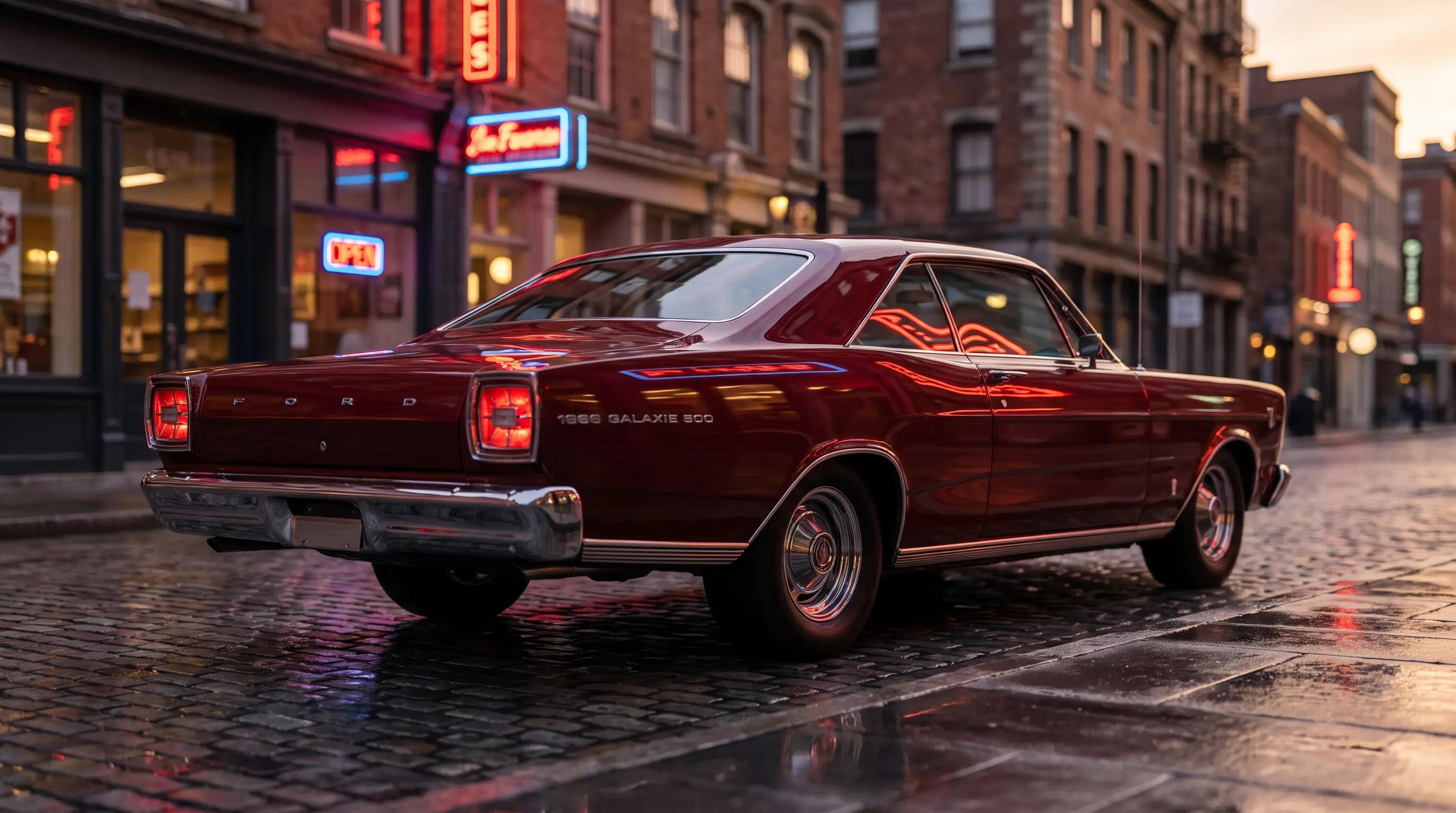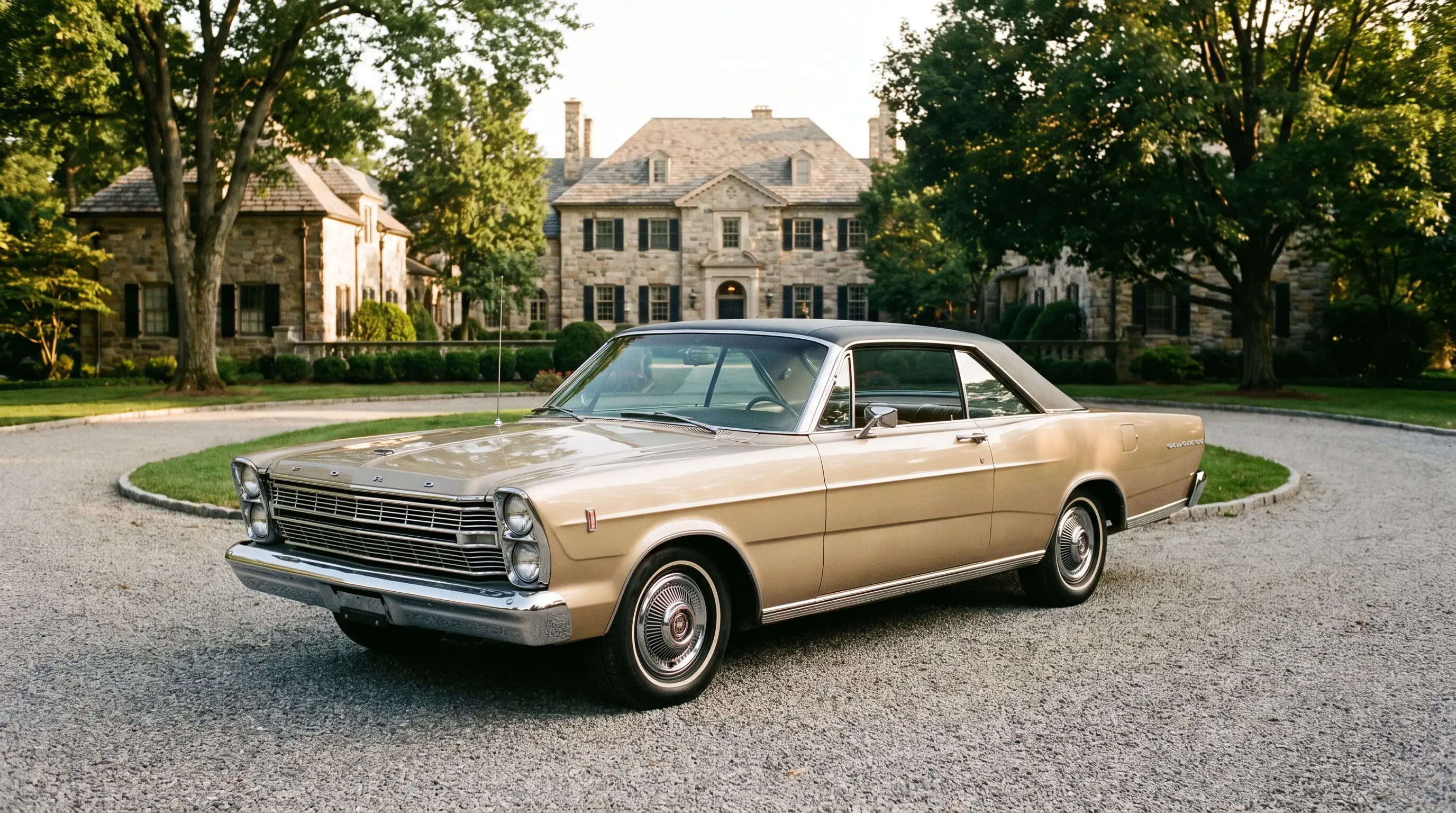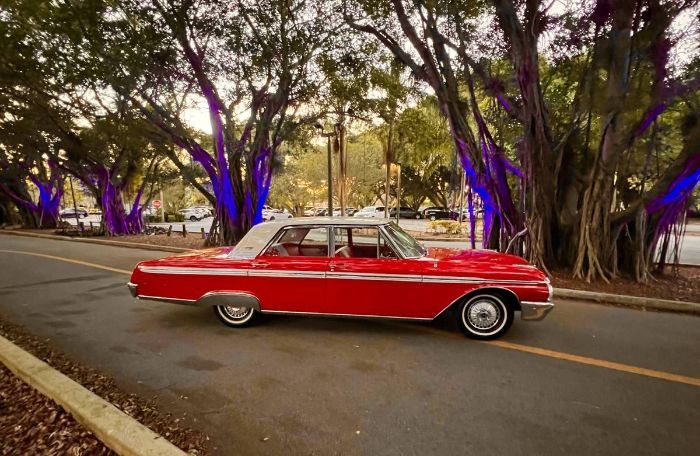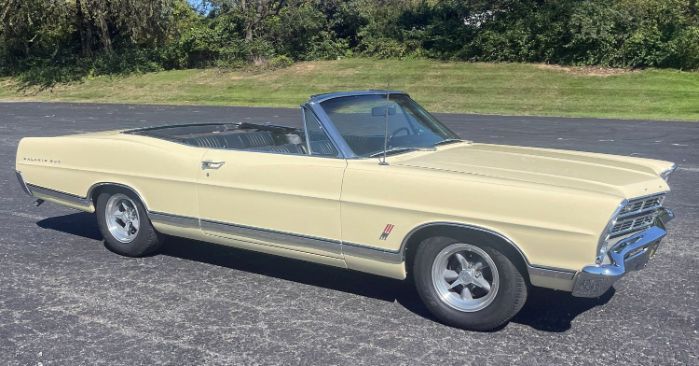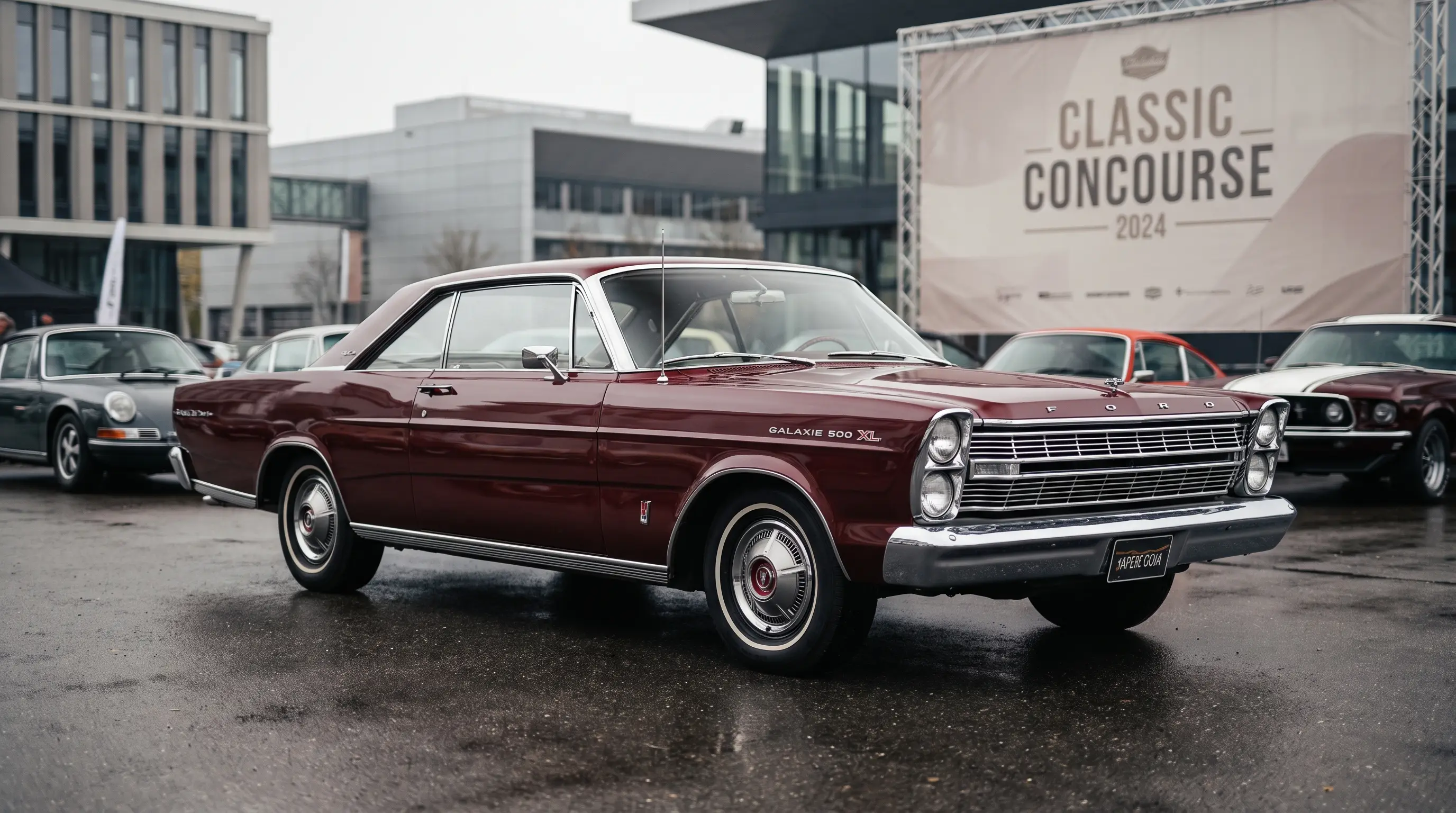
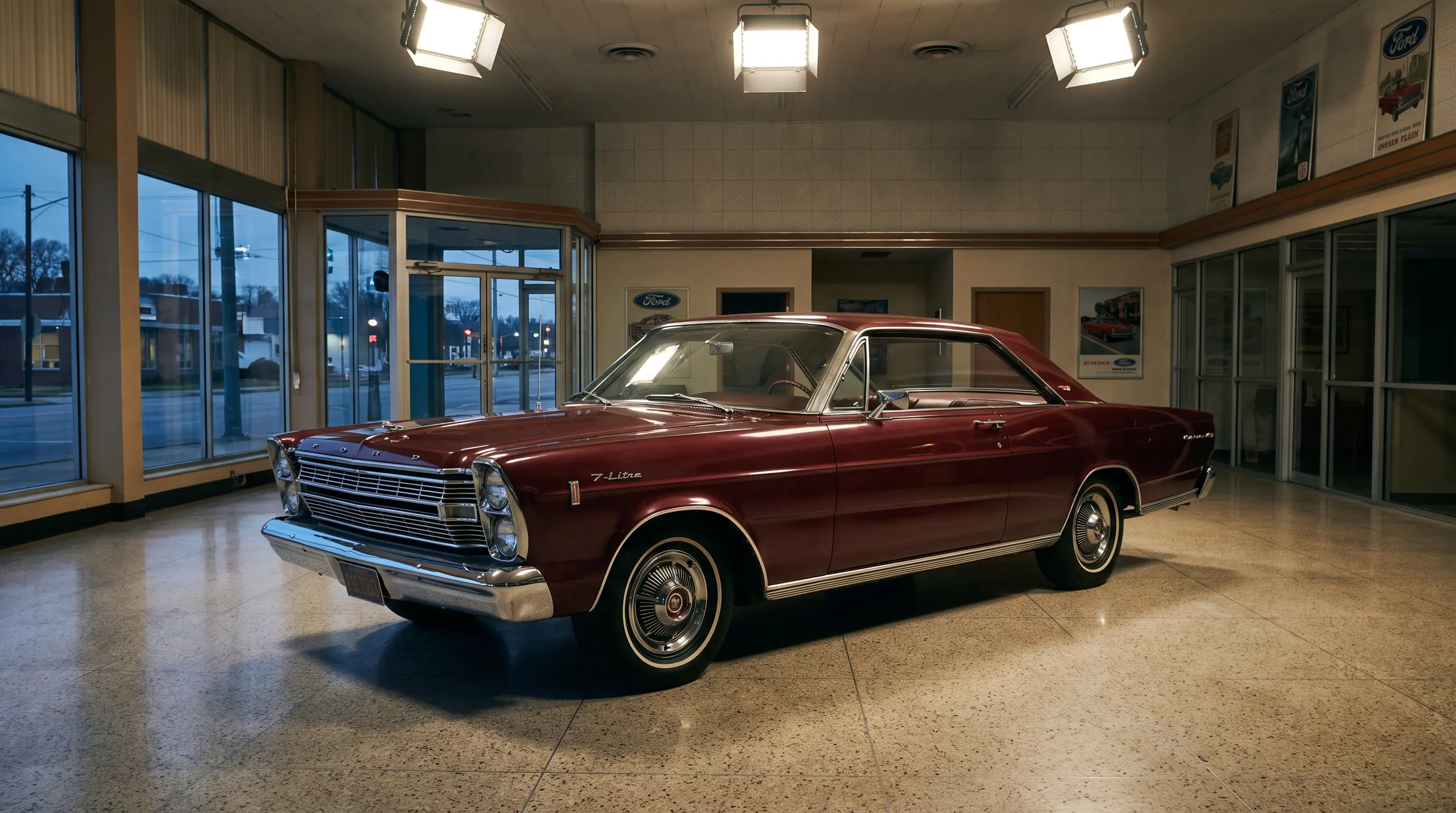
Anyone researching a 1966 Ford Galaxie eventually runs into the same puzzle. The Ford Galaxie 1966 7 Litre vs Galaxie 500 XL question sounds like it should have a clean answer, one trim above the other, but the archival record shows two overlapping products aimed at slightly different buyers rather than a simple hierarchy. Both were built on the same platform, both offered the big-block 428, and both competed for the same showroom floor space. Sorting out what actually separated them requires looking past the badges and into what Ford's order forms and factory literature actually specified.
Where the 500 XL came from
The 500 XL had been part of the Galaxie lineup since the early 1960s, established as the performance and sport-trim option within the Galaxie 500 range, identifiable by its bucket seats, console, and more assertive trim compared to a standard Galaxie 500. By 1966, the XL had a track record with buyers who wanted a car that looked sportier without stepping up to a specialty model. It was available across a broader range of engine choices than the 7-Litre, from six-cylinder base engines up through big-block options, which meant an XL buyer could tailor the car's performance level to their budget in a way a 7-Litre buyer could not.
What made the 7-Litre different on paper
The 7-Litre, introduced for 1966, sat above the XL specifically because Ford made the 428 standard equipment rather than an option. Where an XL buyer chose their engine from a range of displacements, a 7-Litre buyer got the big-block by default, paired with Cruise-O-Matic transmission and a specific trim package that included unique badging and interior appointments not shared with the standard XL. This distinction matters more than it might first appear. Ford was not simply offering a fancier trim level, it was offering a car pre-configured for buyers who had already decided they wanted the largest available engine and did not want to negotiate that decision at the order desk.
| Comparison point | Galaxie 500 XL | Galaxie 7-Litre |
|---|---|---|
| Standard engine | Range of options, six-cylinder up | 428 V8, standard |
| Body styles | Hardtop, convertible | Hardtop, convertible only |
| Positioning | Sport trim within Galaxie 500 | Range-topping flagship |
| Badging | XL script and trim | Unique 7-Litre badging |
Why buyers actually chose one over the other
Price and flexibility were the practical dividing lines. A buyer who wanted the sportier look of an XL but did not need or want to pay for the standard big-block engine could still get that XL trim with a smaller V8, keeping the purchase price lower. A buyer set on the 428 from the start, and comfortable paying the premium that came with it, had less reason to hesitate over the 7-Litre, since the flagship bundled in equipment that would have cost extra as options on an XL. In practice this meant the two trims drew somewhat different buyers even though they overlapped on the showroom floor, and dealers likely positioned the two as parallel choices depending on what a customer walked in wanting rather than a strict step-up sequence. For readers wanting the complete 1966 model year picture beyond just these two trims, more on the 1966 ford galaxie covers the full lineup.
How this plays out in the collector market today
Documentation matters more than badge prestige when evaluating either car for purchase. Because the XL was built in far greater numbers across a wider span of years and engine combinations, verifying an XL's original specification requires checking exactly which engine and options a specific car left the factory with, since an XL body could carry almost anything from the catalog. A 7-Litre, by contrast, is easier to verify precisely because Ford narrowed its own options so tightly, standard 428, standard automatic, hardtop or convertible only. That narrower specification window is part of why 7-Litre cars, despite being less famous than the XL nameplate, often draw close attention from researchers who specialize in Ford's full-size lineup of this era. Neither trim was built in large numbers by the standards of Ford's overall Galaxie output, and both remain underappreciated relative to how well-engineered and historically specific they actually are.
"People assume the 7-Litre must simply be a fancier XL, and the paperwork does not support that. They were parallel products aimed at slightly different buyers in the same showroom, and treating them as a strict hierarchy misses what Ford was actually doing with its full-size lineup in 1966."
- Sarah Whitfield
Interior and trim differences worth checking
Beyond engine and badge distinctions, the two trims diverged in smaller details that matter to a researcher trying to authenticate a specific car. The XL's interior treatment varied depending on which engine and options a buyer selected, since the trim was designed to flex across a wide price range. The 7-Litre's cabin, by comparison, followed a tighter script, bucket seats and console fitted as standard rather than dependent on option selection, with trim details specific to the flagship rather than shared wholesale with lesser Galaxie 500 models. A researcher comparing two cars side by side should expect an XL's interior specification to vary more from example to example than a 7-Litre's, simply because Ford gave XL buyers more room to customize their order.
Exterior badging follows the same logic. XL script appeared in locations consistent across the trim's production run, while 7-Litre badging was applied specifically to communicate the flagship's standing above the XL, not merely alongside it. A careful look at trim tags, badge placement, and documented factory options remains the only reliable way to confirm which trim, and which specific configuration within that trim, a given 1966 Galaxie actually left the factory wearing. Restorers who skip that step and rely on badges alone occasionally end up with a car wearing 7-Litre script over what the trim tag actually confirms is a modified XL, a mismatch that only surfaces once someone bothers to check the paperwork against the metal.
For a researcher or buyer trying to place a specific 1966 Galaxie within this picture, the safest approach is always the trim tag and factory documentation rather than assumptions based on badges alone. Both trims can be verified with the same diligence, and both reward a buyer who does the homework before assuming a car is exactly what its exterior badges claim. Anyone shopping the current market for either configuration can browse classic Galaxies on the market and compare documented examples of each trim side by side, which is the fastest way to understand the difference in person rather than on paper alone. This history traces back to where this started, the broader Galaxie nameplate that both trims eventually grew out of.