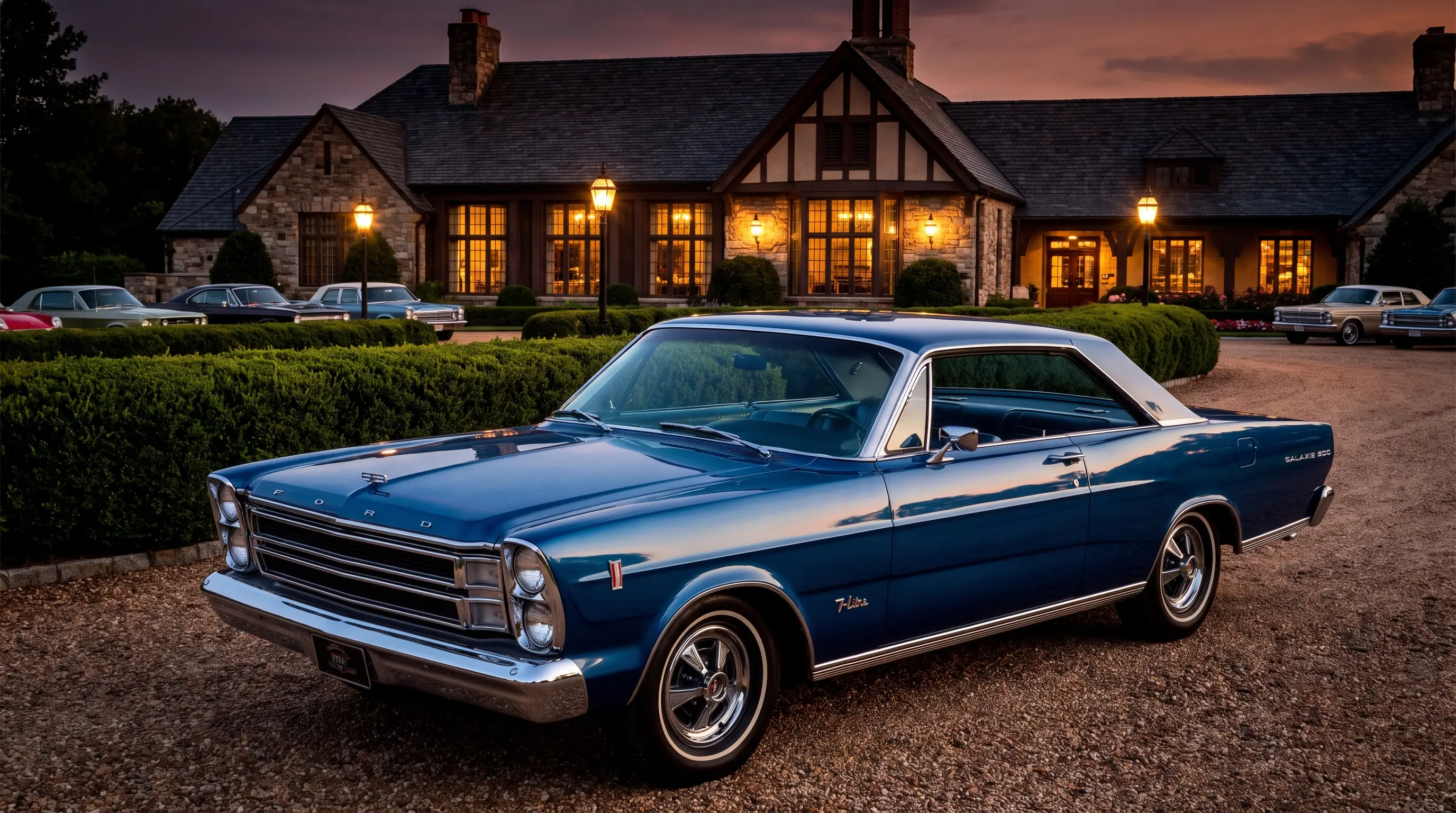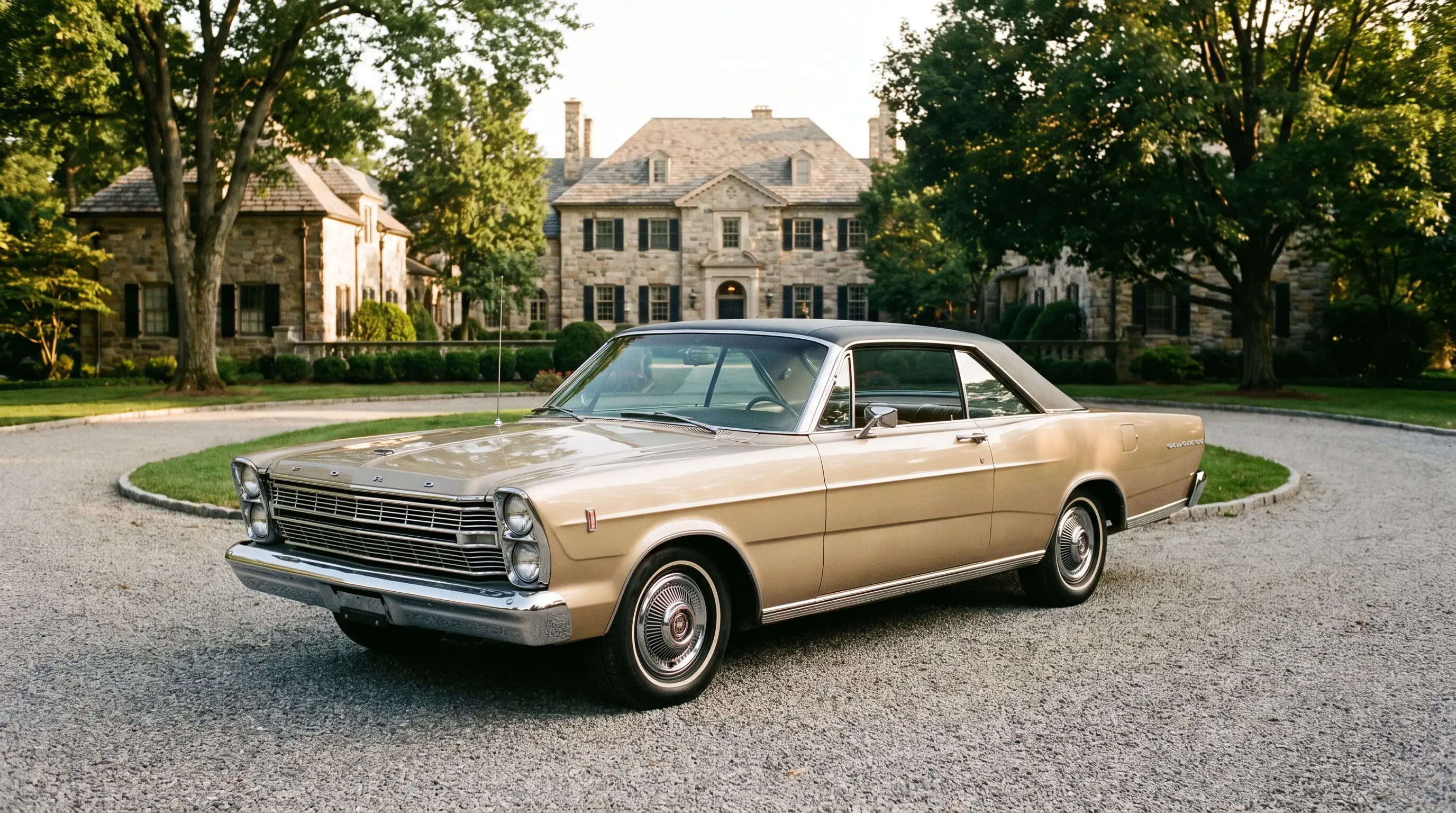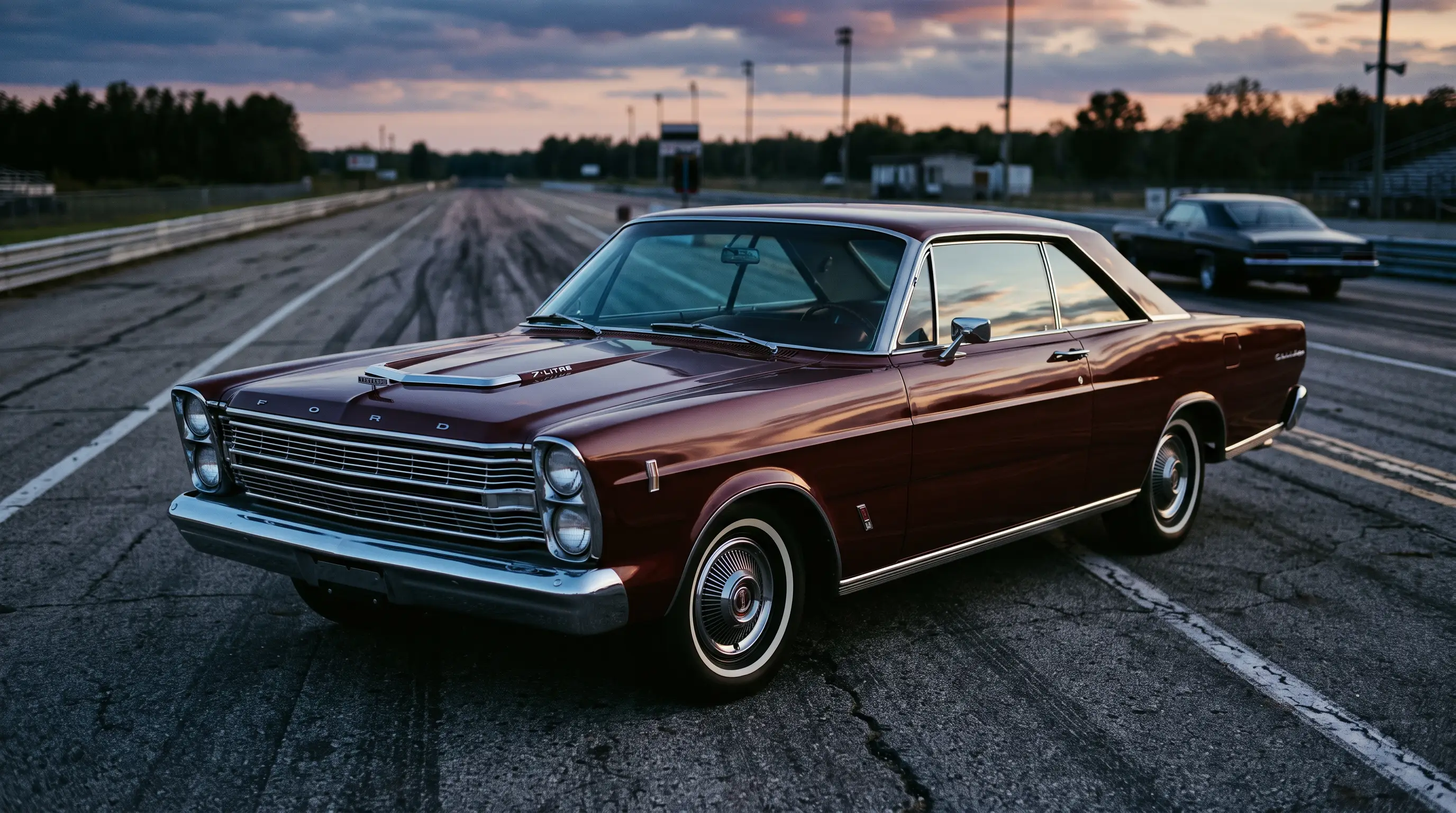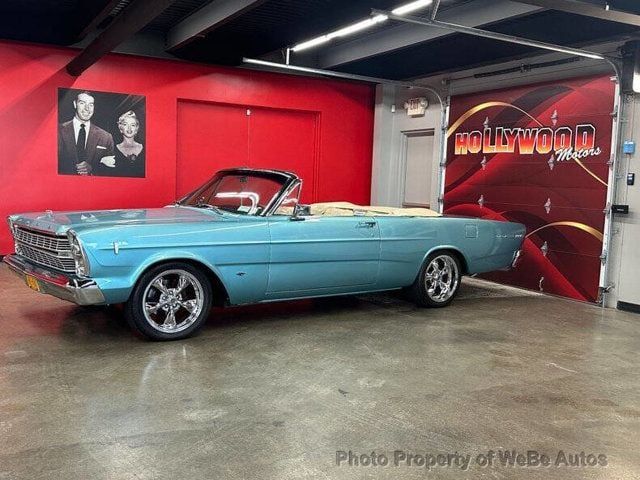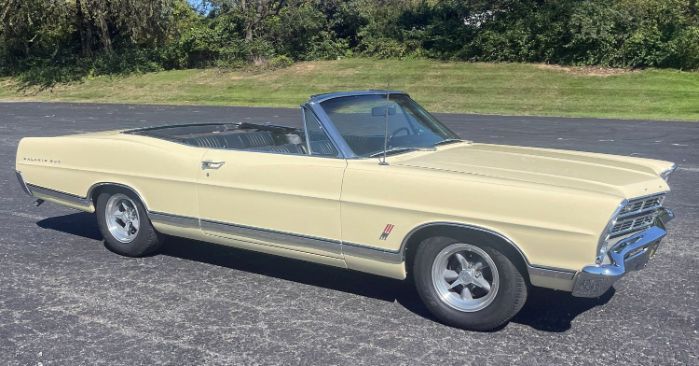
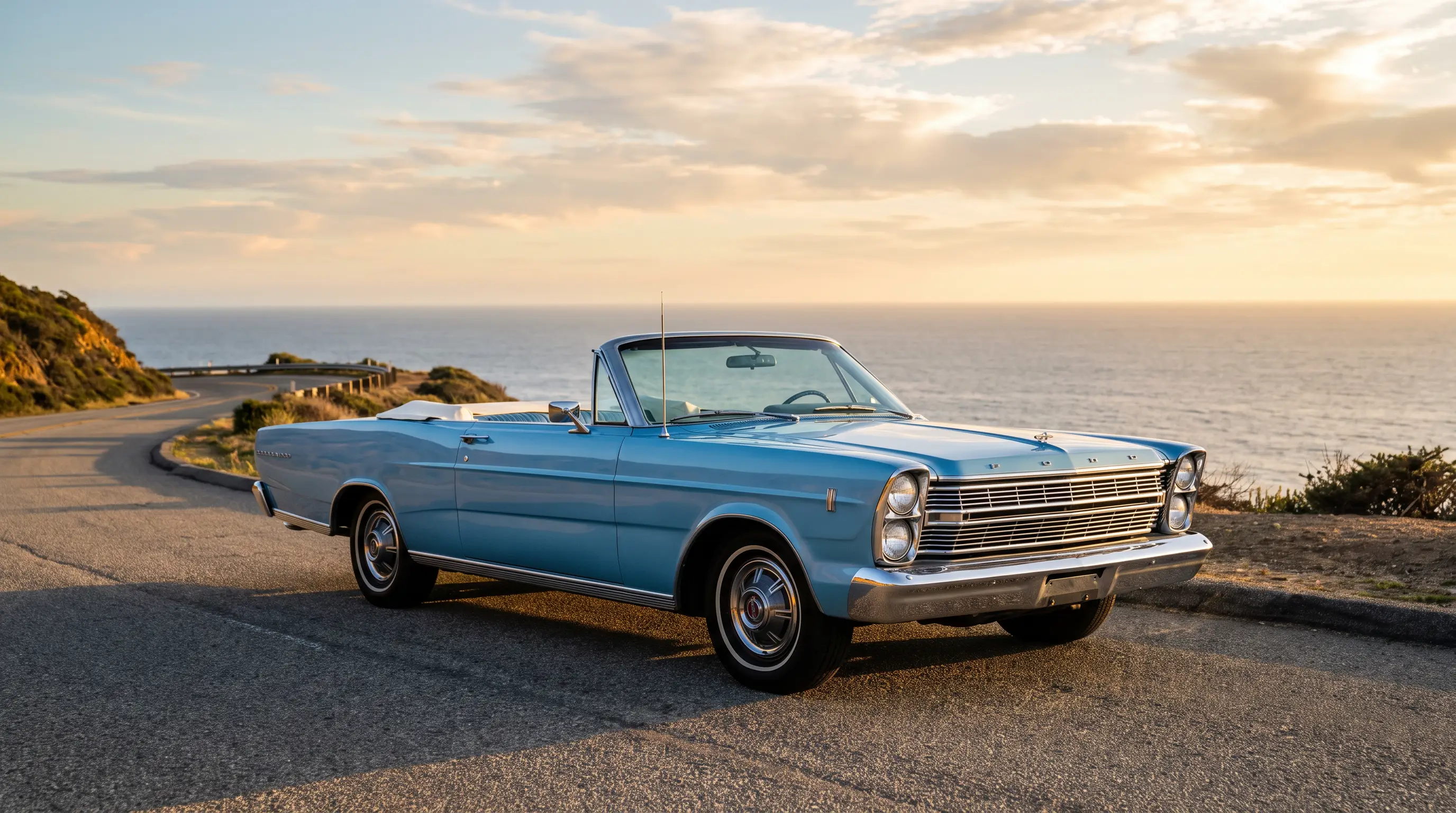
By 1966, Ford had quietly retired the Sunliner name from its own paperwork, but collectors and researchers still use it as shorthand for the full-size Galaxie convertible body style, and the Ford Galaxie 1966 sunliner convertible feature deserves examination on its own terms rather than as a footnote to the hardtop lineup. The open-top full-size Ford occupied a specific and shrinking niche by the mid-1960s, a market being squeezed from below by smaller specialty convertibles and from the side by buyers increasingly drawn to hardtop styling that offered nearly the same visual drama without the complexity of a folding top.
A body style on borrowed time
Convertible sales across the American industry had been softening through the first half of the 1960s as air conditioning became more common and buyers found other ways to enjoy open-air motoring without sacrificing daily practicality. Ford's full-size convertible, regardless of which trim badge it wore that year, was already a niche product by 1966, built in far smaller numbers than the equivalent hardtop or sedan body styles. That scarcity was baked into the production planning from the start, not a later accident of survival rates, which is an important distinction for anyone trying to understand why these cars command attention today. Ford was not building convertibles in volume and losing most of them to attrition, it was building relatively few in the first place.
What the big-block convertible actually offered
Available across Galaxie 500, 500 XL, and the 7-Litre flagship, the 1966 convertible body style could be paired with the full range of Galaxie engines, including the 428 that anchored the top of the lineup. A 428-powered Galaxie convertible combined the flagship's low-end torque with an open-air driving experience that highlighted the engine's character in a different way than a closed hardtop did, with more of the exhaust note and mechanical presence reaching the driver directly, and even at a highway cruise the low, steady pull of the big-block came through the open cabin in a way a sealed roof simply muffles. For a full look at how the standard 428 behaved across Galaxie body styles that model year, the full story covers the entire lineup's mechanical specification.
| Spec | 1966 Galaxie Convertible |
|---|---|
| Available trims | Galaxie 500, 500 XL, 7-Litre |
| Available engines | Full Galaxie range, including 428 |
| Top mechanism | Power-operated folding top standard on upper trims |
| Production volume | Substantially lower than hardtop equivalents; the Galaxie 500 convertible found about 27,000 buyers for 1966, the 7-Litre convertible only around 2,400 |
Restoration and survival realities
Convertibles face structural challenges hardtops do not, since removing a fixed roof changes how a body shell handles stress and flex, and Ford engineered reinforcement into the convertible's frame and rocker panels to compensate. Those reinforcements add weight and complexity that make a proper convertible restoration a more involved and more expensive undertaking than restoring an equivalent hardtop. Top mechanisms, power-operated on most upper-trim 1966 Galaxie convertibles, introduce another layer of mechanical complexity that a hardtop buyer never has to think about, from hydraulic cylinders to the folding frame itself. Anyone evaluating a convertible for purchase should budget accordingly, since a convertible with a tired top mechanism or compromised structural reinforcement is a meaningfully bigger project than the same issue would represent on a hardtop, and rust hiding in reinforced rocker panels or the frame members supporting the folding top can be far more expensive to address correctly than the same corrosion would be on a fixed-roof car.
"A 1966 Galaxie convertible was never a volume car, even brand new. Ford built these in numbers that already reflected a shrinking market for open-top full-size cars, which is exactly why a documented, well-preserved example carries more weight with serious collectors than people often expect."
- Sarah Whitfield
The Sunliner name itself
The Sunliner badge dates back to the 1950s, when Ford used it to distinguish its full-size convertible from the closed-body Fairlane and Galaxie models sharing the same platform. By the early 1960s the name had already begun fading as Ford consolidated its full-size lineup under the Galaxie badge across all body styles, hardtop, sedan, and convertible alike, rather than giving the convertible its own separate identity. Officially, a 1966 buyer signed paperwork for a Galaxie convertible, not a Sunliner, and Ford's own showroom literature from that year does not use the older name. Enthusiasts and researchers kept the term alive anyway, partly out of habit and partly because it remains a useful, unambiguous way to refer to the convertible body style across model years without constantly specifying trim level. That informal survival of a retired factory name is itself a small piece of how collector vocabulary can diverge from official documentation over time, and it is worth knowing the distinction when reading older club newsletters or classified ads that use Sunliner freely for a car whose factory paperwork never mentions the word.
This naming quirk occasionally causes confusion for newer collectors searching historical records, since a period parts catalog or service bulletin referencing "Sunliner" components may in fact apply to any full-size Ford convertible of the era regardless of what badge was on the trunk that particular year. Cross-referencing the actual model year and trim level against any Sunliner-labeled documentation is a small but important step in avoiding parts or specification mismatches during a restoration.
What documentation adds to value
Because convertibles were built in smaller numbers and often modified or hot-rodded more aggressively than sedans across their working lives, an unmolested, well-documented example carries outsized value relative to a comparable hardtop. Trim tags, build sheets, and any surviving factory paperwork matter more here than on almost any other Galaxie body style, since verifying original engine and trim combination on a convertible protects against the far more common practice of upgrading engines or swapping trim on these cars over the decades to chase a more desirable specification after the fact. A buyer prioritizing documentation over showroom shine will generally end up with the more historically sound purchase, even if the paperwork trail takes longer to track down than simply admiring the paint.
For collectors specifically chasing the combination of open-top body style and big-block engine, the 1966 model year offers a genuine and relatively well-documented option within Ford's full-size lineup, provided the homework gets done before the purchase rather than after. Those exploring what is currently on the market can browse classic Galaxie listings and ask pointed questions about documentation on any convertible under consideration, since a seller who can produce a build sheet, trim tag, or period paperwork alongside good photographs is offering something meaningfully more valuable than a clean car with no history attached, even when the asking prices look similar at first glance.