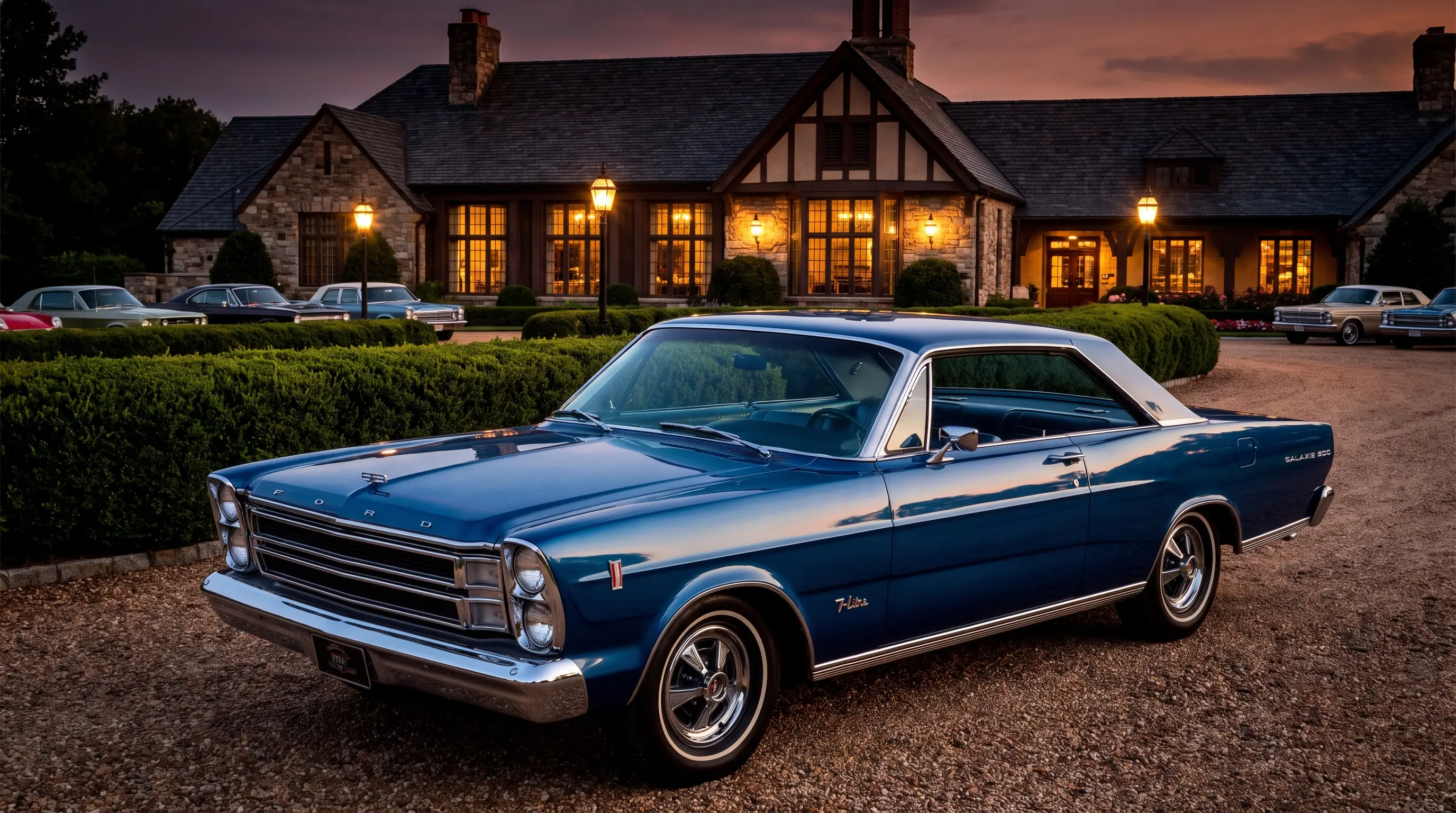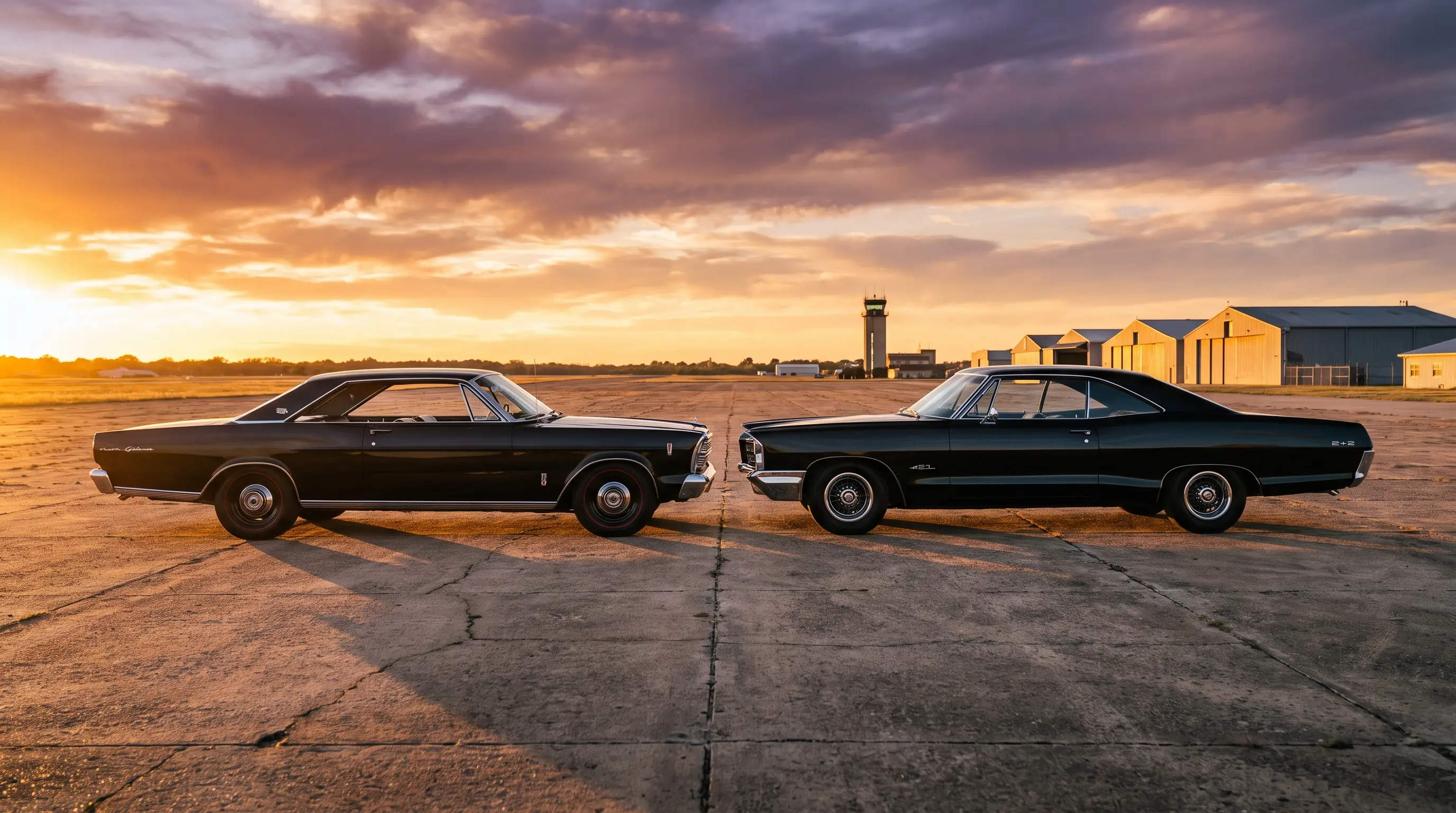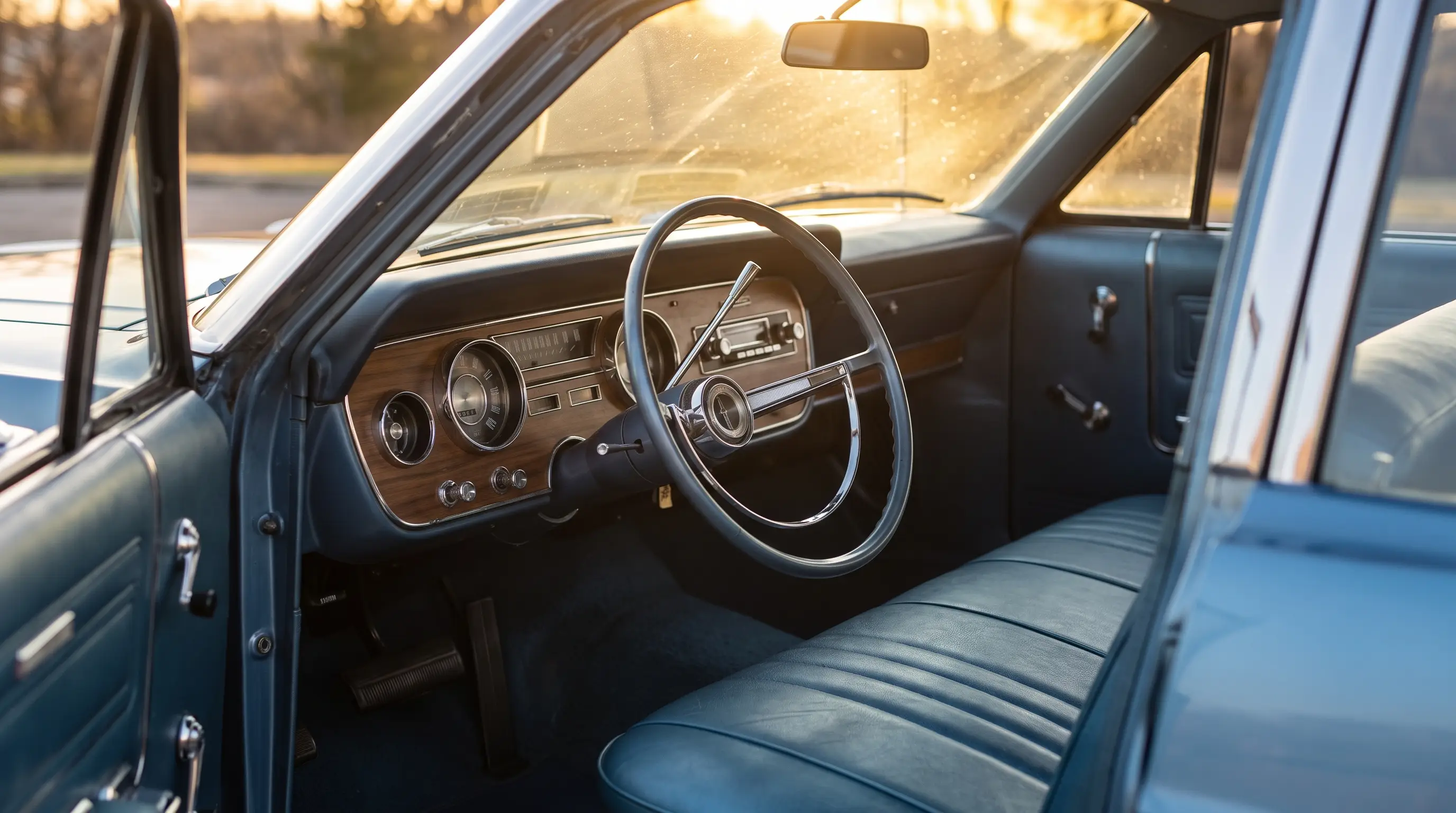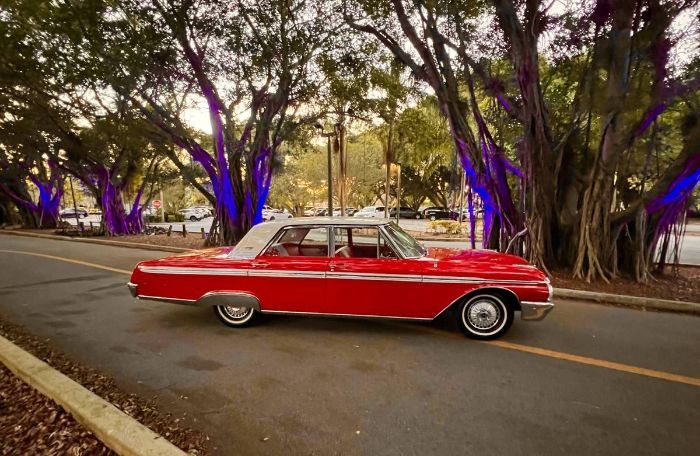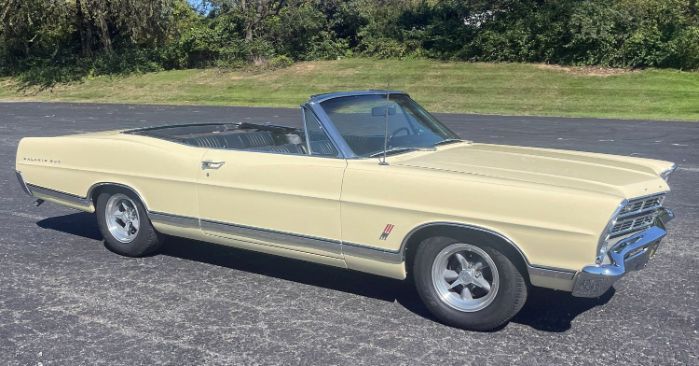
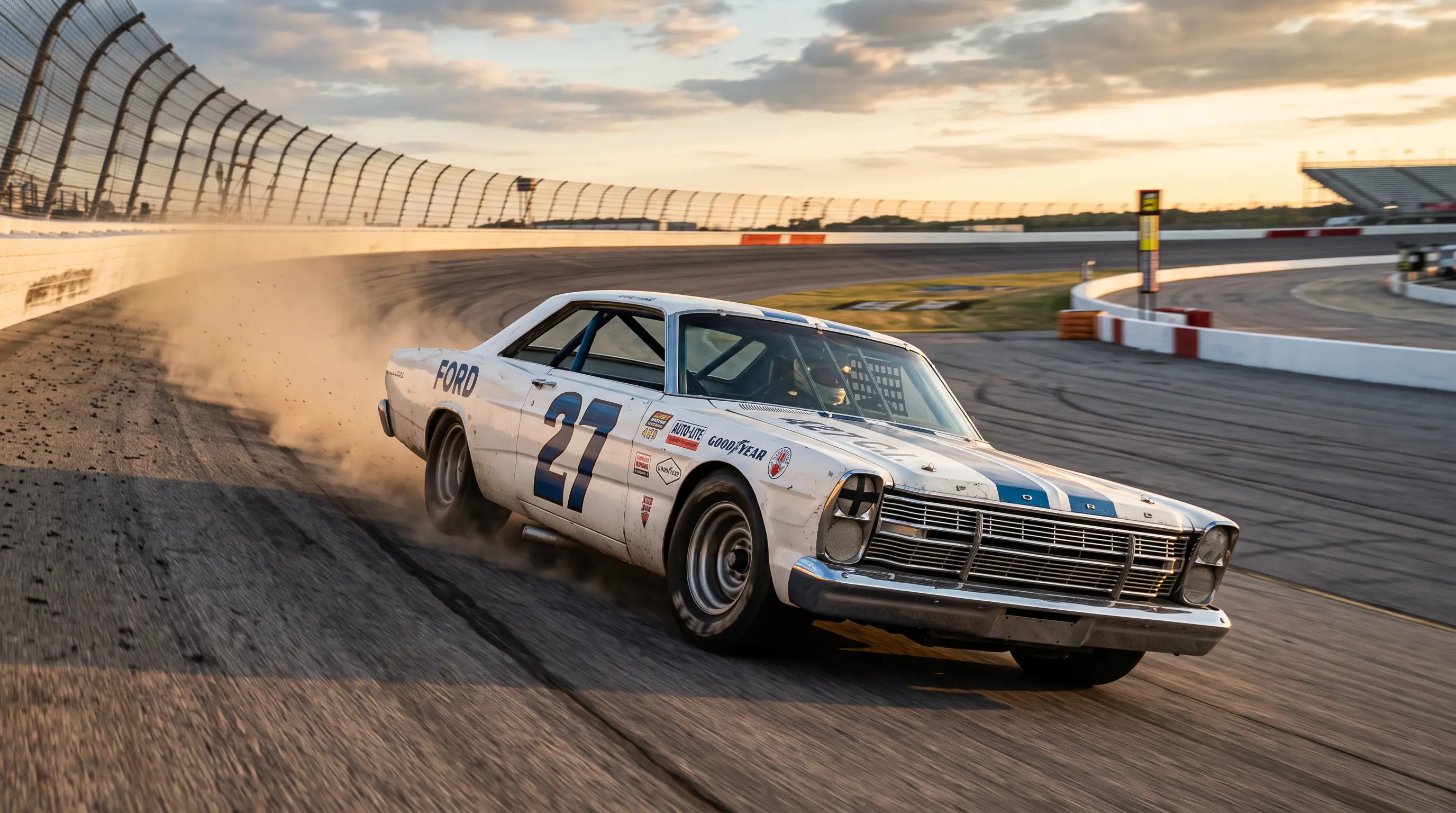
The Ford Galaxie in 1966 NASCAR racing came down to one number: zero. That is how many superspeedway wins the factory Fords banked in the first third of the season, and it had nothing to do with the car's speed. It had to do with a rulebook fight over the 427, and Ford sitting out races rather than run at a competitive disadvantage. The full 1966 NASCAR and 427 story is less "Ford dominates again" and more "Ford gets even before summer," and the numbers back that up better than any highlight reel.
Context matters here, because 1965 had already been a lopsided year. Ford's 427 side-oiler ran without a serious Mopar answer for most of that season since Chrysler had pulled its hemi teams out over the same weight rules fight, just flipped around. So 1966 opened with the sides reversed: Chrysler back in with a lightened hemi, Ford stuck with an engine NASCAR had effectively legislated out of contention. Two seasons, two boycotts, one ongoing argument about how much a cylinder head design should weigh before it's allowed to compete. The Galaxie was the car caught in the middle both times.
Why the 427 wasn't the problem, the rulebook was
Ford's 427 side-oiler, in factory Galaxie trim, was never the issue on raw output. The engine that actually caused the fight was the SOHC 427, the "Cammer," which NASCAR effectively priced out of competition by assigning it a punishing minimum weight, roughly 10.36 pounds per cubic inch versus 9.36 for other engines. Chrysler's hemi got a lighter break for 1966 while Ford's overhead-cam design stayed shut out. Ford's response was blunt: on April 7, 1966, the company announced it was pulling factory backing from NASCAR for the rest of the season rather than run underpowered wedge-head 427s against Hemis with a favorable weight break. That is not folklore, that is a documented boycott, and Ford stayed out for roughly four months before returning at Atlanta in early August.
Ford still ran the Daytona 500 that February, before the boycott began, and lost it to Richard Petty's Plymouth. The real absence came after, through the spring and most of the summer.
The wedge 427 that actually raced
Once Ford teams came back, the engine turning laps in the Galaxie wasn't the banned Cammer, it was the conventional wedge-head 427, rated at 425 horsepower in dual four-barrel street form and tuned considerably harder for competition. Two four-barrel carburetors, solid lifters, and a bottom end built to survive 500 miles at wide open throttle. No electronics, no traction control, just displacement and rpm nerve. That's the package that had to close the gap Chrysler opened with a fully legal hemi and no weight handicap.
| Spec | 1966 Galaxie 427 (street, dual quad) |
|---|---|
| Displacement | 427 cubic inches |
| Carburetion | Dual four-barrel |
| Advertised horsepower | 425 hp |
| Valvetrain | Overhead valve, solid lifters |
| NASCAR eligibility, 1966 | Legal; SOHC "Cammer" 427 was not |
Who actually turned laps
By the time Ford's boycott ended in August, its cars caught up fast, and the record shows Galaxies and Fairlanes winning roughly half of the remaining races before the season closed. Say Ford "swept" 1966 and you're wrong; say Ford "recovered" and you're closer to the truth. The recovery is the more interesting number anyway, because it shows a factory team clawing back market share on the track after losing the opening argument off it. That's a better story than another unbeaten season, because it actually happened the hard way.
The car itself hadn't changed much from 1965 in body or chassis, this was a facelift year, not a redesign year, so the racing story is really about the powertrain fight, not new sheet metal finding extra grip. That's worth saying plainly because it's tempting to credit a win total to styling changes that had nothing to do with it. The 1966 Galaxie's body was carried over with minor trim differences; the 427 argument was the entire plot.
Short track versus superspeedway, a different fight
Not every 1966 race played out the same way. Short tracks rewarded chassis setup and driver patience more than raw horsepower, and Fords that couldn't out-muscle a hemi on a mile and a half oval could still compete on a half-mile bullring where handling mattered as much as displacement. That split matters if you're trying to read a single win-loss column and call it the whole season. A Galaxie built for Daytona and a Galaxie built for a Saturday night short track were tuned to different priorities even with the same basic 427 underneath the hood.
What the boycott actually cost, in plain numbers
Every race missed is a race with zero points, zero purse money, and zero exposure for the dealers paying for the program. Add those up across a boycotted stretch and you get a real, countable dent in a season that otherwise had the engine, the chassis, and the drivers to compete. That's the number that matters more than any single trophy count: races entered versus races available. A car doesn't win what it doesn't run, and for a chunk of 1966, the Galaxie didn't run at all.
Want the whole picture on how this fits into the 1966 Galaxie's full year, not just the NASCAR fight? That's where the street car, the trim levels, and the sales numbers all line up next to the racing story.
Reading the 427 Galaxie today
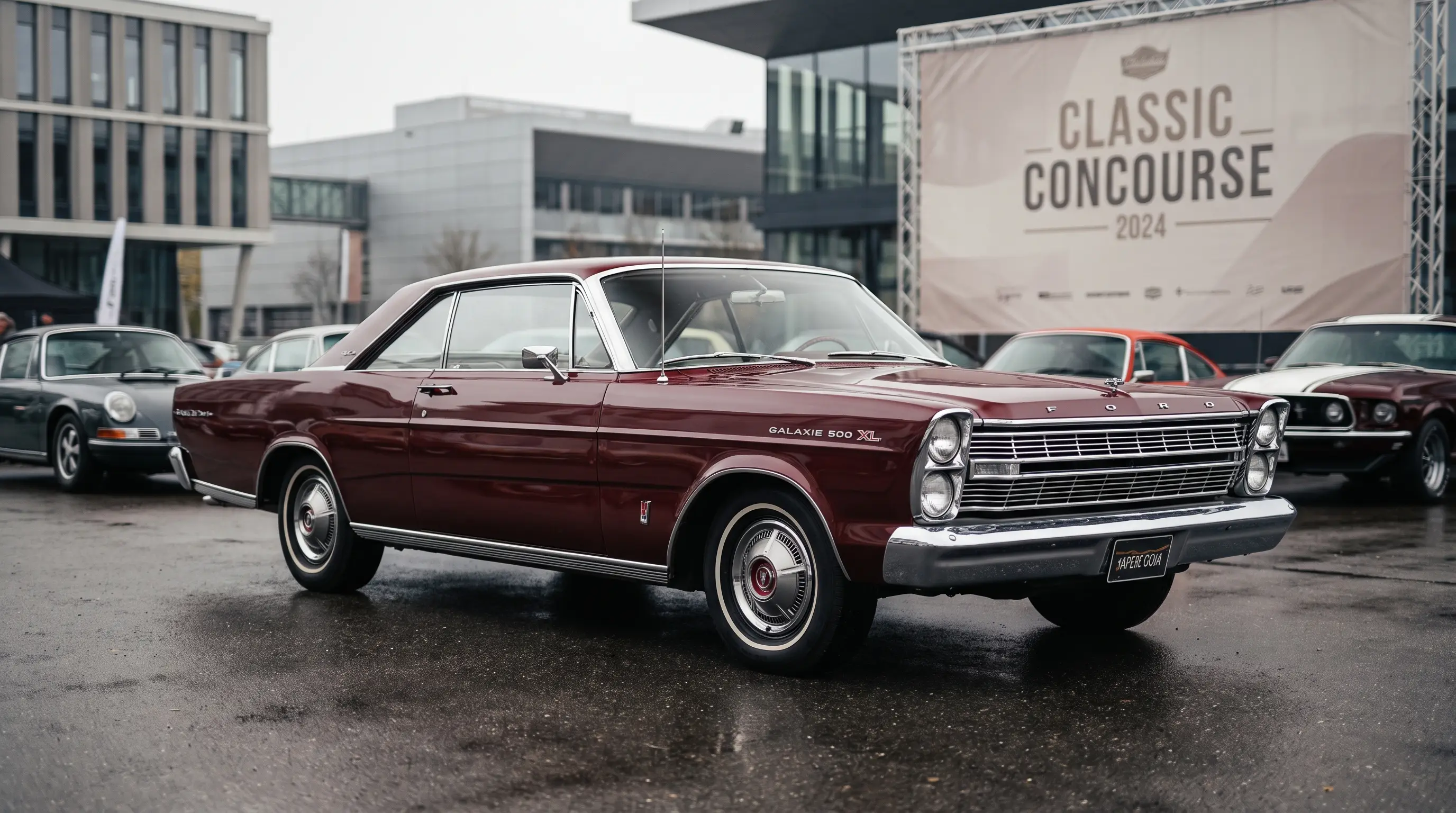
A documented 427 car, real casting numbers, real build sheet, is worth chasing down paperwork for before you chase down horsepower claims. Too many "427 Galaxies" at shows are 390s with a hood scoop and a story. The engine is real, the racing history is real, but the fakes outnumber the genuine articles by a wide margin, and that ratio is the number a buyer actually needs to know.
None of that racing pedigree transferred automatically to the showroom car parked in a customer's driveway, either. A dealer-lot Galaxie 500 with a 427 option checked was a genuinely quick highway car, but it wasn't wearing a roll cage or a NASCAR paint scheme, and it shouldn't be sold as one. Keep the street car and the race car as two separate stories with one shared engine, because collapsing them into a single legend is how inflated prices happen.
"People want to talk about the Cammer because it's the exotic part. The car that actually won races in 1966 was the plain old wedge 427, and that's the one worth verifying before you write a check."
- Dan Reeves
If the numbers in this one convinced you the 427 Galaxie is worth owning rather than just reading about, go shop classic Galaxie listings and start comparing real cars against real paperwork.