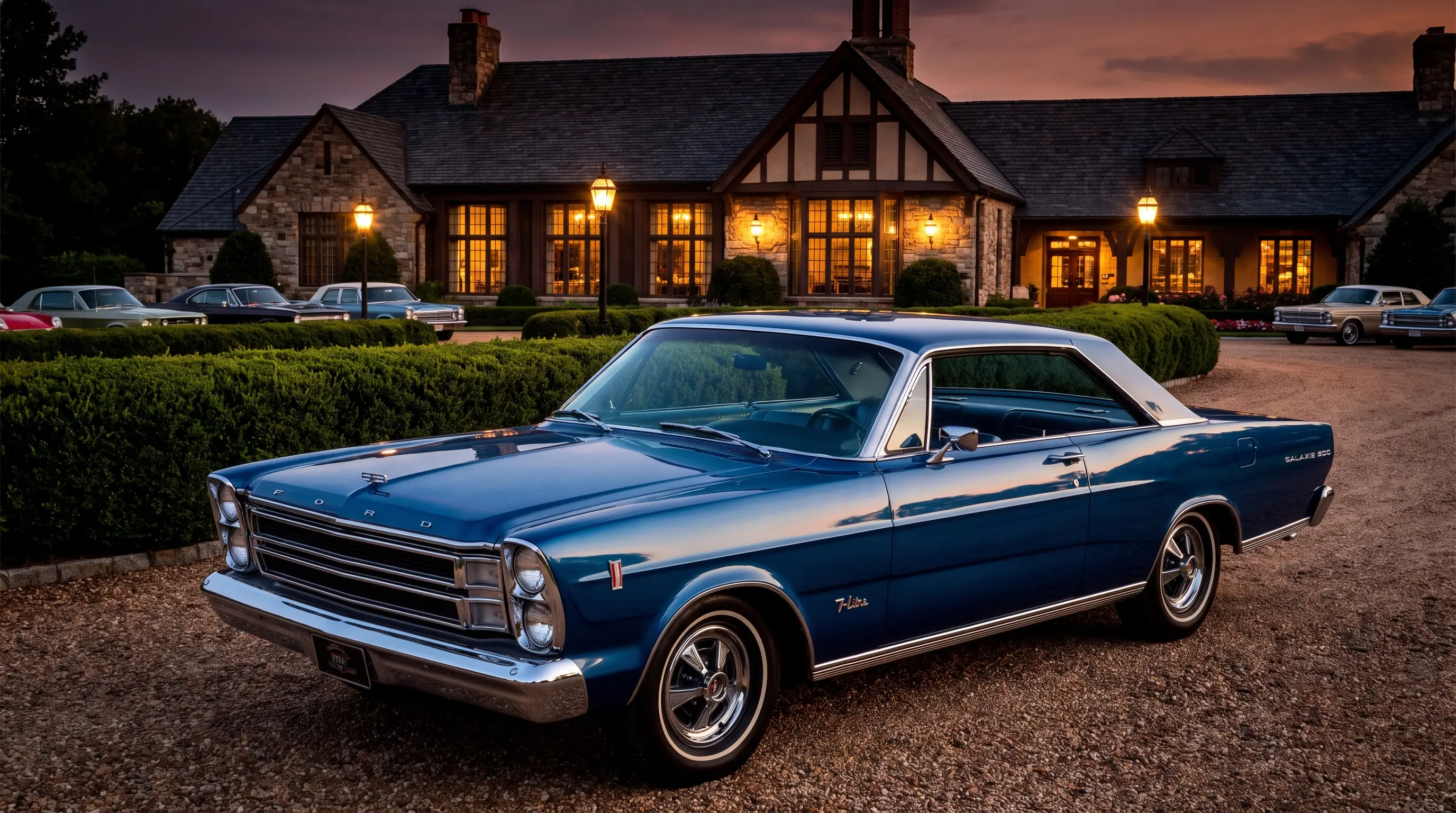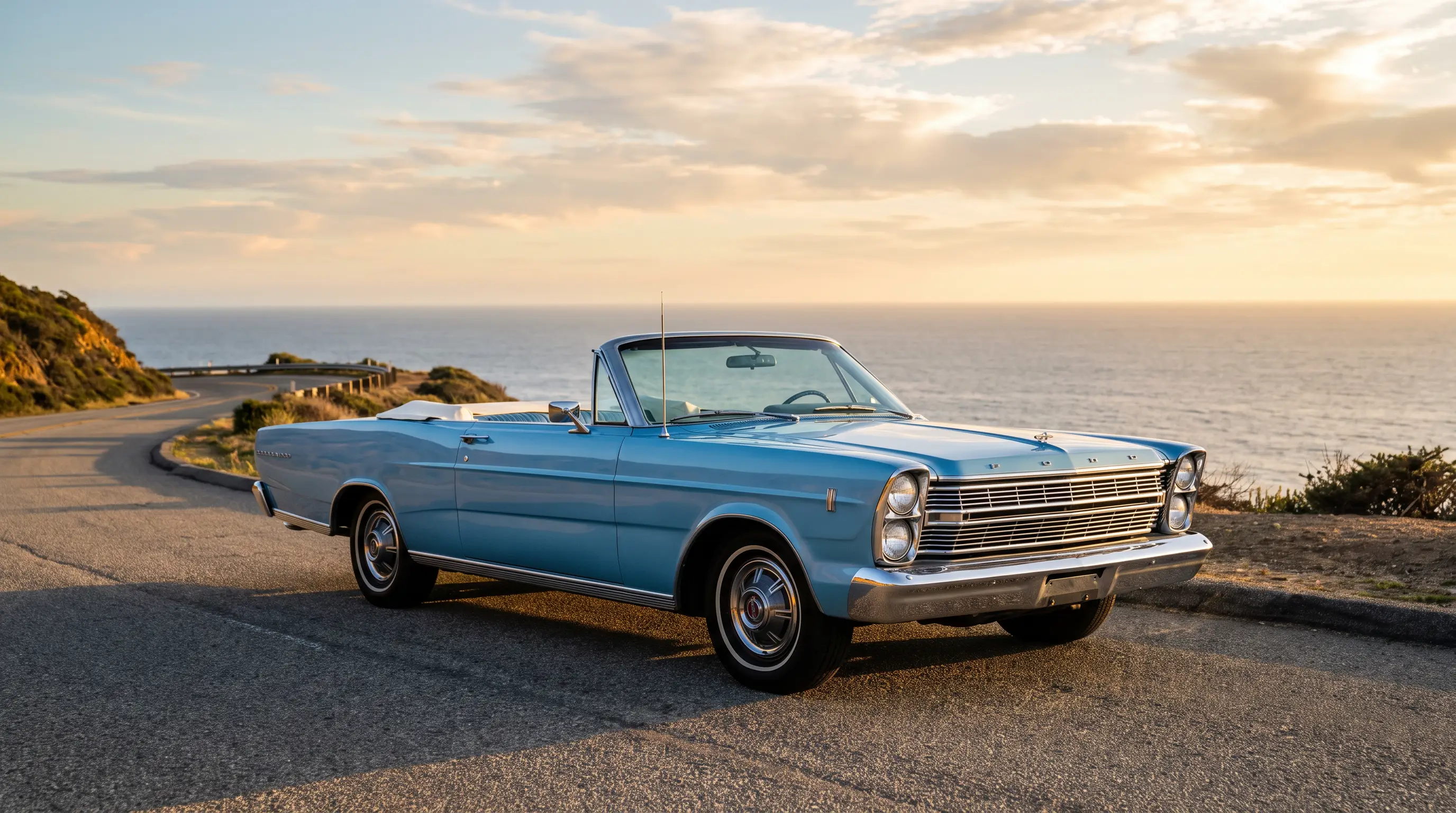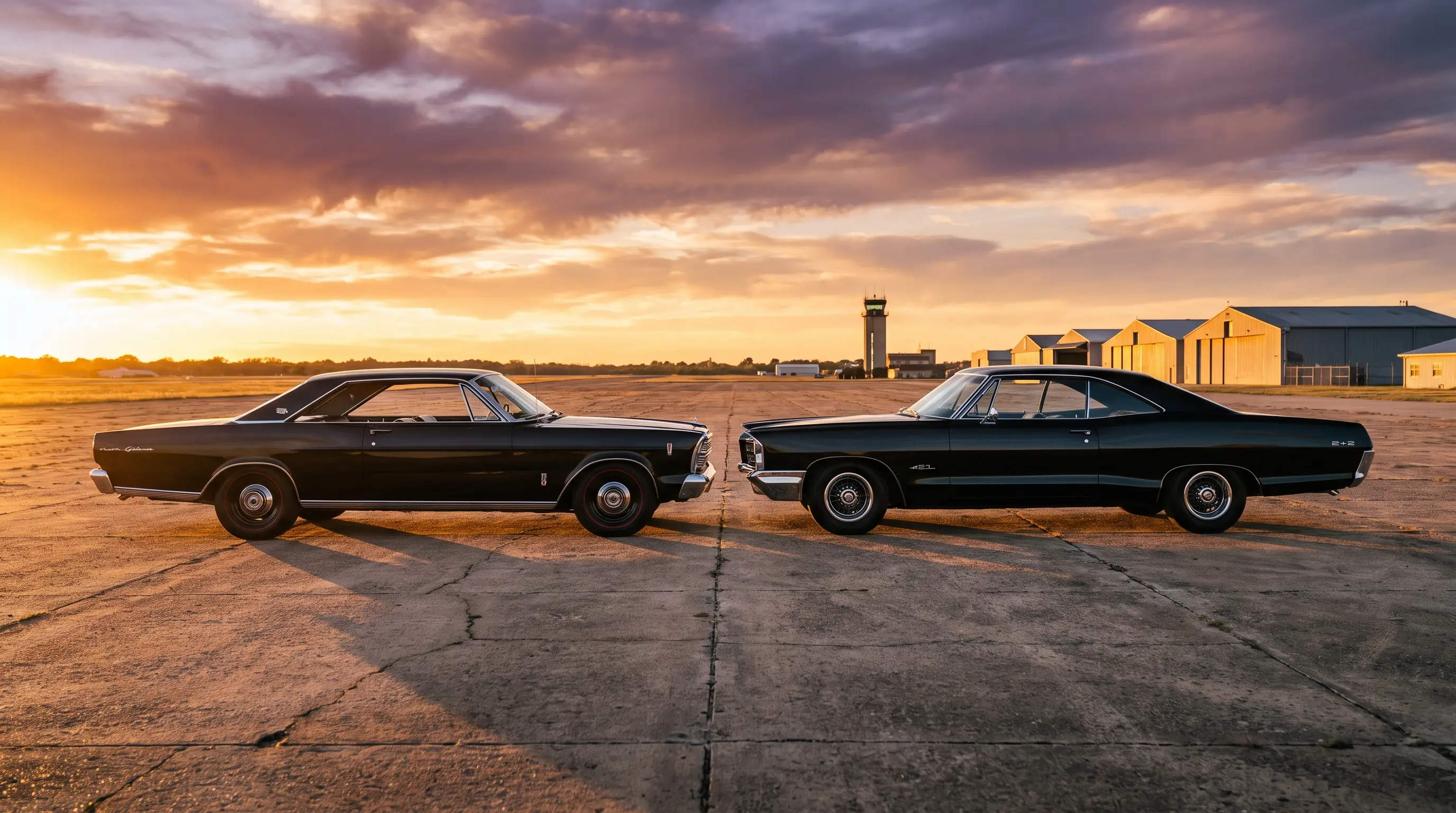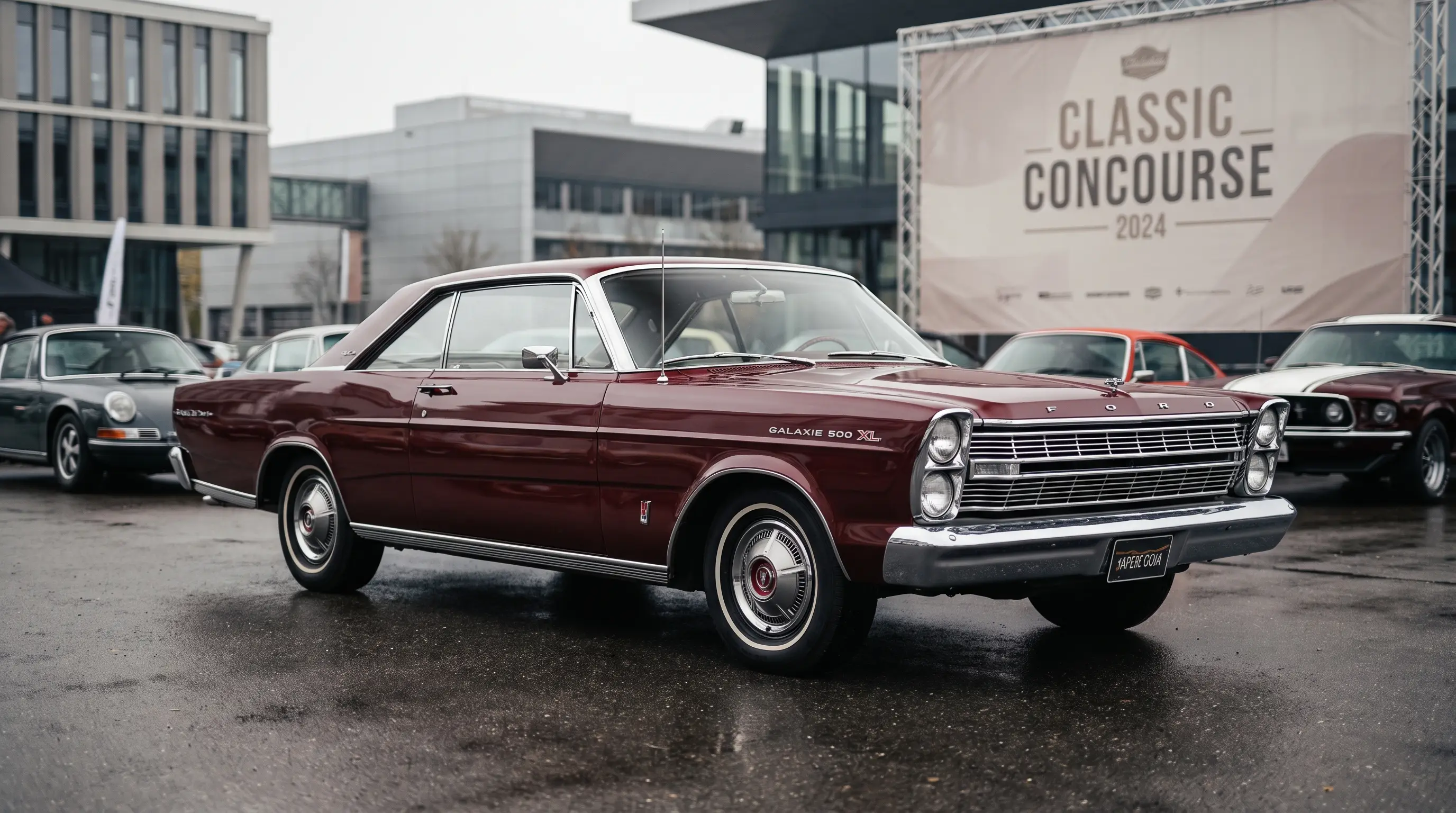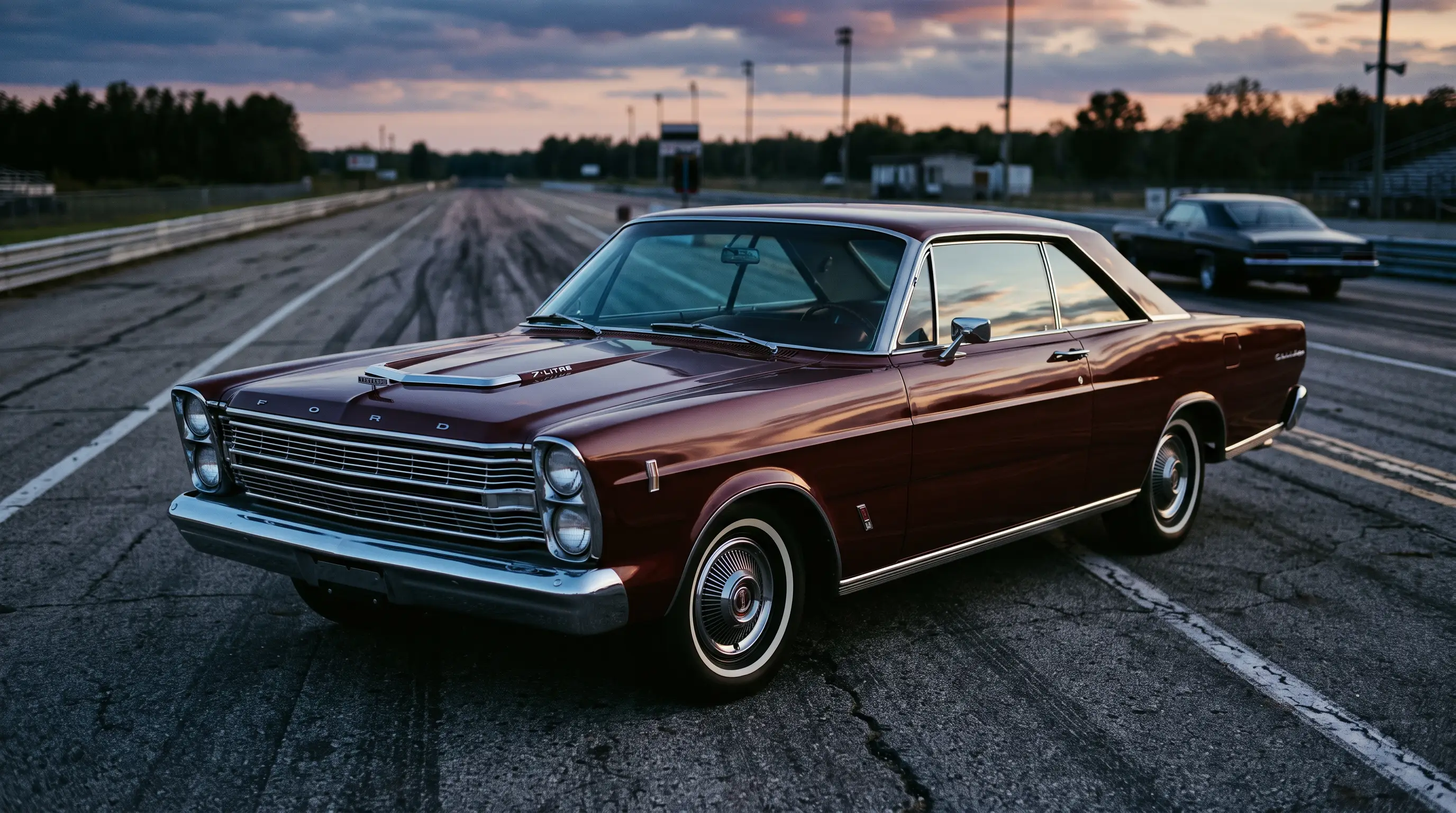
Detroit's rivalry between Ford and Chevrolet ran through nearly every segment in 1966, and nowhere did it play out with more direct engineering comparison than the full-size big-block war. The Ford Galaxie 1966 vs 1966 Impala SS matchup pitted two flagship interpretations of the same basic idea, take a full-size platform, add the largest available engine, and sell buyers a car that could pass for a family sedan while carrying serious performance underneath. Ford's answer was the 7-Litre with its standard 428, and Chevrolet's was the Impala SS 427, and comparing the two on paper reveals how differently the two companies approached the same brief.
Two different philosophies for the same job
Ford's 7-Litre made the 428 standard equipment across its limited body styles, meaning any 7-Litre buyer got the big-block by default with Cruise-O-Matic backing it up. Chevrolet took a more menu-driven approach with the Impala SS, offering the 427 as an option within a broader Impala SS range that also included smaller V8s, letting a buyer choose their level of performance investment within the same trim package. That distinction reflects two different sales philosophies. Ford bundled its flagship engine into a defined, narrow package, while Chevrolet let a wider range of buyers step into SS trim and decide separately how much engine they wanted underneath it. Neither approach was wrong, but they produced different populations of surviving cars, since the number of Impala SS models built with the actual 427 option is a smaller subset of total SS production, while every surviving 7-Litre already came from the factory with the big-block regardless of whether a buyer specifically wanted it.
| Comparison point | 1966 Galaxie 7-Litre | 1966 Impala SS 427 |
|---|---|---|
| Standard engine | 428 V8, standard | Smaller V8 standard, 427 optional |
| Transmission | Cruise-O-Matic, standard | Multiple transmission choices offered |
| Body styles | Hardtop, convertible only | Hardtop, convertible |
| Positioning | Standalone flagship trim | Option within broader SS range |
How the two engines actually compared
Ford's 428 and Chevrolet's 427 both prioritized torque and smooth power delivery over high-rpm drama, reflecting a broader industry consensus that big, heavy full-size cars needed low-end pull more than they needed a screaming top end. Ford's 428 came in a single four-barrel configuration rated at 345 horsepower, while Chevrolet offered the 427 in two states of tune, 390 horsepower with a hydraulic-lifter cam or 425 horsepower in the solid-lifter, high-compression version, so the Impala SS had real room to out-muscle the 7-Litre on paper if a buyer checked the right option box, even though the Ford's standard-issue 428 undercut the base 427 by a meaningful margin. What mattered more to period buyers than the numbers on a spec sheet was how each car actually felt from behind the wheel, and contemporary reviews generally described both as confident, unhurried performers rather than raw or aggressive machines, a reputation that tracks with how both manufacturers positioned these cars as sophisticated alternatives to smaller muscle cars rather than direct competitors to them. For the complete picture of how Ford's 428 behaved across the rest of the 1966 Galaxie lineup, our 1966 ford galaxie retrospective covers the mechanical specification in full.
Which one actually sold better
Chevrolet's Impala nameplate overall outsold Ford's Galaxie across the full-size segment through much of the mid-1960s, a gap that reflected Chevrolet's broader brand strength in this category more than any single trim comparison. Within the specific big-block flagship niche, however, both the 7-Litre and the Impala SS 427 represented narrow slices of their respective parent lineups, appealing to buyers specifically hunting the largest available engine wrapped in relatively restrained styling. Neither car was built in volumes that competed with mainstream trims, and both remain minority slices of otherwise enormous production runs, which is exactly why both draw specialist collector attention today rather than getting treated as ordinary examples of their respective nameplates.
"Comparing the 7-Litre to the Impala SS 427 is really comparing two ways of selling the same idea to two different kinds of Detroit buyer. Ford bundled the big-block in as a package deal, Chevrolet let you build up to it. Both approaches worked, and both left behind cars that reward the collector willing to verify what is actually under the hood."
- Tom Ramirez
Styling and how each car announced itself
Neither the 7-Litre nor the Impala SS 427 relied on aggressive body modifications to signal its performance intent, and that restraint was itself part of the pitch to a buyer who wanted power without spectacle. The 7-Litre communicated its status mainly through badging and a specific interior package, while the Impala SS used its own SS trim identifiers, distinct wheel covers, unique interior appointments, and console-mounted shifter on cars so equipped, without departing dramatically from standard Impala sheet metal. Both companies understood their target buyer the same way, someone who wanted a car respected quietly by people who knew what to look for, rather than one that shouted its intent to everyone at a stoplight. That shared restraint is part of why both nameplates get compared so often. They were solving an identical marketing problem using almost identical tools, badges, trim, and standard equipment bundling, even though the two companies arrived at slightly different structural answers for which engine came standard versus optional.
Interior treatment followed a similar parallel. Both cars offered bucket seats and console configurations as signature features of their respective flagship packages, a detail that mattered enormously to period buyers cross-shopping the two, since the driving position and cockpit feel of a bucket-seat big-block full-size car was a large part of what separated it from an ordinary bench-seat sedan riding on the same platform. Anyone evaluating either car today for authenticity should treat interior configuration as seriously as engine verification, since a numbers-matching engine sitting behind a later reupholstered bench seat tells an incomplete story about how the car actually left the factory.
What this means for today's buyer
Verifying a genuine big-block example matters more with the Impala SS specifically, since the 427 option sat within a range of engine choices and a car wearing SS badging does not guarantee the largest engine was ordered. A 7-Litre carries less ambiguity by design, since Ford never offered the trim with anything but the 428. Buyers choosing between the two nameplates today are really choosing between two collecting philosophies as much as two cars, a narrower but more certain Ford flagship, or a broader Chevrolet range where the most desirable configuration takes more paperwork to confirm. Either path rewards a buyer willing to do that homework, and current listings covering both nameplates give a useful side-by-side look at how each held up. Anyone focused specifically on the Ford side of this comparison can browse Galaxies for sale now, and readers interested in how the 7-Litre stacked up against other GM rivals from the same year should also look at a related story covering the Pontiac comparison.