Records from Ford's full-size lineup in 1966 show something enthusiasts often skip past on their way to the 427 and the NASCAR results: the wagons. The Ford Galaxie 1966 wagon family sat alongside the sedans and coupes in the same full-size range, sharing chassis engineering and much of the same trim hierarchy, and yet they rarely get discussed with the same enthusiasm as their two-door siblings. That gap in attention doesn't match how much engineering and market thought Ford actually put into these cars that year, and it's worth correcting. The wagon deserves a place in this cluster's coverage precisely because it was such a large, practical part of the same lineup that produced the racing legends everyone else writes about.
Three wagons, not one
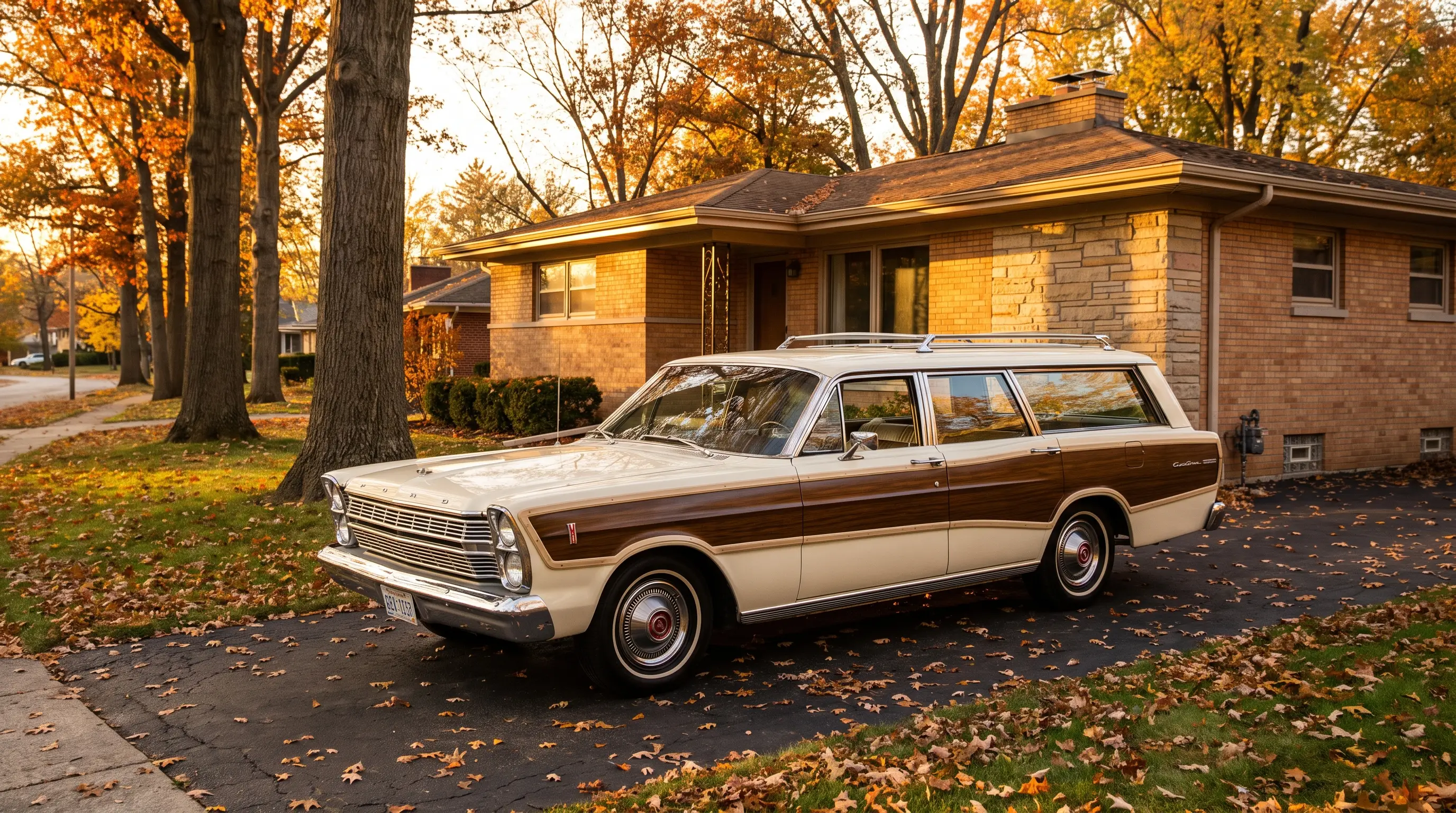
Ford's 1966 full-size wagon lineup wasn't a single model wearing different badges, it was a genuine three-tier hierarchy mirroring the sedan and coupe trim structure. The base Ranch Wagon offered straightforward, unadorned utility for buyers who wanted cargo capacity without extra expense. The Country Sedan sat in the middle, adding trim and comfort features closer to a Galaxie 500's equipment level. At the top, the Country Squire carried Ford's signature simulated wood paneling along its flanks, a design detail borrowed from an era of genuinely wood-bodied wagons decades earlier and kept alive as a styling cue long after real wood construction had disappeared from mainstream production.
| Wagon trim | Position in lineup | Notable feature |
|---|---|---|
| Ranch Wagon | Base | Minimal trim, maximum utility focus |
| Country Sedan | Mid-range | Additional trim and comfort features |
| Country Squire | Top of range | Simulated wood-grain side paneling |
Why the wagon mattered more than its reputation suggests
Full-size wagons in 1966 weren't a niche afterthought in Ford's business, they represented a meaningful share of the company's full-size sales volume, serving families who needed genuine cargo and passenger capacity that a sedan couldn't match and that the emerging compact and midsize segments weren't yet built to handle. A Country Squire with its third-row seating could carry a family and a week of luggage in a way that a Galaxie 500 sedan simply couldn't, and that practical capability made the wagon a genuinely important part of Ford's full-size lineup rather than a decorative sideline to the coupes and sedans.
The engineering underneath the wagons largely mirrored the sedan line, sharing the same engine options and much of the same chassis, which meant a Country Squire buyer who wanted a 427 under the hood could genuinely order one, producing a combination of family hauler and serious powertrain that surprises people encountering the fact for the first time. This wasn't a common order, but the option existed, and a documented big-block wagon from this era is a legitimately interesting piece of factory history. Anyone who assumes every wagon on the lot in 1966 rolled off the line with the smallest available V8 is working from a stereotype the actual factory records don't fully support.
The third-row seat and how families actually used it
The rear-facing third-row seat available on the Country Sedan and Country Squire deserves its own mention, since it's the detail that most directly shaped how families actually used these cars day to day. Kids old enough to remember riding backward in a Country Squire's third row tend to describe it with genuine fondness decades later, watching the road disappear behind the car rather than approach ahead of it. That seating configuration was a genuine selling point for large families in 1966, giving a wagon seating capacity that few competing body styles in Ford's lineup could match, sedan included.
Access to that seat also drove some of the wagon's specific hardware, tailgates that could swing open like a door or fold down flat depending on trim and options, a detail that sounds minor until you're actually loading groceries or luggage on a Saturday afternoon. Ford's engineering team spent real effort refining this mechanism across the full-size wagon generations, and by 1966 the tailgate hardware represented a mature, well-sorted piece of the car's overall design rather than an afterthought bolted onto a sedan platform.
Correcting a common misconception
A misconception worth addressing directly: these wagons are frequently assumed to have been mechanically detuned compared to their sedan and coupe counterparts, built purely for utility with performance as an afterthought. The build sheet data doesn't support that assumption as a blanket rule. Engine and transmission availability largely tracked the rest of the full-size range, meaning a well-documented Country Squire could be ordered with genuinely capable powertrains rather than being limited to the smallest engine on the order sheet. The wagon's reputation as strictly a grocery-getter undersells what Ford actually made available to wagon buyers that year.
"People assume the wagon was the compromise car in the lineup. The build sheets tell a different story, a genuinely capable family hauler that could be ordered about as seriously as anything else Ford built that year."
- Tom Ramirez
What survives and what to look for
Full-size wagons from 1966 suffered a particularly rough survival rate, worked hard as family and utility vehicles for years before being handed down, sold cheaply, or scrapped once minivans and larger SUVs took over the family-hauler role in later decades. Country Squires with their wood-grain paneling suffered their own specific deterioration issues, since that simulated wood material didn't always age well and was frequently either removed or poorly repaired by later owners unfamiliar with proper restoration techniques. A genuine, well-preserved example with intact original paneling and documented build sheet data is a considerably scarcer find today than a Galaxie sedan or coupe from the same model year.
Restorers approaching a Country Squire's wood-grain paneling for the first time are often surprised at how specialized that particular repair work has become, since the material and application methods differ enough from ordinary automotive trim that generic bodywork experience doesn't always transfer cleanly. Locating a shop or specialist genuinely familiar with period-correct simulated wood-grain application is worth the extra effort it takes to find one, rather than accepting a modern approximation that won't hold up to close inspection by anyone who knows what the original material actually looked like.
For anyone tracing how the wagon fits into the wider 1966 Ford Galaxie range, where this started lays out the full lineup these wagons were built alongside. And for buyers specifically interested in tracking down a genuine example, shop classic Galaxie listings for wagons with documentation that actually backs up their history rather than relying on assumptions about what a family wagon from this era could or couldn't have been ordered with.
Sources and notes
- Ford Country Squire - Wikipedia
- 1966 Ford Full Sized Registry - Galaxie Club
- 1966 Ford Country Squire Trim Levels - JD Power
- 1966 Ford Full Size Cars Fact Sheet - Over-Drive Magazine
- 1966 Ford Station Wagon Country Squire full range specs - Automobile Catalog
- 1966 Ford Country Squire Catalog and Classic Car Guide - Metro Moulded Parts