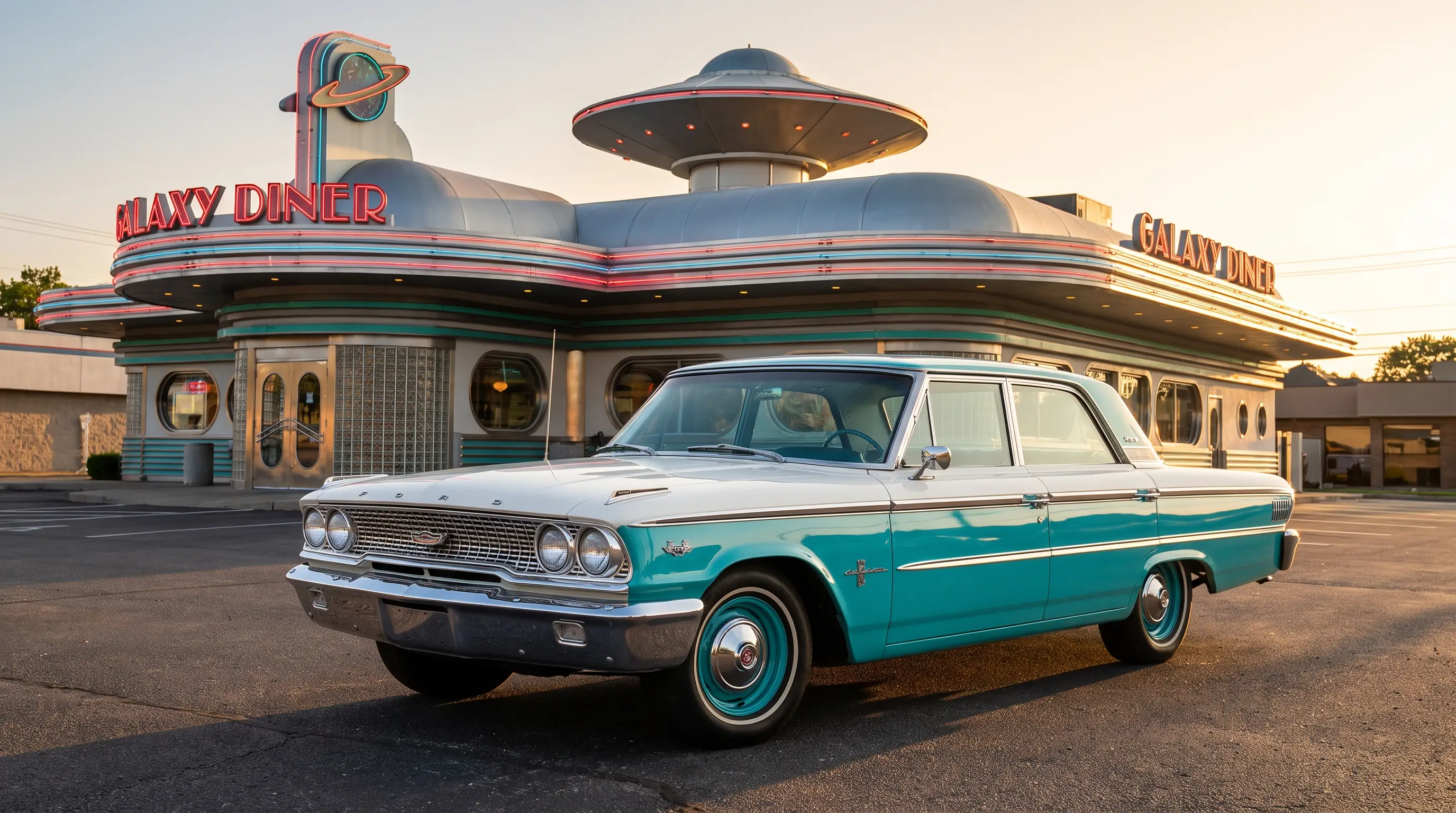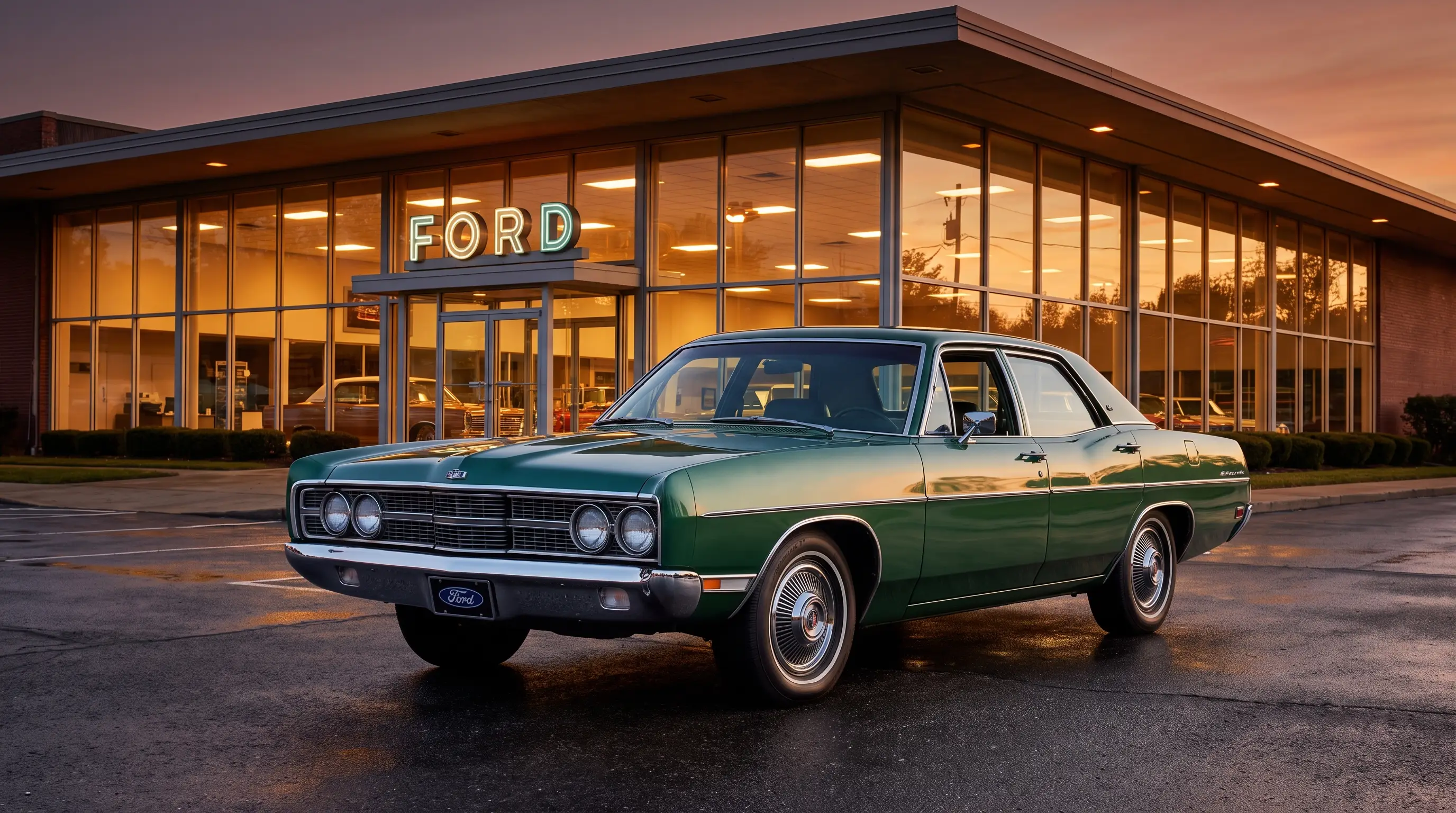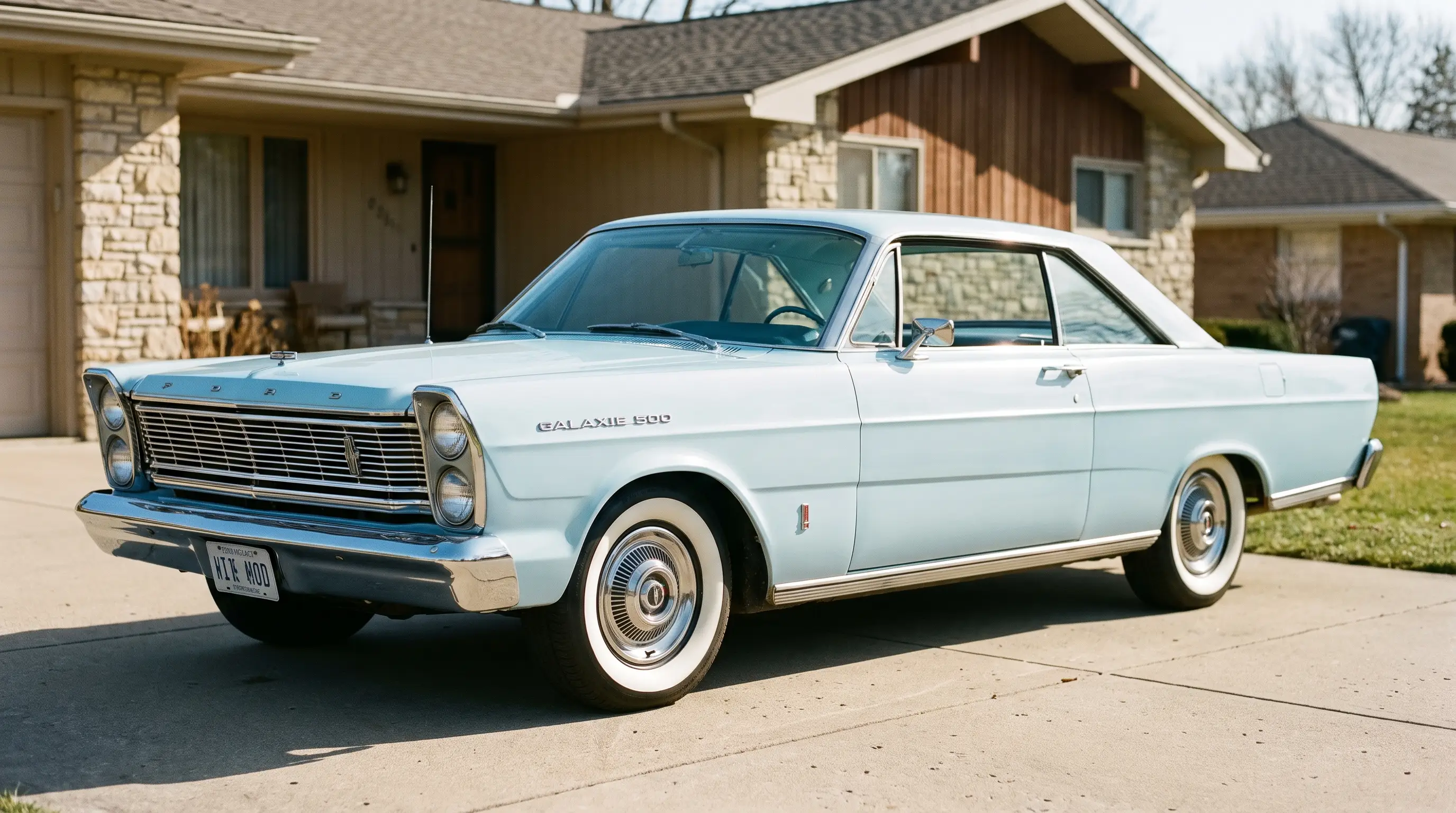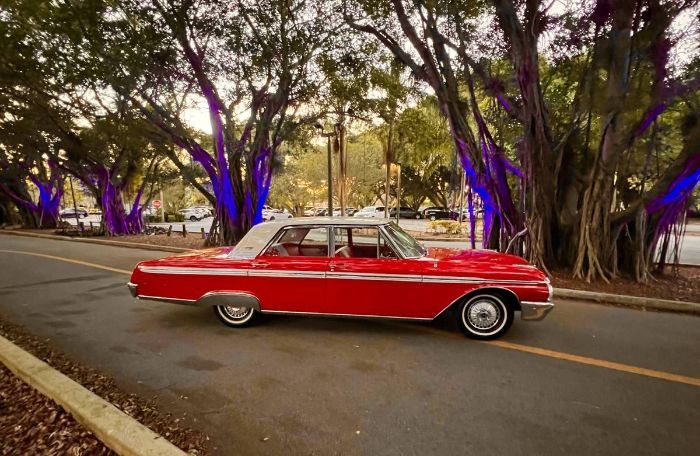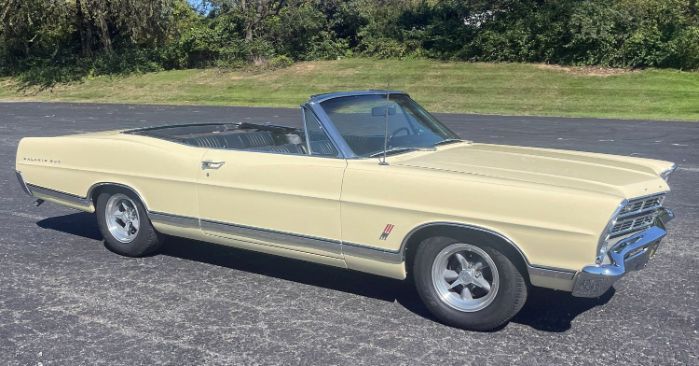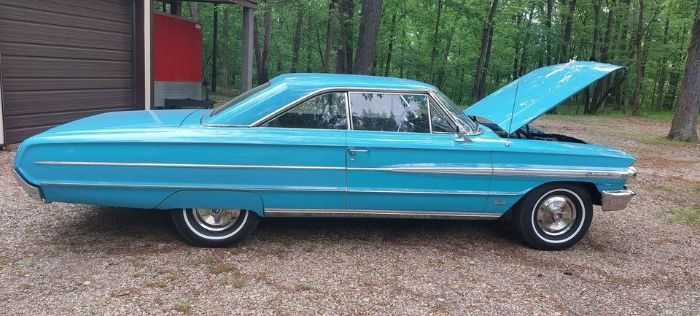
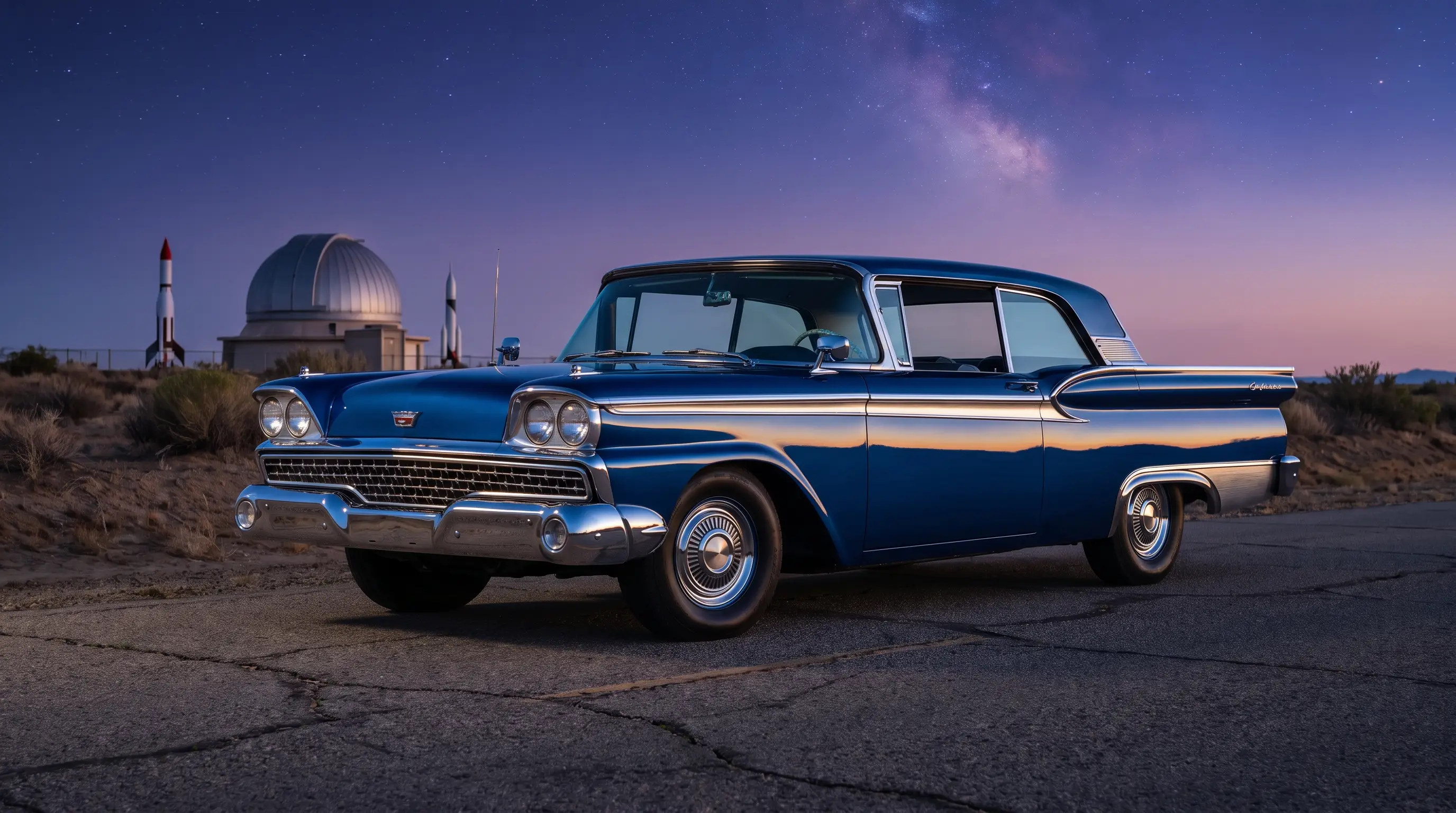
In October 1958, a Ford product planner sat in a Dearborn meeting room with a list of names nobody had approved yet, and the country outside was still buzzing about a Soviet satellite the size of a beach ball. Sputnik had gone up a year earlier. Explorer 1 had followed it into orbit that January. And somewhere in the process of naming Ford's new top-line full-size car for 1959, somebody decided the ford galaxie 500 name origin was not going to be a place, a person, or a number. It was going to be the sky itself.
The Galaxie name landed on the 1959 full-size Ford as the replacement for the Fairlane 500 nameplate at the top of the lineup, and it did so at the exact moment the country's imagination had turned upward. Ford was not alone in reaching for the stars that year. Chevrolet had its Impala with fins that looked like they belonged on a rocket fin display. Plymouth had Fury and Sport Fury with their own celestial pretensions. But Ford went further than badge-deep. The 1959 Galaxie's roofline was pitched to echo the Thunderbird, and the car wore a starburst medallion on its C-pillar that, if you squint at old brochures, looks like a stylized constellation dropped onto sheet metal.
A name born from a national mood
The late 1950s were not a subtle time in American car design, and naming departments across Detroit were raiding the same well of space-age vocabulary. Words like "nova," "astro," "satellite," and "galaxy" (spelled with a deliberate "ie" for Ford's version) were suddenly marketable in a way they had not been five years earlier. Ford's marketing team wanted a name that suggested scale, ambition, and modern engineering all at once, and "Galaxie" checked every box. It sounded expensive without sounding foreign. It sounded futuristic without sounding like a toy.
What is easy to miss, looking back, is that the name was not chosen in a vacuum. Ford had spent the second half of the 1950s building its case as the forward-thinking American automaker, and the space race gave that positioning a ready-made vocabulary. A car named Galaxie did not need much explaining in 1959. Everyone already understood what "big," "modern," and "reaching upward" meant, because the newspapers told them every week.
"The Galaxie name worked because it did not need translating. You said it once and people already had the picture in their head, a car built for a country that had just watched its first satellites go up."
- Patrick Walsh
Why "500" got added almost immediately
The plain Galaxie name carried the flagship spot on its own through 1960 and 1961, years when the Starliner fastback hardtop was the halo body style, before Ford stacked a trim suffix onto it. The "500" designation arrived for 1962, when the Galaxie badge spread across the entire full-size Ford range and "500" became the way to mark the upper series above the base cars. The number borrowed the cachet of racing, echoing NASCAR's 500-mile races the way "300" had worked for Chrysler a few years before. It was shorthand for prestige, a three-digit flourish that told a showroom customer this was the Galaxie they actually wanted, not the stripped-down one sitting next to it on the lot.
From 1962 onward, "Galaxie 500" quickly became the identity most buyers associated with the nameplate, outselling the plain base Galaxie that sat beneath it in the same lineup. Anyone curious about how that badge hierarchy actually played out on the lot can read the full background on what separated a base car from a 500.
The XL and the widening family of space-age suffixes
Once "500" proved it could carry a premium, Ford kept adding to the family instead of retiring the space theme. The Galaxie 500 XL arrived for 1962 with bucket seats and a console, aimed squarely at buyers who wanted sportiness without giving up Galaxie-sized presence. Later in the decade the 500 name persisted even as the LTD nameplate rose above it to become Ford's true flagship trim, effectively repeating the same trick Ford had pulled when Galaxie itself replaced Fairlane 500 at the top a decade earlier. Names got promoted, demoted, and recombined constantly through this era, and the ford galaxie 500 name origin sits right at the hinge point where Ford discovered that a good space-age word could be stretched across a decade of models if you kept dressing it up with fresh suffixes.
How rival names rose and fell around it
Looking across Detroit's 1959 and 1960 lineups makes the pattern obvious once you know to look for it. Chevrolet leaned on Impala and later added Bel Air variants that borrowed from a resort-town name rather than the cosmos, while Plymouth doubled down with Fury and Sport Fury, both words that suggested motion and drama more than orbit and distance. Pontiac reached for Star Chief and Bonneville, the second borrowed from the Utah salt flats where land speed records were being chased that same decade. Against that field, Galaxie stood out because it did not need a modifier to make its point. A "Fury" needed a driver's imagination to complete the picture. A "Galaxie" arrived pre-loaded with scale.
The competitive naming race also explains why Ford was willing to keep stacking suffixes onto the word instead of retiring it once the initial novelty wore off. Rival brands were doing the same thing with their own space-adjacent names, and abandoning a nameplate that had already built recognition would have handed that recognition to a competitor. Ford's product planners understood brand equity even if nobody in that Dearborn meeting room used the phrase. Once "Galaxie" had a foothold in the public's vocabulary, every later trim, from 500 to XL to 500/XL, rode on the reputation the base name had already earned.
A name that outlasted the theme that inspired it
The irony of the whole naming exercise is that "Galaxie" outlived almost every other space-race-era nameplate Detroit tried. Names like Nova and Satellite eventually got reassigned or retired, but Galaxie stuck around into the mid-1970s, carrying full-size Fords through NASCAR glory, a widening body, and eventually a slow fade as Ford shifted emphasis toward the LTD name for its top trim. Few casual observers today connect "Galaxie 500" with Sputnik and Explorer 1, but the connection is right there in the timing, in the roofline, and in a marketing department that knew exactly which cultural moment it was borrowing from.
For the deeper story of how that name carried an entire generation of Ford's biggest cars, ford galaxie 500 history covers the full arc from 1959 launch through the muscle era. And for readers who want to see how the trim hierarchy evolved year by year underneath that name, a related story traces every badge change across the model's run.
Names age strangely. Some feel dated the moment the cultural reference fades, and some keep working because the word itself simply sounds right regardless of context. Galaxie belongs to the second group. Six decades later it still reads as big, confident, and slightly futuristic, which is exactly what a Dearborn planner was chasing back in a 1958 meeting room with Sputnik still fresh in everyone's mind. If that history has you looking for one of your own, Galaxies for sale now span nearly every year the badge existed.