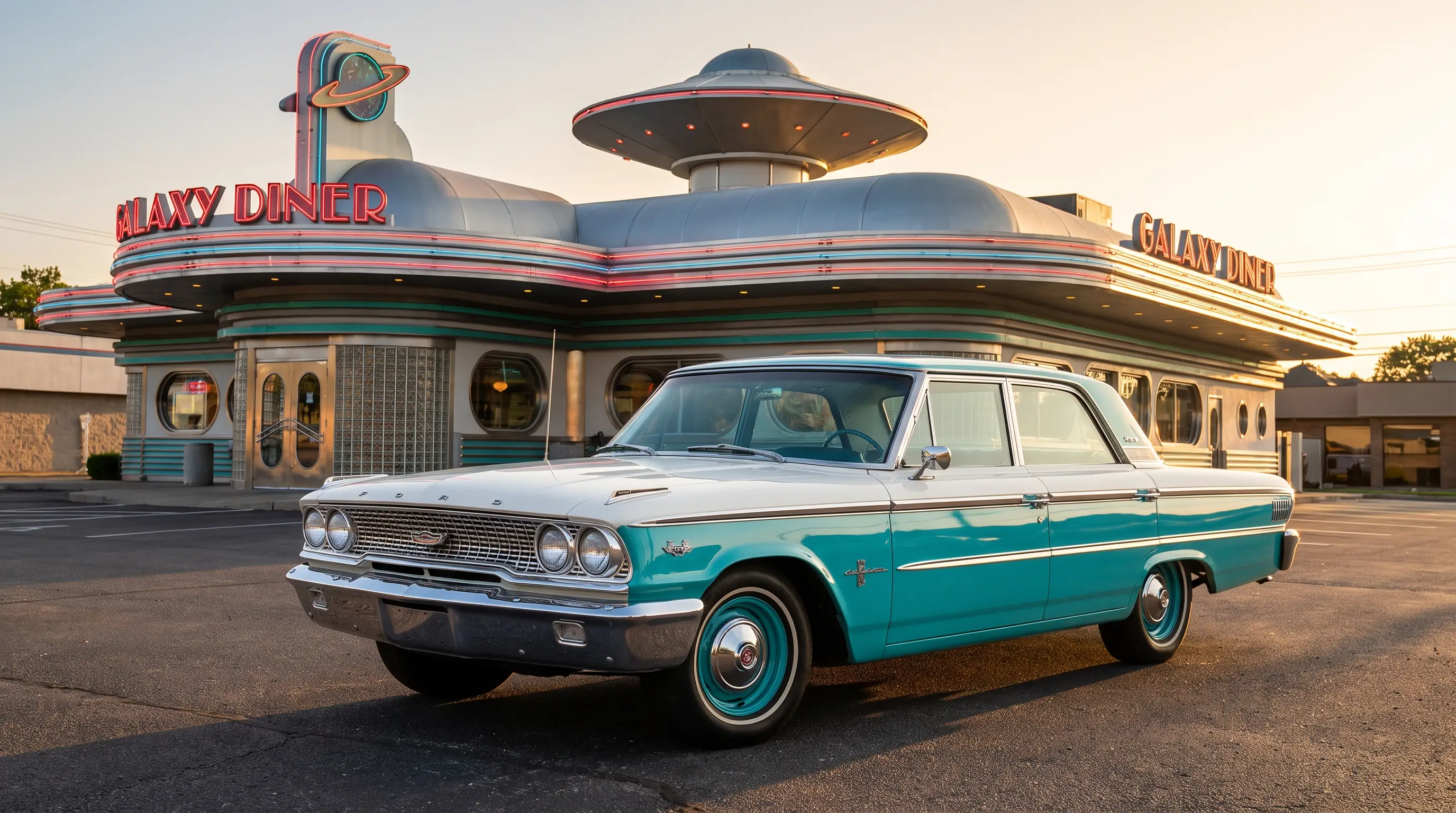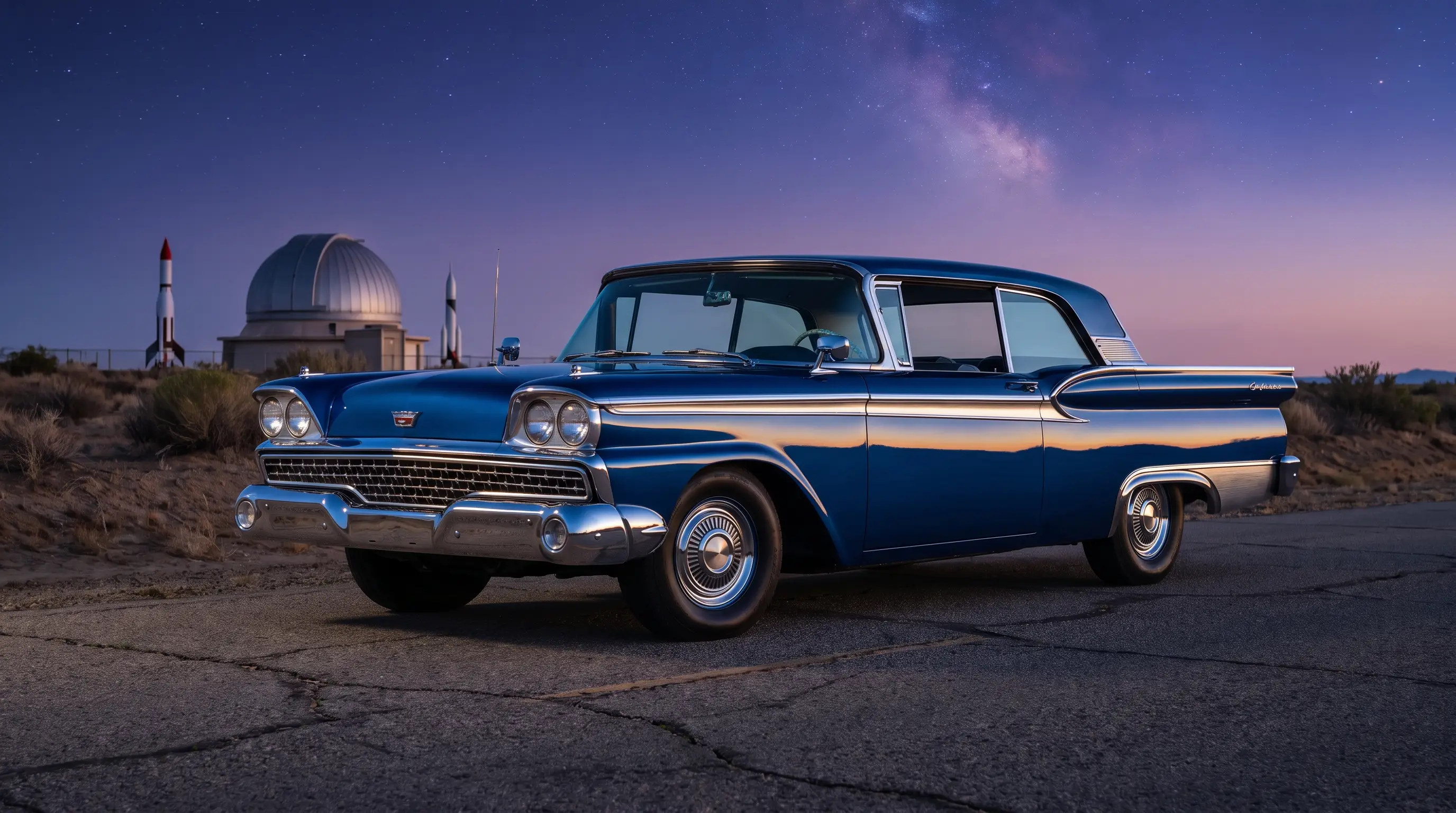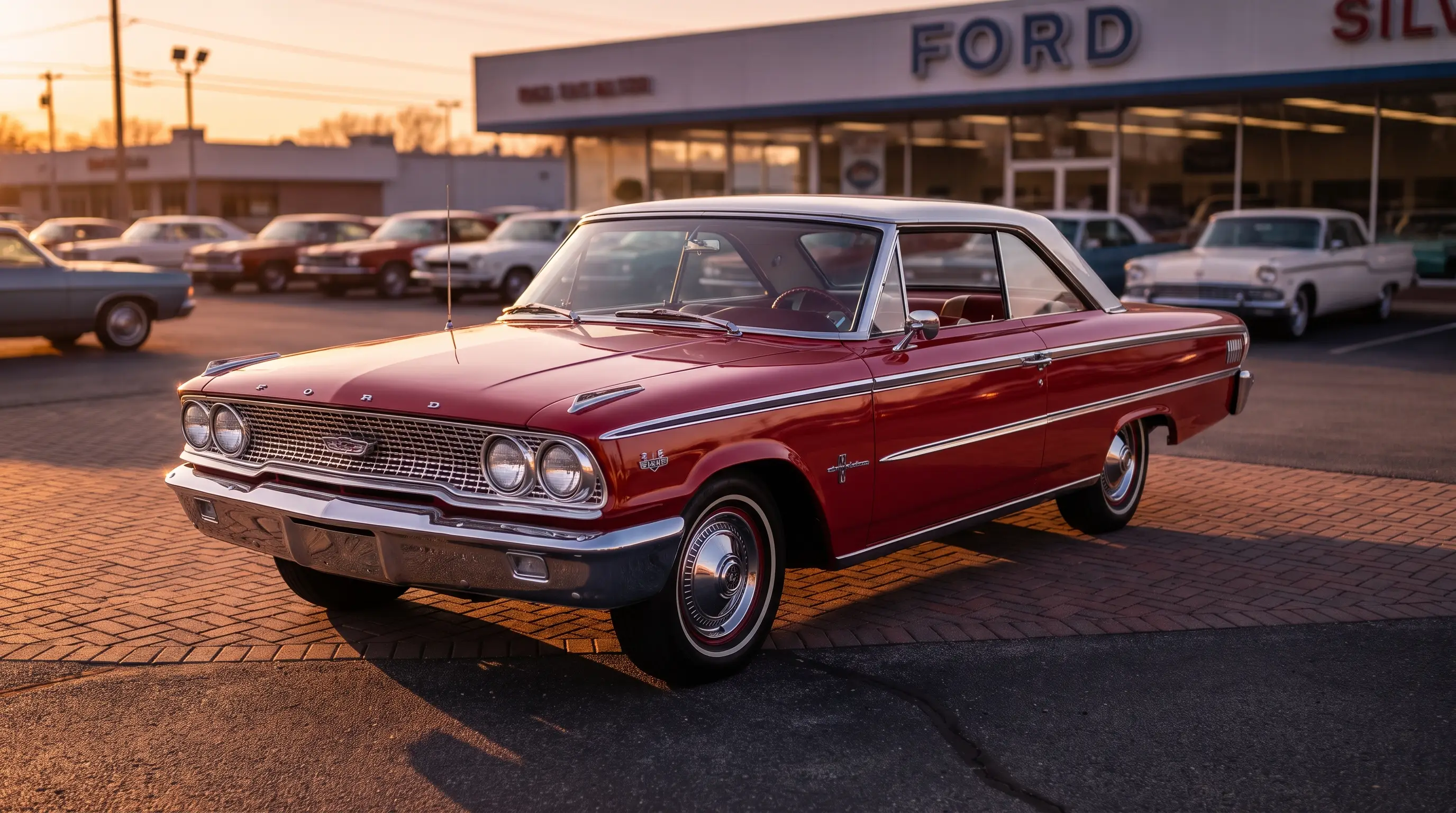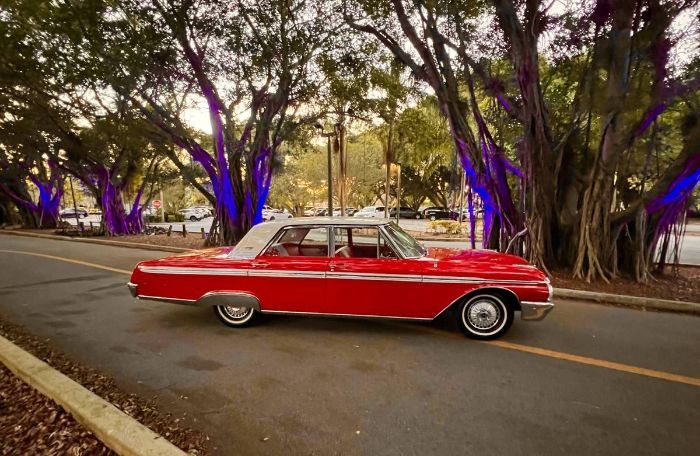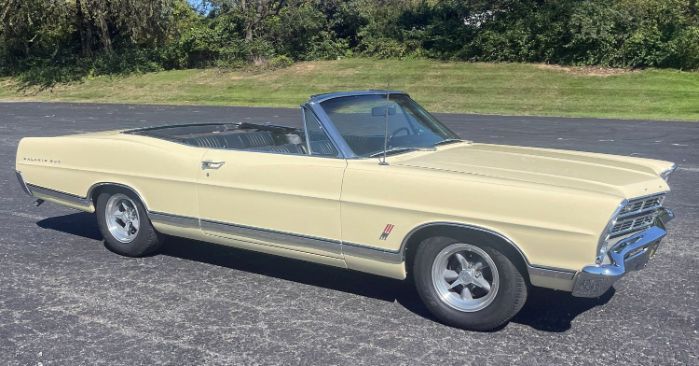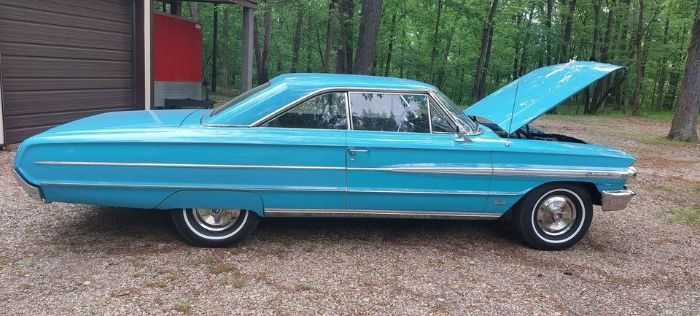
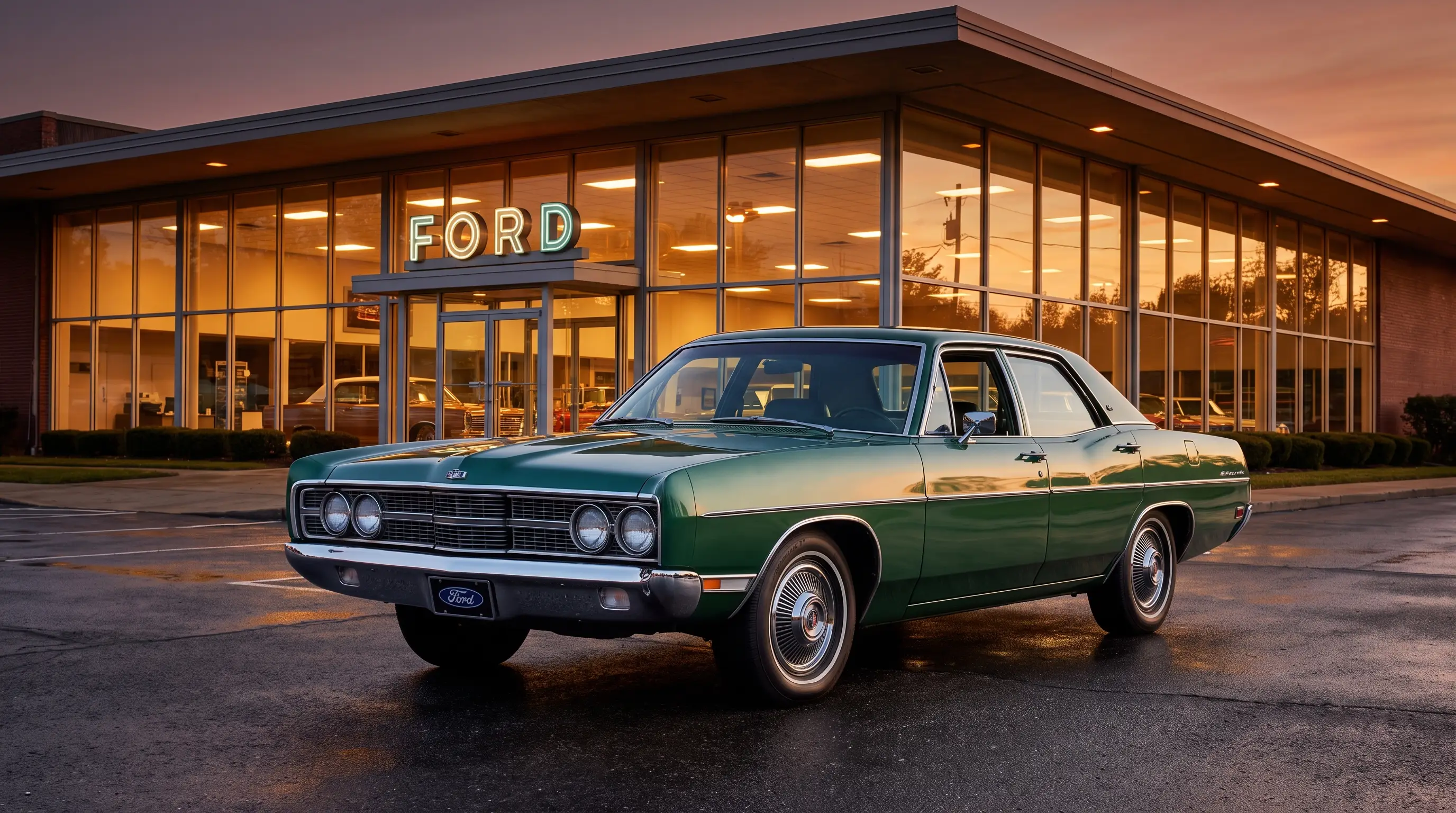
A ford galaxie 500 trim evolution 1959 1974 chart looks deceptively simple on paper, a single row of years with a single badge running across the top. In practice it hides one of the more tangled trim histories of any full-size American car, a lineage where names got promoted, demoted, and reused as Ford's product planners reacted to the market year after year. Cataloguing it properly means treating the Galaxie 500 less as one car and more as a moving target that changed shape almost annually for a decade and a half.
1959 to 1960: the name arrives above Fairlane
The Galaxie name debuted for 1959 as the new top trim above the Fairlane and Fairlane 500, with Custom 300 sitting at the base of the lineup. The plain Galaxie carried the flagship duties that first year, distinguished by its unique roofline and additional brightwork, and it held that spot through 1960 and 1961 without a numeric suffix, the years when the Starliner fastback hardtop served as the halo body style. The "500" suffix followed for 1962, when the Galaxie name spread across Ford's entire full-size range and "500" marked the upper series above the base cars. It quickly became the volume favorite, a pattern that would hold for the rest of the decade.
1962 to 1964: the XL era and body style proliferation
Nineteen sixty-two brought the Galaxie 500 XL, a genuine sport trim with bucket seats, a floor console, and available four-speed manual transmissions, aimed at buyers who wanted the big Ford's presence without its sedate reputation. This period also saw the Galaxie 500 offered across an unusually wide body style range for a single trim: two-door hardtops badged Club Victoria, four-door hardtops badged Town Victoria, the Sunliner convertible, and conventional pillared sedans. Each body style carried its own production numbers and its own collector reputation today, with the XL hardtops and the Sunliner drawing the strongest attention from buyers now. Readers curious about the four-door variant specifically can find our complete history useful background for how that body fit into the wider lineup.
| Model years | Top trim above base Galaxie | Notable addition |
|---|---|---|
| 1959 | Galaxie (flagship itself) | New roofline shared with Thunderbird |
| 1960 to 1961 | Galaxie (still no 500 suffix) | Starliner fastback hardtop halo body style |
| 1962 to 1964 | Galaxie 500, with 500 XL above it | 500 badge introduced 1962; XL adds bucket seats, console, four-speed option |
| 1965 to 1967 | Galaxie 500 XL, then LTD arrives above it | LTD introduced for 1965 as new flagship trim |
| 1968 to 1974 | Galaxie 500 as mid-range, LTD as flagship | Full-size Ford grows in size and weight |
1965: the LTD arrives and reshuffles the hierarchy
The most consequential change to the Galaxie 500's position came in 1965, when Ford introduced the LTD trim above it. The LTD borrowed a page from Galaxie's own origin story a decade earlier, arriving as a new flagship name meant to signal a step above what the existing top trim could offer. Within a few years the LTD had effectively become Ford's true prestige full-size car, and the Galaxie 500 settled into a mid-range identity it would hold for the rest of its production life. This is a subtle but important distinction for anyone cataloguing the lineup by year: a 1963 Galaxie 500 XL and a 1970 Galaxie 500 occupy very different positions in Ford's hierarchy despite sharing a badge, because the ceiling above them had moved.
"You cannot read a Galaxie 500 build sheet in isolation. The trim only makes sense against whatever sat above it that particular year, and that ceiling moved at least twice in fifteen years."
- Sarah Whitfield
1968 to 1974: bigger bodies, quieter changes
The final stretch of the Galaxie 500's run tracked the wider industry trend toward bigger, heavier full-size cars. Body styles simplified compared to the early 1960s peak, with the convertible disappearing from the lineup by the early 1970s and the coupe body style eventually following as buyer tastes shifted toward four-door practicality. The 500 name persisted through 1974, after which Ford retired the Galaxie nameplate entirely and consolidated its full-size lineup under the LTD and Custom names going forward. Fifteen years is a long run for any single trim designation, and the fact that it survived several complete redesigns of the car underneath it says something about how much recognition the name had built by the mid-1960s.
Reading a build sheet against the calendar
Concours judges and serious documentarians treat the Galaxie 500's fifteen-year run the way a genealogist treats a family tree with several branches that reconnect. The engine options alone shifted meaningfully across this span, moving from the smaller Y-block-descended six-cylinder and small V8 choices of 1959 and 1960 toward the FE-series big blocks that defined the mid-1960s cars, then settling into the emissions-conscious, lower-compression engines of the early 1970s as the whole industry adjusted to new regulations. A Galaxie 500 ordered in 1963 with the top engine option was chasing NASCAR credibility. The same trim ordered a decade later was chasing fuel economy and a quieter ride. Neither buyer was wrong about what the car should be. They were simply buying into different moments of the same badge's history.
Interior trim followed a similar arc, with the earlier Galaxie 500 cabins leaning on chrome accents and two-tone vinyl combinations that read as distinctly late-1950s and early-1960s, while the cars built after the LTD's 1965 arrival above them settled for simpler, more subdued cabin treatments befitting a mid-range trim rather than a flagship. This matters enormously for restoration accuracy. Fitting a 1962-style interior kit into a 1970 shell, or the reverse, produces a car that looks wrong to anyone who has spent time studying original photography, even if every individual part is period-correct for some year of Galaxie 500 production.
Why the year-by-year detail matters for buyers today
Anyone shopping the model today benefits from understanding exactly where a given year's 500 sat in the pecking order, because that position affects everything from original equipment lists to how a car was marketed when new. A 1963 XL hardtop and a 1972 four-door 500 sedan are both legitimately "Galaxie 500," but they represent almost opposite ends of what the badge meant to Ford at the time. Cataloguing the full run, rather than treating "Galaxie 500" as a single static specification, is the only way to make sense of why prices, parts availability, and enthusiast interest vary so widely across the model's production life. A car from the early XL years commands attention for its sportier intent and lower production numbers in certain body styles, while a late-run 500 sedan appeals more to buyers wanting an honest, comfortable driver rather than a show piece. Neither is more legitimate than the other, but pricing and documentation expectations differ enough that treating the badge as one flat category will lead a buyer astray more often than not.
Those looking to find a classic Galaxie that matches a specific year's trim story will want to keep this hierarchy in mind before committing to a purchase.