
On December 1, 1929, about 24,320 Ford workers got a raise. Their minimum pay went from $6 to $7 a day, and the company said the change would cost it some $20 million a year. The stock market had crashed at the end of October, and in November President Hoover called business leaders, Henry Ford among them, to Washington and asked them to hold wages and keep investing. Henry Ford answered with a bigger pay envelope and a car that had just had the best year of its life. The story of the Model A great depression years starts there, with confidence, and ends two years later with output cut in half and blood on the road outside the Rouge.
Car Features
6 min read
The Ford Model A and the Great Depression
The Model A had its best year in 1929, then sold into the crash. The $7 day, output cut in half by 1931, and the 1932 Hunger March at the Rouge.
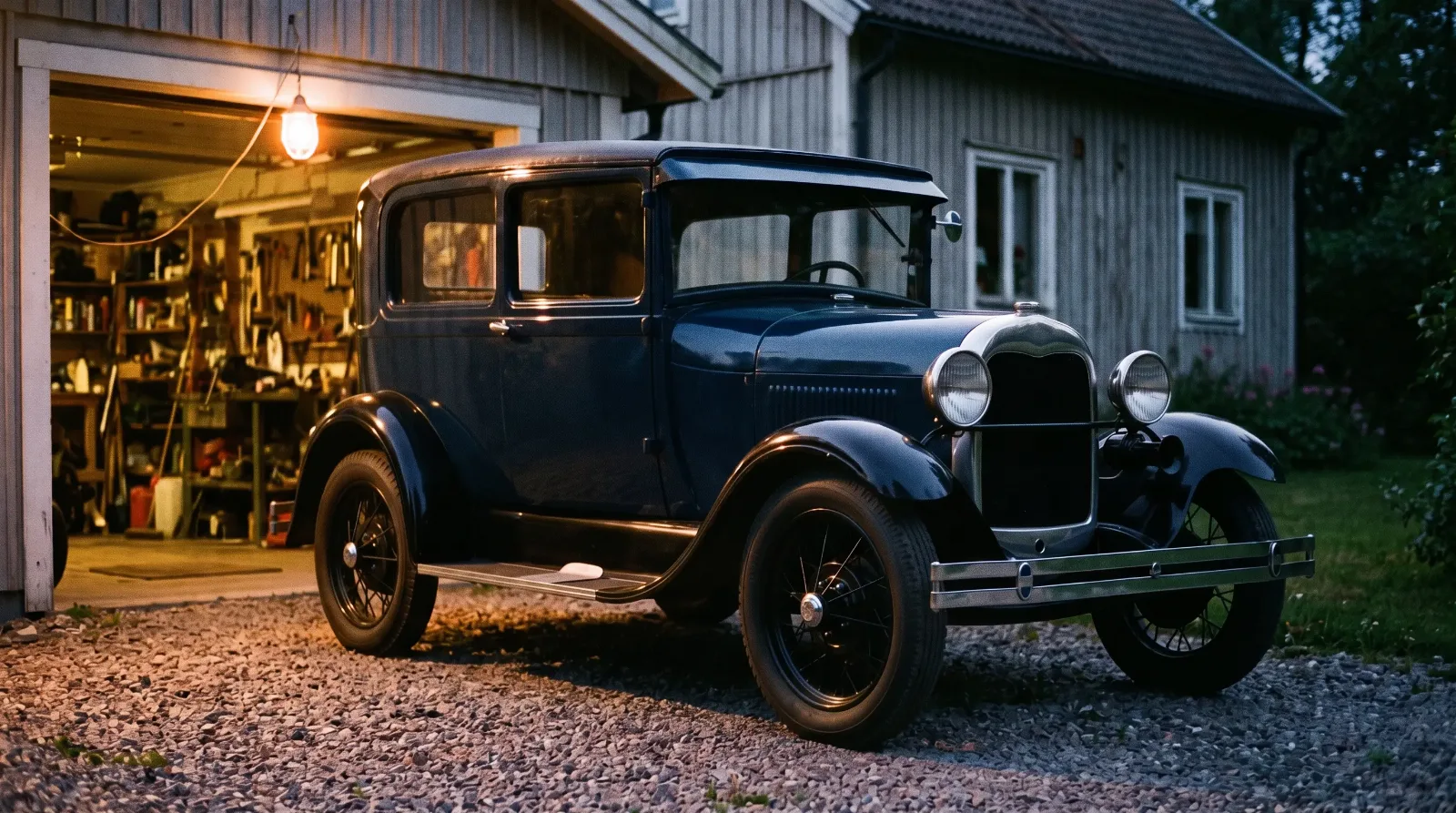
A record year that ended in a crash
The timing could hardly have been worse. In 1929 Ford built 1,507,132 passenger cars in the United States, by far the Model A's biggest year. The one millionth Model A was finished on February 4, 1929, and the two millionth followed on July 24, less than six months later. Ford also took back first place in American sales that year, 1,507,132 against Chevrolet's 1,328,605, after Chevrolet had led in 1928.
That same spring, Ford signed a ten-year technical assistance agreement with the Soviet Union on May 31, 1929, under which the Soviets would buy at least 72,000 vehicle kits over three years. It looked like one more sign of a company that could only grow. In time that deal produced the Soviet GAZ-A, a copy of the 1930 Model A built from 1932, long after the boom that made the agreement possible had ended.
For most of 1929, the Model A was the car of the moment: new, modern, and sold by the hundreds of thousands. If you want the full arc from launch to finale, the broader Model A story covers it. Here the point is narrower. Ford entered the Depression at its peak, with a single car line and a factory system built for volume.
The $7 day: Ford's answer to Hoover
The pay raise of December 1929 was a public gesture as much as a business one. A period wire report tied it directly to Hoover's call for industry to "boost business" after the crash. Ford had made headlines with the $5 day in 1914, and the $7 day was meant to echo it: a sign that the biggest carmaker in the country did not believe the panic.
"There is something almost touching about that raise. Ford was betting that if the men who built the cars kept getting paid, people would keep buying them. For a few months it even looked like a reasonable bet."
Patrick Walsh
It did not hold. The pay rate was a promise about the future, and the future did not cooperate. Demand for new cars across the whole industry was about to fall off a cliff, and no wage policy at one company could stop it.
How the Model A great depression slump hit the line
The numbers tell it plainly. US vehicle output across the industry fell from about 5,337,000 in 1929 to about 1,332,000 in 1931. Ford's own car production followed: 1,155,162 in 1930, then 541,615 in 1931. The Henry Ford museum puts it in one sentence, saying the Depression halved Ford's annual production. In 1931 Chevrolet took first place back.
What did not fall much was the sticker. Model A list prices barely moved through the worst of it. The Roadster went from $385 in 1928 to $430 in 1931, and the Tudor sedan from $495 to $490. Ford kept the car's price roughly where it was and let the volume go.
| Year | US Ford car production | Roadster list price | Tudor list price |
|---|---|---|---|
| 1928 | 633,594 | $385 | $495 |
| 1929 | 1,507,132 | $435 | $500 |
| 1930 | 1,155,162 | $450 | $495 |
| 1931 | 541,615 | $430 | $490 |
Ford did not go quiet, though. In April 1931 the 20 millionth Ford, a black Model A Town Sedan, came off the Rouge line with Henry and Edsel Ford present, and it went on a national tour with up to 20 other 1931 Fords. States issued special plates, and drivers included Eleanor Roosevelt and Admiral Richard E. Byrd. It was publicity at a time when good news was hard to find. The last Model A model year and its end in early 1932 have more on that here.
March 1932: the Hunger March at the Rouge
The worst image of those years came from Ford's own front door. On March 7, 1932, at least 3,000 marchers set out from Detroit toward the Rouge plant to press their demands. The march ended in violence. Four marchers were killed that day, and a fifth died of his injuries in August. Harry Bennett was head of Ford security at the time.
The Ford Hunger March came in the same month the Model A was finally replaced. Henry Ford had decided in October 1931 to build a V8 for 1932, and the Ford V8 and the four-cylinder Model B were introduced on March 31, 1932. The company that had raised wages to $7 to fight the crash was now facing a crowd of men who had no wages at all.
What the Depression did to the Model A's story
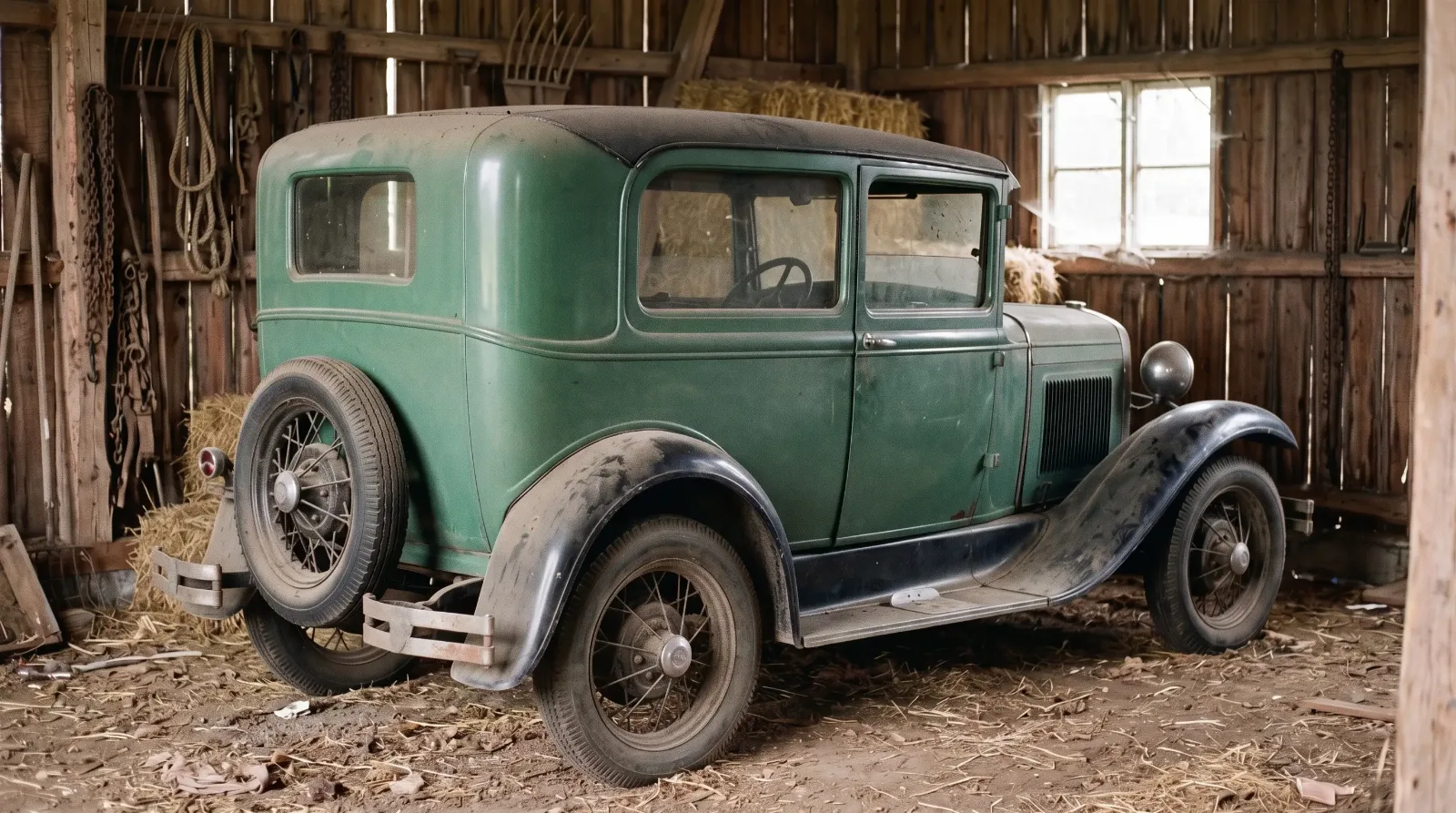
The Model A is often remembered as the car that saved Ford after the Model T. It did, in 1928 and 1929. But it spent half its life selling into the worst economy the country had seen, and its production figures show that as clearly as any history book. A car built in more than 1.5 million copies in one year fell to about a third of that two years later.
That is part of why so many Model As stayed on the road for so long. Families who could not afford a new car kept the old one running, and millions of Model As were already on the road to be kept. The Depression shortened its career at the factory and lengthened its career everywhere else. Ford's next car, the 1932 V8, arrived into the same hard times, but that is a different chapter.
Sources and notes
Related Reading

Have a
Ford Model A
for Sale?
Reach thousands of serious classic car collectors across the US.
Sell It Here →
Selling a classic? Here's how: sell my classic car
Are You a Classic Car Dealer?
List your full inventory and connect with targeted classic car buyers.
Join as a Dealer →
#Ford history
#ford model a
#Great Depression
#henry ford
#Ford Hunger March
#1929 Model A
#1931 Model A

About the author
Patrick Walsh
Automotive journalist covering classic car shows, events, and the enthusiast community across North America.
Related Listings - Ford Model A
More in Car Features

Comments
Be the first to comment on this article.