
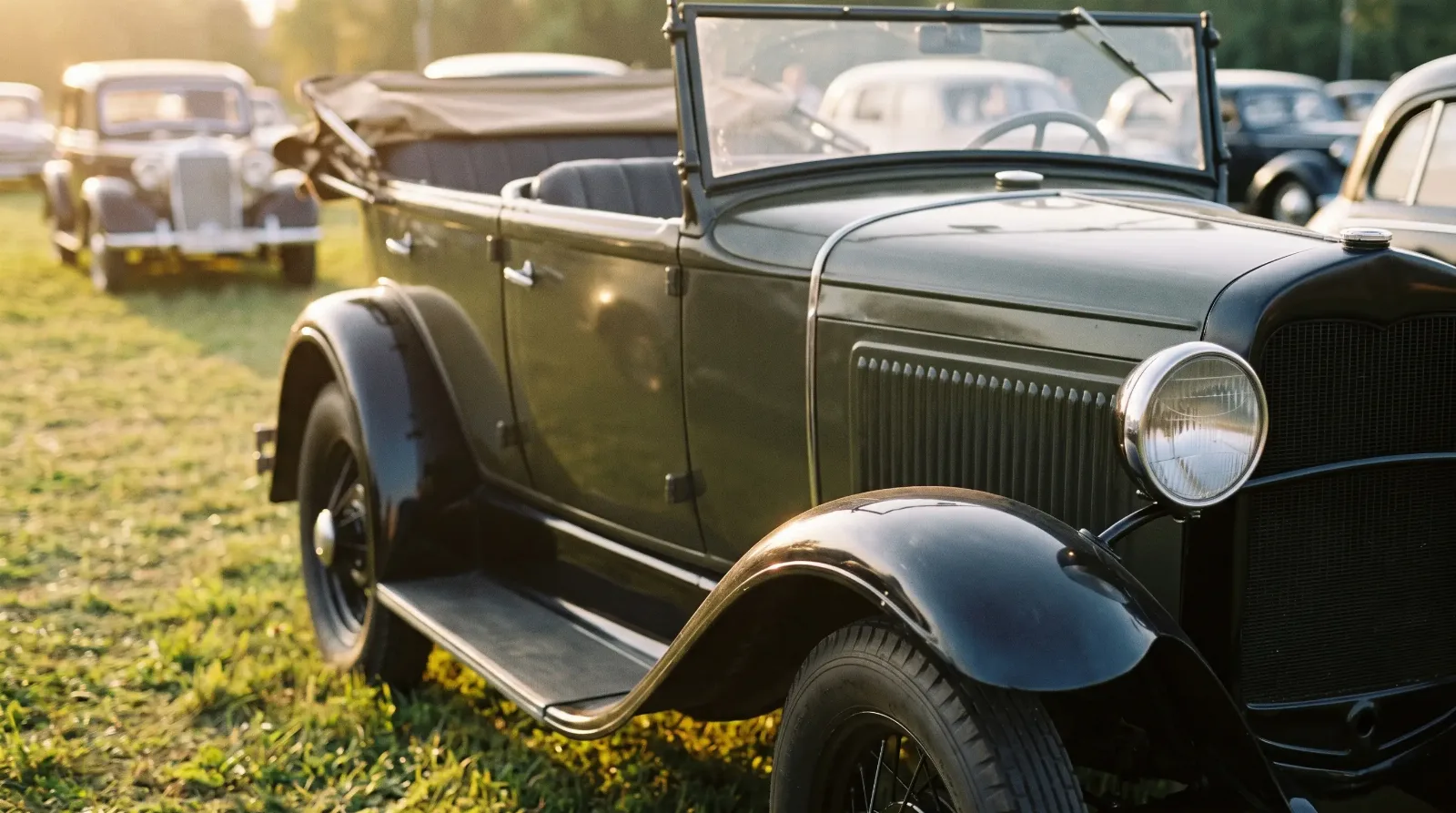
On December 8, 1932, the first cars came off the line at a new factory in a city that had been renamed Gorky only two months earlier. They had a four-cylinder engine and a shape any American farmer would have known at a glance. This was the GAZ A, or GAZ-A as the factory wrote it: a Ford Model A built in the Soviet Union, under license, with American tooling and American know-how behind it. It is one of the stranger chapters in the Model A story, and one of the more revealing, because it shows just how far Henry Ford's simple car could travel once the drawings left Dearborn.
Car Features
7 min read
GAZ-A: The Soviet Ford Model A
In 1932 a new plant at Gorky began building the 1930 Ford Model A under license. The story of the GAZ-A, the Soviet Model A.
This piece stays with the Soviet car. The American production run, from the 1928 launch to the last 1931 cars, is a separate story, and there is more on the Model A history cars in our main history of the model.
A deal signed in 1929
The arrangement began with paper. On May 31, 1929, the Ford Motor Company and the Soviet government signed an agreement for ten years of technical assistance. Under its terms the USSR committed to buy at least 72,000 vehicle kits over three years, and Ford would help the Soviets build a plant that could make the car themselves. The deal was dissolved by mutual agreement in 1935, well short of its ten years, but by then the factory was running.
Why Ford? The answer sits in the production methods more than the car. The Soviet planners wanted a mass-produced vehicle and the system to make it, and nobody had a better claim to that system than Ford. Readers who want the background on how that system was born can turn to our assembly line story, which covers the Highland Park years that made Ford the model to copy.
The car chosen was the Model A as it stood after the 1930 restyle. In other words, the Soviets did not get the first 1928 design. They got the later, lower car with the smaller wheels, and it became the pattern for everything that followed at the plant.
Nizhny Novgorod becomes Gorky, and NAZ becomes GAZ
The plant went up at Nizhny Novgorod. At first it was known as NAZ. In October 1932 the city itself was renamed Gorky, and in 1933 the plant took the name GAZ. The car carried the factory's name, so the Soviet Model A became the GAZ-A.
Production ran from 1932 to 1936. In that time the plant built 41,917 GAZ-A cars. You will sometimes see a figure of more than 100,000 quoted for the model, but that number counts all GAZ vehicles, trucks included, not the passenger car alone. The car was also assembled at the KIM works in Moscow, from 1933 to 1935. Most GAZ-A cars were open four-door phaetons, five-seat tourers built for roads that were mostly dirt.
| Item | GAZ-A detail |
|---|---|
| Agreement with Ford | Signed May 31, 1929; ten-year technical assistance; dissolved 1935 |
| Kit commitment | At least 72,000 vehicle kits over three years |
| Plant | Nizhny Novgorod (NAZ, renamed GAZ in 1933; city renamed Gorky in October 1932) |
| First cars | December 8, 1932 |
| Production years | 1932 to 1936 |
| Cars built | 41,917 |
| Pattern | 1930 Ford Model A |
| Successor | GAZ-M1 |
How the GAZ A differed from a Dearborn Model A
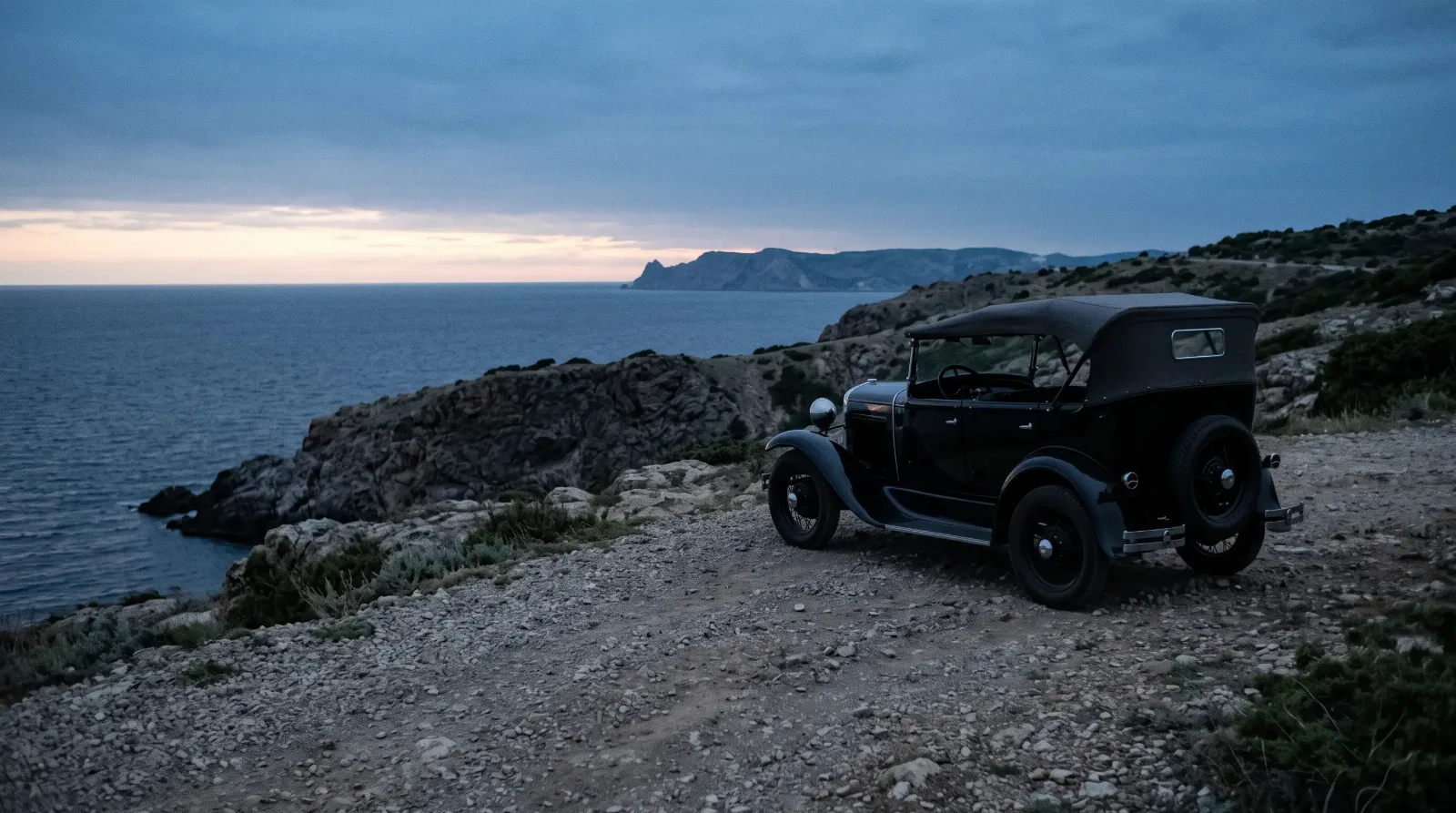
Put a GAZ-A next to an American 1930 Model A and the family resemblance is plain. The differences are small, and most of them point at the roads the car was meant for.
- No cowl lamps. The small lamps that sat on the cowl of many American cars were left off.
- A simpler radiator shell. The GAZ-A used a plainer, nearly rectangular shell in place of Ford's shaped surround.
- An air filter. The Soviet car added one, which made sense on dusty unpaved roads.
- Stronger parts underneath. The clutch housing and the steering were reinforced.
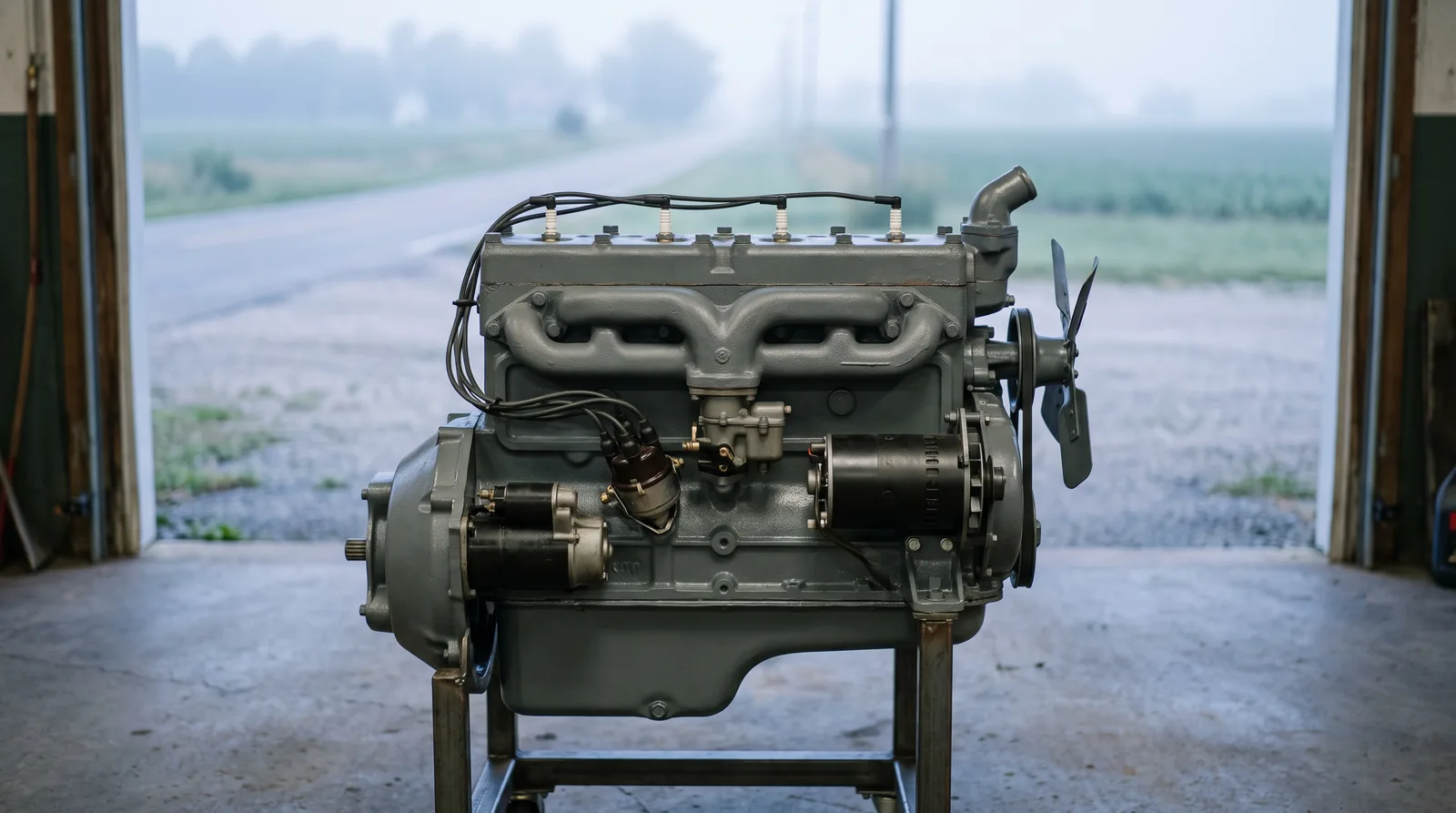
None of these touch the basic design. Underneath, it was the car Ford had built in Michigan: a 200.5 cubic inch L-head four (3,285 cc), driving through a three-speed gearbox. Soviet sources give the GAZ-A the same 40 hp at 2,200 rpm that Ford quoted for the American car.
"Strip the badges off and you would have to look twice. That is the real tribute here. Ford's car was simple enough that a brand new plant, in a country building its car industry almost from nothing, could make it work."
Patrick Walsh
More than a car: the GAZ trucks and offshoots
The passenger car was only part of what the agreement made possible. The same plant used the Model A family as the starting point for a small range of vehicles:
- GAZ-AA: the truck, based on Ford's Model AA, built from 1932 to 1938 in its original form.
- GAZ-4: a pickup on the car chassis, built in the mid-1930s with the cab of the GAZ-AA truck.
- GAZ-6: a closed sedan, built in small numbers in the mid-1930s, when the open phaeton was still the norm.
The truck turned out to be the real heavyweight. By one count GAZ built more than 985,000 GAZ-AA trucks between 1932 and 1950, a production run that dwarfs the car's 41,917. If the GAZ-A taught the plant how to build a car, the truck kept it busy for the better part of two decades.
The GAZ-A among the Model A's foreign cousins
The Soviet car was not the only Model A built far from Michigan, but it was the most independent. In Britain Ford built a smaller-engined version, the Model AF, with a 2,043 cc engine of about 28 bhp, sized to cut the British horsepower tax. That was a Ford car, built in a Ford plant, tuned to local rules. The GAZ-A was something else: a design handed over to a foreign state, built in a factory that would go on making its own vehicles once the American contract ended. You can read about the European cars in our piece on Dagenham, Cologne and the Model AF.
The GAZ-A's run ended in 1936, when the GAZ-M1 replaced it. That car moved the plant past the Model A pattern, but the lessons it was built on came from Dearborn. The plant that built the M1 had learned its trade under a contract signed with Ford seven years earlier.
For American Model A owners, the GAZ-A is a curiosity at first: a Ford in a foreign uniform. Look longer and it says something useful about the original car. The Model A was simple, rugged and easy to make in volume, and those qualities let it cross an ocean and a political divide. The design that let Ford build millions of cars at the Rouge also let a new plant at Gorky learn the trade.
It also shows the reach of the methods behind it. Ford sold the Soviets more than a car; it sold a way of building cars. That way of working, with standard parts, fixed tooling and steady volume, had been refined over two decades by the time the 1929 agreement was signed. For the start of that line of thinking, go back to the early Ford story and the Model T that came first.
Surviving GAZ-A cars are rare outside Russia, and that rarity is part of the appeal for anyone who meets one at a show. The details that give it away are the ones in the list above: the plain radiator shell, the missing cowl lamps. Everything else is pure 1930 Ford, built a long way from home.
Sources and notes
Related Reading
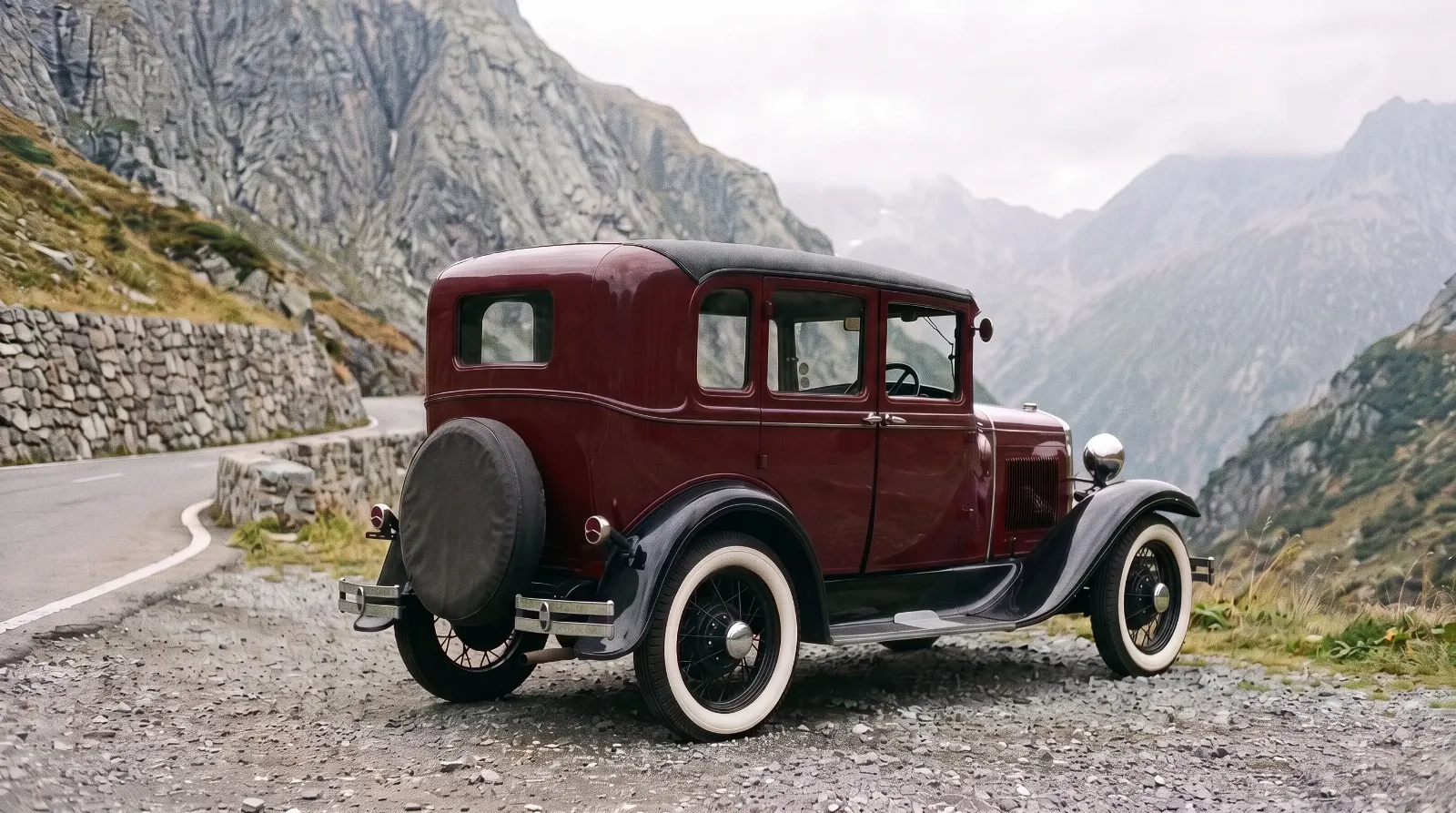
Have a
Ford Model A
for Sale?
Reach thousands of serious classic car collectors across the US.
Sell It Here →
Selling a classic? Here's how: the best sites to sell a classic car
Are You a Classic Car Dealer?
List your full inventory and connect with targeted classic car buyers.
Join as a Dealer →

About the author
Patrick Walsh
Automotive journalist covering classic car shows, events, and the enthusiast community across North America.
Related Listings - Ford Model A
More in Car Features

Comments
Be the first to comment on this article.