
The Model TT had done its job, but by 1927 it was a one-ton truck with a 20 hp engine and a recommended top speed of 15 mph. When Ford retooled for the Model A, it built a truck to match. The Ford Model AA truck took the new 40 hp four, put it in a heavier frame rated at 1-1/2 tons, and gave it a real sliding-gear transmission. Chassis production ran from December 1927 to December 1932. In those five years the AA hauled coal, milk, ice, gravel and passengers across the country, and a version of it was still being built in the Soviet Union in 1950.
Car Features
7 min read
The Ford Model AA Truck
The Ford Model AA truck, 1927 to 1932: a 40 hp four, a 1-1/2 ton rating, a four-speed with a granny gear, and what to check before you buy one.
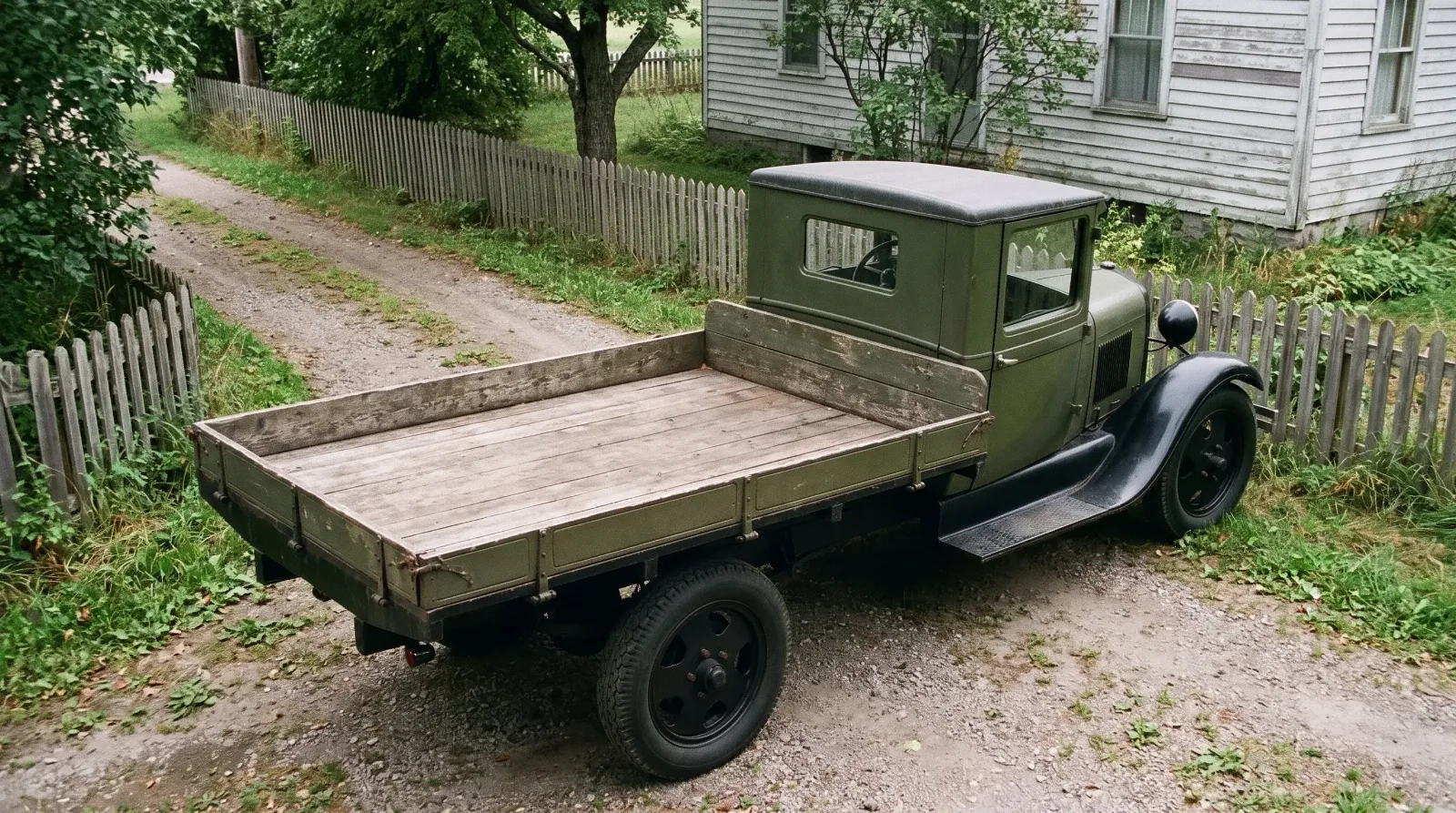
What the Model AA replaced, and what it kept
The AA was the direct successor to the Model TT, and it was followed in turn by the Model BB. For the whole line from the first one-ton chassis to the early pickups, see our early Ford truck guide. Here the focus is the AA itself.
The engine was the same 201 cubic inch (200.5) four used in the Model A car, rated at 40 hp at 2,200 rpm. That was about twice what the TT had. The only engine-side difference between car and truck was a four-row radiator core to handle the heavier work. Parts interchange with the car is one of the best things about owning an AA today: an engine rebuilder who knows the Model A knows your truck.
Where the TT had used a 124 to 125 inch wheelbase, the AA started at 131.5 inches. For 1930 Ford added a 157 inch long wheelbase chassis for bigger bodies. If you want to compare it line by line with the earlier truck, the TT write-up has the details.
| Item | Ford Model AA truck |
|---|---|
| Chassis built | December 1927 to December 1932 |
| Rating | 1-1/2 ton |
| Engine | 201 cu in (200.5) four, 40 hp at 2,200 rpm, four-row radiator |
| Transmission | 3-speed early; 4-speed with low "granny" first standard during 1929 model year |
| Rear axle | Early worm gear, then ring-and-pinion; 6.6:1 standard, 5.14:1 optional |
| Wheelbase | 131.5 in; 157 in added for 1930 |
| Brakes | Mechanical, four oversize drums |
| Springs | Transverse leaf front, longitudinal leaf rear |
Gearbox, axle and the 35 mph question
Early AAs used a three-speed transmission. During the 1929 model year a four-speed became standard, with a very low "granny" first gear for starting a loaded truck on a grade, and a reverse lock-out on the shift knob so a driver didn't find reverse by accident. If you're looking at an early 1928 truck with a three-speed, that may well be correct.
The rear axle changed too. The first AAs had a worm-gear rear end, carried over in spirit from the TT, and it kept top speed low. Ford replaced it with a ring-and-pinion axle. The standard ratio was 6.6:1, and an optional 5.14:1 high-speed ratio was offered. In practice that was the difference between cruising at about 35 mph and about 45 mph.
"Ask what ratio is in the back before you ask about paint. A 6.6 truck is honest and slow. A 5.14 truck will keep up with traffic on a back road, and that changes how much you'll actually drive it."
Robert Halloran
Brakes were mechanical, working on four oversize drums. Front suspension used a transverse leaf spring like the car; the rear used longitudinal leaf springs, which is what let the truck carry its rated load. Mechanical brakes on a loaded 1-1/2 ton truck demand respect. Keep them adjusted, and drive like it.
Wheels tell you the year
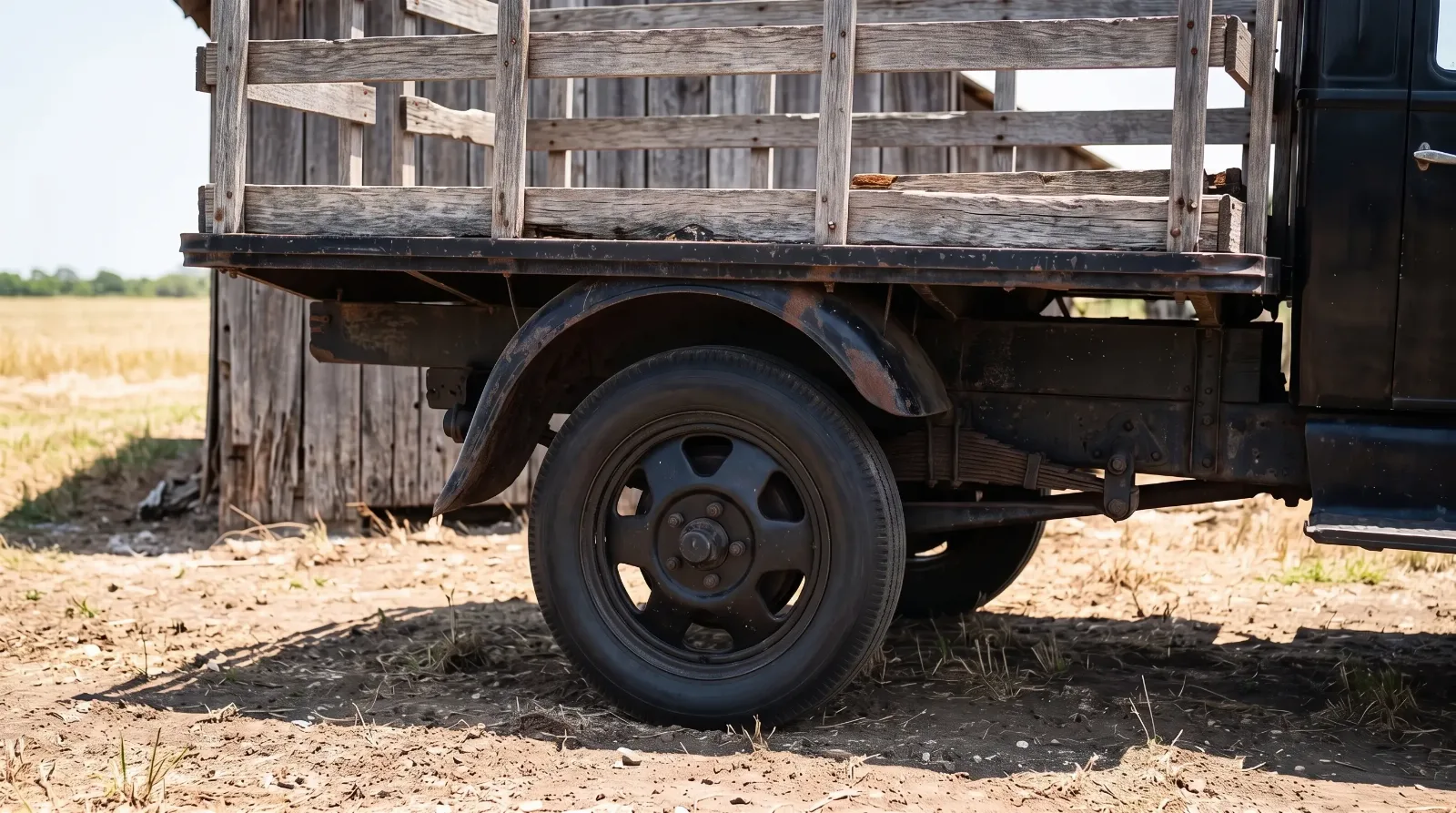
The quickest way to date an AA from across a yard is to look at the wheels. The 1928 trucks rode on spoked wheels. For 1929 Ford fitted 20 inch Budd disc wheels with six slots. For 1930 the disc went to five slots. The final raised-center wheel allowed dual rear wheels, which is what the heavier dump, tow, tanker and stake bodies needed.
That makes wheels a useful check on a seller's story. A truck sold as a 1928 with five-slot discs has had its wheels changed, which is common and not a problem in itself, but it tells you the truck has been worked on and maybe worked hard. Correct wheels for the year matter more if the truck is ever going to be judged.
How many, and what they carried
The figure usually given for total AA production is more than 480,000, out of about 4.3 million Model A and AA vehicles combined. That comes from a single hobby-press source, so treat it as a good estimate rather than a registry count. Ford's own US truck production totals ran 110,342 in 1928, 355,453 in 1929, 272,897 in 1930 and 186,394 in 1931, but those figures cover all Ford trucks, not only the AA.
The AA chassis wore just about every working body of its day: express pickups, panels, stake and platform trucks, ice wagons, milk trucks, ambulances, funeral coaches and school buses. Ford's own 1930 photographs show AAs working as dump trucks and garbage trucks, and closed-cab trucks were set up as coal haulers too, often with bodies from outside builders. The cabs were shared with the pickups, which is why the early history of the Model A pickup is tied so closely to the AA: through August 1928 the pickups got open cabs because the AA line was using every closed cab Ford had.
Buying a Ford Model AA truck in 2026
An AA is one of the easier pre-war trucks to keep running. The engine, ignition, carburetor and much of the electrical system are shared with the Model A car, and those parts are well supported. The truck-specific parts are where you have to look harder: the four-speed gearbox, the heavy rear axle, the larger brake drums, the wheels and the springs.
Bodies are the real cost on these trucks. A lot of AAs worked until they were worn out, and the wood in cabs, beds and stake sides went first. Many surviving trucks wear replacement bodies, some period and some modern. That's fine as long as it's described honestly. A truck with its original commercial body and some documentation of where it worked is a different thing from a nicely finished chassis with a new flatbed.
The other cost is weight. Everything on an AA is heavier than the car: springs, axle, drums, wheels, tires. Tires in the right sizes for 20 inch wheels are not cheap, and duals double the bill. Factor that in before you fall for a dump truck at a farm sale.
If you're shopping, start with Model AA trucks for sale and bring a list of what each year should have. And if you want to know where the AA fits in the larger arc that began with the T, there's the story of Henry Ford's Model T and what came after it. The AA ended in 1932 and handed over to the Model BB, but plenty of the trucks themselves kept working long after that.
Sources and notes
- Old Cars Weekly: Car of the Week, 1930 Ford Model AA (production span, bodies, totals)
- AutoRestorer: the 1930 Model AA Ford truck (wheelbases, transmission, axle ratios)
- Wikipedia: Ford Model AA (radiator, brakes, wheels by year, GAZ-AA)
- The Henry Ford: Ford production figures, US trucks by year
- Mac's Motor City Garage: the Ford Model A engine, 1928-31
- Wikipedia: Ford Dagenham
Related Reading
Have a
Ford Model AA
for Sale?
Reach thousands of serious classic car collectors across the US.
Sell It Here →
Selling a classic? Here's how: where to sell your classic car online
Are You a Classic Car Dealer?
List your full inventory and connect with targeted classic car buyers.
Join as a Dealer →
#ford model a
#Ford truck history
#vintage trucks
#GAZ-AA
#Ford Model AA
#Model AA truck
#1-1/2 ton truck

About the author
Robert Halloran
Texas-based classic truck enthusiast with decades of experience buying, restoring, and writing about American pickups from the 1940s through the 1980s.
Related Listings - Ford Model AA

Comments
Be the first to comment on this article.