
Ford spent 1993 telling Mustang GT buyers their 5.0 made less power than they thought, and in the same model year it sold a version that made more. That second car was the 1993 SVT Cobra. It was one of the last performance Mustangs of the Fox Body Mustang era, the first car from Ford's new Special Vehicle Team, and a lot more careful in its engineering than the bolt-on crowd gave it credit for at the time. I have had my hands inside a few of these. The story is in the parts list.
Car Features
8 min read
The 1993 SVT Cobra
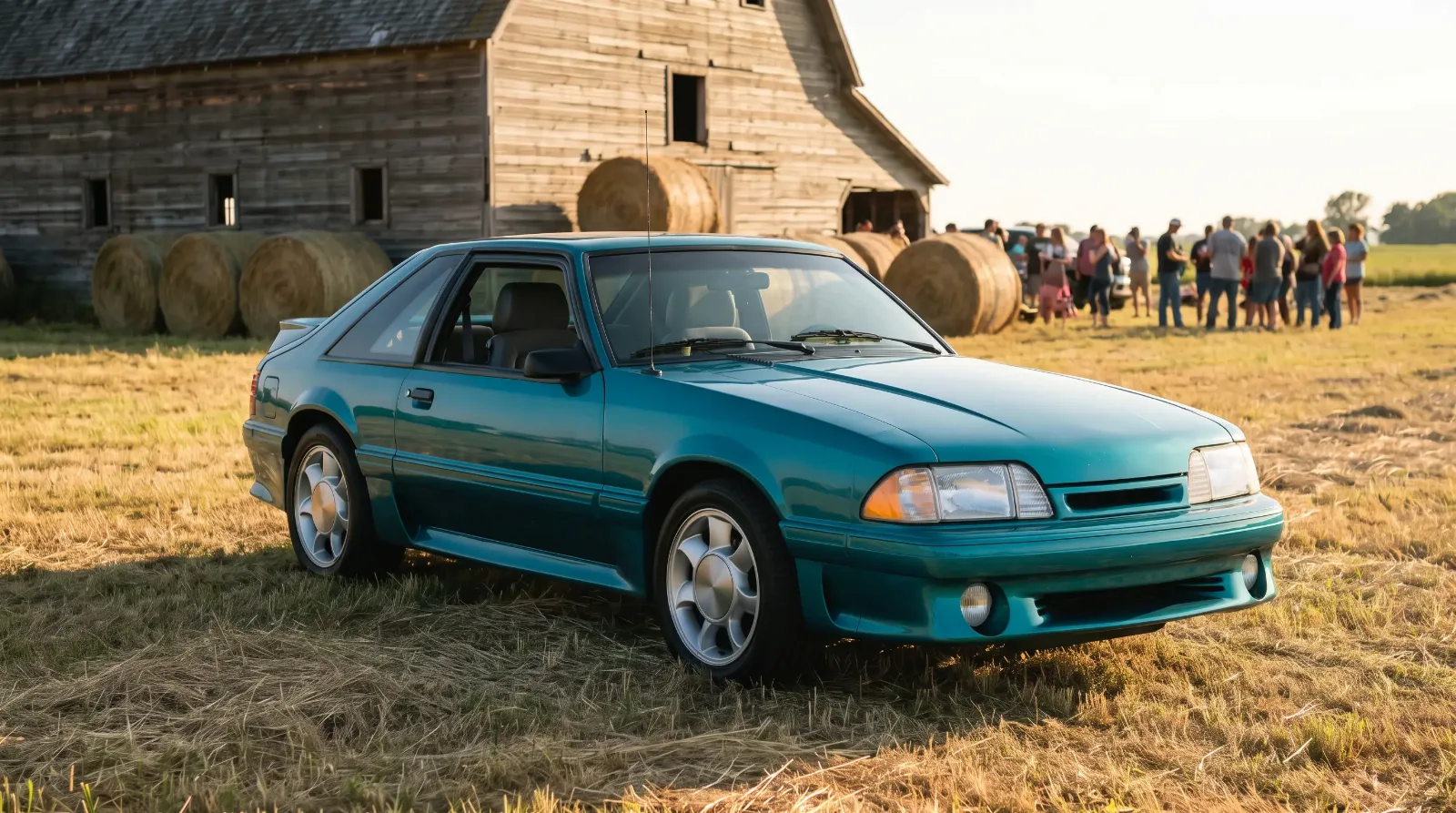
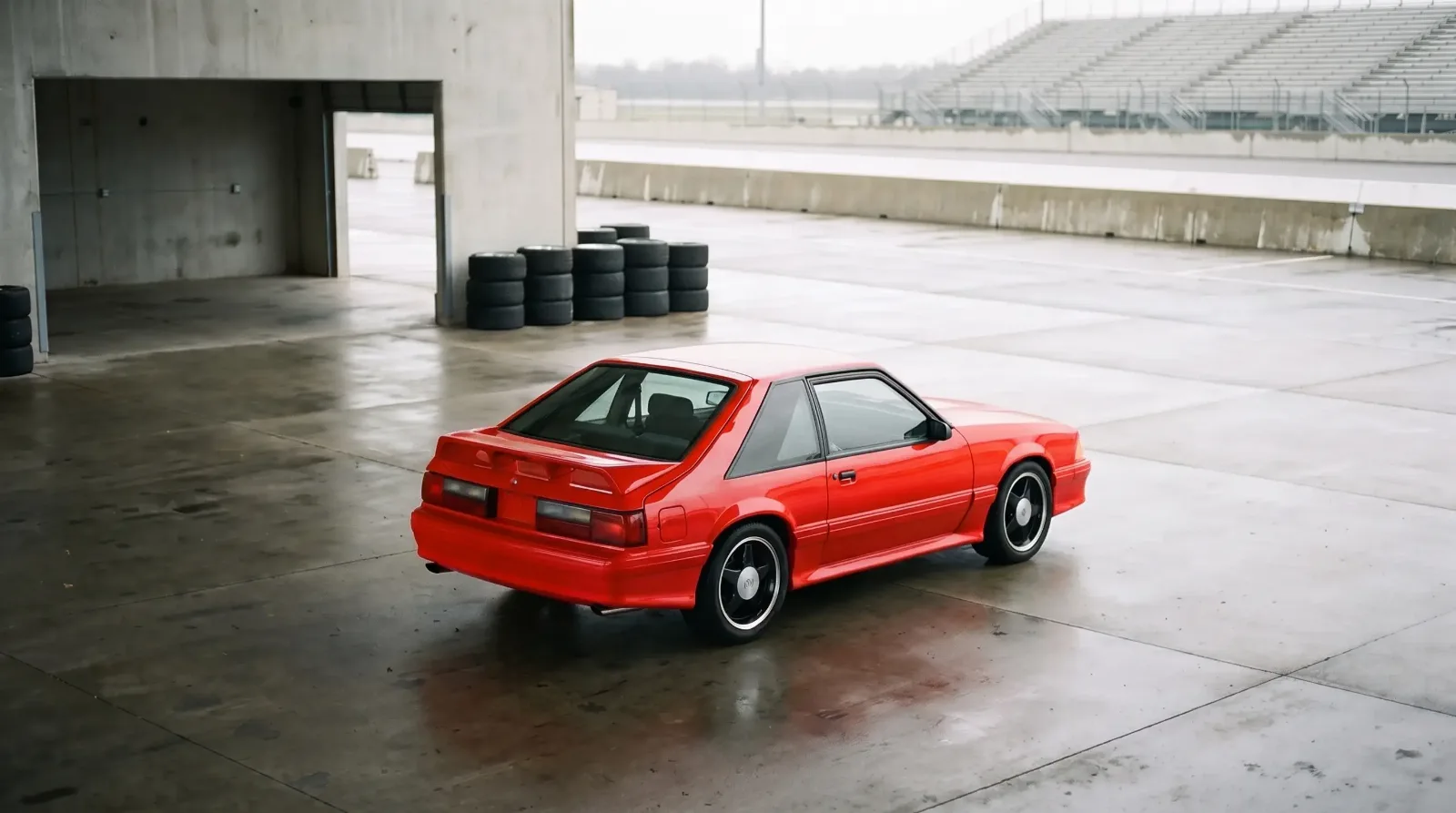
The 1993 SVT Cobra: GT-40 heads, 235 hp, rear discs and 17-inch wheels on the first car from Ford's Special Vehicle Team.
The wider family, from the SVO through the last Cobra R, is laid out in the Cobra and Saleen story. This piece stays with one car and one question: what did SVT actually do to a Fox Mustang to make it worth $18,505?
Why Ford built the 1993 SVT Cobra
Start with the number that embarrassed everybody. From 1987 through 1992 the 5.0 HO in a GT or LX was rated at 225 hp and 300 lb-ft. For 1993 Ford rerated it to 205 hp and 275 lb-ft. The explanation on record is that the older figure predated the mass-airflow system and the new one was more accurate, with minor cam changes and hypereutectic pistons going into all 302s that year. Whatever the reason, the regular 5.0 went into its final Fox season with a smaller number on paper.
Meanwhile the aftermarket had been eating Ford's lunch for years. Saleen had been selling its own Mustangs since 1984, and by the late 1980s it was building cars like the SSC, which you can read about here. Ford's earlier in-house answer, the turbocharged SVO, was gone after 1986. The company needed a factory performance Mustang that dealers could sell with a warranty and a straight face.
That job went to SVT, which took over production-car tuning from the old SVO group. The Cobra was shown at the 1992 Chicago Auto Show as the first vehicle of the newly formed team, and it shared the launch with the SVT F-150 Lightning pickup. One credited source names Janine Bay as the leader of the team that developed the first SVT Cobra. John Coletti ran SVT from 1993 to 2004, so this car sits right at the start of his watch.
What SVT changed under the hood
Here is where the Cobra earns its badge. SVT did not bolt on a blower or a nitrous kit. It took the same 5.0 HO block and worked on breathing. The big piece was a set of GT-40 cylinder heads in place of the regular 5.0's heads. On top went a Cobra upper intake. Then came a unique camshaft, larger fuel injectors and a 65 mm throttle body. Every one of those parts points the same direction: get more air in and out at the top of the rev range.
The result was 235 hp at 4,600 rpm. Torque is listed at 280 lb-ft in one major reference and 285 lb-ft in others, both at 4,000 rpm, so I give it as 280 to 285 and do not pretend to know which is right. Either way, the Cobra made 30 hp more than a 1993 GT on paper, from the same displacement and the same pushrod layout.
I have pulled the upper intakes off enough of these to tell you the work shows when you look at it. It is a tidy, factory-looking package. Nothing about it looks like a weekend at the parts counter, and that was the point. SVT wanted a car that ran like a modified Mustang and lived like a stock one.
| Item | 1993 SVT Cobra |
|---|---|
| Engine | 5.0 HO V8 with GT-40 heads, Cobra upper intake, unique cam |
| Fuel and air | Larger injectors, 65 mm throttle body |
| Rated power | 235 hp @ 4,600 rpm |
| Rated torque | 280 to 285 lb-ft @ 4,000 rpm (sources differ) |
| Transmission | T-5 five-speed manual only |
| Brakes | Discs front and rear |
| Wheels | 17 x 7.5-inch directional alloys |
| Dampers | Tokico |
| Curb weight | 3,255 lb |
| Base price | $18,505 |
| Production | 4,993 |
| Road & Track test | 0 to 60 mph 5.9 s; quarter mile 14.5 s @ 98 mph |
The chassis: brakes, wheels and a softer idea
The chassis work is the part people skip, and it is the part I respect most. The Cobra got rear disc brakes, so it stopped on discs at all four corners. It got Tokico dampers. And it rode on 17 by 7.5-inch alloy wheels, the first time a factory Mustang wore that size, in a directional turbine design cast separately for the left and right sides of the car.
The surprising bit is the spring rates. SVT went softer than the GT, not stiffer: the Cobra got linear-rate springs that were slightly softer than the GT's progressive-rate springs, and a thinner front anti-roll bar. My reading is that a Fox chassis puts more power down when the rear tires stay planted instead of skipping, and Car and Driver found the Cobra a more supple car than the GT with higher cornering limits. Anyone who has driven a stiffly sprung Fox on a rough back road knows exactly what they were fighting. Motor Trend's numbers, as quoted later in a comparison with the 1994 GT, put the 1993 Cobra at 0.87 g on the skidpad and 64.8 mph through the slalom.
The transmission was the T-5 five-speed manual and nothing else. No automatic. That kept the Cobra for people who meant it.
How the 1993 Cobra drove, looked and sold
Road & Track timed the Cobra at 5.9 seconds to 60 mph and 14.5 seconds at 98 mph in the quarter mile. Those are honest numbers for a 3,255 lb car on street tires in that era, and they put the Cobra clearly ahead of the regular GT in a straight line without turning it into a race car.
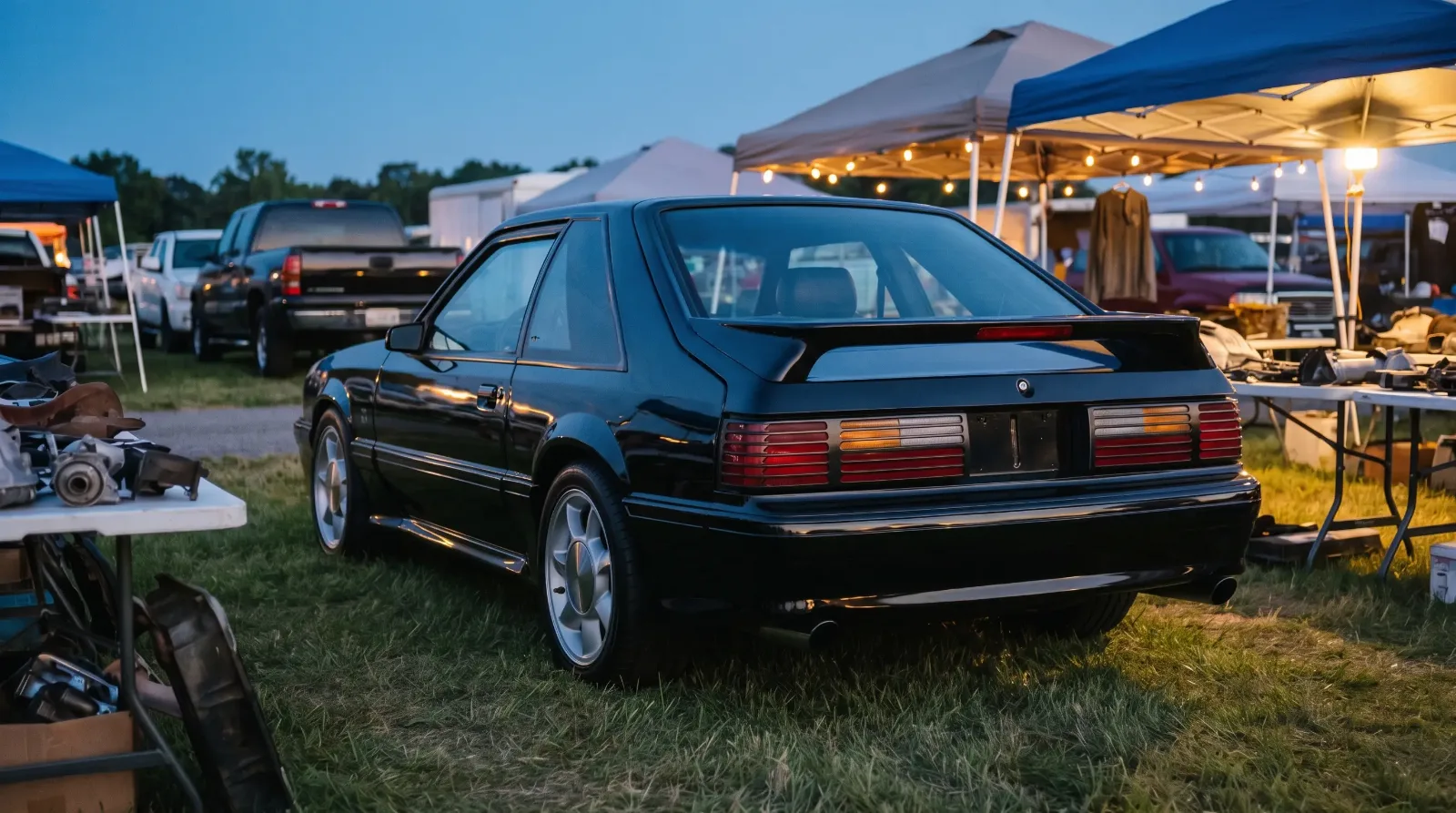
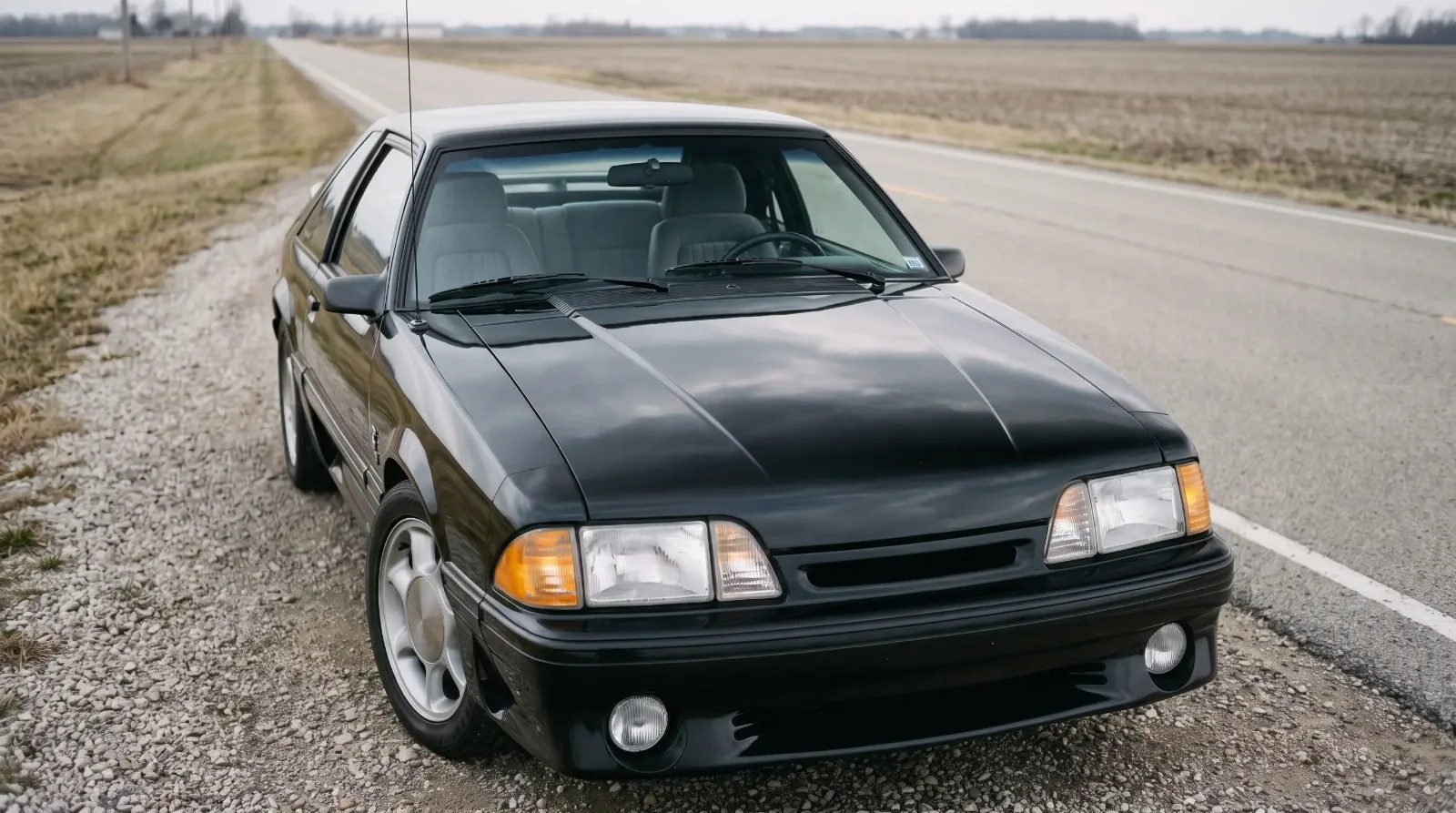
The look was restrained by tuner standards. The Cobra wore a slotted grille insert with a small running pony between the headlamps, side skirts without the GT's fake scoops, its own rear spoiler, SVO-style taillights and a rear fascia cut out for an exposed dual exhaust. Paint choices were Black, Teal Metallic and Vibrant Red, the red offered in clearcoat and non-clearcoat versions. The one published breakdown by color adds up to 5,100 cars, which means it counts the Cobra R too, so treat its per-color totals with caution.
The money side tells you where SVT placed the car. At $18,505, the Cobra listed above a 1993 Mustang convertible at $17,988. That was a lot of money for a hatchback in 1993. Ford built 4,993 of them out of a model year of about 114,000 to 115,000 Mustangs, depending on whose count you use. Alongside the street car, SVT built 107 race-ready versions, all Vibrant Red, and the 1993 Cobra R is a separate story about deleted rear seats, deleted air conditioning and bigger brakes.
"People called it a GT with a wing. Then you pull the intake and see the heads, the injectors and the throttle body, and you realize somebody at Ford sat down with a pencil. The 1993 Cobra is the most thought-through Fox they ever built."
Mike Sullivan
Where the 1993 SVT Cobra fits in the story
The Cobra lived exactly one year in Fox form. Fox production ended during 1993, SN95 production began that October, and the new car took over as the 1994 model. SVT carried the recipe straight across: the 1994 and 1995 Cobras used the same GT-40 head, Cobra intake, cam and injector formula and were rated at 240 hp. That continuity matters. The 1993 car was not a one-off experiment. It was the template SVT used until the four-valve 4.6 replaced the pushrod 5.0 for 1996.
It also settled the argument about whether Ford could do what the tuners did. The SVO had tried it with a turbo four and lost the room to a cheaper V8. The Cobra did it with the V8 everybody already loved, tuned for breathing and handling instead of headline numbers, and sold it in small enough numbers to keep it special. My one complaint is the same one owners had in 1993: 235 hp was a modest jump for the price, and the people who already had a modified 5.0 were not impressed.
Thirty-plus years on, the 1993 SVT Cobra is the Fox Mustang that tells you the most about how Ford's engineers thought when they were finally allowed to finish the job. If you want to see what the regular cars of that final Fox year look like next to it, there are 1993 Mustangs for sale worth comparing.
Sources and notes
- Ford Mustang SVT Cobra (Wikipedia)
- Ford Mustang, third generation (Wikipedia)
- 1993 Ford Mustang SVT Cobra (MustangSpecs)
- 1993 Ford Mustang prices and production (MustangSpecs)
- 1994 Ford Mustang GT, with Motor Trend handling figures (MustangSpecs)
- Swan Song of the Fox: a 1993 Ford Mustang SVT Cobra (The Truth About Cars)
Related Reading
Have a
Ford Mustang
for Sale?
Reach thousands of serious classic car collectors across the US.
Sell It Here →
Selling a classic? Here's how: sell my classic car
Are You a Classic Car Dealer?
List your full inventory and connect with targeted classic car buyers.
Join as a Dealer →

About the author
Mike Sullivan
Detroit-area muscle car enthusiast and restoration specialist with three decades of hands-on experience working on American iron.
Related Listings - Ford Mustang




Comments
Be the first to comment on this article.