
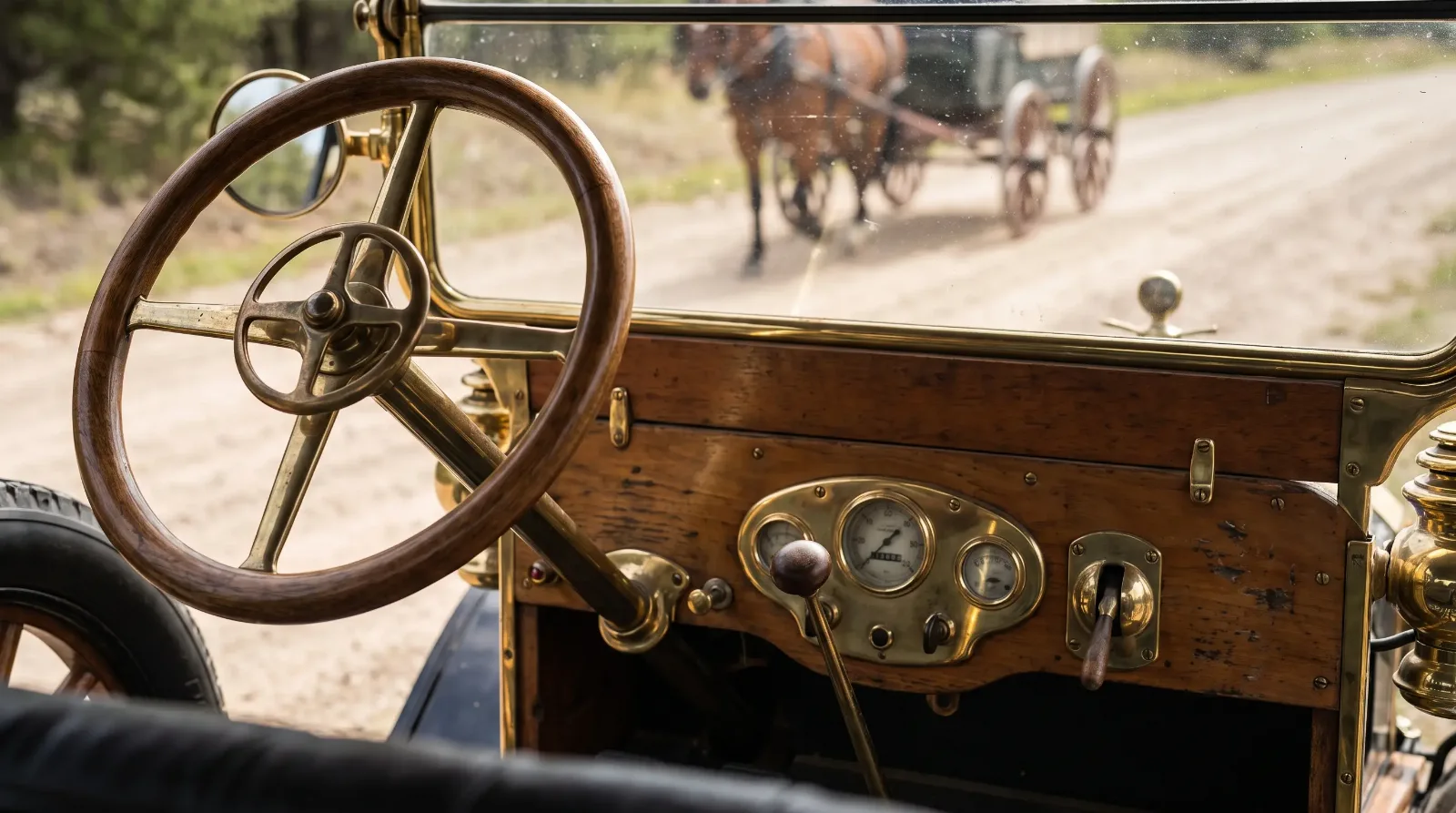
Between 1900 and 1917, several hundred American companies attempted to build and sell automobiles. Most of them failed within a few years, and the majority left behind no surviving cars at all, only a name in a period trade directory and, occasionally, a single advertisement. Studying this graveyard of brands is essential to understanding the brass era honestly, because the handful of names that survived, Cadillac, Ford, Buick, were the exceptions in a market defined by rapid, near-constant failure.
Car Features
6 min read
Forgotten Automakers of the Pre-WWI Boom
Hundreds of American car companies tried and failed before 1920. Here is why most of them disappeared, and why the few survivors mattered.
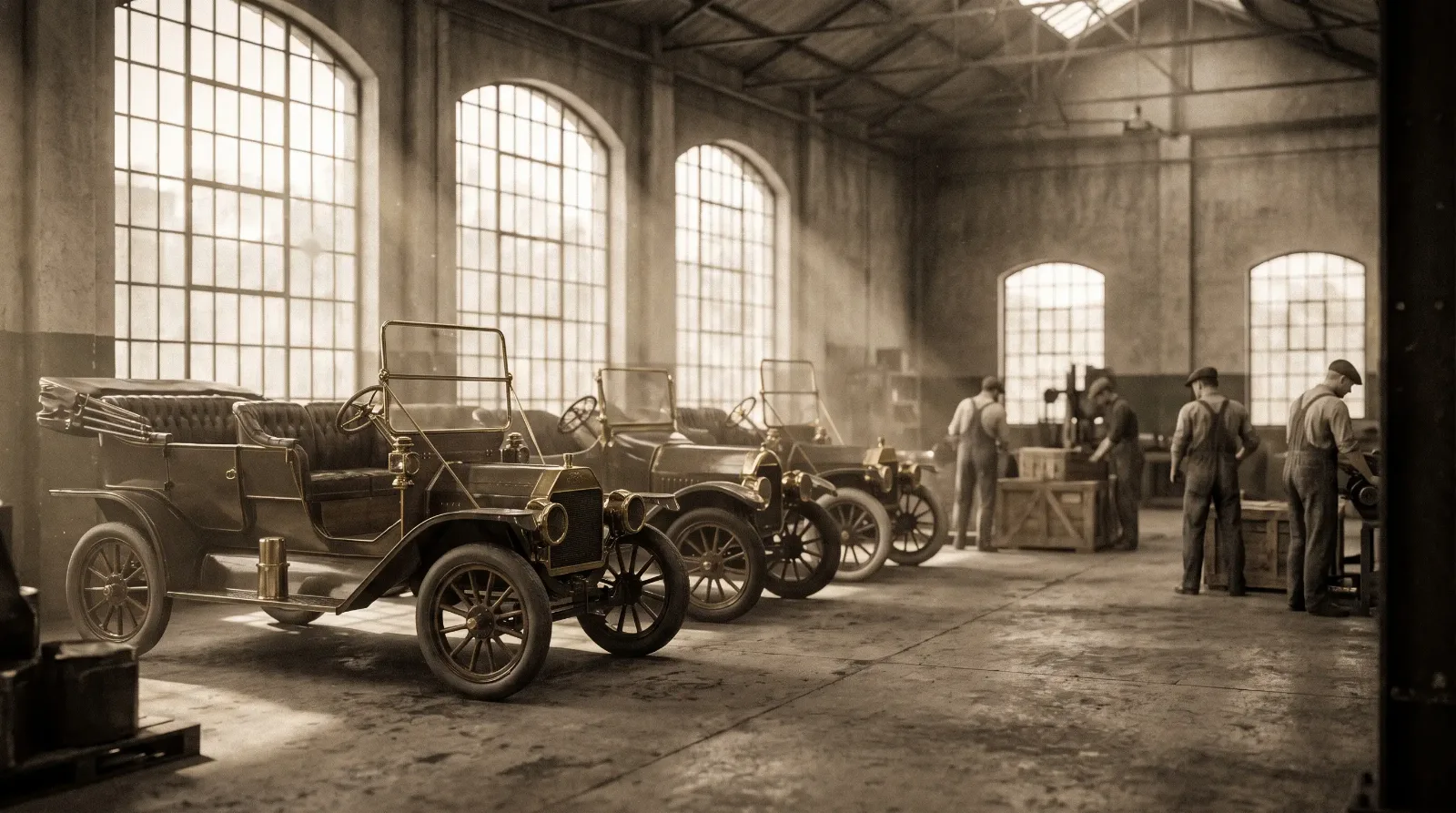
These lost makers were not necessarily poorly engineered. Many built genuinely competent cars. What they lacked, almost universally, was capital, distribution, or the manufacturing discipline to scale beyond a workshop operation, and the automobile business in this period punished that absence ruthlessly.
Why so many companies existed in the first place
The barrier to entering the automobile trade before the First World War was lower than it would ever be again. A machinist with access to a foundry, a small workforce, and a line of credit could reasonably attempt to build cars, since the underlying technology, the internal combustion engine, the differential, the basic chassis layout, was well enough understood by the 1900s that it did not require the enormous engineering investment a new manufacturer would need today.
This openness produced genuine innovation alongside genuine chaos. Regional manufacturers across the Midwest and Northeast, close to the machine shops and skilled labor the trade required, sprang up by the dozens, each betting that quality, price, or some particular engineering choice would carve out a durable niche. Very few bets paid off. The industry needed sustained capital for tooling, dealer networks, and advertising that most small firms simply could not raise once the initial novelty of the automobile wore off and competition intensified.
A few names worth remembering
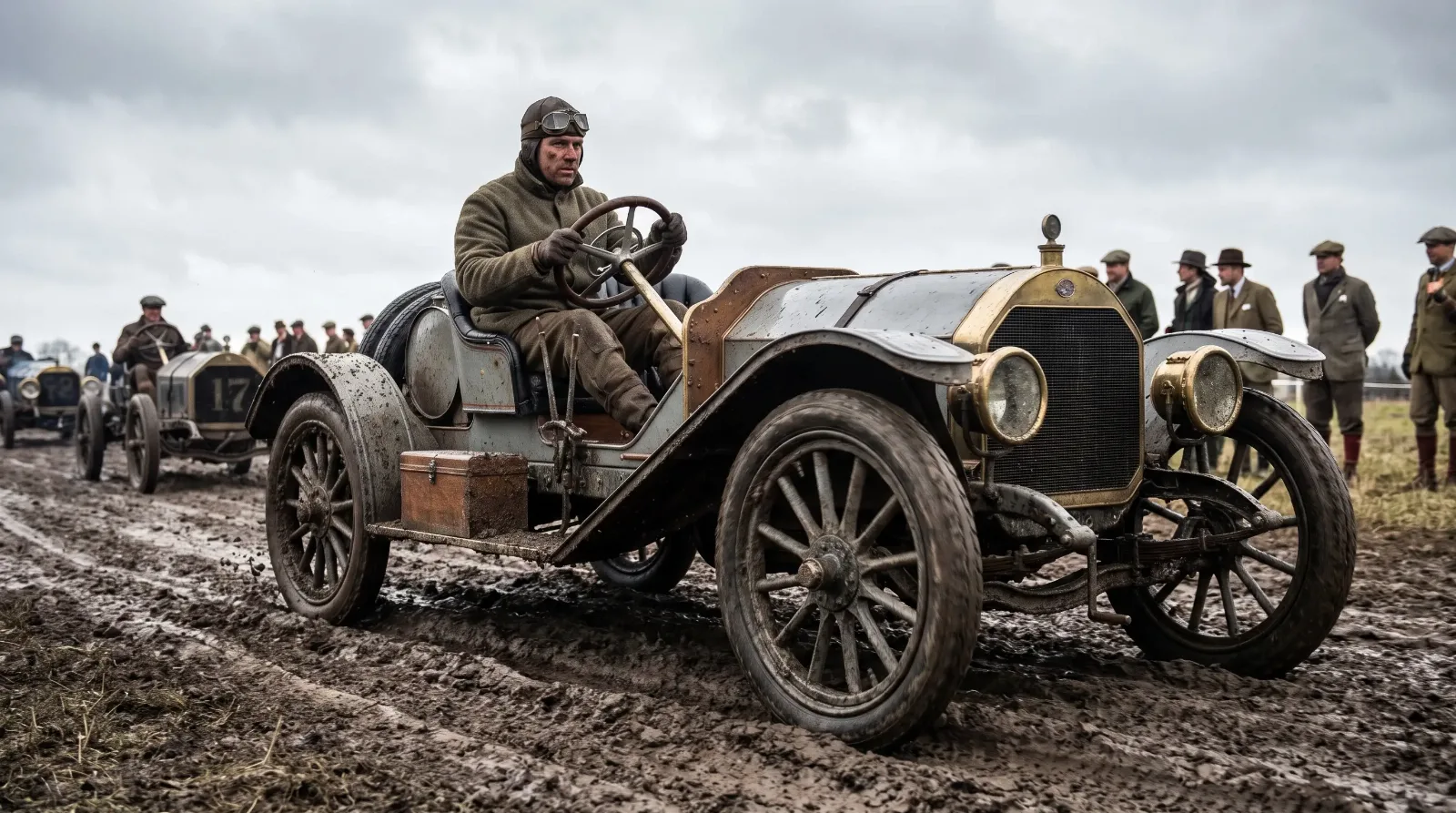
The Thomas Flyer, built by the E. R. Thomas Motor Company of Buffalo, deserves particular attention. It won the 1908 New York to Paris Race, a genuinely extraordinary feat of endurance across continents with roads that barely existed, and for a brief period the Thomas name carried real prestige. The company could not sustain that momentum against better-capitalized rivals, went into receivership in 1912, and was fully shut down within a few years, a reminder that a single spectacular achievement does not guarantee commercial survival.
The Simplex Automobile Company built genuinely well-engineered high-end cars in New York, competing directly with the finest European makes on quality if not on volume. Simplex survived into the 1910s before merging and eventually fading from the market, a common pattern among the era's luxury-focused independents, who built excellent cars for a customer base too small to sustain a standalone manufacturer once larger firms began offering comparable quality at scale.
Smaller regional names, the kind that rarely appear in general automotive histories, tell an even more precise story about this period. Firms building a few hundred cars a year in cities across Ohio, Indiana, and upstate New York, often named for their founder or their town, represent the true texture of the brass era far more accurately than the handful of survivors that dominate the popular narrative. Almost none of their output exists today, which makes any surviving example from one of these obscure makers a genuinely rare artifact rather than merely an old car.
What made a manufacturer survive versus disappear
The pattern across surviving company records is fairly consistent. Firms that lasted tended to solve distribution before they perfected engineering, building dealer networks and financing arrangements that could weather a slow sales year. Firms that disappeared often had the opposite priority, chasing engineering refinement or prestige projects while the business fundamentals underneath went unaddressed.
Capital access mattered enormously as well. Companies backed by an established industrialist or a bank relationship could survive a bad model year that would sink an undercapitalized competitor outright. This is part of why so many surviving brass-era names trace back to founders who had already built successful businesses in bicycles, carriages, or machine tools before entering the automobile trade. They understood how to run a manufacturing operation at scale, which turned out to matter more than any single engineering advantage.
How historians reconstruct a company that left almost nothing behind
Piecing together the story of a forgotten manufacturer is closer to detective work than conventional research. Corporate records for these firms rarely survive in any organized archive, since most were small enough that nobody thought to preserve their paperwork once the company folded. Historians instead rely on period trade publications, newspaper advertisements, patent filings, and the occasional surviving letter or invoice, cross-referencing scattered fragments to reconstruct even a basic production timeline.
Local historical societies, particularly in the small industrial towns where many of these firms operated, often hold the only surviving documentation, a factory photograph, a payroll ledger, a mention in a town history compiled decades later by an amateur historian. This is patient, unglamorous work, and it rarely produces a complete picture. Most forgotten automakers remain known only in outline, a name, an approximate production span, and a rough sense of what they built, with the finer details lost for good.
Why this matters to collectors and historians today
A car from one of these forgotten makers, when one does surface, carries a documentary value that goes beyond its mechanical condition. It is often the only physical evidence that a particular firm, and the ideas its engineers pursued, ever existed at all. Museums and serious collectors treat these survivors accordingly, prioritizing preservation of original components over the kind of aggressive restoration that might make more sense for a common Model T.
Reading the wider context of what these forgotten firms were competing against, and why the market consolidated so severely by the 1920s, is covered in the forgotten pre war car brands guide, which lays out the industry conditions that this graveyard of manufacturers had to operate within.
"Every one of these obscure names represents someone's genuine attempt to build something lasting, and most of them failed for reasons that had nothing to do with the quality of the car itself. That distinction matters when you are handling one of the rare survivors. You are not just looking at a car. You are looking at the physical remainder of an argument the market ultimately decided against."
Sarah Whitfield
The consolidation of the automobile industry was not only about which companies survived. It also reshaped how cars were built and driven day to day, including a fundamental design decision that most modern drivers never think to question. Keep reading to see how the industry settled on left-hand drive during this same period.
Sources and notes
Related Reading
Have a
Classic Car
for Sale?
Reach thousands of serious classic car collectors across the US.
Sell It Here →
Are You a Classic Car Dealer?
List your full inventory and connect with targeted classic car buyers.
Join as a Dealer →
#automotive history
#brass era
#forgotten pre war car brands
#thomas flyer
#simplex automobile
#defunct automakers

About the author
Sarah Whitfield
Third-generation classic car collector specializing in pre-war American and European coachbuilt automobiles. Researcher and concours enthusiast.
Comments
Be the first to comment on this article.