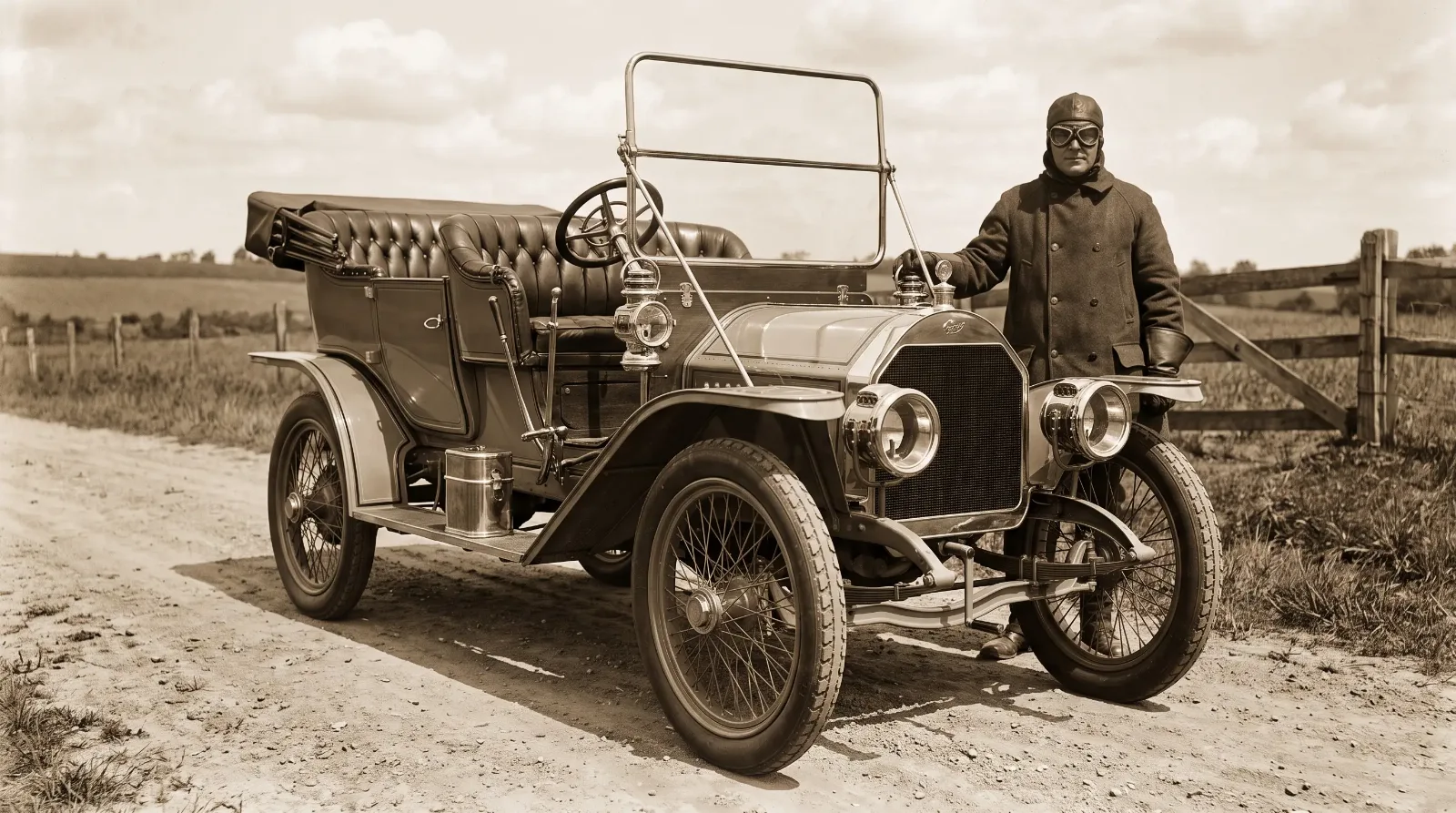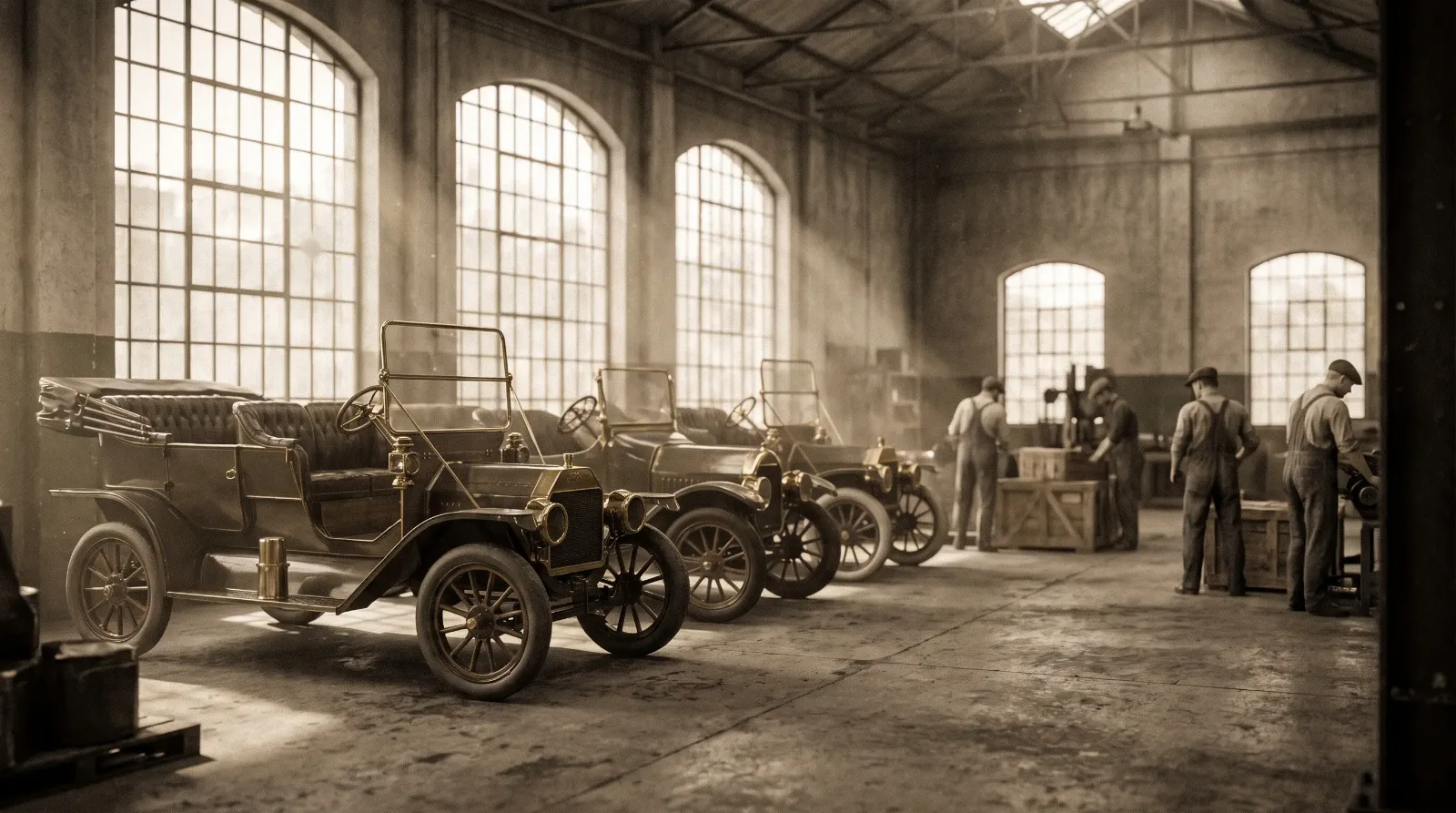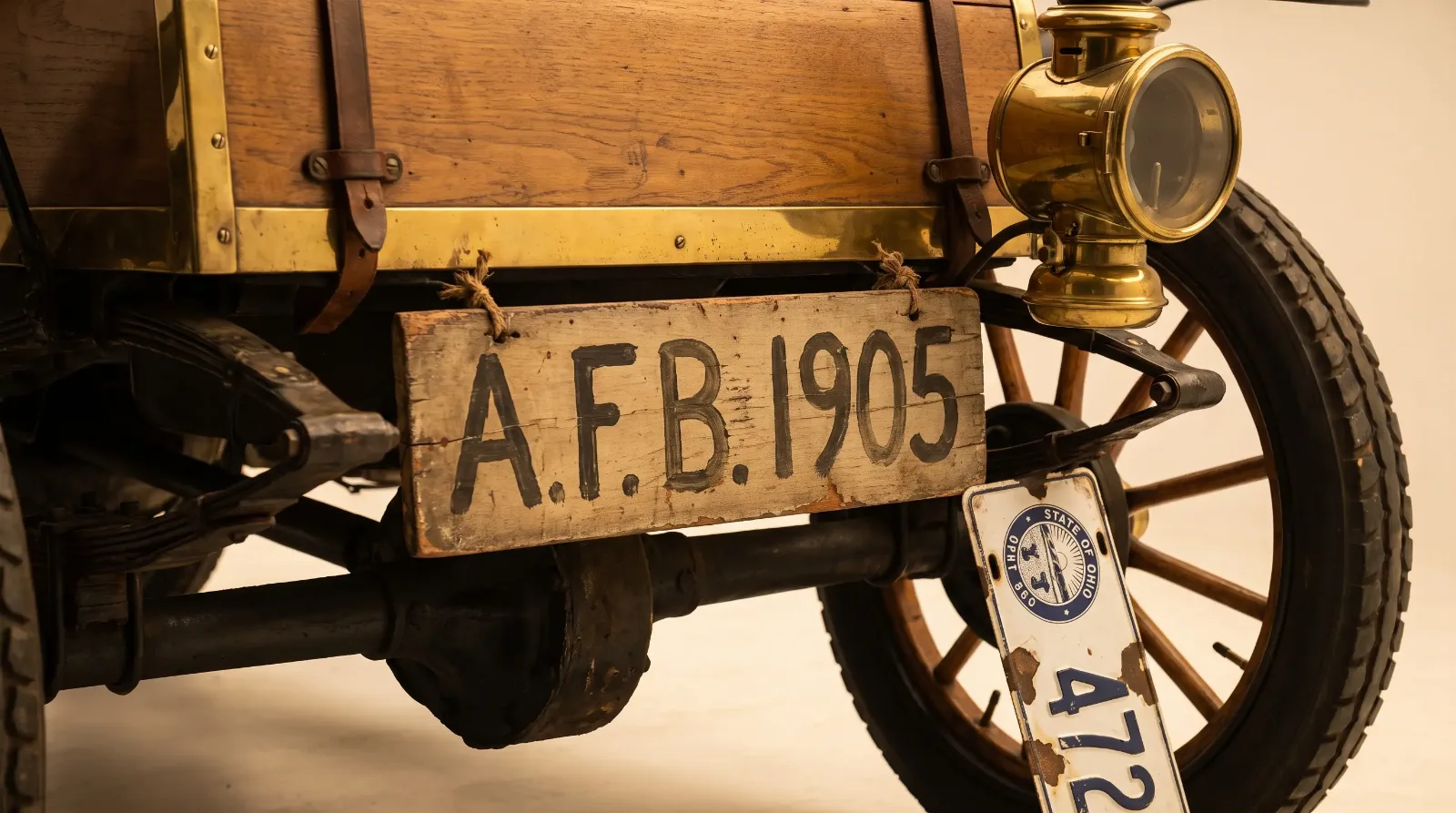
Ask most folks why we drive on the left side of the car in America and they will shrug and say it just always was that way. It was not always that way. Early on, plenty of American cars put the driver on the right, same as a lot of European makes still do today, and the switch to left-hand drive happened over a fairly short stretch of years in the 1900s and 1910s for reasons that had almost nothing to do with tradition and everything to do with practicality.
Why right-hand drive made sense at first
Carriages set the original pattern. A horse-drawn carriage driver sat on the right so his whip hand, usually the right, had clear room to work without catching the passenger beside him. When automobiles came along, a lot of early manufacturers just carried that layout over, since the people building the first cars were often the same shops that had been building carriages, and old habits carry a lot of weight in a young industry.
There was also a practical argument for right-hand drive that made sense on the roads of the day. Roads back then had no real shoulder to speak of, often just a ditch or a drop-off at the edge. Sitting on the right let a driver judge exactly how close he was riding to that edge, which mattered more than you would think when the alternative was putting a wheel in a rut and snapping an axle.
What actually flipped the switch
Here is where it gets interesting. As traffic on American roads started to grow, and as passing other vehicles became something drivers actually had to think about regularly instead of once in a while, the calculation changed. When you are steering around an oncoming wagon or another automobile, you want to be sitting on the side closest to the middle of the road, where the danger actually is, not on the side closest to the ditch. That put the case for left-hand drive on solid ground for the first time.
Ford gets a lot of the credit here, and rightly so. When the Model T standardized on left-hand drive starting around 1908, and then sold in numbers that dwarfed every other manufacturer combined, it dragged the rest of the American industry along with it whether competitors loved the idea or not. Once a car built by the hundreds of thousands was doing it one way, dealers and buyers alike started expecting every car to work the same way. Nobody wants to be the one manufacturer whose steering wheel is on the wrong side when a customer walks into the showroom.
Passing convenience mattered for a more everyday reason too. With the driver on the left, he could see the edge of the road and any oncoming traffic from the seat closest to where the actual danger was, and a passenger could get in and out on the curb side without stepping into the street. That is a small thing until you are doing it every day in a growing city with more cars on the road every year.
It did not happen overnight, and it was not universal
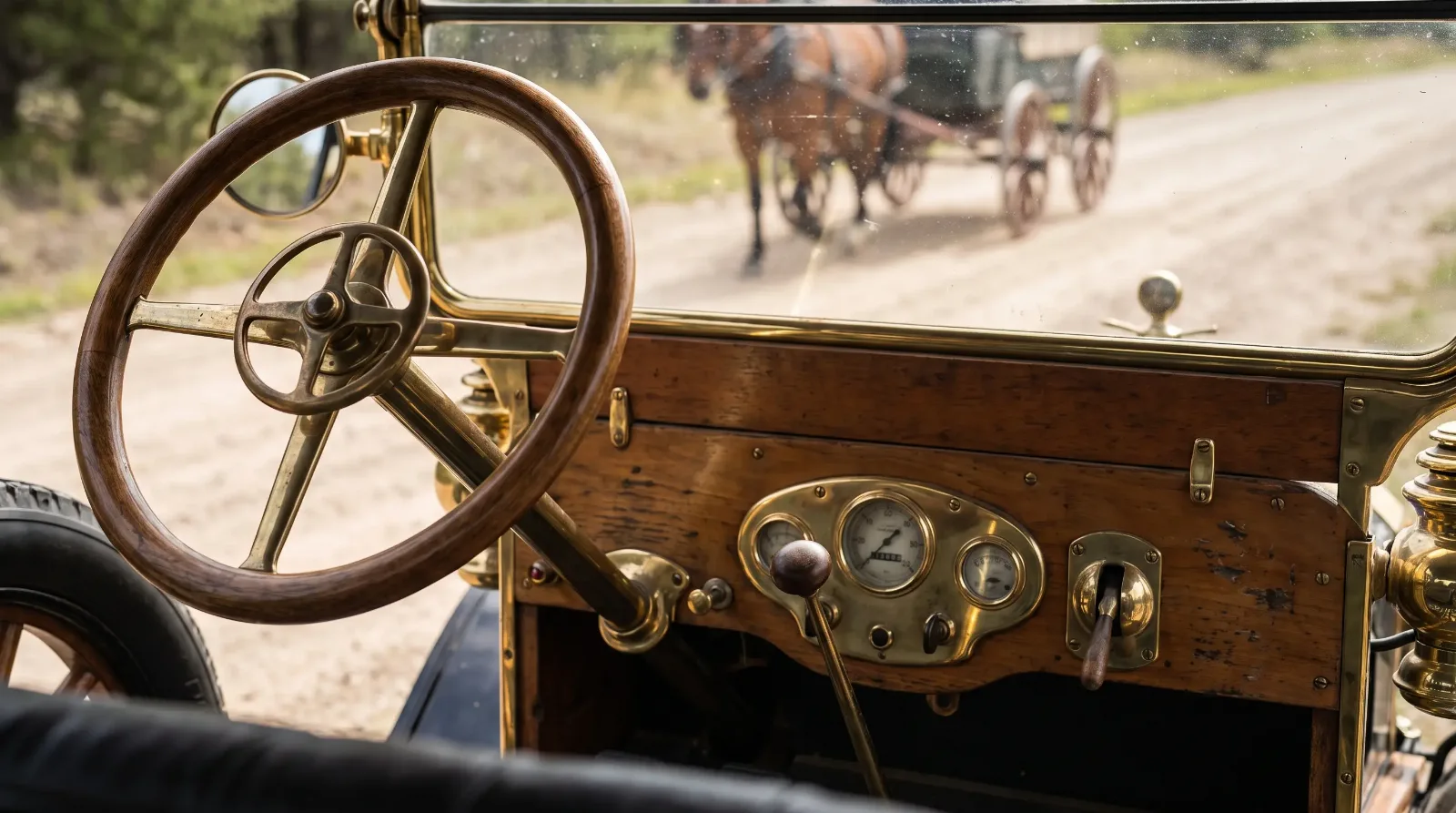
I want to be clear this was not a switch that flipped on one specific date. Plenty of manufacturers kept building right-hand-drive cars well into the 1910s, especially smaller regional outfits that were slower to change tooling and did not have Ford's volume pushing the market around them. You will still find brass-era survivors with the wheel on the right, and they are not mistakes, they are just cars built before or during the transition, when the industry had not fully settled on one answer yet.
By the early 1920s the matter was mostly closed for American-market cars. Left-hand drive had become the expected standard, tied to how American roads worked and how American manufacturers built at scale, and it has stayed that way ever since, long after the original reasons, the carriage whip hand, the ditch at the road's edge, stopped mattering to anybody.
Why this still matters if you own a brass-era car
If you are looking at a surviving brass-era car today, which side the wheel sits on tells you something real about when it was built and what market it was aimed at. A right-hand-drive American car from this window is not necessarily rarer in some universal sense, but it is a marker worth noting when you are trying to date a car or understand its original intended market, especially if the paperwork is thin.
It also connects to a bigger point about how fast the automobile industry was changing during these years. A buyer in 1905 and a buyer in 1915 were, in some real sense, driving different categories of machine, not just because engines got better, but because the whole idea of what a car should feel like from behind the wheel was still being worked out in real time.
"I had a fella bring a right-hand-drive brass-era car into a show once, and half the crowd assumed it was European. It was built right here, just built before the industry made up its mind. People forget how much was still up in the air back then."
— Gary Nowak
The full story of how American roads, and American driving habits, took shape during this decade is laid out in the history of early american cars story, which covers a lot of the same ground this piece touches on the steering side of things. And once you are driving on the correct side of the road, the next question was proving you were even allowed to be there in the first place. The next installment covers how registration and license plates got started in this same period.