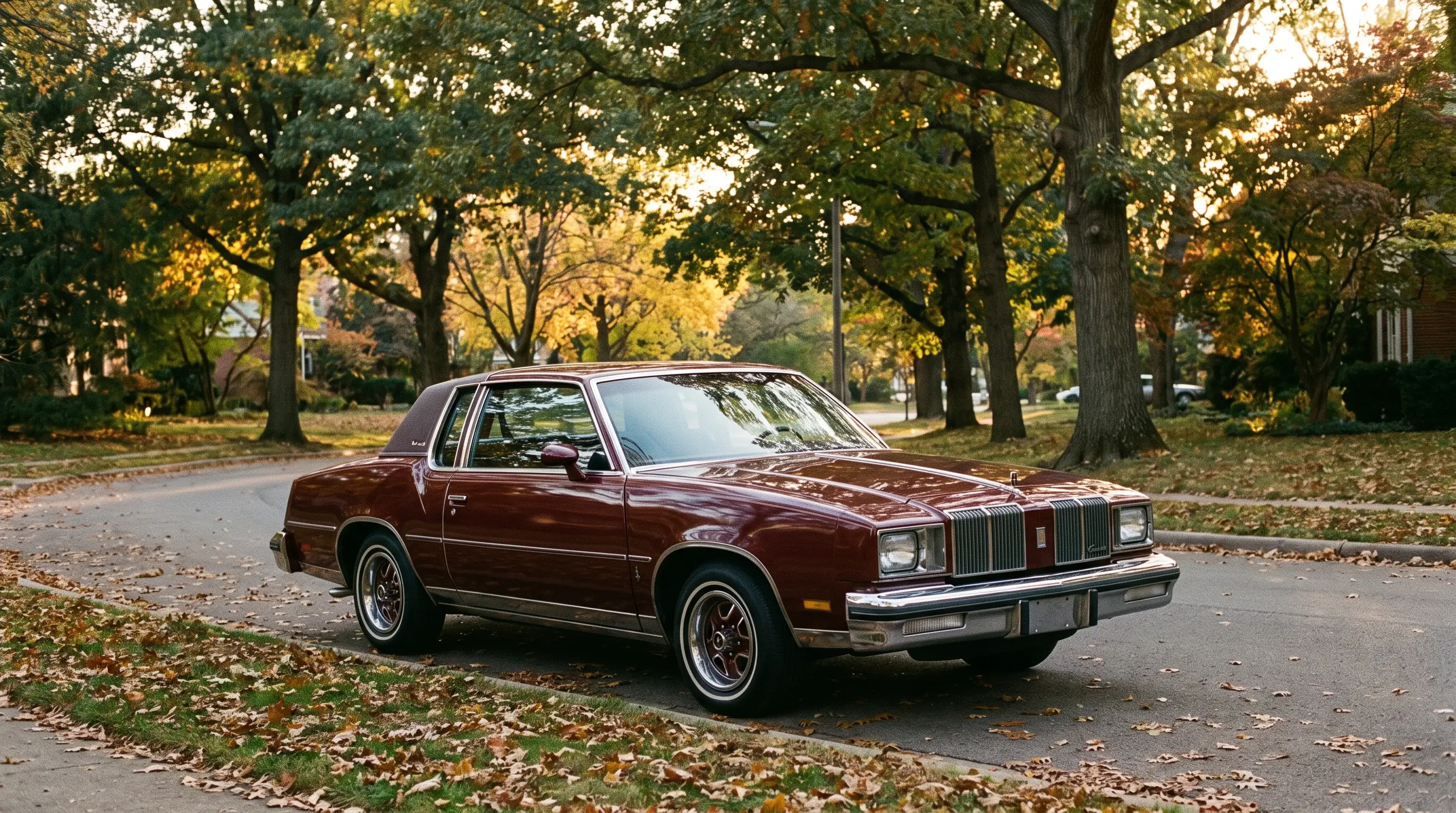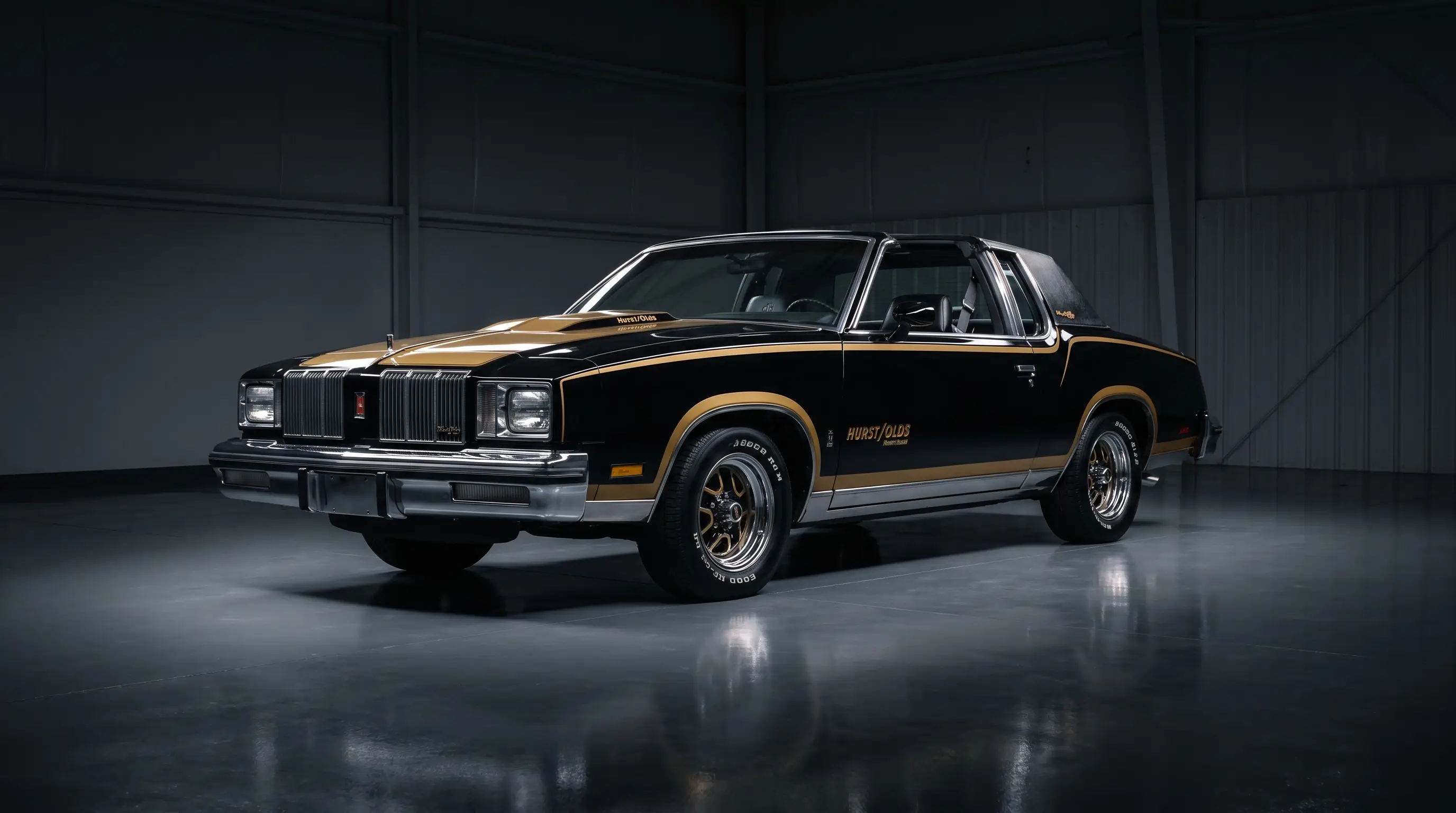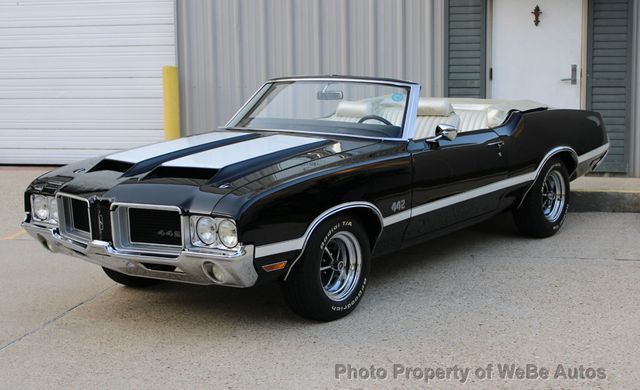
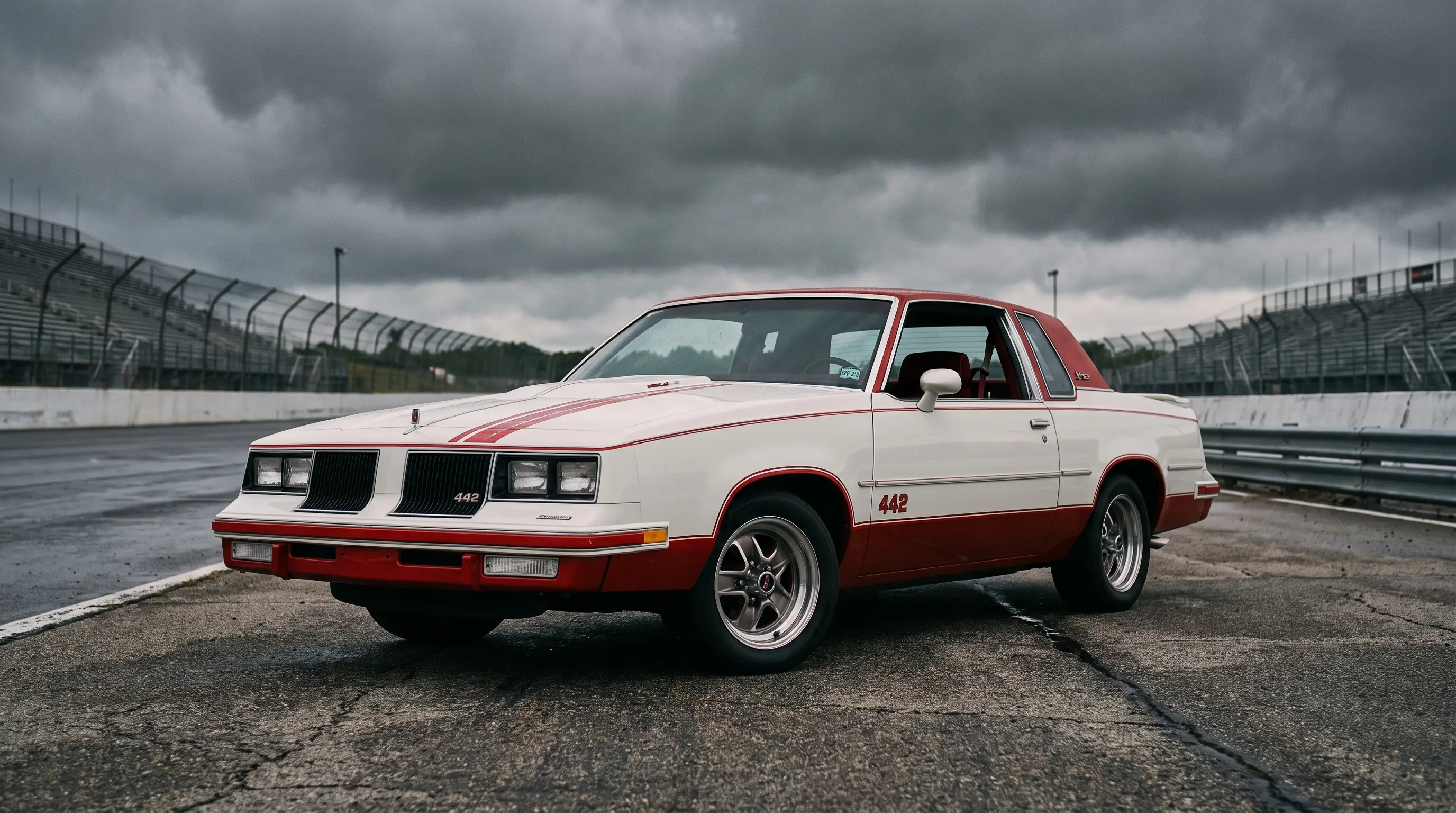
Oldsmobile let the 442 badge sit dark for four full model years after 1980, and when it finally came back in 1985 it landed on a car built to answer a very specific problem. Chevrolet's Monte Carlo SS had a NASCAR pedigree and a showroom full of buyers who wanted a piece of it, and Oldsmobile had nothing on its own G-body Cutlass lineup that could compete for that same customer. The Cutlass 442 G-body, built from 1985 through 1987, was the answer, and it is a stranger, more interesting car than its reputation as a badge revival suggests.
I have always thought this generation gets undersold in conversation, treated as a footnote between the real 442s of the 1960s and whatever came after G-body production ended. It deserves better than that, mostly because of what Oldsmobile actually chose to put into it.
A handling package, not a horsepower story
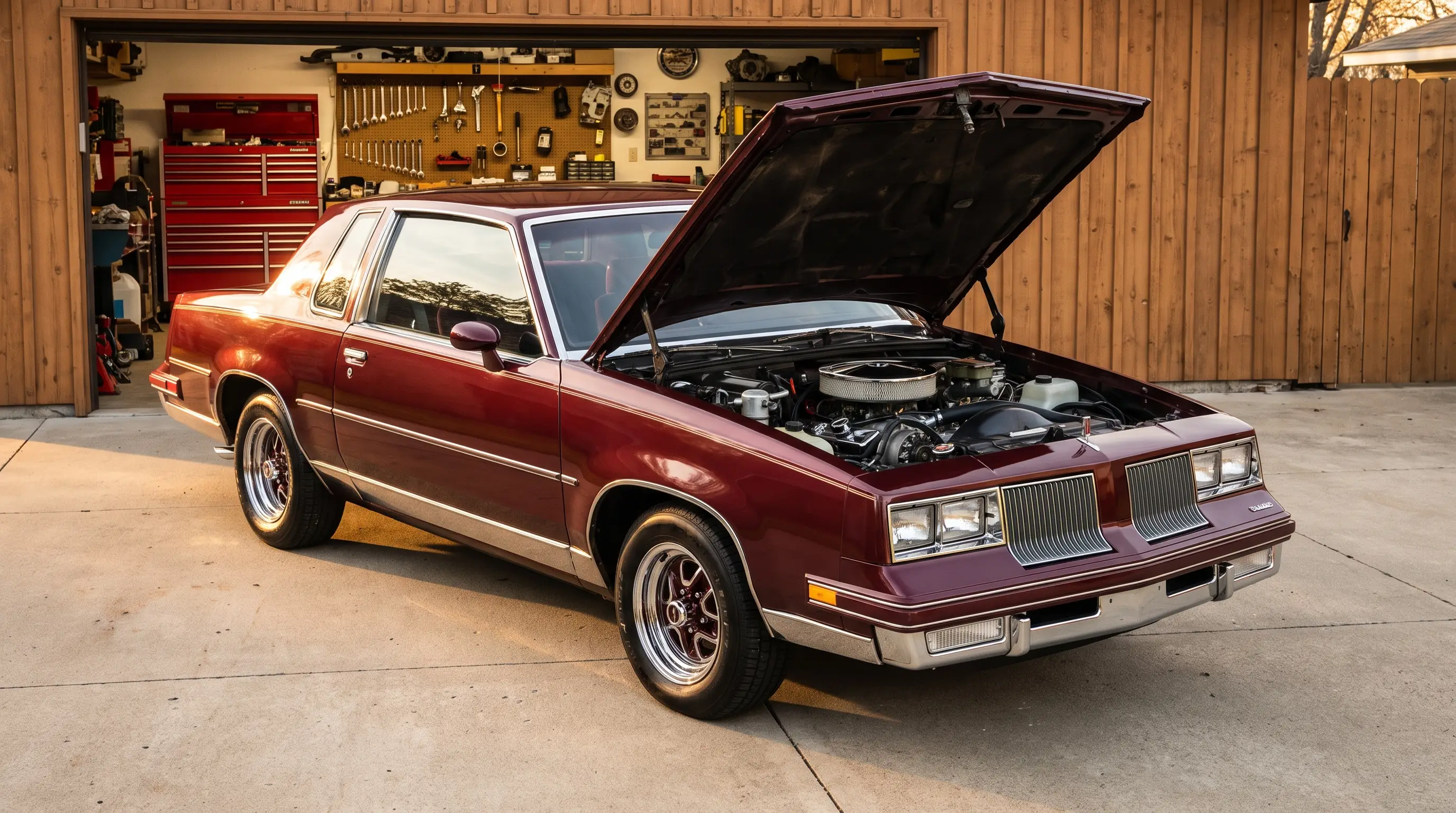
Here is the thing that surprises people who only know the 442 name from its big-block heyday: the 1985-1987 G-body 442 never got anything close to a big engine. The standard powerplant was Oldsmobile's own high-output 307 cubic inch V8, rated at 180 horsepower for 1985 and 1986 and dropping to 170 horsepower for 1987, paired with a 200-4R four-speed automatic overdrive transmission. That is a mainstream, emissions-compliant setup, the kind of engine you would expect under the hood of any ordinary Cutlass Supreme of the period.
What separated the 442 package was everything wrapped around that engine. Stiffer springs, a rear stabilizer bar, quicker steering, and 15-inch aluminum wheels turned a comfortable coupe into something that could actually hold a line through a corner, which was the whole point. Road testers at the time consistently pointed to the handling as the real story, treating the modest V8 as a known, honest quantity rather than the headline. That is a strange thing to say about a car wearing the 442 name, and it is exactly what makes this generation worth understanding on its own terms rather than measuring it against 1970.
Badges versus documentation
There is a wrinkle buyers need to know before shopping this generation. Some cars wearing 442 badging left the factory with the visual package alone, decals and wheels without the full suspension upgrade underneath, and the only way to tell the difference is checking the RPO codes against the factory build sheet. A car with the complete handling package, verified on paper, is worth a real premium over one wearing badges without the mechanical substance behind them. That lesson repeats across nearly every 442 generation Oldsmobile ever built, but it matters especially here, where so many buyers assume the badge alone tells the whole story.
Production numbers stayed modest across all three model years: about 3,000 for 1985, 4,273 for 1986, and 4,208 for 1987, landing in the low thousands rather than the tens of thousands the badge saw during its late-1960s peak. That scarcity, paired with a genuine factory paperwork trail, is a big reason collectors now treat this generation as a distinct, worth-chasing data set rather than an afterthought squeezed between more famous years.
What it feels like from behind the wheel
Drive a well-sorted 1985-1987 442 back to back with a base Cutlass Supreme and the difference is immediate, even if the numbers on paper look similar. The steering tightens up, the body stays flatter through a bend, and the whole car feels like it has a purpose beyond floating comfortably down the highway. It is not going to embarrass anything with a stopwatch, and it was never meant to. What it offers instead is a genuinely competent handling package wearing a name with real history behind it, at a moment when very few American manufacturers were bothering to try at all.
That combination, modest power matched to a package that actually delivers something, is why this generation has quietly gathered a following that goes beyond nostalgia. It rewards a driver who wants to feel the car work rather than just hear an engine make noise, and that is a different kind of appeal than the badge's earlier generations offered. For a look at this same platform's whole decade-long run, the cult-classic Cutlass covers the full story of how the G-body earned its reputation as one of the more beloved American coupes of its era.
| Specification | 1985-1987 G-body 442 Detail |
|---|---|
| Years produced | 1985-1987 |
| Base platform | Cutlass Salon coupe for 1985-1986, Cutlass Supreme coupe for 1987 (G-body) |
| Engine | Oldsmobile 307 cubic inch V8 (high-output) |
| Horsepower | 180 hp (1985-1986), 170 hp (1987) |
| Transmission | 200-4R four-speed automatic overdrive |
| Handling upgrades | Stiffer springs, rear stabilizer bar, quicker steering, 15-inch aluminum wheels |
"People want the 442 name to always mean the same thing, a big engine and a quarter-mile number. The 1985 car tells a different, quieter truth, that Oldsmobile could still build a genuinely good-handling coupe when it needed one, and put an honest badge on it instead of just chasing a memory."
— Patrick Walsh
Shopping this generation today
Anyone chasing a G-body 442 now should treat documentation as the deciding factor over anything else on the listing. Ask for the build sheet before you fall in love with the paint. A numbers-matching car with the complete handling package, confirmed against its original paperwork, holds its value in a way that a badge-only car simply does not, no matter how sharp the stripes look in the listing photos.
Mechanically, the 307 is a durable, well-understood engine with a deep parts network shared across the wider G-body family, so ownership costs stay reasonable relative to more exotic muscle-era iron. For a look at another angle on this same shared-platform story, another angle is worth reading. If this generation's mix of modest power and genuine handling has won you over, there is usually a good classic Oldsmobile Cutlass for sale waiting for someone who wants exactly this kind of car.