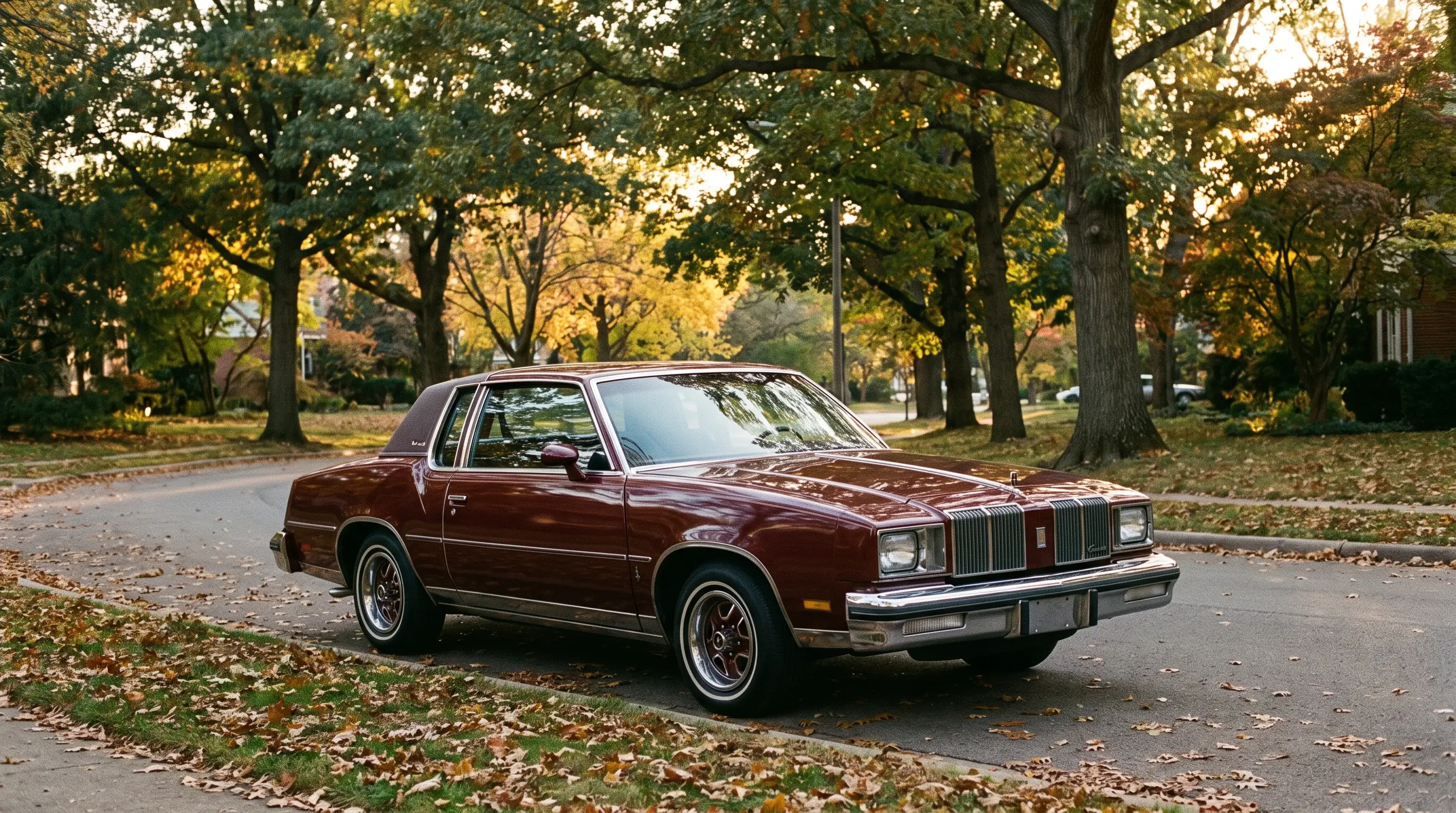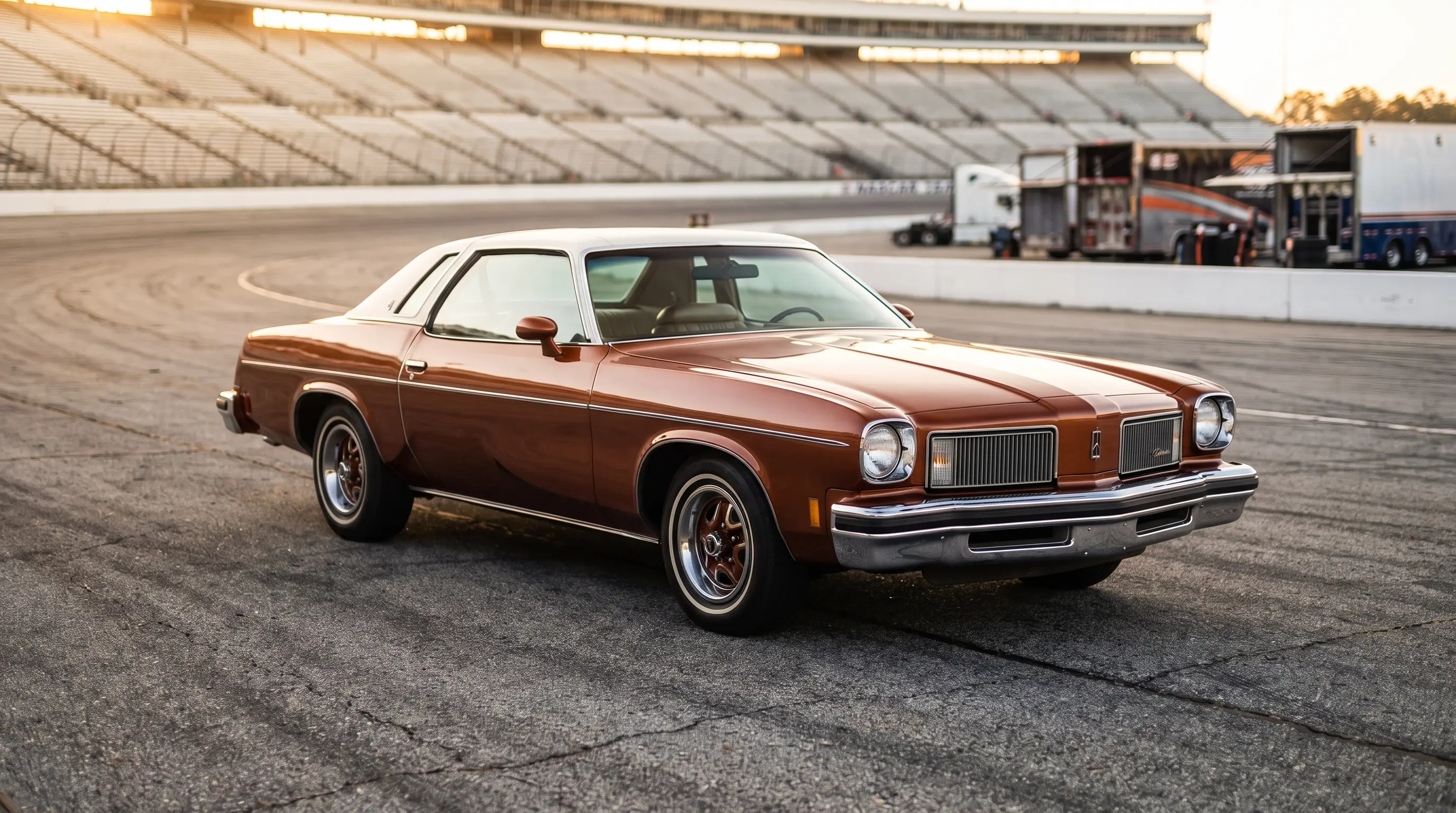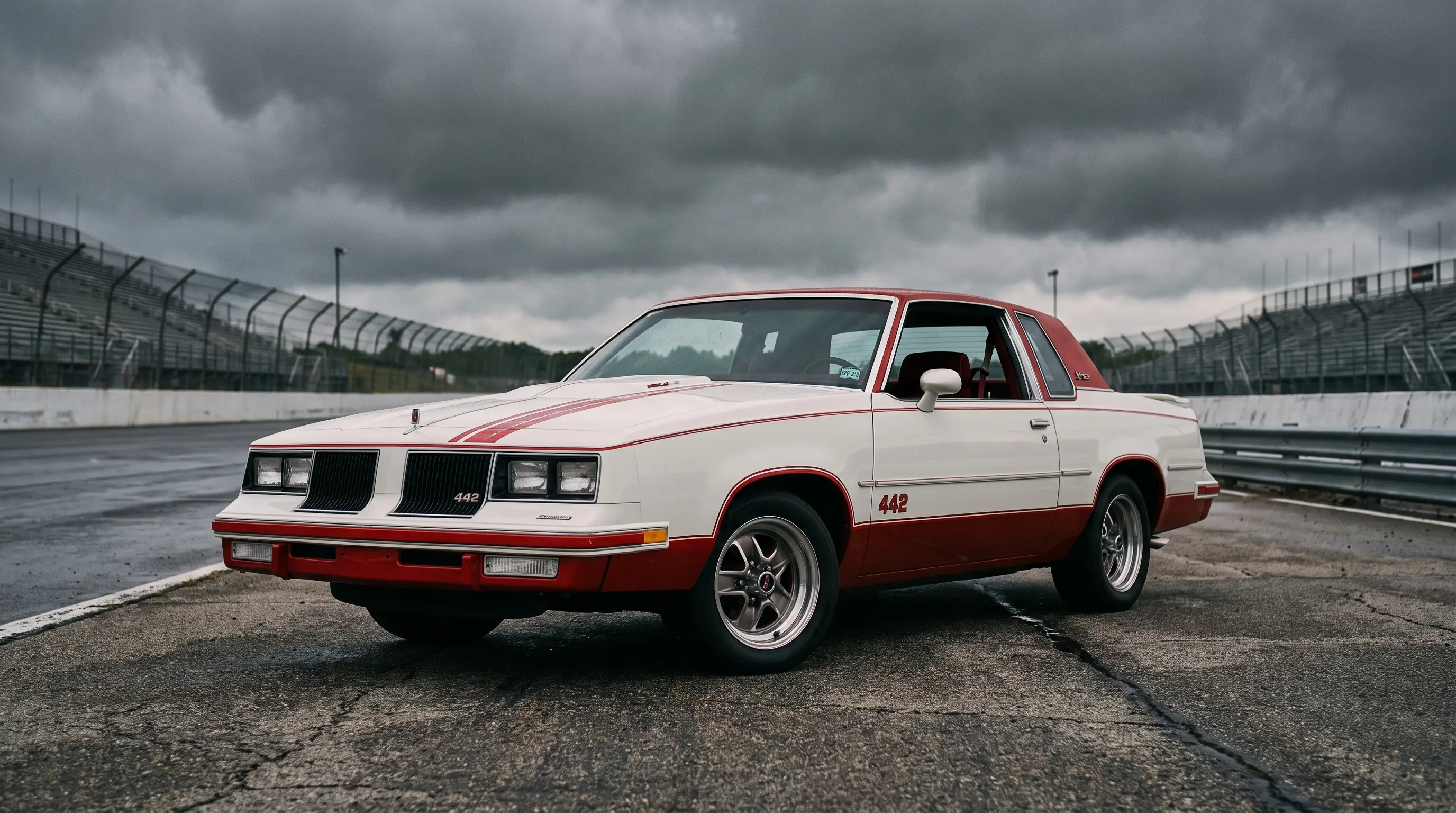
For three model years, from 1976 through 1978, there was no Hurst/Olds. The badge that had once meant a factory-built 455 under a scooped hood simply went dark, a casualty of insurance surcharges, tightening emissions rules, and a muscle car market that had mostly given up on itself. Then in 1979, on a smaller, boxier Cutlass Calais body that had nothing in common with the big Colonnade coupes of the early 1970s, the name came back. I have always found comeback stories more interesting than the originals, and the 1979 Hurst/Olds W-30 is a comeback story through and through.
It arrived quietly, without the fanfare that greeted the original 1968 Hurst/Olds, but it arrived at exactly the moment when American performance cars needed proof that the whole idea was not permanently dead.
Coming back on a smaller stage
The platform underneath the 1979 car tells you everything about how much had changed. The Cutlass Calais was a downsized G-body coupe, tighter and lighter than anything wearing the Hurst/Olds badge before it, built for a decade that had traded big-block torque for fuel economy regulations. Hurst Performance and Oldsmobile chose this smaller canvas deliberately, betting that the badge still had value even on a car that could never chase the numbers its predecessors had posted.
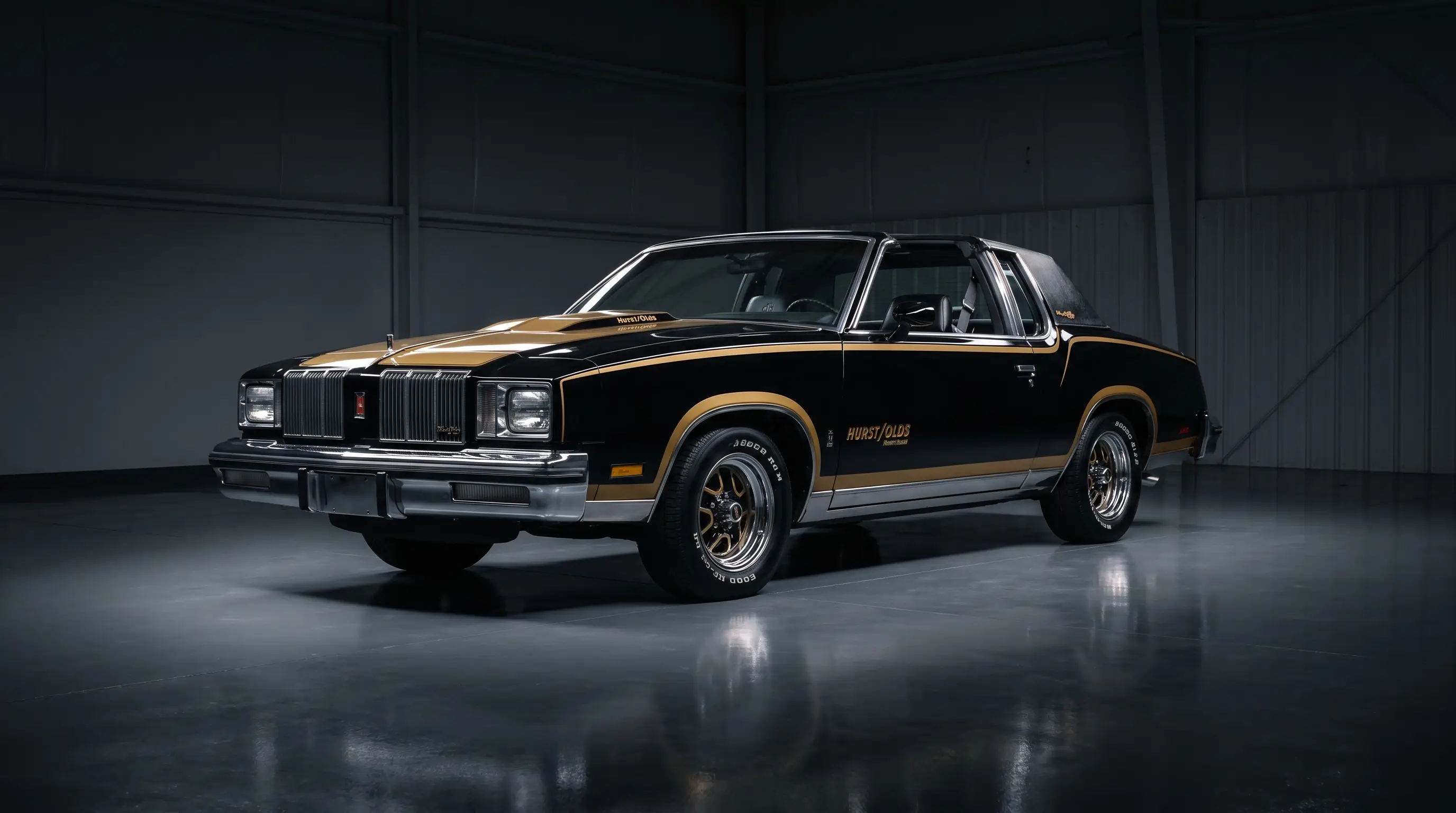
That bet paid off in a modest way. Oldsmobile's 350 cubic inch V8 under the hood made a number that would have embarrassed anyone shopping in 1970, 170 hp, but against the malaise-era competition on dealer lots that same year it looked respectable. Production stayed limited to approximately 2,499 units, split between two color combinations, which kept the car feeling special even without a big engine to back up the claim.
Black, silver, and a shifter you rowed by hand
What sold the 1979 Hurst/Olds was never really the drivetrain. It was the presentation. The car wore a black-and-gold or white-and-gold two-tone paint scheme, gold covering the hood, roof, and rear deck, that Hurst designed to be unmistakable from across a parking lot, and buyers could add a T-top roof option, fitted to roughly 537 of the 2,499 cars built, that quickly became the single most desirable feature of this generation. Slide behind the wheel and the console carried Hurst's Dual Gate shifter, a single lever running through two shift gates, one for smooth automatic driving and one for manual control, a gimmick that felt like a small act of rebellion in a decade of column shifters and detuned engines.
I think that shifter is the real story of this car. It did not make the 350 any faster. What it did was remind a buyer, every time they reached down and worked that dual-gate lever, that somebody at Hurst still cared about the theater of driving even when the horsepower numbers could not deliver the substance. The triple-lever Lightning Rod shifter that collectors associate most with Hurst/Olds cars did not arrive until the 1983 model, four years later. For readers curious how this same platform carried both this comeback and the era's other revived performance nameplate, keep reading the series to see how the 442 badge followed a similar path a few years later.
Judging it by the right yardstick
The mistake collectors make with this car, over and over, is measuring it against the 1970 W-30 and its 455. That comparison was never fair and it still is not. The right yardstick is 1979 itself: a year when quarter-mile times in the mid-16s were typical for anything wearing a performance badge, and when most manufacturers had simply stopped trying to build anything quick at all. Against that field, a documented Hurst/Olds with a T-top and the correct two-tone paint held its own, and it gave buyers something the rest of the malaise-era lineup mostly failed to offer: a car that still felt like an event to own.
That context matters when you are standing in front of one at a show, or shopping a listing online. The engine will not surprise anyone with a stopwatch. The paint, the shifter, and the story behind the comeback are what make the car worth the conversation, and that is exactly what draws people to the cult-classic Cutlass platform underneath it as a whole.
| Spec | 1979 Hurst/Olds W-30 |
|---|---|
| Base platform | Cutlass Calais coupe (G-body) |
| Engine | Oldsmobile 350 cubic inch V8, four-barrel |
| Horsepower | 170 hp |
| Production | Approximately 2,499 units |
| Signature features | Hurst Dual Gate shifter, optional T-top roof, black/gold or white/gold two-tone paint |
"Nobody bought a 1979 Hurst/Olds because it was quick. They bought it because Hurst and Oldsmobile refused to let the idea of a factory performance Cutlass just quietly disappear, and that stubbornness is worth more to a collector today than another tenth of a second in the quarter mile."
— Patrick Walsh
What to look for if you go shopping
Documentation carries more weight on this car than almost any other Hurst/Olds. The badges, stripes, and even the Lightning Rod shifter are all pieces that can be added to an ordinary Cutlass Calais after the fact, so a build sheet or dealer paperwork trail is what separates a genuine 1979 W-30 from a well-dressed imitation. Buyers should also expect T-top cars to command a real premium over the fixed-roof coupes, since that option became one of the defining features people associate with this specific comeback year.
Mechanically, there is little to fear. The 350 is a durable, well-understood engine with a deep parts network shared across the wider G-body family, so keeping one running is not the challenge. Finding one with clean paperwork and an honest history is. For anyone who wants the fuller arc of how the Cutlass name reached this point at all, how the Cutlass legend began traces the decades that made a comeback like 1979 even matter to buyers in the first place.
Sources and notes
- Oldsmobile Hurst/Olds, Wikipedia
- One of 1,165 Built: 1979 Oldsmobile Hurst/Olds W-30, Barn Finds
- 1979 Hurst-Olds W-30 Specs, Automobile Catalog
- A Cool Idea at the Time: The Hurst Lightning Rods Shifter, Mac's Motor City Garage
- Car of the Week: 1979 Hurst/Olds, Old Cars Weekly
- 1979 Hurst/Olds gold color code discussion, GBodyForum