
A grille is the first thing you read on a luxury car, often before you register the badge above it. For most of the twentieth century it did real work, feeding air to the radiator behind it, but it also carried the marque's face. A Packard did not look like a Cadillac, and neither looked like a Rolls-Royce, and the grille is where that difference lived. Over roughly six decades the American and European luxury makes settled into a handful of recurring patterns, and three of them, the egg-crate, the waterfall, and the split, still define how we recognize a car from across a concours field.
Car Features
6 min read
Grille Design Evolution: Egg-Crate, Waterfall, and Split Grilles
How egg-crate, waterfall, and split grilles gave classic luxury cars their faces, from Cadillac and Packard to Rolls-Royce and BMW.
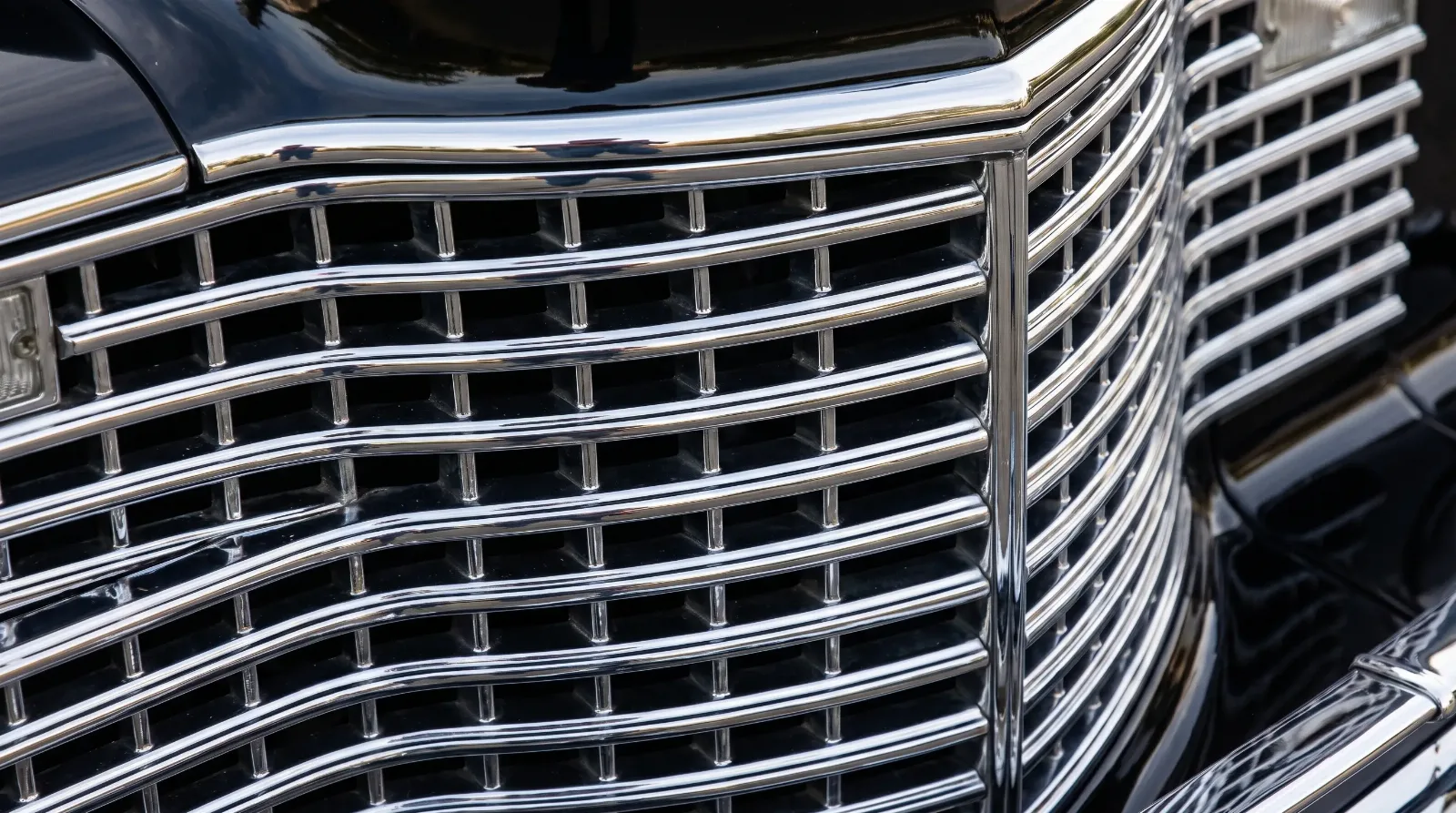
The grille began as pure function. Early radiators sat exposed at the front of the car, and the shell around them was a simple protective frame. What happened next is the interesting part, because designers realized the shape could be proprietary, and by the 1930s the radiator surround had become a signature that a brand would defend for decades. To see how this fit into the broader vocabulary of the era, it is worth reading the design language hub, which places grille styling alongside the other cues that signaled status.
The egg-crate and the geometry of prestige
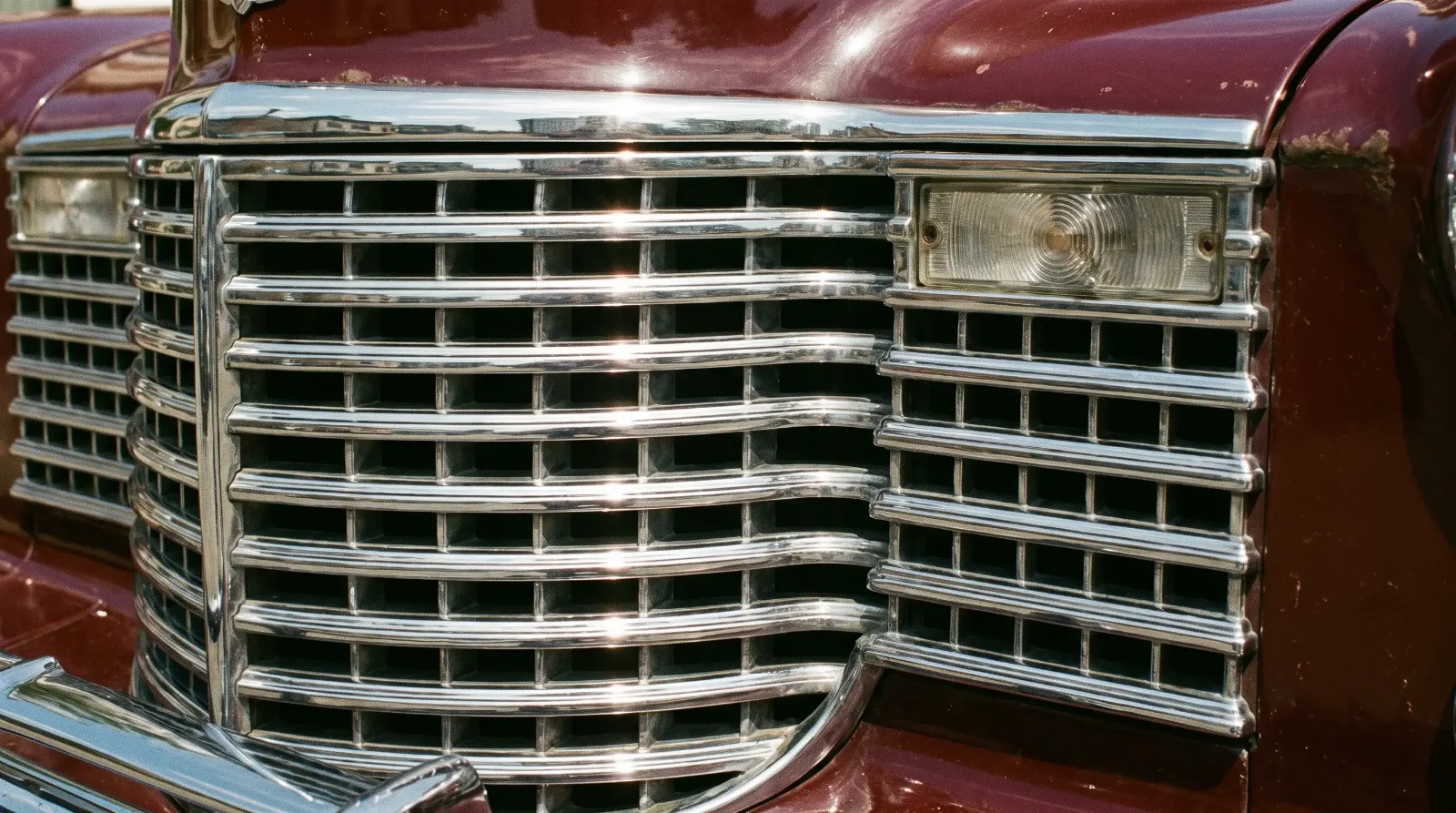
The egg-crate grille takes its name from exactly what it looks like, a fine crosshatch of horizontal and vertical bars forming small rectangular or square cells. Cadillac made it a house style. The 1941 Cadillac wore a wide, low egg-crate grille that read as expensive precisely because it was so finely detailed, and the division kept refining the pattern through the postwar years. The appeal was partly optical. A dense grid catches light on every bar, so the front of the car sparkles in a way a plain opening never could.
Egg-crate work was also a quiet statement about manufacturing. A grille with dozens of individual bright cells, each one chromed and fitted, cost more to tool and assemble than a simple slotted panel. Buyers may not have known the tooling economics, but they registered the density as richness. The motif never entirely disappeared. It faded when heavy chrome fell out of fashion, then returned whenever a marque wanted to reach back toward its own heritage.
The waterfall and vertical drama
Where the egg-crate spreads sideways, the waterfall grille runs down. It uses vertical bars, usually bright, cascading from the top of the grille opening to the bumper line, and the effect is meant to suggest height and formality. The style peaked in the late 1930s and around the 1942 model year, when American stylists were drawn to tall, narrow radiator themes that made a car look imposing from the front three-quarter view.
Vertical grilles carried a particular association with dignity. Packard held onto its tall, upright radiator shape, sometimes called the ox-yoke or tombstone for its distinctive outline, long after rivals had gone lower and wider, because that verticality was the brand's inherited face. A waterfall arrangement of thin bright bars within a tall opening reinforced the same idea. The car was not crouching. It stood up straight, the way a formal building does, and that posture read as old money even when the chassis underneath was thoroughly modern.
The split grille and the divided face
The split grille breaks the opening into two halves separated by a body-colored or bright center section. In American luxury and near-luxury design the most famous adoption is Pontiac, which introduced a split grille for 1959, briefly abandoned it, and then made it a permanent brand signature for decades. The European precedent is older and even more recognizable. BMW's twin-kidney grille, first seen on the BMW 303 in 1933, is a split grille raised to the level of trademark, and it has survived in some form on nearly every BMW since.
A split grille solves a specific design problem. A very wide single opening can look heavy and undifferentiated, especially as cars grew broader through the 1950s and 1960s. Dividing it gives the front a center point, a place for the eye to settle, and it lets the designer align the split with the hood ornament and the crease down the hood. Done well, it organizes the whole front of the car around a spine. Done poorly, it just looks like two grilles that could not agree.
| Grille style | Signature example | Peak era |
|---|---|---|
| Egg-crate | Cadillac (1941 onward) | 1940s-1950s |
| Waterfall (vertical bars) | Packard, late-prewar American | late 1930s-1942 |
| Split | Pontiac (1959), BMW kidney (1933) | 1930s and 1959 onward |
| Temple / shell | Rolls-Royce, Bentley | 1900s-present |
Why the grille outlasted the radiator
By the time engineering moved the radiator behind more efficient cooling arrangements, the grille had long since stopped being only a functional necessity. It had become identity. That is why the shape survived the transition, and why marques guard their grille silhouettes so carefully. A Mercedes-Benz upright grille with the star, a Rolls-Royce temple, a BMW kidney, and a Cadillac egg-crate are all recognizable in outline alone, stripped of color and badge.
"When you study these cars closely, you learn to date them by the grille before you check anything else. The pattern tells you the decade, the marque, and often the price class the car was built to occupy. It is the most honest single detail on the front of an automobile, because a company chose that face on purpose and defended it for years."
Sarah Whitfield
The grille is a small area of a large machine, yet it carries a disproportionate share of the car's character. Egg-crate density signaled expensive assembly, waterfall verticality signaled formality, and a split face gave a broad car a center and a spine. Once you can name the pattern, the front of any classic luxury car becomes legible, and the next detail to study is what waited behind the doors rather than in front of the hood, which is next: Leather vs. Woodgrain.
Related Reading
Have a
Classic Car
for Sale?
Reach thousands of serious classic car collectors across the US.
Sell It Here →
Are You a Classic Car Dealer?
List your full inventory and connect with targeted classic car buyers.
Join as a Dealer →

About the author
Sarah Whitfield
Third-generation classic car collector specializing in pre-war American and European coachbuilt automobiles. Researcher and concours enthusiast.
Comments
Be the first to comment on this article.