
Three carburetors on one engine sounds like overkill until you understand what problem it's solving. Tri-Power wasn't Pontiac showing off. It was a real answer to a real limitation of single four-barrel carburetion in a performance engine, and it's one of the defining features of the early GTO. If you've ever wondered why Tri-Power cars command a premium over their single-carb siblings, the answer is mechanical, not just nostalgic.
Car Features
7 min read
Tri-Power Explained: Three Two-Barrels and a Legend
Tri-Power wasn't just a badge. It solved a real carburetion problem, and it still rewards owners who understand how to tune it.
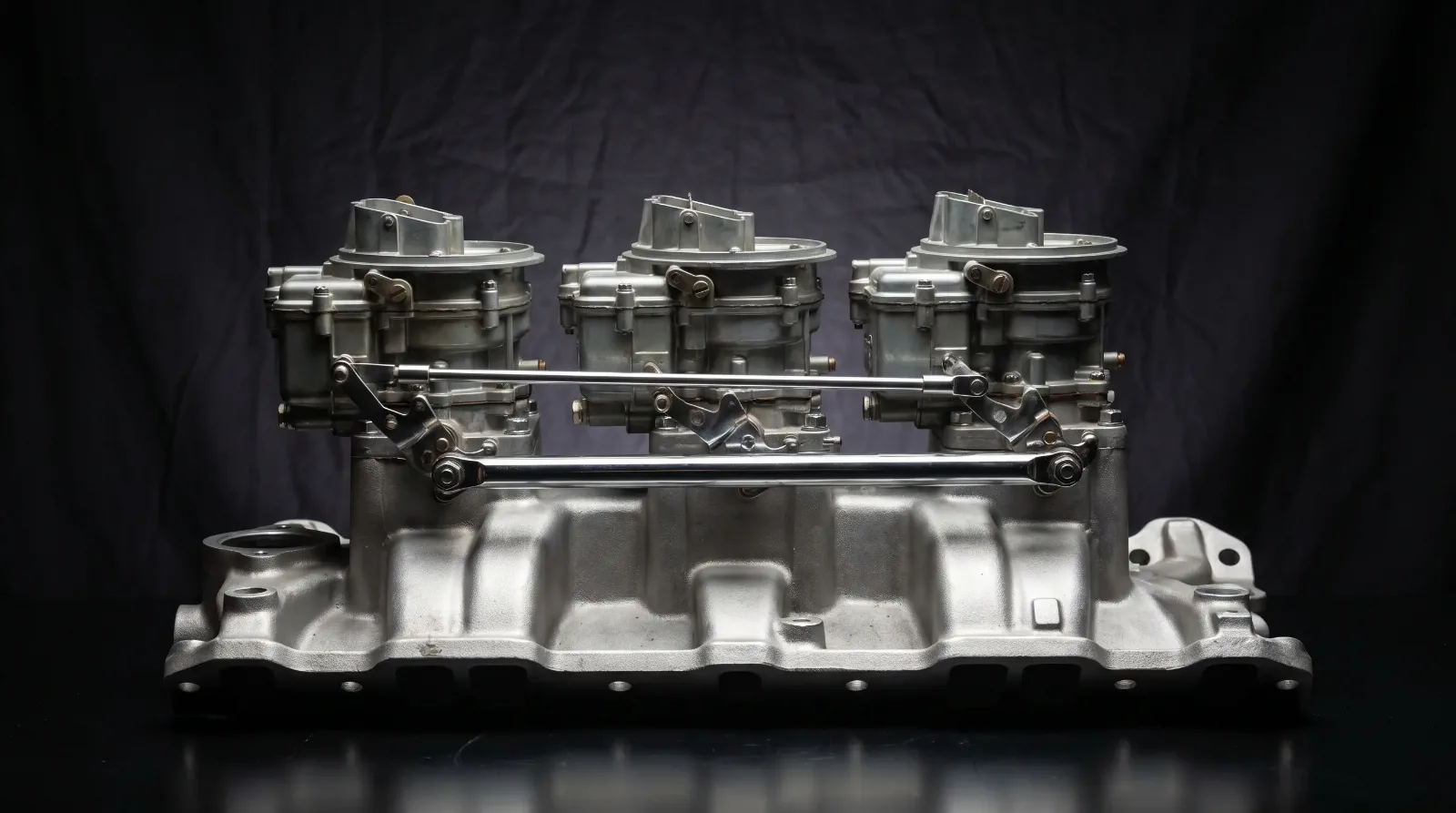
The basic idea behind three carburetors
A single four-barrel carburetor has to be sized for two very different jobs. It needs to meter fuel precisely at idle and light cruising, and it needs to flow enough air and fuel to feed a big V8 at wide-open throttle. Those two jobs pull in opposite directions. A carburetor big enough for top-end power tends to run rich and sluggish at part throttle. A carburetor tuned for smooth low-speed manners often can't flow enough air when the driver puts their foot down.
Tri-Power splits the job across three two-barrel carburetors instead of asking one unit to do everything. The center carburetor is the one doing the work most of the time, idle, cruising, light acceleration, and it's tuned to behave like a normal, well-mannered two-barrel. The two outer carburetors sit mechanically linked but closed under normal driving, and they open only when the throttle goes down hard, usually somewhere past half throttle depending on how the linkage is set. When they open, the engine suddenly has the equivalent of a much bigger carburetor feeding it, and the power comes on with a noticeable step, not just a gradual increase.
How GTO buyers ordered it
On the early GTO, Tri-Power was a factory option over the base single four-barrel 389, part of what made Pontiac's GTO engines such a strong lineup right out of the gate in 1964. The rated horsepower bump from base to Tri-Power was significant on paper, and the driving character shifted even more than the number suggests. A base four-barrel GTO is quick. A Tri-Power GTO feels like it has a second engine waiting for you to ask for it.
| Component | Role | Notes |
|---|---|---|
| Center carburetor (Rochester 2GC) | Primary, handles idle and cruise | Does nearly all the daily driving work |
| Front and rear carburetors | Secondary, open under hard throttle | Mechanical progressive linkage on manual-transmission GTOs; vacuum-operated on automatics |
| Progressive linkage | Controls when secondaries open | Adjustment point most owners get wrong |
Why Tri-Power has a reputation for being finicky
Three carburetors means three times the parts that can go out of adjustment, and that's the honest reason some owners over the years converted their Tri-Power cars to a single four-barrel. It wasn't that the system didn't work. It's that it needs somebody who actually understands it to keep it working. The linkage between the three units has to be synchronized so the outer carburetors open together and at the right point in the throttle travel. Get that wrong and you get a flat spot, a stumble, or an engine that floods at idle.
Fuel distribution is another common complaint. With three separate carburetors feeding into different points along the intake manifold, cylinder-to-cylinder fuel mixture can vary more than it does with a single, centrally located four-barrel. Pontiac's engineers designed around this reasonably well, but it's still a system with more variables than a simpler setup, and it rewards an owner who's willing to learn its habits.
"I've had guys bring me a Tri-Power car running like garbage and swear the system is junk. Nine times out of ten it's just never been set up right. Get the linkage synced and the idle mixture correct on all three, and it runs as smooth as anything else from that era. People give up on it too early."
Mike Sullivan
Buying and owning a Tri-Power car today
A documented, numbers-matching Tri-Power GTO from 1964 or 1965 is one of the more desirable configurations from the early years, and the price reflects it. Before buying, verify the carburetors themselves are correct for the application, not later replacements or a mismatched set pulled from different sources. Casting numbers on Rochester carburetors are traceable, and a knowledgeable seller should be able to point to them without hesitation.
For ownership, budget time and money for a shop or a mentor who actually knows how to tune three carburetors together. It's not a skill every general mechanic has anymore, and a botched Tri-Power tune-up can leave an owner thinking the whole system is unreliable when the real issue is inexperienced hands. Parts availability is solid thanks to a strong reproduction market, so sourcing rebuild kits and linkage components isn't the bottleneck it might be for rarer setups.
Spotting a properly restored system versus a parts-bin job
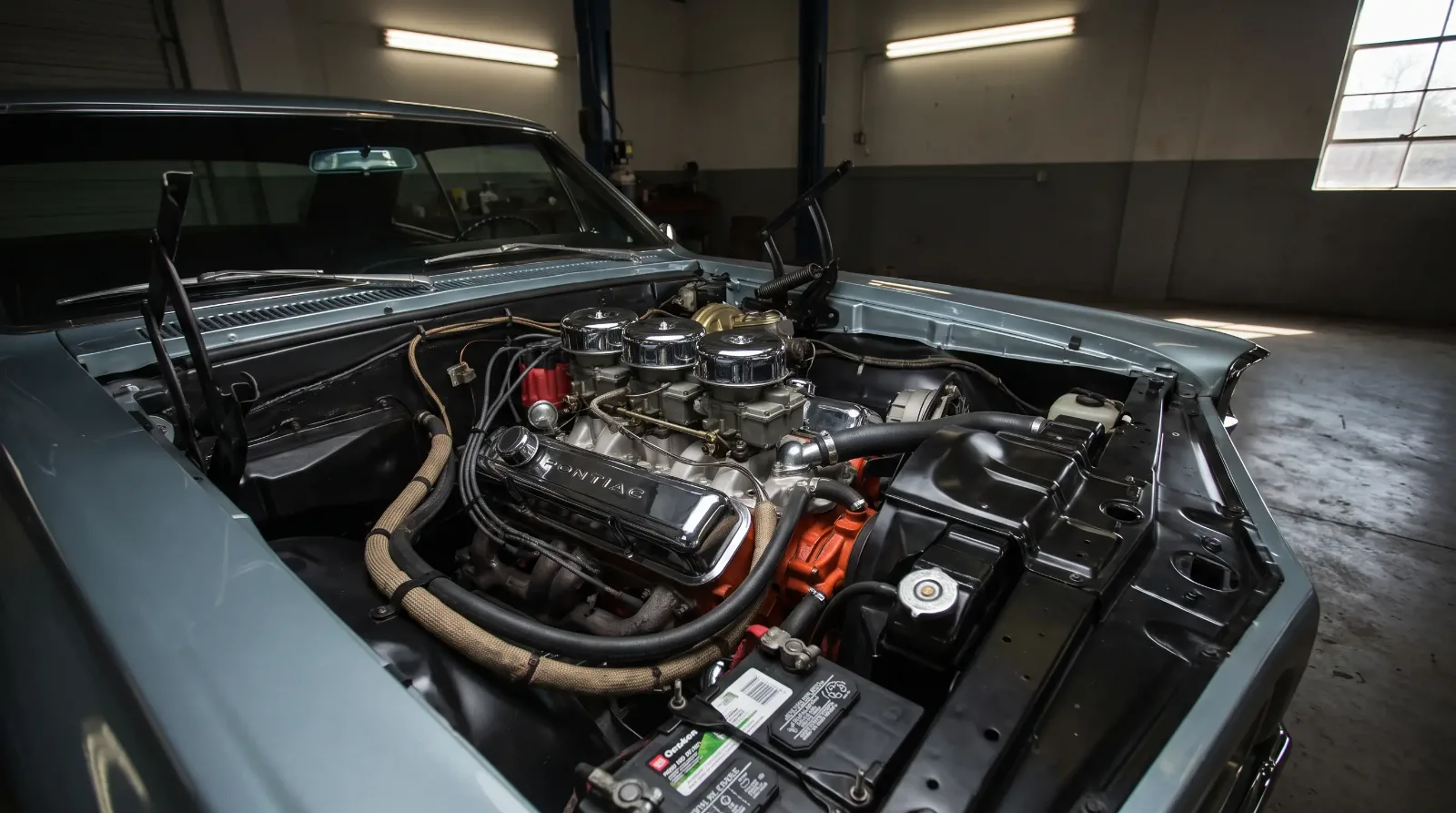
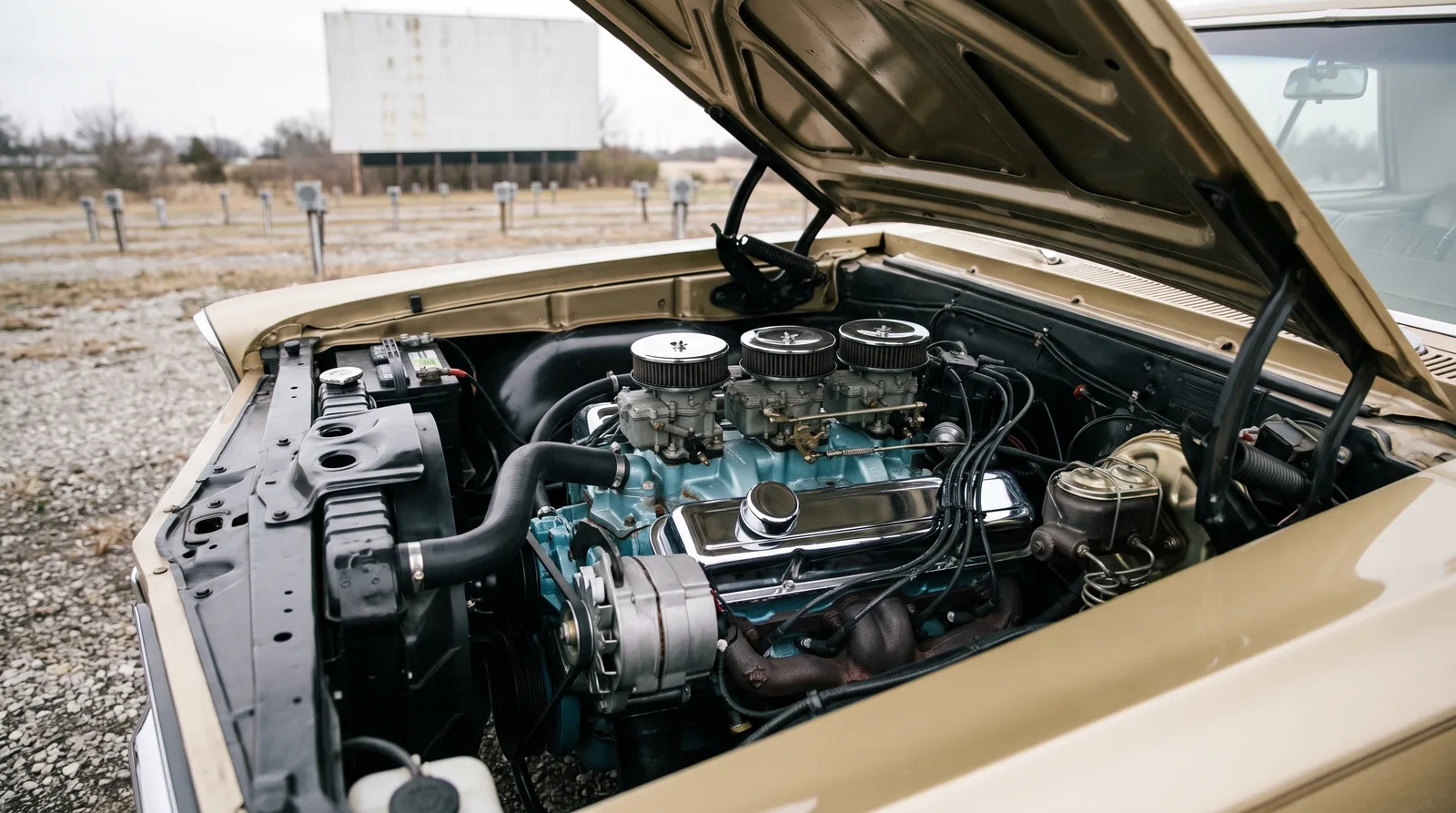
Not every Tri-Power intake on the market today started life on a GTO, and not every restoration got the details right. The three-carburetor intake manifold itself is a specific casting, and reproduction manifolds have closed some of the gap for restorers who couldn't find an original. What separates a careful restoration from a rushed one usually comes down to the small stuff: correct fuel line routing between the three carburetors, the right air cleaner assembly sized for three carbs instead of one, and a throttle return spring setup that actually matches factory photos rather than an improvised fix.
Check the choke setup too. The center carburetor typically carries the automatic choke on factory Tri-Power installations, and a car with mismatched choke hardware or a choke that's been deleted entirely is a sign the system was reassembled without much attention to originality. None of this is disqualifying on a driver-quality car built for enjoyment rather than judging, but it matters a great deal for a car being sold as numbers-matching or concours-correct, and it should show up in the asking price one way or another.
Where Tri-Power fits in the bigger engine story
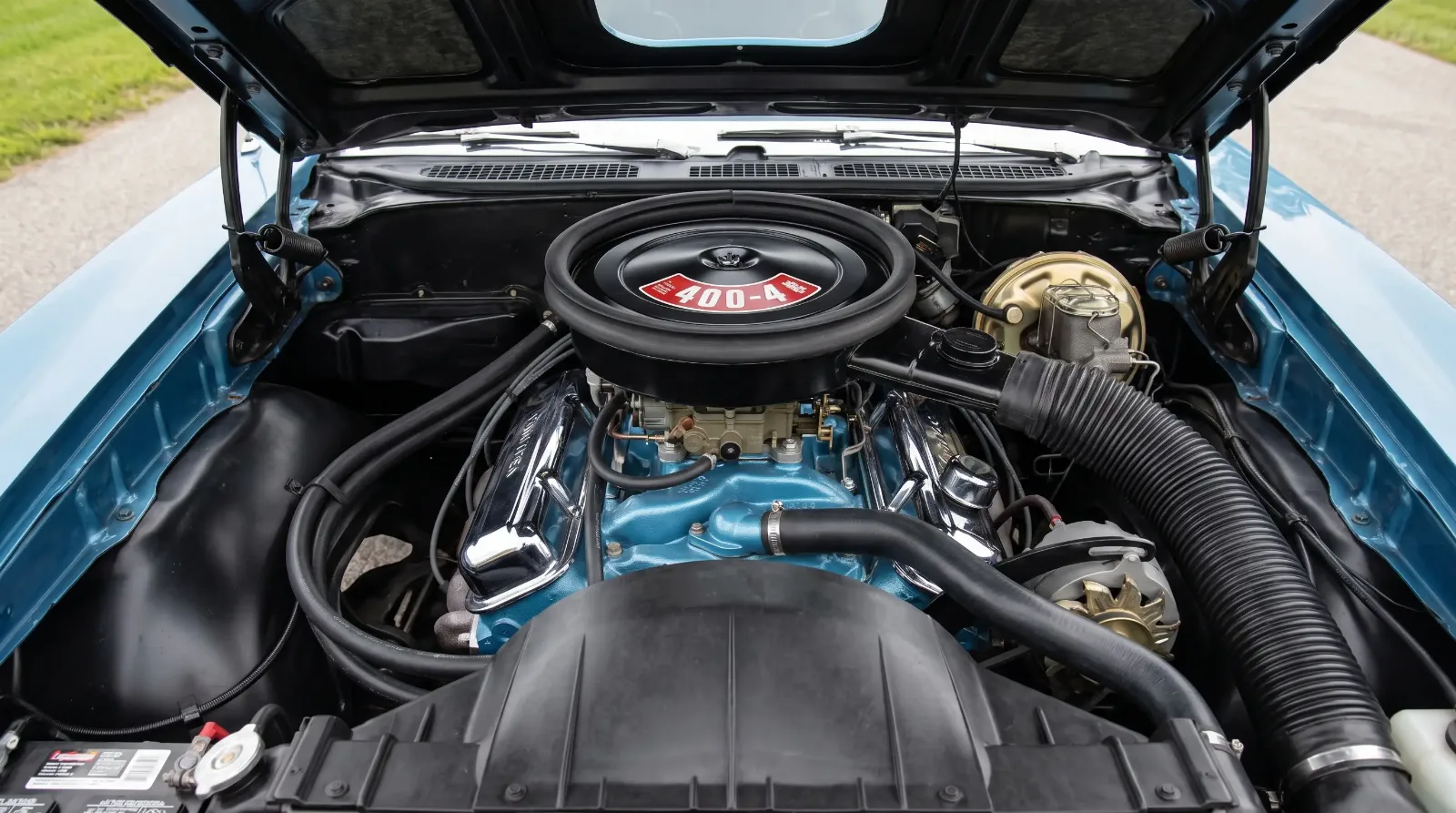
Tri-Power didn't last the whole run of the GTO. By 1967, GM's ban on multi-carburetor setups on intermediate cars pushed Pontiac toward a single four-barrel Quadrajet, even as displacement grew from 389 to 400. That transition changes how later GTOs deliver power and how they should be evaluated against earlier cars. For the story of what replaced Tri-Power under the hood, read on to see how the 400 carried the torch forward with a very different approach to making horsepower.
Whatever came after, Tri-Power remains one of the most collectible and most talked-about features of the early GTO, and understanding how it actually works separates a buyer who can spot a properly sorted car from one who's just chasing a name on a valve cover.
Sources and notes
Related Reading
Have a
Pontiac GTO
for Sale?
Reach thousands of serious classic car collectors across the US.
Sell It Here →
Are You a Classic Car Dealer?
List your full inventory and connect with targeted classic car buyers.
Join as a Dealer →

About the author
Mike Sullivan
Detroit-area muscle car enthusiast and restoration specialist with three decades of hands-on experience working on American iron.
Related Listings - Pontiac GTO




Comments
Be the first to comment on this article.