
The 400 doesn't get the same mythology as the 389 or the same headline numbers as the 455, and that's exactly why it's worth understanding. This engine carried the GTO through most of its production run, from 1967 all the way to the model's final classic year in 1974, longer than any other displacement Pontiac put under a GTO hood. If you're looking at a GTO for sale, odds are good it's got a 400 in it, not a 389 and not a 455. The workhorse deserves its due.
Car Features
7 min read
The Pontiac 400: The GTO's Long-Serving Workhorse
It never got the mythology of the 389 or the 455, but the 400 carried the GTO through most of its production life. Here's why it matters.
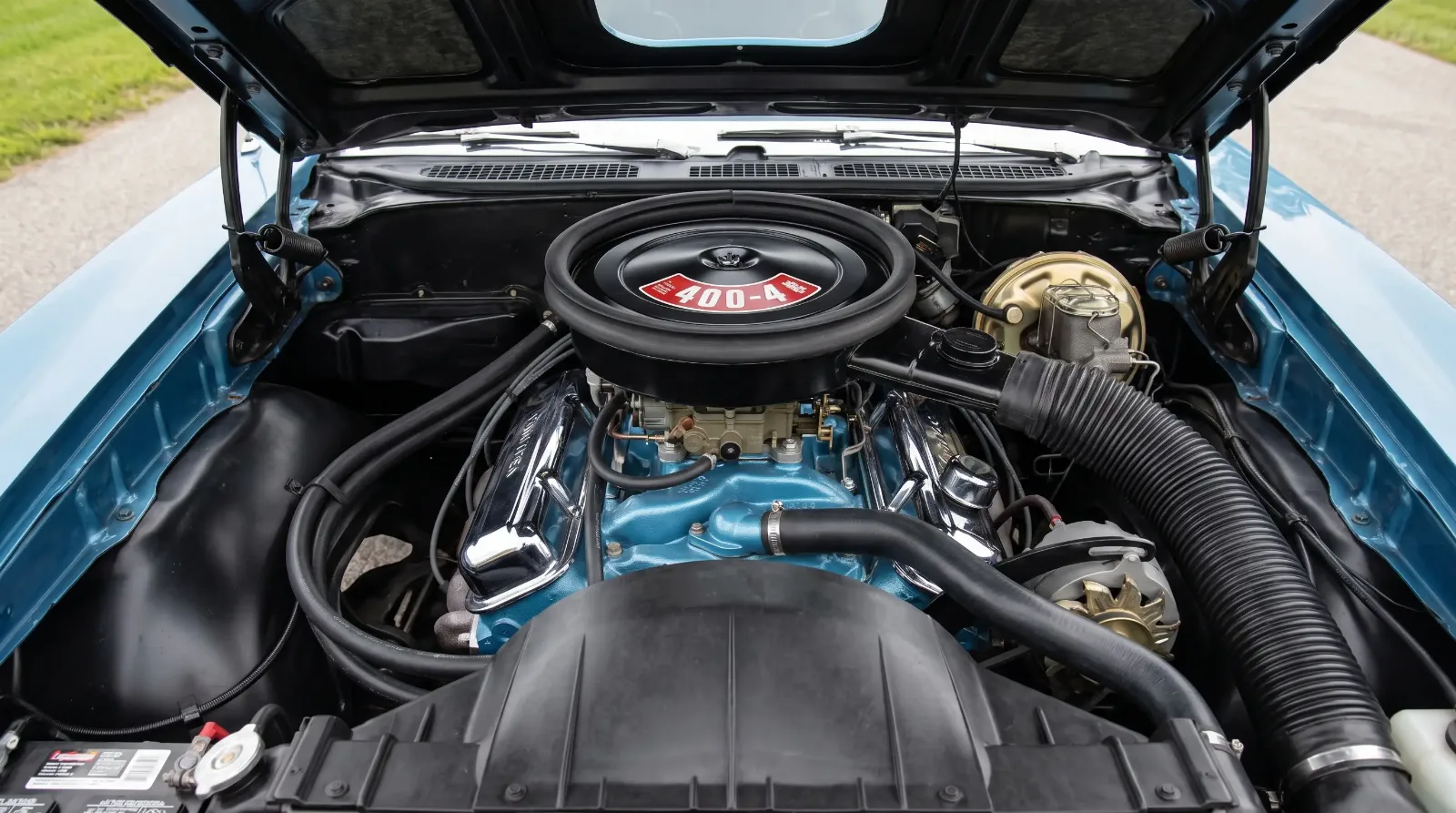
Why displacement grew from 389 to 400
The jump to 400 cubic inches in 1967 wasn't a dramatic redesign. Pontiac increased the bore slightly on the existing V8 architecture, going from the 389's 4.0625 inches to 4.12 inches while keeping the same 3.75-inch stroke and the same basic block family that had underpinned the GTO from the start. The result was a modest displacement increase that gave engineers more room to work with as emissions regulations and insurance industry pressure started reshaping what automakers could build.
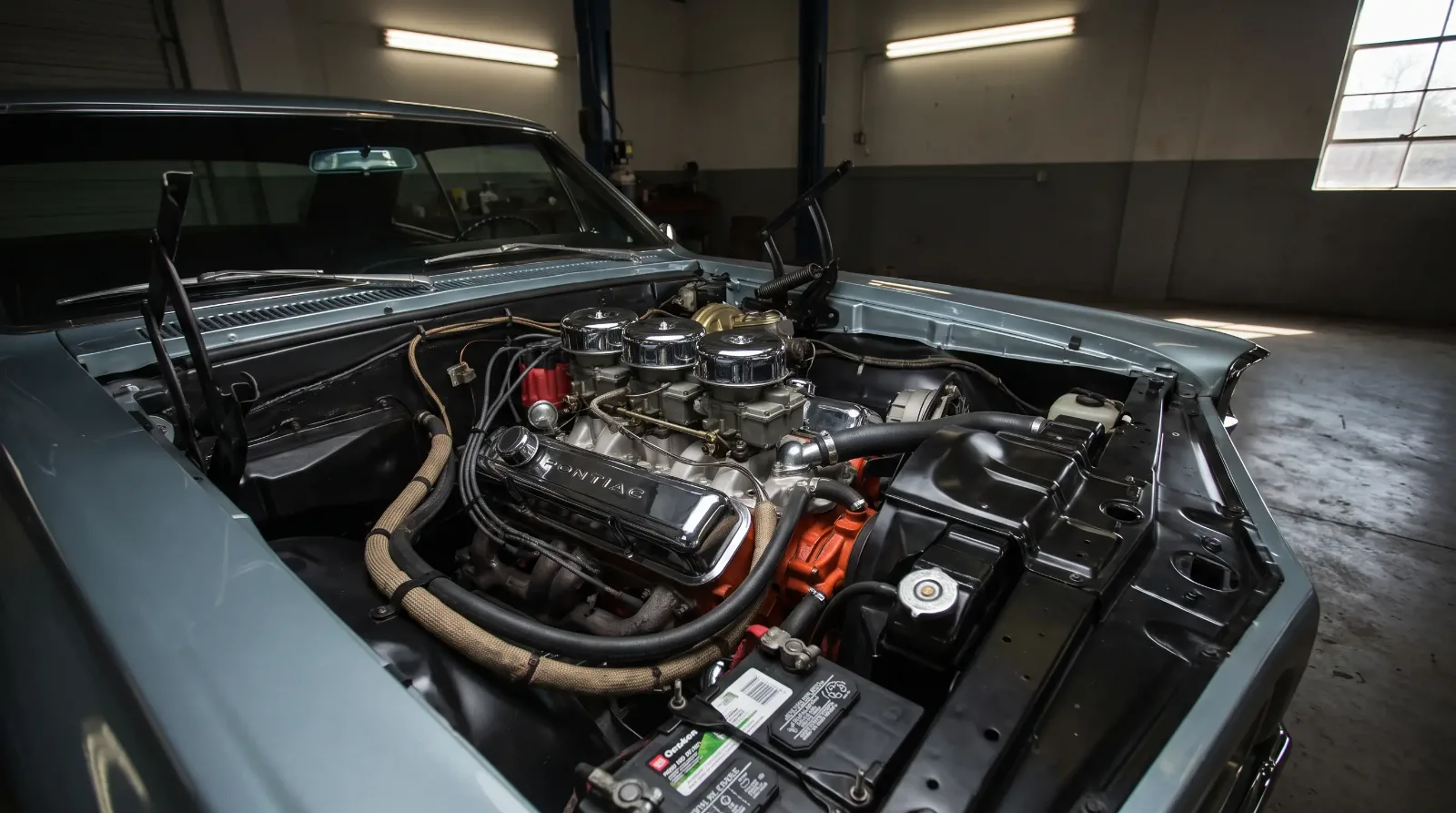
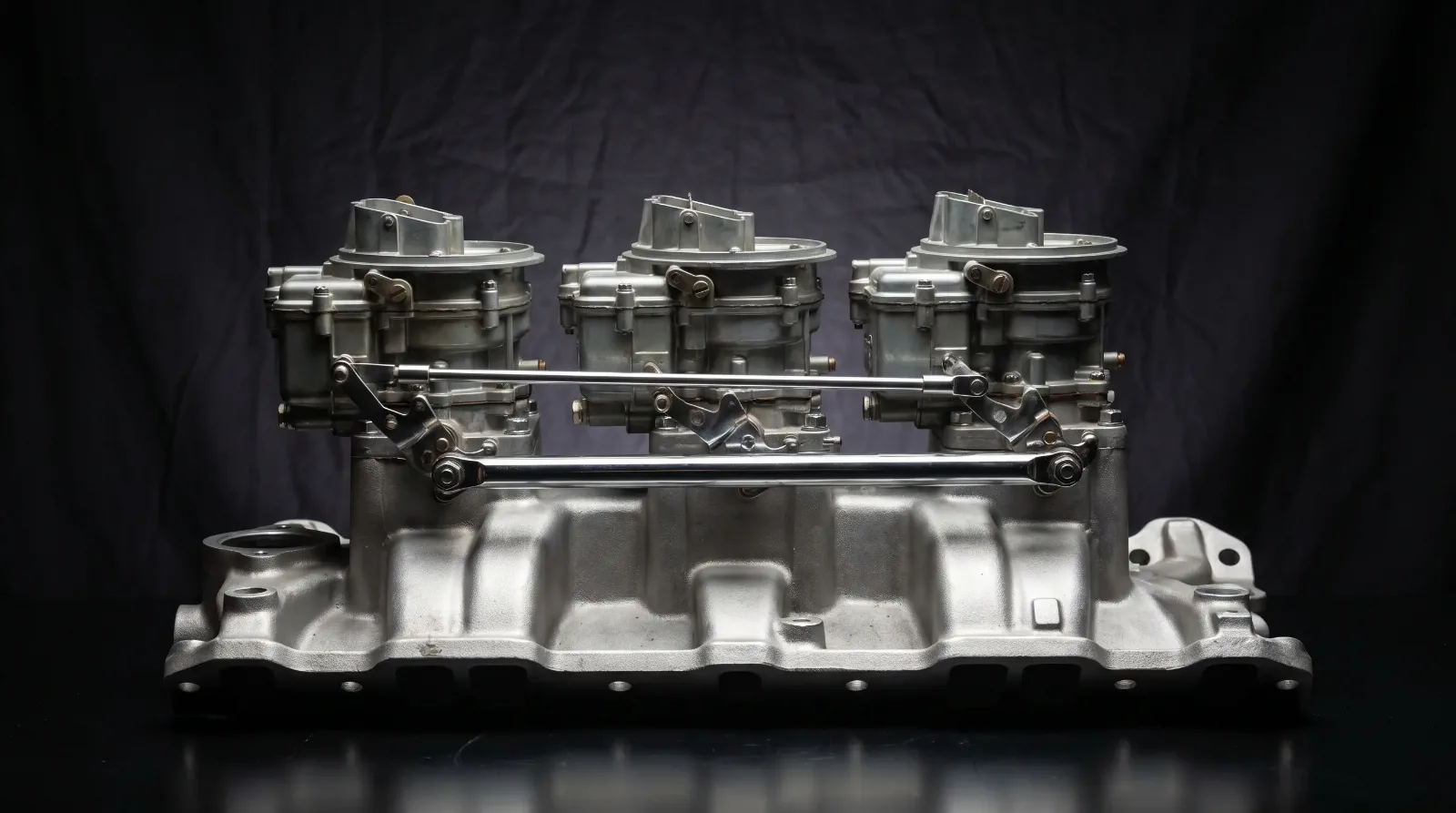
1967 also marked the end of Tri-Power on the GTO. GM corporate cracked down on multiple-carburetor setups across its intermediate car lines, and Pontiac replaced the three two-barrels with a single Rochester Quadrajet four-barrel. That's a real shift in how these engines behave day to day. A Quadrajet is simpler to live with and easier to keep in tune than three synchronized carburetors, even if it trades away some of the visual drama and mechanical romance of Tri-Power.
The 400's various states of tune
Not all 400s were created equal, and that's the part shoppers need to understand. Pontiac offered the 400 in several different states of tune across its run, from a mild base engine to genuinely potent high-output variants. The base 400 in a typical GTO made a stated 335 horsepower in 1967, rising to 350 horsepower for 1968-69, while the HO and Ram Air versions pushed higher, especially once Ram Air induction entered the picture.
| Variant | Years | Approx. horsepower | Notes |
|---|---|---|---|
| Base 400 (standard) | 1967-1974 | ~230-350 hp | 335 hp in 1967, 350 hp 1968-69, dropping through the 1970s as compression fell and ratings switched to net |
| 400 HO | 1967-1968 | ~360 hp | Higher compression, better breathing heads |
| Ram Air 400 (Ram Air II / III) | 1968-1970 | ~366 hp | Functional hood scoops, revised cam, round-port heads |
By the early 1970s, the numbers on paper started to drop, and that decline tells a more complicated story than it looks like at first glance. Compression ratios came down across the industry to accommodate lower-octane unleaded fuel, and by 1972 the entire industry switched from gross horsepower ratings, measured on a bare engine on a test stand, to net ratings, measured with all accessories installed and running as the engine would sit in the actual car. A 1972 GTO's 400 numbers look weaker next to a 1968 400 largely because of how the number was calculated, not necessarily because the engine underneath got dramatically softer. The full explanation of that shift lives in a companion piece worth reading if you're comparing horsepower figures across GTO model years.
The 400 also shared its block with the Ram Air III and Ram Air IV, two of the most sought-after GTO engine variants ever built. Both started as 400-cubic-inch engines before Pontiac's engineers reworked the cylinder heads, valvetrain, and induction to turn a good workhorse into something closer to a race engine with a warranty. The differences between those two variants are significant enough, and confused often enough, that they deserve their own explanation. the differences deserve their own explanation, read on for a breakdown of what actually separates them.
Living with a 400 today
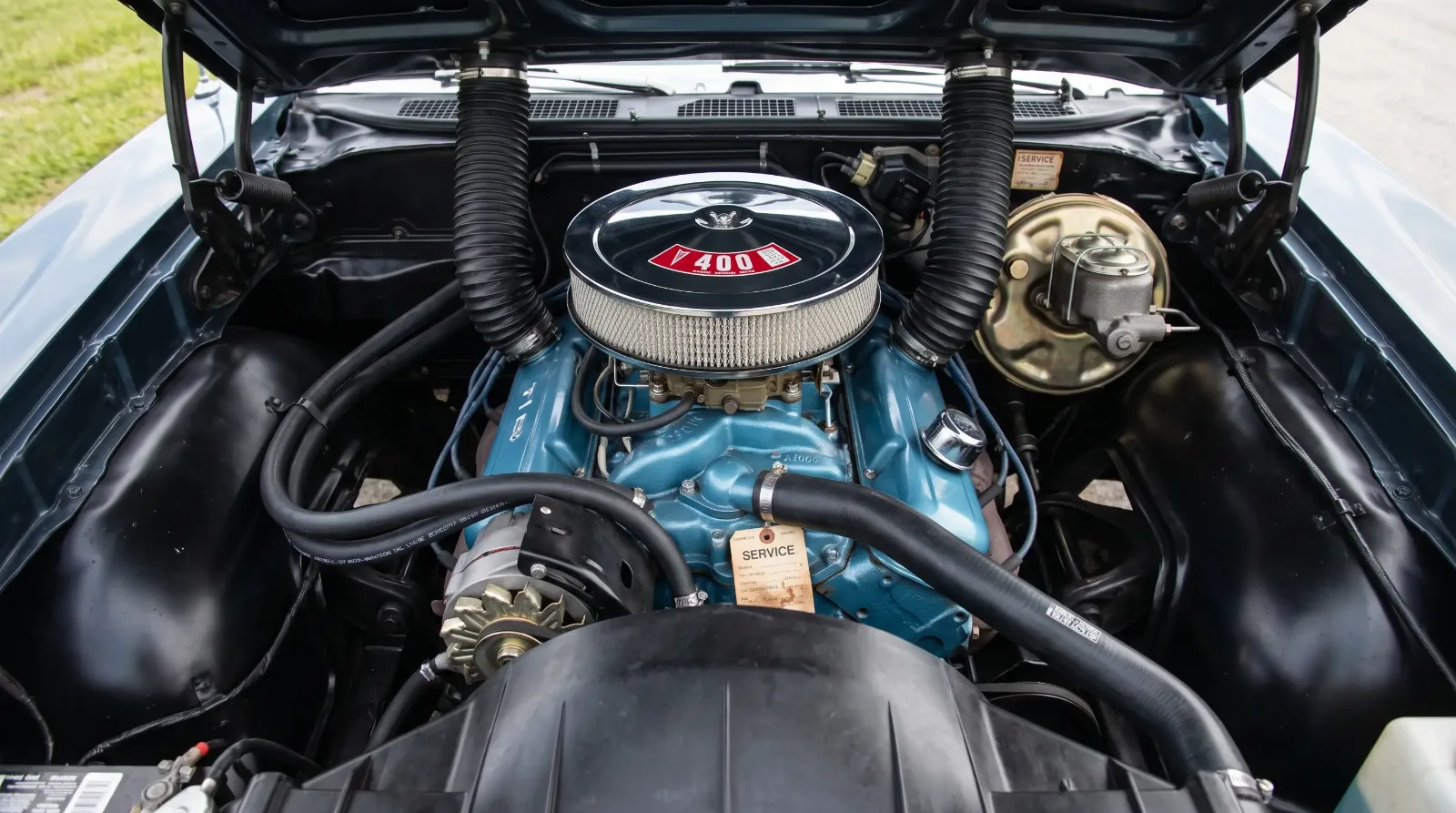
From an ownership standpoint, the 400 is generally the easier engine to keep running well compared to a Tri-Power 389 or a high-strung Ram Air IV. The single Quadrajet carburetor is well understood by a much wider pool of mechanics, parts are plentiful thanks to how many GM applications shared this basic architecture, and the engine tolerates daily driving and stop-and-go traffic better than some of its more temperamental siblings.
That doesn't mean it's bulletproof. Quadrajet carburetors have a reputation, sometimes overstated, for being finicky if not properly rebuilt, and the secondary air valve needs to be adjusted correctly or the engine feels flat under hard acceleration. Overheating is a common complaint on cars with tired radiators or a water pump nearing the end of its service life, something any buyer should check regardless of which engine sits under the hood.
"The 400 doesn't get talked about at car shows the way a Ram Air IV does, but it's the engine that actually kept the GTO on the road for most of its life. I've put more miles on 400s than any other GTO engine, and they just work if you take care of them."
Dan Reeves
What to check before buying a 400-powered GTO
The single biggest issue with a 400 that's sat unused for years is the timing chain and gears stretching, which shows up as sluggish throttle response and a rattle on cold start that quiets down once the engine warms. It's not an expensive fix relative to other engine work, but it's a common one, and a seller who's owned the car a long time should know whether it's been addressed.
🔧 Inspection Priorities
- Timing chain slack. A rattle on cold start that goes away as the engine warms points to a stretched chain. Budget a few hundred dollars for parts and labor if it needs replacing.
- Quadrajet condition. A poorly rebuilt Quadrajet causes hesitation and flooding. A proper rebuild from a specialist runs a modest but worthwhile cost.
- Cooling system health. Original-spec radiators are often undersized for modern traffic and fuel. Check for a period-correct or upgraded radiator and a recently serviced water pump.
- Head casting numbers. Verify the cylinder heads match what's documented for that model year and engine code, especially on a car represented as numbers-matching.
Parts sourcing for the 400 is genuinely one of the easier aspects of GTO ownership. Because Pontiac used variations of this block across so many full-size and intermediate models through the 1970s, the parts pool, from gaskets to internal components, is deep and well supported by the aftermarket. That's a real advantage over chasing down Ram Air-specific hardware, which gets scarcer and pricier the higher up the performance ladder you go.
What the 400 means for buyers
A GTO with a base or HO 400 is generally more affordable than an equivalent Tri-Power 389 or a documented Ram Air IV car, which makes it a reasonable entry point for someone who wants real GTO history without the price tag of the rarest variants. That affordability comes with its own homework, though. Because the 400 ran for so many years across so many states of tune, verifying exactly which 400 sits in a given car, and whether it's the correct one for that VIN, takes real diligence. For the full arc connecting this engine to what came before and after it in Pontiac's lineup, the 389-to-455 engine guide lays out how each generation fits together, and for the broader context of how the GTO itself came to exist, Pontiac GTO history covers the full model's arc.
The 400 that started strong in 1967 eventually gave way to the 455 as Pontiac's flagship performance engine, a transition worth understanding on its own terms before deciding which era of GTO fits what a buyer actually wants to own.
Sources and notes
Related Reading
Have a
Pontiac GTO
for Sale?
Reach thousands of serious classic car collectors across the US.
Sell It Here →
Are You a Classic Car Dealer?
List your full inventory and connect with targeted classic car buyers.
Join as a Dealer →

About the author
Dan Reeves
Performance engine builder from North Carolina's motorsports corridor, focused on swaps, forced induction and making real, repeatable power.
Related Listings - Pontiac GTO




Comments
Be the first to comment on this article.