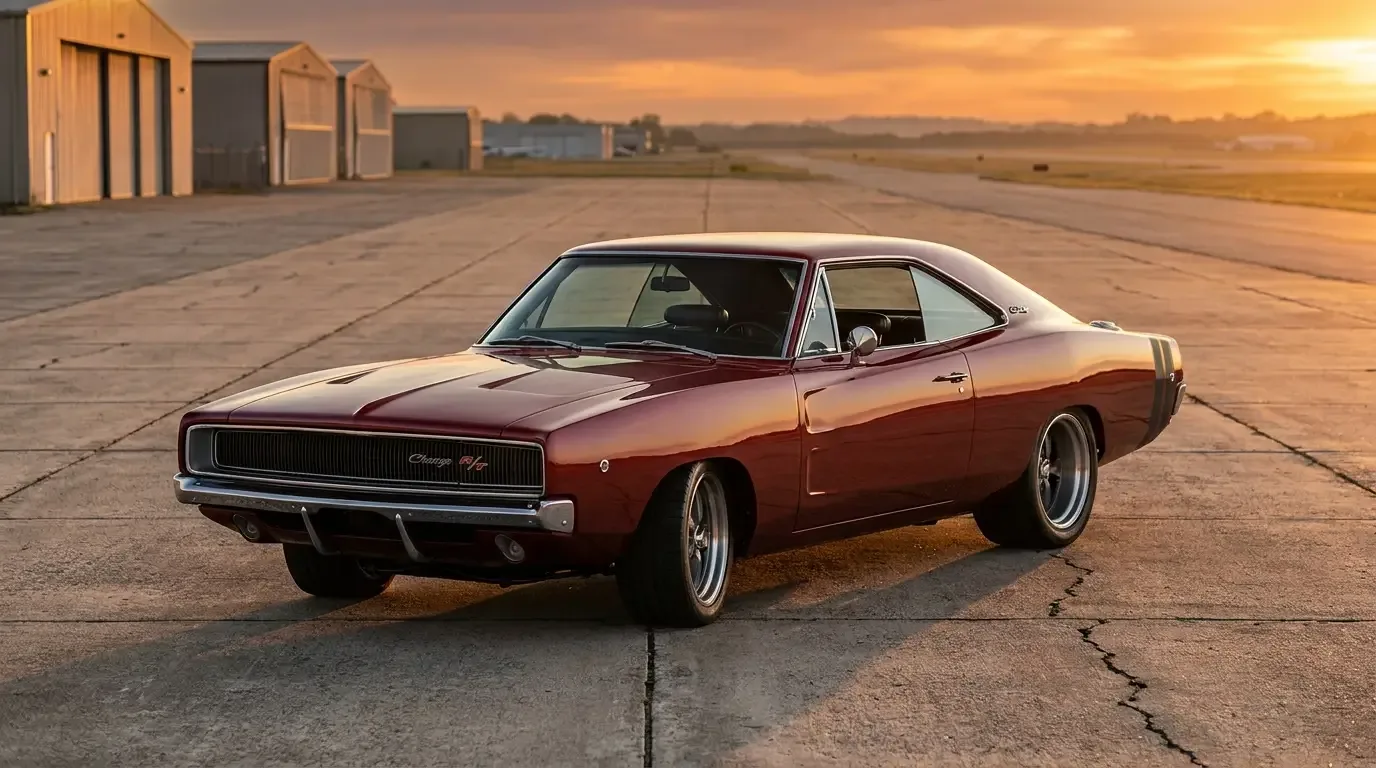
425 hp on the window sticker, and everybody who's ever dyno tested a real 426 Hemi knows that number was never the whole truth. Dodge rated the Hemi conservatively for insurance reasons that had nothing to do with what the engine actually produced on a chassis dyno. The real figure sits well north of that, and it's one of the reasons the Hemi Charger R/T carries the reputation it does, and the price tag that goes with it.
This is the top of the R/T ladder. Below it sits the standard 440 Magnum, a genuinely quick and durable engine in its own right, but the Hemi was the option that cost real money at the dealer and rewarded buyers who wanted the fastest thing Dodge built on the Charger platform, full stop.
What the 426 Hemi actually was
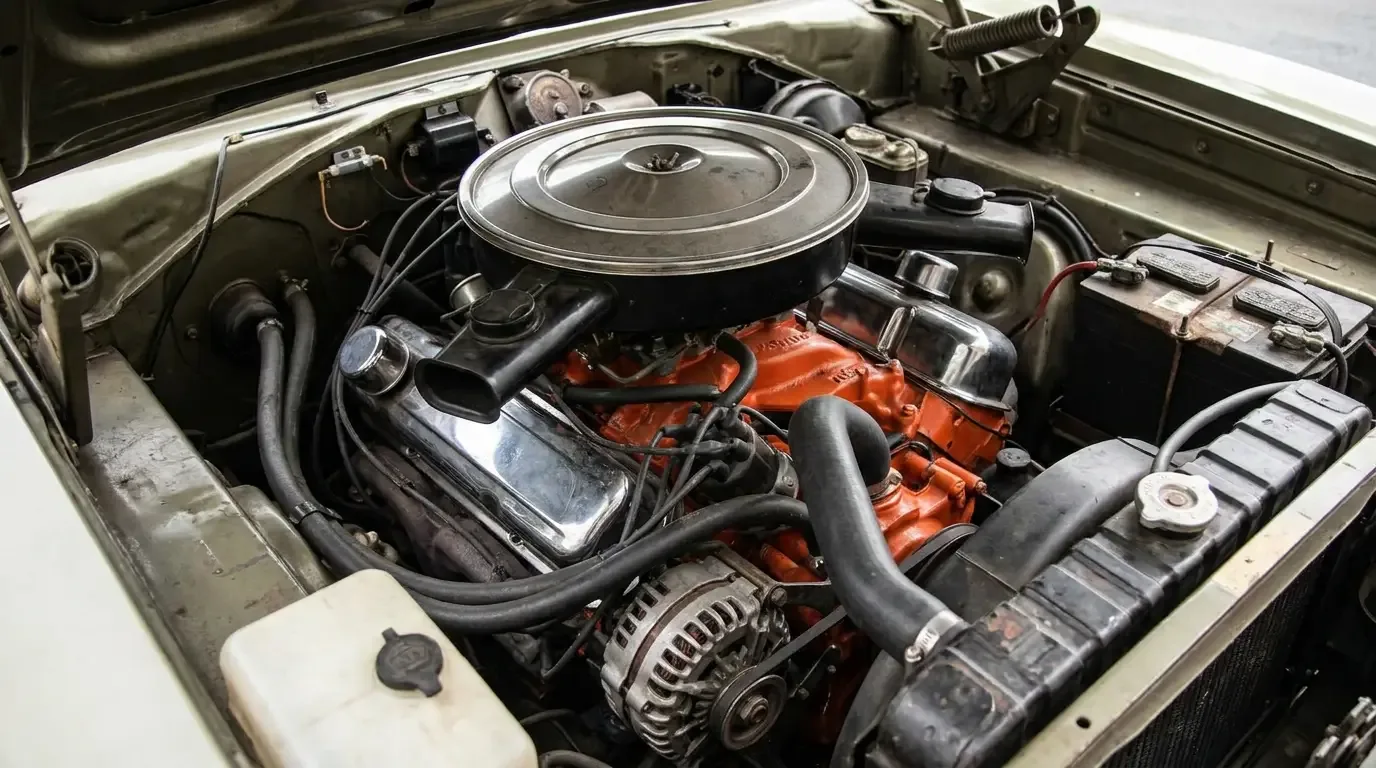
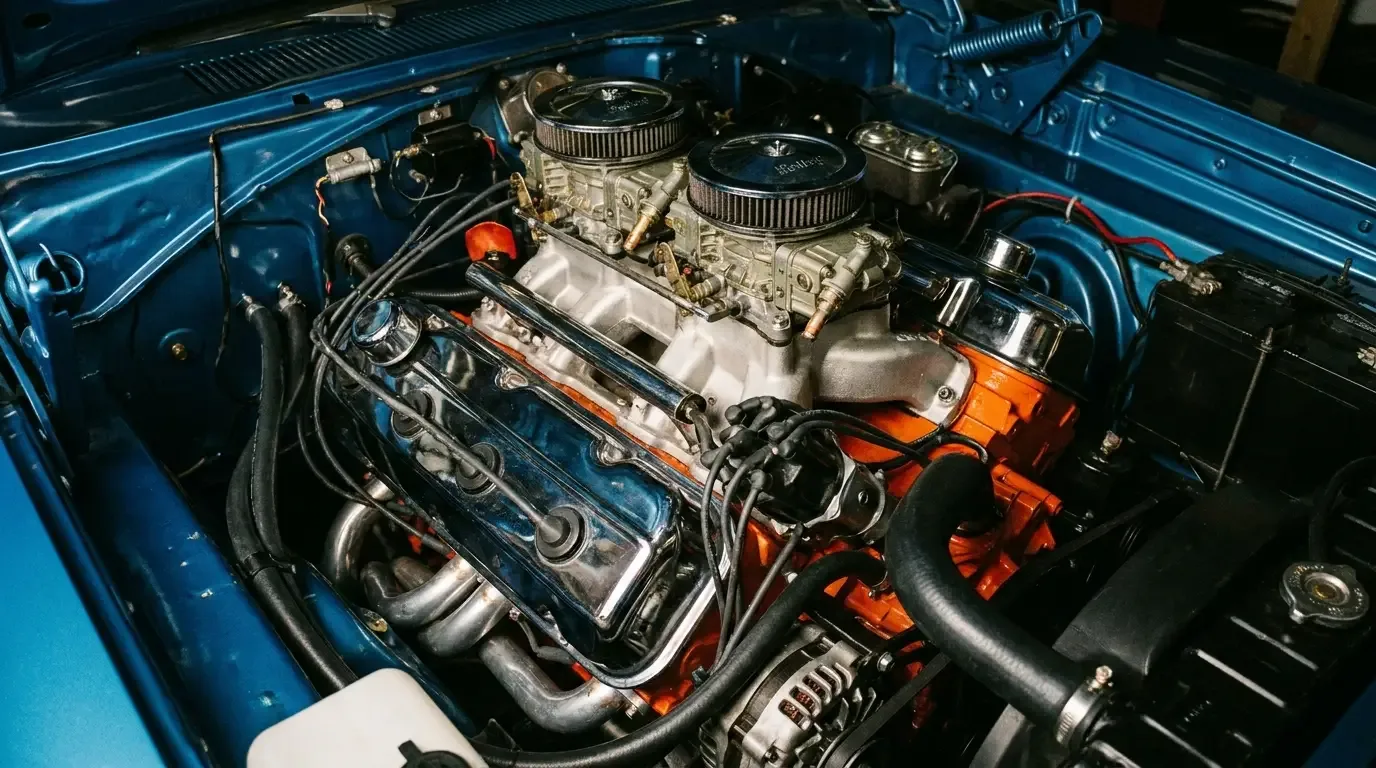
The 426 Hemi is a hemispherical combustion chamber V8, a design that traces back to Chrysler's NASCAR program earlier in the decade before Dodge and Plymouth got street versions cleared for regular production. Two four barrel carburetors sat on a cross ram or in line intake depending on year, compression ran around 10.25:1, and the whole package demanded premium fuel and a serious cooling system just to survive daily traffic. This wasn't an engine Dodge built to be easy. It was built to win, and the street version was a byproduct of homologation requirements more than a request from typical buyers.
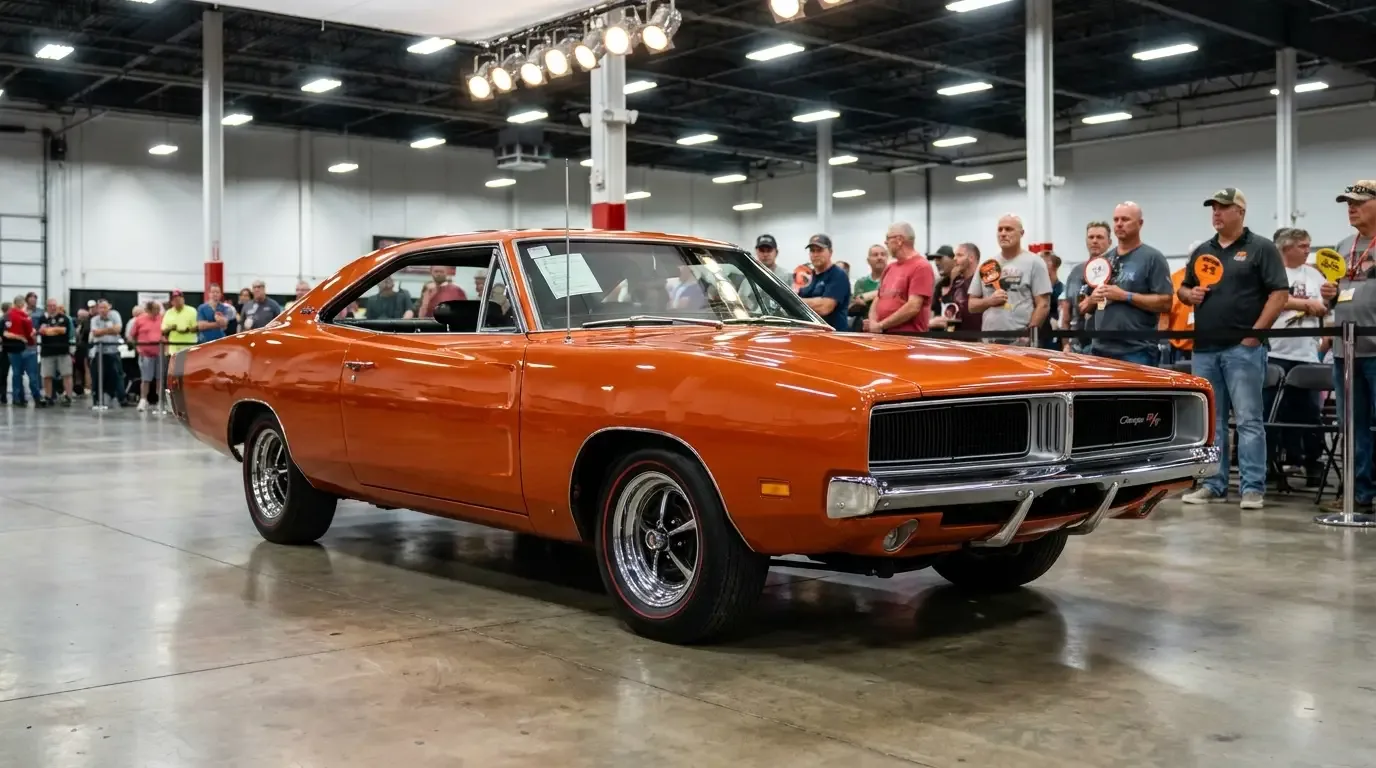
Take rate tells the real story here. In any given R/T model year, the Hemi option accounted for a small single digit percentage of total production, often cited in the low hundreds of units per year across the Charger line, just 475 Hemi Chargers in 1968 and around 432 Hemi R/Ts in 1969. That scarcity is exactly why a documented Hemi R/T commands multiples of what a comparable 440 Magnum car brings at auction today, sometimes three or four times the price for the same body style and year.
Real numbers versus the window sticker
Dyno tests done decades after the fact on stock rebuilt 426 Hemi engines consistently show output well above the factory's 425 hp claim, with plenty of examples landing in the 450 to 490 hp range at the crank once you account for the underrating. That gap is one of the worst kept secrets in the muscle car world, but it still surprises new buyers who assume factory numbers were accurate measurements rather than marketing decisions filtered through insurance actuaries.
"The blower looks great on the invoice. On the dyno it made twelve more horsepower than the combo that cost a third as much. That's the number that matters."
— Dan Reeves
Quarter mile times back this up. A well sorted Hemi Charger R/T ran mid to high 13 second quarters in period magazine tests, a genuinely quick number for a full size muscle car riding on bias ply tires with no traction control of any kind. That's not a car that needed the marketing department's help to sell itself, and it's part of why the option persisted through multiple model years despite the cost.
Ownership realities nobody puts in the brochure
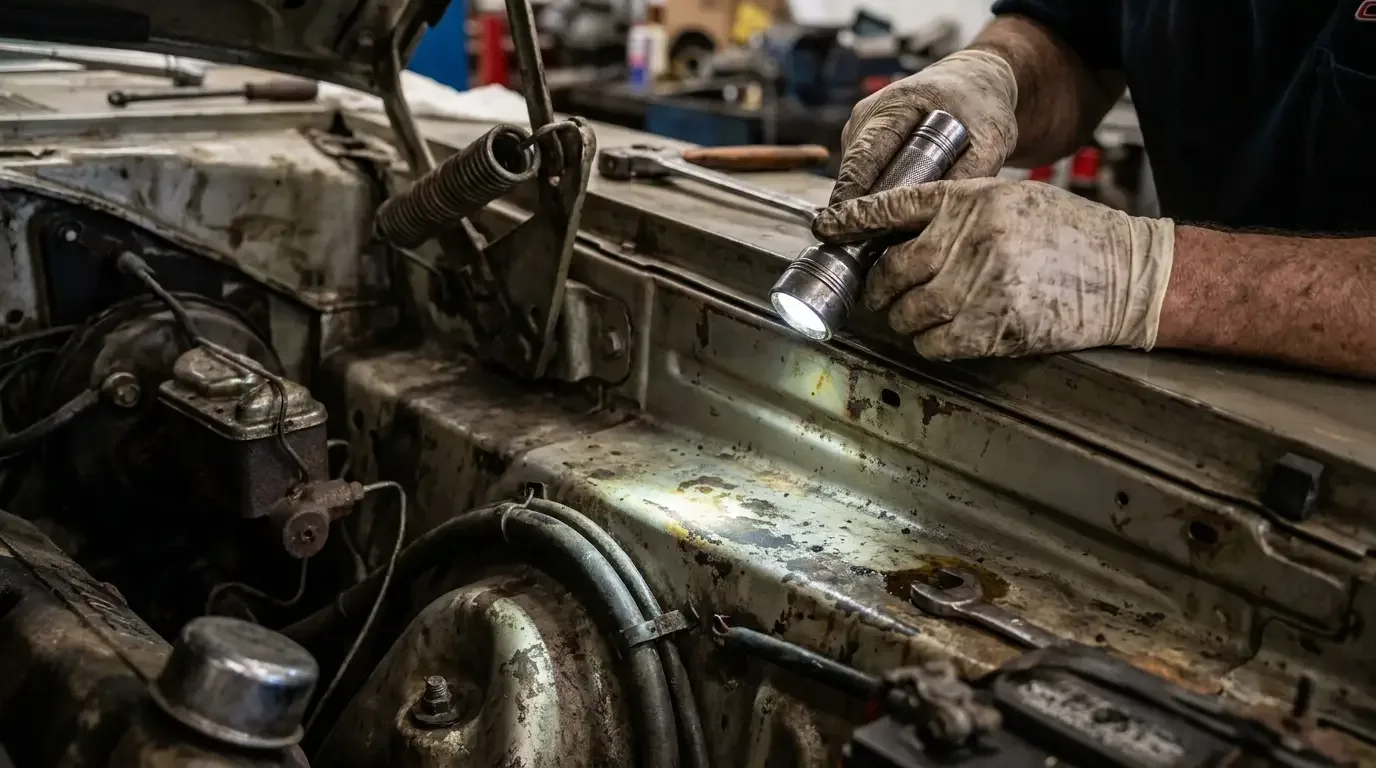
Owning a real Hemi R/T today is a different proposition than owning the 440 Magnum version. Parts that are common for the 440 get expensive fast when they're Hemi specific, cross ram intakes and correct carburetors chief among them. Cooling system demands are real, these engines run hot in stop and go traffic and a marginal radiator that would be fine on a 440 car will cook a Hemi in August. And the documentation stakes are higher too, because the premium for a genuine numbers matching Hemi car versus a clone or a transplant is enormous, which means fender tags, broadcast sheets, and block casting numbers all need to line up before anyone should write a check at Hemi prices.
That verification process is exactly what the How to Identify a Genuine Charger R/T story walks through in more detail, and it's not optional homework if you're shopping in this price bracket. A clone dressed up with Hemi badges and an engine swap can look convincing at a glance, and the gap in value between real and replica is too large to guess at.
| Spec | 426 Hemi (Charger R/T option) |
|---|---|
| Displacement | 426 cubic inches |
| Horsepower (factory rating) | 425 hp gross @ 5000 rpm |
| Carburetion | Dual 4-barrel (two Carter AFB) |
| Compression | 10.25:1 |
| Approx. take rate | Low single digit % of R/T production |
| Quarter mile (period test) | Mid to high 13 seconds |
Where the Hemi R/T sits in the bigger picture
The Hemi option ran across multiple Charger R/T model years before emissions regulations and shifting market demand pushed big block performance options off the table entirely by the early seventies. Within that run, the Hemi always stayed the exception rather than the rule, a low volume option that most period buyers skipped in favor of the standard 440 Magnum's better balance of cost and daily usability. That's part of what makes surviving examples significant now. For the full arc of how the R/T package evolved around this engine, the Charger feature on Classic Cars Arena covers the broader story, and anyone new to this era of Dodge should start with dodge charger history before diving into the Hemi specifically. If you're ready to look at what's actually available, you can browse classic Chargers and compare documented Hemi cars against the far more common 440 Magnum examples.
Sources and notes
- Ultimate Muscle Car: 426 Hemi specifications - 425 hp gross, 490 lb-ft, 10.25:1 compression, dual 4-barrel.
- Ultimate Muscle Car: rated vs real Hemi hp - dyno testing showing output well above the 425 hp rating.
- Ultimate Muscle Car: 426 Hemi production numbers - 475 Hemi Chargers in 1968, roughly 432 in 1969.
- Curbside Classic: Hemi gross vs net hp - context on Chrysler's underrating and insurance motivation.
- Wikipedia: Dodge Charger (1966) - Hemi option availability and R/T context across model years.