Every club I've ever sat in on has the same argument eventually, somebody rolls up with an R/T and somebody else squints at the stripes and says "that's not a real one." Sometimes they're wrong. Sometimes they're dead right, and the owner finds out the hard way when it comes time to sell. The badge is cheap. The documentation that actually proves an R/T is real is not, and it's the only thing that settles the argument for good.
This isn't complicated once you know where to look, but it does take actually looking, not just trusting a for sale listing that says "numbers matching R/T" in the headline and shows nothing to back it.
Start with the fender tag, not the paint
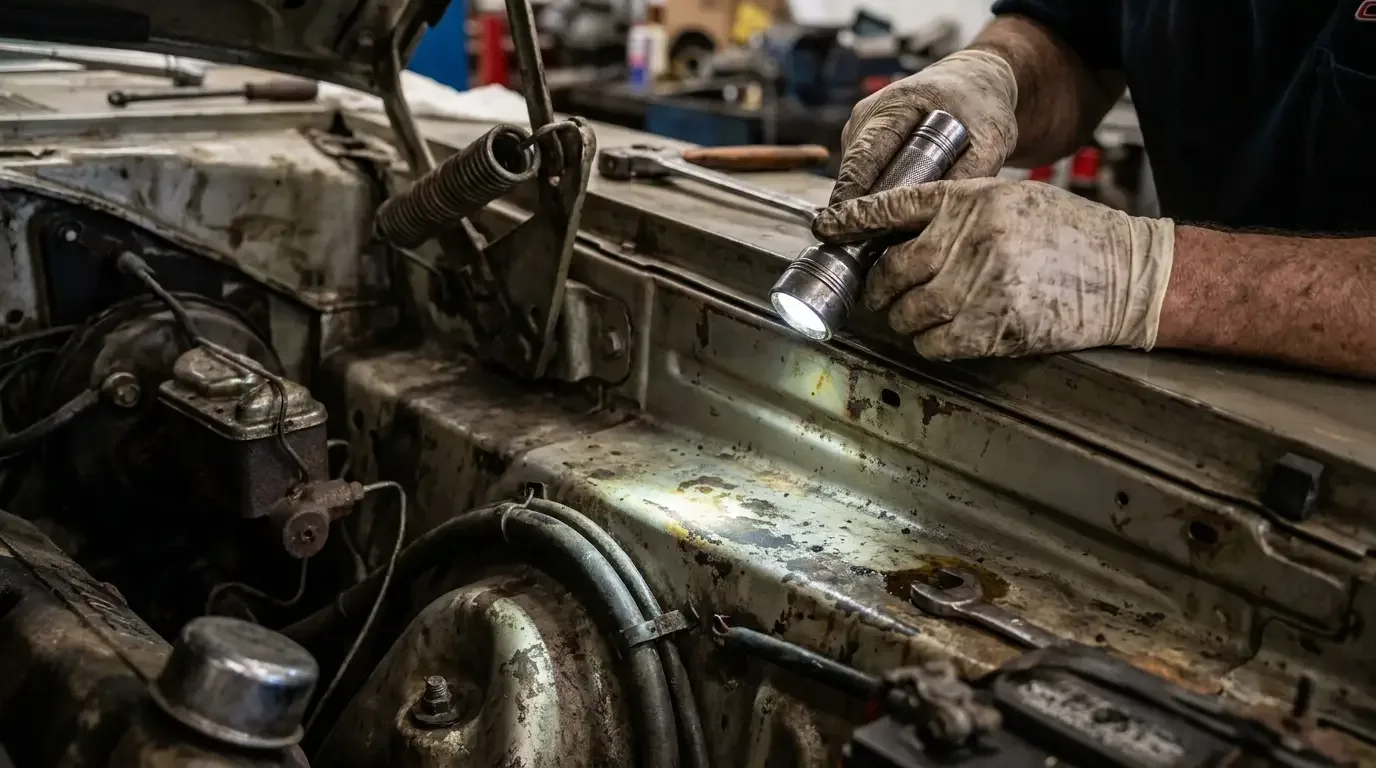
The fender tag is a small metal or foil plate riveted inside the engine bay, usually on the driver's side firewall or fender, that lists the car's build codes in factory shorthand. For an R/T, you're looking for the specific option code that designates the package, not just an engine code that happens to be a big block. A car can have a 440 in it without being an R/T, the base Charger offered big block options too in some years, so the fender tag needs to specifically show the R/T package code, and that code needs to be cross referenced against a decoding guide for the correct model year, because the codes shifted as the car evolved through its run.
I've seen tags that were clearly swapped, rivets that don't match the factory pattern, or stampings that look too crisp for a fifty plus year old piece of foil. When something about a tag looks off, that's worth more attention than the seller's explanation for it.
The VIN tells its own story
Beyond the fender tag, the VIN itself encodes information, model year, body style, and in most cases enough of the trim level to confirm or contradict an R/T claim. This is where a lot of clone cars fall apart under scrutiny, because building a fake fender tag is more achievable than altering a stamped VIN plate convincingly, and altered VIN tags leave evidence under close inspection, rivets replaced, metal that doesn't match the surrounding patina, fonts that are close but not quite right.
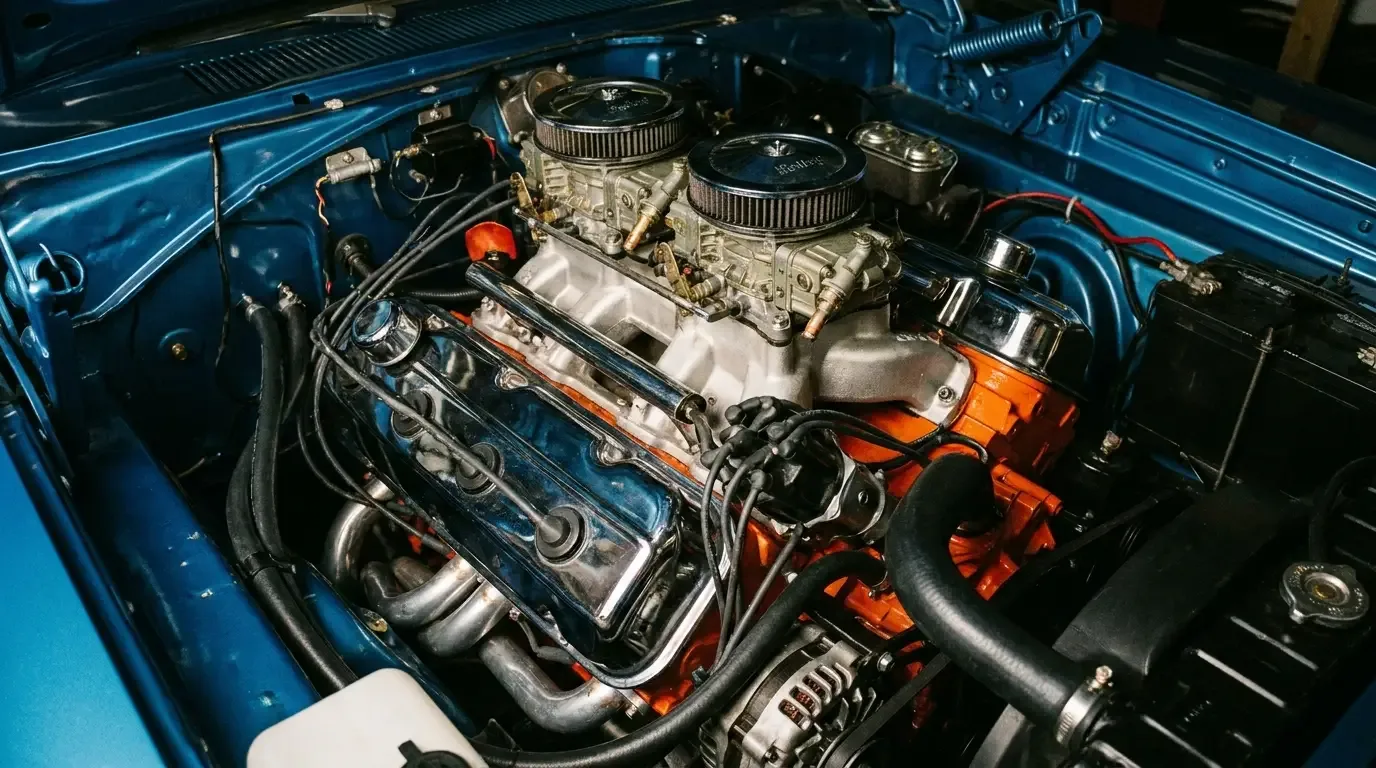
The other piece worth checking is the engine pad stamping, a code stamped directly into the block that should correspond to the engine originally installed at the factory. On a genuine numbers matching car, this stamping lines up with what the fender tag and VIN together suggest the car left the factory with. When it doesn't line up, you're either looking at a replacement engine installed decades ago for entirely legitimate reasons, which happens and isn't automatically a dealbreaker, or you're looking at a clone built specifically to pass as more than it is.
"Everybody at the club had a theory until somebody pulled the paperwork, and just like that the bench-racing was over."
— Wayne Coburn
Broadcast sheets and why they matter more than people think
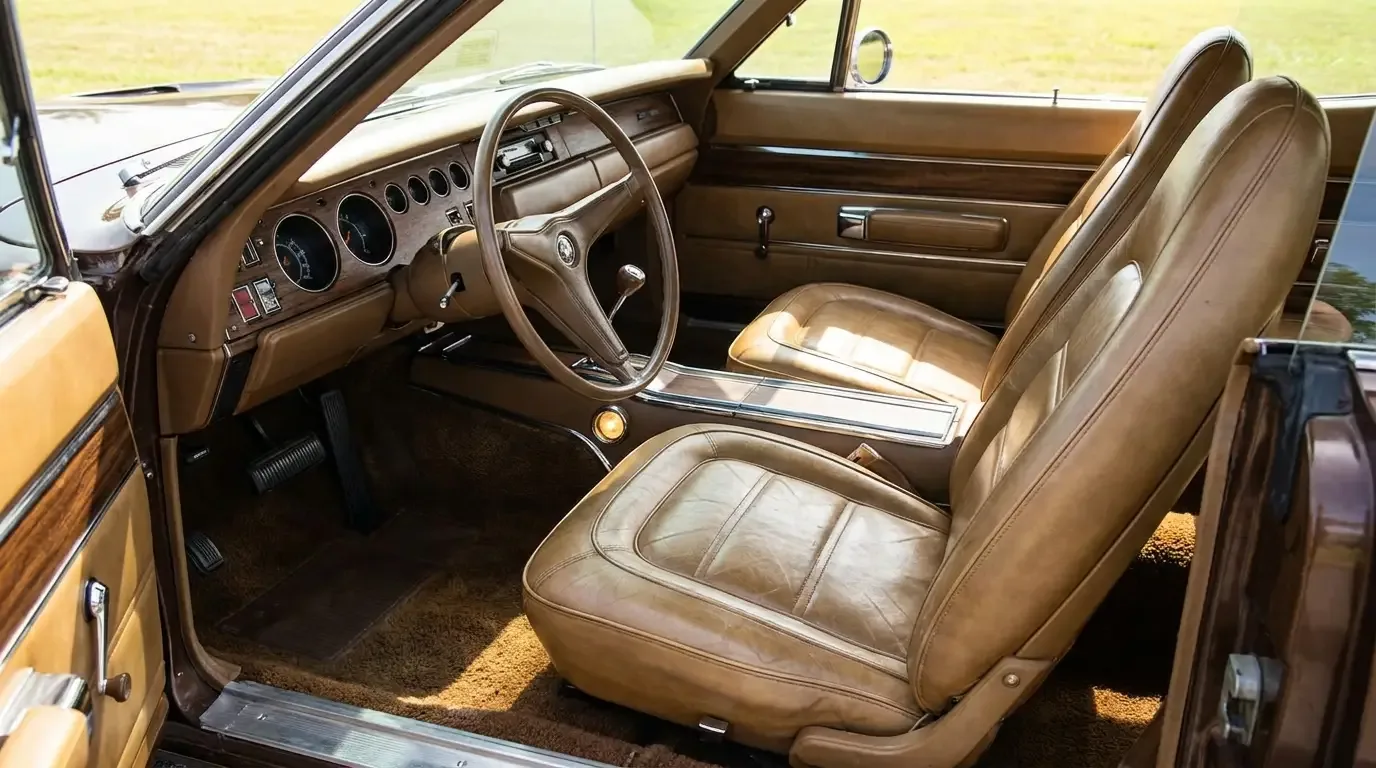
A broadcast sheet is the factory's build instruction paper, often found stuffed behind seat springs or under carpet where an assembly line worker tossed it decades ago and nobody ever thought to remove it. When one of these survives with a car, it's about as close to a birth certificate as you can get, listing the exact options the factory installed at build time. Not every genuine R/T has a surviving broadcast sheet, plenty were lost to cleaning, restoration, or just time, so absence of one doesn't disqualify a real car. But presence of one, especially one that matches the fender tag and VIN decode, is about the strongest documentation you can ask for.
| Document | What it should confirm |
|---|---|
| Fender tag | R/T package option code, correct for model year |
| VIN plate | Model year, body style, trim consistency |
| Engine pad stamp | Original engine matches fender tag and VIN |
| Broadcast sheet | Factory build order, options as installed |
| Title history | Continuity of ownership and description over time |
What clones look like in the wild
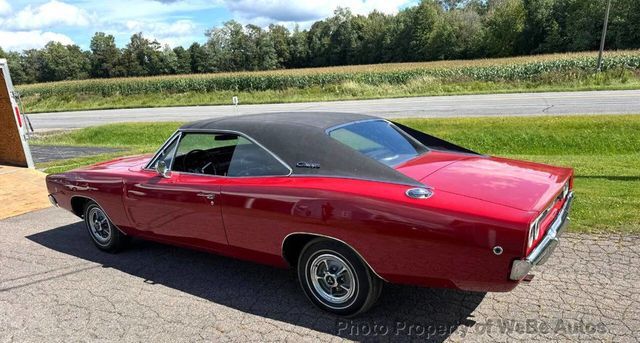
A clone isn't automatically a scam. Plenty of clones started as honest restoration projects, a base Charger dressed up in R/T trim by an owner decades ago who just wanted the look and never claimed otherwise on the title. The problem shows up when a clone gets sold later, sometimes through several owners removed from that honest original build, and somewhere along the chain the "clone" framing quietly disappears from the description. By the time it hits a listing today, it's just "R/T" with photos of stripes and a badge, and the buyer has to do the work the seller should have disclosed upfront.
The tell is almost always in the paper trail, or the lack of one. A genuine R/T with real documentation usually has an owner who's happy to produce it, because it's the thing that makes the car worth what they're asking. A seller who gets vague when you ask for the fender tag photo, or who says the broadcast sheet was "lost in a move," deserves more scrutiny, not less. That same scrutiny is worth applying before you even start shopping, and it pairs well with understanding what the R/T package looked like across trim levels, including the more comfort oriented version covered in the Charger R/T SE story, since SE cars get misrepresented just as often as base R/Ts.
None of this replaces a proper pre-purchase inspection from someone who's handled dozens of these cars, not just read about them. But knowing what questions to ask before you fly out to look at a car saves a lot of wasted trips, and it's the same due diligence covered in more depth in this story about the R/T package generally.
🔧 Inspection Priorities
- Fender tag option code. Confirm the R/T package code matches the correct format for the claimed model year, not just any big block code.
- Engine pad stamping. Cross check against fender tag and VIN, a mismatch means a replacement engine or worse.
- VIN plate condition. Look for replaced rivets, inconsistent fonts, or metal that doesn't match surrounding patina.
- Broadcast sheet, if present. Verify it matches the fender tag exactly, discrepancies are a red flag worth walking away from.
- Title and ownership history. A long, documented chain of ownership with consistent description is worth more than a clean-looking recent repaint.
Sources and notes
- Decoding and Documenting Charger VIN Plates - how the VIN and fender tag encode model year, body style and trim.
- Hagerty 1968 - 70 Charger buyer's guide - authentication guidance and clone-versus-original value gap.
- Wikipedia: Dodge Charger (1966) - R/T package definition and standard big-block requirement.
- Classic Industries: 1966 - 1974 Charger history - trim and option context used to cross-check fender tag codes.
- Autoevolution: numbers-matching 1968 R/T - real-world example of matching fender tag, VIN and engine pad.