
Two engines can share the same displacement and make completely different power. The reason usually lives in the combustion chamber, in the shape of the space where the fire happens. Hemi versus wedge is the clearest example of that in the muscle era. Same job, two design philosophies, and the dyno tells you flat out which one breathes better and what it costs to get there.
Car Features
6 min read
Hemi vs Wedge: The Design Difference
How the hemi and wedge combustion chambers differ, why the 426 Hemi breathes better than a 440 wedge, and which design is the smarter buy today.
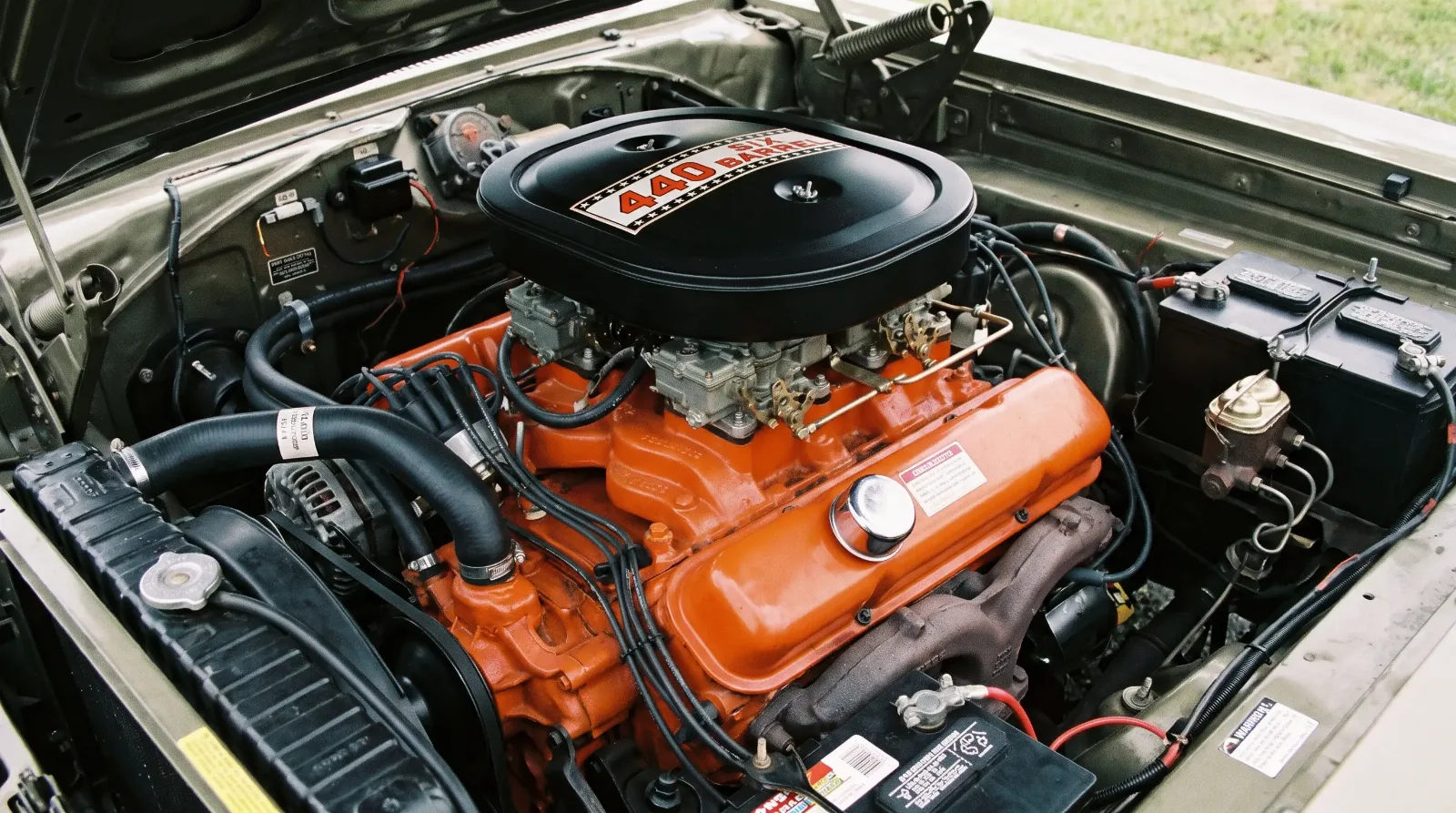
The short version: the Hemi flows more air and makes more top-end power, and it is heavier, wider, and more expensive to build. The wedge is cheaper, lighter, and easier to live with, and it gave up some breathing at the top. Both won races. Neither is simply better. For where these fit in the larger fight, take a closer look at muscle car engines and how the divisions used each design.
What the two chamber shapes actually are
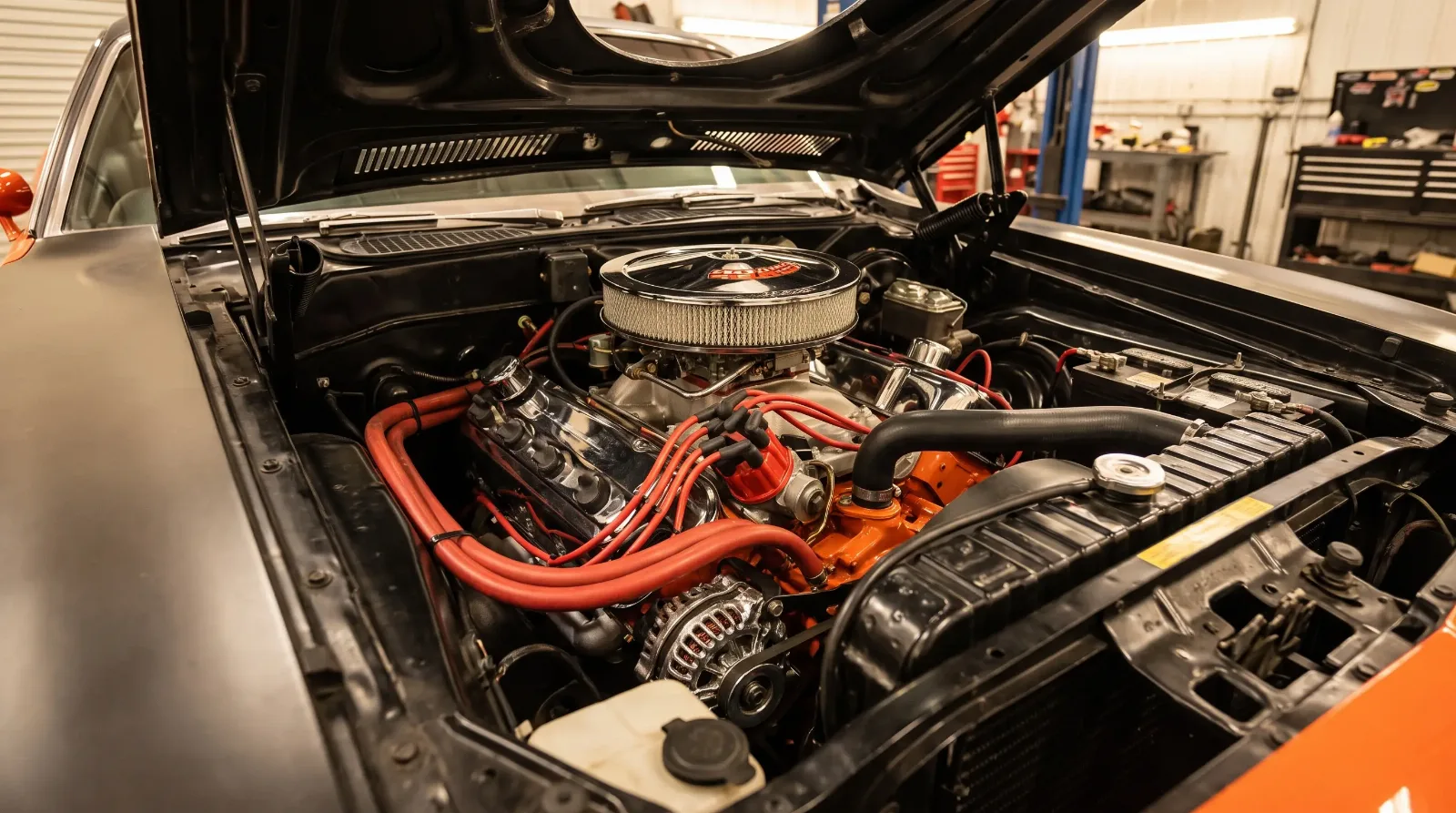
A wedge engine has a combustion chamber shaped like a wedge, with the valves sitting more or less in a row and the intake and exhaust on the same side of the head. It is simple, compact, and cheap to manufacture. The vast majority of muscle engines used it, from the small-blocks up through most of the big-blocks. Nothing wrong with it. It works, and it works on a budget.
A Hemi uses a hemispherical chamber, a dome, with the intake valve on one side and the exhaust valve on the other and the spark plug in the middle. That layout lets you fit bigger valves and run a straighter path for air in and exhaust out. Straighter path plus bigger valves equals more airflow, and airflow is horsepower. The central plug also lights the charge evenly. On paper the Hemi is the better breather, and on the dyno it proves it.
Why the Hemi makes more power up top
Airflow is the whole game at high rpm. An engine is an air pump, and the one that moves more air makes more power, assuming you feed it fuel and spark to match. The Hemi's opposed valves and open chamber let it keep flowing when a wedge head starts to choke, which is exactly why the 426 Hemi lived at the top of the Chrysler range and dominated where sustained high-rpm output mattered, like NASCAR ovals.
Chrysler rated the street 426 Hemi at around 425 gross horsepower, a number most builders consider deliberately conservative, held down to ease insurance classification and NHRA bracketing. Dyno tests of stock Street Hemis have shown output well above the rating, into the 450 to 490 range depending on the setup. The real output was higher, and more to the point it kept climbing where the wedge flattened. That is the Hemi's argument in one sentence. It does not run out of breath when the tach swings up.
The dome chamber does one more thing worth knowing. It supports a higher compression ratio without knocking as readily, because the central plug and the clean chamber shape burn the charge fast and evenly, leaving less unburned mixture sitting around to detonate. That gave the Hemi headroom the wedge did not have. It is also why the design worked so well in sustained-load racing, where a wedge head would heat-soak and start giving up power that the Hemi held onto lap after lap.
| Trait | Hemi chamber | Wedge chamber |
|---|---|---|
| Chamber shape | Hemispherical dome | Wedge, valves in line |
| Valve layout | Opposed, bigger valves | Same side, simpler |
| Airflow at high rpm | Superior | Good, falls off sooner |
| Weight and width | Heavy, wide heads | Lighter, compact |
| Cost to build | Expensive | Cheap, mass-market |
What the wedge did better
The Hemi's advantages come with a bill. The heads are big and heavy, the engine is wide enough to be a headache in some chassis, and it cost real money to build and to buy new. It also needed maintenance a casual owner did not always want, with valve lash and tuning that rewarded attention. For most buyers, that was too much engine for the street.
The wedge answered with value. Chrysler's own 440 wedge, especially in Six Pack form, delivered most of the street performance of a Hemi for a fraction of the cost and weight, and it was easier to keep running. Off the line the lighter wedge could even feel livelier, because it was not carrying those heavy heads over the front wheels. For the money, the wedge was the smarter street engine, and the sales numbers showed it. The history of how these choices played out across every brand is covered in muscle car history in full.
The wedge also fit the real world better. Its narrower profile dropped into more engine bays without a fight, its simpler heads meant a home mechanic could service it, and it did not demand the periodic valve adjustments a solid-lifter Hemi wanted. Most owners were not running a quarter-mile every weekend, they were driving to work and to the cruise night, and for that life the wedge asked less and gave back plenty. The Hemi was the specialist. The wedge was the engine you could live with, and that is exactly why so many more of them left the showroom.
Which one to chase today
For a buyer, the decision is mostly about money and intent. A documented Hemi car is a blue-chip collectible priced accordingly, and it is a lot of engine to own and maintain. A wedge car gives you a huge share of the experience for far less, and it is friendlier to drive and to service. Neither choice is wrong. They answer different questions.
The design difference is not just trivia, it is the thing that sets the price and the driving character of these cars, so it pays to understand it before you shop. Hemi engineering influenced rivals across the industry, including AMC's approach to its own big-block, and you can read the full story on that. When you are ready to compare real cars, explore classic muscle cars for sale and see how the chamber design shows up in the asking prices.
"The Hemi wins the airflow argument, no contest. But airflow is not free. You pay for it in weight, in width, and in a check that clears a lot slower. Nine times out of ten a 440 wedge gives you the number that matters on the street for a third of the money. Buy the one that fits how you actually drive."
Dan Reeves
Related Reading
Have a
Classic Car
for Sale?
Reach thousands of serious classic car collectors across the US.
Sell It Here →
Are You a Classic Car Dealer?
List your full inventory and connect with targeted classic car buyers.
Join as a Dealer →

About the author
Dan Reeves
Performance engine builder from North Carolina's motorsports corridor, focused on swaps, forced induction and making real, repeatable power.




Comments
Be the first to comment on this article.