
Park a finished hot rod next to a rat rod at any cruise night and the crowd splits down the middle. One side loves the mirror paint and the tucked wiring. The other side loves the surface rust, the exposed welds, and the sense that the thing was thrown together in a weekend and driven hard the next day. Both cars might sit on the same era of chassis, run the same kind of V8, and trace back to the same postwar backyards. What separates them is intent, and once you understand the intent, everything else on the car starts to make sense.
Car Features
6 min read
Hot Rod vs Rat Rod: The Real Difference
A builder settles the hot rod vs rat rod argument: intent, finish, cost, safety, and the culture split behind two very different cars.
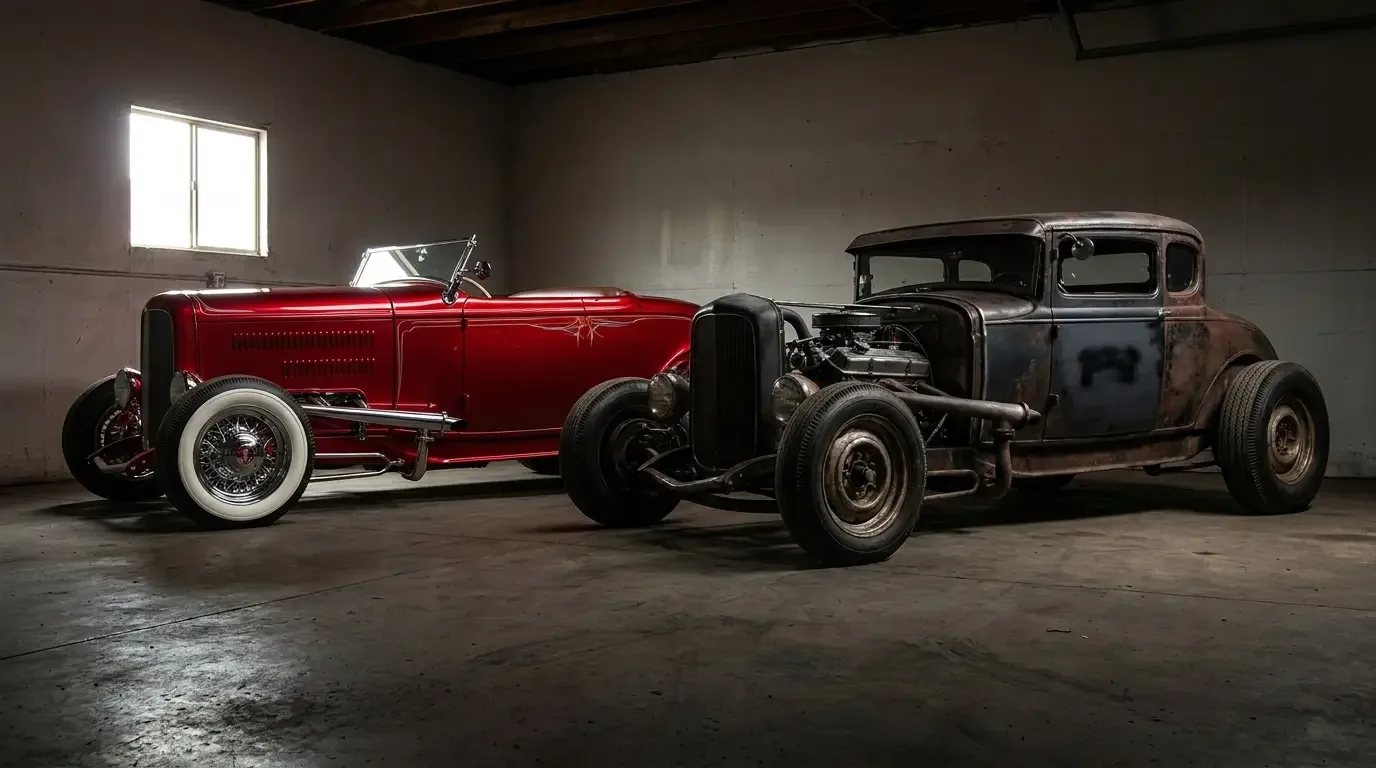
I have built both. I have laid block-sanded paint until my hands cramped, and I have also bolted together a beater on purpose and left the primer showing. So when people ask me to settle the argument, I tell them the truth: a rat rod is not a hot rod that failed. It is a different answer to the same question. If you want the wider family tree, the difference between a period build, a modern cruiser, and a rat is the whole point of hot rod vs street rod. This piece narrows it down to the two that get confused most.
Finish and intent: the real dividing line
A traditional hot rod is a finished object. The builder chases a look that would have passed muster in the 1950s or early 60s: a chopped top with the pillars leaded smooth, a nose and deck shaved of trim, paint that reflects the shop lights, and a stance that sits right because someone measured it. Every choice points toward "done." Even a channeled, primered hot rod built in the old style is usually primered because the owner is saving up for paint, not because rough is the goal.
A rat rod inverts that. The unfinished surface is the finish. Rust is left, or clear-coated so it stops spreading but keeps looking raw. Welds stay proud. Mismatched parts get bolted on because they were free or because they tell a story, not because they match. The look is deliberate even when it reads as careless. A good rat rod builder is making aesthetic decisions the whole way, they are just decisions in the opposite direction from a show car.
What is which: reading the two cars
People mix these up because a scruffy in-progress hot rod and a finished rat rod can look similar in a phone photo. Stand next to them and the tells appear fast. Check the fasteners, the seams, the wiring, and the way the paint or rust was handled. A hot rod hides its work. A rat rod displays it.
| Trait | Traditional hot rod | Rat rod |
|---|---|---|
| Finish goal | Complete, polished, period-correct | Raw, unfinished by design |
| Bodywork | Leaded seams, smooth panels | Visible welds, patina, patches left |
| Paint | Gloss color, flames, or clean primer as a stage | Bare metal, matte, rust, satin rattle-can |
| Parts sourcing | Matched, correct for the era | Mismatched, salvaged, improvised |
| Interior | Trimmed, upholstered | Bare, distressed, sometimes bench and blanket |
One honest caveat: the categories bleed together at the edges. A well-sorted rat rod with a strong stance and a clever parts mix can be more of a real hot rod, mechanically, than a trailer queen that never gets driven. Intent still decides the label, but craft decides whether the car earns respect.
Cost and safety: where the philosophies really split
Money is where new builders get the wrong idea. A rat rod looks cheap, so people assume it is cheap. The rough surface does save the single biggest line item on any build, which is paint and bodywork, and that can run into the thousands once you count materials and hours. But the running gear underneath does not care about the finish. Brakes, steering, a sound frame, and a reliable engine cost the same whether the body is glass-smooth or scabbed with rust.
Safety is the part I get loud about. A hot rod built to old-school show standards is usually sorted, because the same owner who fusses over paint tends to fuss over the brake lines. Rat rods have a worse reputation here, and it is earned by the bad ones: suicide front ends hung together with the wrong hardware, no shocks, marginal brakes, seats that are not bolted to anything real. Rough on the outside is a style. Rough underneath is a hazard.
The culture split
The two camps do not always get along, and the friction is older than the rat rod name. Traditional builders spent decades earning respect for craftsmanship, so when a wave of deliberately crude cars showed up winning attention, some took it as an insult to the trade. On the other side, rat rod folks saw the show scene getting expensive and precious, and the raw car was partly a rebellion against a hobby that priced out the kid with a welder and a junkyard.
Both readings are fair. Hot rodding started rough. The first dry-lakes cars were stripped, primered, and far from pretty. The polish came later, as the hobby matured and money arrived. In that light a rat rod is less a betrayal of the tradition and more a return to its scrappy beginning, aimed at a different destination than a modern comfortable cruiser. For how those modern goals diverge, see Hot Rod vs Restomod: Two Philosophies.
"A rat rod is honest about being unfinished, and a real hot rod is honest about being done. The only build I have no respect for is the one that lies about what it is underneath."
Jim Vasquez
Which should you build
Pick by intent, not by budget. If you want a car that reads as complete, that you can take to a judged show and stand behind, build the traditional hot rod and accept the paint and bodywork bill. If you want to drive something raw, get on the road faster, and treat the patina as the point, build the rat rod, and put every dollar you saved on finish into the frame, brakes, and steering. Do that, and either car earns its place at the cruise night, on opposite sides of the same aisle.
Sources and notes
- Period hot-rod press and magazine coverage from the postwar and revival eras
- Kustom kulture and traditional-build reference material
- Builder interviews and shop-floor practice on bodywork, finish, and chassis safety
- Show and club records documenting judging standards for finished builds
Related Reading
Have a
Classic Car
for Sale?
Reach thousands of serious classic car collectors across the US.
Sell It Here →
Are You a Classic Car Dealer?
List your full inventory and connect with targeted classic car buyers.
Join as a Dealer →

About the author
Jim Vasquez
Southern California hot rod and custom car builder with roots in the traditional kustom kulture scene.
Comments
Be the first to comment on this article.