
Two rods can start from the same body and the same frame and end up looking like they came from different planets. One sits tall and proud, wheels out in the wind, no fenders to hide behind. The other hunkers so low the rocker panels look like they are dragging pavement. That is the highboy and the lowboy, and the difference is not paint or wheels or an engine. It is where the body sits on the frame, and whether the fenders stay or go.
Car Features
7 min read
Highboy vs Lowboy: Hot Rod Stances Explained
What separates a highboy from a channeled lowboy: where the body sits on the frame, fenders on or off, and the real driving trade-offs behind each stance.
People throw the terms around loosely, and half the time the guy saying them cannot tell you what he means. So let me sort it out from the bench. If you want the wider family tree first, read the hot rod vs street rod breakdown, then come back here for the stance question.
What highboy actually means
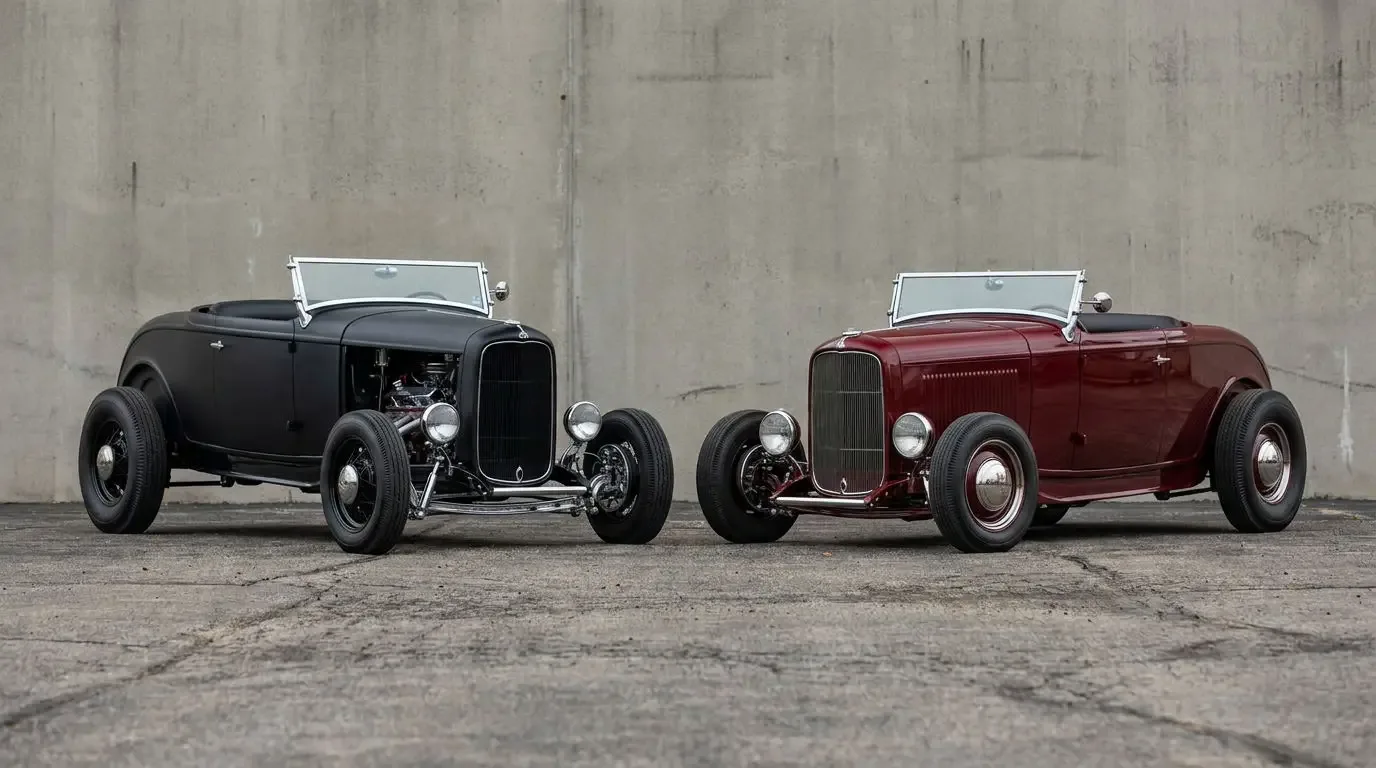
A highboy is a hot rod with the fenders removed and the body left sitting on top of the frame rails at its original height. Nothing gets dropped, nothing gets tucked. The body rides where the factory put it, the frame is exposed along the sides, and the tires stand out in the open. That exposed rail and the daylight under the body are the whole point. You are looking at a car stripped to its bones.
The classic example everybody pictures is the 1932 Ford, the Deuce. A Deuce highboy roadster is about as close to a religious icon as this hobby gets. Fenders off, top down or chopped, that little grille shell up front, the frame horns showing at the back. When somebody says "highboy" without naming a car, nine times out of ten there is a 32 Ford in their head.
What lowboy and channeled mean
A lowboy sits closer to the ground because the body has been dropped down over the frame rather than resting on top of them. The way you get there is channeling. You cut the floor loose, raise it up inside the body, and drop the body shell down so the frame rails pass up through where the floor used to be. The result is the body swallowing the frame instead of perching on it. The car loses several inches of height without touching the suspension.
Channeling is not the same as chopping, and beginners mix these up constantly. A chop lowers the roof by cutting the pillars. A channel lowers the whole body relative to the frame. You can do one, the other, or both. A car that is chopped and channeled is a mean-looking thing, and it is also a miserable thing to sit in, which I will get to. If any of this vocabulary is new, the Hot Rod Glossary: Terms Every Beginner Should Know lays out chop, channel, section, and Z in plain language.
| Trait | Highboy | Lowboy (channeled) |
|---|---|---|
| Body position | On top of frame, factory height | Dropped down over the frame rails |
| Fenders | Removed, frame exposed | Often removed, sometimes kept |
| How it drops | Does not, rides tall | Channeling the floor and body |
| Interior room | Reasonable, close to stock | Cramped, floor raised into the cabin |
| Look | Tall, open, hot rod classic | Low, aggressive, ground-hugging |
Fenders on, fenders off
The fender question is separate from the stance question, but the two travel together in most people's minds. Pull the fenders and you are almost always headed toward a highboy look, because there is nothing left to fill and the tires are meant to be seen. Highboys are a fenderless idea at the core.
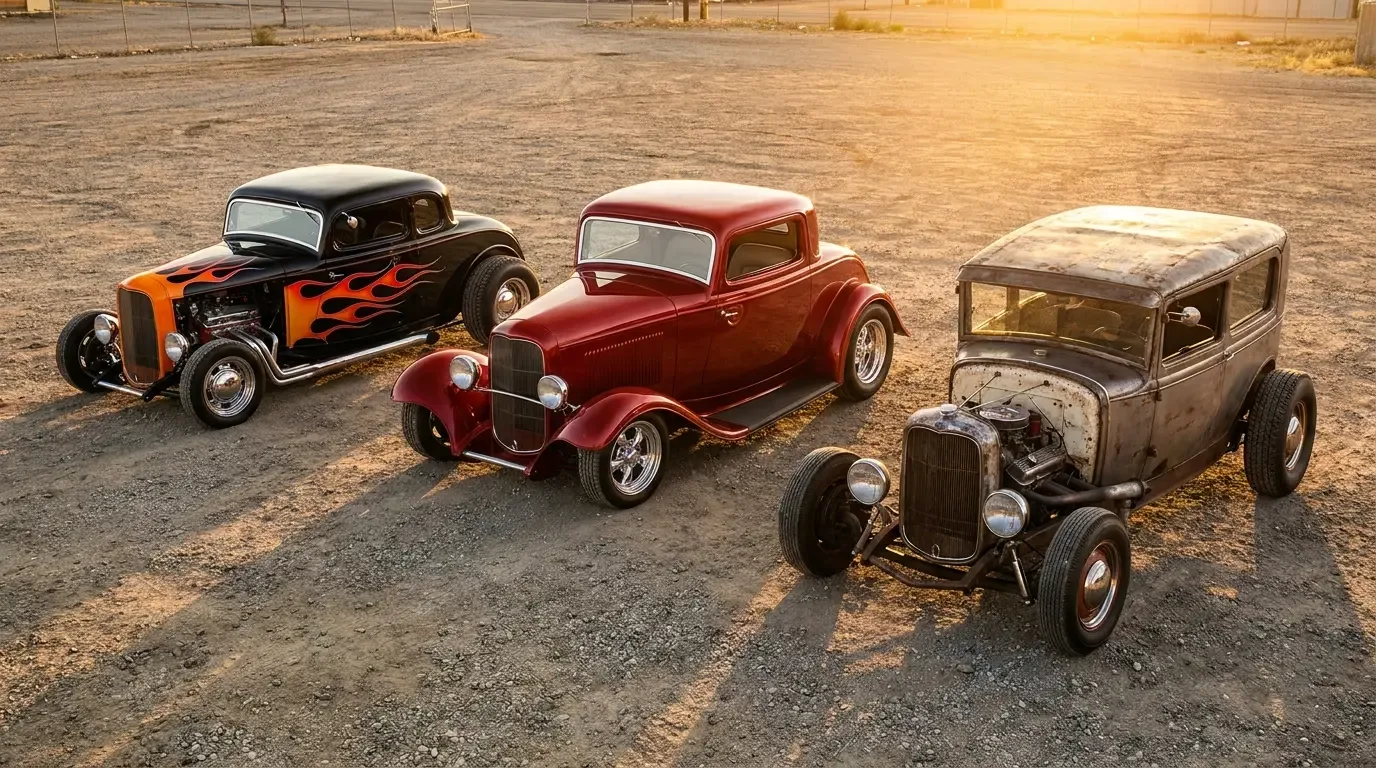
Channeled cars go both ways. Plenty of lowboys keep their fenders, and with the body dropped, those fenders sit right down over the tires and give you a low, closed-in profile that reads more like a kustom than a hot rod. Take the fenders off a channeled car and you get the most aggressive stance in the whole hobby, low body plus open wheels. That combination is a lot of the appeal of a channeled A or a channeled 32 sedan.
"First rod I ever channeled, I was so proud of how low it sat until I tried to drive it three hours to a show. My knees were up around the wheel and the floor was hot from the exhaust. Looked incredible in every photo. Punished me the whole way home."
Jim Vasquez
The look and the trade-offs
A highboy gives you presence without much penalty. The body is where the factory intended, so you keep most of your interior room, the seating is close to stock, and it will still take a long drive without wrecking your back. You give up nothing mechanical to run tall. What you get is that open, honest, wind-in-the-face profile that defined the dry lakes cars and the early street rods.
A lowboy buys you a lower center of gravity and a stance that looks planted and fast standing still. But channeling is real work and it costs you. The raised floor eats legroom and headroom. The seat has nowhere to go but up, so tall drivers end up cramped. Pedals, steering column, and driveline all have to be reworked around the new floor line. Exhaust routing gets tight. On some channeled cars the driveshaft tunnel intrudes so far you are practically straddling it. None of that shows in a photo, which is why channeled cars photograph like a million bucks and drive like a penalty box.
Why the Deuce highboy became the icon
Of all the ways to build a rod, the fenderless 32 Ford at full height is the one that got printed on the movement's birth certificate. It came out of the dry lakes and the early postwar street scene, where guys stripped weight and ran what they had. The 32 happened to have handsome proportions and that flathead V8 from the factory, so when you pulled the fenders and left it tall, it just worked. The look stuck and never left. Sixty-odd years later, builders still chase the exact stance of an original Deuce highboy because it is the reference everybody measures against. That lineage is a big part of the classic hot rod story.
The channeled lowboy has its own following, and it never stopped being cool, but it reads as a specific choice rather than the default. A highboy says traditional. A deep channel says you cared more about the stance than your spine, and there is an honored place for that too. Both stances still turn up across the hot rods for sale listings, so you can compare a tall Deuce roadster against a slammed channeled coupe and feel the difference before you ever build one.
Sources and notes
- Period hot-rod press coverage of dry lakes and early street rod construction.
- Traditional builder interviews on channeling, chopping, and body-mounting practice.
- Ford chassis and body references for the 1932 model, used to describe frame geometry generally.
- Hot rod show and registry records documenting highboy and channeled builds over time.
Related Reading
Have a
Classic Car
for Sale?
Reach thousands of serious classic car collectors across the US.
Sell It Here →
Are You a Classic Car Dealer?
List your full inventory and connect with targeted classic car buyers.
Join as a Dealer →

About the author
Jim Vasquez
Southern California hot rod and custom car builder with roots in the traditional kustom kulture scene.




Comments
Be the first to comment on this article.