
Type "how many Model T still exist" into a search bar and you will get a confident number within seconds. Treat it with caution. Nobody has ever counted the surviving Model Ts, and nobody has counted the Model As either. What exists is a handful of estimates from clubs and writers, a couple of old registration figures, and a lot of repetition. That is still useful, as long as you know which number is which and how much weight each one can carry. For an appraiser, the uncertainty is the first fact, not a footnote.
Car Features
6 min read
How Many Model Ts and Model As Survive Today?
No census exists. What the estimates say about surviving Model Ts and Model As, how solid each figure is, and what survival means for value.
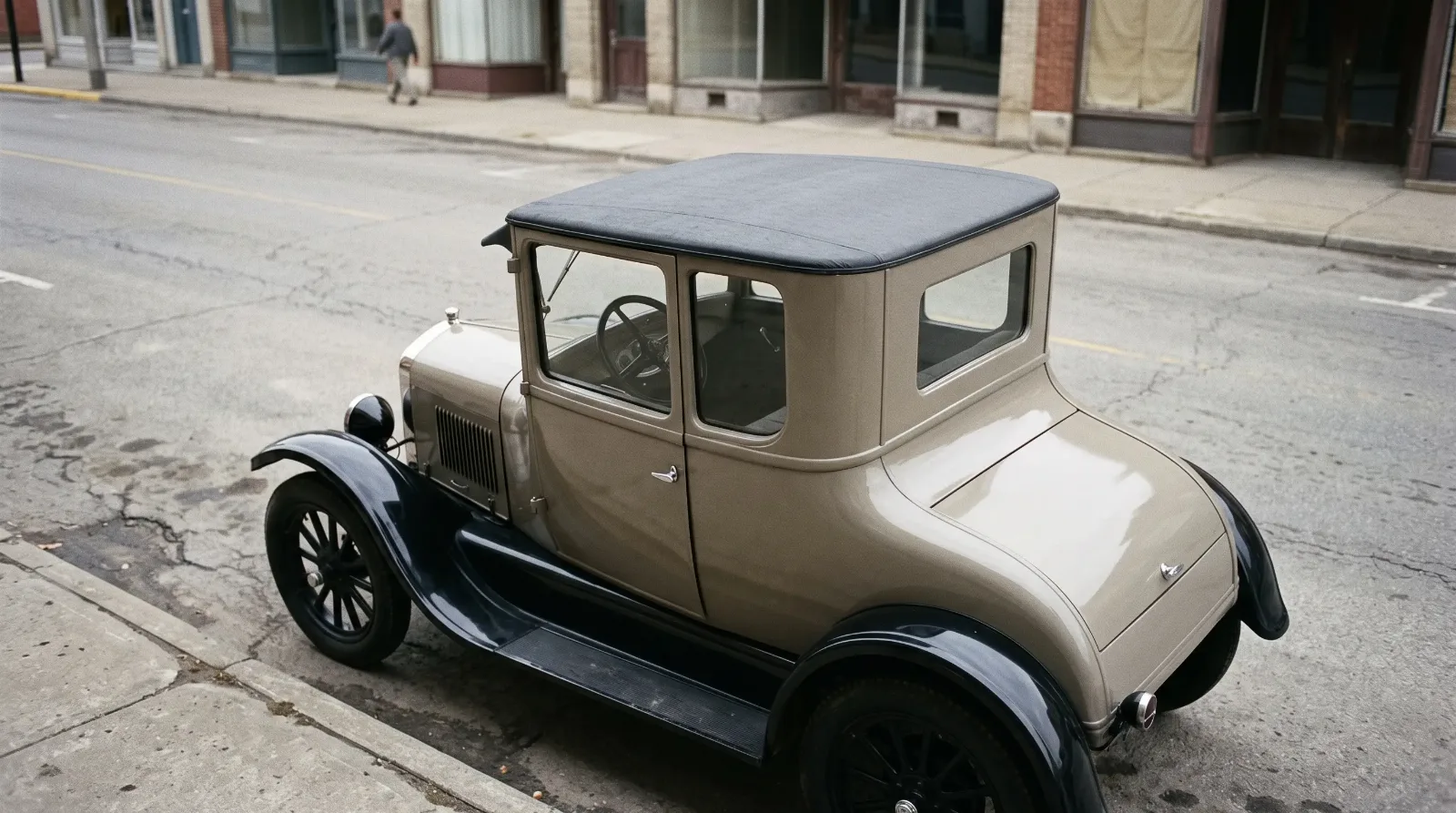
Why there is no census
Start with the size of the original pool. Ford built more than 15 million Model Ts between 1908 and 1927, counting branch plants and overseas assembly. The Model A, built for the 1928 to 1931 model years, added about 4.85 million more (MAFCA counts 4,849,340). That is roughly 20 million cars, spread over dozens of countries and a century of scrapyards, hot rod shops and barns.
No registry tracks all of them. State titling records are not pooled. Plenty of survivors sit unregistered in sheds, a car in pieces may or may not be counted, and a chassis that became a speedster or a tractor in 1940 is a judgment call. The Model T Ford Club of America's own president put it plainly in 2008: "We have no idea how many." He gave a range of about 50,000 to 150,000. A range that wide, from the people closest to the cars, is the honest starting point.
The best estimates of how many Model T still exist
The most quoted current figure is about 50,000 running Model Ts, described in 2025 as the Model T community's best estimate. An older secondary source gave 50,000 to 60,000 roadworthy cars in 2008. Neither is a count. Both are informed guesses, and the second appears to have fed the first.
The 1949 registration figure is the firmest number on the list, and even it has a problem: a 1948 figure of 49,869, credited on club forums to an R.L. Polk survey by way of Ralph Stern's book Tin Lizzie, also circulates. That is a fourfold gap, and nobody has resolved it against the original survey. So the historical anchor is shaky too. What can be said with confidence is the ratio. If something like 50,000 Model Ts still run out of more than 15 million built, that is about one car in 300.
| Estimate | Figure | Date | How solid |
|---|---|---|---|
| Model T registered in the US | About 200,000 | 1949 | Medium: one opened secondary source |
| Model T roadworthy | 50,000 to 60,000 | 2008 | Low: one dated secondary source |
| Model T survivors (club president) | 50,000 to 150,000 | 2008 | Medium: stated as a guess |
| Model T running | About 50,000 | 2025 | Low: community estimate |
| Model A existing, complete or in pieces | About 250,000 | c. 2008 and 2026 | Medium: two sources, both estimates |
The Model A: a larger share of a smaller pool
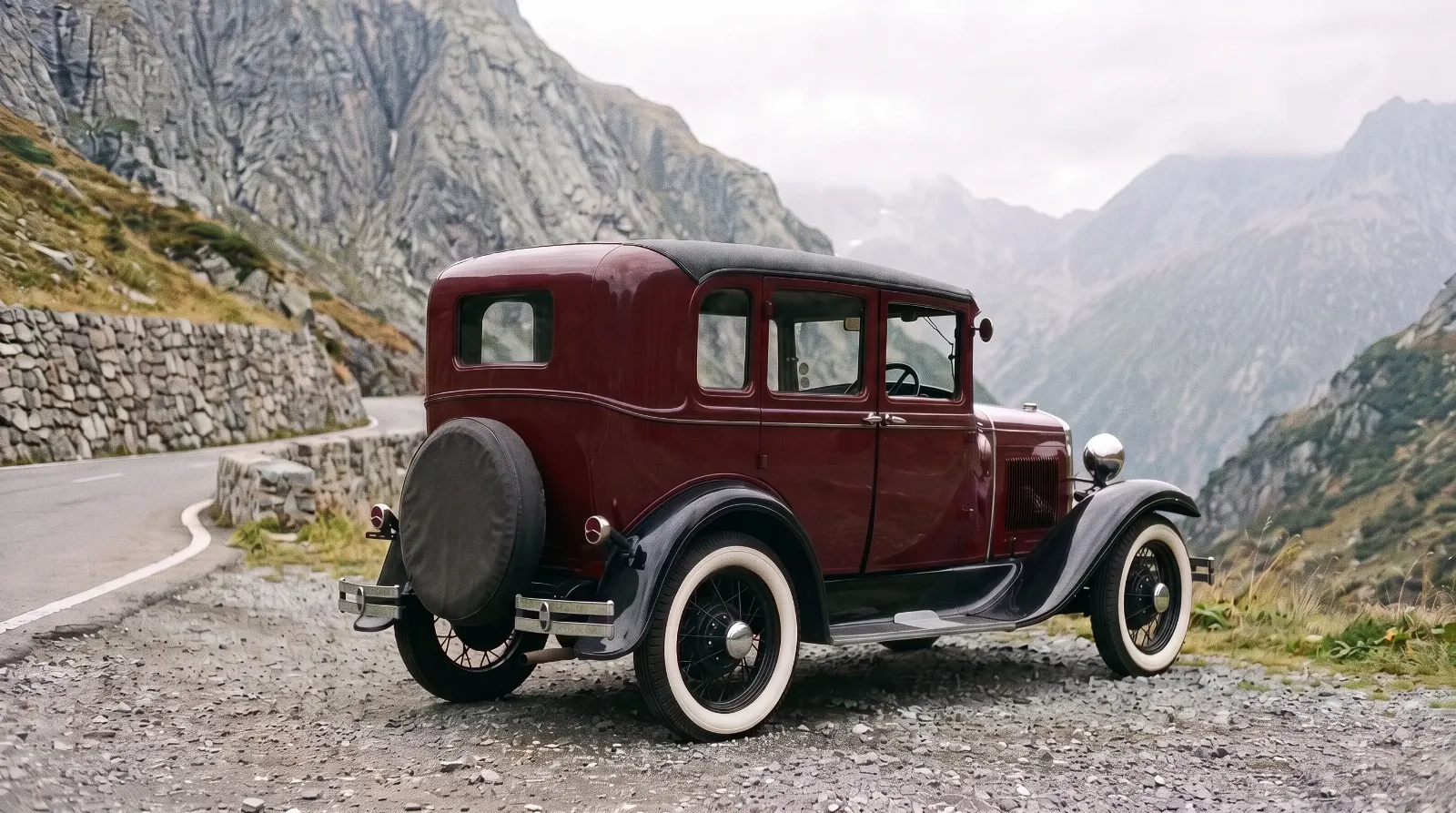
The Model A number is bigger in absolute terms and much bigger as a share. A MAFCA chapter flyer says some estimate that 250,000 Model As still exist, complete or in pieces, and a 2026 article repeated that most estimates come in above 250,000. Out of about 4.85 million built, that is roughly one in 20.
Note the qualifier, though: "complete or in pieces." That figure counts parts cars and project cars, which the Model T running estimate does not. The two numbers measure different things, so the gap between them is partly real and partly definitional. Higher and lower guesses turn up on forums and overseas club pages, but none of them comes with a documented method.
Why would the A survive at a higher rate? It is newer by as much as two decades, and it drives like a modern car: a three-speed sliding-gear gearbox and four-wheel mechanical brakes in place of the T's pedals and transmission band. That kept it usable longer, and a car that keeps working keeps getting repaired. A fair part of the remaining count also reflects people who rebuilt cars from parts, which is why restoration matters so much to any survival estimate.
"A survival estimate tells you one thing for certain: you will not run out of cars to look at. It tells you nothing about the one in front of you. Value lives in that car's condition, its paperwork and how quickly you could sell it again."
Marcus Feld
What the survival numbers mean for a buyer
Large survival counts translate into liquidity, and liquidity is the quiet strength of both cars. In April 2025 one aggregator showed almost 300 Model T sales averaging just under $17,000. Another tracked 391 Model T sales since 2020 with a median of £10,169. On the Model A side, one tracker shows 830 sales of 1930 cars with a trimmed average of $22,225 and a median of $20,000, and 731 sales of 1929 cars with a trimmed average of $20,754, as of October 2026.
Read those figures as a market with depth, not as a price guide. Hundreds of documented sales mean a seller can usually find a buyer, and a buyer can usually find a comparable car. The headline auction highs for the Model A (a top 1929 sale of $209,000, for instance) belong to unidentified cars that were probably hot rods or special builds, and they say nothing about a stock Tudor.
The risk sits elsewhere. With so many survivors, the ordinary Model T or Model A is not scarce, and a seller who prices a common touring car or Tudor as if it were rare is selling a story. Condition and documentation carry the value. If you want to know what owning one actually involves day to day, the details are worth reading before you bid.
Where rarity actually lives
Common cars still contain rare ones. Body styles built in small numbers, or built in materials that did not last, survive in small numbers. The Model A Convertible Sedan, built only in 1931, is one example. The 1929 to 1931 wood-bodied station wagon is another. It needed fresh varnish every year to stay sound, and a dealer account blames neglect of that wood for its low survival rate.
Early serial numbers are the other pocket of rarity. A 1908 touring car carrying serial no. 2 is believed to be the earliest Model T surviving, found in upper Michigan and bought for $400 in 1958. Even there, the caveat applies: the auction house said its history as no. 2 cannot be proved by documents. That is the general rule in this market. A claim of rarity is worth what the paperwork behind it is worth.
So the honest answer to the question in the title is a range, not a number: on the order of 50,000 running Model Ts and about a quarter of a million Model As in some form, with wide error bars on both. For the clubs, museums and tours that keep those cars moving, see the old Ford hobby today.
Sources and notes
- Wikipedia: Ford Model T (1949 registrations, 2008 roadworthy estimate)
- SlashGear: how many Model Ts were made and what they cost now
- Collectors Weekly: interview with MTFCA president Russ Grunewald
- MAFCA chapter flyer (Model A survival estimate)
- Conceptcarz: 1930 Ford Model A auction data
- Bonhams: 1908 Ford Model T Touring, serial no. 2
Related Reading
Have a
Ford Model T
for Sale?
Reach thousands of serious classic car collectors across the US.
Sell It Here →
Selling a classic? Here's how: compare the places to sell classic cars
Are You a Classic Car Dealer?
List your full inventory and connect with targeted classic car buyers.
Join as a Dealer →
#collector car market
#ford model a
#ford model t
#surviving cars
#Model T survivors
#Model A values

About the author
Marcus Feld
Accredited collector-car appraiser who reads the market through hammer prices, condition tiers and risk.
Related Listings - Ford Model T
More in Car Features
Comments
Be the first to comment on this article.