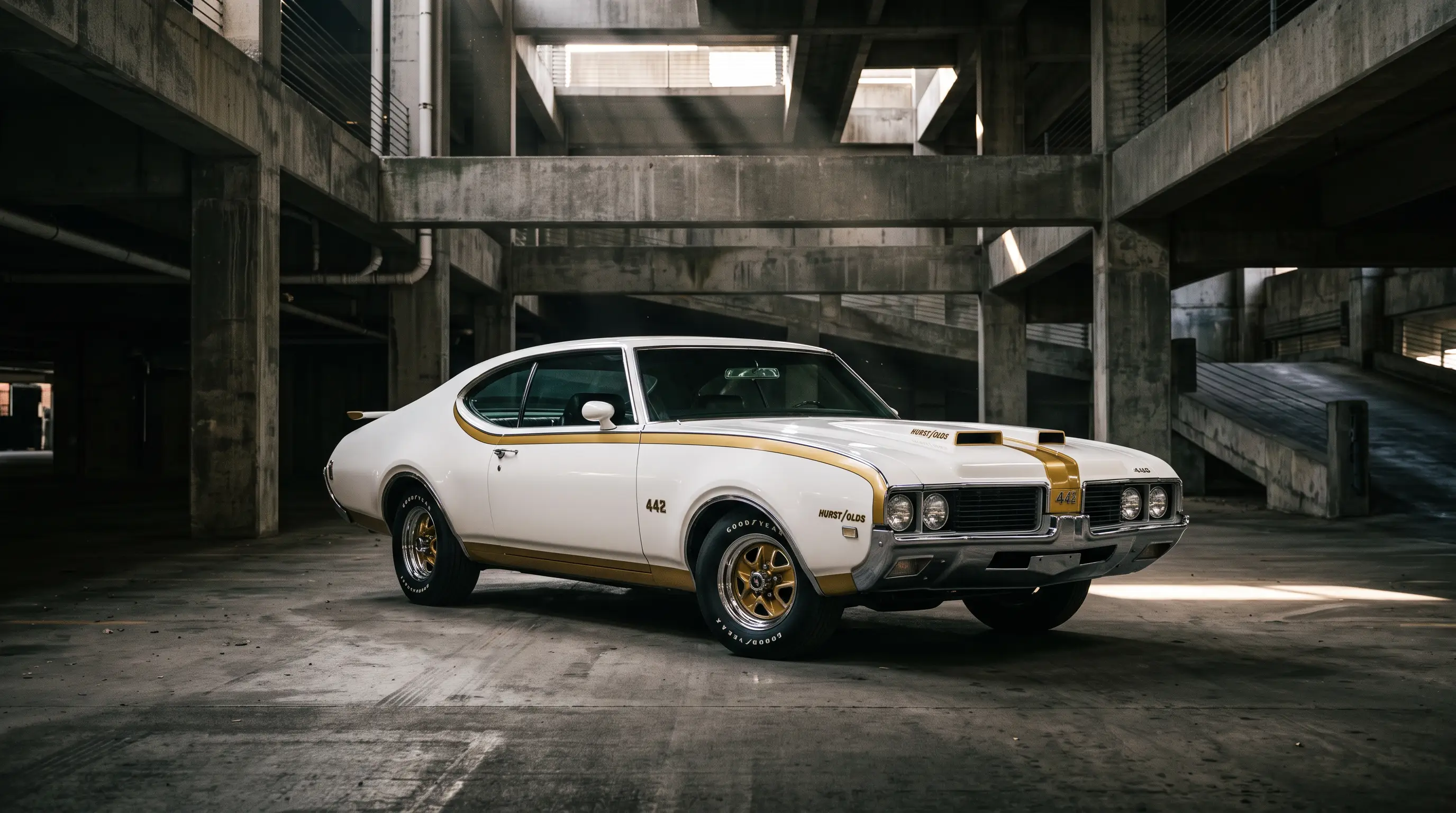
Ask ten Oldsmobile collectors to name the one Hurst/Olds they would buy if money and patience were no object, and you will get ten different answers pointed at roughly the same handful of cars. That convergence is not an accident. In appraisal work, "holy grail" status is not a marketing phrase, it is a specific combination of scarcity, documentation, and demand that a small number of Hurst/Olds cars satisfy and almost everything else in the model's run does not. Here is what actually separates a genuinely grail-tier Hurst/Olds from a car that is merely rare.
Rarity alone does not make a grail
A car can be numerically scarce and still not command grail pricing, because scarcity without demand is just a small number on a spreadsheet. The Hurst/Olds cars that reach the top of the market pair low production with a specific, well-known story attached to that scarcity: a first-year introduction, an option combination almost nobody ordered, or a documented tie to a factory program that ended abruptly. Condition tier matters, obviously, but a #2 car with the right story regularly outsells a #1 car with a thinner one.
This is the distinction appraisers actually get paid to make, and it is where most casual market commentary falls short. Two cars can look nearly identical in photographs and sell forty percent apart, and the gap is almost never about paint quality.
Liquidity plays into this too, and it is the part sellers tend to leave out of the conversation. A car can be genuinely rare and still be hard to sell at a premium if the pool of buyers who understand why it is rare is small. Grail-tier Hurst/Olds cars sit in a narrow band where the story is well enough known inside the Oldsmobile community that a serious buyer will act on it quickly, and specific enough that a casual buyer will not overpay for a car that only looks similar.
1968: the first year and its short window
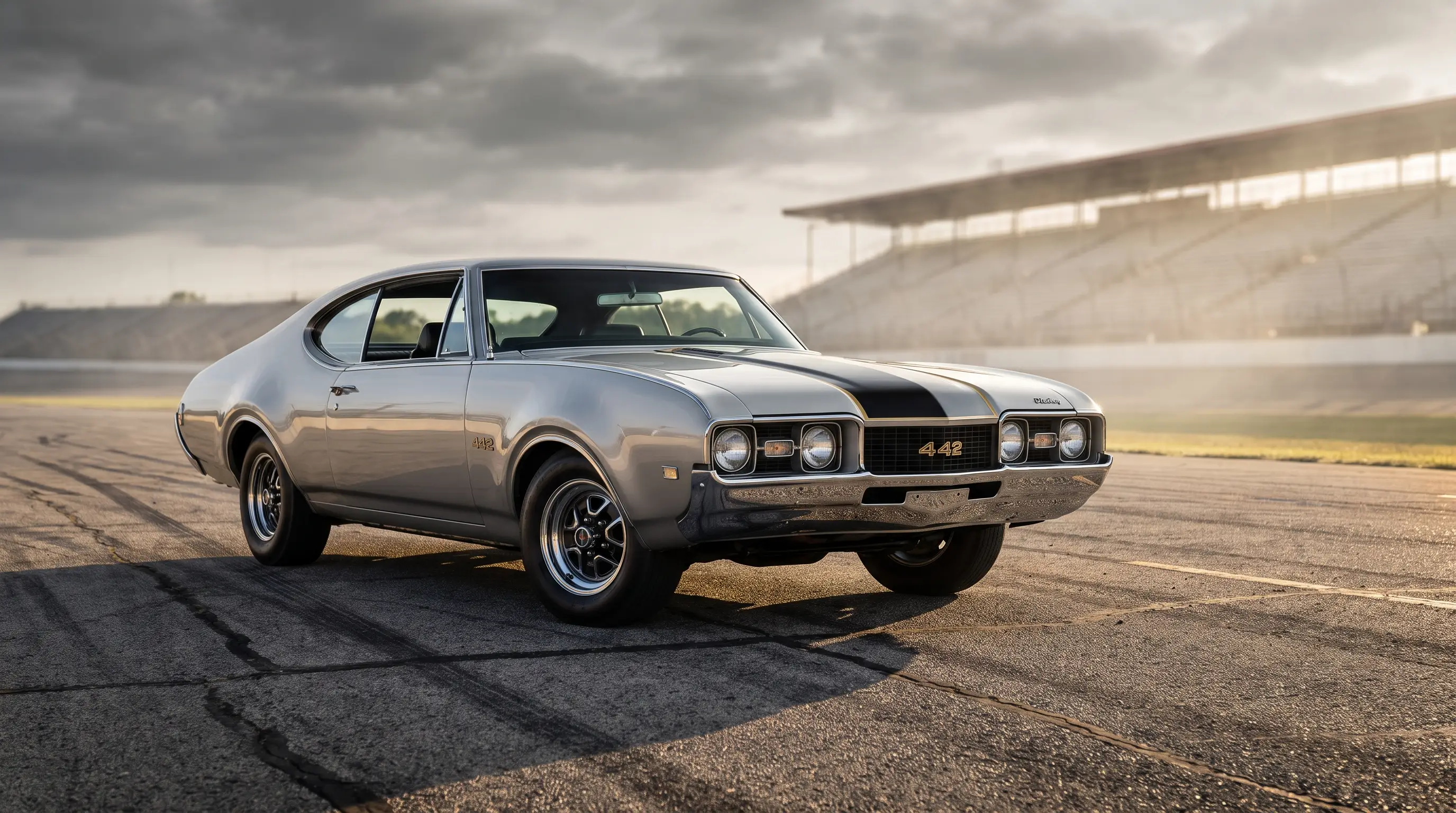
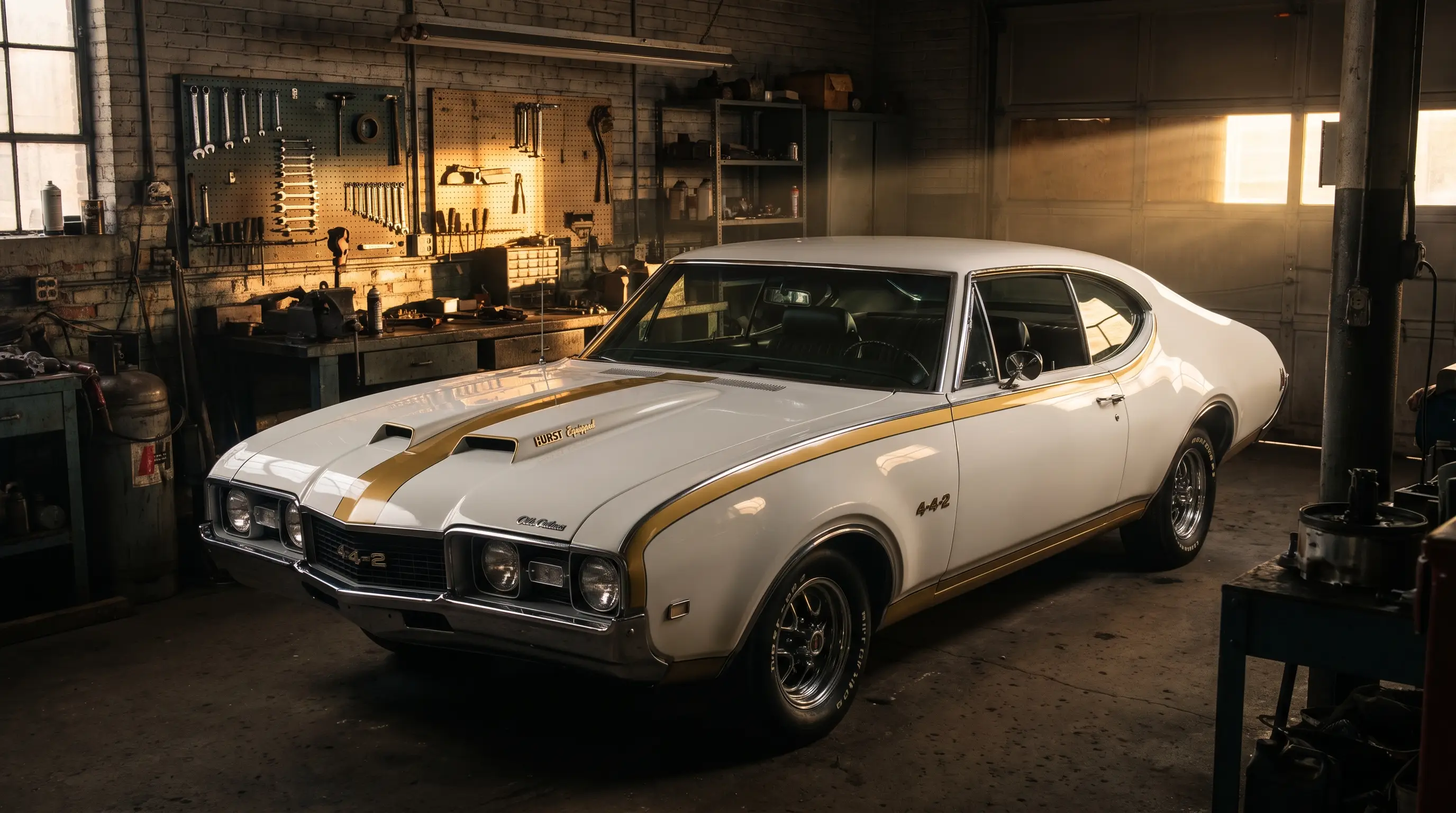
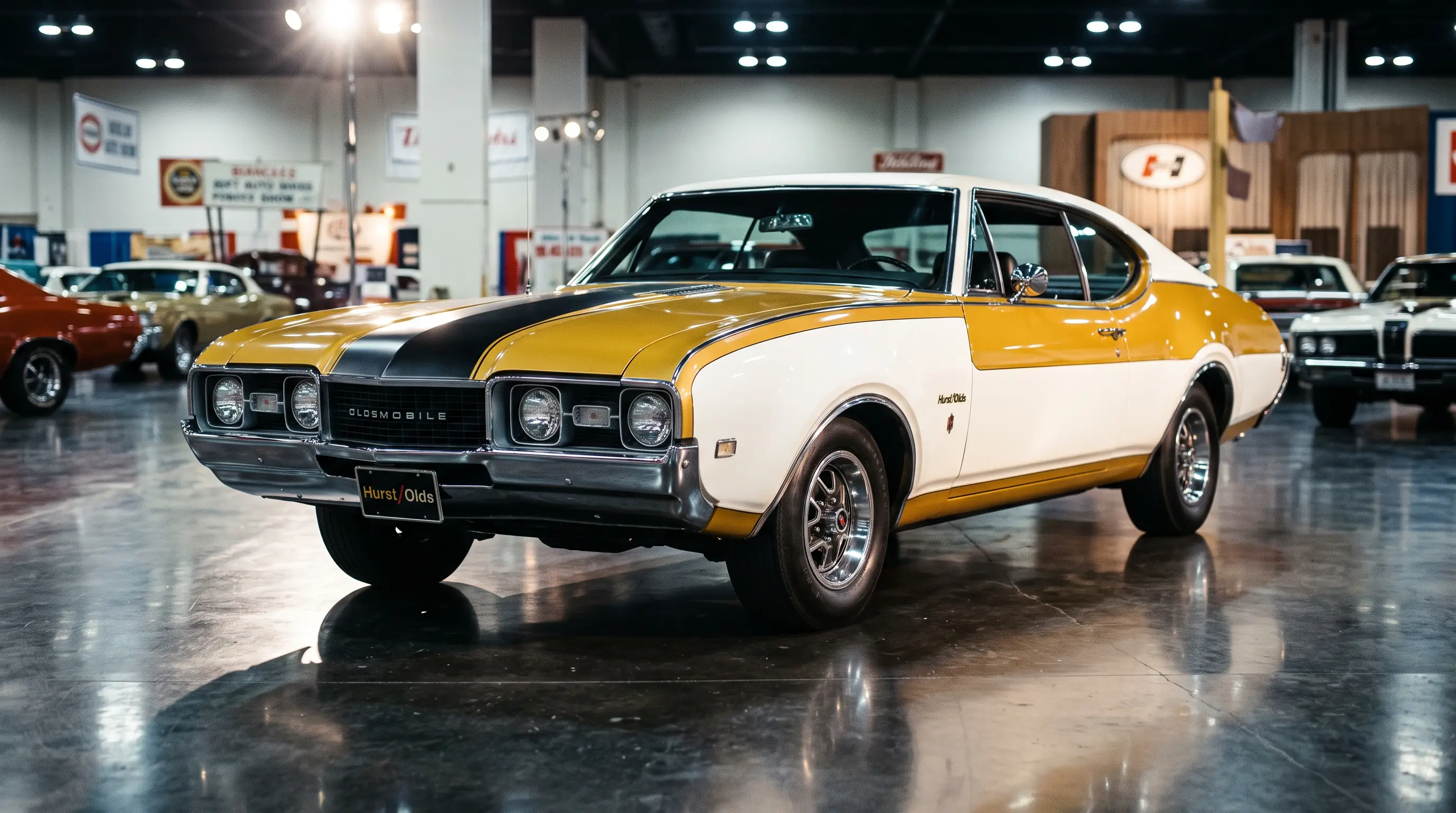
The original 1968 Hurst/Olds package, built on the 442 platform with a 455 cubic inch engine that was not otherwise available in that body that year, is the obvious starting point for any grail conversation. Oldsmobile built just 515 of these cars for 1968, a number small enough on its own to anchor a grail argument. Oldsmobile's own displacement rules kept the 455 out of the 442 for retail buyers that year, which made the Hurst-built cars the only way to get that engine in that body. That kind of factory-created exclusivity is exactly the setup that produces long-term grail demand, because it cannot be replicated after the fact. A clone can wear the stripes. It cannot manufacture the underlying rules exception that made the original scarce.
This is also why the 1968 cars carry a particular kind of appraisal risk. Because the package was built outside Oldsmobile's normal assembly line process, with Hurst performing modifications after the cars left the factory, the paperwork trail runs through a different set of records than a standard Oldsmobile build. A buyer who assumes the documentation looks like a normal factory build sheet is going to be disappointed, and possibly exposed to a car that has been dressed up to look more special than it can actually prove itself to be.
1969: the pause that created its own mythology
Oldsmobile stepped back from the Hurst/Olds program for the 1969 model year before returning for 1972, and that gap has done strange things to collector psychology around the cars built just before and after it. A documented late-1968 or early-return 1972 car benefits from being framed as a bookend to a program that briefly disappeared. The Hurst/Olds story covers the full year-by-year arc, but from a valuation standpoint, the interruption itself became part of what collectors are paying for. Continuity sells volume. Discontinuity, in this hobby, sometimes sells premiums.
The 1972 return brought its own wrinkle worth flagging for appraisal purposes: that year's Hurst/Olds served as the Indianapolis 500 Pace Car, which layered an entirely separate collector category, pace car replicas and the small number of actual pace cars used at the Speedway, onto an already complicated production picture. Distinguishing a genuine pace car from a dealer-ordered replica built to the same appearance package is exactly the kind of documentation problem that separates a confidently appraised car from a guess.
Documentation is the difference between #2 and #4
I have appraised cars that were mechanically identical and priced a full condition tier apart, and the separating factor was always paperwork: a broadcast sheet, a period photograph, a chain of title back to an original dealer. A Hurst/Olds without that paper trail is not worthless. It is a good driver with a good story that cannot yet be proven, and the price has to reflect that unresolved risk. Buyers are effectively purchasing two things at once, a car and a level of certainty about that car, and the market prices the certainty as aggressively as it prices the sheet metal.
I have also seen the reverse mistake: a buyer walking away from a well-documented car because the price looked high relative to an undocumented example they had seen advertised cheaper elsewhere. That comparison is not apples to apples. An undocumented car at a lower price is not a bargain version of the documented one. It is a different, lower tier of asset that happens to look similar in photographs, and pricing it as though the gap were negotiable is how buyers end up overpaying for risk they did not realize they were taking on.
| Factor | Grail-tier signal | Risk if missing |
|---|---|---|
| Broadcast sheet or build sheet | Confirms factory options, engine, drivetrain | Reclassified as unverified, price discount |
| Ownership chain | Traces back to original dealer or first owner | Gaps invite clone suspicion |
| Model-year context | First year, resumption year, or discontinued option | Common configuration, lower ceiling |
| Condition tier | #1-#2 with matching numbers | #3-#4 caps upside regardless of story |
"A Hurst/Olds with a broadcast sheet and a clean chain of ownership is not the same asset as one without, even if they're mechanically identical. The paperwork isn't decoration. It's the thing that actually gets appraised."
— Marcus Feld
What buyers should actually do before writing a check
Before paying grail-tier money for any Hurst/Olds, get the broadcast sheet or build sheet verified independently, confirm the VIN and body tag data match the claimed configuration, and ask directly what the seller cannot prove rather than only what they can. A seller who volunteers the gaps in their own documentation is worth more trust than one who does not mention them at all. Keep reading the series for the fuller picture of how Hurst and Oldsmobile built this partnership year over year, because the context around a specific car's production run is often the single best tool for spotting whether its story actually holds up.
Sources and notes
- Oldsmobile Hurst/Olds, Wikipedia
- GM's Original Rule Breaker: The 1968 Hurst/Olds Story, autoevolution
- Vintage M/T Review: 1968 Oldsmobile Hurst/Olds, Curbside Classic
- From Loophole to Indy Pace Car: The 1972 Hurst/Olds, Sports Car Market
- Hurst/Olds Club of America, Production Numbers
- George Hurst and the Hurst Olds, Ate Up With Motor