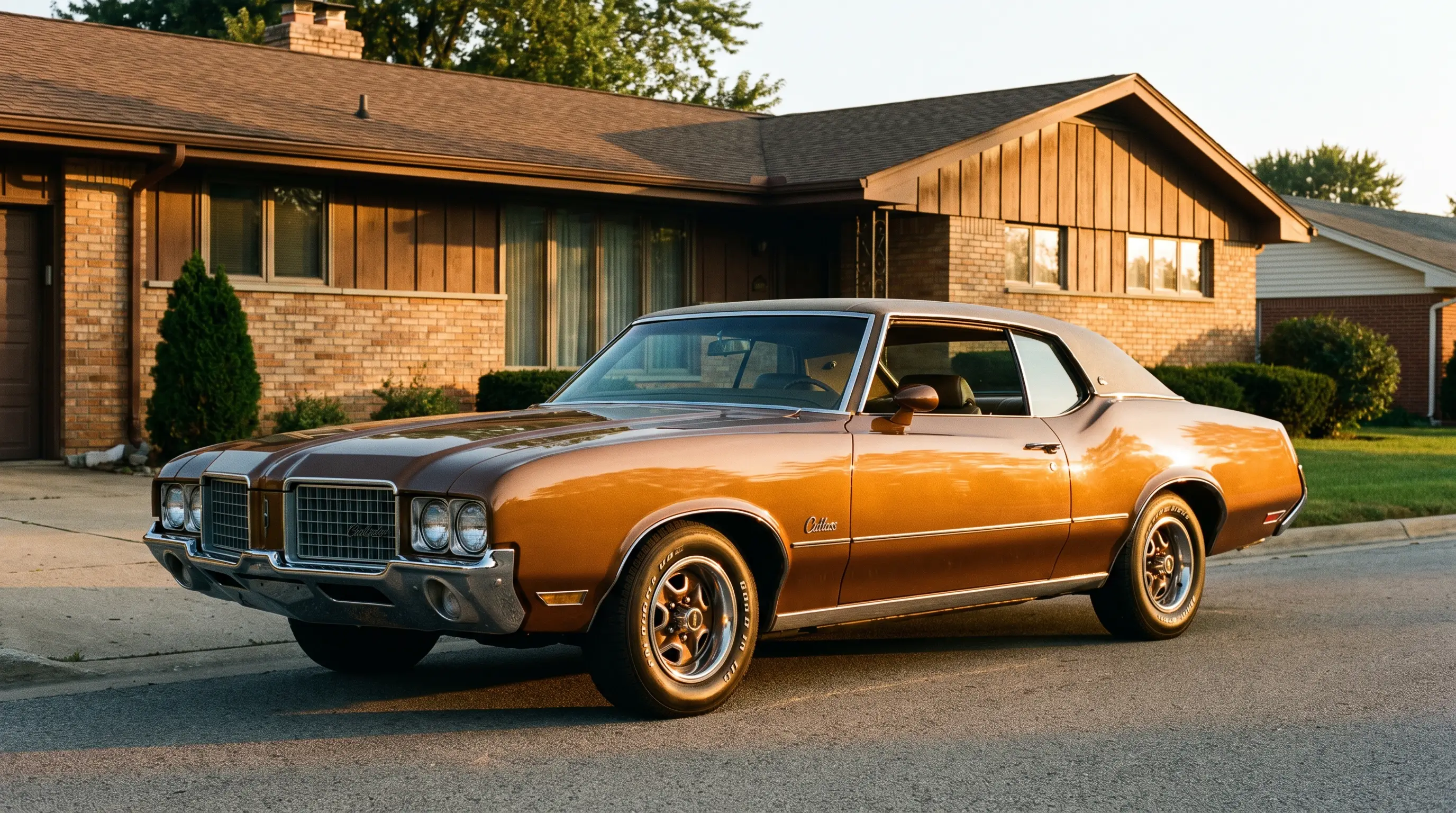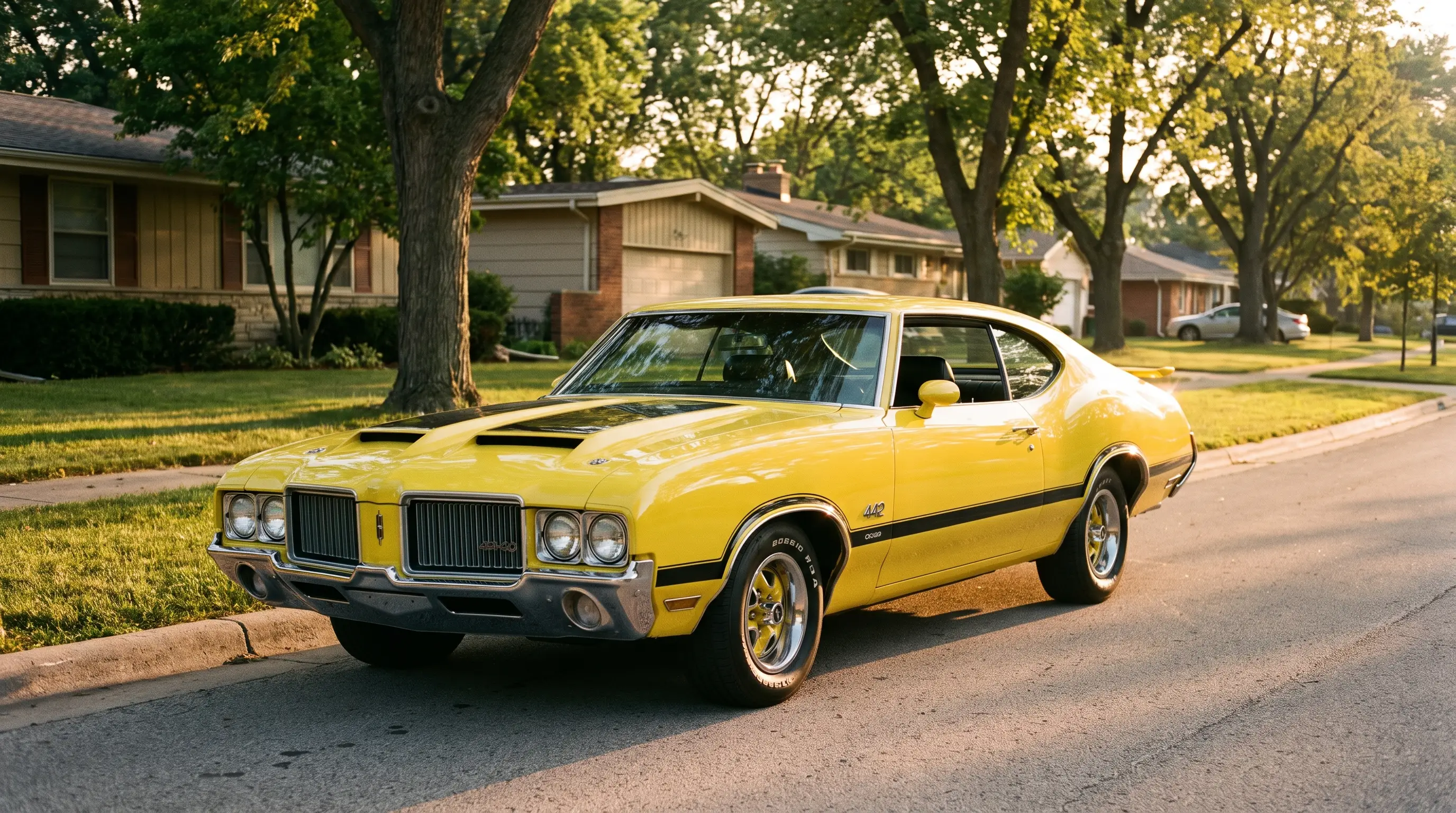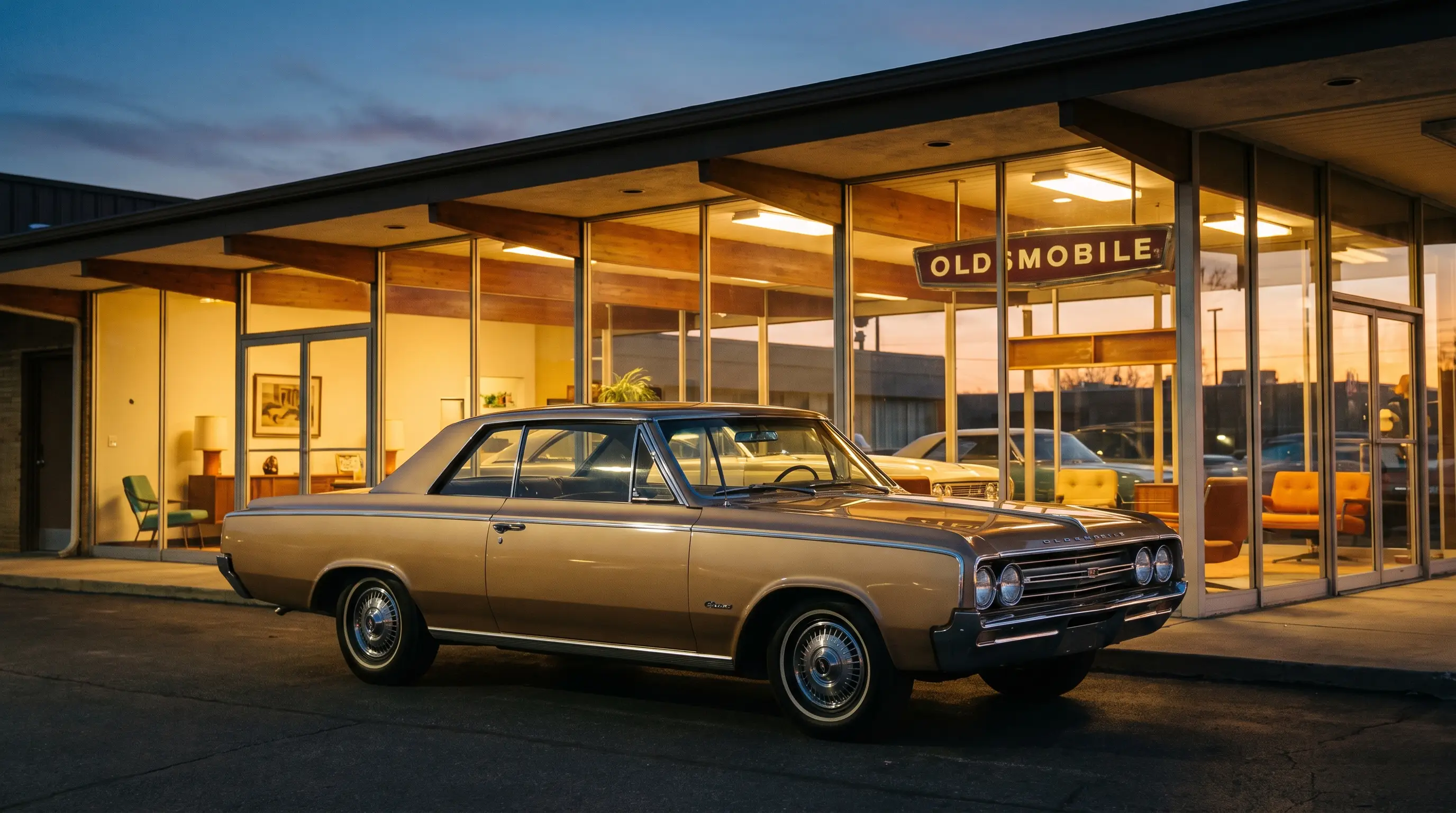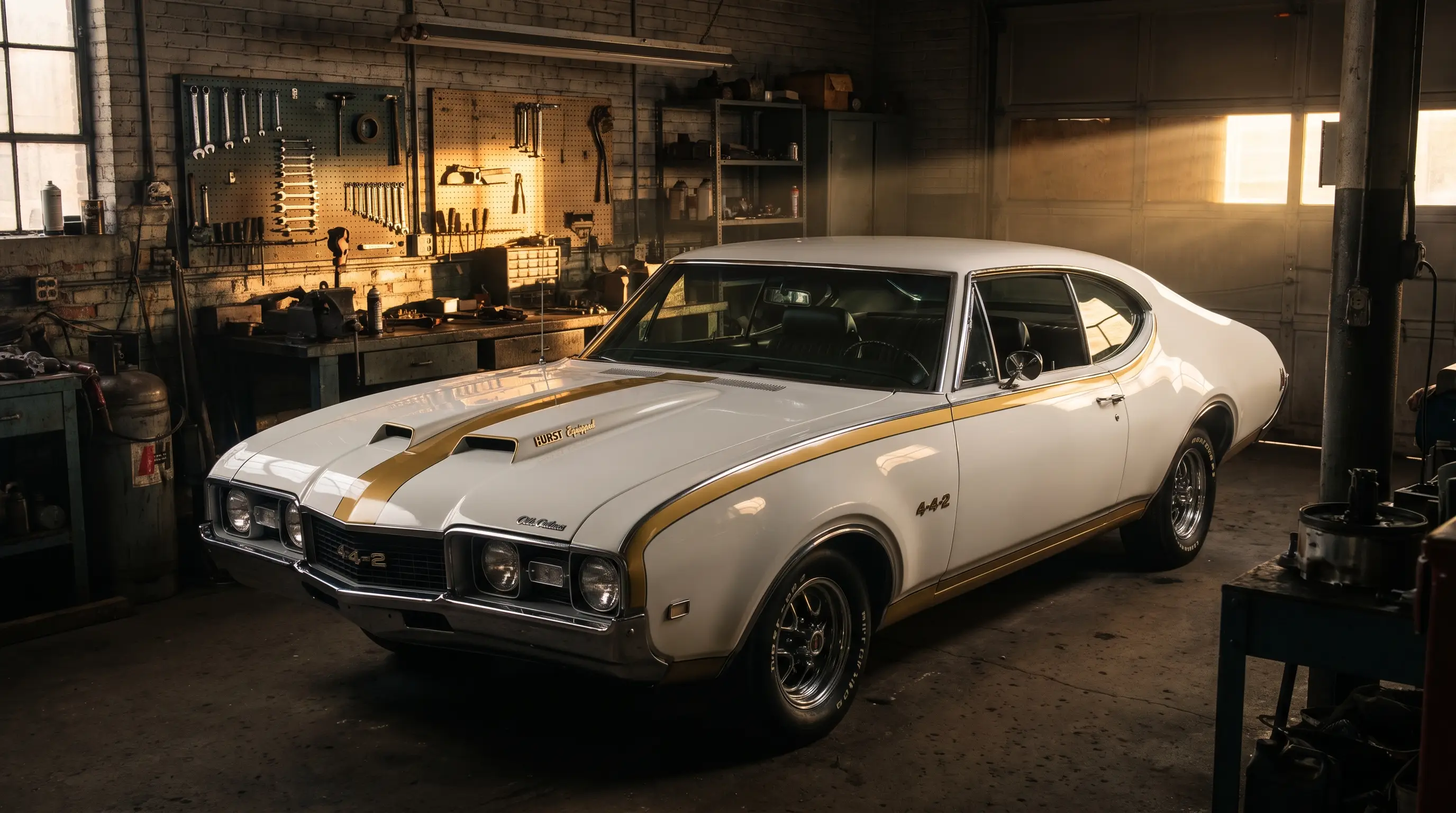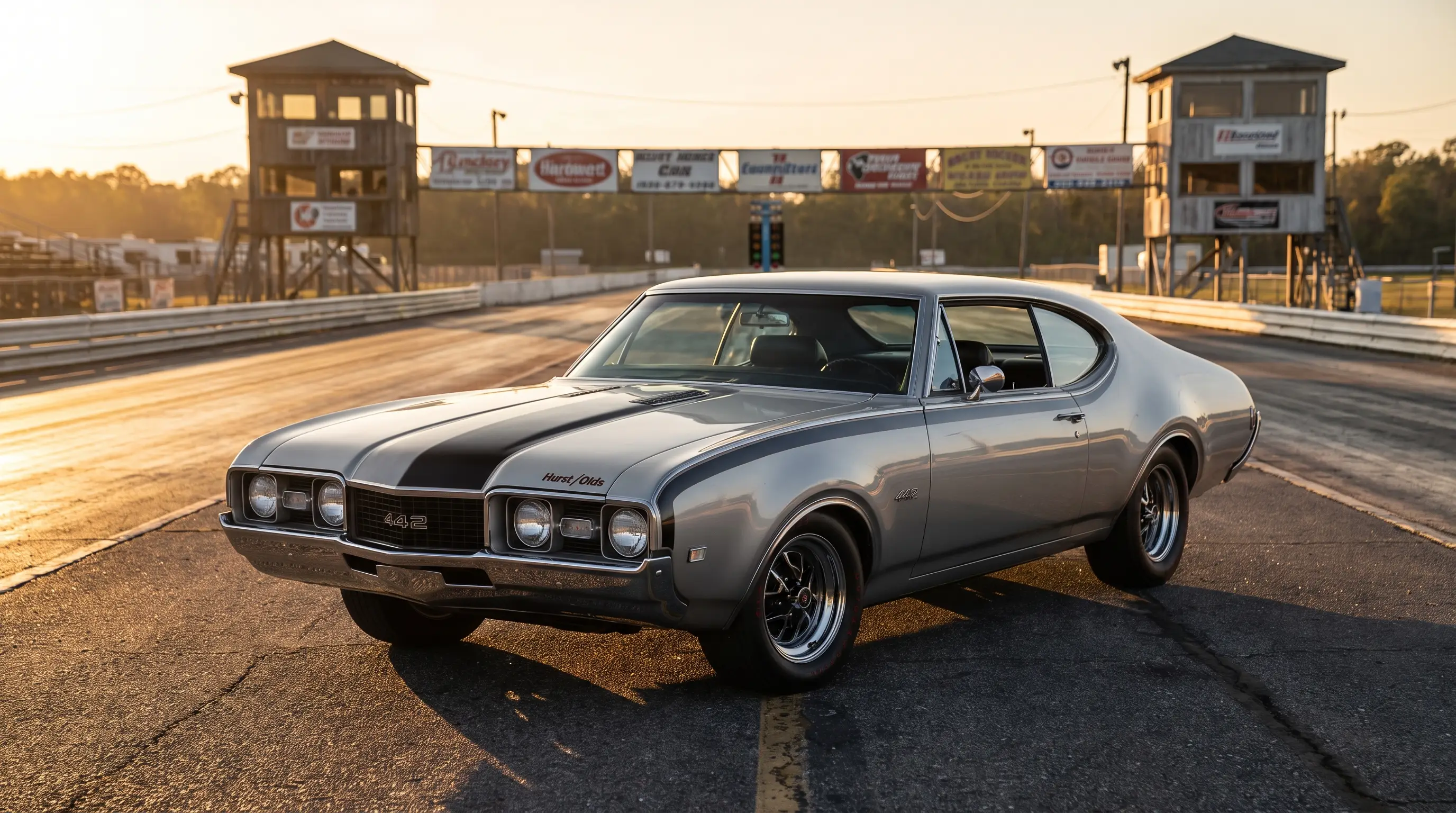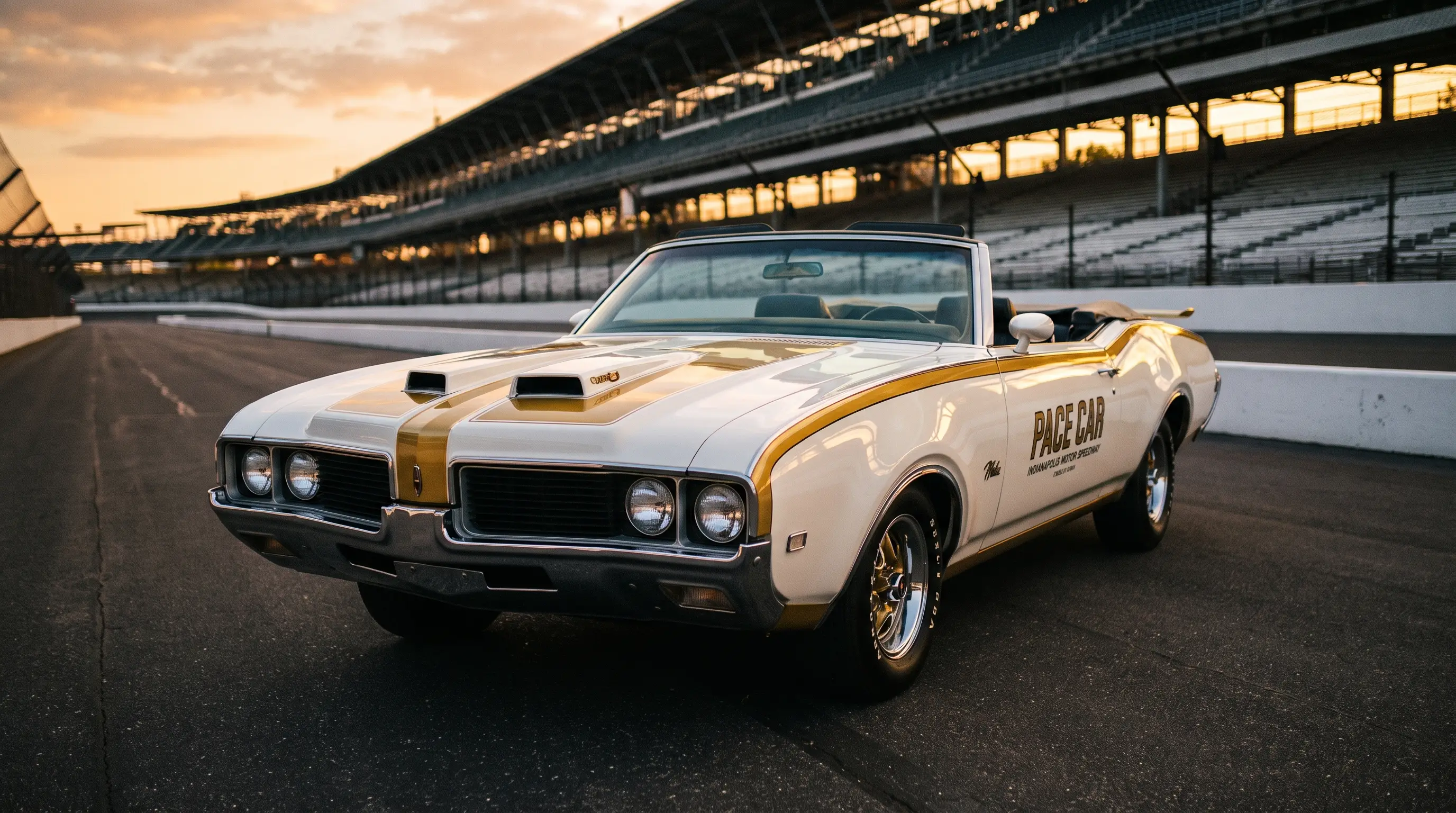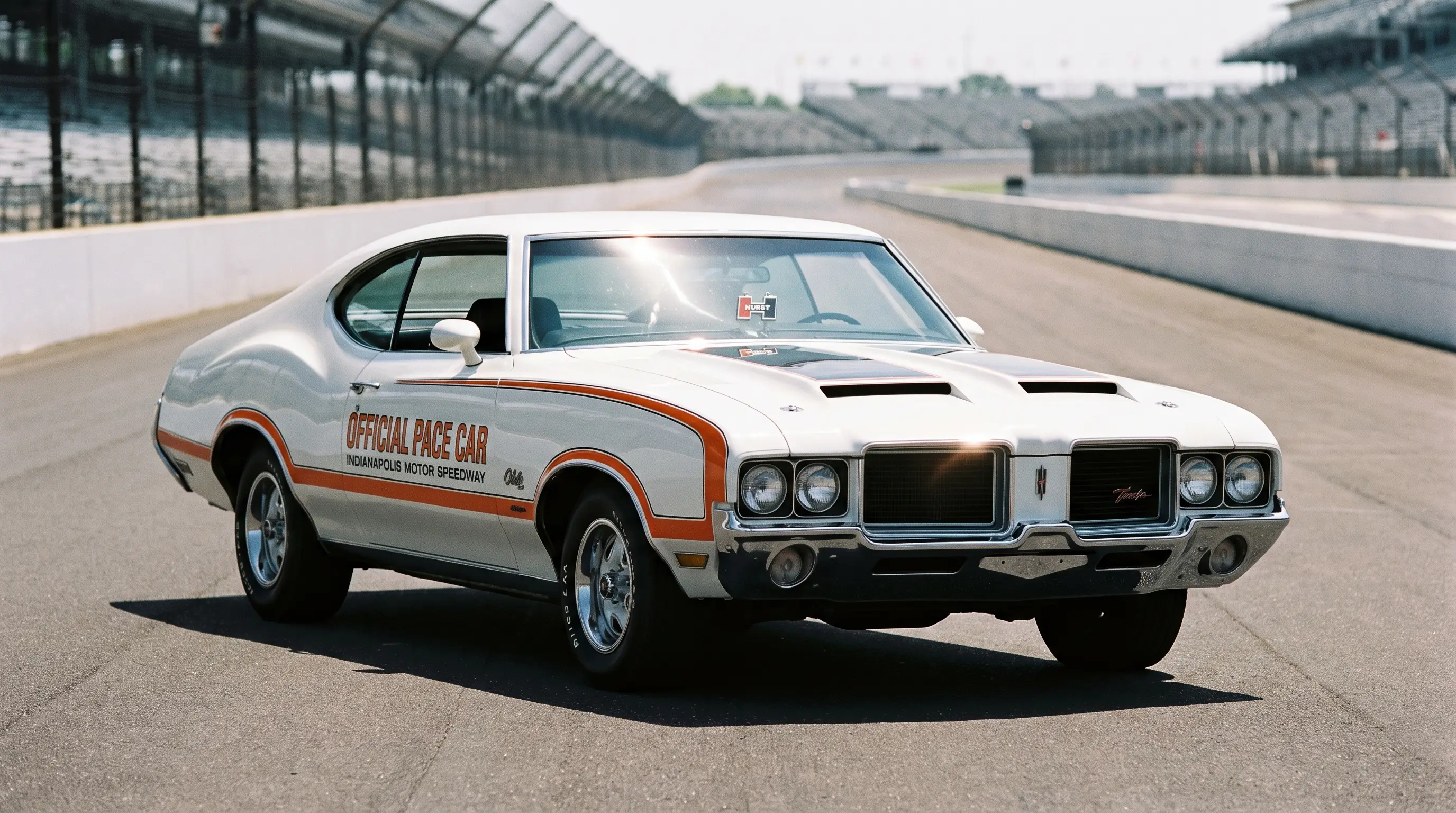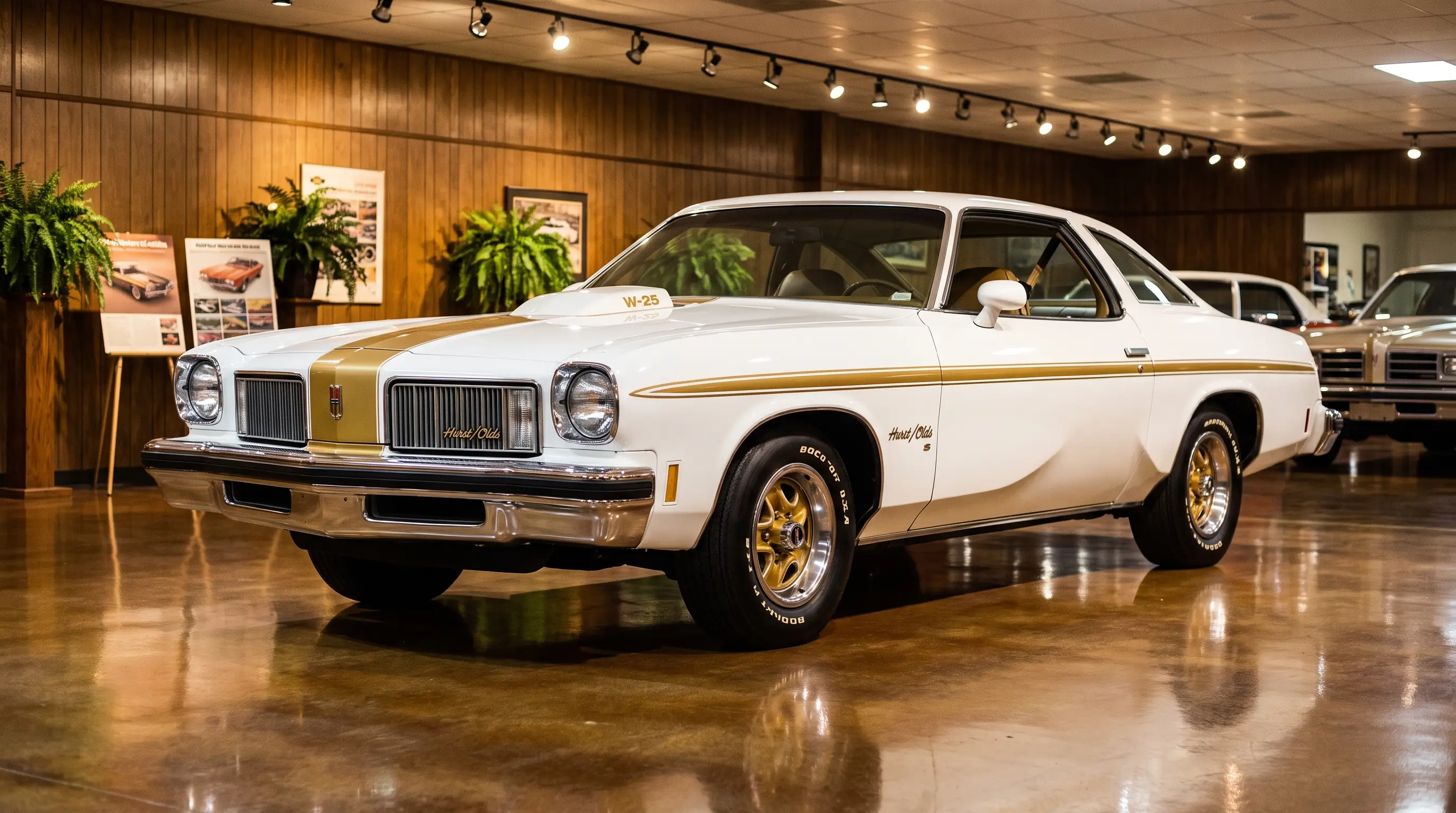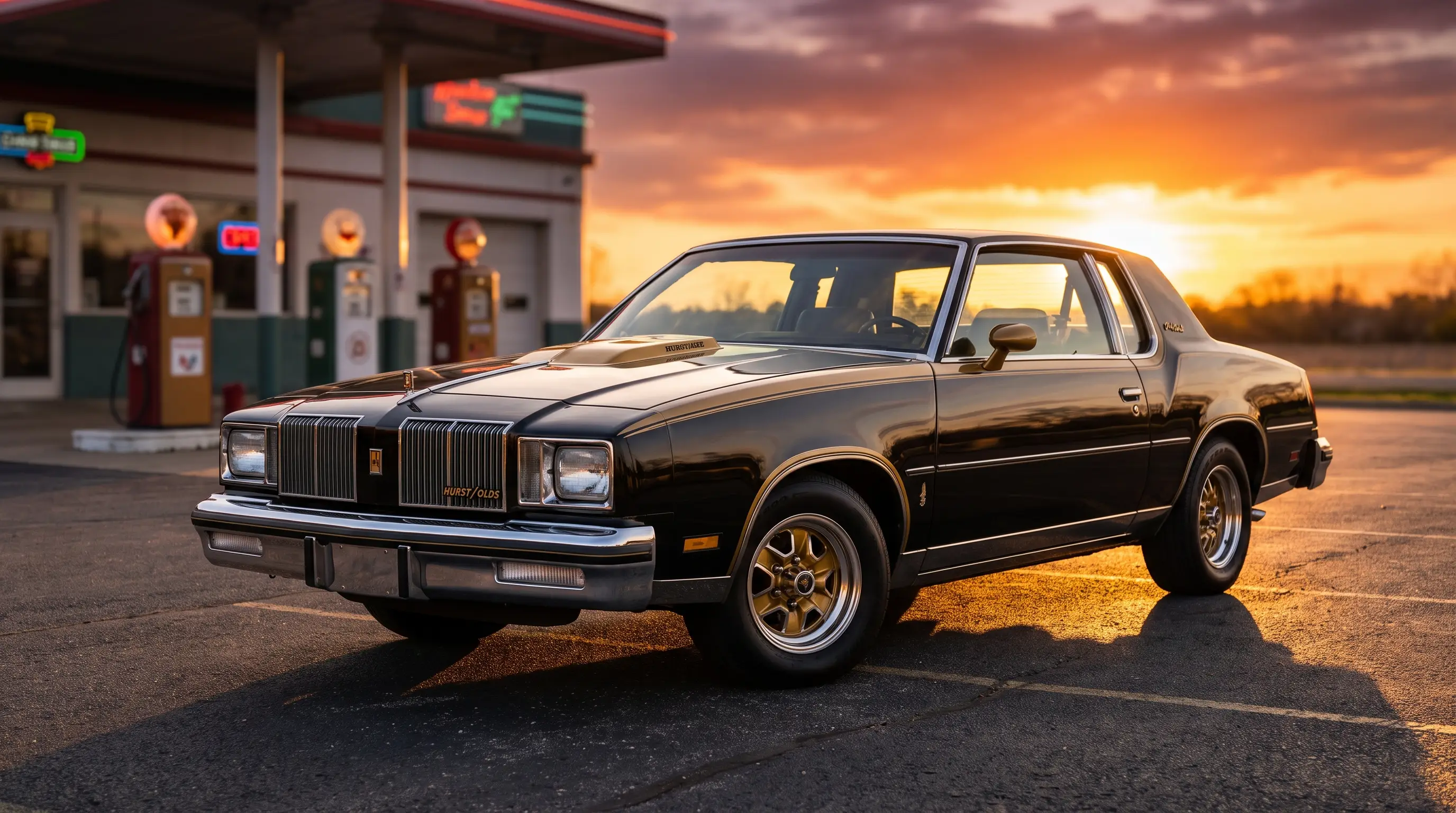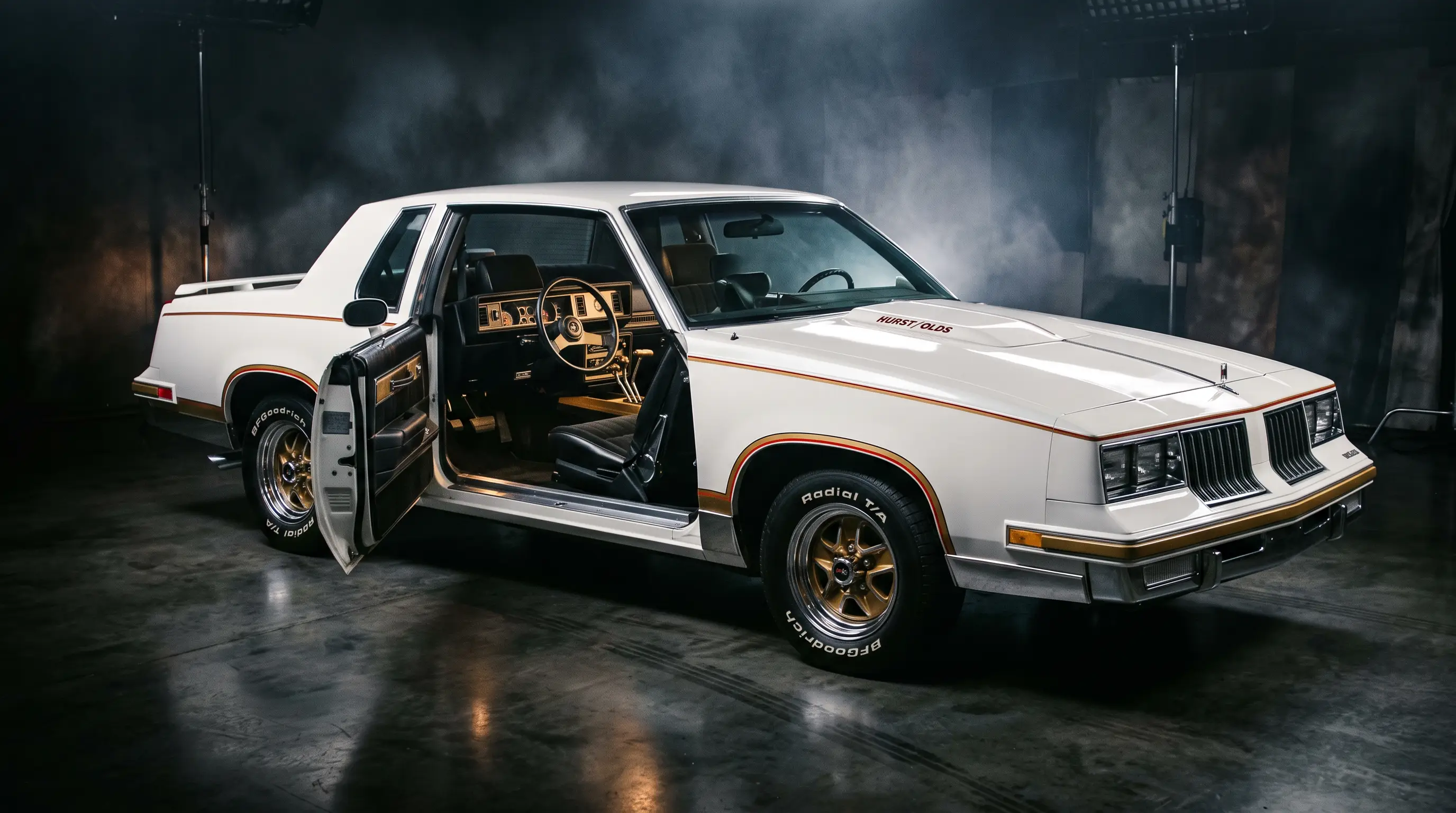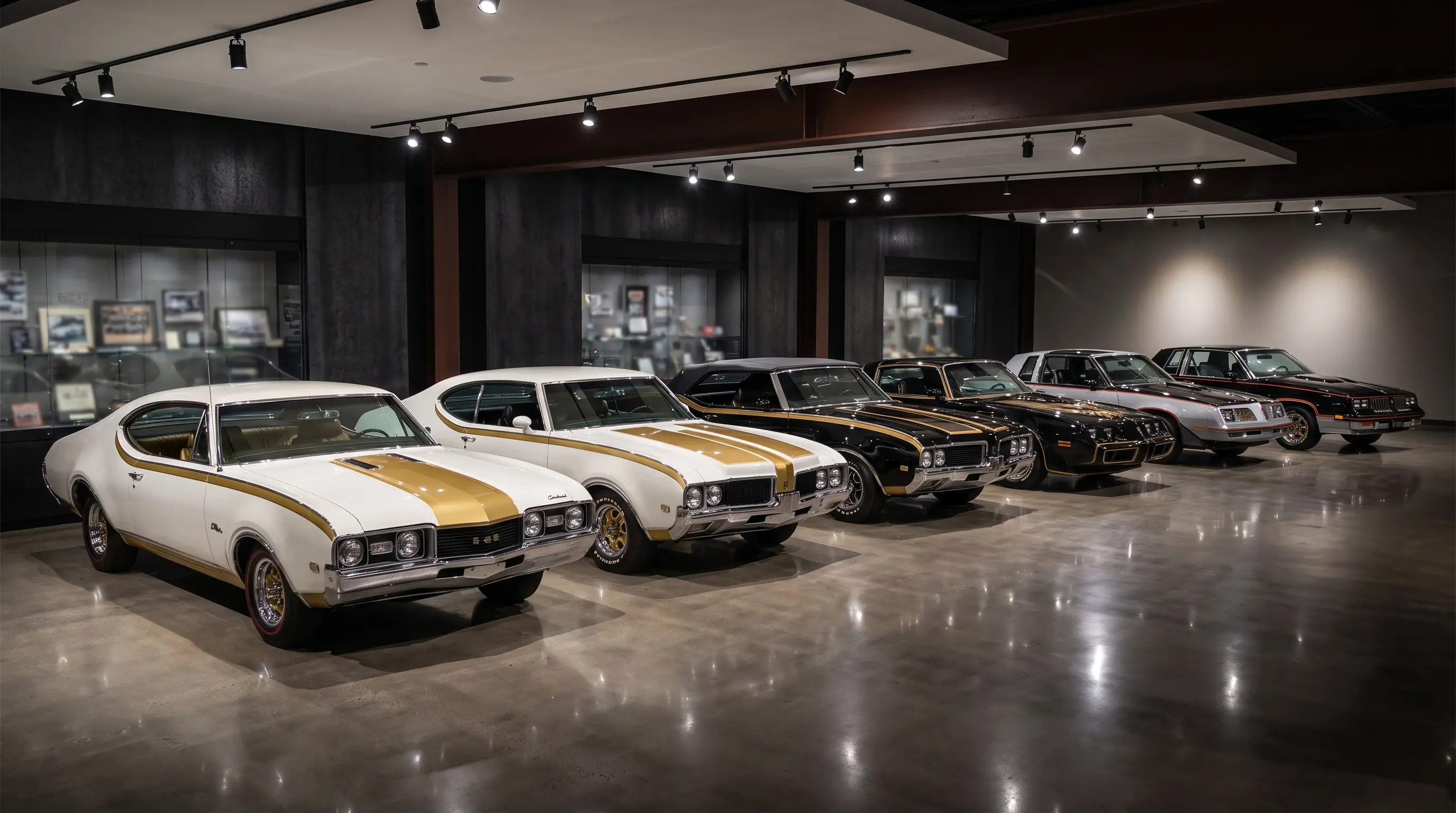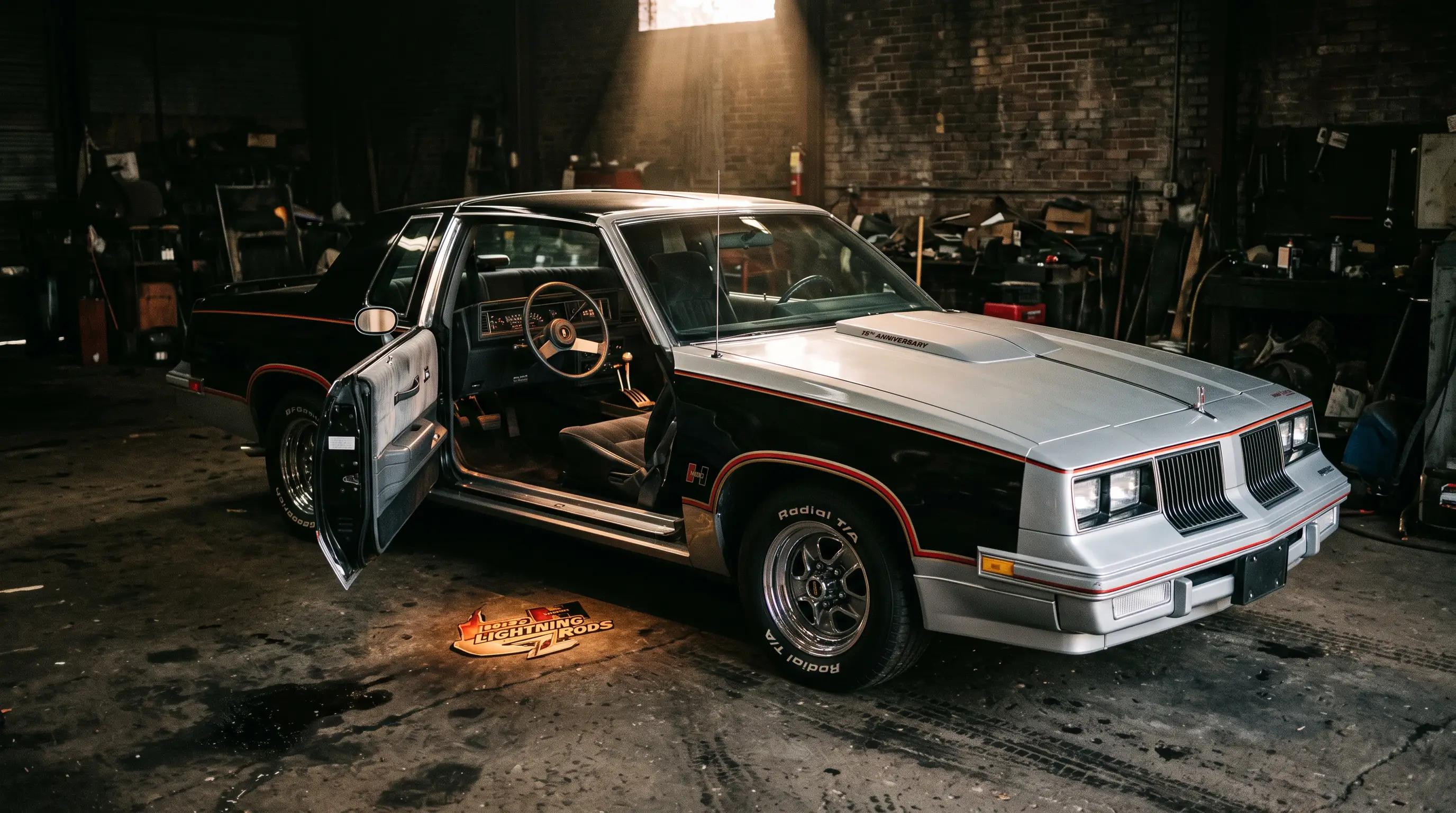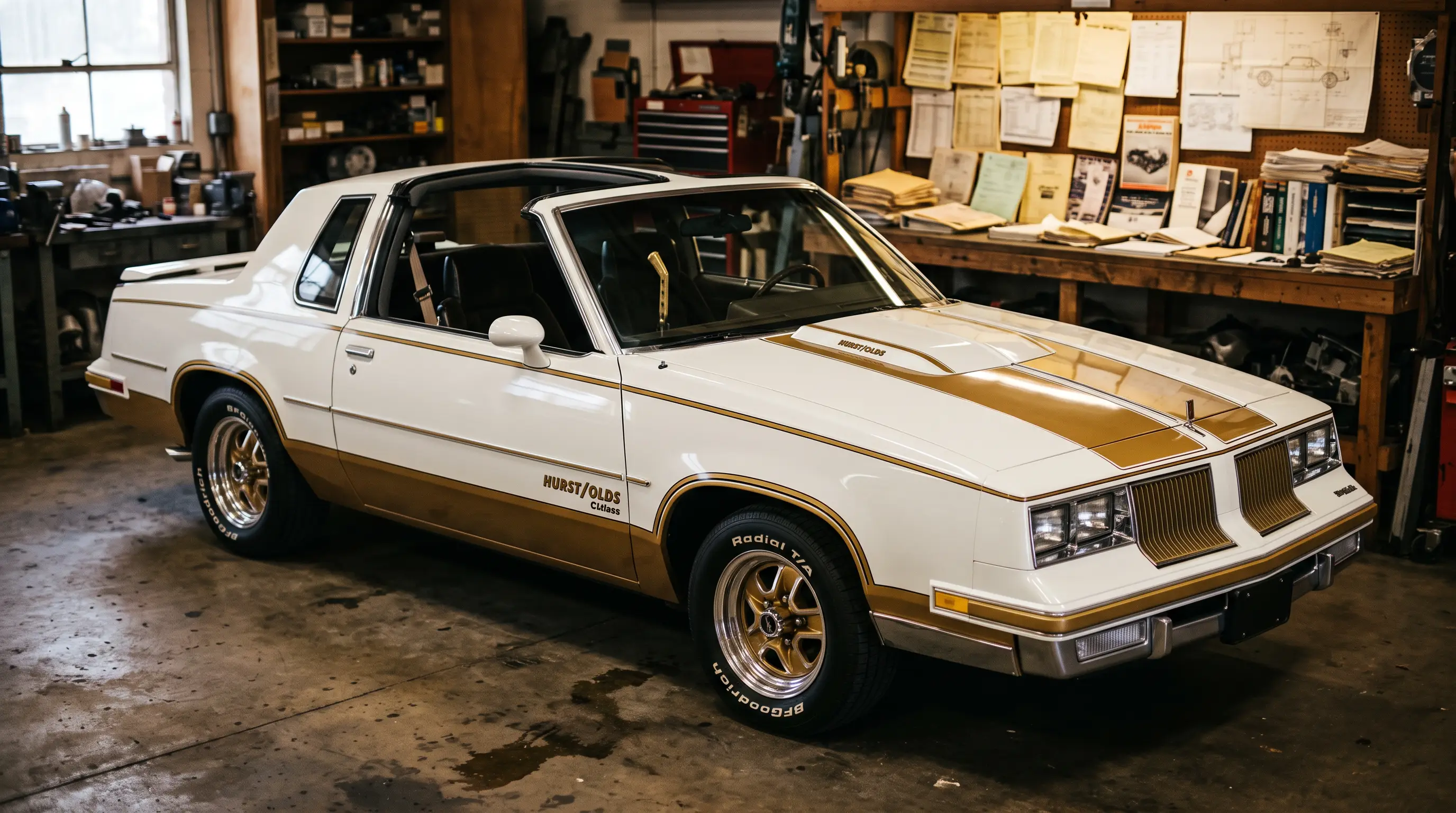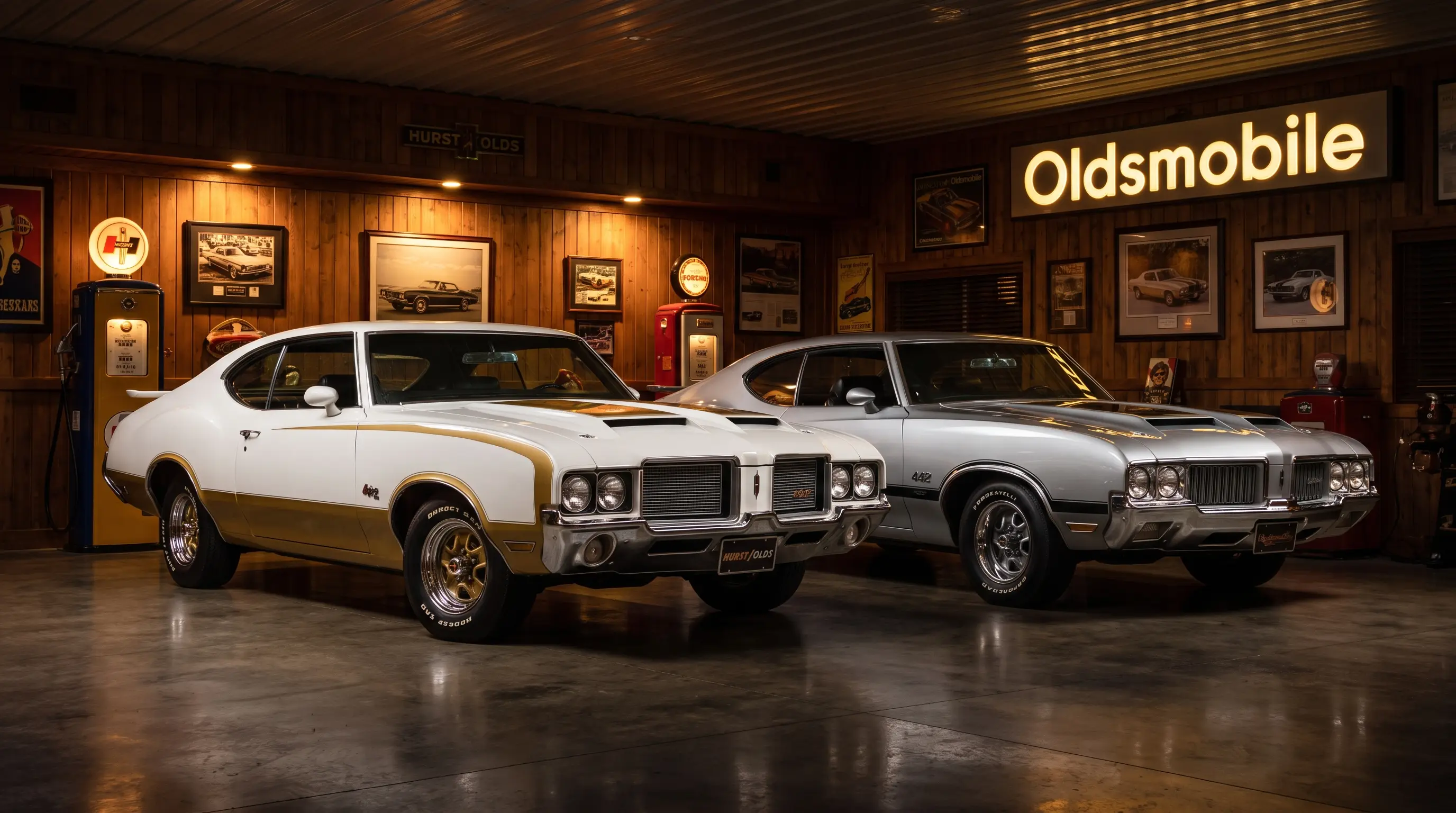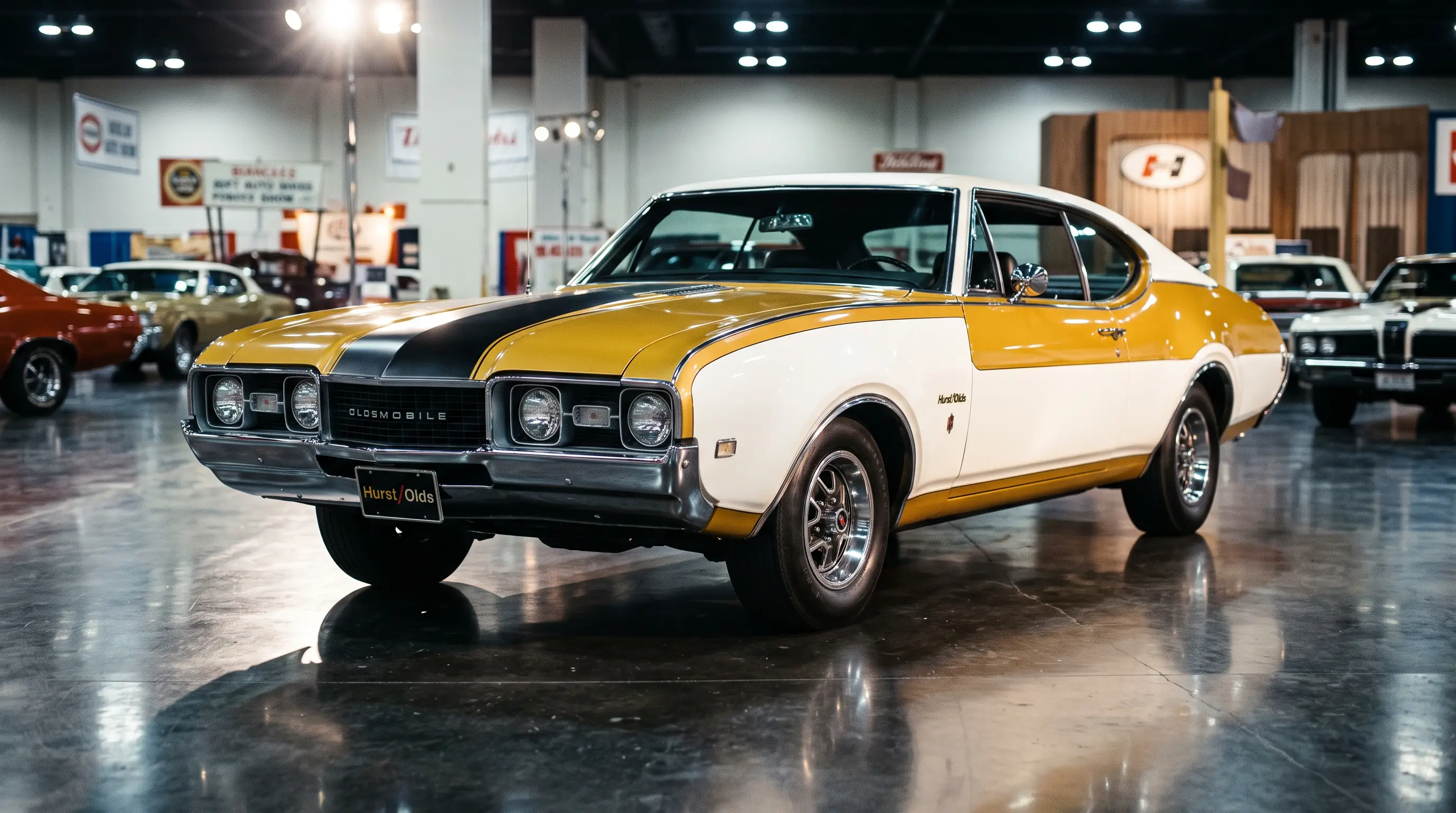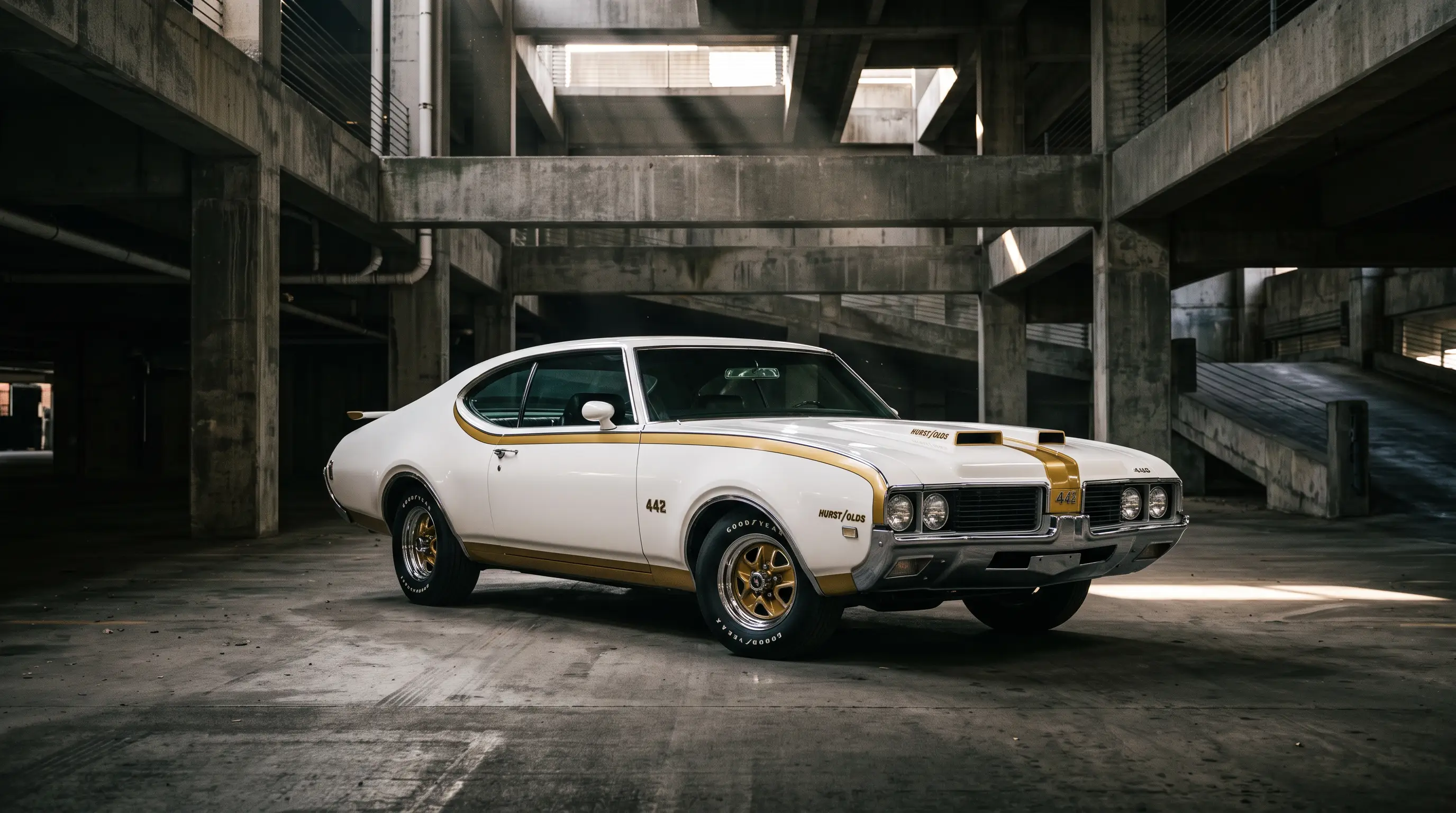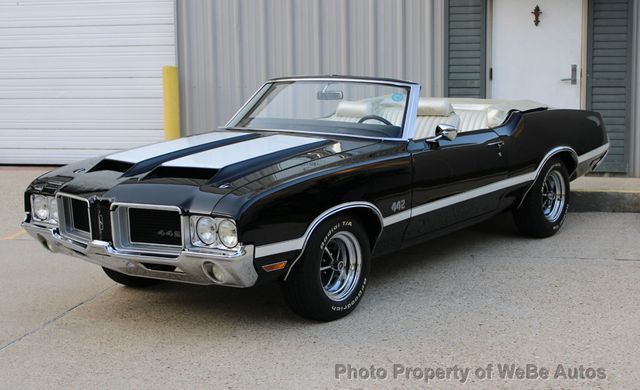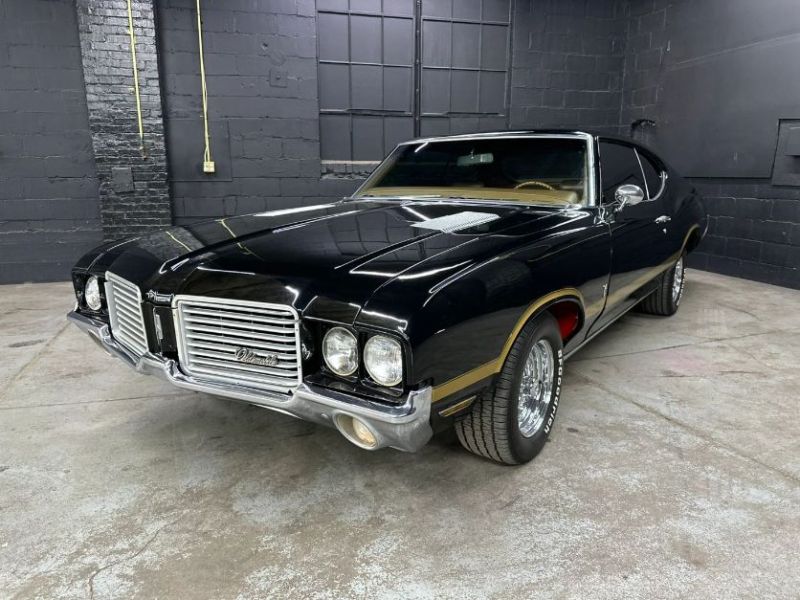
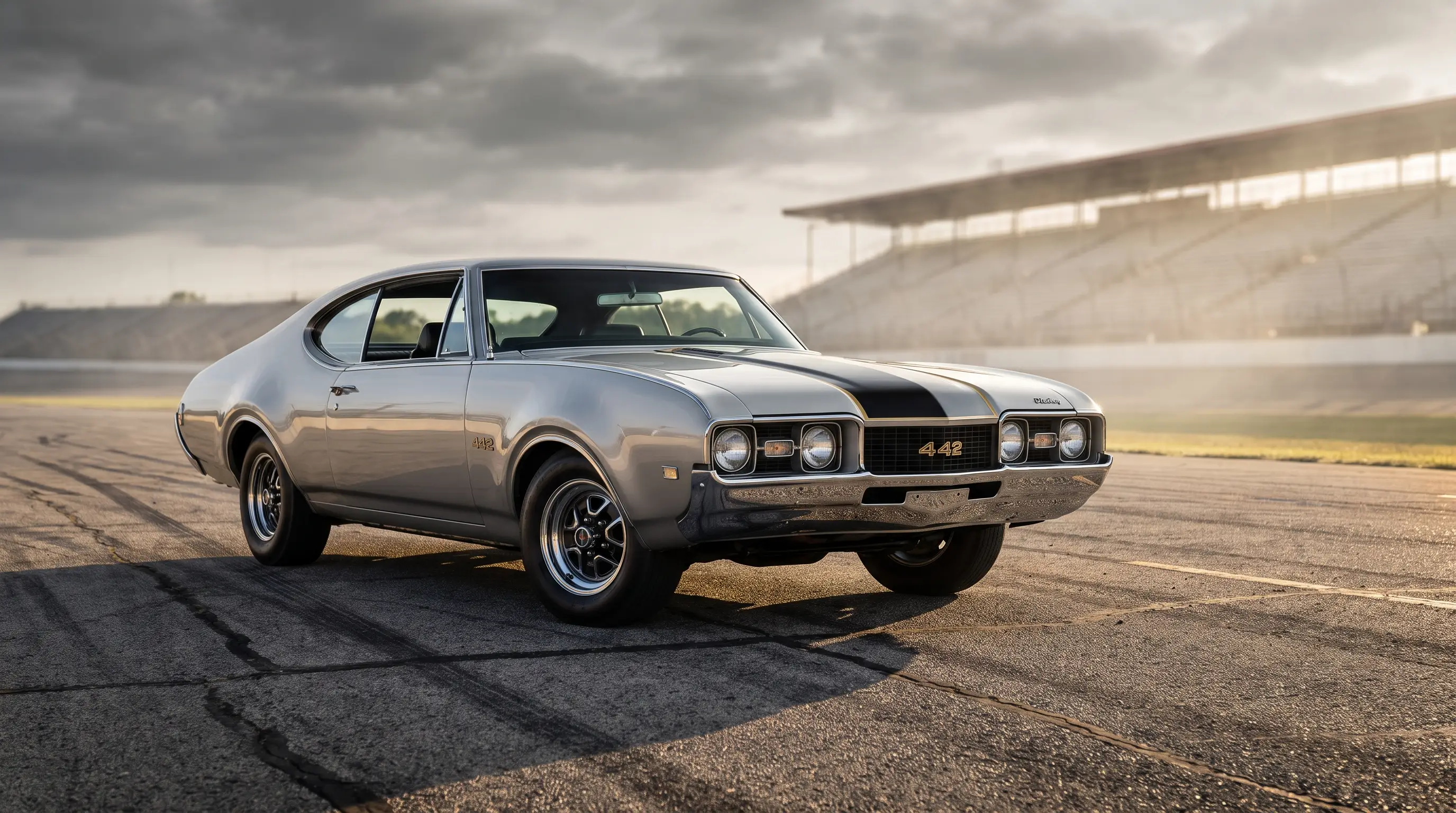
The Hurst/Olds exists because of a rule. In the late 1960s General Motors capped its intermediate cars at 400 cubic inches, which left Oldsmobile unable to put its big 455 in the 442 the way buyers wanted. George Hurst, the shifter man, had a workaround. If the factory could not build it, an outside partner could finish it. The first Hurst/Olds arrived in 1968, a 442 sent out to be fitted with the 455 Rocket V8 and a level of trim the regular car never got. That origin story matters, because scarcity and a good backstory are two of the things the collector market pays for.
I look at these cars the way I look at any asset: what did it cost to make, how many exist, and what are they doing at auction now. On all three counts the Hurst/Olds reads better than most people assume. For the wider family context, our Cutlass retrospective lays out where this fits, but the short version is that the Hurst cars sit at the premium end of the Cutlass and 442 world.
How the partnership worked
Hurst did not just slap on badges. Cars were built as 442s, then shipped to Demmer Engineering in Lansing, Michigan, which handled the conversion work on the original 1968 run. That added cost and added time, which is exactly why so few were made. Low production is the foundation of the value case here. When only a few thousand of something leave the line, condition and documentation drive price far more than they do on a mass-produced Chevelle.
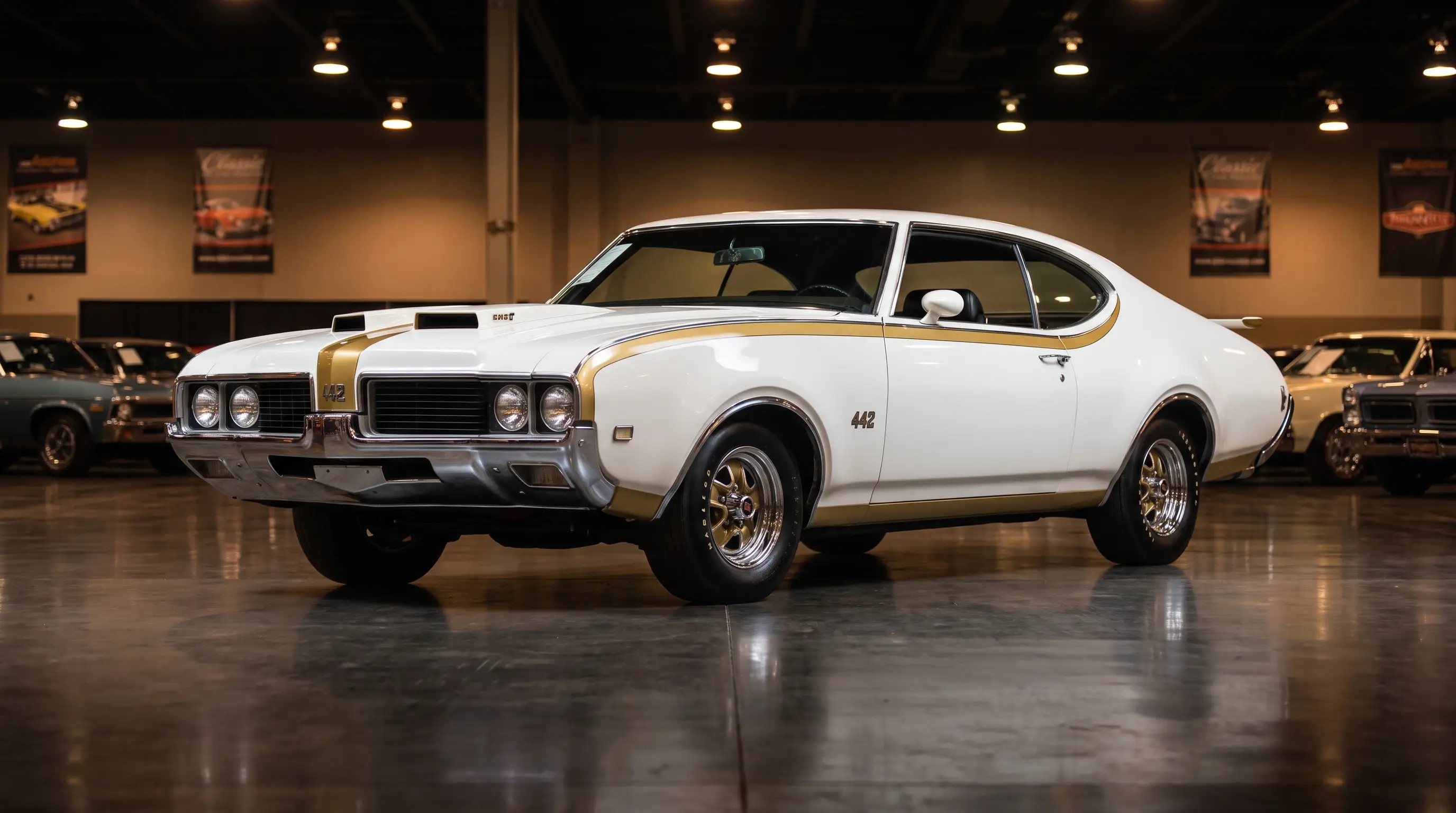
The 1968 cars wore silver and black. For 1969 the scheme changed to white with gold and red striping, the look most people picture when they hear the name. That 1969 car leaned on the "Dr. Oldsmobile" ad campaign, and the marketing built a following that still supports values today. Brand story is not fluff to a buyer. It is demand, and demand is price.
The dual-gate shifter and the pace car years
The signature piece inside was the Hurst Dual-Gate shifter, nicknamed "His and Hers." It let the driver run the automatic as a normal slushbox or slide over and shift it manually. It sounds like a gimmick and it half was, but it is also one of the most recognizable pieces of muscle-era hardware, and originality of that shifter affects value on a survivor car.
The program earned real credibility when a Hurst/Olds Cutlass paced the Indianapolis 500 in 1972, the first time a company other than an automaker supplied the official pace car. Pace car provenance is a documented value bump across the collector world, and Oldsmobile leaned into it with replica trim. If you are shopping, a genuine pace car edition with paperwork sits above a standard car of the same year.
What the market actually pays
Here is my measured read. A documented, numbers-matching 1968 or 1969 Hurst/Olds in strong condition trades in the upper tier of the Cutlass and 442 market, generally well above a standard 442 and well above a Cutlass Supreme of the same year, reflecting production runs in the hundreds rather than the tens of thousands. Condition spread is wide. A tired driver with a story sells for a fraction of a concours car, and the gap between the two has widened as the top of the muscle market has firmed up.
The 1972 cars and the pace car editions are their own sub-market. Later Hurst/Olds revivals on the downsized 1980s G-body platform, with the famous Lightning Rod shifters, are cheaper to buy and are climbing slowly as a distinct collectible. I would not confuse the two eras when you value a car. They are different assets with different buyers.
Liquidity is the quiet factor most first-time buyers ignore. A blue-chip Hurst/Olds has a national audience, which means when you sell, the buyers exist and the car moves at a fair number. A borderline car with a thin story is harder to move and trades at a discount when you need to sell in a hurry. In market terms, the documented car is not just worth more, it is easier to turn back into cash. That optionality has real value, and I price it into every purchase.
Watch the broader muscle index too. Hurst/Olds values do not move in isolation. When the top of the collector market cools, the questionable and mid-grade cars soften first while the very best documented examples hold. That pattern repeats across the segment. If you are buying near a market peak, the safest place to stand is on a fully documented, top-condition car, because that is the tier that resists the downturn.
"My rule with a Hurst/Olds is simple. Pay for the documentation, not the paint. A repaint costs a few thousand. Genuine provenance on a low-production car is the part you can never recreate, and it is the part the next buyer pays you back for."
— David Mercer
Buy or pass
My opinion, and it is only that: the Hurst/Olds is a buy if you find a documented car at a fair number, and a pass if you are being asked to take the seller's word on provenance. The value case rests entirely on authenticity. A real one is a blue-chip Oldsmobile with a limited supply and a loyal audience. A questionable one is just an expensive 442 with extra badges, and you should price it as a standard car until the paper proves otherwise.
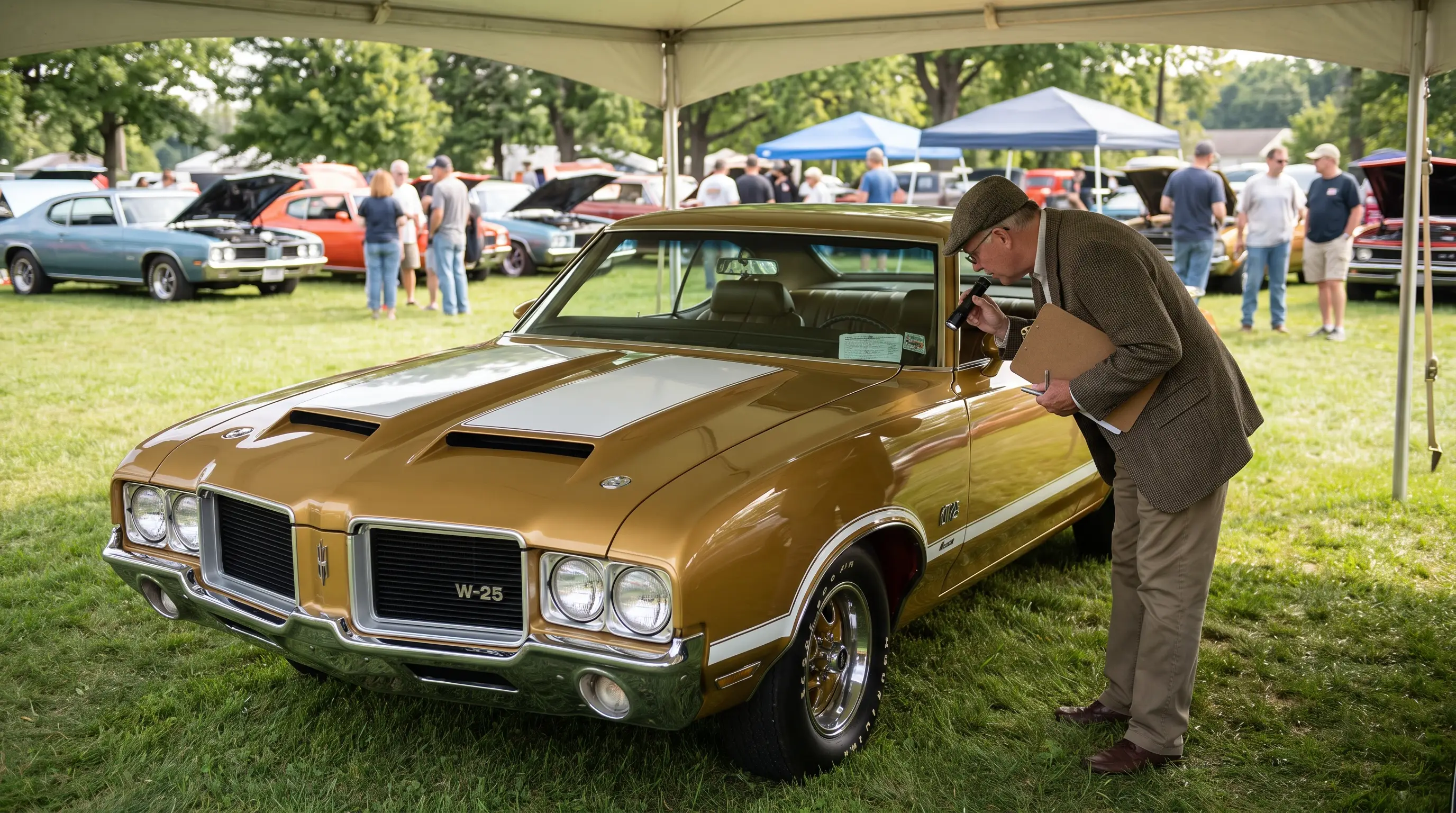
The specific risk is the same one that haunts the whole muscle segment. High values invite cloning. Because the Hurst cars started as 442s, a clone is mechanically plausible and visually convincing. Insist on the conversion documentation, engine stampings, and any surviving build records before you agree on price.
There is a registry angle worth using. Because so few Hurst/Olds cars were built, the marque community keeps informal records of known cars, and a serious buyer can often cross-check a car's identity against that community knowledge. A car that is unknown to the people who track them is not automatically fake, but it does raise a question you want answered before the money moves. Ask the specialists. They usually know the car, or know why they do not.
Specifications at a glance
| Spec | Detail |
|---|---|
| First year | 1968 |
| Reason built | To fit the 455 around GM's 400 cu in intermediate cap |
| Engine | 455 cu in Rocket V8 |
| Assembly partner | Hurst / Demmer Engineering, Lansing, MI |
| Signature feature | Hurst Dual-Gate "His and Hers" shifter |
| 1968 colors | Silver and black |
| 1969 colors | White with gold and red stripes |
| Indy 500 pace car | 1972 |
Where it sits
The Hurst/Olds is the halo above the halo. The 442 was already the muscle Cutlass, and the Hurst cars took that and added exclusivity, a name partner, and a real racing tie-in. For a collector, that combination is what turns a fast old car into a durable asset. It does not swing as hard as the very top Mopar money, but it holds its value with less drama, and the ownership community keeps the fakes honest.
One more point for the buyer thinking long term. The Hurst/Olds tells a complete story on its own, from the GM rule that forced its creation to the racing tie-in that cemented its reputation. Cars that carry a clear, self-contained narrative tend to hold interest across generations of collectors, because each new buyer can understand at a glance why the car matters. That durability of interest is part of what protects the value. A car that needs a paragraph of explanation to justify its price is a harder sell than one whose story fits on a show placard, and the Hurst/Olds story fits.
Set expectations on running costs too. The 455 is thirsty, insurance on a documented example is not trivial, and correct restoration parts for the Hurst-specific pieces are scarcer than standard 442 components. None of that is a reason to walk away. It is a reason to buy the best example you can afford up front, because chasing a cheap car to a correct restoration usually costs more than paying for a good one at the start. In this segment, the finished car is almost always cheaper than the project.
If you want to understand where the whole line came from before you commit, there is another Cutlass worth knowing that traces the early muscle years. And when you are ready to price the real thing against the market, look through the current classic Hurst Olds for sale listings and sort by documentation first. On a car this scarce, the paper is the value.