The Hurst shifter on an Oldsmobile is one of those details buyers assume they understand and usually don't. It wasn't a factory option Oldsmobile dreamed up on its own. It was the product of a partnership with an outside company, built to get around a problem General Motors had created for itself, and the deal that resulted is a bigger part of Oldsmobile's performance history than most price guides give it credit for.
I've priced enough of these cars to know most buyers understand the shifter and skip past the corporate politics that actually made the car possible. That's a mistake. The politics are the reason the car exists at all, and they're the reason the production numbers stayed as low as they did.
Who was George Hurst
George Hurst built his name on shifters before he ever partnered with a car company. His company, Hurst Performance, made its reputation supplying quick, precise aftermarket shift linkages to racers and street performance buyers who wanted crisper gear changes than factory hardware delivered. By the mid-1960s, Hurst shifters were already a recognized upgrade across multiple brands, which gave Hurst something valuable when GM came looking for a partner: an established name that performance buyers already trusted.
That reputation is exactly why GM approached Hurst rather than solving the problem internally.
Why Oldsmobile needed a partner outside the factory
By the late 1960s, General Motors had a corporate rule capping engine displacement in its intermediate-size cars, which put Oldsmobile's larger big-block engines off limits for the Cutlass-based 442 as a factory-built option. Oldsmobile wanted a big-block intermediate anyway, and the solution wasn't to fight the corporate rule. It was to build the car through a channel the rule didn't cover: a dealer-arranged, outside-installed conversion.
Hurst Performance had the manufacturing relationships and the outside-the-factory status to make that work. The result was a car built on Oldsmobile's assembly line, then modified through a coordinated conversion process before reaching the buyer, badged as a joint product rather than a straight factory model.
This wasn't a casual handshake deal either. It required coordination between Oldsmobile's engineering staff, who had to sign off on installing an engine larger than corporate policy technically allowed, and Hurst's own operation, which had to build a repeatable, quality-controlled conversion process rather than a one-off custom job. GM's displacement rule existed for insurance and image reasons across the whole intermediate lineup, and routing around it through a documented outside partner let Oldsmobile satisfy demand without the corporation formally breaking its own policy.
The first Hurst/Olds and what made it different
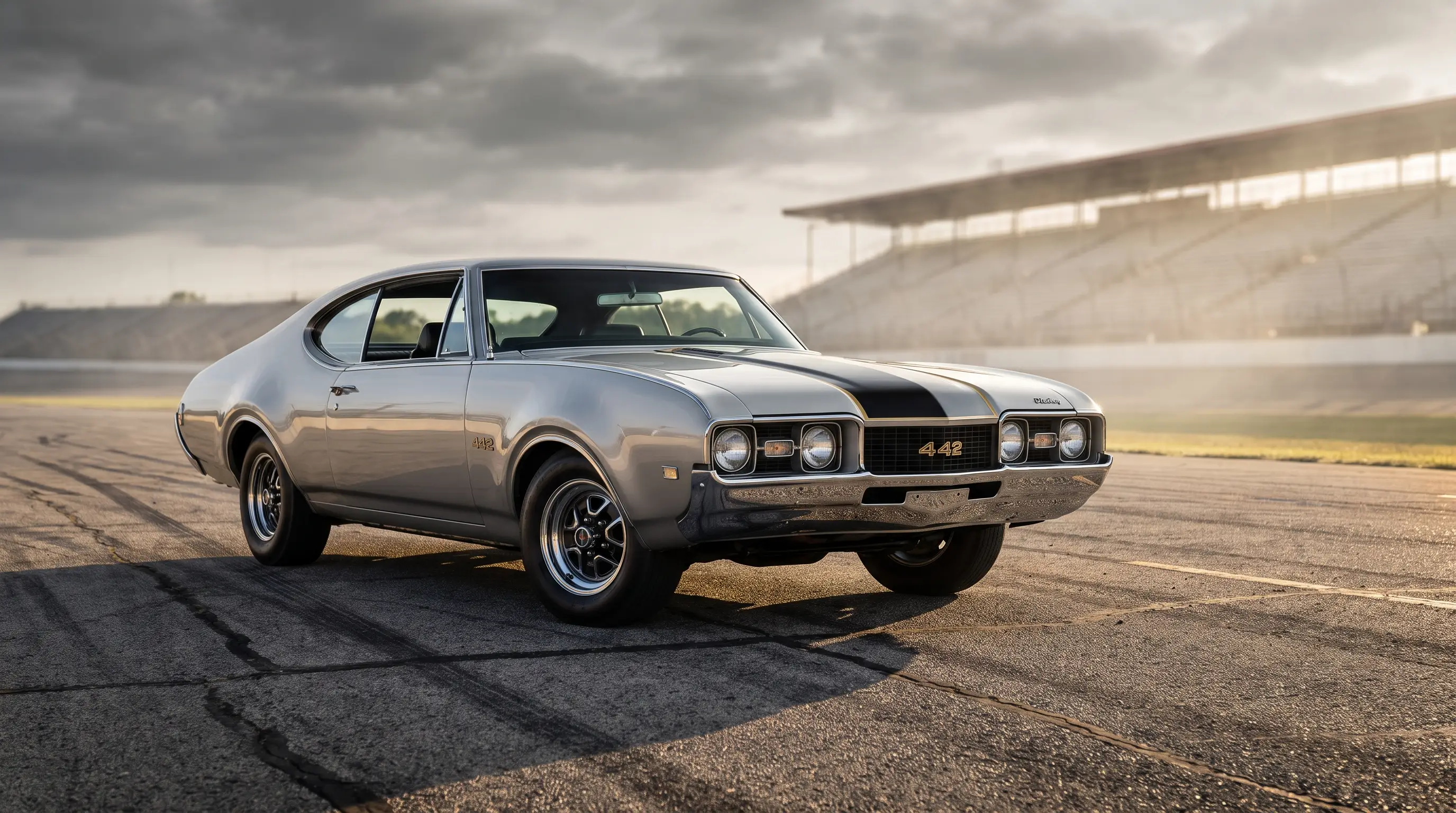
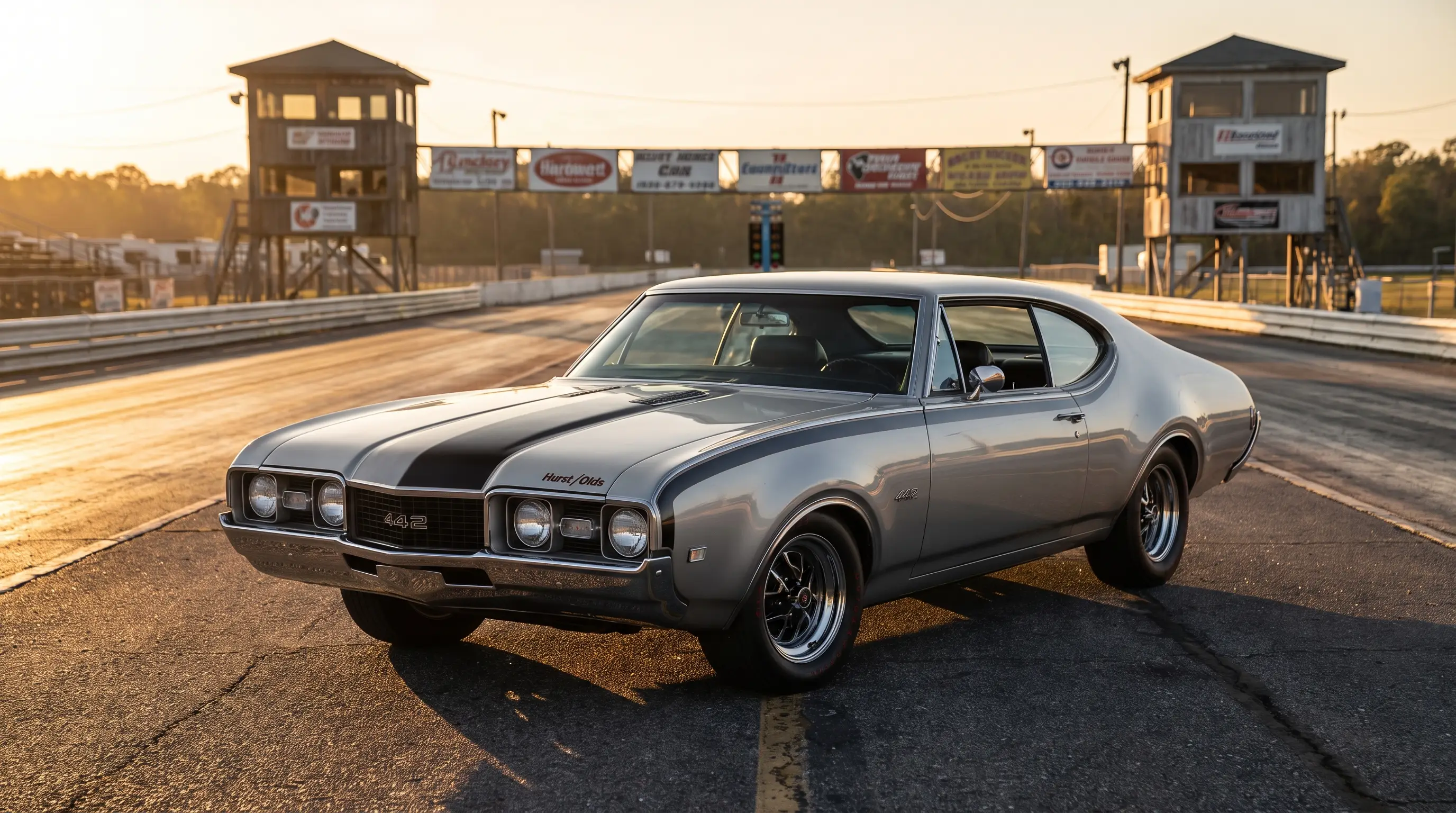
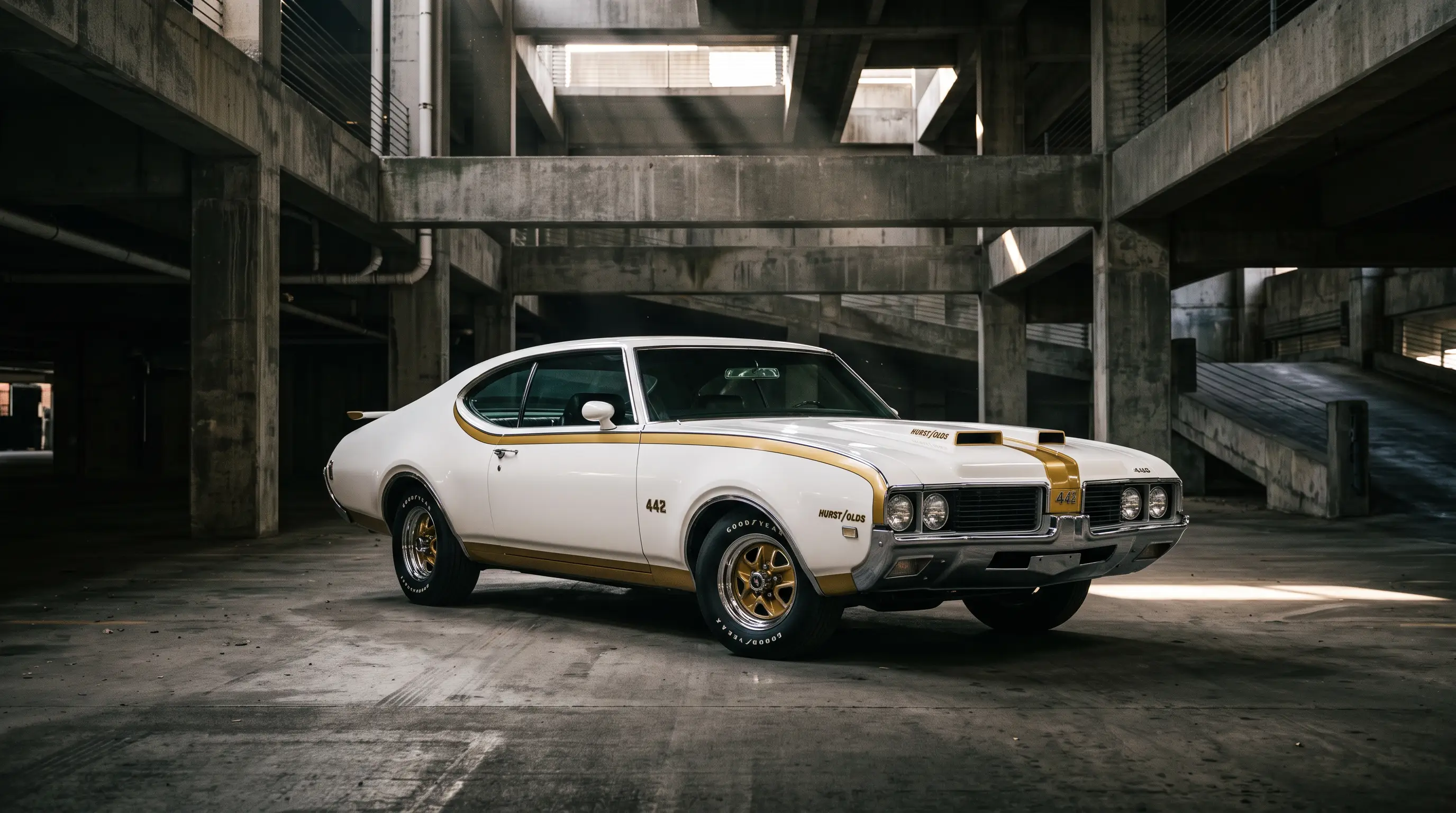
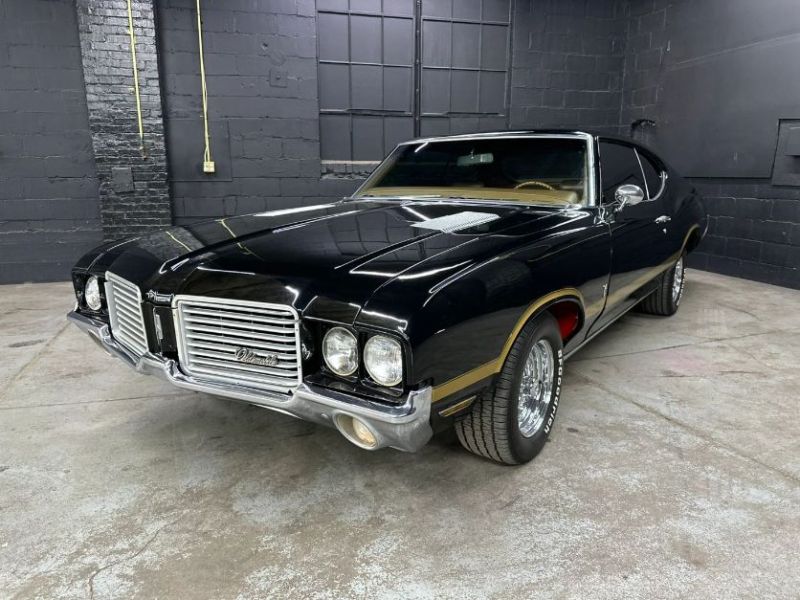
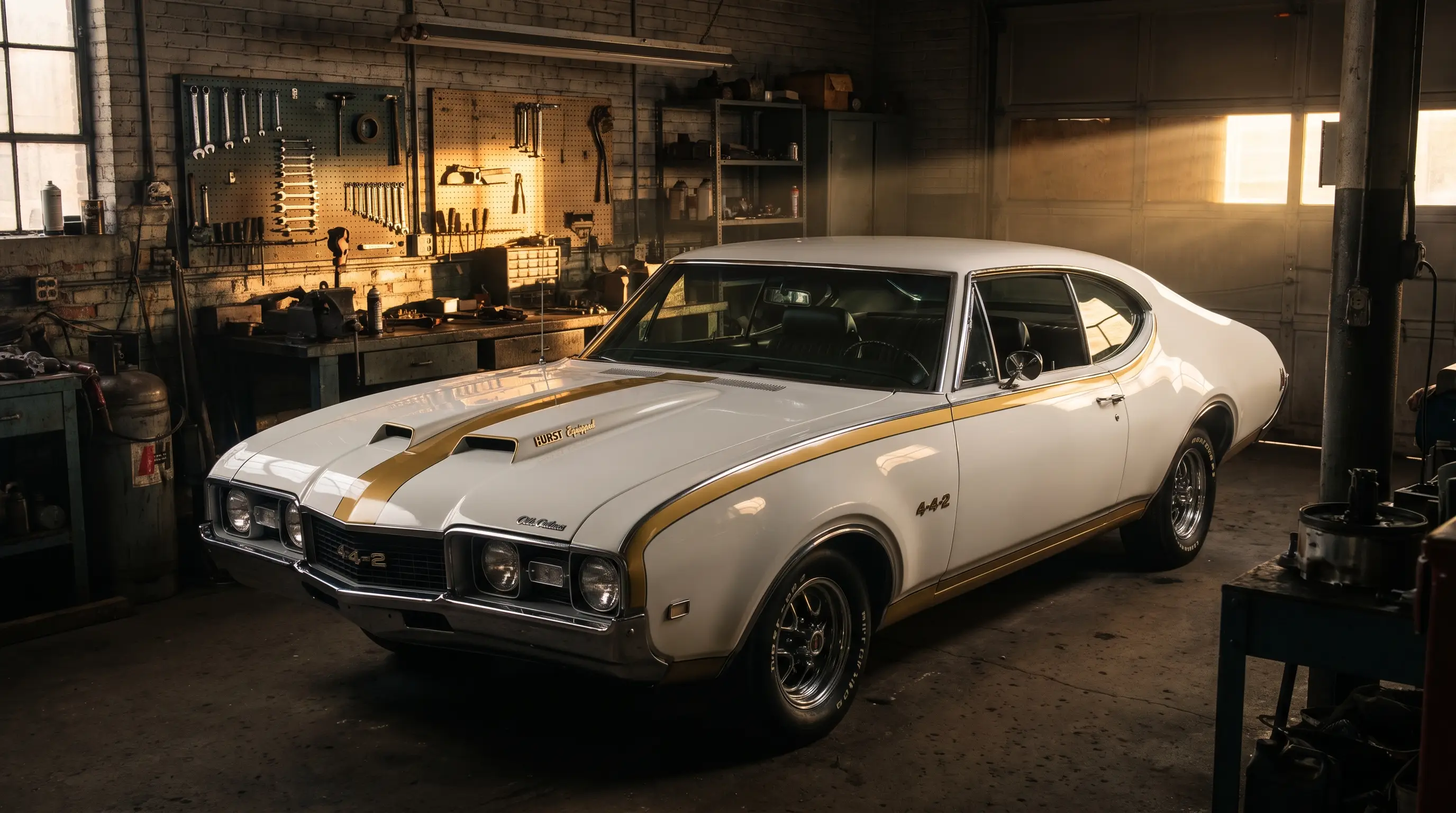
The first Hurst/Olds arrived for the 1968 model year, based on the Cutlass, and paired Oldsmobile's largest available big-block with the kind of exterior treatment that made the car impossible to mistake for a standard 442: bold paint, contrasting hood and trunk treatments, and functional hood scoops feeding the engine underneath. If you want the deeper mechanical story behind that car specifically, the factory super Cutlass covers the engine and chassis details that made it stand apart from anything Oldsmobile sold through a standard order form.
Production stayed low by design. This was never meant to be a high-volume model. It was a workaround, built in limited numbers to satisfy buyers GM's own displacement rule would otherwise have turned away.
| Detail | Description |
|---|---|
| Partner company | Hurst Performance |
| First model year | 1968 |
| Base platform | Oldsmobile Cutlass / 442 |
| Reason for the partnership | GM's displacement limit on intermediates |
| Production volume | Low by design, 515 units for 1968 |
The shifter that carried the name
It's easy to forget, given how the Hurst/Olds cars get discussed today, that the partnership started with a shifter company. The Hurst shift linkage remained a hallmark of these cars, and of performance Oldsmobiles generally, because it delivered exactly what racers and street buyers already expected from the Hurst name: short, precise throws that made a manual transmission feel sharper than the factory unit it replaced. The shifter wasn't a footnote to the partnership. In a lot of ways, it was the credibility that made the whole deal work in the first place.
Buyers who wanted the loudest big-block Oldsmobile intermediate money could buy in 1968 got a car whose name led with the shifter company, not the engine package, and that ordering says something about how much weight the Hurst name carried at the time.
How the partnership held up over the years
What's notable about the Hurst/Olds arrangement is that it didn't end after one model year as a novelty. Oldsmobile and Hurst revived the partnership repeatedly across the following decade and a half, in years where the displacement politics that started the whole thing had shifted or disappeared entirely. That's the mark of a deal that worked for both sides commercially, not just a one-time regulatory workaround that outlived its usefulness.
Each revival kept the same basic formula: a distinctive paint and stripe treatment, Hurst-branded shift hardware, and a production run kept deliberately small enough to feel like a genuine specialty vehicle rather than a trim package with a name attached. Later Hurst/Olds cars into the 1970s and early 1980s leaned harder on the visual identity as the big-block displacement question became less relevant with emissions-era engines, which tells you the partnership had outgrown its original excuse and become a brand in its own right.
| Era | What defined it |
|---|---|
| 1968 to 1969 | Big-block workaround, earliest partnership cars |
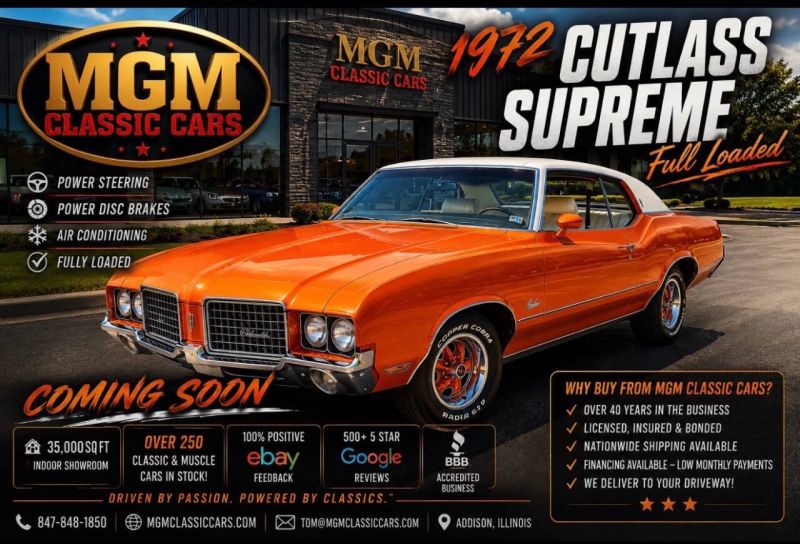
| 1972 revival | Continued brand identity after original rule became less relevant |
| Mid-to-late 1970s | Emissions-era engines, identity carried by paint and stripe treatment |
| Early 1980s | Final Hurst/Olds runs on the G-body platform |
"GM built a rule it didn't want to break for its own products, then quietly let an outside partner build the car the rule was blocking. That's not a footnote. That's the whole story of the Hurst/Olds."
— David Mercer
What the partnership is worth to collectors today
Documented Hurst/Olds cars trade at a real premium over comparable standard 442s, and that gap has held steady rather than collapsing the way some low-production novelty variants do once the story around them gets picked apart. The premium holds because the story checks out: a legitimate corporate workaround, a known outside partner with an established name, and a genuinely low production run that GM's own rules forced into existence.
The paperwork matters here in a specific way that's different from a factory-only model. Because the conversion happened outside the normal assembly process, a genuine Hurst/Olds should have documentation tracing the specific conversion, not just a standard broadcast sheet. Buyers who skip that step and rely on paint and badges alone are exposed to the same cloning risk that affects any low-production specialty car, arguably more so, since the conversion process itself left a paper trail that a clone simply can't replicate after the fact.
My buy assessment is straightforward. A documented, verifiable Hurst/Olds is a buy at current market levels, provided the paperwork supports the badge. For a look at how the partnership evolved once the formula proved itself, another angle on that first production year fills in details worth knowing before you write a check.
The car gets the attention. The partnership behind it, and the rule it was built to route around, is the part of the story worth remembering.
Sources and notes
- Oldsmobile Hurst/Olds, Wikipedia
- George Hurst and the Hurst Olds, Ate Up With Motor
- GM's Original Rule Breaker: The 1968 Hurst/Olds Story, autoevolution
- 1968-1969 Oldsmobile Hurst/Olds, HowStuffWorks
- 455 Hurst-Olds: Lansing's Executive Express, Car Guy Chronicles
- History, The Hurst/Olds Club of America