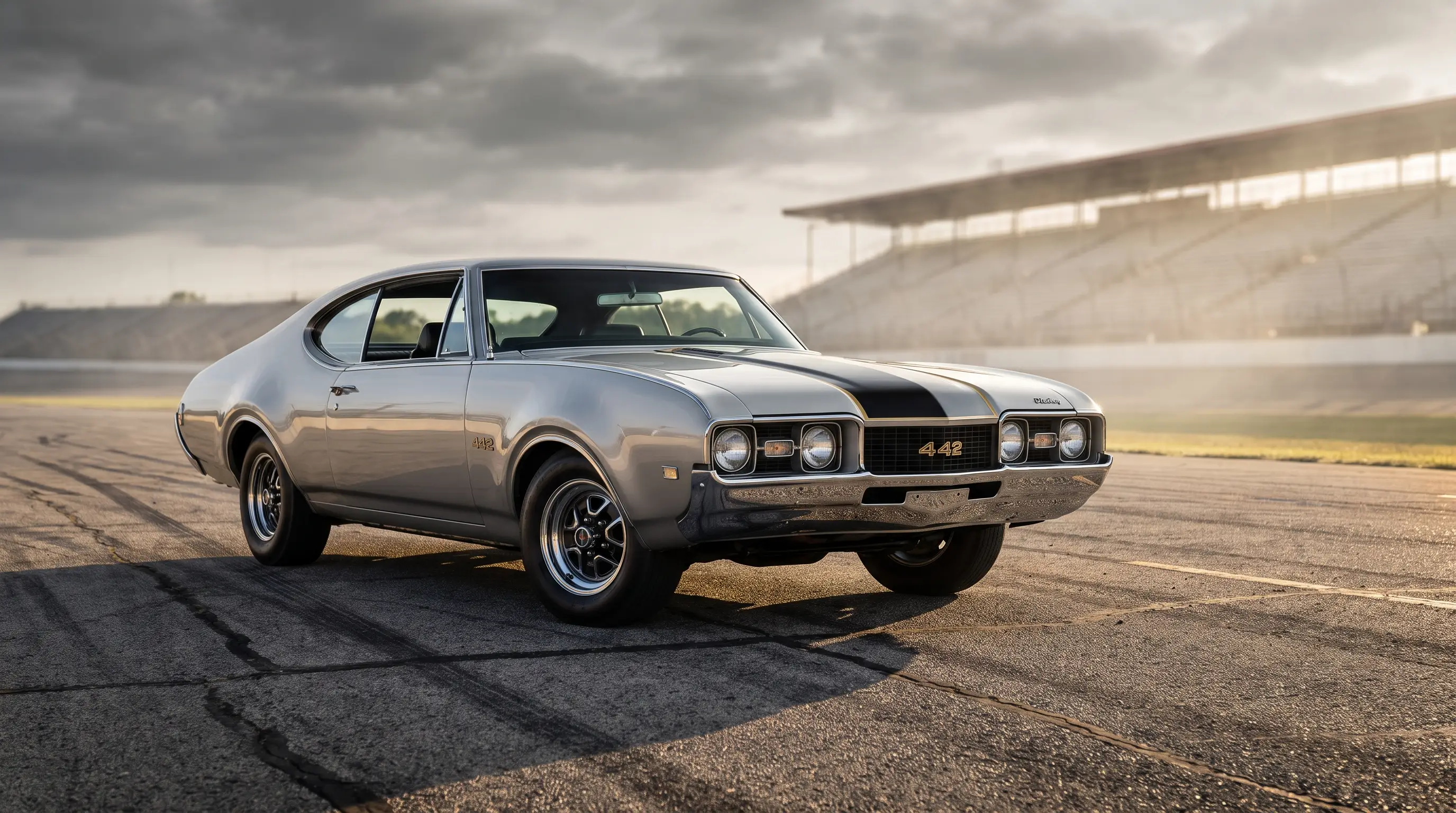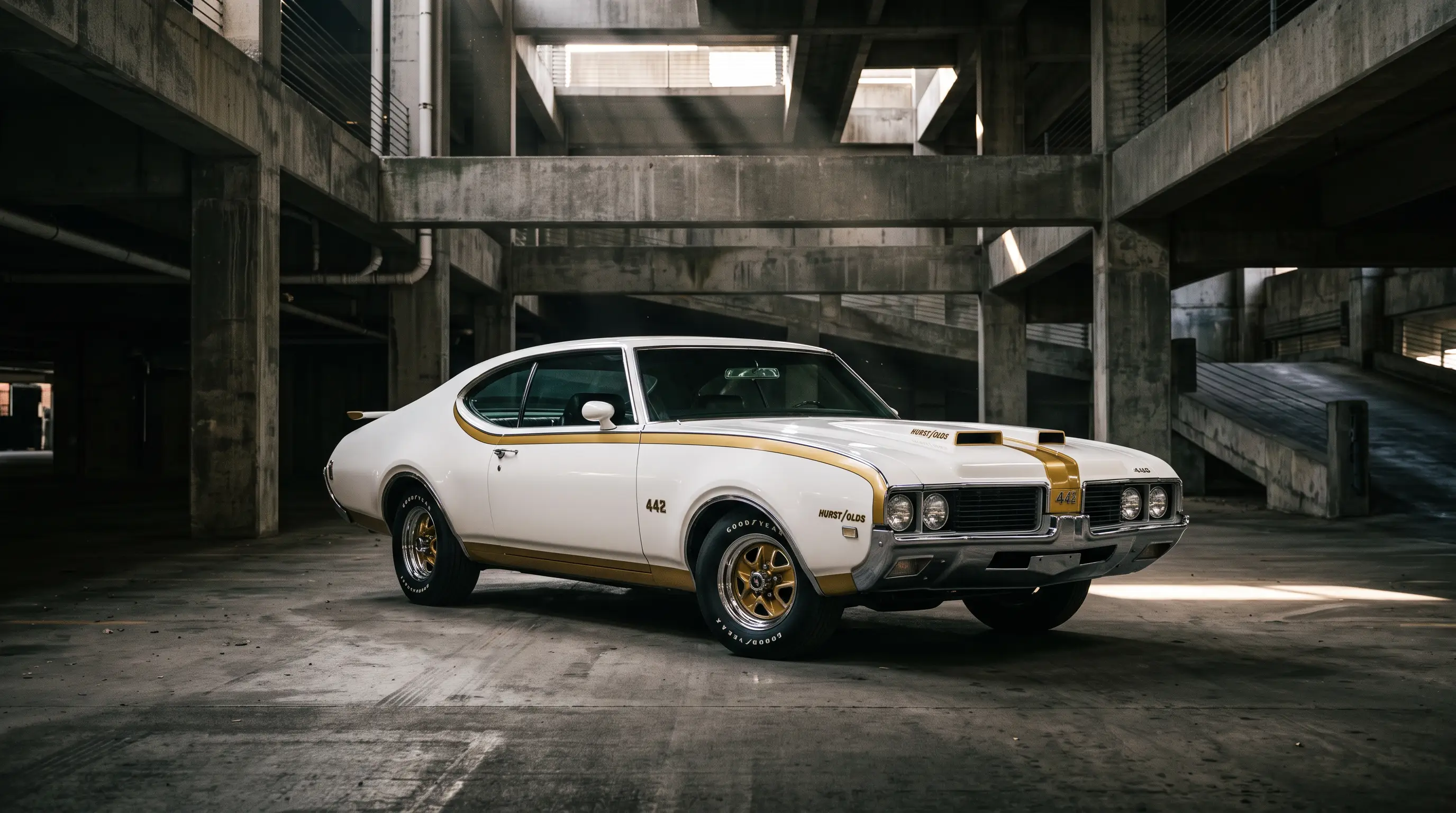
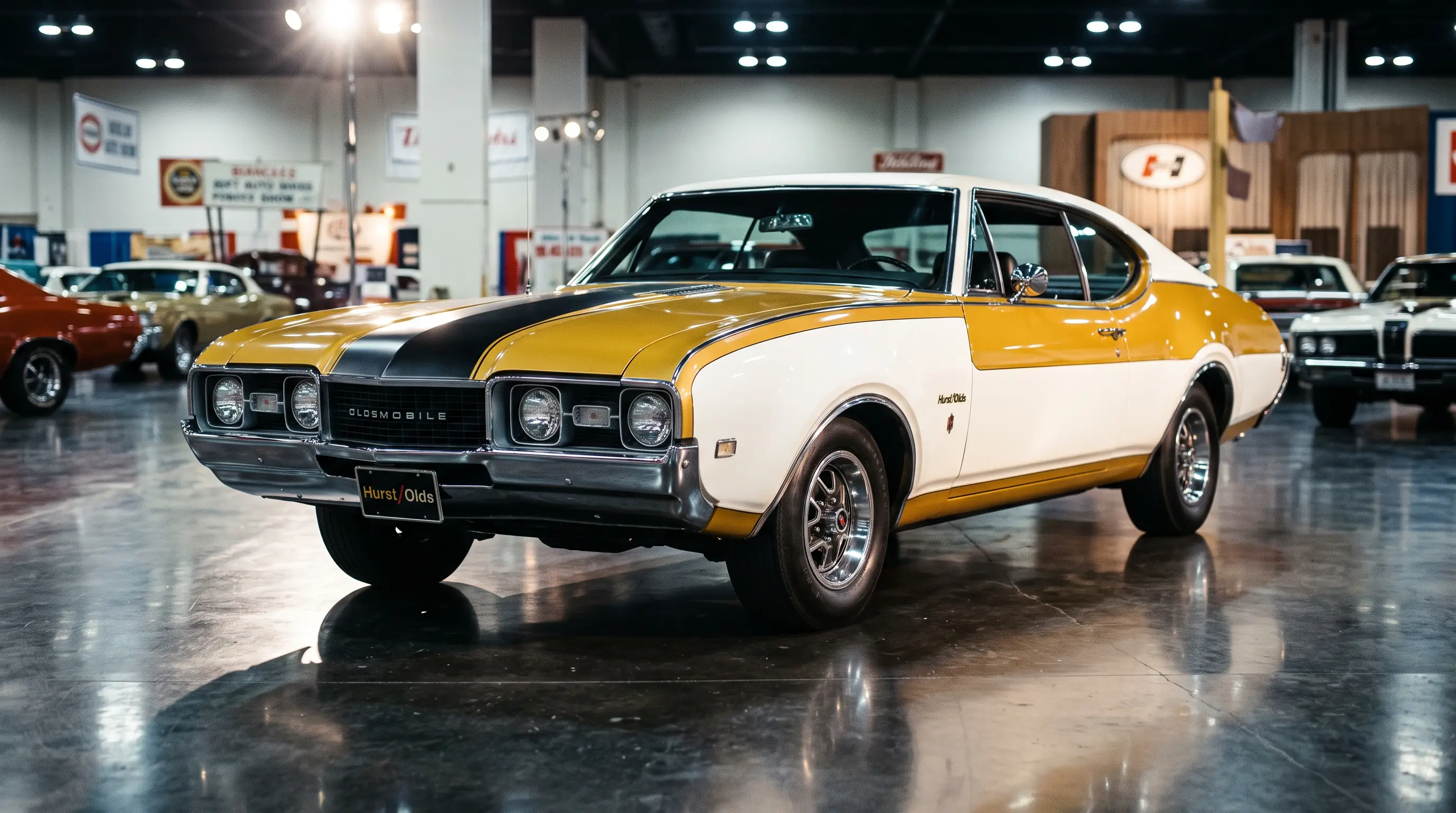
Every car company sells metal, but only a few figured out you could sell an idea instead. Oldsmobile and George Hurst figured that out together, and the proof is a handful of cars that were never meant to sit in a driveway. The Hurst Olds show and exhibition cars of the late 1960s and early 1970s were rolling advertisements, built to be looked at, photographed, and occasionally driven flat out down a quarter mile in front of a grandstand. Most of them never touched a factory order sheet. That is exactly why they matter to anyone tracking where the real money in this hobby has gone.
Selling horsepower before selling cars
By the mid-1960s, Oldsmobile had a problem shared by every GM division: a stodgy reputation with a buying public that was suddenly obsessed with quarter-mile times. The division needed proof, not just a brochure claim, that its engines could hang with anything from Pontiac or Chevrolet. George Hurst, whose shifter business had already made his name synonymous with performance, became the vehicle for that proof. The arrangement that eventually produced the Hurst Olds as a production package started years earlier, on the exhibition circuit, where one-off builds did the persuading that TV commercials could not.
The math behind this strategy was simple and, frankly, smart. A factory could build ten thousand cars and still not change a buyer's mind about a brand's image. One car, touring match-race events and county fairs for a summer, reached a fraction of that number of people directly but left a far deeper impression. Oldsmobile and Hurst leaned into that math hard.
The Hairy Olds: two engines, one point to prove
The clearest expression of that strategy was the twin-engine 1966 Oldsmobile 442 built for exhibition match racing, known on the circuit as the Hurst Hairy Olds. It carried a supercharged, nitromethane-and-alcohol-burning 425 cubic inch Oldsmobile V8 under the hood in the conventional position and a second, matching supercharged 425 mounted in the bed area, each driving its own Toronado-sourced transaxle so power reached all four wheels. Combined, the two blown engines were estimated at roughly 2,400 horsepower, enough to cover the quarter mile in the eleven-second range despite the traction penalty of hauling two engines down the strip. Driver Joe Schubeck debuted the car at Bakersfield, California, on March 4, 1966, and ran it on the exhibition match race circuit into 1967, when a second Hairy Olds was built to keep the tour going, and the sight of an Oldsmobile launching hard enough to lift its front wheels did more for the brand's street credibility among enthusiasts than any print ad could have.
What makes the car relevant to a market conversation rather than just a trivia answer is scarcity. Exhibition cars were built in single digits, used hard, and frequently modified or scrapped once their promotional life ended. A twin-engine match racer that survives in anything close to its touring configuration is not a car with comparable sales data. It is a car that sets its own market the moment it changes hands.
The convertibles that were never supposed to exist
Oldsmobile never put a factory Hurst/Olds convertible into regular production during the package's original run. That did not stop Hurst from building a small number of open-top cars specifically for dealer introductions and auto show turntables, where a droptop simply photographs better than a hardtop under showroom lights. These cars used the same running gear and W-30 based performance components as their hardtop siblings but wore bodywork that no retail buyer could order through a dealer. Hurst built exactly three such convertibles for the 1969 model year, one assigned to East Coast promotional duty, one to the West Coast, and a third built as a replacement after one of the originals was destroyed in an accident and fire. Genuine factory-production Hurst/Olds convertibles did not arrive until the 1972 Indianapolis 500 pace car program.
Collectors chase these cars for a specific reason: they occupy a gap in the factory build sheet. A numbers-matching hardtop Hurst/Olds can be cross-referenced against Fisher body tags and known production runs. A show convertible has no such paper trail to lean on, which cuts both ways. It raises the burden of proof on authentication and raises the ceiling on value for any example that clears that bar convincingly.
What these cars are worth when one actually surfaces
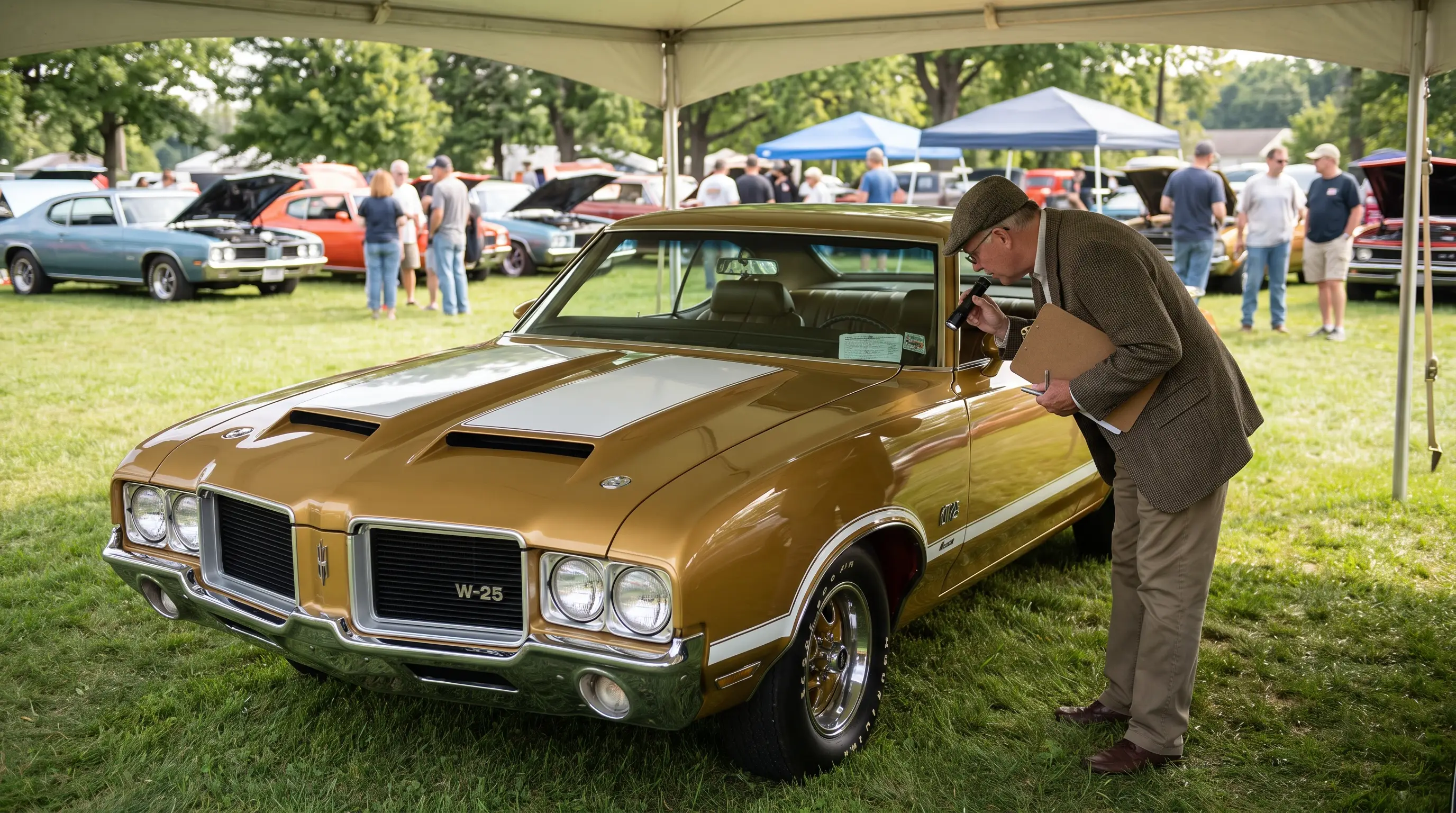
Standard production Hurst/Olds cars already trade at a premium to a comparable 442, and documented W-30 cars command more still. Exhibition and show cars do not fit neatly into that ladder because so few trade hands publicly. When one does surface, whether at a major collector auction or through a private sale inside the Oldsmobile club community, the price is set less by a comp sheet and more by how convincingly the seller can document the car's history, since genuine exhibition-only Hurst/Olds cars trade hands too rarely to build a reliable price comp from at all. That documentation gap is the whole ballgame. A car with period photographs, magazine coverage, or a chain of ownership back to Hurst Performance itself is worth multiples of an unverified claim, even if the sheet metal looks identical.
| Category | Typical build count | Primary value driver |
|---|---|---|
| Factory Hurst/Olds production | Hundreds to low thousands per year | Documented VIN, W-30 content, color combination |
| Dealer/show convertibles | Single digits per program | Period documentation, provenance chain |
| Match race exhibition builds | One or two per campaign | Race history, driver association, survival condition |
"The production Hurst/Olds cars are a known market with a known ceiling. The show and exhibition cars are a different asset class entirely, because you're not buying a car, you're buying a story that has to hold up under scrutiny."
— David Mercer
The bottom line for collectors
If you are chasing a Hurst Olds show or exhibition car, treat the paperwork as the primary purchase and the car as the supporting evidence, not the other way around. These builds were never meant to be common, and that scarcity has only sharpened with time as more of them were altered back toward street configuration or simply lost to attrition. For a fuller picture of how the production side of this partnership developed year to year, a companion piece digs into why certain factory Hurst/Olds combinations reach grail status among appraisers. And if you want the broader arc of the nameplate these cars were built to promote, the full Cutlass story lays out how a mid-size Oldsmobile turned into one of the most collected American cars of its era.
Sources and notes
- Hurst Hairy Olds, Wikipedia
- The Hairy Olds Exhibition Drag Car, CarTech Books
- Hurst's Hairy Olds: A Twin-Engined, All-Wheel Drive 442, Street Muscle
- 1969 Hurst/Olds Convertible: Remembering One of the Rarest Muscle Cars Ever Built, autoevolution
- 1 of 3 Convertibles? 1969 Oldsmobile Hurst/Olds, Barn Finds
- Oldsmobile Hurst/Olds, Wikipedia