Hurst/Olds production numbers get thrown around at every swap meet table and every online forum thread, and most of the figures people quote are wrong by a comfortable margin. I look at build counts for a living, and the Hurst/Olds file is one of the messier ones in the muscle car world. Not because the cars are obscure. Because the paperwork trail was never as tidy as the marketing made it sound.
The short version: Hurst Performance took Oldsmobile Cutlass hardware, added a 455 the factory wasn't supposed to put in an intermediate, and built a run small enough that every number attached to it deserves a second look before you let it move a price.
Why production numbers are the first thing I check
A collector car's rarity claim is only as good as the source behind it. With factory muscle from GM, the baseline is usually a build sheet, a broadcast sheet, or a corporate production report that someone at the plant filed and someone else photocopied forty years later. Hurst/Olds cars complicate that because they left the Lansing assembly line as regular Cutlass 442s, then went through a second conversion process at Demmer Engineering, a Lansing-area contractor working under Hurst's arrangement, where the 455, trim, and Hurst shifter hardware came together off Oldsmobile's own line. That second step is where a lot of the documentation gets thin. Two build events means two chances for the paper trail to go missing, and in this case, both did to varying degrees.
When I'm asked to put a number on a Hurst/Olds, condition and drivetrain correctness carry maybe sixty percent of the weight. Documented production status carries the rest. A car that can be tied to a verified low-volume year sells at a meaningfully different level than a visually identical car with no paper behind it.
1968: the number everyone quotes, and the number I trust
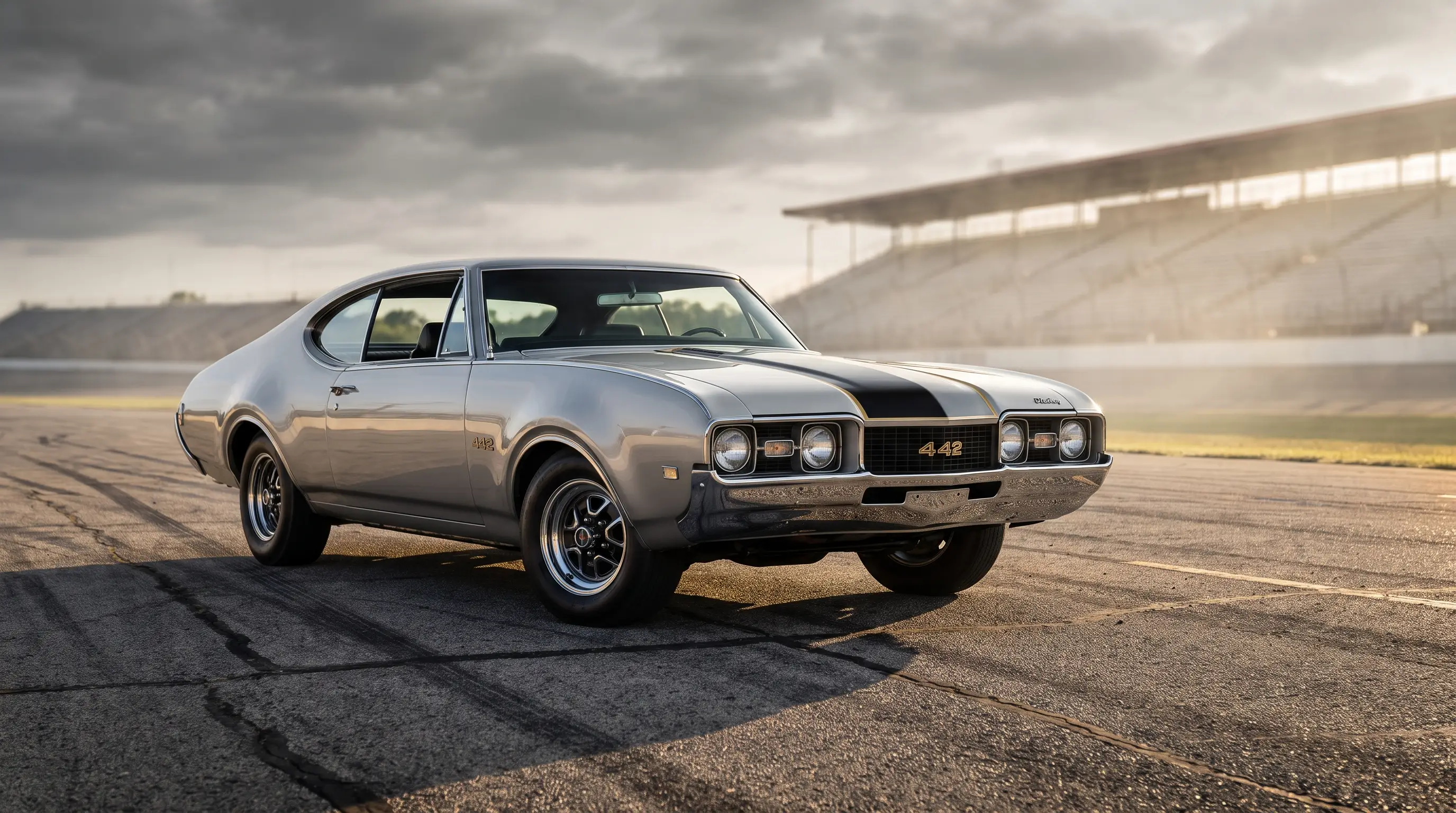
The 1968 Hurst/Olds, built on the W-45 package, is where the whole program started. Oldsmobile had a corporate rule against engines larger than 400 cubic inches in its intermediate line, and Hurst got a waiver to drop a 455 into the Cutlass 442 body. The commonly cited total is 515 cars for the model year. I've seen that figure repeated so often it's treated as gospel, and it holds up reasonably well across independent modern research, though accounts still differ slightly on the exact Sport Coupe versus Holiday coupe split within that total. It's probably close. It is not gospel.
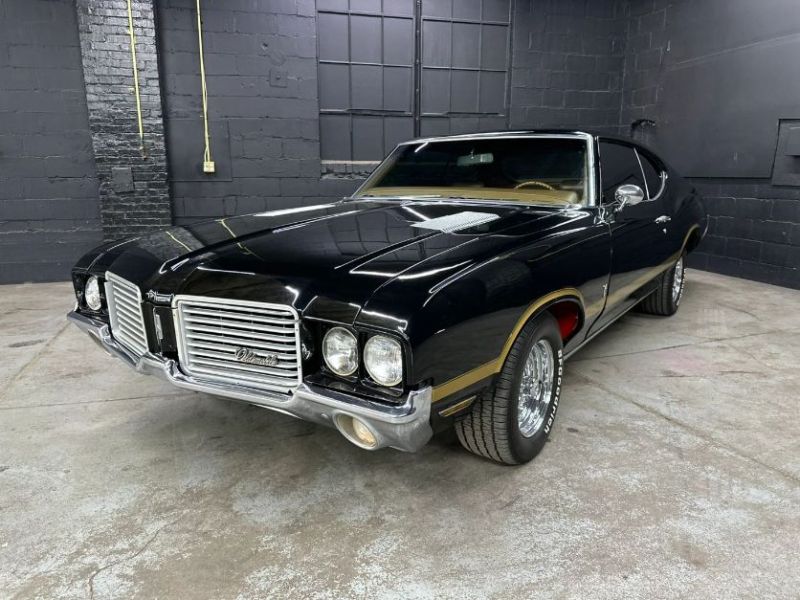
What I trust more is the split by color and body style, because that comes from surviving dealer literature rather than a single round number. The 1968 cars came almost exclusively in Peruvian Silver with a black vinyl roof, or black with a silver roof, with gold H/O badging front and rear. Hardtop coupes made up the overwhelming majority. A documented 1968 convertible or a car finished outside the standard two color combinations is the kind of thing that should trigger a harder authentication look, not an automatic premium, before any check gets written.
1969: bigger volume, thinner paperwork
The 1969 car, built under the W-46 designation, moved to Firefrost Gold over white or white over Firefrost Gold, and volume increased substantially. The number I see cited most is 906 hardtops off the regular production line, plus three additional convertibles Hurst built separately for promotional use, one for East Coast events, one for the West Coast, and a third built to replace a car destroyed in an accident, none of which count against the production total. That's nearly double the prior year, which tracks with dealer demand once word got around about what the 1968 car could do at the strip. More volume should mean better documentation. It doesn't, in this case, because Hurst's conversion records for 1969 have not survived in the same condition as some of the dealer-side materials from 1968.
This is where I tell clients to stop asking "how many were built" and start asking "how many are accounted for." Total production is a historical curiosity. Surviving, verifiable examples are the actual market. For 1969 Hurst/Olds cars, the surviving count with strong ownership chains is a fraction of the built total, and that fraction is what actually sets price at auction, not the headline number from 1969 Hurst literature.
| Model year | Package | Engine | Approx. production | Primary colors |
|---|---|---|---|---|
| 1968 | W-45 | 455 cu in V8 | 515 | Peruvian Silver / black |
| 1969 | W-46 | 455 cu in V8 | 906 (plus 3 promo convertibles) | Firefrost Gold / white |
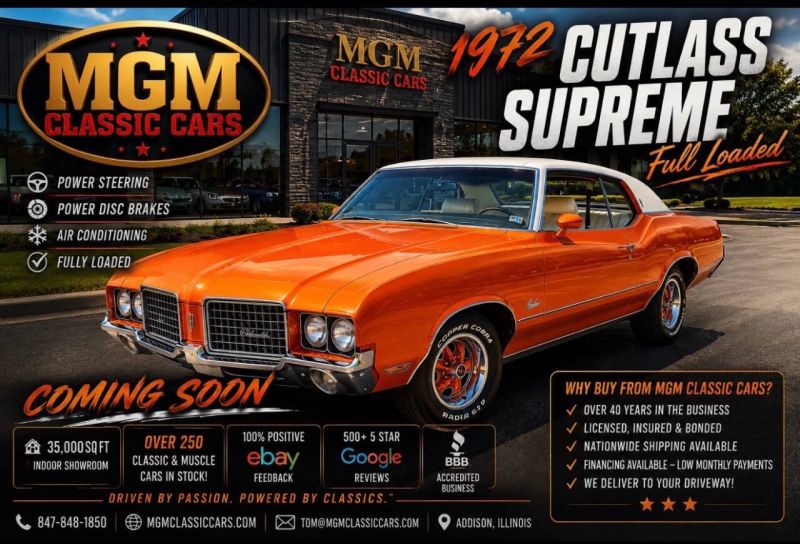
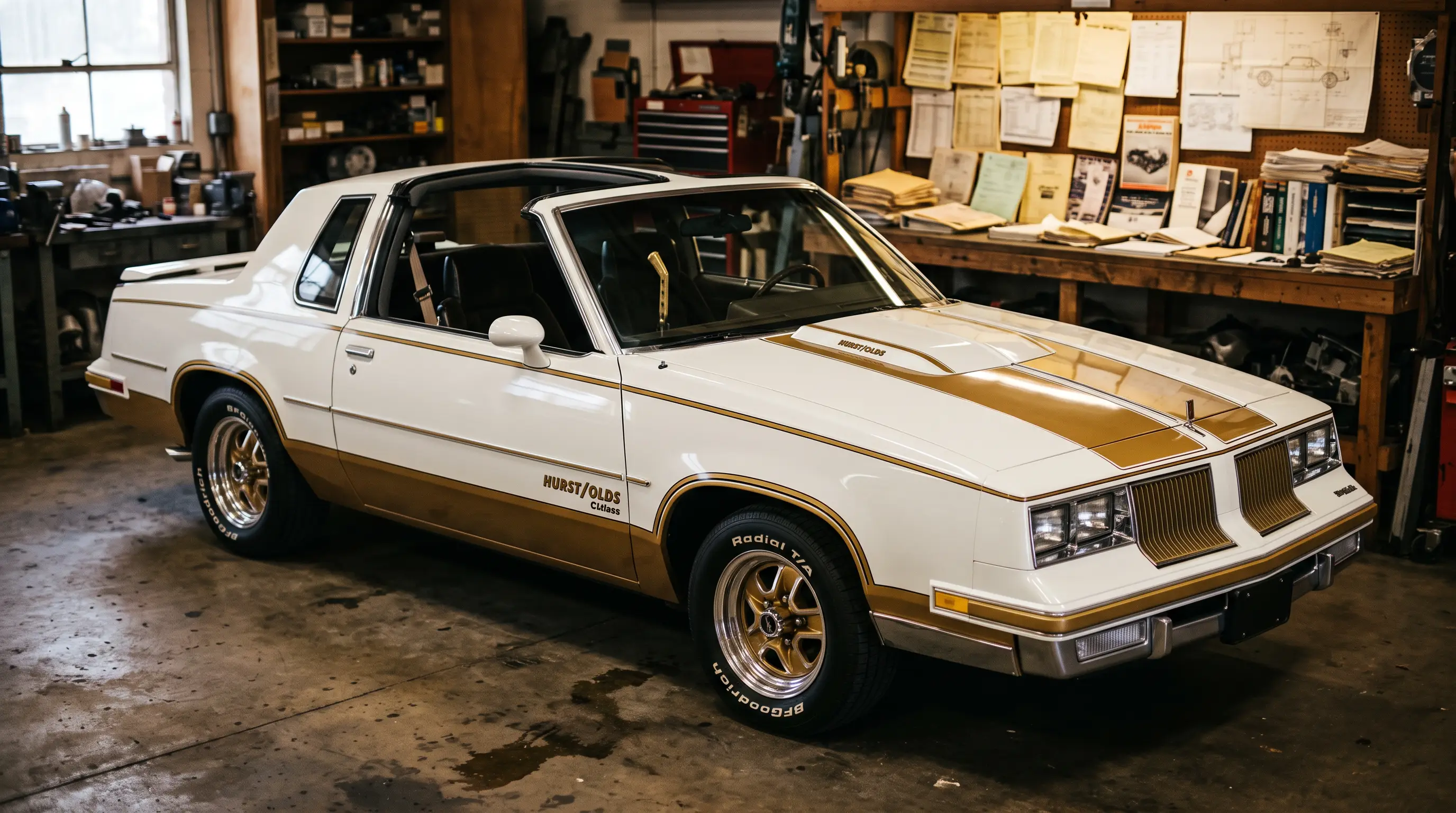
| 1972 | W-45 | 455 cu in V8 | 633 | White / gold |
| 1974 | W-30 option | 455 cu in V8 | 380 (of 1,851 total that year) | White / gold |
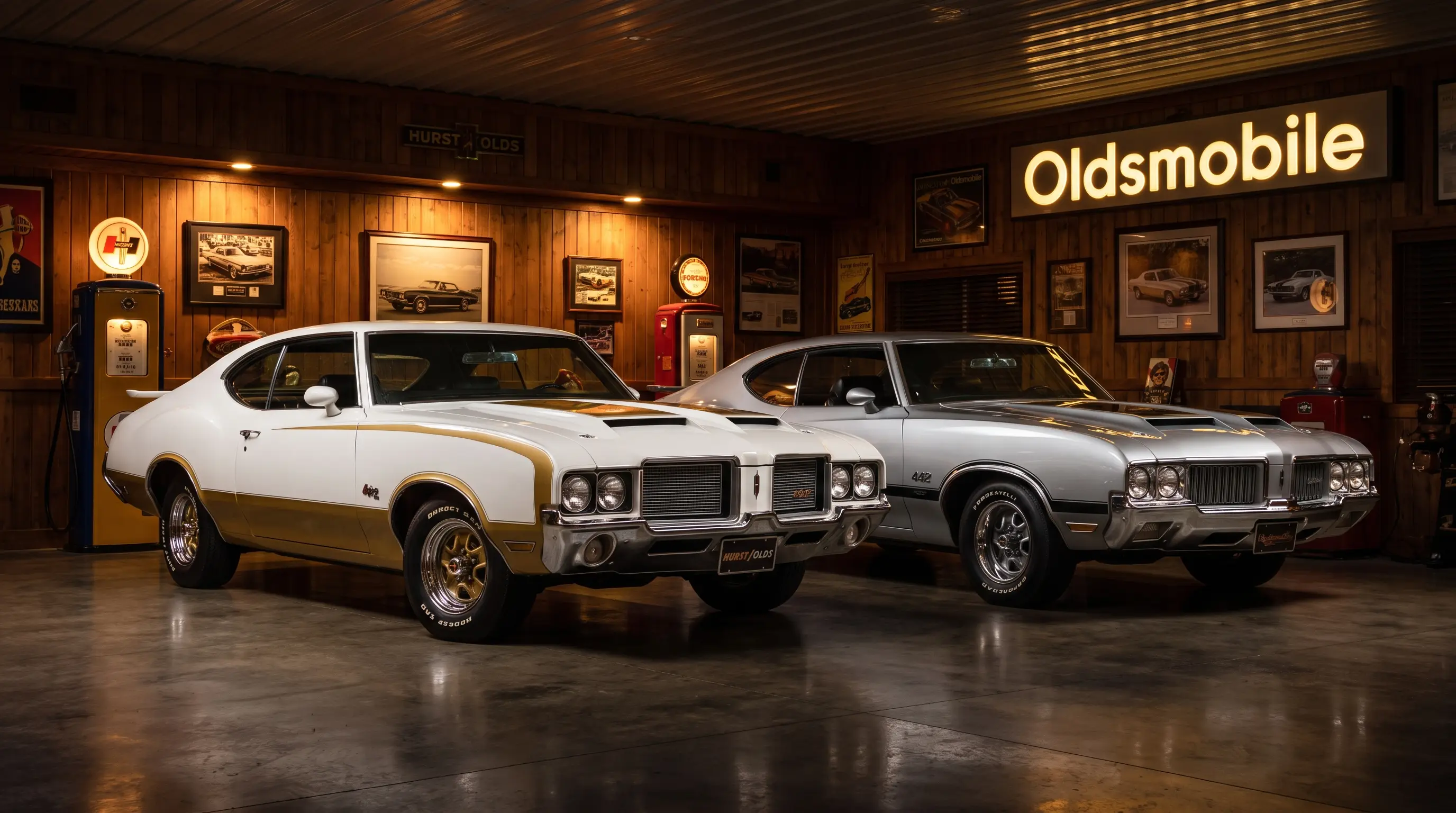
The program went dark after 1969, a gap tied to shifting corporate policy on big-block intermediates and Hurst's own priorities, then came back for 1972 tied to the Indianapolis 500 pace car assignment. That 1972 run is smaller than 1969's and arguably better documented, because pace car association tends to generate more contemporary press coverage that later researchers can cross-reference. If you want the factory super Cutlass story from the beginning, the full history of how the program came together and why Hurst had the leverage to push GM's engine rule is worth the read before you get deep into year-by-year counts.
What the gap years tell you about scarcity
Scarcity in this market isn't just about how few were built. It's about how few were built in a documented, verifiable way, and how few of those have survived without a title-branding issue, a non-numbers-matching drivetrain swap, or a body style that fell outside the standard specification. A 1968 Hurst/Olds with intact factory paperwork is scarcer, in the way that actually moves a hammer price, than a 1974 car with a similar build count and thinner records.
🔧 Inspection Priorities
- Cross-reference the VIN against period Hurst dealer records where they exist. Missing cross-reference doesn't kill a deal, but it should discount the number you're willing to pay.
- Confirm the engine block casting and stamping match the announced W-45 or W-46 specification for that model year. A correct-looking 455 that isn't the documented package is a common and expensive substitution.
- Check paint code and trim tag consistency against the color combinations actually offered that year. An off-spec color on a "rare factory" claim is a red flag, not a bonus.
What a real production count is worth at the sale
Here's my actual appraisal logic. I start with the commonly cited production total for the model year, then discount it based on how much of that total I can trace to a primary source rather than a repeated secondary claim. A #2-condition 1968 Hurst/Olds with a verified build sheet and matching numbers sits meaningfully above a visually identical #2 car with no paperwork trail. Both cars might look the same in photographs. They are not the same asset.
The downside case matters as much as the upside. If a seller leads with a production number and can't produce anything beyond "it's rare, everybody knows that," treat the claim as marketing, not documentation, and price accordingly. If you want to see where this argument plays out against a direct rival from the same era, keep reading the series for how the Hurst/Olds stacks up against the standard 442 on value, not just on paper.
"A production number without a source is just a rumor with a decimal point. I've watched two identical cars sell forty percent apart because one had a paper trail and the other had a story."
— Marcus Feld
The honest summary is this. Hurst/Olds production totals are directionally right and specifically unreliable. Use them to understand scale, not to justify a specific dollar figure. The number that should move your offer is how much of that history you can actually verify, in writing, before the car changes hands.
Sources and notes
- Oldsmobile Hurst/Olds, Wikipedia
- Hurst/Olds Club of America, Production Numbers
- 1 of 3 Convertibles? 1969 Oldsmobile Hurst/Olds, Barn Finds
- From Loophole to Indy Pace Car: The 1972 Hurst/Olds, Sports Car Market
- '72 Olds W30 4-4-2 & W-45 Hurst/Olds, Car Guy Chronicles
- 455 Hurst-Olds: Lansing's Executive Express, Car Guy Chronicles