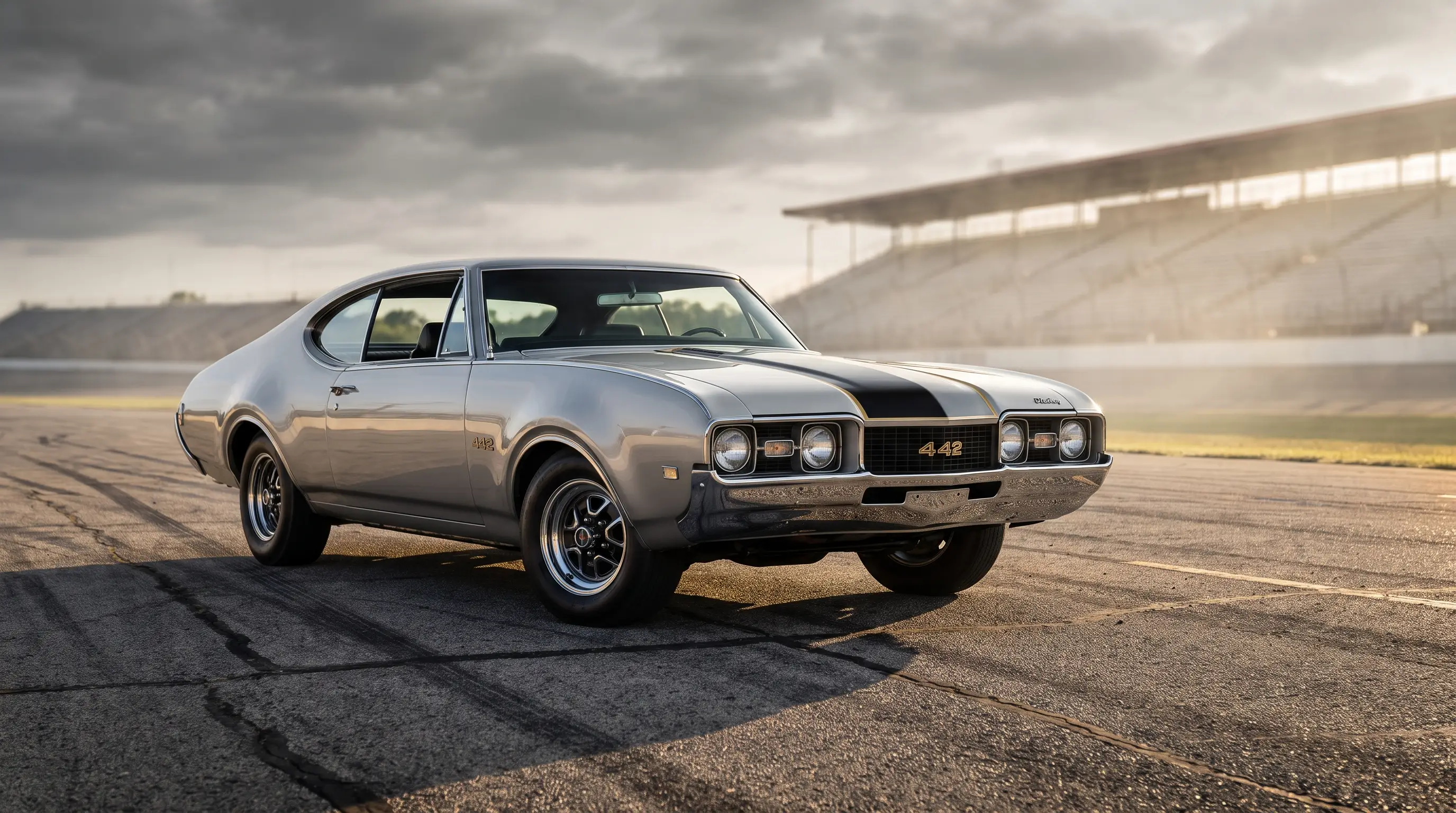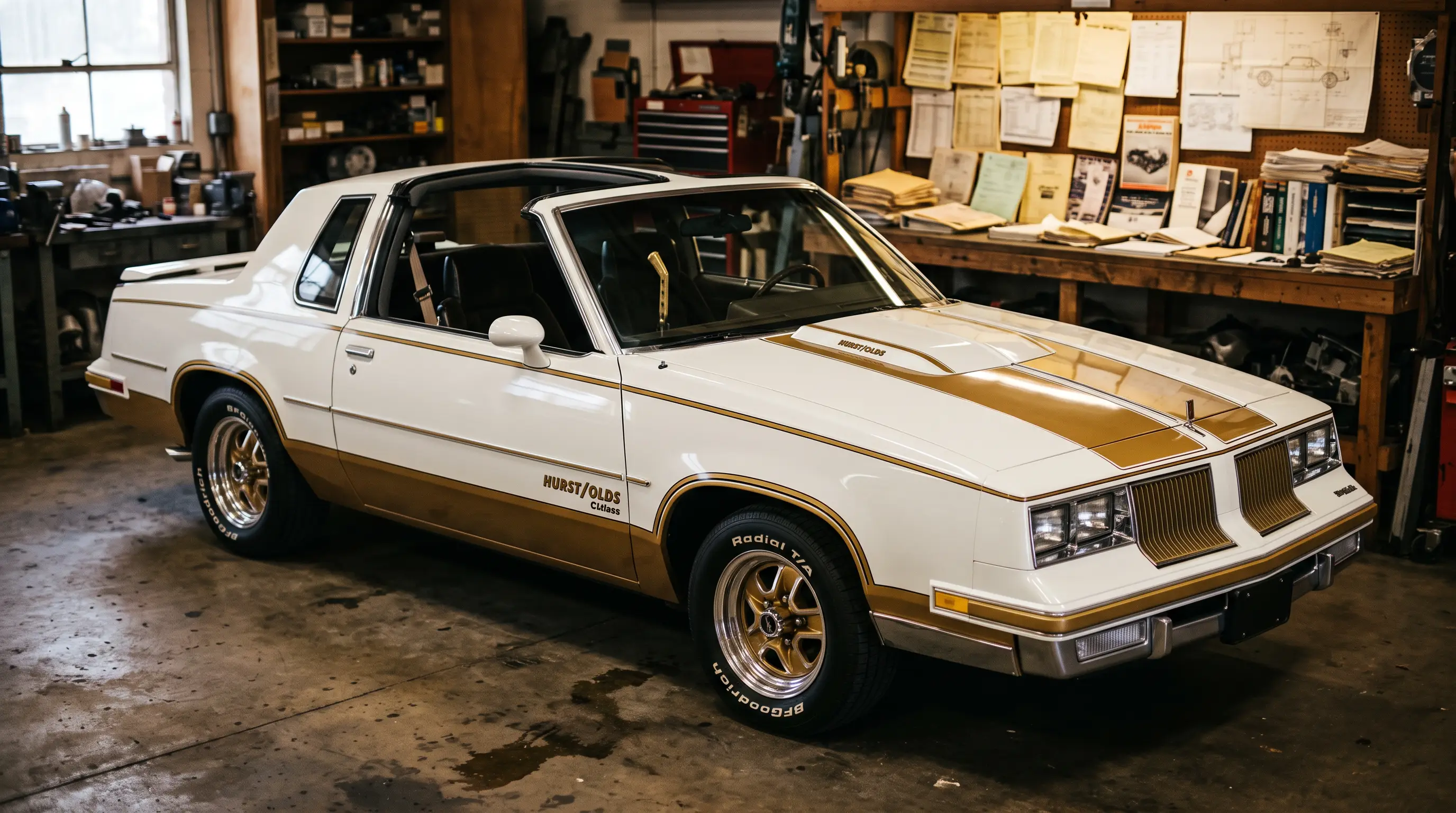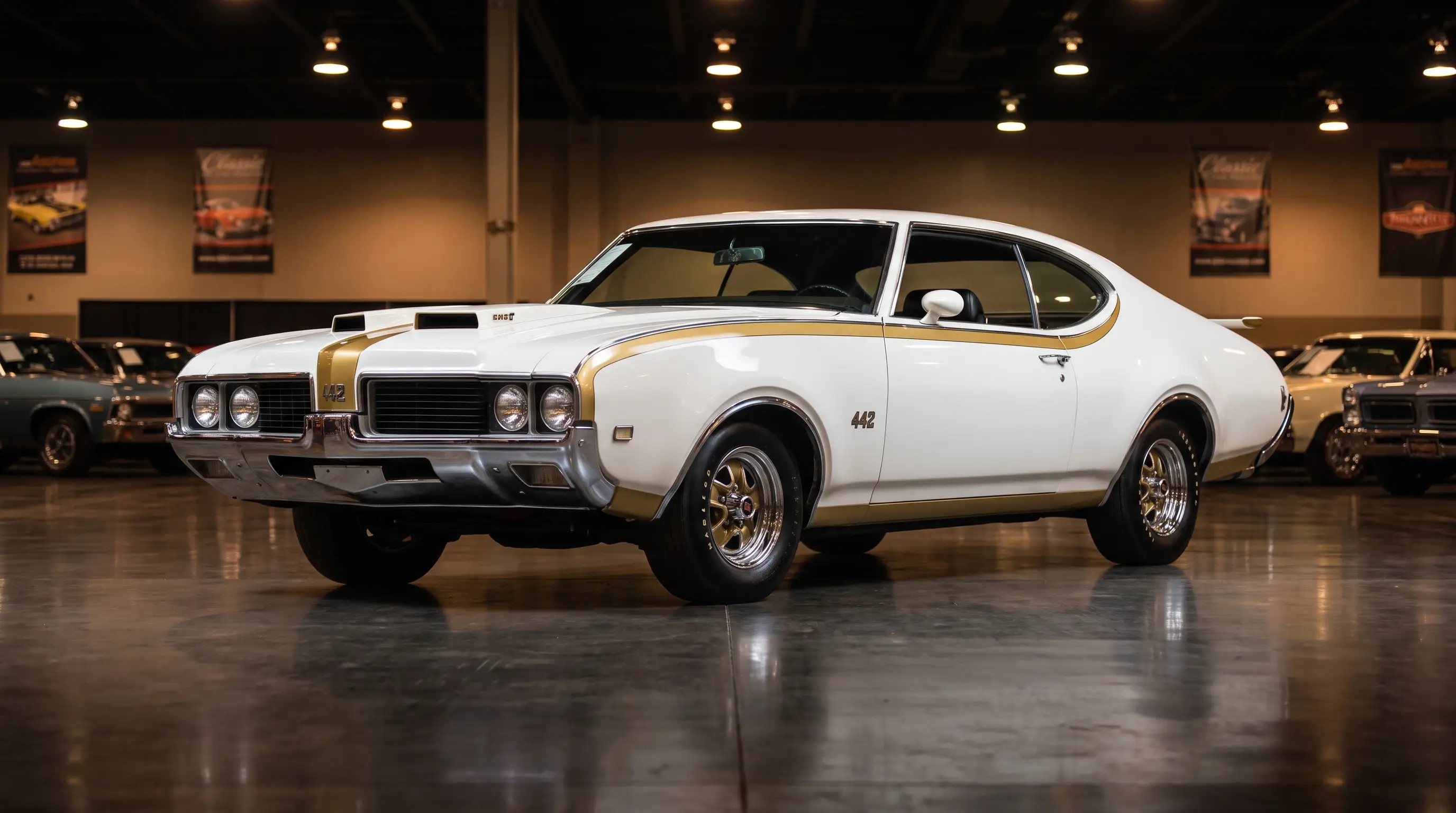
Every Cutlass 442 buyer eventually asks the same question at some point in their search: why pay two to three times as much for a Hurst/Olds when a well-built 442 gets you most of the same car. I've tracked both segments through enough auction cycles to give a real answer instead of a shrug. The gap is not hype. It's driven by scarcity, documentation, and a slightly different buyer pool, and understanding that split changes how you should shop either car.
Same platform, different program
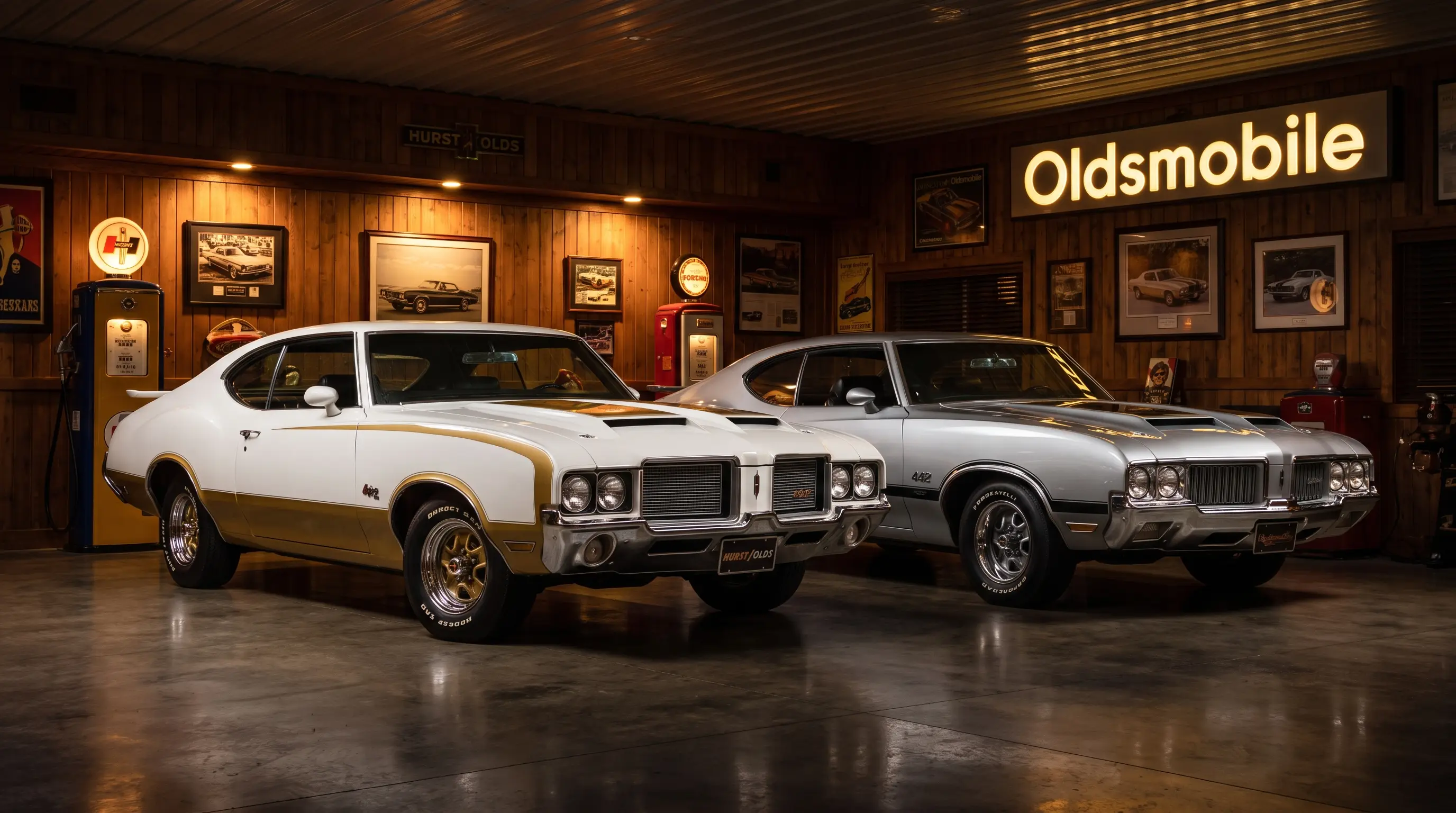
Both cars start from the same place: the Cutlass body, the 442 suspension and handling package, GM's A-body architecture underneath. The 442 was Oldsmobile's mainstream performance offering, built in volumes high enough that a good one is still findable without months of searching. The Hurst/Olds took that same starting point and ran it through a second build process at Hurst's facility, adding the 455 that Oldsmobile's own corporate rules kept out of the standard 442, along with specific paint, trim, and shifter hardware tied to the Hurst name.
That second build step is the entire reason the market treats these as separate segments rather than one car with an option box. A 442 with the L78 or W-30 package is a genuinely quick car. A Hurst/Olds is that same foundation plus a documented, low-volume factory special edition, and collector markets pay a real premium for "special edition with a paper trail" over "quick car that a lot of people also own."
What the auction data actually shows
Pull sale results across the last several major auction cycles and the pattern is real but not tidy. A 1969 Hurst/Olds averages around $45,000 to $46,000 by Hagerty's numbers, with strong examples pushing past $70,000. A 1969 442 in ordinary trim trades well below that. But the comparison flips hard once you isolate the rarest 442 packages: a documented W-30 convertible from the same model year has priced out well north of $100,000, ahead of a typical Hurst/Olds hardtop, because factory 442 convertibles in that spec are scarcer than the Hurst/Olds itself. The honest planning number isn't a fixed multiple, it's that a mainstream 442 usually sits below a comparable Hurst/Olds, while the rarest 442 variants can outrun it entirely.
What surprises newer buyers is how much of that spread comes down to volume rather than raw performance difference. The two cars post similar quarter-mile numbers when built to comparable spec. The market isn't really pricing straight-line speed. It's pricing the smaller production run and the fact that a Hurst/Olds carries its own dedicated collector following that doesn't fully overlap with the broader 442 buyer base.
| Factor | Cutlass 442 | Hurst/Olds |
|---|---|---|
| Production volume | Thousands per year, broad availability | As low as 515 in the founding 1968 year, climbing to roughly 3,500 in the 1984 Lightning Rod run |
| Engine ceiling | Up to W-30 455 in later years | 455 as standard, sourced under a Hurst-negotiated waiver |
| Documentation depth | Standard GM build sheet trail | Two-stage build, thinner Hurst-side paperwork |
| Typical buyer | Muscle car generalist, driver-focused | Dedicated collector, provenance-focused |
| Price posture | Baseline for the platform | Meaningful premium over a comparable 442 |
Where the 442 is the smarter buy
If your goal is a car you'll actually drive hard and enjoy without worrying about a six-figure asset, the 442 wins on almost every practical measure. Parts support is deeper because the production base is bigger. A misstep during restoration costs less to correct because you're not chasing Hurst-specific trim or shifter linkage that only a handful of suppliers stock. And a well-documented 442 still holds value respectably, it just doesn't carry the same acceleration curve that a genuine Hurst/Olds does when a strong example comes up at a major sale.
For buyers who want performance and presence without committing to the Hurst/Olds premium, a W-30 442 from the right year gets you close to the same experience behind the wheel. You give up the badge and the smaller production count. You keep a meaningfully lower entry price and an easier ownership experience.
Where the Hurst/Olds earns its premium
The Hurst/Olds premium holds up when three things line up: verified low production for the specific year, intact factory documentation, and condition that supports the top of the market rather than the middle. Strip any one of those out and the gap to a strong 442 narrows fast. A Hurst/Olds with a murky paper trail and a non-matching drivetrain is not automatically worth double a comparable 442. It's worth roughly what its actual, provable rarity supports, which sometimes isn't much more.
This is the analysis I run for every client comparing the two: does the specific car in front of you justify the segment premium, or is it riding on the segment's reputation. That reputation comes from the factory super Cutlass program's real scarcity in specific years, not from a name alone. Not every surviving car earns the full weight of that reputation at resale.
"The market isn't pricing which car is faster. It's pricing which car is rarer and better documented. Those are different questions, and buyers who confuse them overpay in both directions."
— David Mercer
The verdict
Buy the 442 if you want a genuinely quick, well-supported classic without the documentation chase. Buy the Hurst/Olds if the specific car has the paperwork to back its scarcity and the condition to justify the segment's top pricing. For readers weighing both against the platform's full history, the Classic Cars Arena Cutlass guide lays out where each variant sits across the model's full run. And if you're actively shopping either segment right now, browsing current listings for classic Hurst Olds for sale against comparable 442 inventory is the fastest way to see today's real spread, not last year's auction average.
I'll say this plainly, because it's a companion argument worth reading in full: a companion piece on recent Hurst/Olds auction records breaks down exactly which sales set the current ceiling, and why some "record" prices get quoted long after the market has actually moved on.
Sources and notes
- Hagerty Valuation Tools, 1969 Oldsmobile 4-4-2 Hurst/Olds
- Hagerty Valuation Tools, 1969 Oldsmobile 4-4-2 W-30
- Wikipedia, Oldsmobile Hurst/Olds
- Hurst/Olds Club of America, production numbers archive
- Barrett-Jackson, 1969 Oldsmobile Hurst 442 docket
- Sports Car Market, From Loophole to Indy Pace Car: The 1972 Hurst/Olds