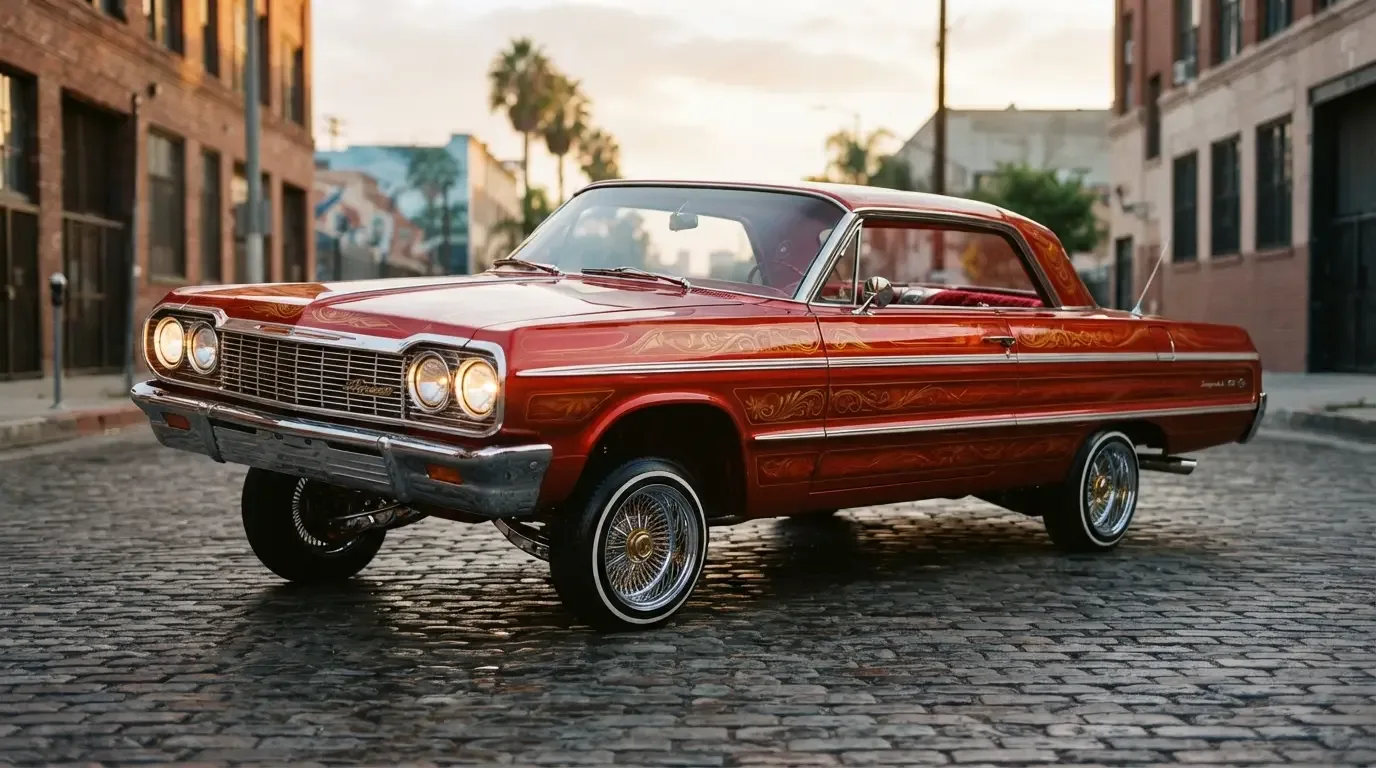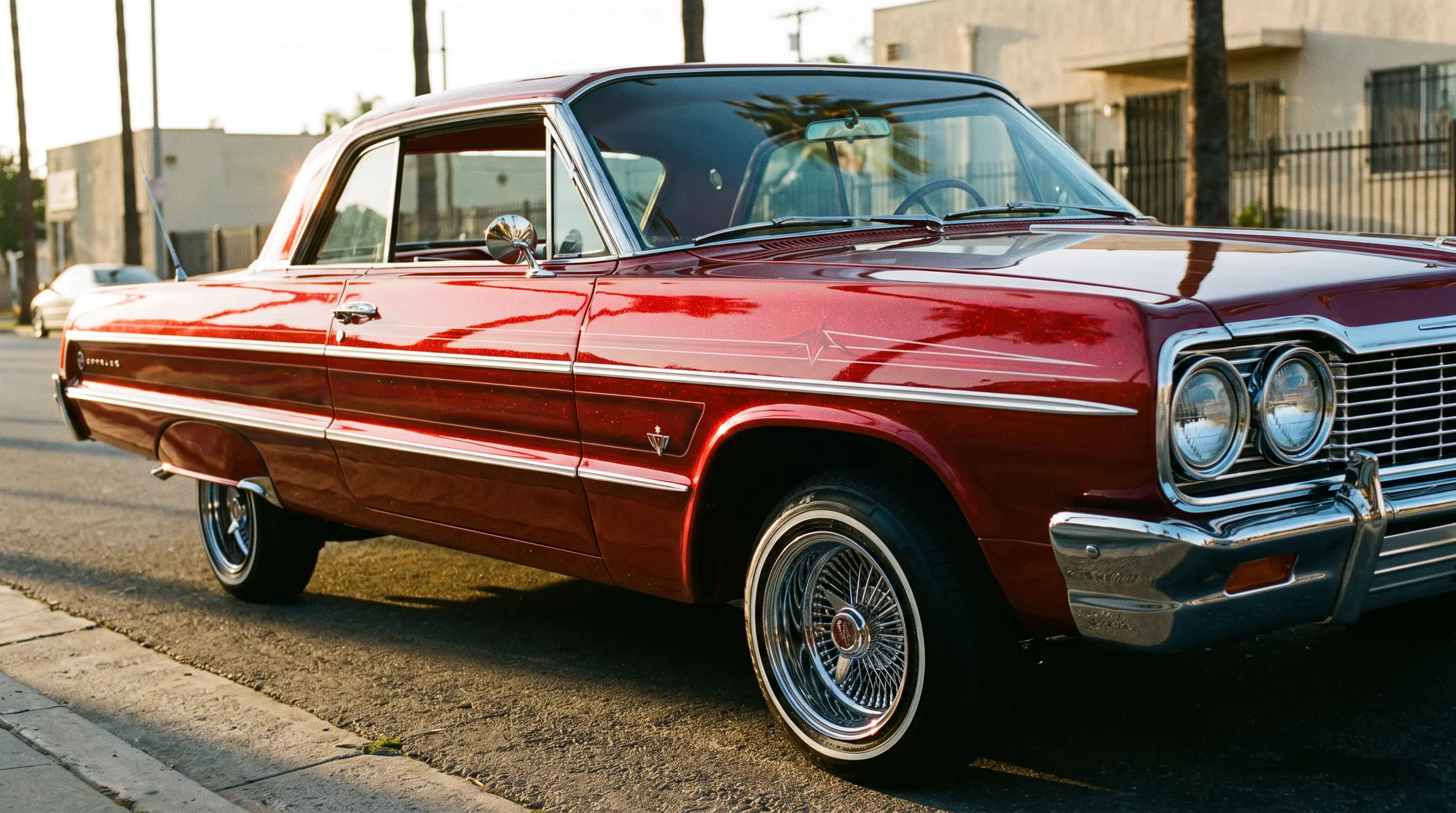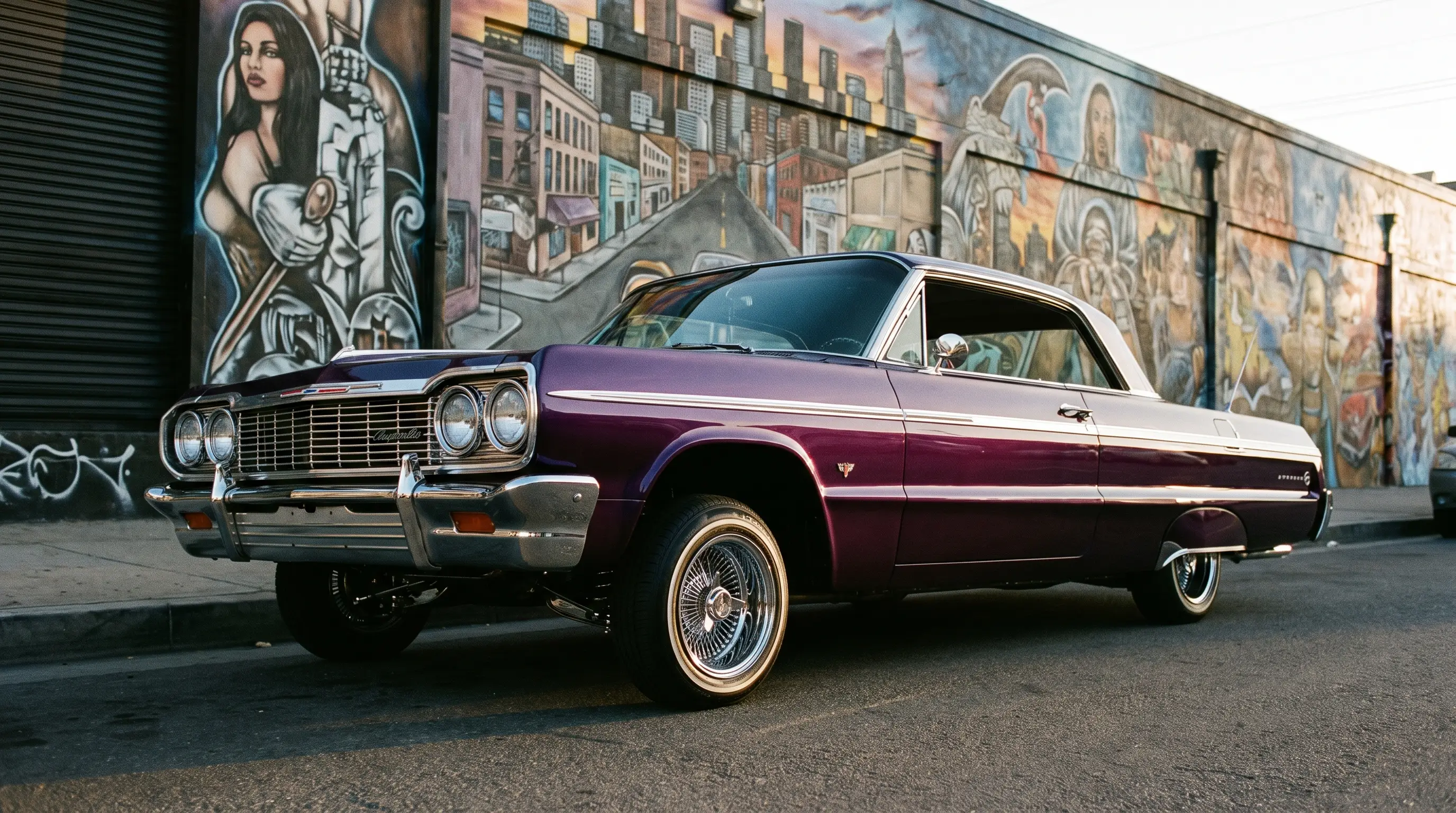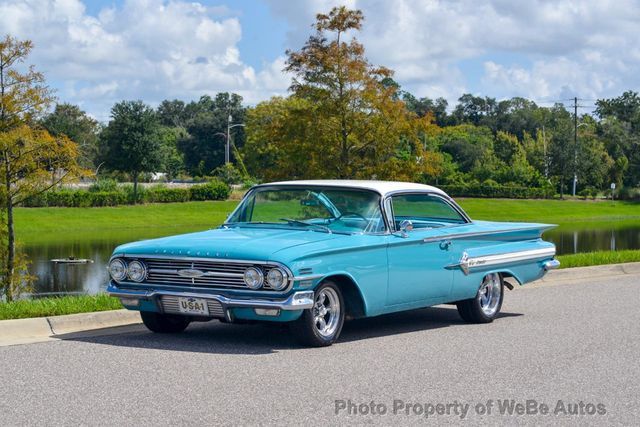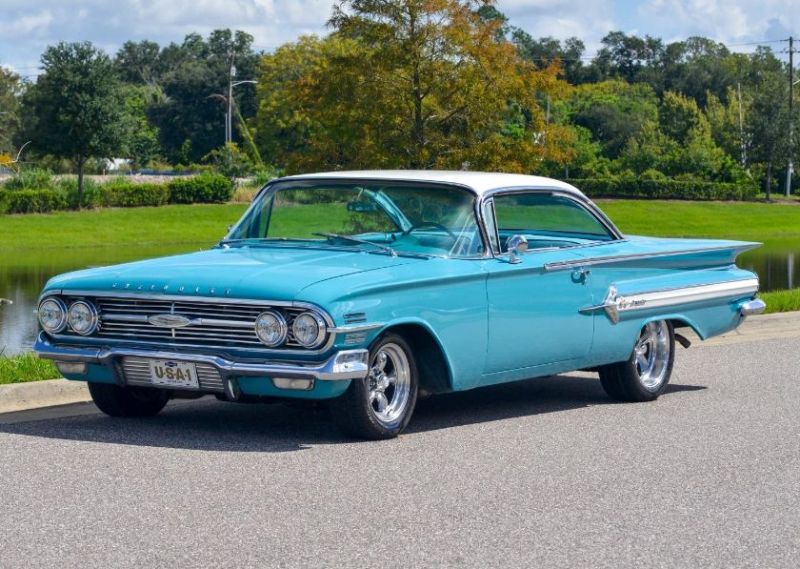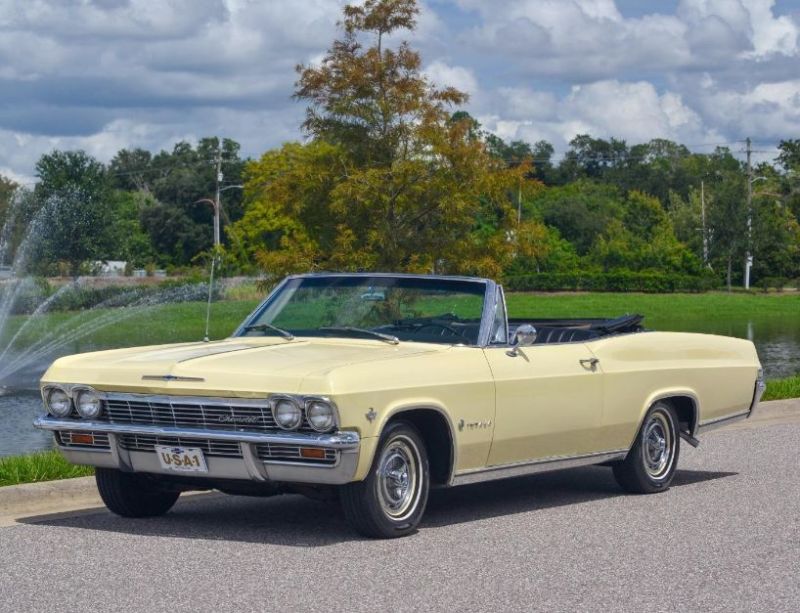
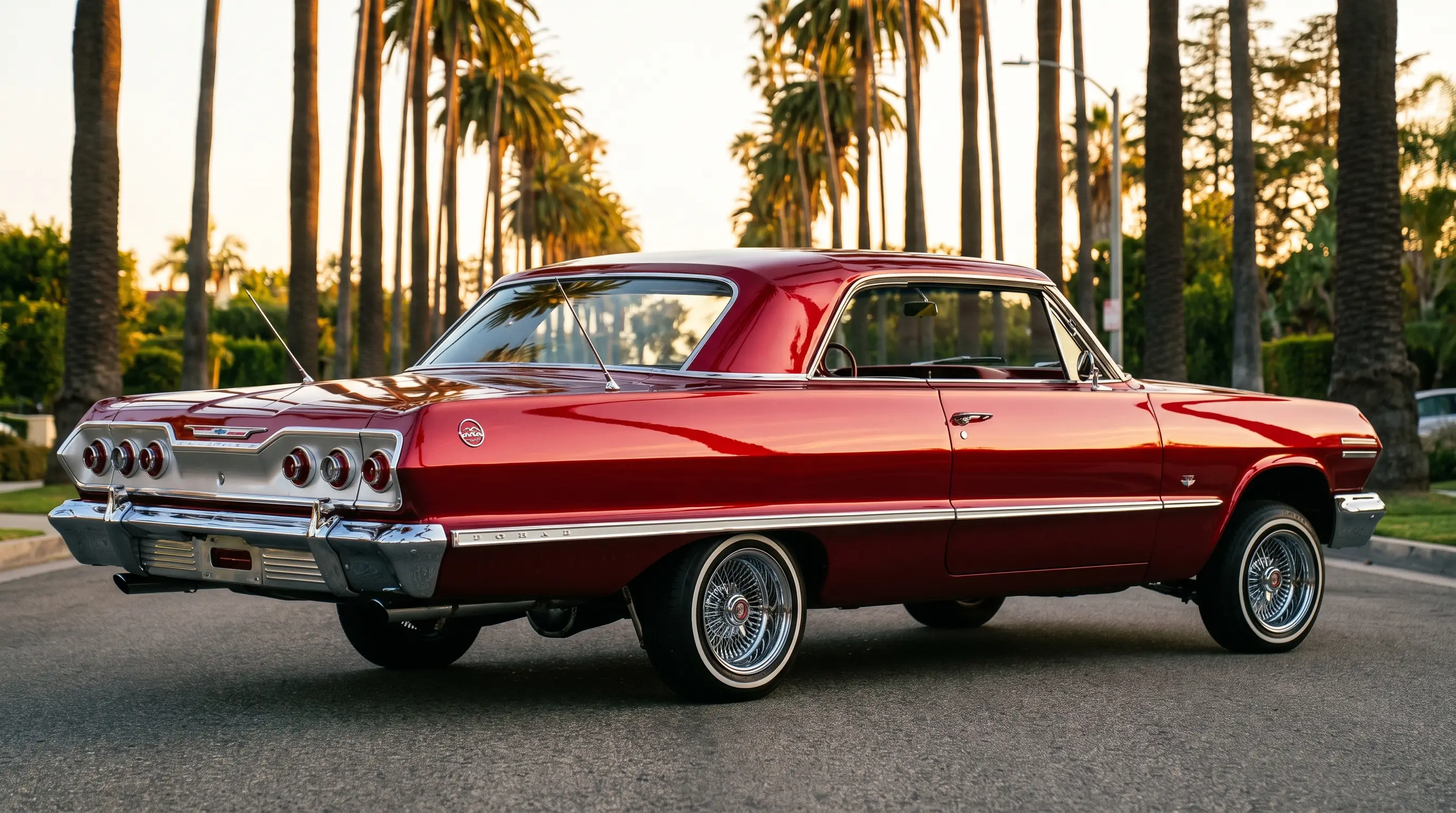
Walk through any serious lowrider show and count how many pre 1980 Impalas are wearing a 1963 body. It will be more than any other single year, and that is not an accident of survival rates or nostalgia. The 1963 Chevrolet Impala earned its place at the center of lowrider culture through specific body lines and proportions that builders decided, decade after decade, were simply the best canvas Chevrolet ever produced for this kind of work.
The body that started it
Chevrolet redesigned the full size lineup for 1961 and refined it further by 1963, giving the Impala a straighter beltline and a formal roofline option that read as clean rather than fussy. That flatness mattered enormously to painters and builders looking to lay metalflake evenly or plan a mural without fighting a lot of sculpted curves. The 1963 model in particular hit a proportion that builders kept coming back to, long and low without looking bulky, with enough flat real estate on the hood, trunk, and doors to give an airbrush artist genuine working room.
Early customizers in Southern California through the mid and late 1960s gravitated toward the 1963 body specifically once they started experimenting with hydraulic suspension and dramatic paint work, and once a few well known builds established the model's reputation at local shows, the choice became somewhat self reinforcing. Younger builders wanted the same body their heroes had used, and that preference has held remarkably steady for six decades now.
Hydraulics found a good partner
The 1963 Impala's frame and suspension geometry also proved cooperative when builders started adapting hydraulic systems to let a car drop low for cruising, then rise back to legal height at will. The car's proven strength as a full size body meant it could absorb the stress of that dropped and raised cycling, and later the more violent stress of competitive hopping, better than a lot of contemporaries could. Builders learned the platform's limits through trial and error across thousands of individual cars, and that accumulated knowledge became part of why a 1963 Impala project today benefits from decades of documented experience that a less common model simply does not have behind it.
A rolling reference point
Because so many builders across so many decades chose the same body, the 1963 Impala became something like a shared vocabulary within the culture. A club member could reference "a sixty three" in conversation and every other builder in the room understood immediately what proportions, what stance, and what history that shorthand carried. Few cars in American automotive history have earned that kind of instant recognition within a specific subculture, and the 1963 Impala holds it as firmly today as it did in the 1970s.
That shared reference point extends into film and music too, where the 1963 body specifically shows up again and again whenever a production wants to signal lowrider culture visually without needing a single word of dialogue. Audiences who know nothing else about the movement still recognize that silhouette on sight, which says something about how thoroughly this one model year became the culture's visual shorthand.
"Ask any builder which year they'd choose if money and parts were no object, and most of them still say sixty three. That's sixty years of consensus, which almost never happens in this hobby."
- Hector Morales
Trim levels mattered less than you'd think
Chevrolet sold the 1963 Impala across several trim levels, from the base Impala up through the Super Sport package with its bucket seats and console, but lowrider builders rarely cared much which trim a starting car had originally carried. Once a car was headed for full custom paint, a new interior, and a hydraulic setup, the factory trim distinctions that mattered so much to a numbers matching restorer became almost irrelevant. What builders actually looked for was a straight body with minimal rust in the trunk floor and rear quarters, since those areas took the brunt of stress once hydraulics started cycling the suspension through thousands of up and down movements over years of use.
Engine choice followed a similar logic. A stock inline six or small block V8 under the hood satisfied most builders just fine, since the point of the build was rarely straight line performance. A few builders swapped in larger displacement V8s for shows where engine bay presentation mattered, chrome valve covers and polished intakes dressed up for judging, but the drivetrain was consistently treated as secondary to the body, paint, and suspension work that actually defined the car's identity within the culture.
Finding good bones gets harder every year
Sixty plus years on, a genuinely solid 1963 Impala body is a shrinking resource, and builders now treat a rust free trunk floor and quarter panel as close to non negotiable before committing to a full build. Salvage cars from drier climates, particularly the Southwest, have become the preferred source of donor bodies, since decades of road salt in colder regions took a heavy toll on exactly the panels a lowrider build depends on most. Parts support has held up reasonably well thanks to the model's popularity and the reproduction panel market that grew up around it, but a builder still needs to start with a fundamentally sound car, since no amount of bodywork skill fully compensates for a frame or floor pan that has already given up structural integrity.
Still the standard
Values for original, well documented 1963 Impalas suited to lowrider builds have climbed steadily as the classic car market has recognized this cultural weight alongside the mechanical merits. Builders today sometimes compete for good starting cars against restorers chasing a stock example, a dynamic that did not really exist a generation ago when these cars were simply plentiful and cheap. Readers wanting lowrider impala history in full will find the 1963 body mentioned constantly throughout it, because so much of the culture's visual identity traces directly back to this one model year. There is also a related story covering how the Impala earned its broader status as the movement's defining icon, well beyond just this one year. For anyone hunting a project or a finished build, Impalas for sale now still include 1963 examples with the right bones, though patience and a good eye for rust and documentation matter more with every year that passes.