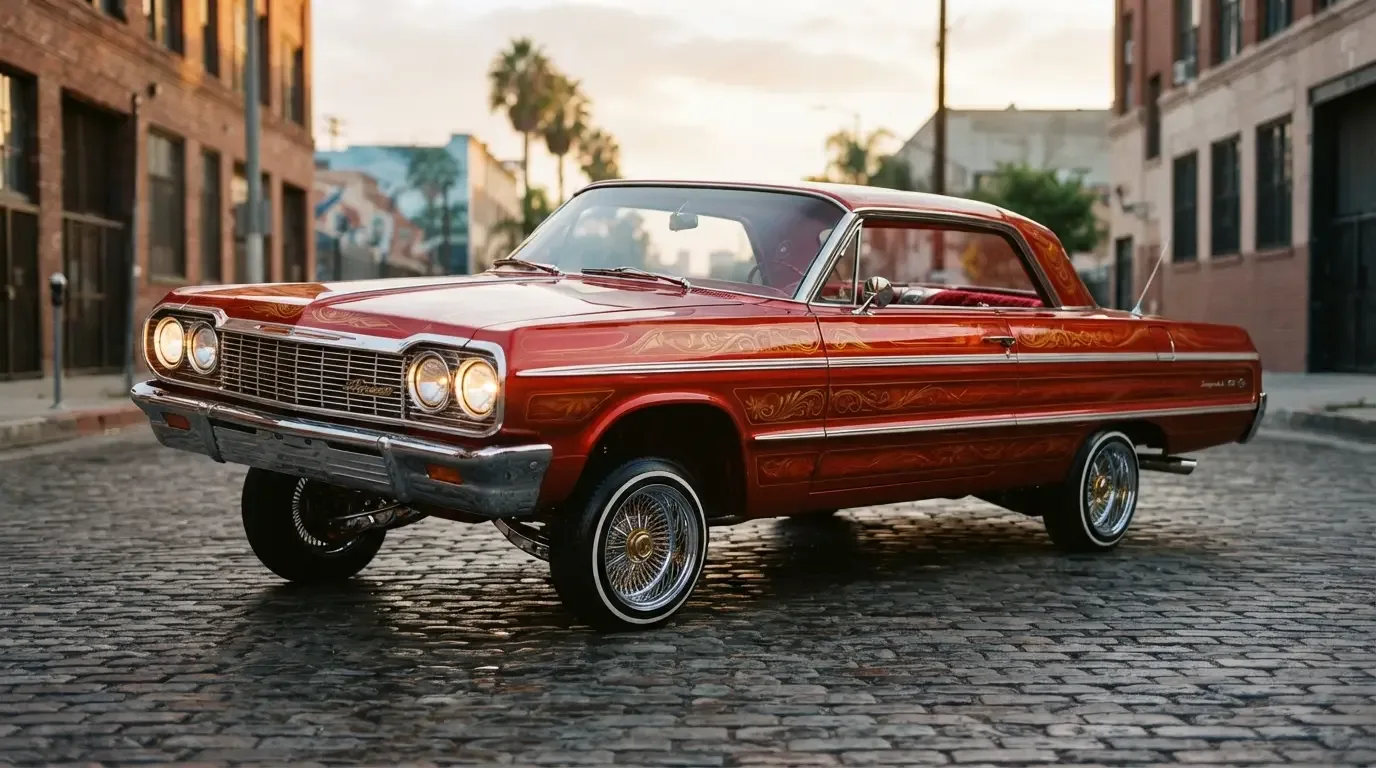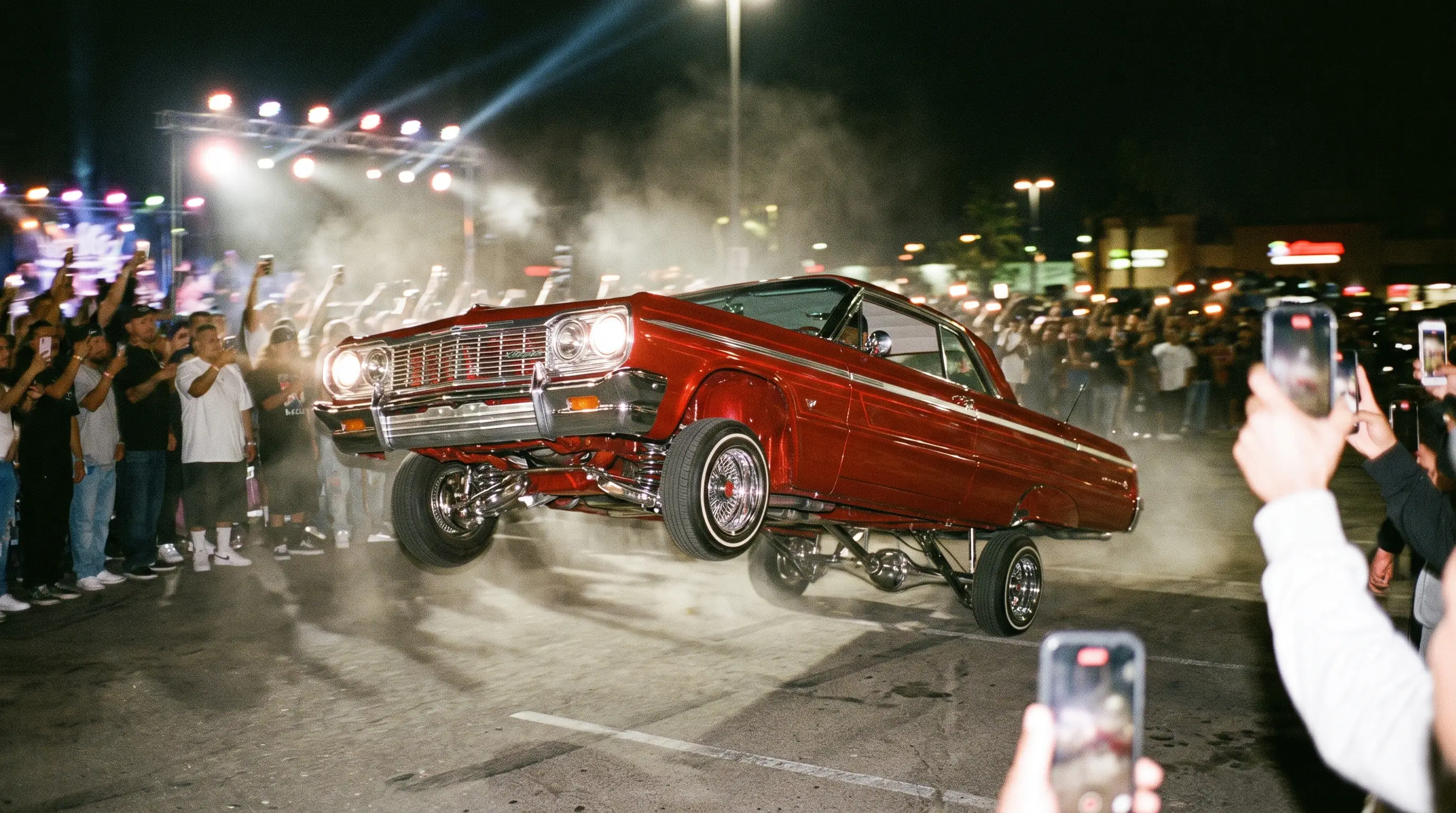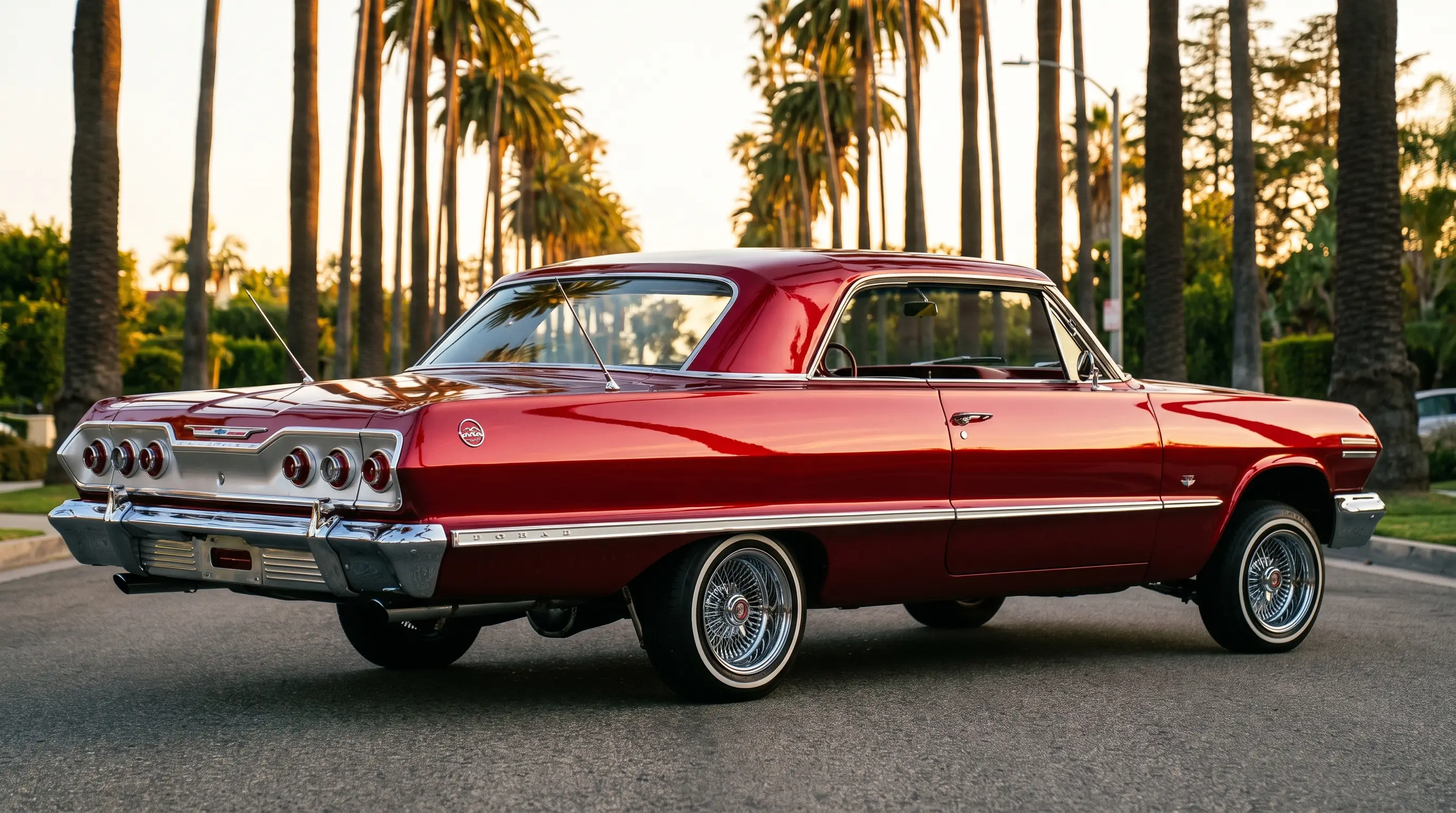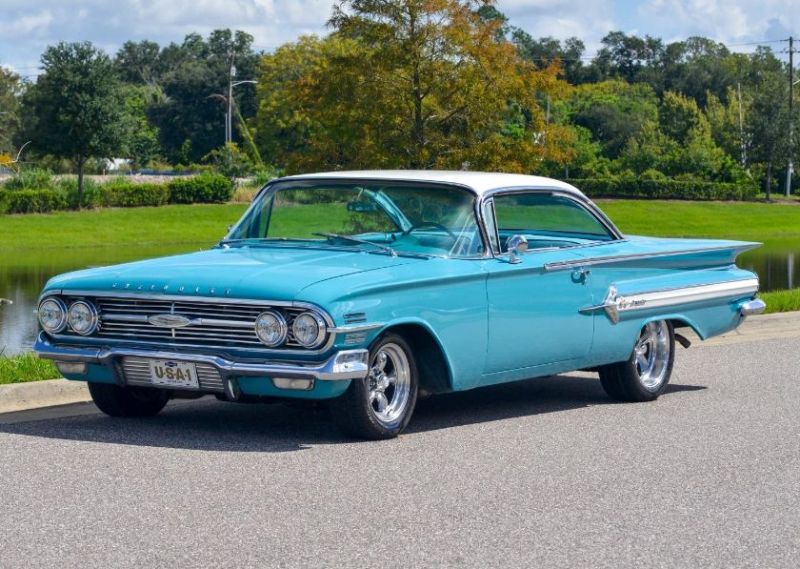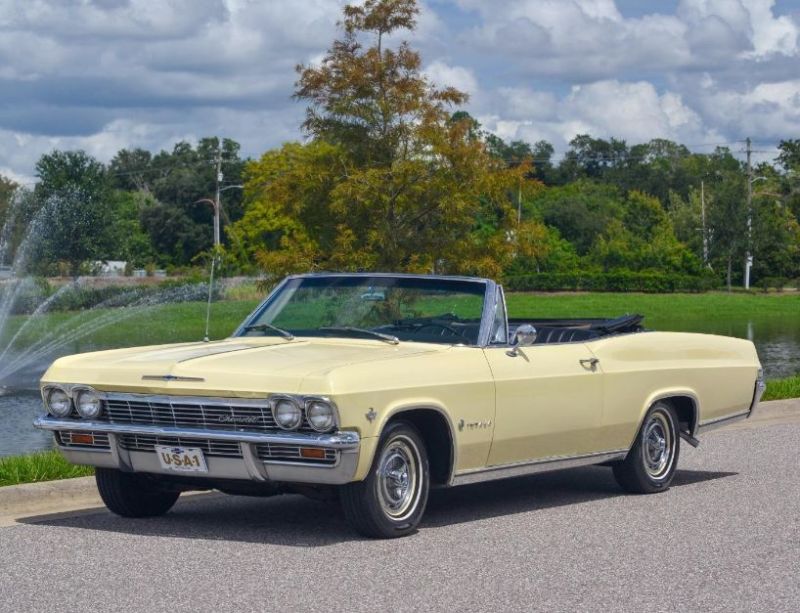
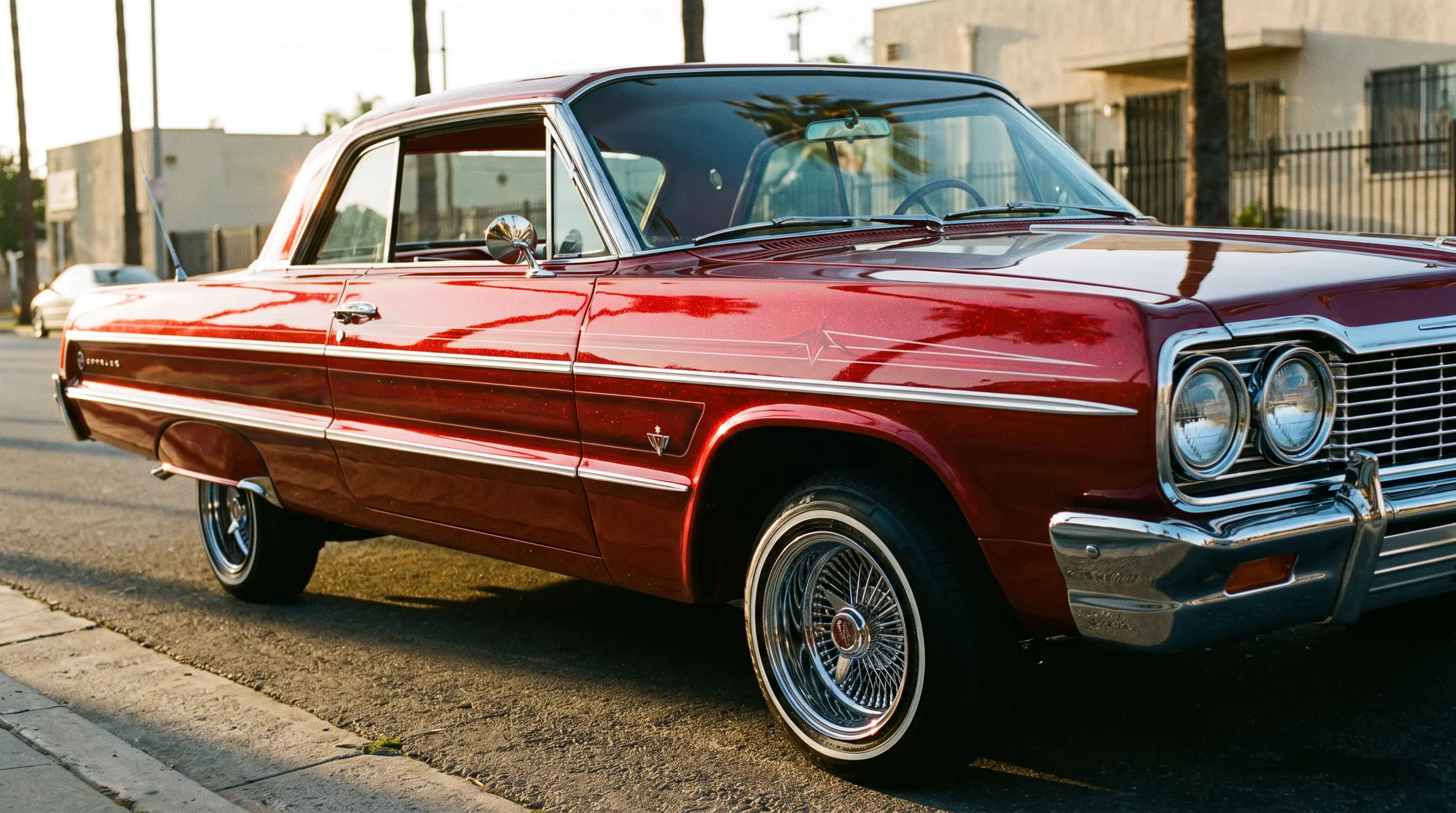
Ask anyone who grew up around East Los Angeles in the 1960s and 70s to name a car that belonged to the neighborhood, and the Chevrolet Impala comes up before anything else. Not because it was rare or expensive when new, but because of what got done to it afterward, by hand, in driveways and small garages, by a community that turned a mass produced American sedan into a rolling piece of its own identity. The relationship between the Impala and Chicano culture is one of the more specific and well documented chapters in American car history, and it deserves to be told with the same care as any other.
A car that was already everywhere
Part of why the Impala became the vehicle of choice was simple availability. Chevrolet built the Impala in enormous numbers through the 1960s, making it one of the most common cars on American roads and therefore one of the most affordable used cars available a few years later, exactly when young builders in Mexican American neighborhoods across Southern California were looking for something to customize. A full size body with generous flat panels gave those builders room to work, whether the plan was a candy paint job, a mural, or a hydraulic suspension setup meant to make the car dance at a stoplight.
The customizing itself drew on skills that had deep roots in the community, body work, upholstery, pinstriping, and airbrush art passed between family members and neighborhood shops rather than learned in a classroom. A builder did not need a large budget to start, just patience and access to people willing to teach what they knew, and that apprenticeship style knowledge transfer became part of how the culture reproduced itself generation after generation.
More than a hobby
Car clubs organized around these builds became genuine community institutions. They set standards for what counted as a properly finished car, organized cruises and picnics, and in many cases functioned as mutual aid networks, helping members find parts, labor, or even just moral support during a long build. Being part of a club and rolling a well built Impala into a Sunday cruise was a way of publicly claiming space and identity in cities where Mexican American communities were often overlooked or actively marginalized by wider civic life. The car became a visible, undeniable statement of skill and pride that did not require anyone's permission or approval to exist.
Murals painted across hoods and trunk lids frequently drew on Mexican and Chicano iconography directly, Aztec imagery, portraits honoring family, religious scenes, and later political images tied to the Chicano civil rights movement of the late 1960s and 70s. A painted Impala could be a rolling piece of cultural expression in a period when murals on public walls carried the same message across many of the same neighborhoods.
Carrying it forward
By the 1980s and 90s, what had grown up as a Southern California phenomenon had spread into a national and international movement, with clubs and builders in Texas, the Midwest, and eventually overseas adopting the Impala as their preferred canvas too. The car's association with Chicano culture never diluted through that spread, if anything it became more explicitly honored, with newer builders acknowledging the East Los Angeles roots of the tradition even as they built their own regional variations on it.
Readers wanting our complete history of how this whole movement formed around the Impala will find this cultural thread woven through every part of the story, not as a side note but as the actual foundation the rest of it was built on.
"The Impala didn't become a Chicano icon by accident. A community with real skill and not much money looked at a common car and saw a canvas nobody could tell them not to use."
- Patrick Walsh
Music, film, and a wider audience
Through the 1990s, the Impala's tie to Chicano culture reached a much wider audience through music and film. Songs referencing lowriders and the boulevards they cruised carried the imagery into households far from Los Angeles, and films focused on the culture put the customized Impala in front of a national audience for the first time in a serious way. That exposure was not always handled with nuance, and plenty of coverage from outside the community leaned on shallow stereotypes rather than engaging with the craftsmanship and history involved. But it also introduced the tradition to younger builders in cities that had no prior lowrider scene of their own, and many of those new scenes grew directly out of people wanting to understand and honor what they had seen rather than simply copy the aesthetic.
Within the community itself, the response to that wider attention was mixed but mostly proud. Builders who had spent decades perfecting paint and hydraulic work largely welcomed recognition of the skill involved, while pushing back hard against any framing that reduced the culture to a stereotype rather than crediting it as a serious art form with a specific, documentable history rooted in East Los Angeles.
Passing the tradition down
What keeps the story alive today is the same thing that started it, family. Plenty of builders working on Impalas now learned the craft from a parent or grandparent who built cars decades earlier, and a lot of clubs still carry the same name and the same standards they held in the 1970s. Teenagers who grow up washing chrome on a family Impala before a Sunday show often end up as the ones restoring that same car twenty years later, keeping the paint and the hydraulics true to how it was originally built rather than modernizing it out of respect for what it represents. That continuity, more than any single show trophy or magazine feature, is the real measure of how deep this culture runs.
A legacy still visible today
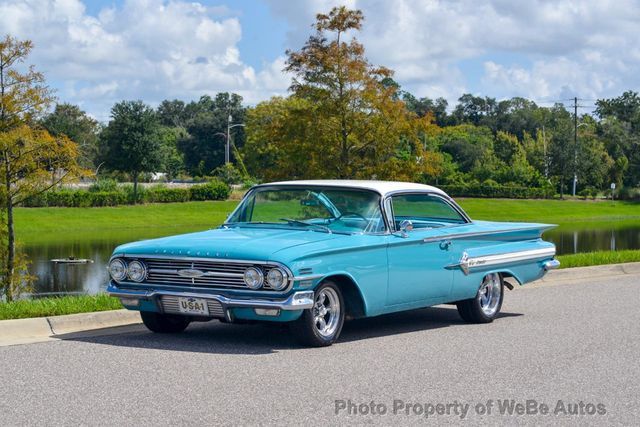
Museums and cultural institutions have taken the tradition seriously in recent decades, exhibiting customized Impalas as genuine folk art rather than treating them as a curiosity, a recognition that took longer to arrive than it should have. The cars themselves have only grown more valuable as collector pieces, both for their engineering and for the specific cultural history stitched into every panel of paint and every spoke of chrome. For anyone drawn to that history and looking to own a piece of it, there is a steady stream of browse classic Impala listings available today, cars that carry this legacy forward the same way the original builders intended. What started as young people in East Los Angeles turning an ordinary sedan into something unmistakably their own has become one of the most enduring and widely respected car cultures in the country, and the Impala remains its clearest symbol.