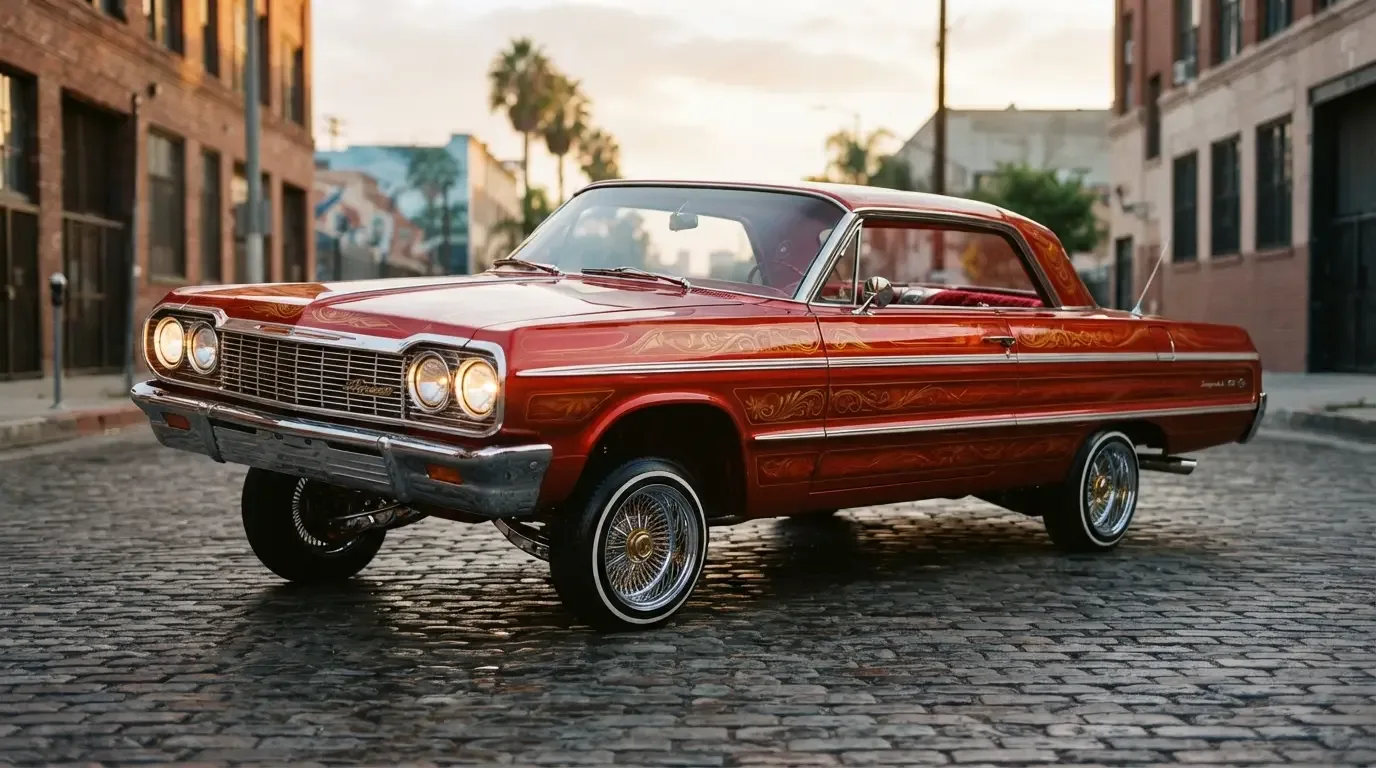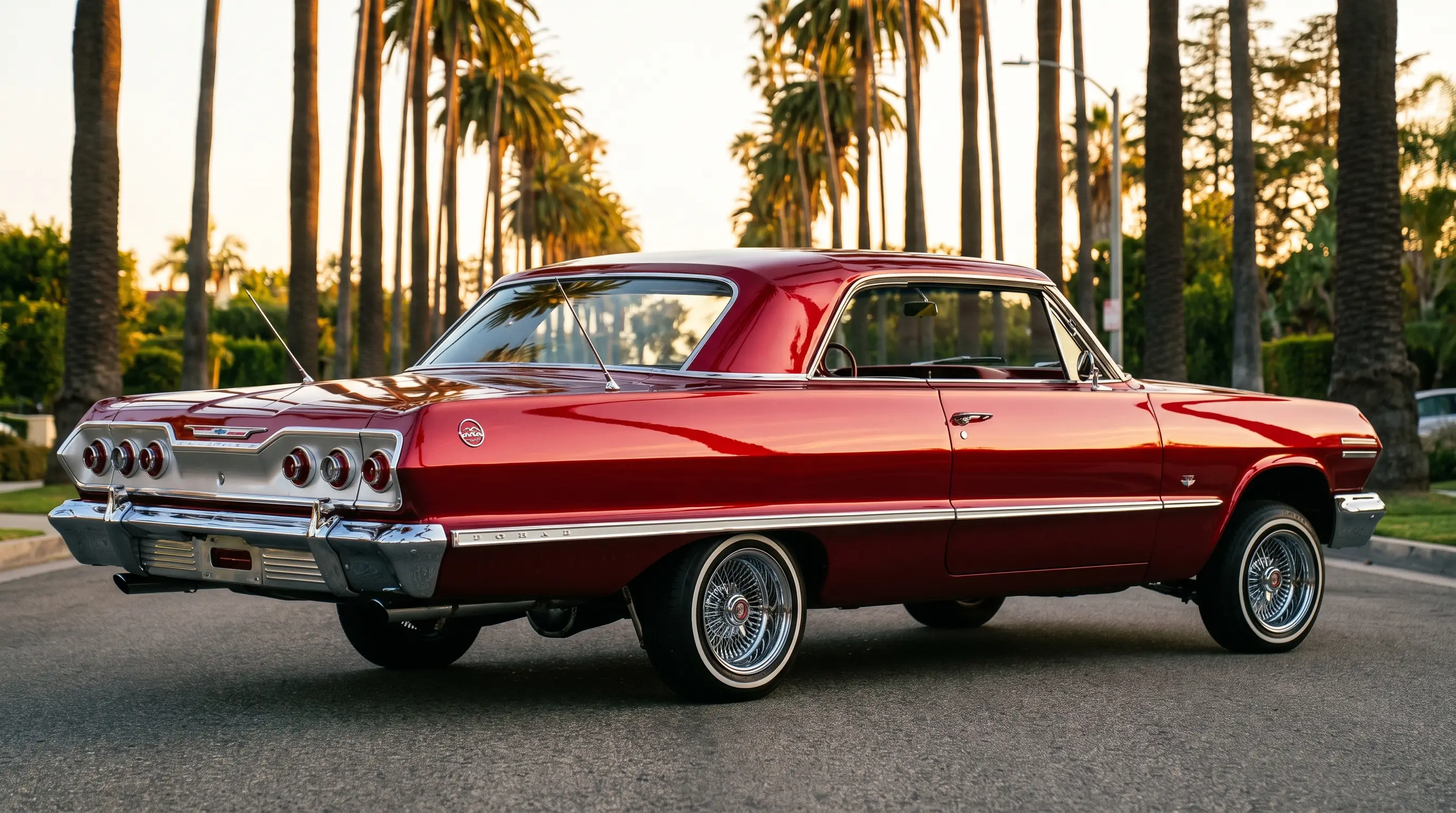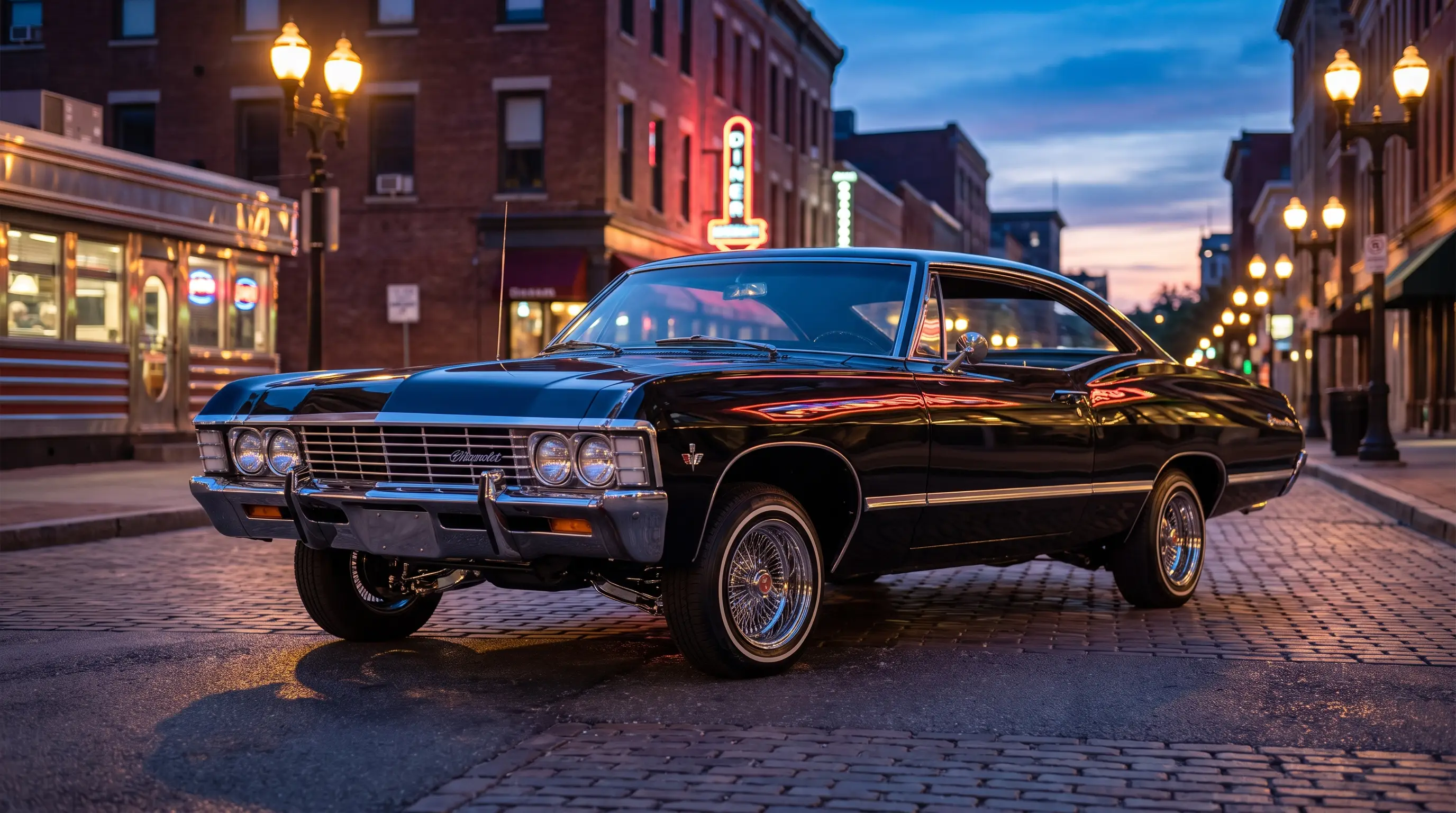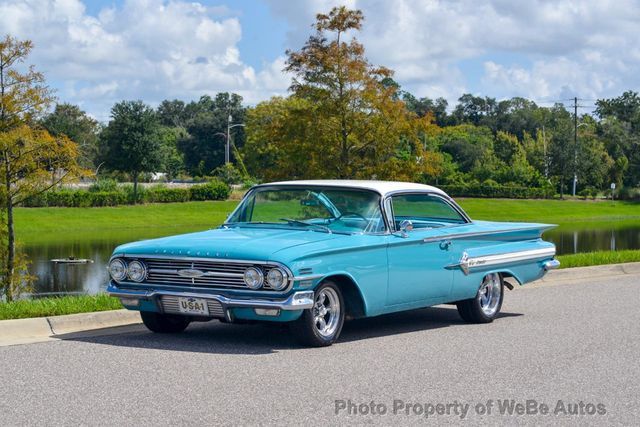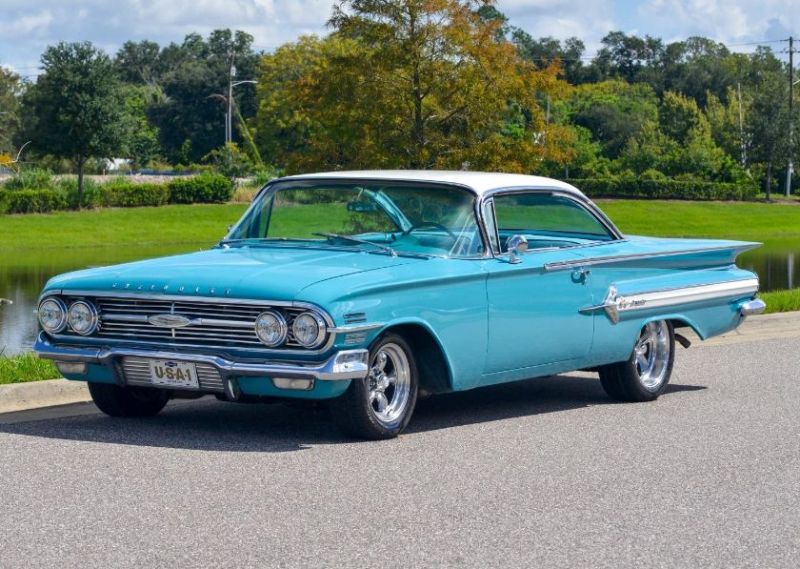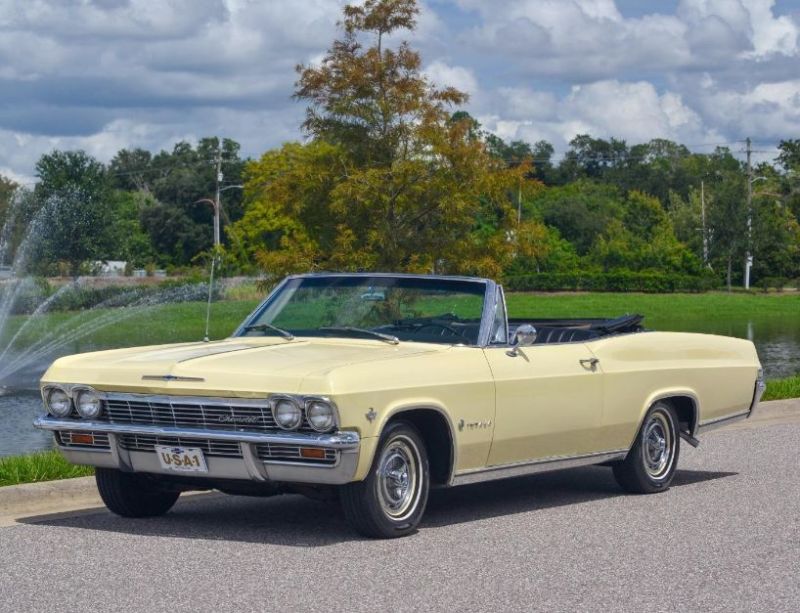
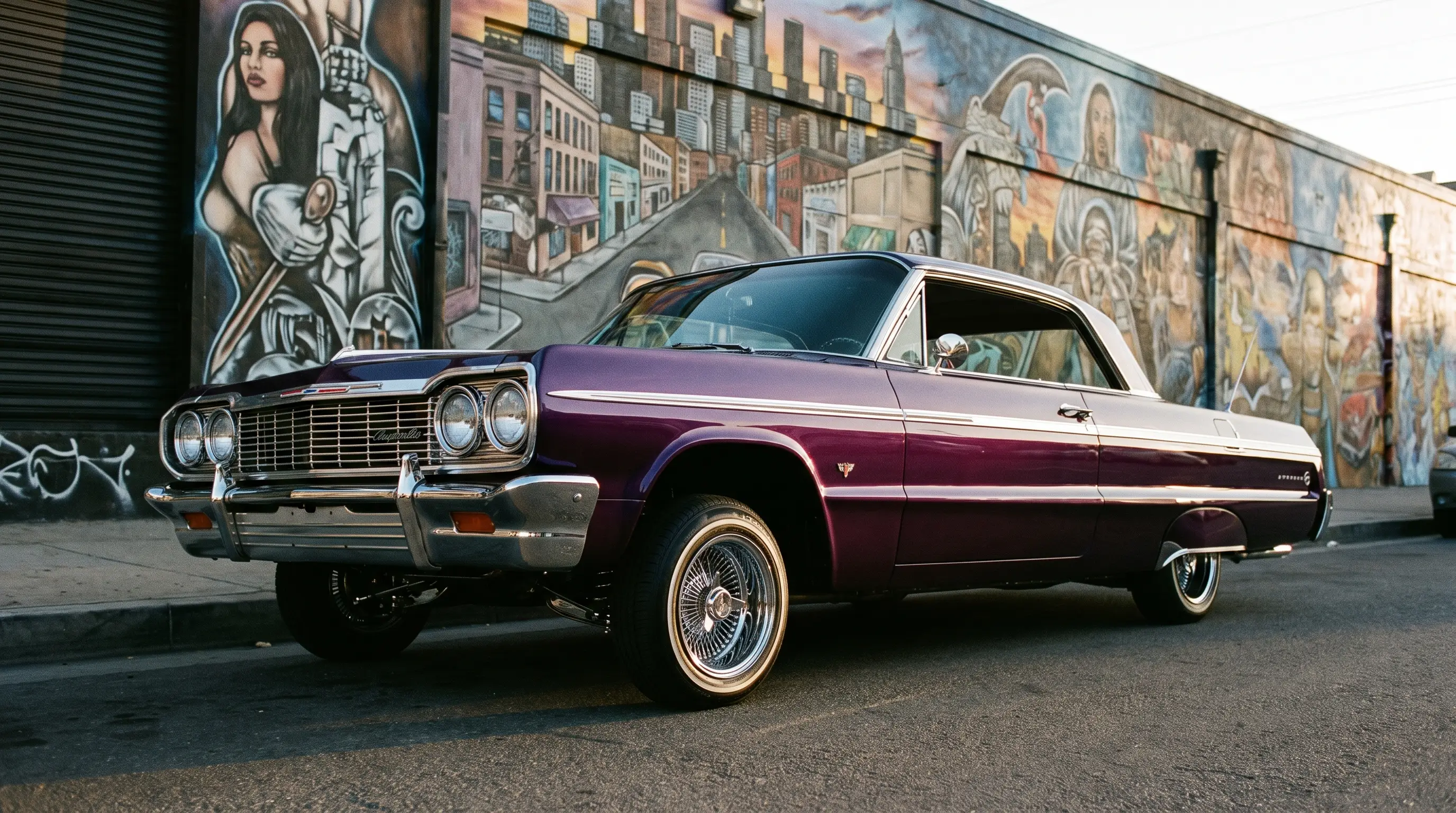
No car had to become the face of an entire movement. Chevrolet built the Impala as a mainstream family sedan, sold in enormous volume through the 1960s and 70s, with nothing in its original marketing pointing toward hydraulics, candy paint, or hop contests. Yet ask anyone outside the classic car world to picture a lowrider, and the image that comes to mind is almost always this exact car. How the Impala became the lowrider icon is a story about timing, geometry, and a community that made a specific, repeated choice for six decades running.
Right place, right shape
The Impala's rise as lowrider culture's default canvas started with simple math. Chevrolet built it in huge numbers, which meant used examples were cheap and plentiful exactly when young builders in Southern California were looking for something to customize in the 1960s. Beyond availability, the body itself cooperated with what builders wanted to do. Full size, with long flat panels ideal for murals and metalflake, and a proven chassis that could handle the stress of hydraulic suspension cycling and eventually competitive hopping. Smaller or more sculpted cars simply did not offer the same working canvas.
Once a handful of well regarded builders in East Los Angeles established Impala based cars as the standard to beat at local shows through the late 1960s, the choice became somewhat self perpetuating. New builders wanted to be measured against the best work in the scene, and the best work was overwhelmingly built on Impalas.
Culture did the rest
What turned availability and good proportions into genuine icon status was the culture that grew up around the car. Car clubs organized around Impala builds became real community institutions, hosting cruises, picnics, and charity events that gave the model a social meaning well beyond its mechanics. Murals painted across hoods and trunks carried cultural and sometimes political meaning tied to the Chicano civil rights movement of the era, turning individual cars into rolling statements of identity and pride.
That combination, widely available car plus a community investing real skill and meaning into it, is a pattern that shows up again and again in automotive history, but rarely with results this durable. Fifty and sixty years later, the association between the Impala and lowrider identity has not faded even slightly.
Spreading far beyond Los Angeles
By the 1980s and 90s, what had been a distinctly Southern California phenomenon had spread nationally and then internationally, with builders in Texas, the Midwest, and eventually Japan and parts of Europe adopting the Impala as their preferred platform too. Films and music brought the imagery to audiences who had never seen an actual cruise night, and the Impala's silhouette became instantly recognizable shorthand for the whole movement even to people with no other connection to the culture.
That global spread never diminished the model's specific East Los Angeles roots. If anything, builders in newer scenes went out of their way to acknowledge and honor that origin, treating the Impala's status as something inherited rather than reinvented.
"Chevrolet built a sedan for families. A community with real skill and not much money looked at it and saw a canvas nobody could tell them not to use. That's the whole story of how it became an icon."
- Hector Morales
Other cars tried, none replaced it
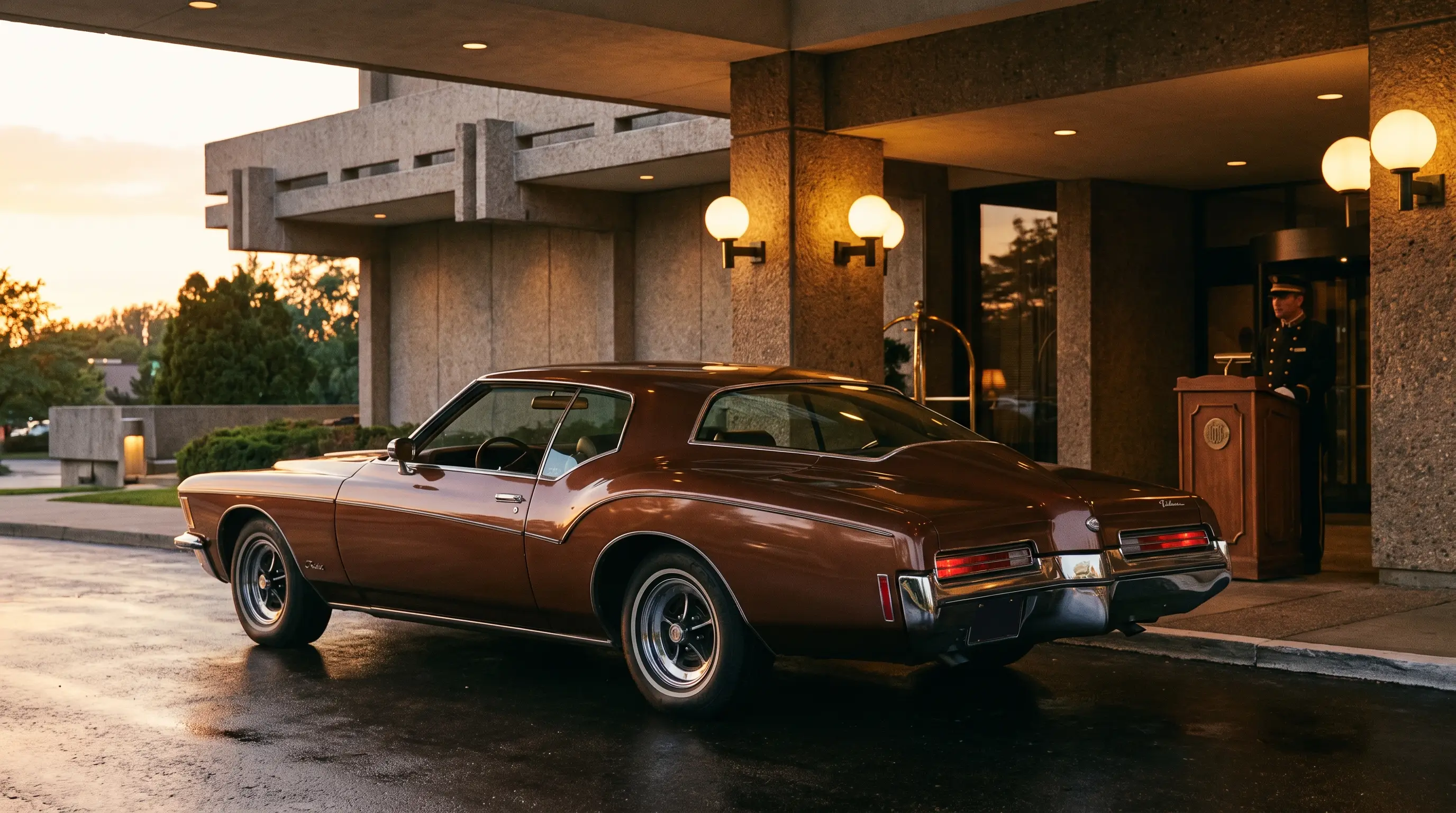
It is not that builders never experimented with other platforms. Buick Rivieras, Monte Carlos, Cadillacs, and Lincoln Continentals all showed up at shows over the decades, some with genuinely excellent work behind them. What none of those alternatives managed was displacing the Impala from the center of the culture's identity, and the reason comes back to that original combination of availability, body proportion, and accumulated history. A Riviera might photograph beautifully with a fresh candy paint job, but it did not carry six decades of documented builds, club history, and community meaning behind it the way an Impala did by the time any of these alternatives got serious consideration. Builders respected other platforms without ever treating them as a real substitute for what the Impala represented.
Even within the Impala's own model run, certain years carried more weight than others, with the early to mid 1960s bodies drawing the most sustained attention from builders across generations. But the icon status attached to the nameplate broadly, not just to a single favored year, which is part of why later Impalas from the 1970s also found their way into serious builds even as the 1960s bodies remained the most prized starting point.
What the market says now
Auction and private sale results over the last two decades have confirmed what the culture always believed informally, that a documented, well built lowrider Impala carries real collector value on top of whatever its mechanical condition might suggest on its own. Cars with clear club history, known builders, or notable show records draw serious attention from buyers who understand exactly what that provenance means within the culture, sometimes commanding prices that surprise people unfamiliar with the scene. That market recognition has done more than any single museum exhibit to cement the Impala's icon status as something the broader collector world now takes seriously rather than dismisses as a regional curiosity.
An icon that keeps earning it
What keeps the Impala's icon status alive today is not nostalgia alone. Builders continue producing new, high quality work on the platform, hop contests still measure the model's capability against modern standards, and younger generations keep inheriting both the cars and the skills from family members who built decades earlier. Readers wanting the whole picture of how this culture organized itself around one specific car will find that story reinforced from every angle, decade after decade of choices all pointing the same direction. For anyone drawn to be part of that lineage rather than just admire it from outside, there remains a steady market of people ready to find a classic Impala worth building, restoring, or simply appreciating for what it has come to represent. No marketing department could have engineered that outcome. It took decades of builders making the same choice for reasons that had nothing to do with what Chevrolet intended and everything to do with what a community decided the car should mean.