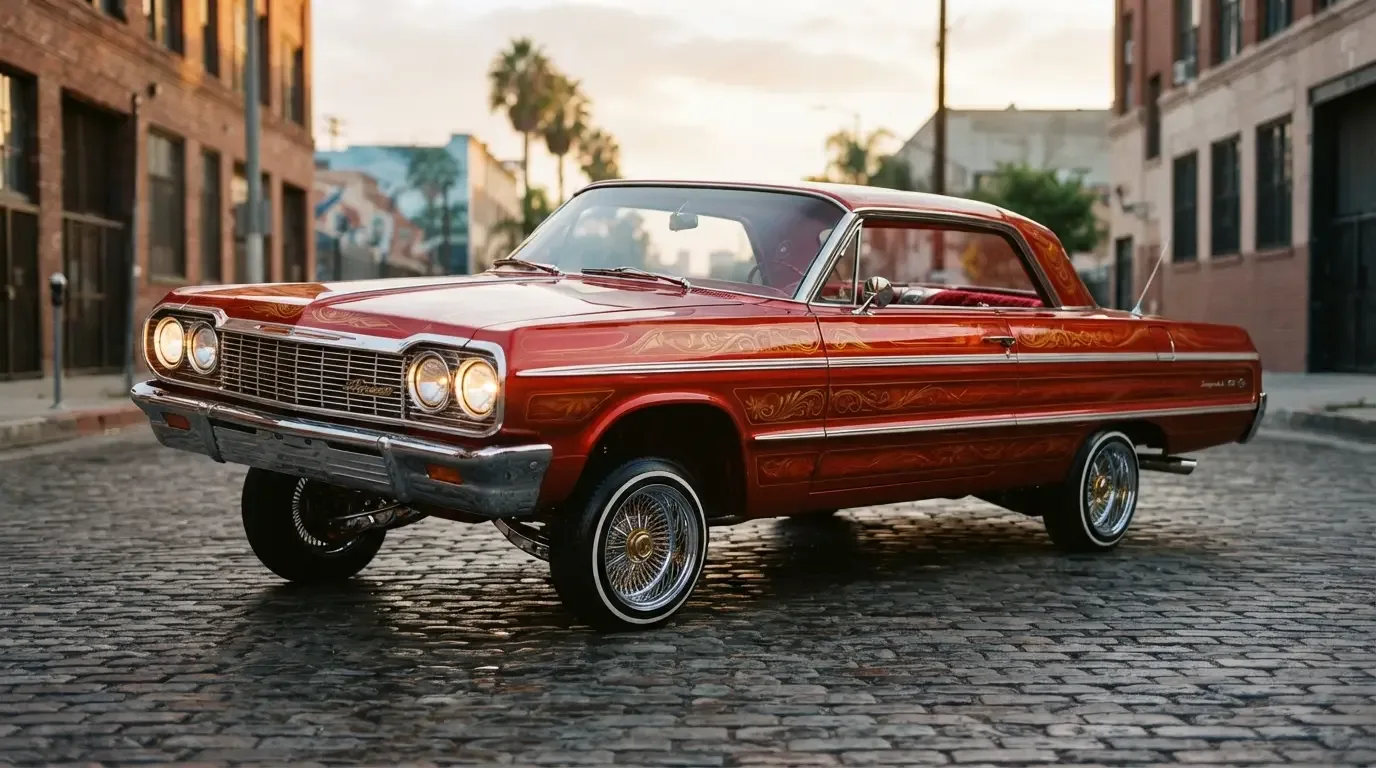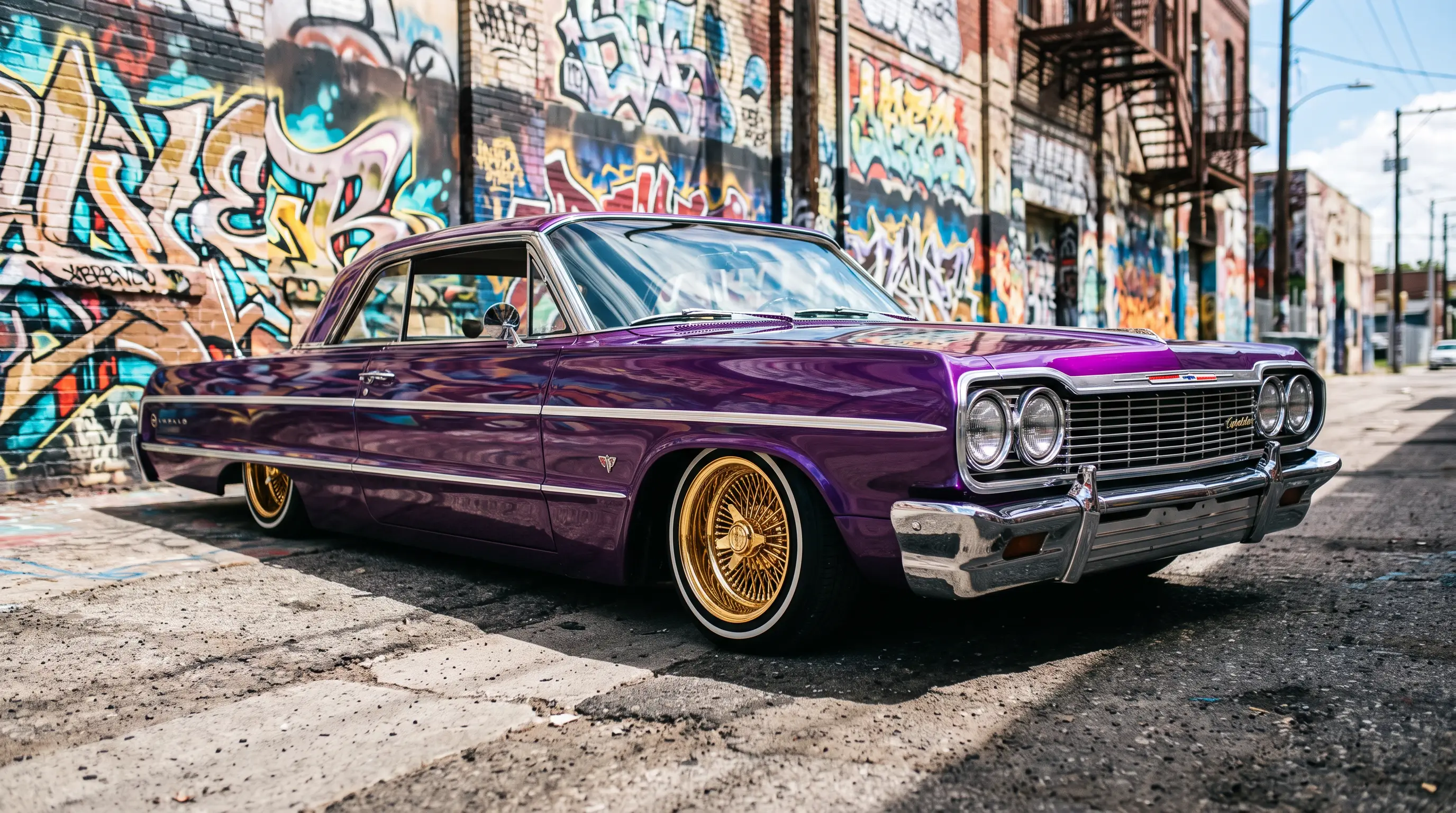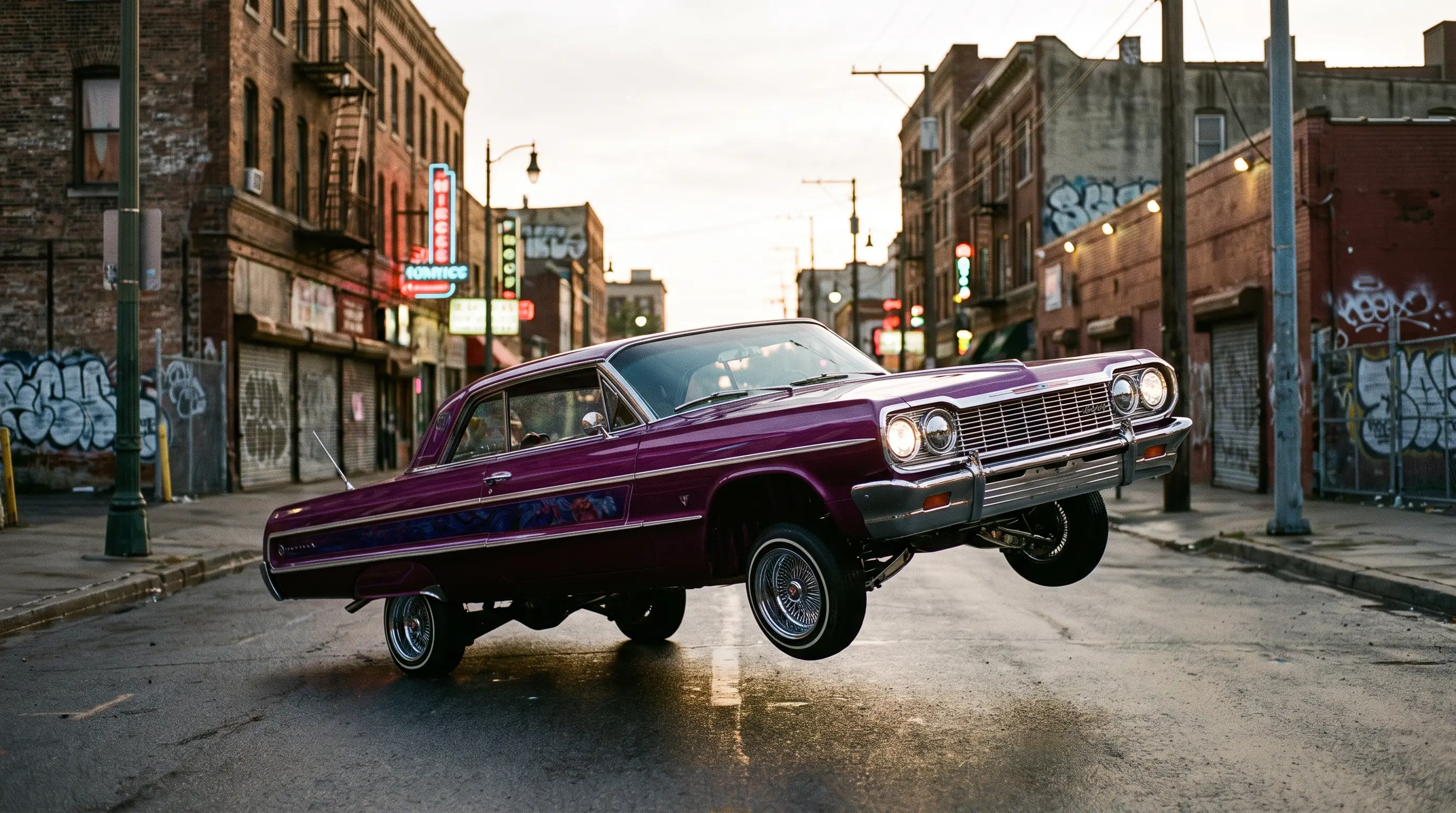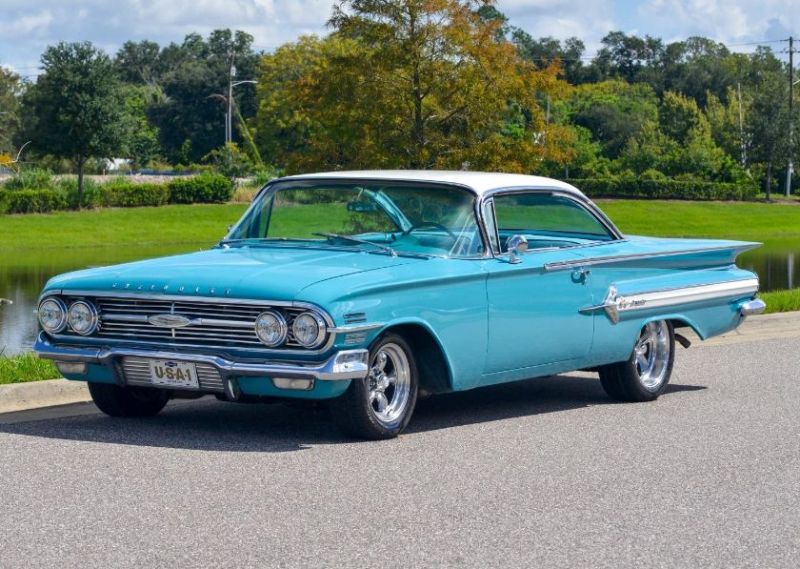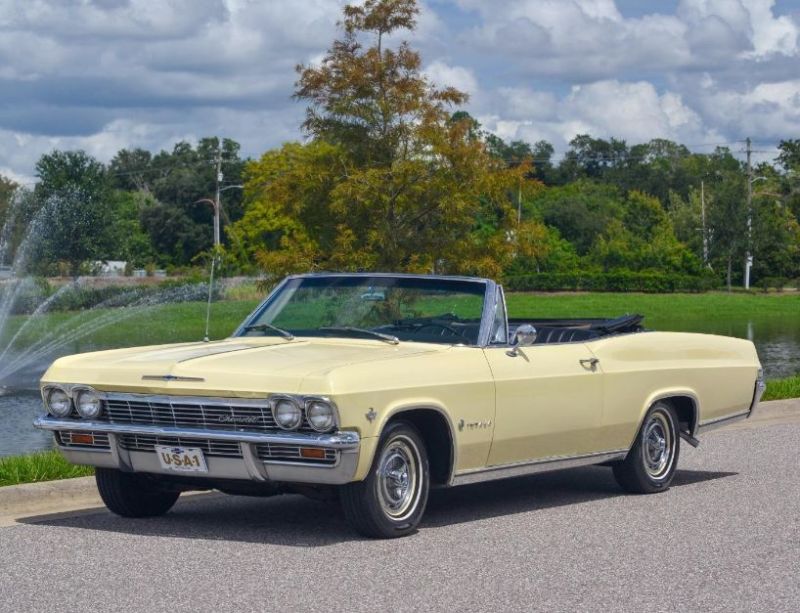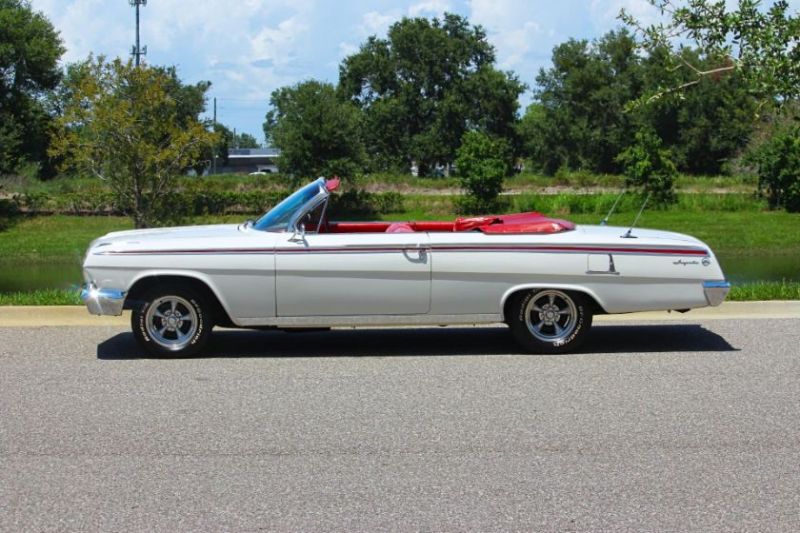
On a Saturday night in the early 1970s, a young man named Ruben would wash his Impala twice before leaving the driveway, once with soap and once more with a chamois, because Whittier Boulevard did not forgive a dull paint job. That single stretch of East Los Angeles asphalt became the place where a whittier boulevard impala turned from a family sedan into something closer to a rolling introduction, and the cars that rolled slowest down that strip were often the ones everybody remembered by name the following Monday.
A boulevard built for slow driving
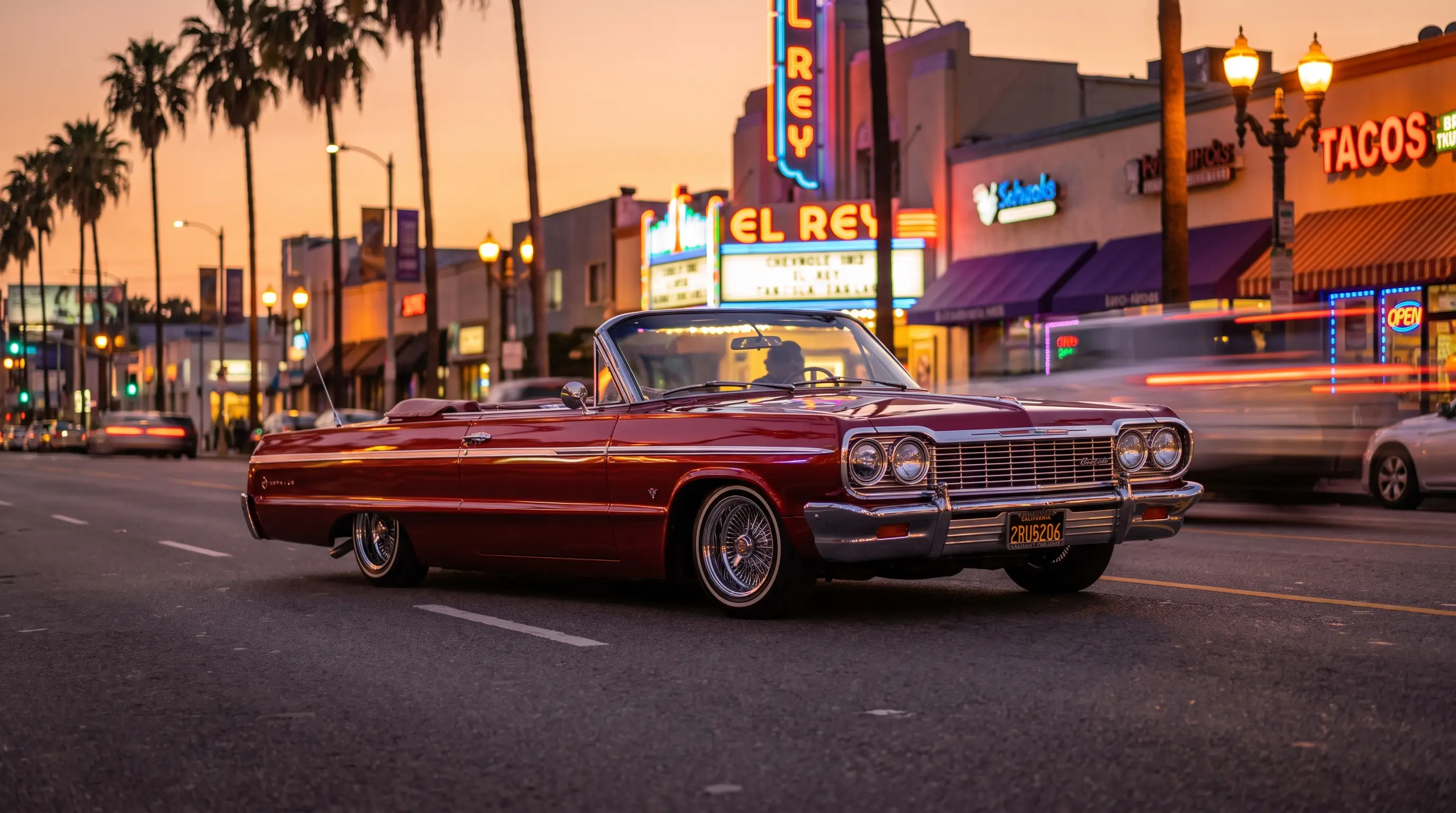
Whittier Boulevard runs through East Los Angeles as an ordinary commercial corridor by daylight, lined with storefronts and taquerias, nothing about its architecture suggesting it would become a cultural landmark. But by the late 1960s and into the 1970s, weekend nights turned it into something else entirely, a stage where lowered Impalas crept along at walking pace, windows down, chrome wheels catching every streetlight along the route. The slowness was the point. A fast car draws attention for a second and then it is gone. A car crawling the boulevard at five miles an hour gets seen, studied, and remembered.
Why the Impala fit that stage so well
Not every car suits a slow crawl down a crowded street, but the Impala's long body and wide stance were built for exactly that kind of presence. Dropped low on its suspension, with wire wheels tucked under fender lips and paint holding a deep shine under sodium streetlights, the car read as confident rather than aggressive, which mattered on a boulevard where the whole point was style rather than speed. Owners understood that a Whittier Boulevard cruise was a kind of public exhibition, and the Impala gave them a canvas large enough to make every detail visible from the sidewalk.
The people who made the boulevard what it was
It would be easy to describe Whittier Boulevard purely in terms of chrome and paint, but the cars were never really the whole story. Families came out to watch. Kids leaned against fences to see who had a new set of wheels since the last weekend. Car clubs organized informal routes and unspoken rules about who got the inside lane closest to the crowd. For a community that did not always see itself reflected in mainstream car culture, the boulevard on a Saturday night was a place where ownership and pride were on full, unapologetic display, and the Impala carried that weight better than any other car on the street.
The wider history connecting these cruising nights to the broader lowrider movement is laid out in whittier boulevard impala history, which traces how a single street became shorthand for an entire culture.
"Nobody drove Whittier Boulevard to get somewhere. They drove it to be somewhere, and the Impala understood that better than the driver sometimes did."
- Nora Beckett
What survived after the crowds thinned
The boulevard eventually quieted, restrictions and changing neighborhoods pulling the scene toward other locations and organized events instead of a spontaneous weekly gathering. But the cars from that era did not disappear, and neither did the memory of what that street represented. Owners who kept their Impalas through those decades often speak about the boulevard the way other people speak about a hometown ballpark, a place tied so tightly to identity that the car itself becomes almost secondary to what it represented on those Saturday nights. That emotional thread is part of why these cars still command such devotion among collectors who never personally cruised the strip but understand exactly what it meant.
For more on how wire wheels became such a defining detail of that same cruising era, more from this era covers the specific style choices that made these cars instantly recognizable from a distance.
How the scene shaped the cars mechanically
Slow cruising put different demands on an Impala than a straight-line performance build ever would. Suspension work centered on ride height and smoothness at low speed rather than cornering grip, since a car that bounced or lurched at five miles an hour looked amateurish next to one that glided. Cooling systems mattered more than most people realize, since idling and creeping through traffic for hours put more heat stress on an engine than an occasional highway run ever would. Builders who understood the boulevard adjusted their priorities accordingly, favoring reliability at low RPM and a smooth hydraulic setup over anything resembling drag strip preparation.
That distinction is part of why cruising-era Impalas developed their own mechanical culture separate from muscle car circles of the same period. The engineering goals were different because the entire purpose of the car on a Saturday night was different. Speed was never the measure of success on Whittier Boulevard. Presence was.
A short, quiet postscript
Ruben sold his Impala decades ago. He still talks about the sound of the boulevard on a summer night, low conversation, a radio somewhere down the block, tires rolling slow over warm asphalt. He does not remember the exact horsepower or the paint code. He remembers how it felt to be seen.
That is the real inheritance of Whittier Boulevard, passed down less through specifications and more through memory. Anyone hoping to connect with that same lineage today can find a classic Impala and start building a story of their own, on whatever street still allows for a slow, deliberate drive.
Why the memory outlasted the pavement
Streets change. Storefronts close and reopen as something else, restrictions get written and occasionally loosened again, and the exact stretch of pavement that mattered most in 1971 is not necessarily the same one people gather on now. What has not changed is the underlying instinct that made Whittier Boulevard matter in the first place, the idea that a car can be a public statement of identity and effort rather than a private commuting tool. That instinct shows up today at organized cruise nights and car shows far from East Los Angeles, wherever an Impala rolls slow enough for people to actually look at it.
Ruben's Impala is gone, sold to someone he lost track of years ago, but the boulevard he describes still exists in the stories passed between owners who never met each other, connected only by the same make and the same instinct to slow down and let people see the work. That is a strange kind of inheritance for a car to carry, but it is the one Whittier Boulevard left behind, and it is still being paid forward one Saturday night at a time.
Sources and notes
- Whittier Boulevard - Wikipedia
- Lowriders roll down Whittier Boulevard as California lifts ban on cruising - ABC7 Los Angeles
- Revival of the Whittier Blvd Cruise Scene - Lowrider Syndicate
- The life of a lowrider: destigmatizing Latin car culture - The State Hornet
- The Cruising Culture of East Los Angeles - Barrio Boychik