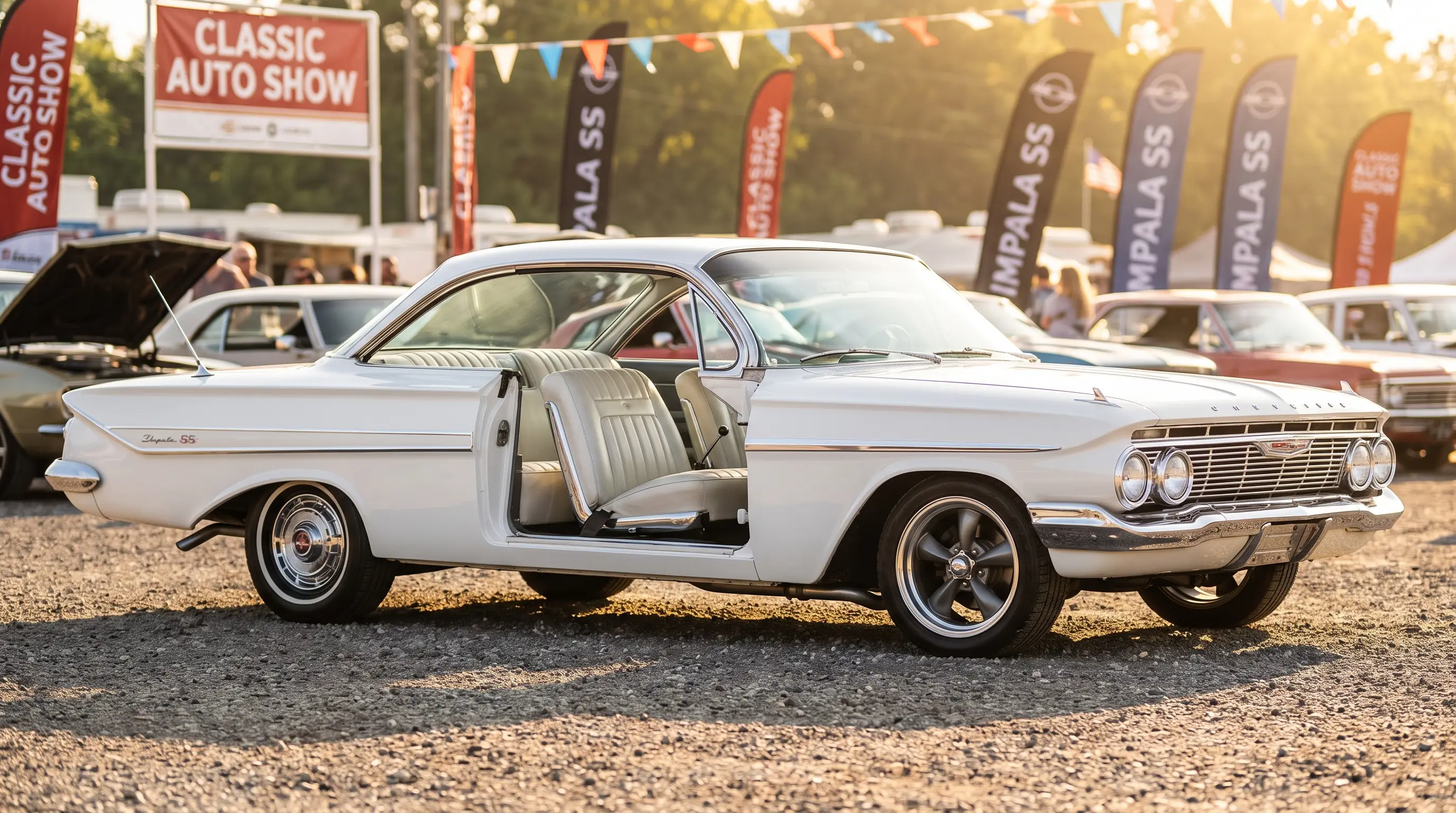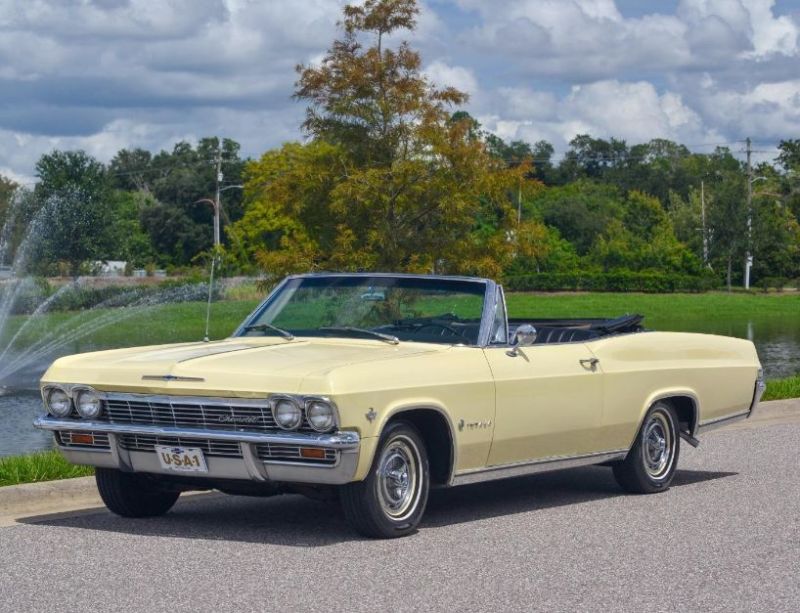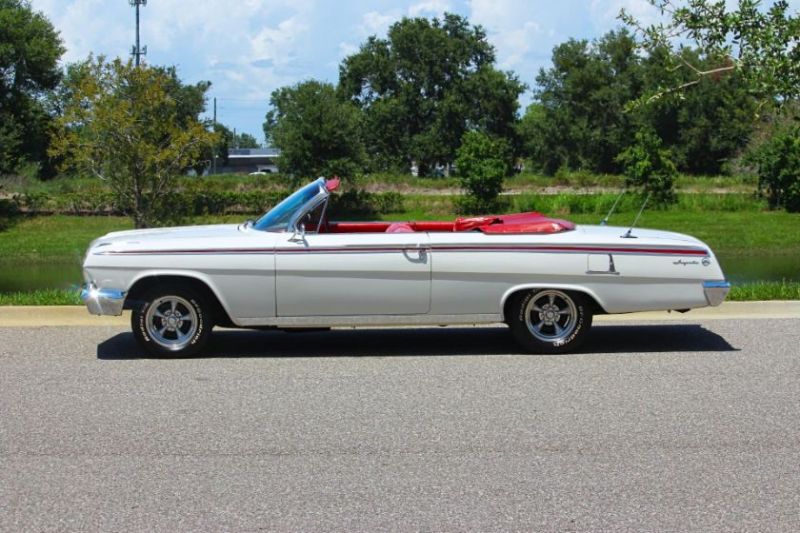
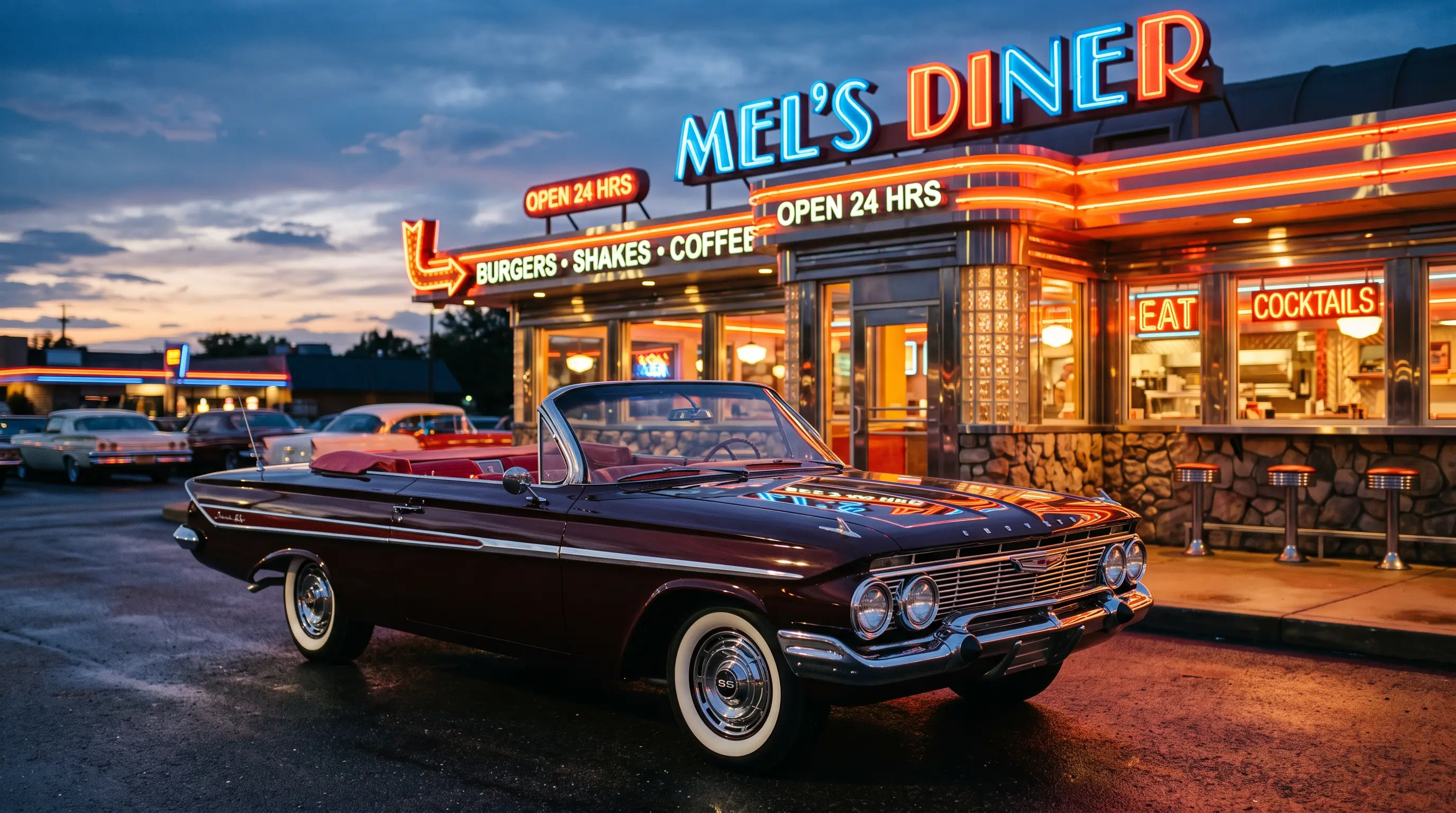
The 1961 Impala SS is one of those cars whose paper record undersells how significant it actually was. Introduced mid-year in February 1961 as Regular Production Option 240, the Super Sport package for the 1961 Impala was a modest bundle of comfort and appearance items on the surface, but it established a naming convention and a set of expectations that would define one of Chevrolet's most recognizable badges for decades afterward.
What the option actually included
Chevrolet's factory documentation for the 1961 SS package lists specific hardware rather than vague marketing language. The bundle included a distinct instrument cluster with a tachometer position, a passenger assist bar mounted on the dashboard, specific wheel covers, narrow-band whitewall tires, and a heavy-duty suspension setup intended to firm up the ride and handling relative to a standard Impala. The package did not require the range-topping 409, and V8 power in some form was the practical expectation, which still surprises modern buyers who assume every SS was ordered strictly with big-block muscle from the start.
The package was available exclusively on the Impala Sport Coupe and convertible body styles, meaning a 1961 SS never existed as a four-door sedan or wagon, a detail that matters when authenticating a car claiming SS heritage from this specific model year. Any four-door claiming original 1961 SS status should be treated with immediate skepticism, since Chevrolet's own production parameters simply did not allow for it.
Take rates and why they were modest
Documented take rates for the 1961 SS package were low relative to total Impala production for the year, reflecting both its mid-year introduction and buyers' unfamiliarity with a new option that did not yet carry the reputation it would earn over subsequent model years. Surviving production estimates put the number of 1961 SS cars built at only around 453 units against total Impala output of roughly 491,000 for the year, and just 142 of those SS cars left the factory with the 409 V8, which is a major reason genuine 1961 SS cars, particularly convertibles, are treated as significant finds by knowledgeable collectors today.
This scarcity is compounded by the fact that many 1961 SS cars were not treated as special by their original owners. The package was subtle enough in its execution that plenty of buyers ordered it simply for the firmer suspension and nicer wheel covers without any particular sense that they were purchasing a future collectible. Many of these cars were used and eventually discarded exactly like any other Impala from the period, which reduced the surviving population further.
Dealer stock also played a role in how many 1961 SS cars actually reached customers. Because the option arrived mid-year, dealers who had already ordered their spring inventory before the package became available simply had fewer opportunities to sell it until later in the model year. Regional variation in awareness of the new option meant some parts of the country saw meaningfully higher take rates than others, another factor that later complicates any attempt to establish a single, simple production number for the package nationwide.
| Feature | 1961 SS specification |
|---|---|
| Available body styles | Sport Coupe and convertible only |
| Required engine | Did not require the 409; paired with a range of V8s |
| Key equipment | Tachometer-position gauge cluster, assist bar, specific wheel covers |
| Suspension | Heavy-duty package included |
Authentication challenges specific to this model year
Because the 1961 SS package predates the more elaborate exterior badging Chevrolet would add in later years, authenticating a genuine 1961 SS relies heavily on interior details and factory paperwork rather than obvious exterior cues a casual observer could confirm at a glance. This is a meaningfully harder authentication job than later Super Sport model years present, and it is one reason careful research matters more here than almost anywhere else in the early Impala story. The RPO code on a body tag, cross-referenced against surviving factory records, remains the most reliable single piece of evidence, since exterior trim alone can be recreated relatively easily by a determined restorer working from parts sourced independently of any specific car's actual history.
This authentication challenge is precisely why 1961 SS cars with strong, verifiable paperwork command a real premium over cars presented as SS without documentation to back the claim. A convertible in particular, given how few were built with the option in period, deserves careful scrutiny before any collector treats a claimed 1961 SS designation as settled fact.
Setting the template for what came next
What the 1961 SS lacked in flash it made up for by establishing a badge identity that Chevrolet would build on every subsequent year through 1964 and beyond. The instrument cluster layout, the assist bar, and the general idea of a sportier, firmer-riding Impala variant all trace their lineage back to this specific model year's option sheet, even as later years added engine-specific associations and more prominent exterior badging that the 1961 car never carried.
It is worth noting how conservative this first version of the package looks next to what followed. Chevrolet was clearly testing the market rather than committing fully to a performance identity, and the restraint shows in every piece of included equipment. There is no dedicated exterior SS badge on these earliest cars in the way later years would carry it prominently on the grille and deck lid, and that absence is itself a useful dating clue for anyone trying to distinguish a genuine 1961 example from a later car with SS trim added afterward.
For the full arc of how this modest 1961 option grew into the performance-associated badge collectors recognize today, our complete history traces the Super Sport across every major model year of its early development.
"The 1961 car is easy to overlook because it doesn't look dramatic next to a 409-powered 1963 SS. But without this option sheet, none of the later cars exist under that name. It is the foundation, not a footnote."
- Sarah Whitfield
What to look for as a buyer
A buyer considering a 1961 SS today should prioritize body tag verification, confirmation of the correct body style, and, ideally, surviving factory or dealer paperwork over cosmetic presentation alone. Given how few genuine examples exist and how straightforward exterior trim is to replicate, documentation is the single factor most likely to separate an authentic 1961 SS from a well-executed but unverifiable tribute car. Buyers ready to compare current listings against this checklist can find a classic Impala and apply the same scrutiny to any car presented as an original Super Sport from this founding model year.
Patience is the other requirement. Genuine, well-documented 1961 SS cars do not come up for sale often, and a buyer determined to own one specifically, rather than settling for a later and more common model year, should expect a longer search than they might for a 1963 or 1964 equivalent. That scarcity is, for the right collector, exactly the appeal.
Sources and notes
- Impala Engine Options: 1961 - Chevy Hardcore
- Chevrolet Impala - Wikipedia
- 1958-90 Impala and Passenger Car Production Figures - Classic Industries
- 1961 Chevrolet Impala Series Specifications - Conceptcarz
- Start Saving Your Pennies for a 1961-64 Chevrolet Impala - Hagerty Media
- 1961 Chevrolet Full Size Cars Fact Sheet - Over Drive Magazine