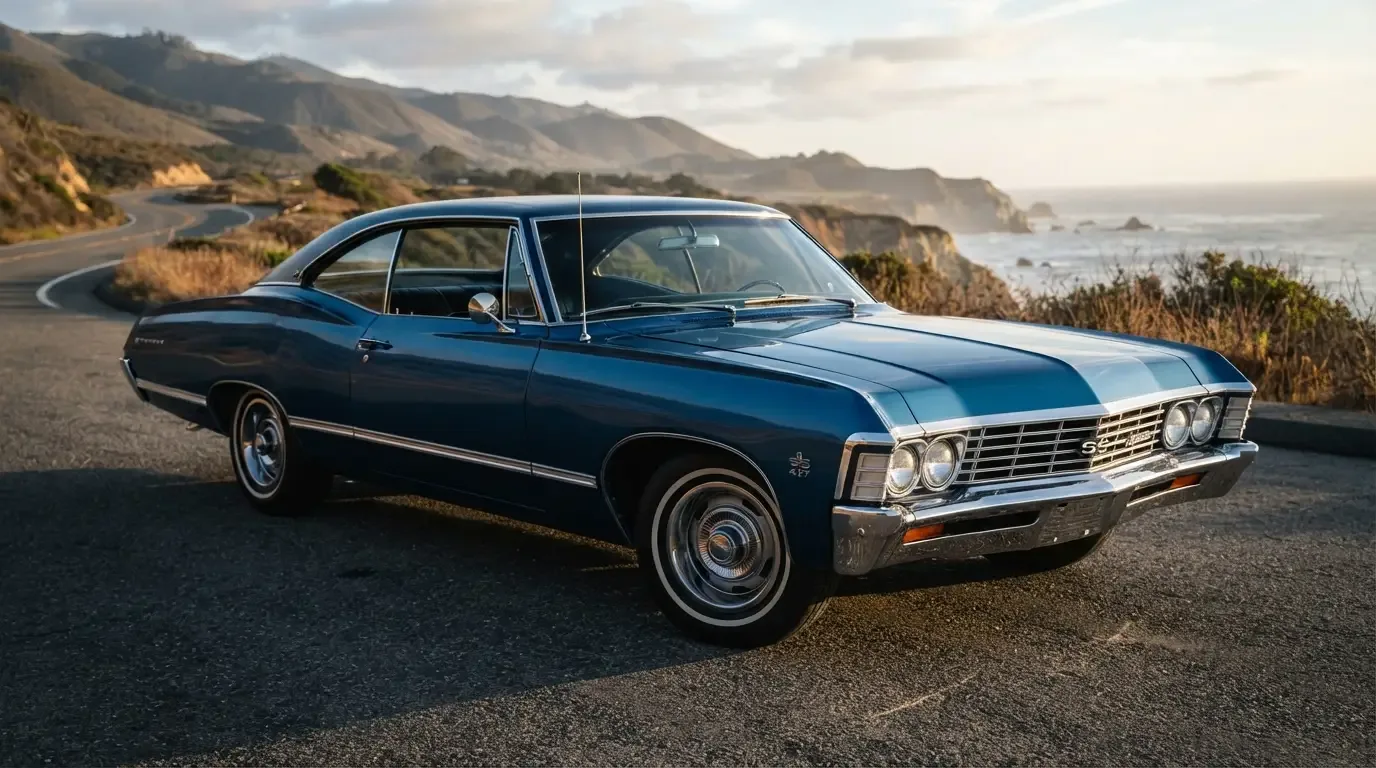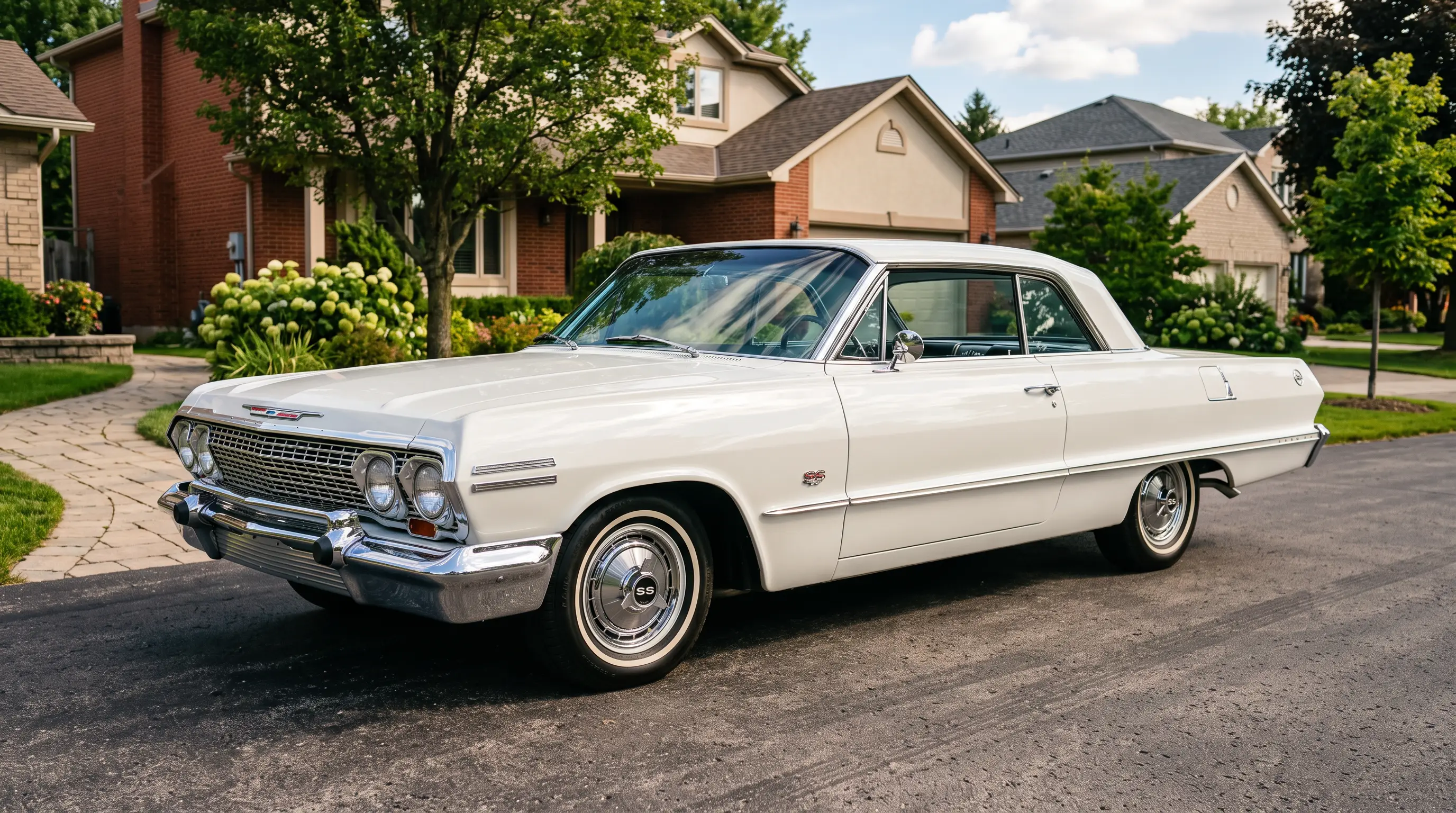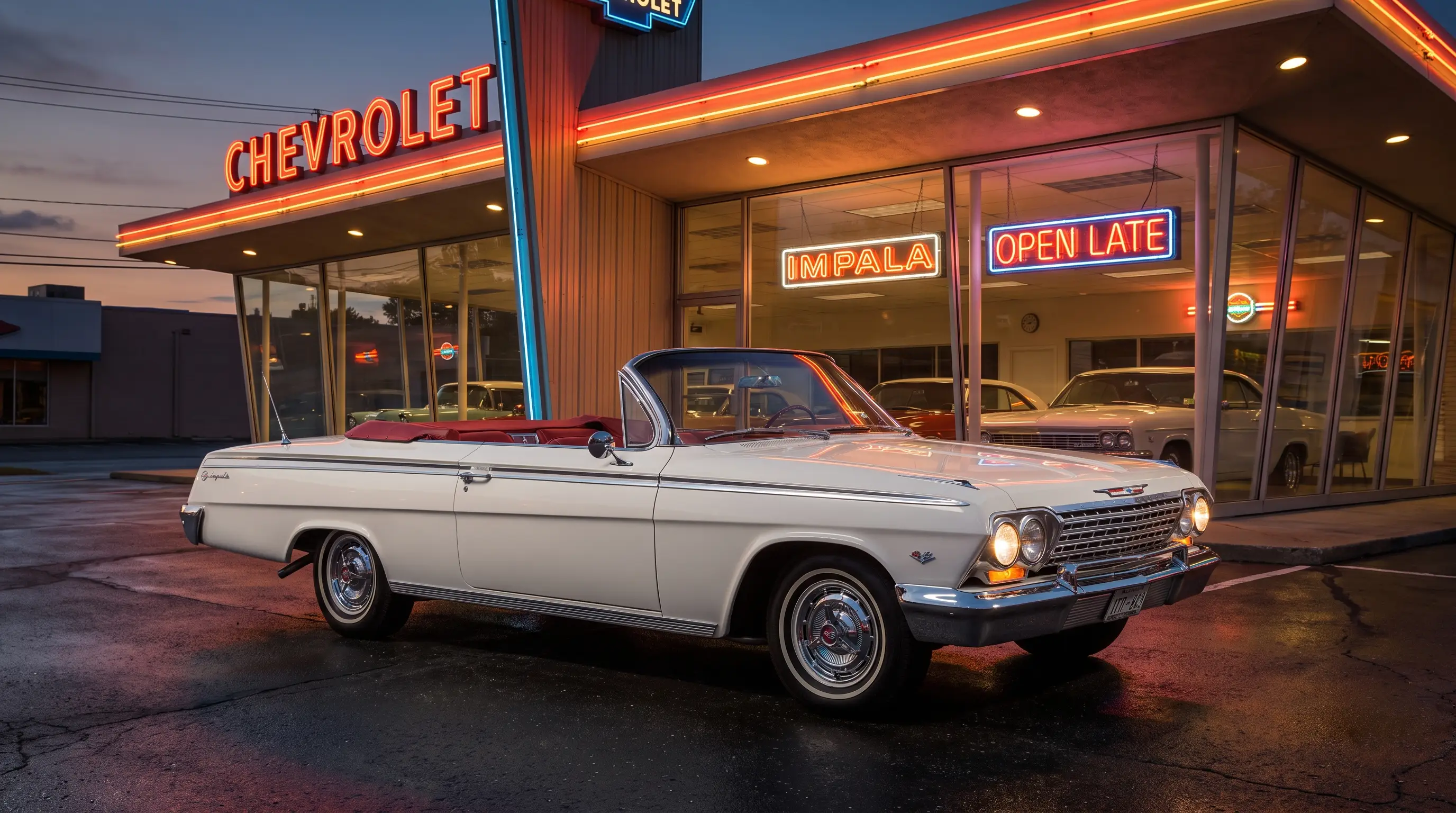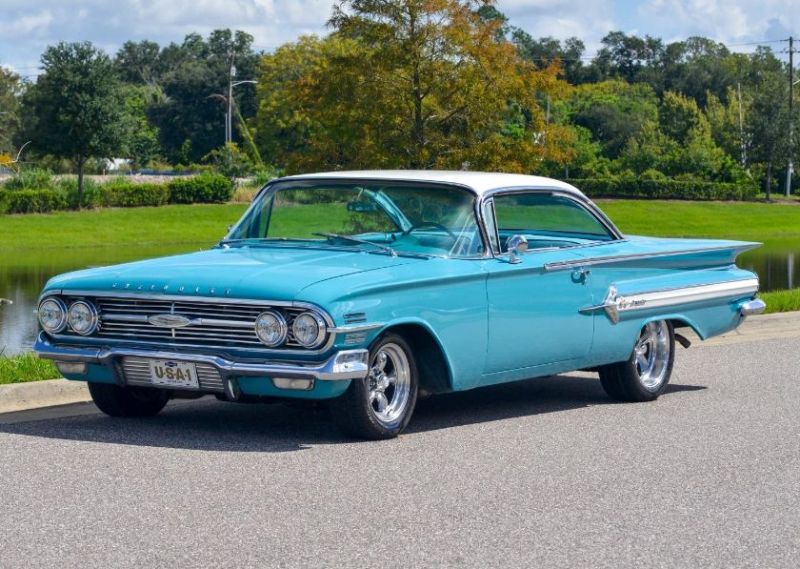
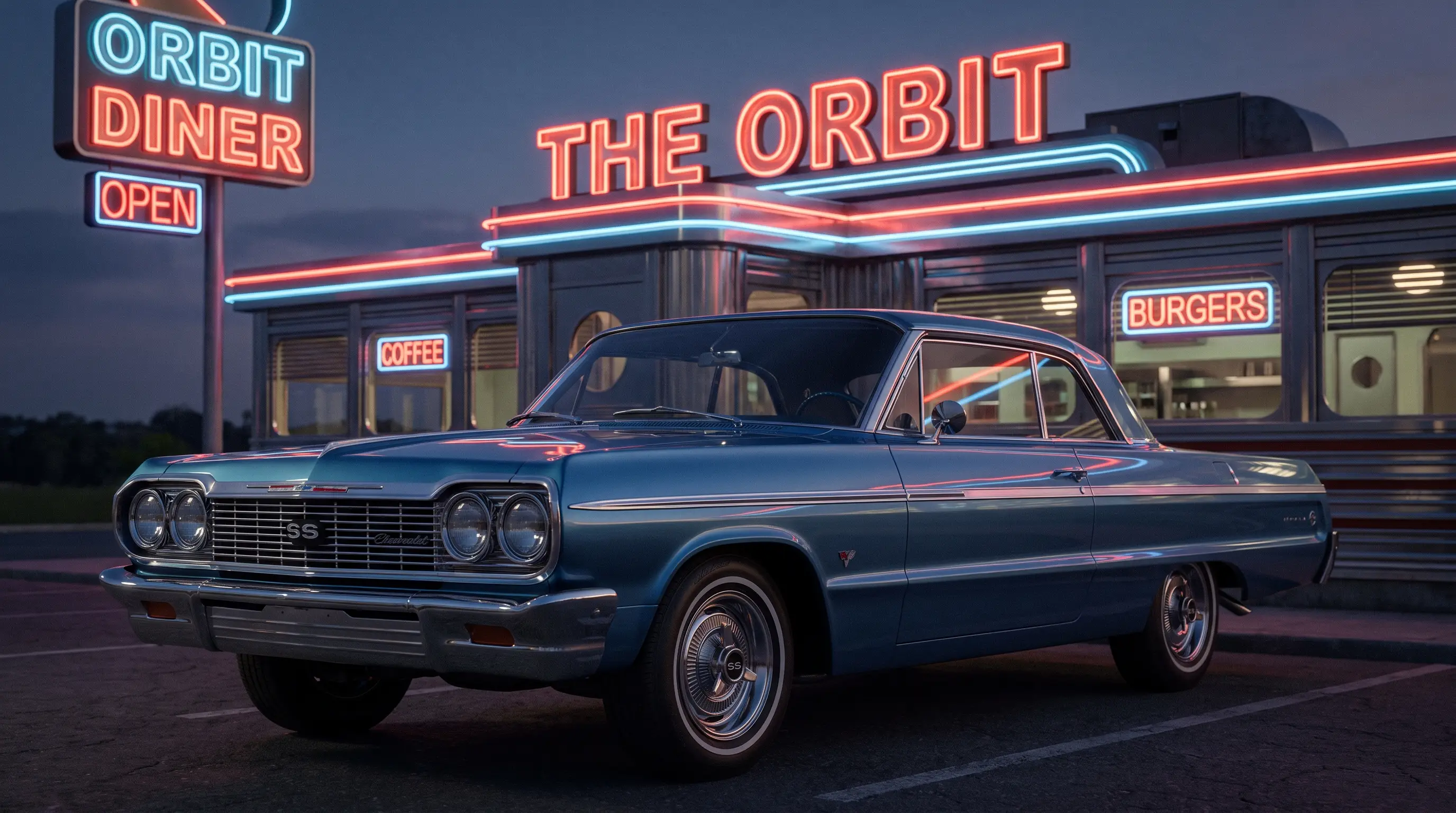
The 1964 Impala SS sits at an interesting point in the Super Sport's history, a car built during the model's most confident and best-selling stretch, before the 1965 restyle changed the entire Impala lineup underneath it. Understanding 1964 impala ss features means understanding a car that had fully arrived as its own identity, no longer an experimental option but a proven, high-volume seller with a defined formula.
A Super Sport with nothing left to prove
By 1964, Chevrolet had spent three model years refining the SS package, and it showed. The formula was settled: bucket seats, a center console housing the shifter, unique SS badging on the exterior, and a distinct engine and trim lineup that separated it clearly from a standard Impala. None of this was new by 1964, but it was executed with a confidence that the earlier cars, still finding their footing, did not quite have. The SS was no longer being sold as a novelty. It was being sold as the version of the Impala that serious buyers were supposed to want.
That confidence showed up in the sales figures. The 1964 model year produced 185,325 Impala SS units, among the strongest of the entire pre-1965 SS era, before the fully restyled 1965 body arrived and changed how the SS fit into the broader lineup.
Engine choices that defined the year
The 1964 SS could be ordered with a wide spread of engines, from a base six-cylinder for buyers who wanted the look without the performance, up through a series of V8s that culminated in the 409 cubic inch engine, offered in multiple states of tune. The top 409 option was rated at 425 horsepower in its most aggressive configuration, a genuinely serious number for a full-size passenger car in 1964, and one that put the SS solidly in the performance conversation of its day rather than on the margins of it.
What made the 1964 lineup notable was the breadth of it. A buyer could walk into a Chevrolet dealership and order an Impala SS that was mechanically closer to a base sedan than to a performance car, or one that was genuinely quick, and both cars would wear the same badge, the same bucket seats, and the same console. That range is part of why 1964 SS cars vary so widely in value today. The badge alone tells a buyer far less than the engine code does.
Interior and trim details that set the year apart
Inside, the 1964 SS carried a distinct instrument cluster and trim package that differed in small but real ways from both the 1963 car before it and the 1965 restyle after it. The bucket seats used a specific vinyl and pattern combination for the year, the console housed a shifter unique to whatever transmission was ordered, and the door panels carried SS-specific trim that a base Impala did not get. None of these details are dramatic on their own, but together they are exactly what makes a 1964 SS recognizable to someone who knows the lineup well, and exactly what restoration judges check line by line at concours events.
The exterior trim followed the same logic. SS-specific wheel covers, brightwork around the wheel openings, and badging placement all differed subtly from surrounding years, changes driven by the annual styling refresh Chevrolet gave every Impala, SS or otherwise. A 1964 SS is not simply a 1963 SS with a new grille. It has its own specific combination of details that either matches a genuine factory build or does not.
| Feature | 1964 Impala SS Detail |
|---|---|
| Base engine option | Six-cylinder, with multiple V8 options above it |
| Top performance engine | 409 cubic inch V8, up to 425 horsepower in top tune |
| Interior | Bucket seats, center console, SS-specific instrument cluster |
| Production | 185,325 units for the model year |
| Body generation | Final year of the 1961 to 1964 Impala body style |
Why 1964 SS cars hold a specific place among collectors
Collectors tend to treat the 1964 SS as a kind of high water mark for the earlier Impala body style, a car that got the SS formula right without the added weight and different proportions of the 1965 restyle. It is not necessarily the rarest year, and it is not necessarily the fastest depending on engine choice, but it represents the SS concept fully matured inside its original body. That combination of maturity and originality is a large part of why the year has its own dedicated following separate from the SS story as a whole.
Sarah Whitfield has spent years documenting exactly these kinds of year-to-year distinctions across the SS lineup, and puts the 1964 car in useful context against everything that came before and after it.
"The 1964 car is where you stop seeing the SS as an experiment and start seeing it as a fully resolved product. Every detail, the console, the badge placement, the engine spread, had been worked out by then. It is the most confident version of that first Impala body Chevrolet ever built."
- Sarah Whitfield
For readers who want the full progression of how the Super Sport got to this point, and where it went afterward, the full story traces the entire arc from the badge's earliest days through its later years. And for anyone specifically interested in acquiring one of these cars, browse classic Impala listings to see how 1964 examples compare in price and condition against the rest of the lineup.
What to check before buying a 1964 SS
Because the 1964 SS covers such a wide engine range, from mild six-cylinder cars to serious 409-powered examples, verifying exactly what is under the hood matters more than it does for years with a narrower option list. Cowl tag codes and engine casting numbers are the starting point, not the badge or the bucket seats, both of which could exist on nearly any Impala from that model year if a previous owner wanted the look without the documentation behind it. A 1964 SS bought on looks alone is a gamble. One bought after checking the codes is simply a well-informed purchase of a genuinely well-sorted car.
Paint and trim colors are worth cross-referencing too. Chevrolet offered a specific palette for 1964, and while a repaint in a period-incorrect color does not make a car fraudulent, it does affect how a knowledgeable buyer values it against a more original example. The same goes for interior upholstery patterns, which changed enough between 1963, 1964, and 1965 that a mismatched set is usually an easy tell that something has been swapped or replaced somewhere along the way.
Rust is the other quiet concern with any car this age, and the 1964 body has known trouble spots around the trunk floor, lower quarter panels, and floor pans that are worth inspecting in person rather than trusting from photographs alone. None of this should discourage a buyer who has done the homework. It simply means the homework has to happen before the check does, not after.