
The chaparral camaro is one of the best-known Chevrolets ever built for the SCCA Trans-Am series, and also one of the most misunderstood. It came from Jim Hall's shop in Midland, Texas, it wore the new 1970 body, and it carried factory hopes into a season Chevrolet expected to win. The record says otherwise. Over the 1970 season the lead car started 11 races and won one of them. That single win, and the reasons there were not more, tell you a good deal about how Chevrolet went racing at the start of the 1970s. For the wider picture, start with the Camaro racing history; this article stays with the three Texas cars and their single season.
Car Features
6 min read
Jim Hall's 1970 Chaparral Camaro
Jim Hall's Chaparral Camaro took over Chevrolet's 1970 Trans-Am effort late. The race log shows 11 starts, one win and third in the makes' points.
Why Chevrolet sent the 1970 program to Midland
The program existed because Chevrolet lost its best team. Roger Penske's Camaros, driven by Mark Donohue, had defined the Trans-Am Camaro in 1968, when Donohue's Penske car won 10 of the season's 13 rounds (one of them, Sebring, shared with Craig Fisher). After 1969 Penske left Chevrolet for American Motors and took Donohue with him. Chevrolet needed a new partner for 1970, and fast.
It had two serious candidates. One was Smokey Yunick, whose own Trans-Am Camaro had already made history with the inspectors. The other was Jim Hall's Chaparral operation. Chevrolet chose Chaparral, and it made the choice only about six months before the season opener. That timing matters more than any other single fact in this story. Six months is not long to turn a brand-new body into a winning race car, and the new body itself was late: the second-generation Camaro was not introduced to the public until 26 February 1970. Readers who want the background on why the 1970 car arrived months behind schedule will find it in the generation story.
Building the chaparral camaro: three cars and a spare
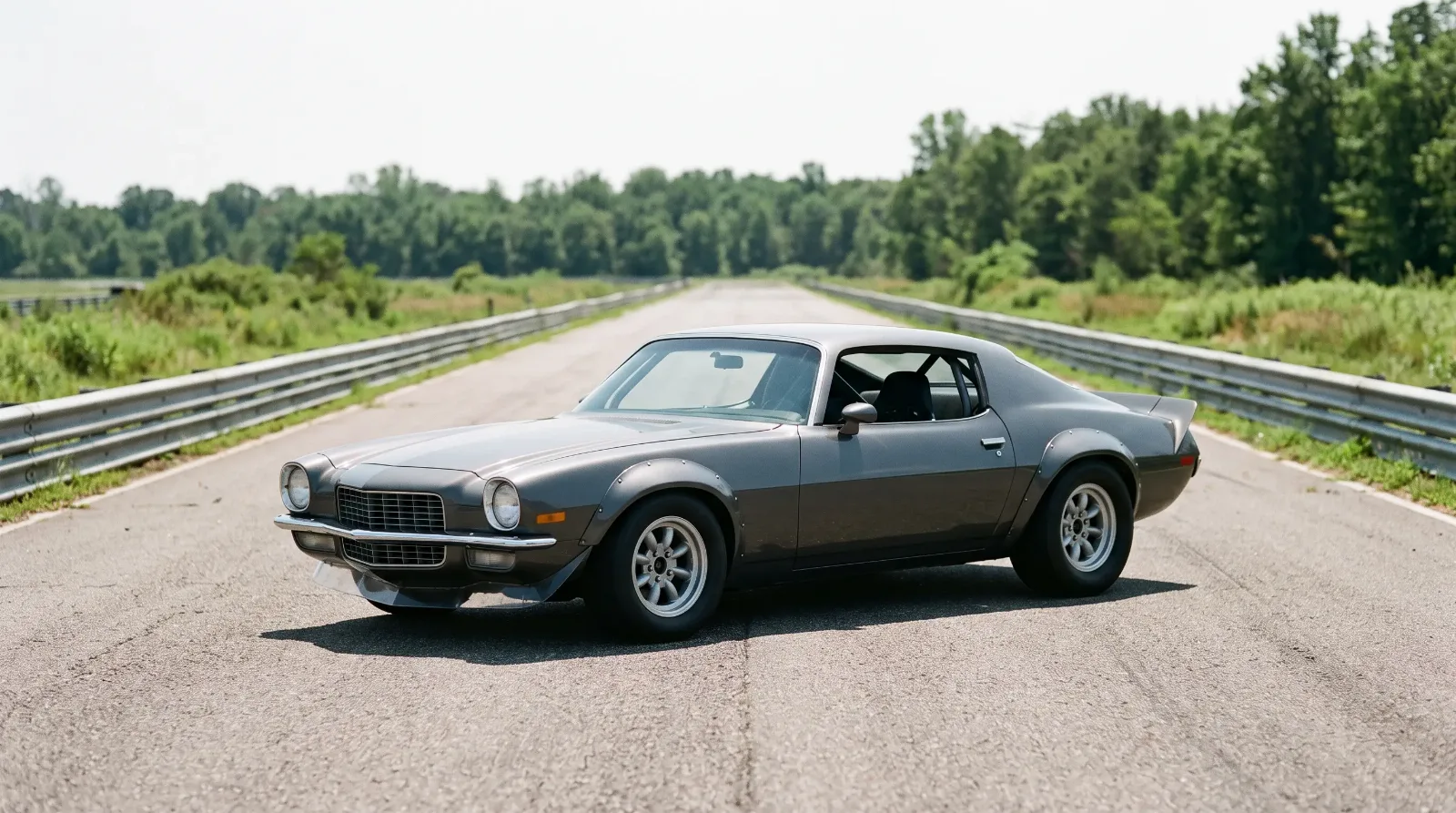
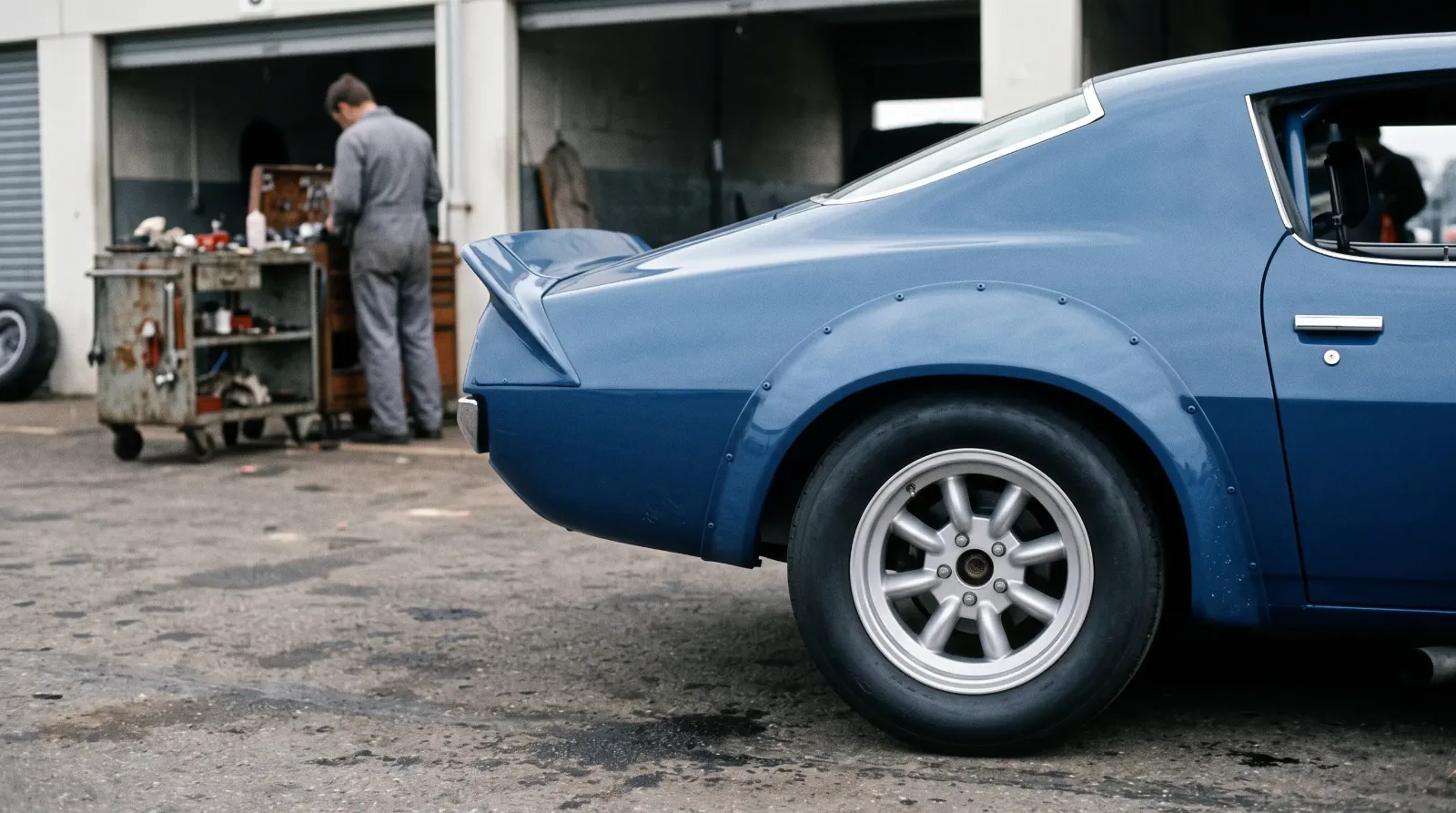
Chaparral built three 1970 Camaros. Car No. 1 was Hall's own. Car No. 2 went to Ed Leslie. The third was a spare. The surviving lead car carries the chassis identification Camaro-II-Chaparral-01, which is the name you will see in the race records and in later sale listings.
The visible changes were functional. The cars wore flared fenders made by Fisher Body, a Lexan front spoiler and a tall rear spoiler. Those flares and spoilers are the details that separate a real Chaparral car from the many tribute builds that copy its look. Under the hood the cars ran a 302 cubic-inch small-block with a cast-iron block and heads, 12.0:1 pistons and a large Holley four-barrel, prepared by Chaparral's own engine program. That program was never fully developed, and the new angle-plug cylinder heads were never homologated. No reliable output figure has been published, so collectors should treat any confident horsepower claim for these cars with care until a primary source turns up.
The 1970 season, race by race
The race log for chassis 01 is the most reliable document we have, and two independent sources agree on it. It shows a car that was fast enough to run near the front but rarely there at the finish. Three of its 11 starts ended with a mechanical failure: the transmission at Laguna Seca, fuel at Mid-Ohio and the engine at Riverside. A fourth retirement, with electrical trouble, came at Mont-Tremblant.
| Round | Driver (car No. 1) | Result |
|---|---|---|
| Laguna Seca | Jim Hall | DNF (transmission) |
| Lime Rock | Jim Hall | 4th |
| Bryar | Jim Hall | 5th |
| Mid-Ohio | Jim Hall | DNF (fuel) |
| Bridgehampton | Jim Hall | 4th |
| Donnybrooke | Joe Leonard | 4th |
| Road America | Jim Hall | 4th |
| Mont-Tremblant | Vic Elford | DNF (electrics) |
| Watkins Glen | Vic Elford | Win |
| Kent | Vic Elford | 5th |
| Riverside | Vic Elford | DNF (engine) |
The driver column needs one note. The log names Joe Leonard for Donnybrooke and Vic Elford for the last four rounds; the other six starts are credited to the car's owner-driver, Hall, whose fourth place at Road America was his last drive of the year. The change of drivers in the second half of the year is itself part of the record. A team that is winning seldom changes the man in the seat.
The No. 2 car's best day came early. Ed Leslie finished second at Lime Rock on 9 May 1970, the same race in which Hall took fourth. On paper, that weekend looked like the start of a strong season. It turned out to be one of its high points.
Watkins Glen and the final standings
The one win came on 16 August 1970 at Watkins Glen, with Vic Elford driving chassis 01. It is the result that gets quoted and photographed, and it was a real achievement for a program that had started so late. It was also the only one.
The makes' championship tells the rest. Ford finished the 1970 Trans-Am with 72 points, AMC was second with 59, and Chevrolet was third with 40. AMC, the make that had hired away Penske and Donohue, finished ahead of the Chevrolet team brought in to replace them. That is the plain arithmetic of the season, and it is why the Chaparral program is better remembered for its pedigree than for its points.
"People talk about the Chaparral Camaro as if it dominated 1970. The log shows eleven starts, one win and four retirements. It was a serious effort started too late, and the records are kinder to it than the legends need to be."
Tom Ramirez
What the record says about the car today
Chassis 01 is the only one of the three cars known to survive. The team cars were sold off and raced in other series after 1970, and no record traced here follows car No. 2 or the spare beyond that. Chassis 01 has been restored, carries an SVRA log book, runs at vintage events such as the Rolex Monterey Motorsports Reunion, and has been offered for sale through The Canepa Collection without a public asking price. Any other 1970 Camaro presented as a Chaparral car needs paperwork that ties it to a team chassis, and a race history that matches the period entries.
The Chaparral season closed one chapter of the Camaro's racing life. Its next long run in front of big crowds began in 1974, when the Camaro became the IROC race cars that put champions from different series in identical machines. For the other candidate Chevrolet passed over in 1970, Smokey Yunick's own Trans-Am Camaro is worth reading next.
Sources and notes
Related Reading
Have a
Chevrolet Camaro
for Sale?
Reach thousands of serious classic car collectors across the US.
Sell It Here →
Selling a classic? Here's how: where to sell your classic car online
Are You a Classic Car Dealer?
List your full inventory and connect with targeted classic car buyers.
Join as a Dealer →

About the author
Tom Ramirez
Corvette researcher and historian based in Bowling Green, Kentucky. Two decades documenting Corvette production history from original factory records.
Related Listings - Chevrolet Camaro

Comments
Be the first to comment on this article.