
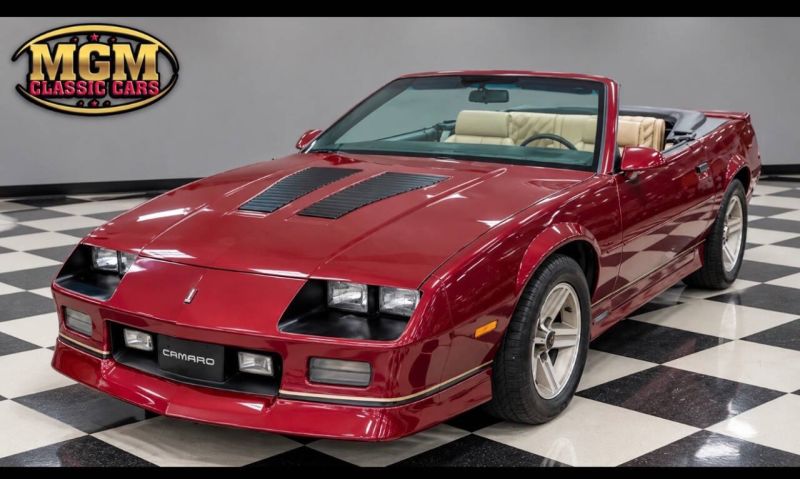
The IROC-Z is now a collectible, and the data supports that claim. The caveat is that it supports it for a narrow slice of cars. A low-mile, documented IROC-Z trades at prices that would have sounded absurd a decade ago, while a tired one with 150,000 miles is still, in market terms, a used Camaro. Understanding how the IROC-Z collectible market got here, and which cars it actually rewards, is the difference between buying an asset and buying a project at an asset's price. For the model's full background, see the IROC-Z Camaro history.
Car Features
7 min read
How the IROC-Z Went From Used Car to Collectible
How the IROC-Z collectible market formed: when values turned, what mileage does to price, which cars earn a premium and the risks for a buyer today.
The used-car years
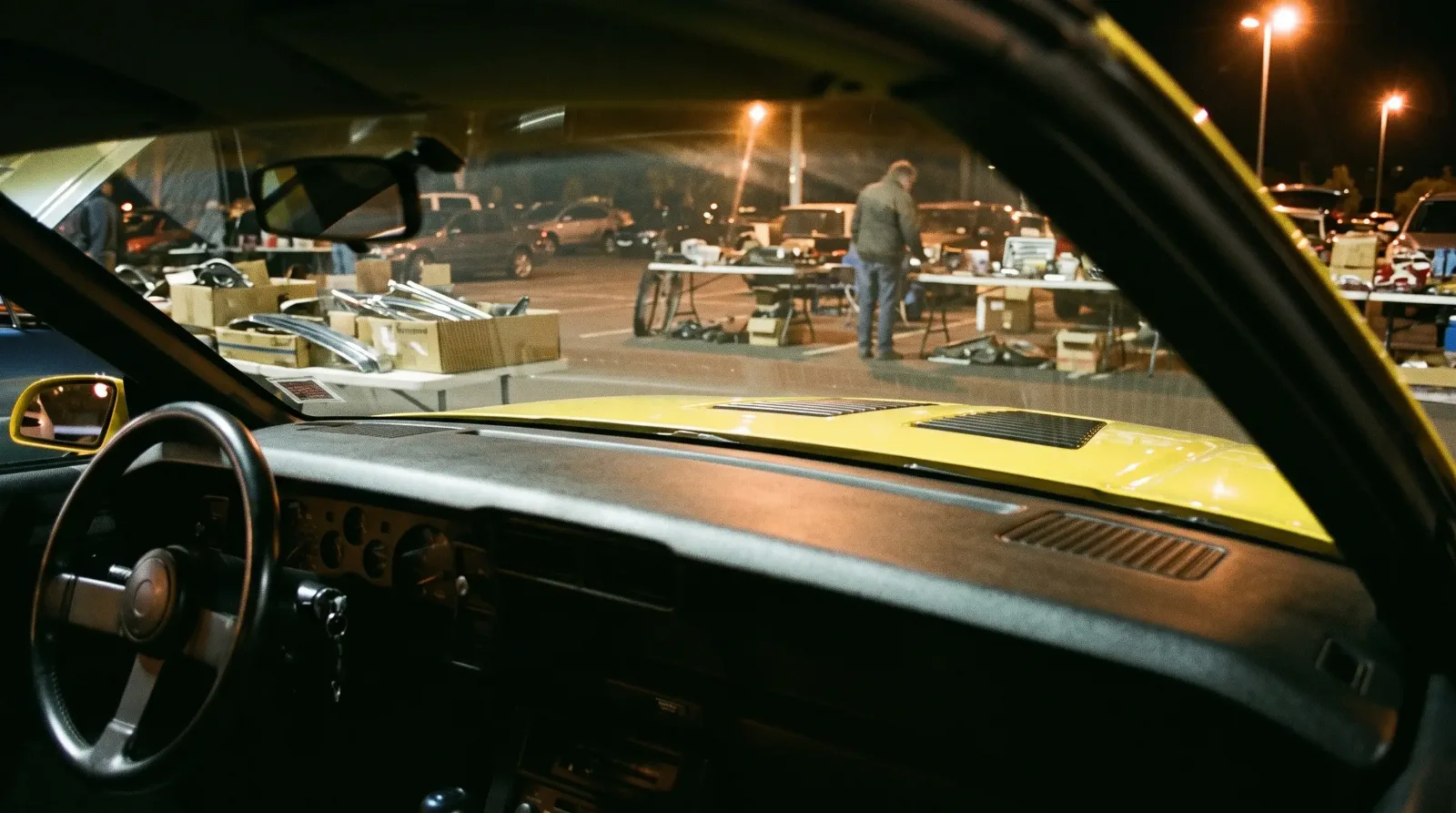
The IROC-Z was not rare, and that is where its long stay in the used-car lot begins. Chevrolet built 21,177 in 1985, 49,585 in 1986 and 38,889 coupes in 1987. For 1988 the count was 24,050 coupes and 3,761 convertibles, and for 1989 20,067 coupes and 3,940 convertibles. Only the short 1990 model year was small, at 4,213 coupes and 1,294 convertibles. Add the yearly figures and you get roughly 167,000 cars before the 1987 convertibles, whose IROC-Z share is not broken out. That is a sum of secondary-source figures, not a factory total, but the order of magnitude is not in doubt.
Supply on that scale keeps prices down for a long time. So did reputation. In the second half of the 1980s Hagerty describes the IROC-Z as "the Camaro to have", and the same desirability that sold the car new made it a cultural shorthand afterward, complete with the mullet jokes, which even Hagerty's own writers indulge. A car that is a punchline is rarely a blue-chip asset. Many were driven hard and modified, which is exactly what made the good ones scarce later.
Pricing when new was not exotic either. A loaded IROC-Z could reach about $20,000 at a time when a 1985 Corvette started at $24,000. The IROC-Z was an attainable performance car, and attainable cars tend to be consumed rather than stored.
When IROC-Z values turned
According to Hagerty, IROC-Z values started to climb steeply in 2014. By December 2022, the value of a 1988 IROC-Z in #2 condition had risen 225 percent over ten years, against 35 percent for a 1985 C4 Corvette, and the IROC was worth more than twice a base C4. That last point inverts the showroom order of the 1980s, when the Corvette was the more expensive car by a clear margin.
The buyer profile explains much of it. Hagerty reported that Generation X made up 32 percent of the market but owned about half of the IROC-Zs it insured. These are buyers acquiring the car they saw, or wanted, as teenagers. That is a durable driver of demand, but it is also a generational one. A market built on one age group's nostalgia has a natural horizon, and a buyer holding for the long term should price that in rather than assume the 2014 to 2022 slope continues.
What an IROC-Z collectible is worth now
Mileage sets the price more than any other single factor. The spread between a near-new car and an ordinary driver is wide, and it is visible in every data point on record.
| Data point | Figure | As of | Source |
|---|---|---|---|
| Hagerty #1 condition value, 1987 IROC-Z | $44,300 | June 2022 | Hagerty |
| Record sale, 729-mile 1987 IROC-Z | $64,575 with fees | June 2022 | Online auction result, via Hagerty |
| Under 2,000 miles | about $60,000 | December 2023 | SlashGear |
| 5,000 miles and up | over $40,000 | December 2023 | SlashGear |
| About 20,000 miles | over $20,000 | December 2023 | SlashGear |
| Perfect later fuel-injected IROC | more than $40,000 | November 2023 | Hagerty |
| 14,000-mile example, sold | $28,500 | 2025 | Online auction result, via Jalopnik |
| 1990 IROC-Z 350, 13,166 miles, asking | $58,995 | September 2026 | Dealer listing, via Jalopnik |
Read the table with some care. The mileage bands come from a December 2023 summary and are rough tiers, not a valuation formula. The 2025 sale of a 14,000-mile car at $28,500 sits well below the band its mileage would suggest, which shows how much condition, color, options and the specific auction matter. And the 2026 figure is an asking price, not a sale. The same September 2026 Jalopnik report cites Hemmings putting the high end at about $55,000, with a premium of 10 to 20 percent for the 350.
"The record sale tells you what one perfect car brought on one day. The car you are looking at has to earn its price on its own paperwork."
Marcus Feld
Which IROC-Zs carry a premium
Within the IROC-Z collectible market, a few configurations sit above the rest. Each premium comes with a verification burden.
The 1LE is the clearest. A 1989 IROC-Z with the 1LE package was worth about $37,000 in #2 condition as of May 2021, according to Hagerty, a 60 percent premium over a comparable IROC-Z without it. Only 111 were built for 1989. That combination of value and low numbers makes the 1LE the configuration most worth faking, so the claim needs factory documentation behind it.
The 350 is the second. The L98 arrived for 1987 and came with the automatic only, and Hemmings' 10 to 20 percent premium for it reflects buyer preference rather than rarity alone. The 1990 cars add scarcity to the mix: of 4,213 coupes, 2,415 had the 5.7. Convertibles are a smaller pool again: the production tables at camarotech.com list 1,294 IROC-Z convertibles for 1990.
Then there are the oddities. American Sunroof Corp. built 82 IROC-Z convertibles late in the 1986 model year for a dealer consortium, outside the factory line. Cars like that are interesting, and also thin markets: few buyers know what they are, and fewer will pay for the story without proof. To understand why the name carries weight with buyers at all, it helps to know where the IROC name came from.
Buying an IROC-Z collectible: the risks
Value in this market is condition plus documentation plus liquidity, and the IROC-Z tests all three.
Condition is the obvious one, and it is where the used-car years bite. Many survivors were modified, and reversing modifications on a 1980s car means sourcing interior plastics, trim and electronics that were never built to last 40 years. A clean, original, low-mile car is worth its premium partly because it removes that risk.
Documentation is the second. The IROC-Z package was RPO B4Z on the Z28 through 1987, and the decals, fog lamps and rocker extensions that make an IROC look like an IROC are all bolt-on parts. Appearance proves nothing. Original window stickers, dealer invoices and service records that tie to the VIN are what move a car from "IROC-Z" in a listing to an IROC-Z in an appraisal.
Liquidity is the third, and it cuts both ways. Roughly 167,000 cars means there is always another one for sale, which helps a buyer and caps a seller. The top of the market is deep for perfect cars and thin for everything else. A mid-condition IROC-Z can take a long time to sell at the price its owner has in mind.
The IROC-Z went from used car to collectible because enough of them were used up. The ones that were not are the collectibles. The rest are still used cars, and they should be priced that way.
Sources and notes
- Hagerty: Why on earth is an IROC Camaro worth more than a C4 Corvette? (December 2022)
- Hagerty: 1987 IROC-Z sets a third-gen Camaro record (June 2022)
- Hagerty: the IROC-Z 1LE and its value premium (May 2021)
- SlashGear: a closer look at the IROC-Z Camaro (December 2023)
- Jalopnik: a 13,000-mile 1990 IROC-Z 350 and current prices (September 2026)
- Camarotech: third-generation Camaro production by model and year
Related Reading
Have a
Chevrolet Camaro
for Sale?
Reach thousands of serious classic car collectors across the US.
Sell It Here →
Selling a classic? Here's how: compare the places to sell classic cars
Are You a Classic Car Dealer?
List your full inventory and connect with targeted classic car buyers.
Join as a Dealer →

About the author
Marcus Feld
Accredited collector-car appraiser who reads the market through hammer prices, condition tiers and risk.
Related Listings - Chevrolet Camaro


Comments
Be the first to comment on this article.