
Value in this segment does not track condition the way it does on a Corvette or a Mustang. A rough CJ-2A with a documented, unbroken chain of ownership will outsell a shiny one with a fuzzy history every time it comes up against a knowledgeable buyer, and that is the first thing anyone approaching the jeep cj cj2a collector value question needs to internalize. This is a market where paperwork and originality carry more weight than paint depth, and pricing it like a typical postwar collector car will lead you astray fast.
Car Features
7 min read
The CJ-2A Collector Market: Buying the Very First Jeep
Value in the CJ-2A market runs on documentation and originality more than paint, and the buyer pool is thinner than most sellers expect.
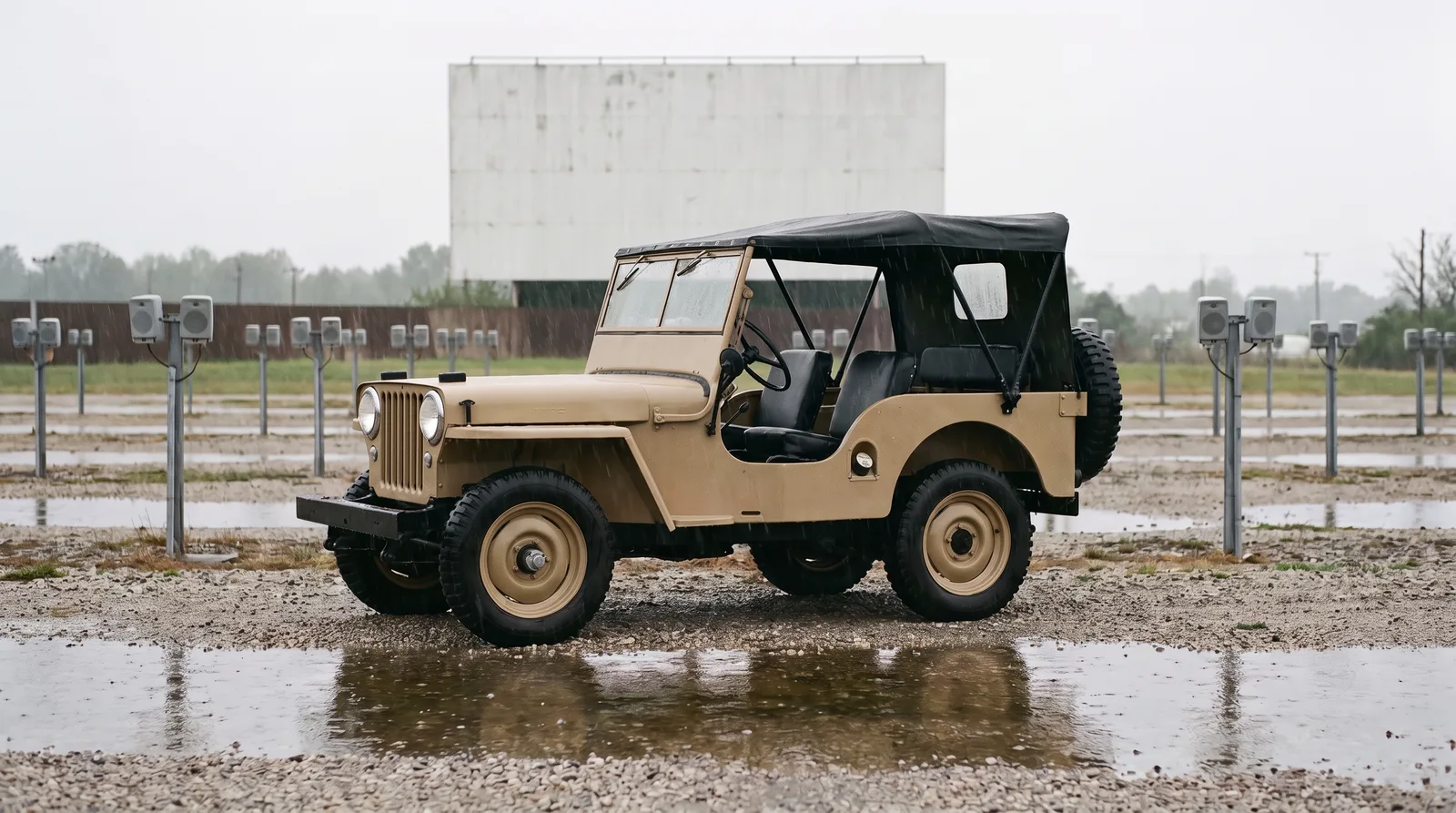
The CJ-2A is the first Jeep Willys-Overland sold to civilians, built from 1945 to 1949, and that first-of-its-kind status is the foundation of everything about its collector standing. It is not the rarest CJ variant Willys ever built, and it is not the fastest or most powerful, but it is the one that started the whole civilian Jeep line, and that historical position matters more to serious collectors than any spec sheet number does.
What actually drives price in this segment
Four factors do most of the work in setting what a given CJ-2A is worth: condition, documentation, originality, and liquidity, and I want to take each one on its own terms rather than blending them together the way casual listings often do. Condition is the least interesting of the four because it is the most visible and the most correctable with money. A rough example can be restored. A missing serial tag cannot be manufactured back into existence without raising legitimate authenticity questions, which is why documentation carries so much more weight in this specific market than it does elsewhere.
Originality means something narrower here than it does with muscle cars. Buyers care whether the engine block matches the vehicle's known production window, whether major components like the transfer case and frame are period-correct rather than swapped in from a donor, and whether modifications, if present, are reversible or permanent. A CJ-2A that picked up a later drivetrain somewhere along the way is not worthless, but it is a different product than a numbers-consistent original, and pricing it as though it were the same thing is the most common mistake I see sellers make.
Liquidity is the part nobody wants to talk about
Here is where I diverge from most of what gets written about this model. The CJ-2A market is thinner than people assume. It is not illiquid in the sense of being hard to sell eventually, but the buyer pool for a genuinely correct, well-documented example is small and specific, concentrated among collectors who already understand early Jeep history rather than general old-car buyers browsing broadly. That means a seller with an exceptional example may need real patience to find the right buyer at the right price, while a seller with a merely decent example should expect a longer sales cycle than a comparably priced vehicle from a more actively traded segment.
Reading a listing like an appraiser, not a fan
When I look at a CJ-2A for a client, I start with the paper trail before I even walk around the vehicle. A continuous ownership history, original title documentation, and any surviving factory paperwork tell me more about long-term value than a fresh coat of paint does. From there I move to the mechanical specification against known production data for that build window, checking whether the transmission, transfer case, and engine are consistent with what left the factory rather than accumulated over decades of practical repairs. Only after that do I evaluate cosmetic condition, because cosmetics are the easiest thing to fix and therefore the least predictive of true value.
| Value driver | Downside risk if weak |
|---|---|
| Documentation and provenance | Buyer discount, longer time to sell |
| Matching engine and drivetrain | Reclassified as modified, not original |
| Structural and frame condition | Restoration cost can exceed purchase price |
| Buyer pool depth for the specific configuration | Extended holding period before sale |
The buy case and the caution that goes with it
I generally like the CJ-2A as an acquisition for a buyer who understands what they are getting into. It is historically significant, it is not currently overpriced relative to its importance, and demand has been steady rather than speculative, which tends to make for a more stable long-term hold than segments that spike and correct. My caution is specifically about exit planning. Buyers should go in understanding that selling a CJ-2A, particularly a top-tier documented example, may take longer than they expect, and pricing patience needs to be part of the plan from day one, not an afterthought when the listing has been up for six months. Anyone new to the model should start with where this started to understand the full production context before evaluating any specific vehicle against it.
"The CJ-2A market rewards patience on both ends, buying and selling. Rush either side of that transaction and you will either overpay for a mediocre example or leave real money on the table waiting for a buyer who never had to exist."
- Marcus Feld
How this compares to other early collector Jeeps
I get asked constantly whether a CJ-2A is a better acquisition than a later flat fender or an early CJ-3A, and the honest answer is that it depends entirely on what the buyer values. The CJ-2A has the strongest claim to historical primacy since it was the first civilian model, and that first-of-line status tends to hold value better across market cycles than incremental successors that share most of the same engineering. A CJ-3A improved on some mechanical rough edges from the CJ-2A, and buyers who prioritize driveability over historical firstness sometimes prefer it for exactly that reason. Neither choice is wrong. They simply serve different collecting priorities, and a buyer should be honest with themselves about which one actually matters more before writing a check.
I also get asked whether now is a good time to buy. My answer has stayed consistent for years: the CJ-2A has not experienced the speculative spikes that hit some other postwar collector segments, which makes it a comparatively low-risk entry point for a buyer who wants exposure to early Jeep history without betting on a bubble. That stability cuts both ways, of course. It also means nobody should expect a documented example to double in value over a short window. This is a patient market for patient money.
Practical guidance for a first-time buyer
For a first-time buyer in this segment, my advice is straightforward. Do not chase the cheapest listing, chase the best-documented one within your budget, because the discount on a poorly documented Jeep rarely covers the eventual resale penalty it carries. Verify serial numbers against known production data before committing funds, and budget realistically for the fact that even a well-preserved CJ-2A is now well over seventy-five years old and will need ongoing mechanical attention regardless of how clean the paperwork looks. Those ready to start comparing real examples against this framework can shop classic CJ listings and apply the documentation-first approach before falling in love with a photograph.
Sources and notes
Related Reading
Have a
Jeep CJ
for Sale?
Reach thousands of serious classic car collectors across the US.
Sell It Here →
Selling a classic? Here's how: compare the places to sell classic cars
Are You a Classic Car Dealer?
List your full inventory and connect with targeted classic car buyers.
Join as a Dealer →

About the author
Marcus Feld
Accredited collector-car appraiser who reads the market through hammer prices, condition tiers and risk.
Related Listings - Jeep CJ

Comments
Be the first to comment on this article.