
The jeep cj cj8 258 six is the engine most long bed Scrambler owners actually wanted, and the sales figures back that up. AMC's 4.2 liter inline six, badged 258 for its displacement in cubic inches, was the torque answer to a truck that had gotten longer and heavier than the CJ-5 it descended from. A CJ-8 hauling a load in the bed needed low end pull more than it needed revs, and the 258 delivered exactly that.
Car Features
7 min read
The 258 Six in the Scrambler: Hauling the Long Jeep
The AMC 258 inline six was the torque answer to a longer, heavier CJ-8, and it is the engine most Scrambler owners actually chose when the truck had real work to do.
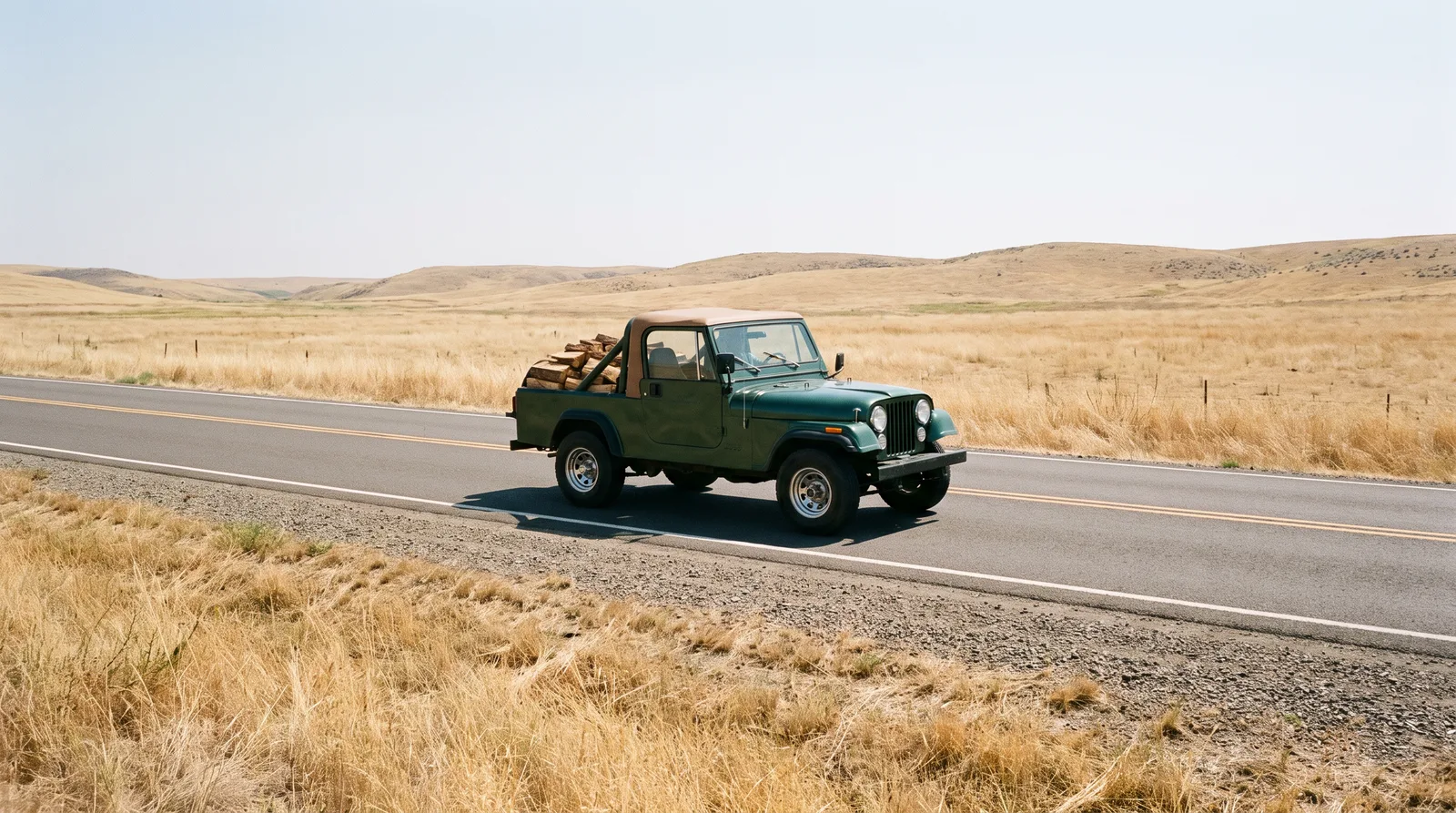
Why the six mattered more on the CJ-8 than on shorter CJs
Stretch a wheelbase, add a cargo bed, and the math changes. A CJ-5 with the four-cylinder option could get away with modest output because the truck itself was light and short. The CJ-8 was neither. The added length and the pickup bed pushed curb weight up, and loaded with cargo or a topper, that weight climbed further. The 258 six answered with displacement, not cleverness. Bigger cylinders, more torque at low RPM, and a power curve built for pulling rather than sprinting.
Buyers noticed. The four-cylinder option existed on paper across the Scrambler's run, but real-world ordering patterns leaned hard toward the six, especially once a buyer had any intention of using the bed for actual cargo rather than treating the truck as a novelty. An exact take rate split between the two engines is hard to pin down with confidence, since surviving dealer order breakdowns are incomplete for this specific model, but surviving trucks and period sales accounts both point the same direction: the six was the engine most Scramblers actually left the lot wearing.
What the numbers actually say about output
| Spec | AMC 258 inline six |
|---|---|
| Displacement | 4.2 liters / 258 cubic inches |
| Configuration | Inline six, cast iron block and head |
| Fuel delivery | Carbureted (fuel injection came later, outside CJ-8 production window) |
| Character | Low RPM torque, modest peak horsepower |
The horsepower figure on this engine changed across production years and emissions requirements, and quoting a single number without the year attached is how a lot of casual writeups get it wrong. In CJ-8 tune, the 258 is generally cited around 112 horsepower and roughly 210 lb-ft of torque, well ahead of the four-cylinder's roughly 88 horsepower and 132 lb-ft, though buyers should treat any single figure as a rough guide rather than a year-exact rating given how much emissions calibration shifted across the run. What is not in dispute is the shape of the power curve. This engine made its case in the low and mid RPM range, not at the top end, and that is exactly where a loaded pickup needs it.
"Torque moves weight. Horsepower moves a dyno chart. The 258 never won a bragging contest, but it moved a loaded Scrambler up a grade without drama, and that is the only test that actually mattered to the guy who bought this truck to work."
- Dan Reeves
The four-cylinder alternative, and why fewer chose it
AMC offered a four-cylinder engine option on the CJ-8 for buyers who wanted lower cost or slightly better fuel economy, and on paper that trade made sense for a narrow slice of buyers. In practice, most people cross-shopping a Scrambler already understood what they were buying it for, and a four-cylinder loaded down with cargo bed weight plus a passenger or two struggled in exactly the situations where the truck was supposed to prove its usefulness. Word travels fast in a small ownership community, and the reputation the four-cylinder built for feeling strained under real load pushed subsequent buyers toward the six almost by default.
That pattern repeats across a lot of niche trucks from this era. The base engine exists to hit a lower advertised price point, and the engine buyers actually drive away with skews toward whatever handles the truck's actual job description. On a cargo hauling Jeep, that job description favored torque, and torque favored the 258 every time.
Reliability, in blunt terms
The 258 has a reputation among Jeep owners as one of the more durable engines AMC ever built. It is not fussy. It tolerates neglect better than most engines from the same era, and parts availability decades later remains strong because the same basic block saw duty across a wide range of Jeep and AMC vehicles for years beyond the CJ-8's own short production run. That shared parts ecosystem is a practical advantage for anyone running one today. Owners are not hunting for CJ-8 specific parts. They are pulling from a much larger, well supported parts pool.
Weak points exist, as they do on any engine of this age. Carburetor tuning drifts without attention. Cooling system components degrade over decades regardless of how well the engine itself holds up. None of that is unique to the CJ-8 application. It is simply the maintenance reality of any forty-plus year old carbureted six.
Buyers evaluating a used CJ-8 today should treat the 258 the same way they would treat any engine this age, judged on documented maintenance history rather than reputation alone. A well maintained example with regular service records tells a buyer far more than the engine's general reputation for durability, which is real but no substitute for actually checking compression, looking for oil leaks, and confirming the cooling system has been kept current.
The number that matters most to a buyer is not a horsepower figure on a spec sheet. It is whether the specific truck in front of them runs the way this engine is known to run, strong and steady off idle, without the hesitation or overheating that signals deferred maintenance rather than a design flaw.
What it feels like from the driver's seat
Numbers on a spec sheet only tell part of the story. Drive a loaded CJ-8 with the 258 and the engine's character becomes obvious within the first hill climb. There is no waiting for a power band to arrive. Pull is available almost immediately off idle, which matters more than a horsepower peak when the goal is moving a bed full of firewood or a small trailer up a grade rather than winning a stoplight sprint. The tradeoff is refinement. This is not a smooth, quiet engine by modern standards. It has the mechanical thrum you would expect from a cast iron six built primarily for durability and torque rather than isolation from the driver.
That lack of refinement is not a flaw so much as a design choice consistent with everything else about the CJ-8. This was never a truck built to compete on comfort. The 258 fits that identity precisely, an engine that does its job without apology and without much concern for how it feels doing it.
How the six shaped the Scrambler's identity
A truck's engine choice shapes how it gets remembered. The CJ-8 with a four-cylinder is a lighter duty curiosity. The CJ-8 with the 258 is the version that actually did truck work, hauling loads a shorter CJ never could carry comfortably. For the full picture of how the Scrambler's platform decisions, length, bed, drivetrain options, came together as one program, the whole picture covers the engineering and market context the engine choice sat inside.
Bottom line: if you are evaluating a CJ-8 today and torque under load matters to how you plan to use it, the 258 six is the engine to look for. Buyers who want that combination, real cargo capacity backed by an engine built to move it, can shop classic CJ listings and filter for exactly that drivetrain rather than settling for whatever happens to be closest.
Sources and notes
Related Reading
Have a
Jeep CJ
for Sale?
Reach thousands of serious classic car collectors across the US.
Sell It Here →
Selling a classic? Here's how: compare the places to sell classic cars
Are You a Classic Car Dealer?
List your full inventory and connect with targeted classic car buyers.
Join as a Dealer →
#Jeep CJ-8
#Jeep collectibility
#classic Jeep engines
#AMC 258 engine
#Scrambler drivetrain
#AMC inline six

About the author
Dan Reeves
Performance engine builder from North Carolina's motorsports corridor, focused on swaps, forced induction and making real, repeatable power.
Related Listings - Jeep CJ

Comments
Be the first to comment on this article.