
The Jeep CJ-8 Scrambler never sold big numbers in the United States, and across the Pacific it sold even fewer. But Australia is where a handful of these trucks found a second and much harder life, and where the survivors today carry a story that most American Scrambler owners have never heard. This is the jeep cj cj8 australia story, and it starts with a country that had already been running Jeeps since before most CJ-8s rolled off the Toledo line.
Car Features
8 min read
Scrambler Down Under: The CJ-8 in Australia
Australia never got a big Scrambler push from Jeep, but the CJ-8 found a hard-working second life on stations and back roads that made it rare in a way nobody planned.
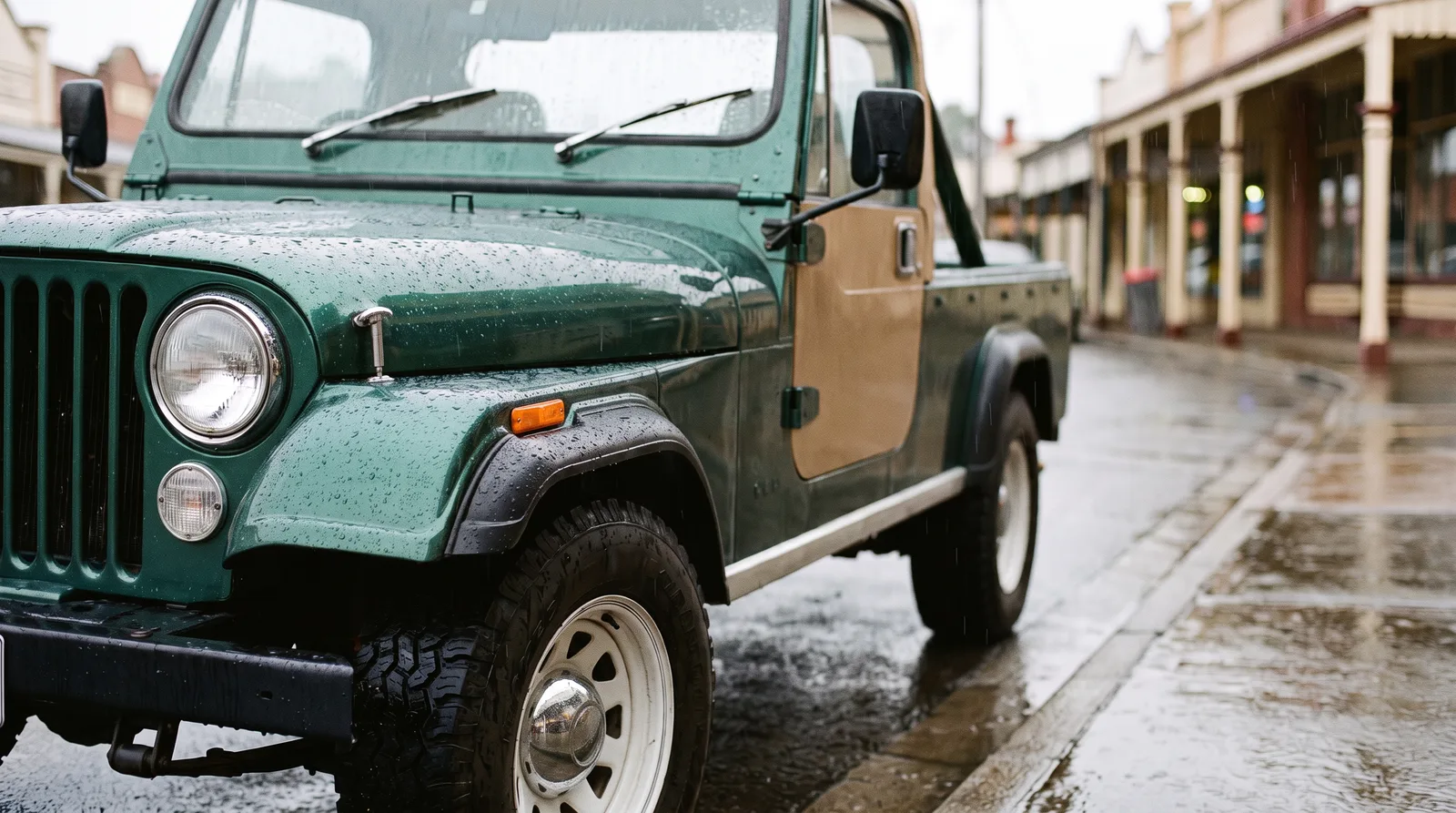
Jeeps were already an Australian institution
Australia had a relationship with Jeep going back to World War II, when American forces shipped thousands of CJ predecessors through Pacific ports and left plenty of them behind. By the time the CJ-8 showed up in the early 1980s, Jeep was not a novelty brand down under. It was a working name, tied to farms, mining camps, and outback stations that needed something that would not quit when the pavement did. That reputation is part of why a handful of CJ-8s made it to Australian buyers even though Jeep never ran a big official push for the model there.
Most CJ-8s that reached Australia arrived through small independent importers rather than a factory-backed distribution network. That matters because it means the paperwork trail is thin, and it means every surviving example has its own quiet history of how it got there, who drove it first, and what it was actually used for once it landed.
A truck built for a place like this
The CJ-8's stretched wheelbase, roughly 10 inches longer than a standard CJ-7, gave it a pickup-style bed behind the cab. On paper that made it a compromise, not quite a full-size ute and not quite a short wheelbase trail rig. In the Australian bush it made more sense than it ever did on an American backroad. Station hands wanted a bed for fencing wire and feed sacks. They wanted low range for creek crossings. They did not much care that the ride was stiff or that the cab was tight for two grown men in hats.
Locals who ran them alongside the more common Land Cruisers of the era noticed the difference immediately. The Jeep was lighter, quicker to react on rough ground, and easier to horse out of a bog by hand if it came to that. It was also thirstier and, depending on the engine under the hood, less bulletproof over the truly long haul. Owners split into two camps fast: the ones who loved the CJ-8 for exactly what it was, and the ones who wished Jeep had just built a Land Cruiser with a different badge.
Rarity that nobody planned for
Nobody set out to make the Australian CJ-8 rare. It just happened, the same way most true rarity happens, through a slow drip of trucks getting worn out, parted out, or quietly scrapped because nobody thought to save them. Parts were never easy to source locally. A cracked windshield frame or a worn steering box meant either an expensive overseas order or a home-built fix that may or may not have used the correct part. Over three or four decades that attrition adds up, and what is left today is a small, scattered population of trucks held by people who know exactly what they have.
Club networks in Australia have done more to keep these trucks alive than any factory support ever did. Owners trade leads on parts, share photos of chassis numbers to help each other confirm what they are looking at, and occasionally track down a Scrambler that has been sitting under a tarp on a rural property for twenty years. For the full arc of how the model came to exist in the first place, from AMC's decision to stretch the CJ-7 platform through its production run and eventual end, our complete history lays out the American side of the story that Australian trucks share a bloodline with.
"You learn to read a chassis number like a detective. Every Scrambler down here has a story about how it got here, and half the time the paperwork lies."
- Mike Sullivan
What collectors are finding now
Interest in the CJ-8 has grown steadily worldwide over the past decade, and Australia has not been immune to it. Values that once sat well below equivalent US market prices have climbed as overseas buyers and local enthusiasts alike started paying attention to how few clean examples remain. A truck that might have sold for a few thousand dollars in the early 2000s, treated as a used farm vehicle and nothing more, now draws serious interest when it comes up for sale with a documented history and original sheet metal.
That shift has changed how people treat the survivors. Trucks that would once have been stripped for parts to keep a working farm vehicle running are now more likely to get restored, or at least stabilized and preserved as-is. It is a small market, but it is an active one, and the people in it tend to know each other by name.
Buying one today
Anyone chasing an Australian CJ-8 needs to go in with eyes open. Rust in sills and floor pans is common given decades of outback dust and the occasional flooded creek crossing. Non-factory modifications, from bull bars to aftermarket suspension lifts, are the rule rather than the exception. None of that makes a truck worthless. It just means the buyer is paying for a working history rather than a numbers-matching restoration, and pricing should reflect that honestly.
For those ready to look beyond Australia and see what is actually on the market right now, it helps to browse classic CJ listings and compare condition, provenance, and asking price across a wider pool of trucks before committing to any single example.
The trucks that got left behind
Not every Scrambler that made it to Australia survived the decades that followed. Plenty were run into the ground on remote properties, patched with whatever was on hand, and eventually pushed into a paddock corner once they stopped being worth the trouble to fix. Some of those abandoned trucks are only now being rediscovered, dragged out from under sheds and behind machinery barns by a new generation of buyers who actually know what they are looking at.
That rediscovery process is slow and often disappointing. A truck that looked promising in a photo can turn out to be little more than a rusted shell once someone gets underneath it with a flashlight. But often enough, there is something worth saving, a chassis with good bones, an engine that turns over, a body that has more surface rust than structural damage. Those finds are what keep the small community of Australian CJ-8 owners motivated to keep looking.
Comparing notes with the American market
Australian owners who follow the American CJ-8 market closely notice real differences in how the trucks are treated on each side of the Pacific. American Scramblers tend to have better documentation on average, simply because the US market developed a collector infrastructure earlier. Australian trucks make up for that gap with genuine working histories that are, in their own way, just as valuable to the right buyer, someone who wants a truck with a real story rather than just a clean logbook.
Shipping a CJ-8 between continents is not cheap or simple, and most buyers end up sourcing locally rather than importing across oceans. That keeps the Australian market somewhat self-contained, trading mostly among people who already know the local scene and understand what they are looking at when a truck comes up for sale.
A footnote that deserves more attention
The Australian CJ-8 story will never get the attention that the American Scrambler market gets, and that is fine. It was never meant to be a headline chapter. But for the people who have kept these trucks running on stations and back roads for forty years, it is the only chapter that matters, and it deserves to be told before the last of the originals disappear for good.
Sources and notes
Related Reading
Have a
Jeep CJ
for Sale?
Reach thousands of serious classic car collectors across the US.
Sell It Here →
Selling a classic? Here's how: sell my classic car
Are You a Classic Car Dealer?
List your full inventory and connect with targeted classic car buyers.
Join as a Dealer →

About the author
Mike Sullivan
Detroit-area muscle car enthusiast and restoration specialist with three decades of hands-on experience working on American iron.
Related Listings - Jeep CJ



Comments
Be the first to comment on this article.