
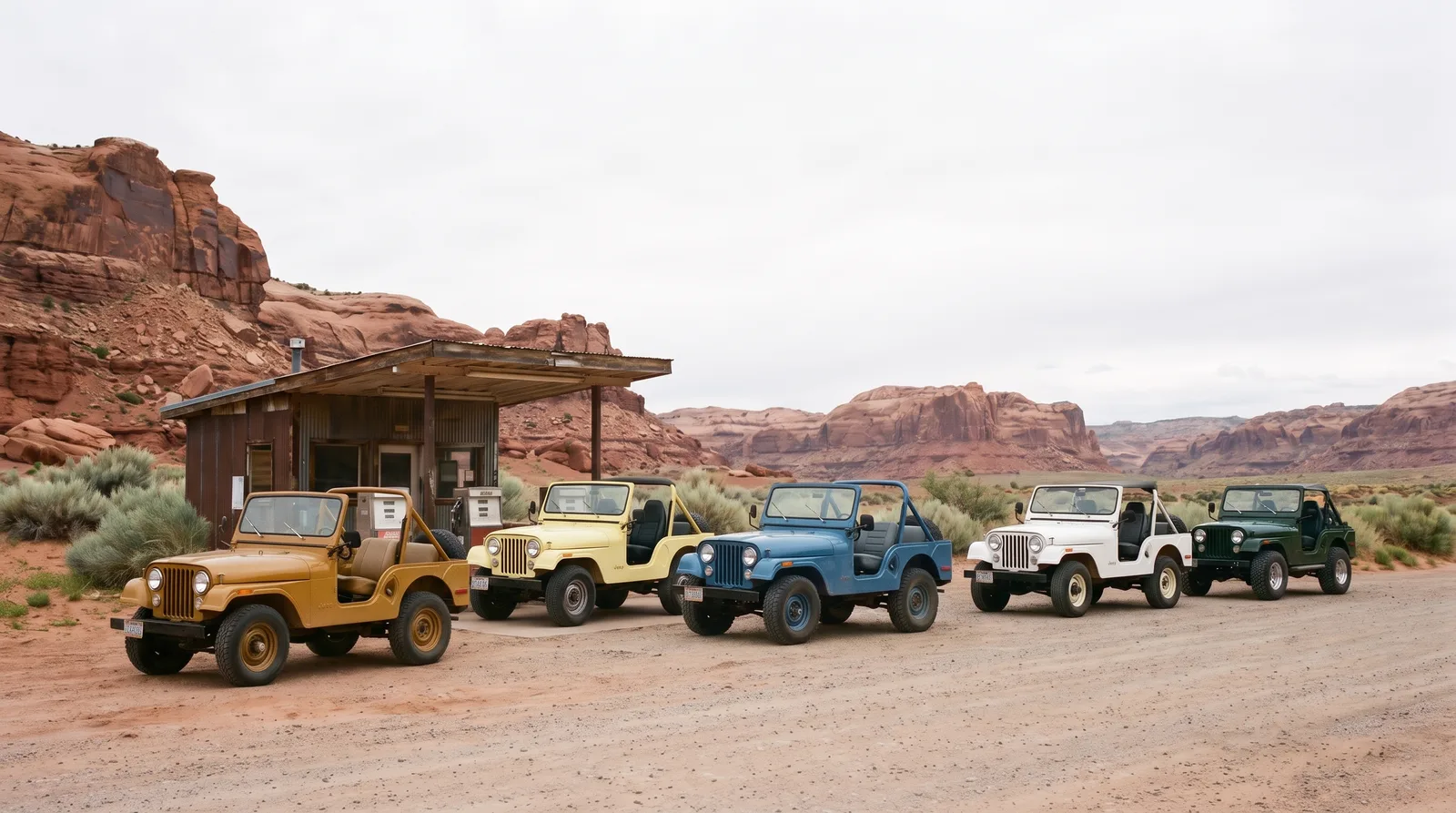
Pull up a photo album of any CJ club meet from the 1970s and the first thing that hits you is not the mud or the mismatched tires. It is the colors. The jeep cj culture color palette is one of the strangest things Detroit ever put its name behind, a lineup of hues that ranged from military drab to shades that look pulled from a candy counter, and every one of them tells you something about the decade that picked it. The Jeep CJ never had the luxury of a single signature color the way some cars do. It had eras, and the paint chart moved with the culture around it.
Car Features
7 min read
The Colors of the CJ: A Palette of Its Time
From Willys' farm-friendly yellows to AMC's shouting seventies oranges, the Jeep CJ's paint chart is a decade-by-decade record of what America wanted from its Jeep.
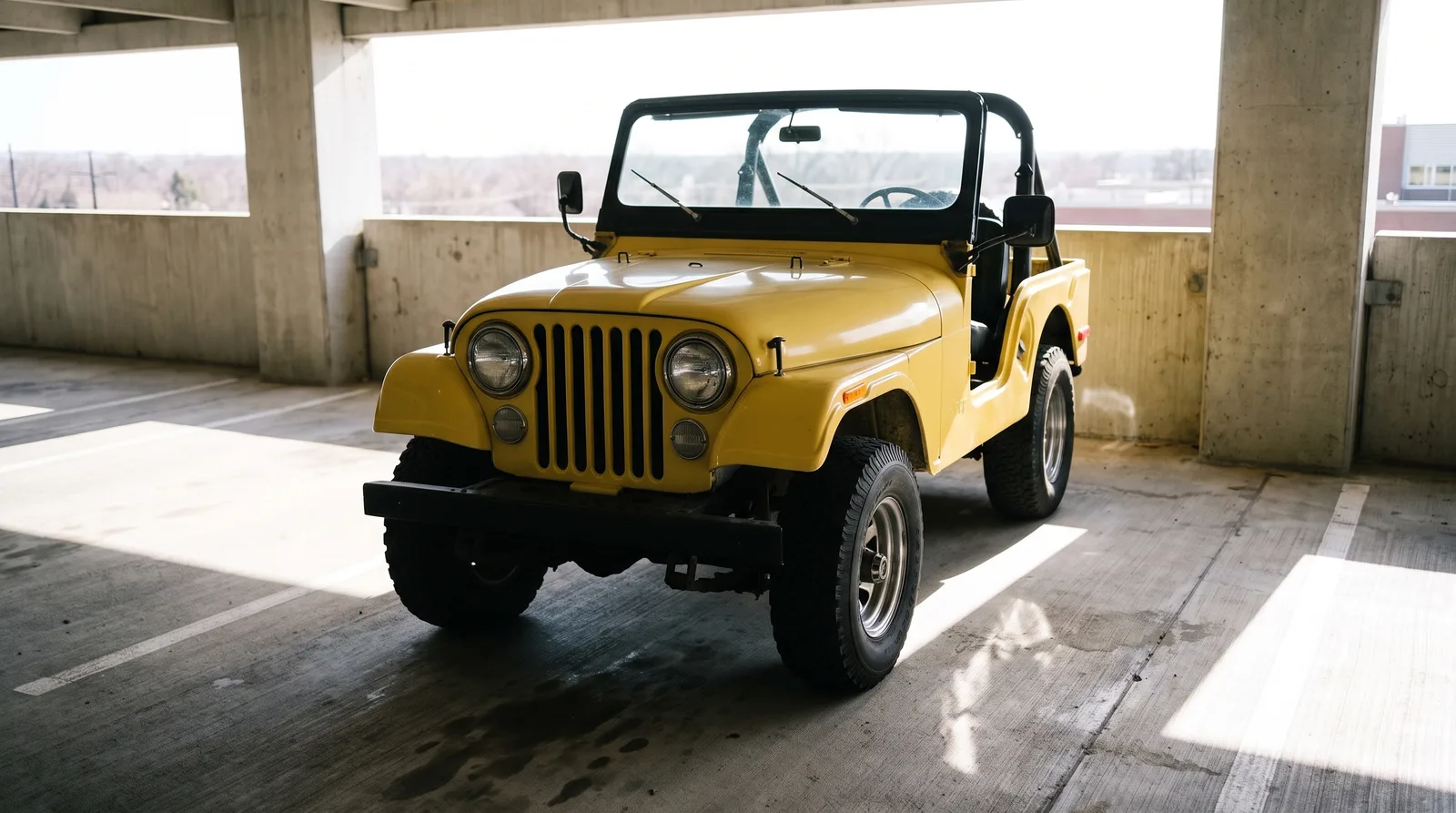
Olive drab was never really a factory color
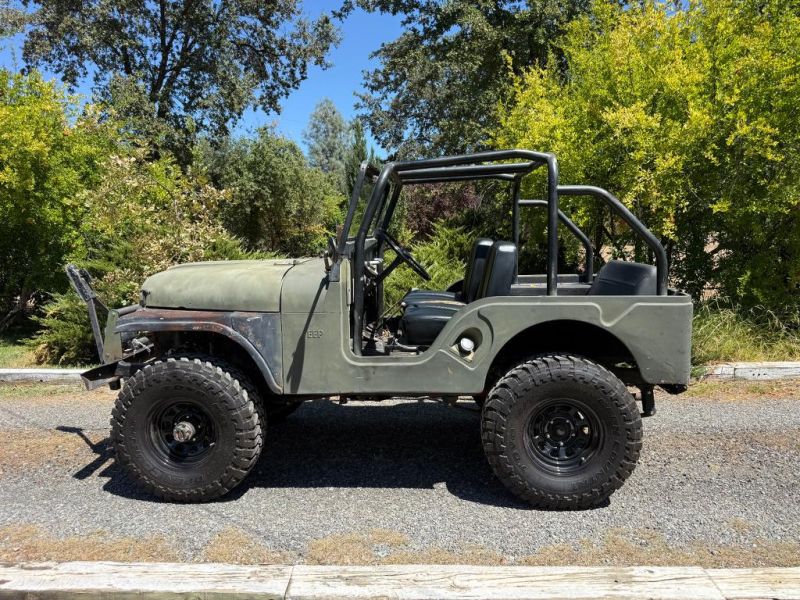
Start with the myth, because it needs correcting before anything else makes sense. Most people assume the earliest CJ-2A and CJ-3A Jeeps rolled out of Toledo in the same flat olive drab as the wartime MB. They did not, not exactly. Willys-Overland offered civilian buyers a small run of colors from day one, including Pasture Green and Harvest Tan, with Michigan Yellow added to the chart by mid-1946, because the company understood that a farmer buying a Jeep in 1946 was not trying to relive the war. He wanted a tool that looked like it belonged on his land, not a leftover from a battlefield. Olive drab persisted mostly because it was cheap, familiar, and easy to touch up with a brush, not because Willys insisted on it. The color stuck in the public imagination anyway, which is its own kind of lesson in how folklore outlives fact.
The 1960s brought Kaiser's brighter thinking
By the time Kaiser Jeep took over and the CJ-5 and CJ-6 were settled into their long production run, the palette loosened up considerably. Kaiser understood something Willys had only guessed at: buyers wanted a Jeep that looked good parked next to the lake house, not just one that survived a winter on the back forty. Colors like Sunset Bronze and Spruce Green entered the lineup, softer and more considered than anything from the previous decade. This was also the moment the Jeep started showing up in lifestyle advertising rather than farm-equipment catalogs, photographed on beaches and ski slopes instead of hay fields. The paint followed the marketing, not the other way around, and if you read the background on how the CJ's trim packages evolved alongside this shift, the timing lines up almost exactly.
AMC and the loud, unapologetic seventies
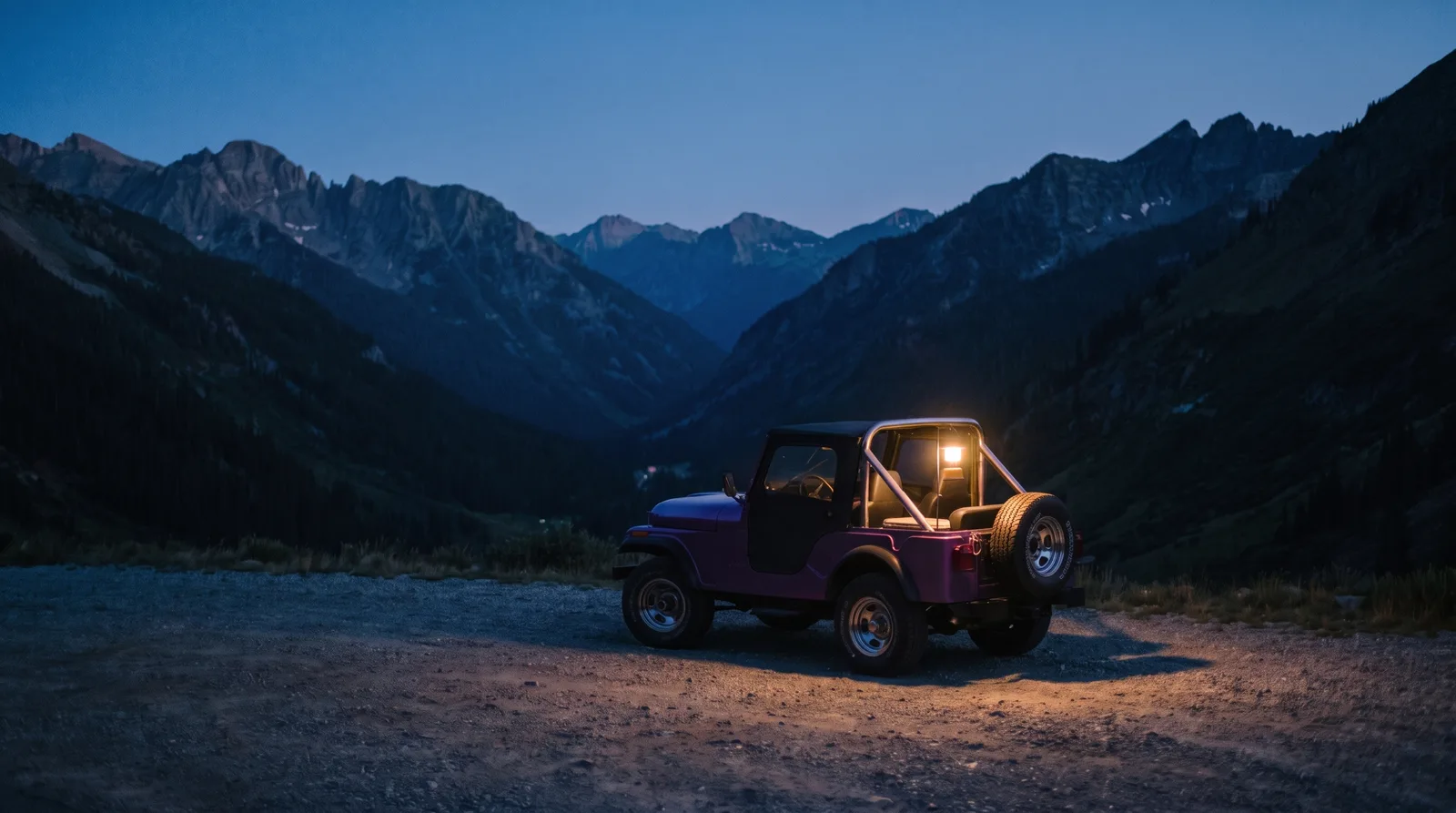
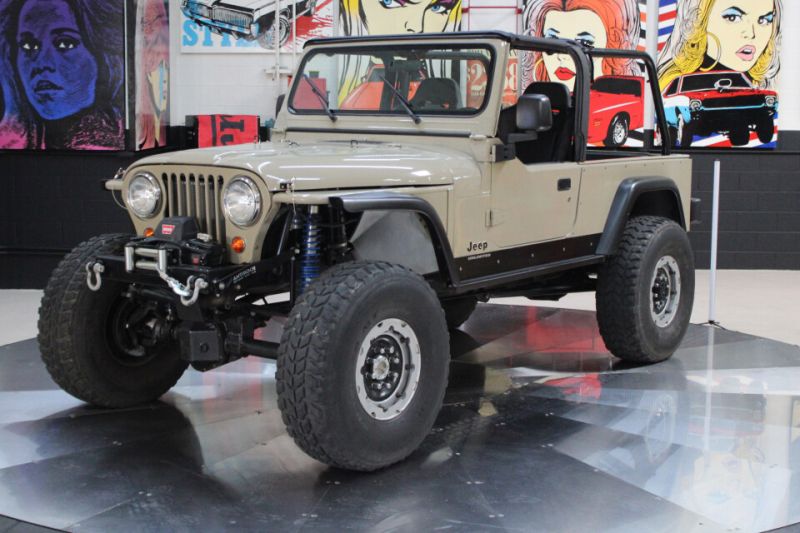
Nothing captures the jeep cj culture color palette quite like what American Motors did once it took the reins in 1970. This is the era people picture when they think of a truly colorful CJ-5 or CJ-7: Riverside Orange, Butterscotch, Big Bad Orange with black decal graphics straight off a Javelin. AMC was a smaller company competing against giants, and it leaned into personality because it could not win on scale. The Renegade and Levi's editions of the mid-seventies pushed color and graphics as a genuine selling point, not an afterthought. A Renegade in Baja Yellow with black striping was not subtle, and it was not meant to be. It was a statement that the CJ had stopped being purely a work vehicle and had become something people wanted to be seen in.
That shift did not happen by accident. AMC's design studio was watching the same youth market that was buying muscle cars and vans with custom paint jobs, and the CJ absorbed some of that energy. The colors got names with attitude behind them. Nobody names a paint "Big Bad Orange" for a tractor.
"You can date a seventies CJ almost to the year just by the color on the fender before you even look at the grille. Detroit rarely gave a truck that much personality, and the CJ wore it well."
- Patrick Walsh
Two-tone treatments changed how the color read
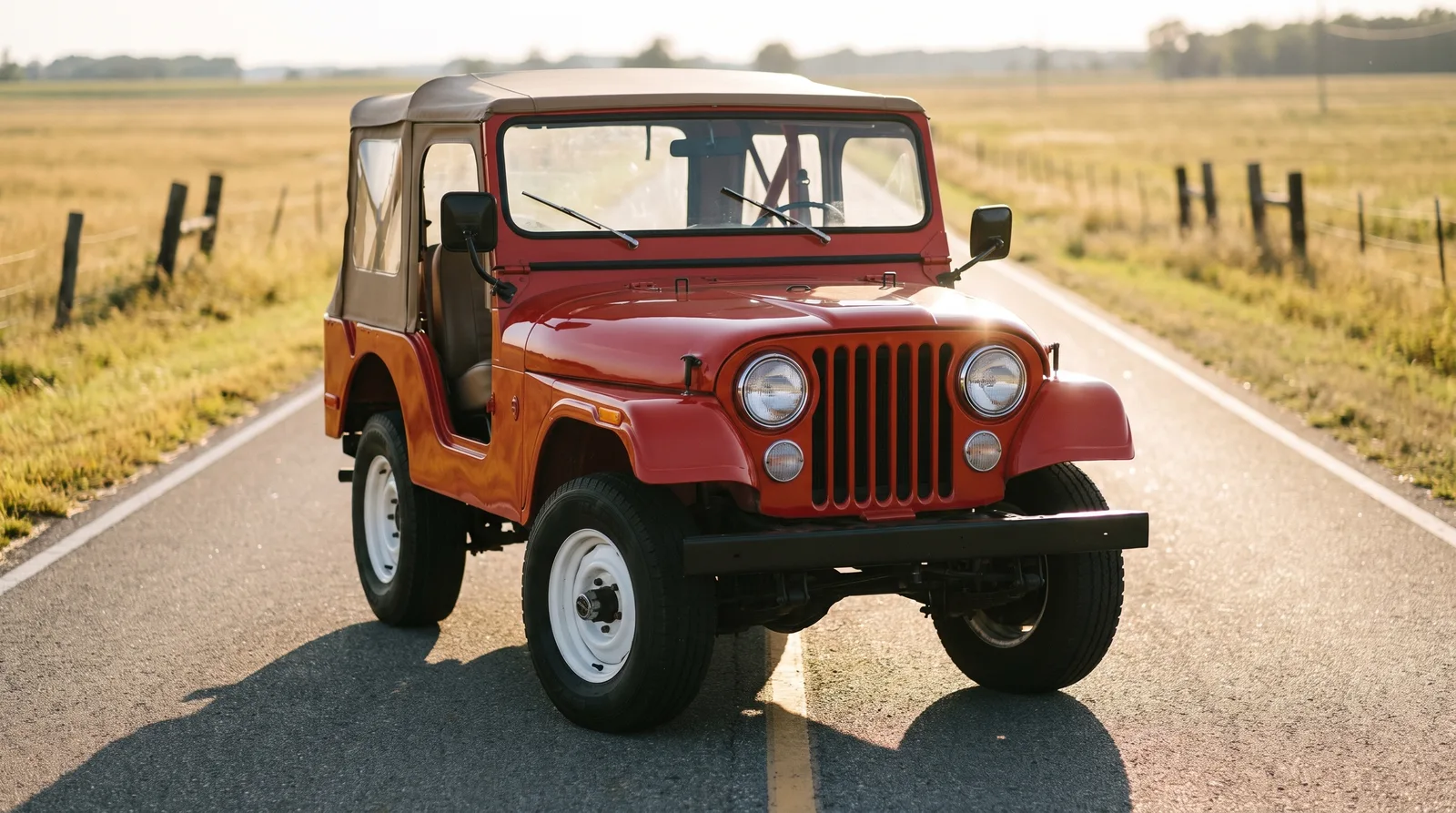
Color on a CJ was never just about the base paint. Hardtops, when buyers ordered them, were frequently finished in white or black regardless of the body color underneath, and that contrast became part of the truck's visual signature during the sixties and seventies. A Spruce Green CJ-5 with a white hardtop reads completely differently from the same green with a soft top folded down, and dealers understood that the combination mattered as much as either color alone. Wheel colors added another layer. Steel wheels painted to match the body were common on plainer trim levels, while upgraded trims sometimes ran contrasting wheel colors or trim rings that picked up an accent from the decal package. None of this was accidental. Willys, Kaiser, and later AMC all treated the CJ's exterior as a set of coordinated choices, not a single paint decision, even on a truck this basic underneath.
That layered approach is part of why period-correct restorations are harder to get right than they look. Getting the body color right is only step one. Matching the correct hardtop shade, the correct decal color, and the correct wheel treatment for a specific model year requires real research, and shops that skip that research tend to produce a CJ that looks close but reads wrong to anyone who has studied the originals closely.
Why color still moves the market today
Walk any Jeep show today and watch what draws the crowd. It is rarely the most mechanically pristine example. It is the one in an unusual, correct, period color that nobody expects to see anymore. A CJ-5 in Butterscotch or a Renegade in the right orange with matching decals carries a premium that a repainted, generic example simply does not, because the color is doing historical work. It places the truck in a specific year and a specific attitude, and buyers who grew up around these trucks respond to that instantly. Original paint codes, even faded ones, tend to matter more to serious collectors than a fresh repaint in a modern shade, because the factory color is part of the document, not just the finish.
That is also where the market gets interesting for anyone actually shopping. A correctly colored, honestly presented CJ is not always the most expensive option on a lot, but it is usually the one that holds its value best, because the color tells a buyer the truck has not been reinvented to chase a trend. If you want to see how that plays out in real inventory, you can browse classic CJ listings and notice how often the description leads with the paint before it mentions the engine.
Reading a CJ by its paint
None of this means later, more muted colors are lesser. The plainer olive and tan trucks of the forties and fifties have their own honesty to them, a working-vehicle simplicity that some buyers prize precisely because it resists the flash of the AMC years. The jeep cj culture color palette is not a single story with a hero color at the center. It is a timeline you can read like tree rings, decade by decade, each shade telling you what the country wanted from a Jeep at that particular moment. A quiet olive CJ-3A from 1949 and a shouting orange Renegade from 1976 are the same basic machine wearing two completely different American moods, and that gap is exactly why the paint chart is worth more attention than it usually gets.
Next time you are at a show, skip the engine bay for a minute and just look at the color. It will tell you almost as much about the truck's era as the badge on the fender does, and it will probably tell you more about the country that built it than either one.
Sources and notes
Related Reading
Have a
Jeep CJ
for Sale?
Reach thousands of serious classic car collectors across the US.
Sell It Here →
Selling a classic? Here's how: sell my classic car
Are You a Classic Car Dealer?
List your full inventory and connect with targeted classic car buyers.
Join as a Dealer →

About the author
Patrick Walsh
Automotive journalist covering classic car shows, events, and the enthusiast community across North America.
Related Listings - Jeep CJ

Comments
Be the first to comment on this article.