
The first civilian Jeep CJ left a Toledo assembly line in 1945 with a tailgate, a passenger seat, and a job description written for farmers instead of infantry. Willys-Overland had spent four years building the machine that hauled American soldiers across two theaters of war, and when the government contracts thinned out the company faced a blunt commercial question. What do you sell to a country that has just watched newsreels of your product for four straight years? The answer was to keep building it, paint it in farm-implement colors, bolt a power take-off to the back, and sell it as a tractor that could also drive to town.
Car Features
17 min read
The Jeep CJ Story: How the Civilian Jeep Became an American Icon
From a 1945 farm tool with a power take-off to the last CJ-7 built in 1986, the Jeep CJ survived three owners, four decades and a hostile television segment without ever really changing its mind.
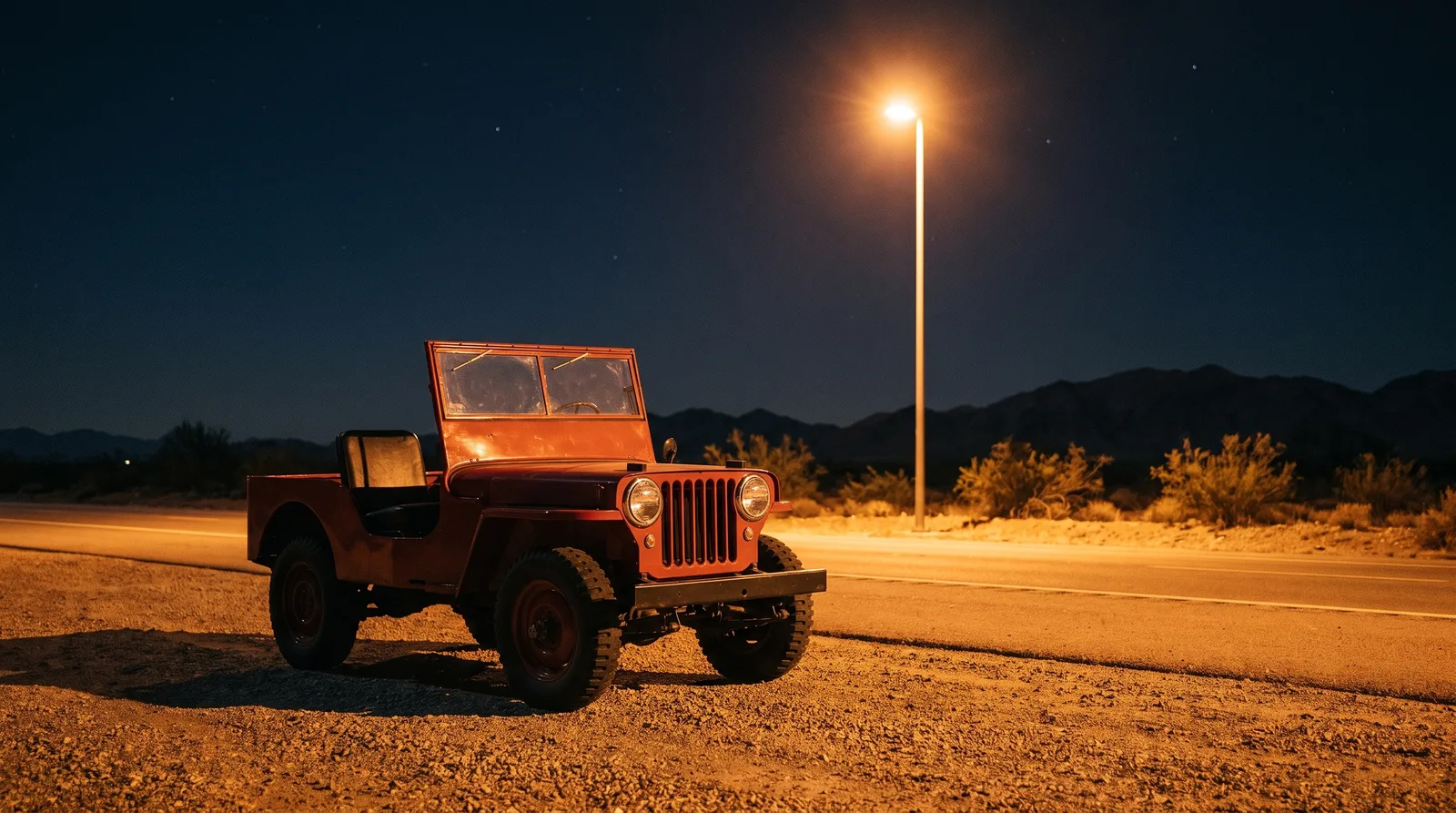
That decision produced one of the longest continuous production runs in American motoring. From 1945 to 1986, through three separate corporate owners and a total redesign of what Americans expected from a car, the CJ stayed recognizably itself: flat fenders or nearly so, a folding windshield, a grille with slots in it, and a driving experience that never once pretended to be comfortable. The story below is the story of that stubbornness.
The jeep comes home in 1945
Willys-Overland built roughly 360,000 MB military jeeps during the war, with Ford building close to 280,000 GPWs alongside them. Barney Roos, the Willys engineering chief who had turned a rough prototype into a durable production vehicle, understood something the accountants did not immediately grasp. The military had done the marketing already. Every farm boy who came home in 1945 had driven one, fixed one in the mud, or watched one climb something a truck could not.
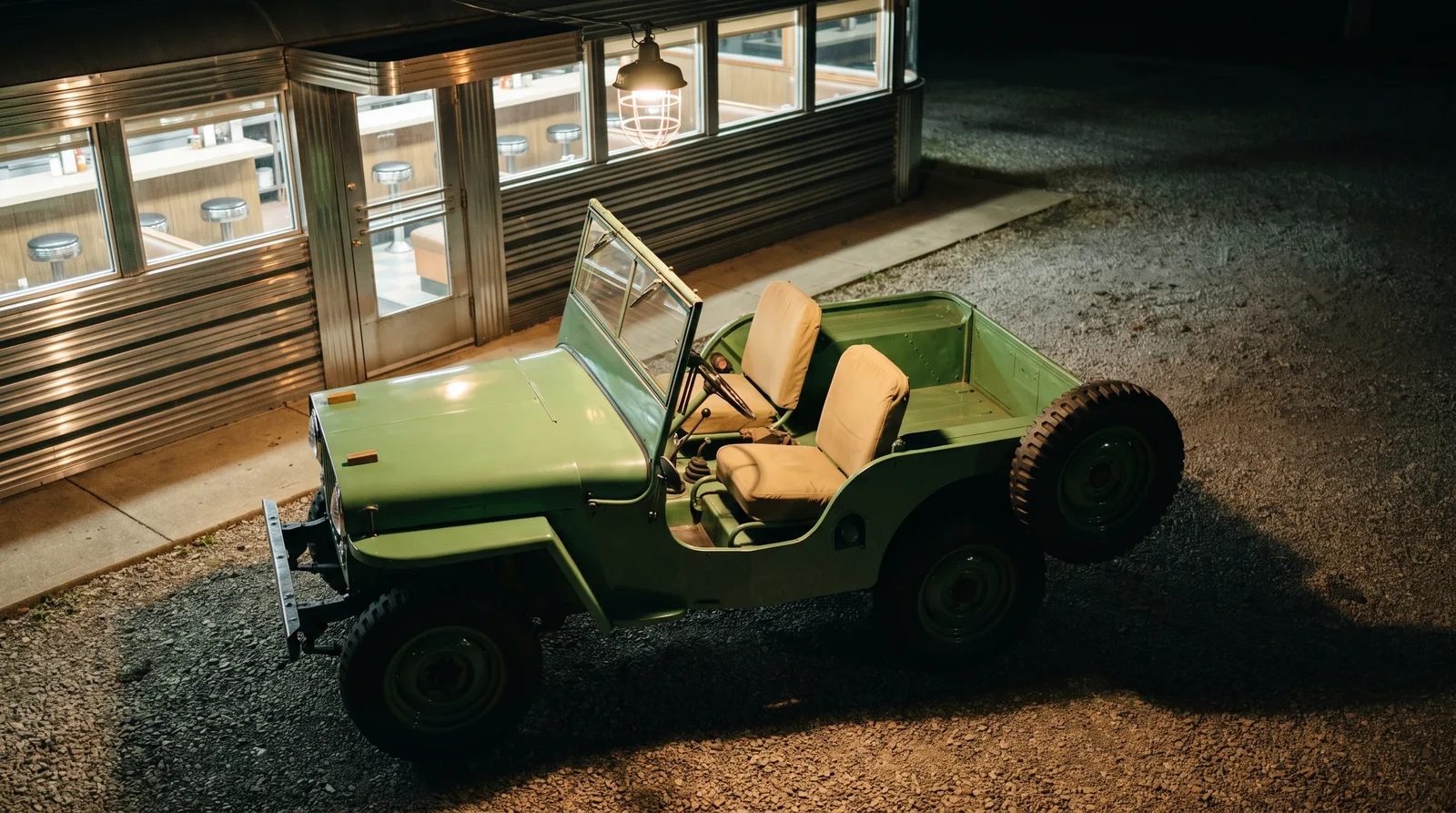
So Willys skipped the usual postwar scramble to build a family sedan and went the other direction. The CJ-2A, announced in 1945 and in real production the same year, was the MB with civilian manners grafted on. It gained a tailgate, a side-mounted spare tire, bigger headlights that sat outside the grille instead of behind it, and a stronger T-90 transmission with a Spicer 18 transfer case. The blackout lighting went away. The gas can bracket stayed.
Willys called it the Universal Jeep, and the early advertising is worth reading now because it tells you exactly who the company thought would buy one. The ads show the CJ-2A belted to a buzz saw, pulling a plow, running a hay elevator, powering a water pump. Willys published capability charts comparing it to a team of horses. The company even commissioned agricultural studies on plowing rates. This was not a lifestyle vehicle in 1945. It was a machine that a small farm could justify on a ledger, and the four wheel drive was a means to an end rather than the whole point.
Roughly 214,000 CJ-2As were built through 1949. The early ones wore a nine-slot grille before Willys settled on the seven slots that became the brand's face, dropping two slots to make room for the larger headlights required on the street-legal civilian model. The trademark fight over the word "Jeep" ran through the same period and Willys eventually secured it, which is why every one of these vehicles wears the name and none of Ford's do.
Flat fenders and a very tall hood
The CJ-3A arrived in 1949 and looked almost identical to the car it replaced, which was the point. Willys had found a formula and saw no reason to spend money proving otherwise. The visible change was a one-piece windshield with a vent at the bottom instead of the two-piece unit, plus a stronger rear axle and revised suspension. Under the hood sat the same 134 cubic inch L-head four that everybody called the Go Devil, good for about 60 horsepower and a torque curve that made it feel stronger than the number suggests.
Then came the odd one. In 1953 Willys introduced the CJ-3B, and anyone who has seen one parked next to a CJ-3A remembers the proportions. The hood and grille are noticeably taller, giving the vehicle a slightly startled expression that has been affectionately mocked for seventy years. There was nothing stylistic about it. The new Hurricane F-head engine put its intake valves in the head rather than the block, which made the whole assembly taller, and the cheapest solution was to raise the sheet metal over it. Function beat proportion, as it usually did in Toledo.
The Hurricane made about 72 horsepower from the same 134 cubic inch displacement, a meaningful jump when your competition was a horse. The CJ-3B stayed in American production until 1968, long after the CJ-5 had taken over as the volume model, because there was still a market for the cheapest possible four wheel drive with the simplest possible everything.
1953 also brought the first ownership change. Kaiser Motors bought Willys-Overland that year, and the company became Willys Motors before taking the Kaiser-Jeep name in 1963. The vehicles barely noticed. That was the pattern for the next three decades: the letterhead changed, the ladder frame did not.
The CJ-5 and the longest run in American four wheel drive
If one model carries the CJ story, it is this one. The CJ-5 launched in 1954 as a 1955 model, and it did not leave the price list until 1983. Twenty-eight model years. Presidents came and went. The interstate system was built. Fuel went from cheap to rationed to cheap again. The CJ-5 kept being sold.
Its shape came from the military M38A1, which is why the CJ-5 has softly rounded front fenders where the earlier cars have flat ones, and a hood that curves down to meet the grille. The body was wider and longer than the CJ-3B, the seats were slightly less punishing, and the whole thing looked less like war surplus. Wheelbase started at 81 inches. Underneath it was still leaf springs at both ends, a live axle at both ends, drum brakes, and a transfer case you operated with a lever that required commitment.
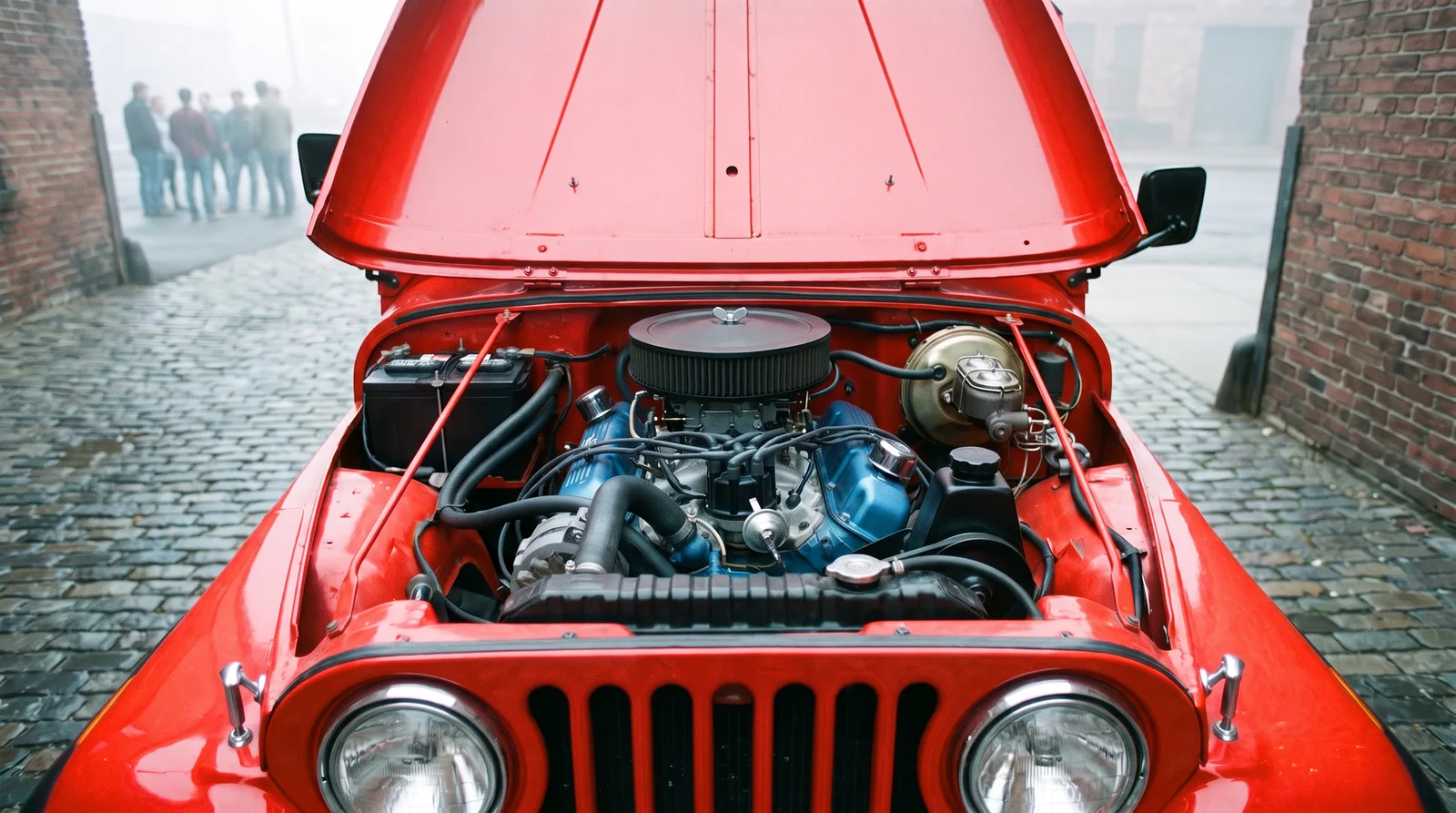
The engine story is where the CJ-5 gets interesting, because it turned into a rolling record of who owned the company. The Hurricane four carried the early years. In 1965 Kaiser bought the tooling for Buick's 225 cubic inch V6, renamed it the Dauntless, and dropped it in. That engine made about 160 horsepower, more than double the four, and it changed the character of the vehicle completely. A Dauntless CJ-5 will still surprise people who assume every old Jeep is slow.
American Motors bought Kaiser Jeep in 1970 and had its own engines to amortize, so by 1972 the Buick V6 was gone and the AMC 232 and 258 cubic inch straight sixes were in, along with the 304 V8 for anyone who wanted it. The wheelbase grew to 83.5 inches to fit the longer engines, and the front fenders and grille were reshaped slightly to match. Later in the run, in 1980, AMC added the 151 cubic inch four from Pontiac as the economy option after the second fuel crisis made a V8 Jeep a hard sell.
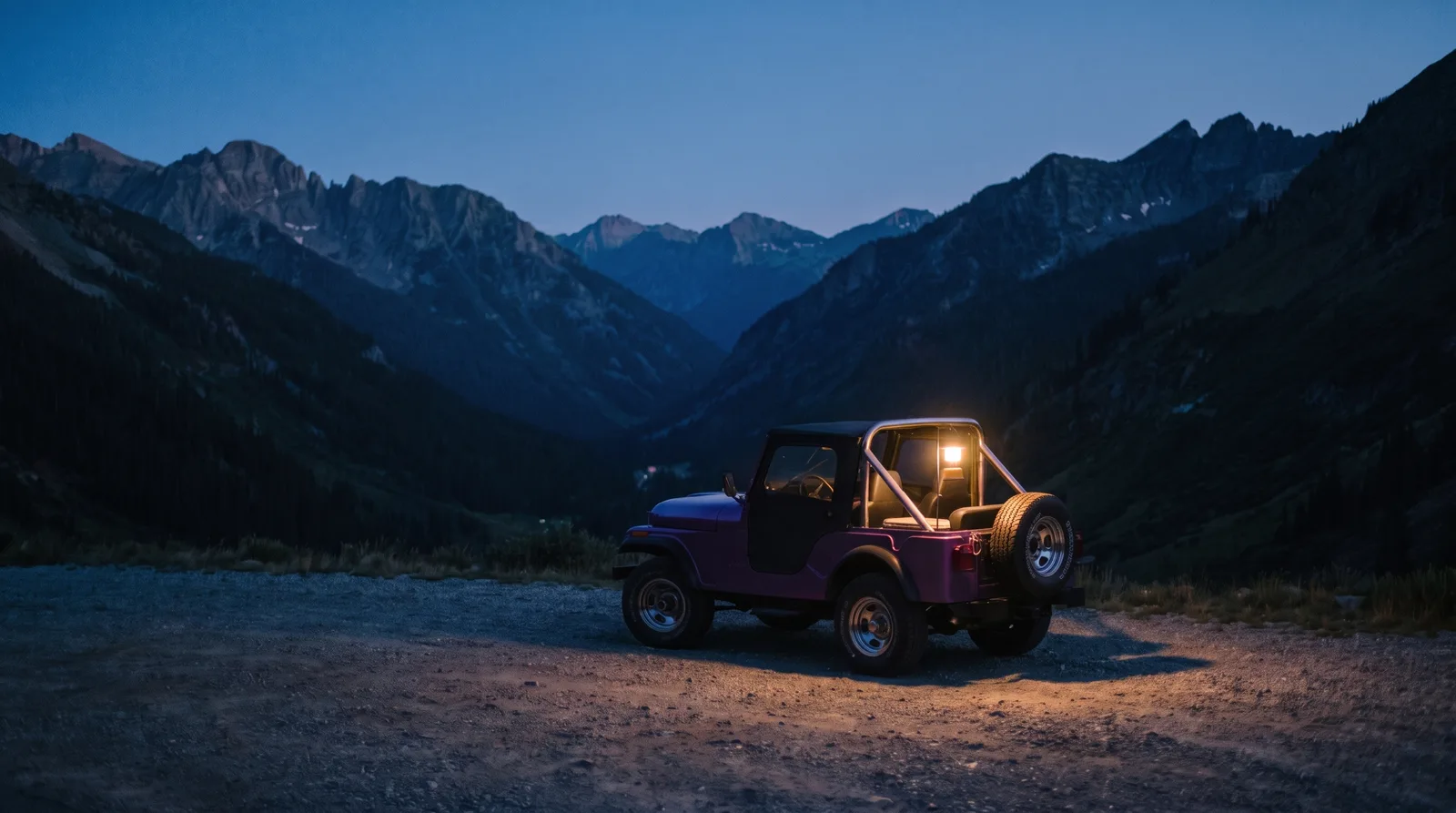
Along the way the CJ-5 picked up the trim packages that collectors now chase. The Renegade started as a limited run in 1970 and 1971 with the V6, bold stripes, and alloy wheels, then became a permanent fixture. The Golden Eagle arrived in 1977 wearing a large eagle decal across the hood that was either the best or worst thing about the late 1970s depending on your taste. The Levi's interior option put denim-look spun nylon on the seats, complete with a red tab, and it is now one of the details buyers ask about first.
"The CJ-5 outlasted the company that designed it, the company that bought that company, and the company that bought them both. Not many vehicles get to put that on a resume."
- Patrick Walsh
The CJ-6 and the wheelbase nobody wanted
In 1955 Willys did the obvious thing and stretched the CJ-5 by 20 inches, producing the CJ-6 on a 101 inch wheelbase. On paper it solved every complaint about the short car. More room behind the seats, a calmer ride, better manners at speed, actual cargo space. It was the sensible one.
Americans ignored it almost entirely. The CJ-6 sold in small numbers for two decades and was pulled from the US market after 1975, though it continued for export markets and did respectable business in South America and with utility fleets. The usual explanation is that anyone who needed that much length in the 1960s bought a pickup, and anyone who wanted a Jeep wanted the short, awkward, charismatic one. Practicality was never the reason people bought these.
The consequence is a survival story that appraisers enjoy. Because so few were sold and most of the ones sold went to work sites, ranches, and forestry departments, a clean original CJ-6 is genuinely difficult to find today, and the model has quietly become one of the more interesting corners of the CJ market. It is the rare case where the model that failed commercially is the one that rewards a patient buyer.
| Model | Production years | Wheelbase | Signature engines | Approx. US production |
|---|---|---|---|---|
| CJ-2A | 1945 to 1949 | 80 in | 134 L-head Go Devil | 214,760 |
| CJ-3A | 1949 to 1953 | 80 in | 134 L-head Go Devil | 131,843 |
| CJ-3B | 1953 to 1968 | 80 in | 134 F-head Hurricane | 155,494 in the US |
| CJ-5 | 1954 to 1983 | 81 in, later 83.5 in | Hurricane four, Dauntless V6, AMC 258 six, AMC 304 V8 | 603,303 |
| CJ-6 | 1955 to 1975 in the US | 101 in, later 104 in | Hurricane four, Dauntless V6, AMC sixes | around 50,000 |
| CJ-7 | 1976 to 1986 | 93.5 in | AMC 232 and 258 sixes, AMC 304 V8, 151 four | 379,000 plus |
| CJ-8 Scrambler | 1981 to 1986 | 103.5 in | AMC 258 six, 151 four | 27,792 |
AMC's decade: the CJ-7 arrives
The CJ-7 landed for 1976 and it is the moment the CJ stopped being a farm tool that people happened to enjoy and started being a recreational vehicle that happened to be capable. The wheelbase went to 93.5 inches, splitting the difference between the CJ-5 and the departed CJ-6, and the rear wheel arches were reshaped into a squarer opening that anyone can spot from fifty feet away.
Two options tell you what AMC was thinking. First, the CJ-7 could be ordered with Quadra-Trac, a full-time four wheel drive system paired with an automatic transmission, which meant a buyer no longer had to understand hubs, levers, or when it was safe to engage anything. Second, AMC offered a molded plastic hardtop with steel doors and roll-up windows. A CJ with roll-up windows was a philosophical break. It said this vehicle would now be driven to work in February by people who had no intention of leaving pavement.
That change in ambition matched a change in the buyer. The late 1970s recreational boom put four wheel drive on suburban driveways, and the CJ-7 was ready with a trim catalog to match: Renegade with its stripes and 304 V8, Golden Eagle with the hood bird, Laredo from 1980 with chrome bumpers, a color-matched hardtop, and an interior that at least tried. The Limited of 1982 went further still with leather and power steering as standard, which would have baffled a 1946 buyer trying to decide between a Jeep and a mule.
Mechanically the AMC years brought real improvements that get less attention than the decals. Front disc brakes became standard in 1977. Power steering became a common option rather than a curiosity. The 258 six with a four speed is arguably the best all-round CJ drivetrain ever offered, not because it is fast, which it is not, but because it will idle up a rock face and then run 200,000 miles doing errands. In 1980 the Iron Duke four and a lighter chassis came in response to fuel economy pressure, and in 1982 a five speed manual finally appeared.
The Scrambler, the lawsuits, and the end of the line
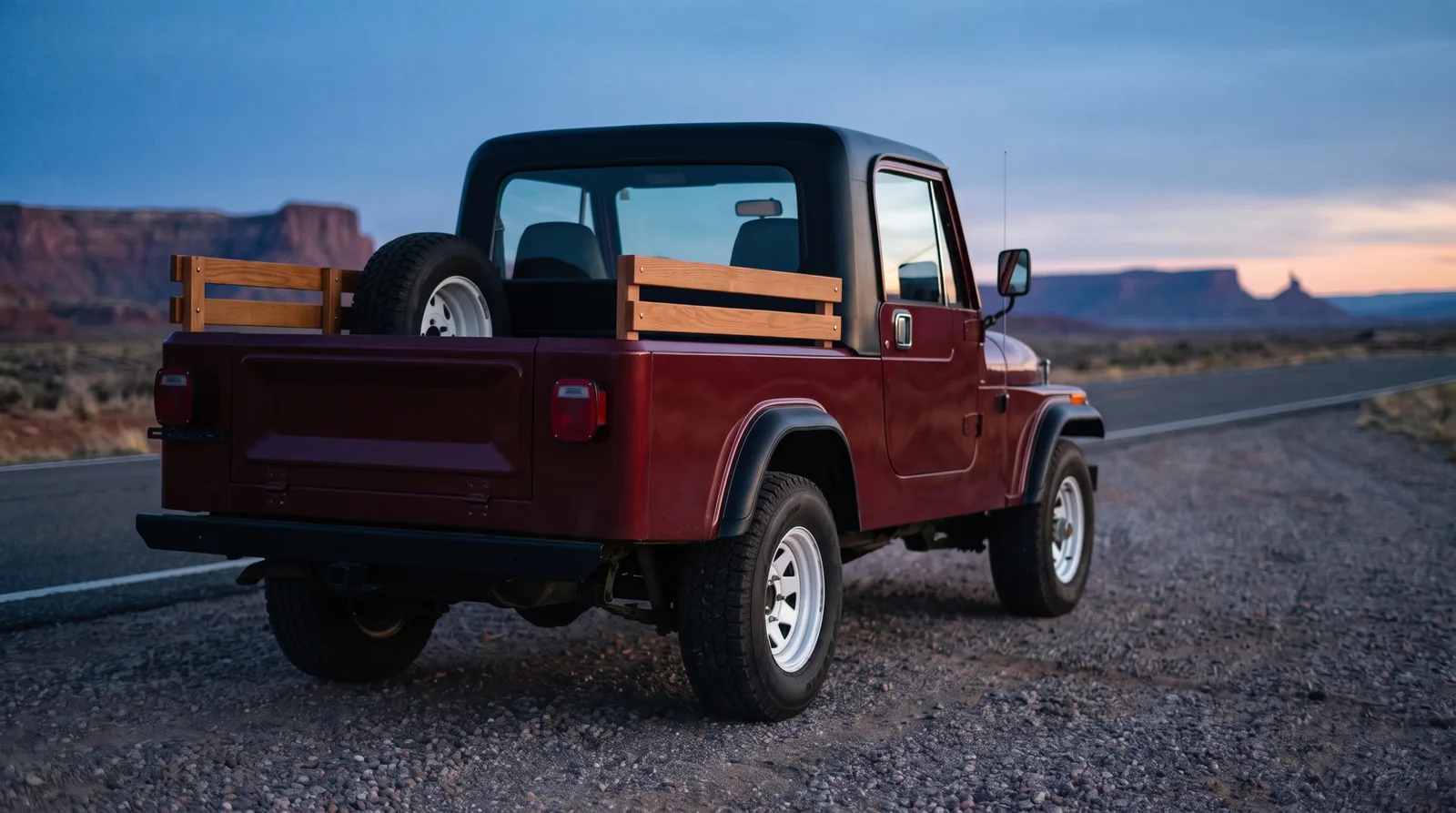
The CJ-8 Scrambler arrived in 1981 and was the last genuinely new idea in the CJ family. AMC stretched the CJ-7 to a 103.5 inch wheelbase, added a small pickup bed behind the cab, and offered it with a half-cab hardtop that gave it the look of a compact truck with a Jeep face. It was meant to compete with small pickups from Toyota and Datsun that were selling in enormous numbers.
It did not work. Roughly 27,792 Scramblers were built across six model years, a rounding error next to the CJ-7. The bed was short, the price was high next to a Japanese pickup, and the CJ ride quality that owners forgave in a recreational vehicle was harder to forgive in something bought to haul feed. Ronald Reagan owned one at his California ranch, which did the model no commercial good at the time and has done its collector reputation considerable good since.
The other story of the early 1980s is less fun. In 1980 the Center for Auto Safety and Consumers Union pressed the National Highway Traffic Safety Administration over the CJ's rollover behavior, and a CBS 60 Minutes segment that aired December 21, 1980 showed test footage of a CJ-5 tipping during avoidance maneuvers. AMC disputed the methodology loudly and at length, arguing the tests did not reflect real driving. The regulatory outcome was inconclusive, but the reputational and legal outcome was not. Litigation followed for years, and the short-wheelbase CJ-5 was dropped after 1983, leaving the longer CJ-7 and CJ-8 to finish the run.
The last CJ-7 was built in January 1986. Its replacement, the YJ Wrangler, arrived for 1987 with rectangular headlights, a wider track, and a suspension that would not embarrass the company in a test lab. Enthusiasts were unkind about the headlights for a decade. They were, in fairness, missing the point of what had changed: the CJ ended because the world it was designed for, one of farms and fire roads and buyers who accepted a machine on its own terms, had stopped being the world most buyers lived in.
"Every CJ I have ever ridden in smelled faintly of gear oil and canvas, and every owner apologized for it in a tone that made perfectly clear they would not change a thing."
- Patrick Walsh
What the CJ became in American culture
Look at where these vehicles ended up and you get a map of postwar American work and leisure. The US Forest Service ran them. Rural fire departments ran them. Ski patrols ran them, usually with a plow blade and a paint job that had seen better winters. Beach towns from Nantucket to Malibu had a local fleet of sun-bleached CJ-5s with the doors off from May to September, and that image did more for the brand than any advertisement AMC ever bought.
The color palette tells its own story. Early civilian cars came in agricultural shades with names like Pasture Green, Harvest Tan, and Michigan Yellow, chosen to sit comfortably next to a tractor. By the late 1970s the catalog had gone to Sunshine Yellow, Firecracker Red, and Jade Green, colors chosen to sit comfortably next to a surfboard. The vehicle did not change nearly as much as the paint chips did.
Hollywood used the CJ constantly, mostly as shorthand. If a character worked outdoors, ran a ranch, or was introduced as capable and slightly unruly, a CJ turned up in the establishing shot. The vehicle rarely got a starring role and never needed one. It was a costume that told you something true about the person driving it, which is a decent working definition of an icon.
The aftermarket that grew around these vehicles is its own cultural artifact. Warn, Ramsey, Meyer, Koenig, and dozens of smaller outfits built an industry on the assumption that no CJ owner would leave the vehicle alone. That assumption was correct, which is why originality is now the scarce commodity. An unmolested CJ with its factory drivetrain, factory axles, and factory ride height is rarer than a heavily modified one by a wide margin.
Collecting a CJ today
The market has separated into clear tiers, and it is worth knowing which one you are shopping in before you start. Early flat fenders, the CJ-2A and CJ-3A, trade on originality and completeness rather than power, and a correct, documented example is worth multiples of a tidy driver. The CJ-5 is the volume model and therefore the accessible entry point, with the Dauntless V6 cars and the well-documented Renegade and Golden Eagle packages sitting above the ordinary ones. The CJ-7 is the daily-usable choice, and a 258-powered Renegade in honest condition is one of the better value propositions in classic American four wheel drive.
Then there is the Scrambler, which has done what almost no commercial failure gets to do. Rarity, a genuine cult following, and the fact that most were worked to death have pushed clean CJ-8s to the top of the CJ market, and the good ones now sell for money that would have looked absurd in 2005. If you are watching the market or browsing a classic Jeep CJ for sale listing with real intent, the CJ-8 is the model where condition and paperwork move the price the furthest.
Rust is the constant across all of it. These were open vehicles used in salt, mud, and snow by people who did not baby them, and the frame, the floors, and the rear body corners are where the money hides. A cosmetically pretty CJ over a compromised frame is the single most common trap in this market, and it catches somebody new every week. The second most common is the modified truck sold as a restoration, where a fresh coat of paint sits over a decade of accumulated substitutions that nobody wrote down.
What has not changed in eighty years is the reason to want one. A CJ is loud, slow, and honest. It asks you to pay attention, rewards you for doing so, and gives back a kind of driving experience that modern engineering has spent four decades successfully eliminating. That is the whole appeal, and it is why the CJ still has a following that vehicles with far better numbers never earned.
Sources and notes
Related Reading
Article
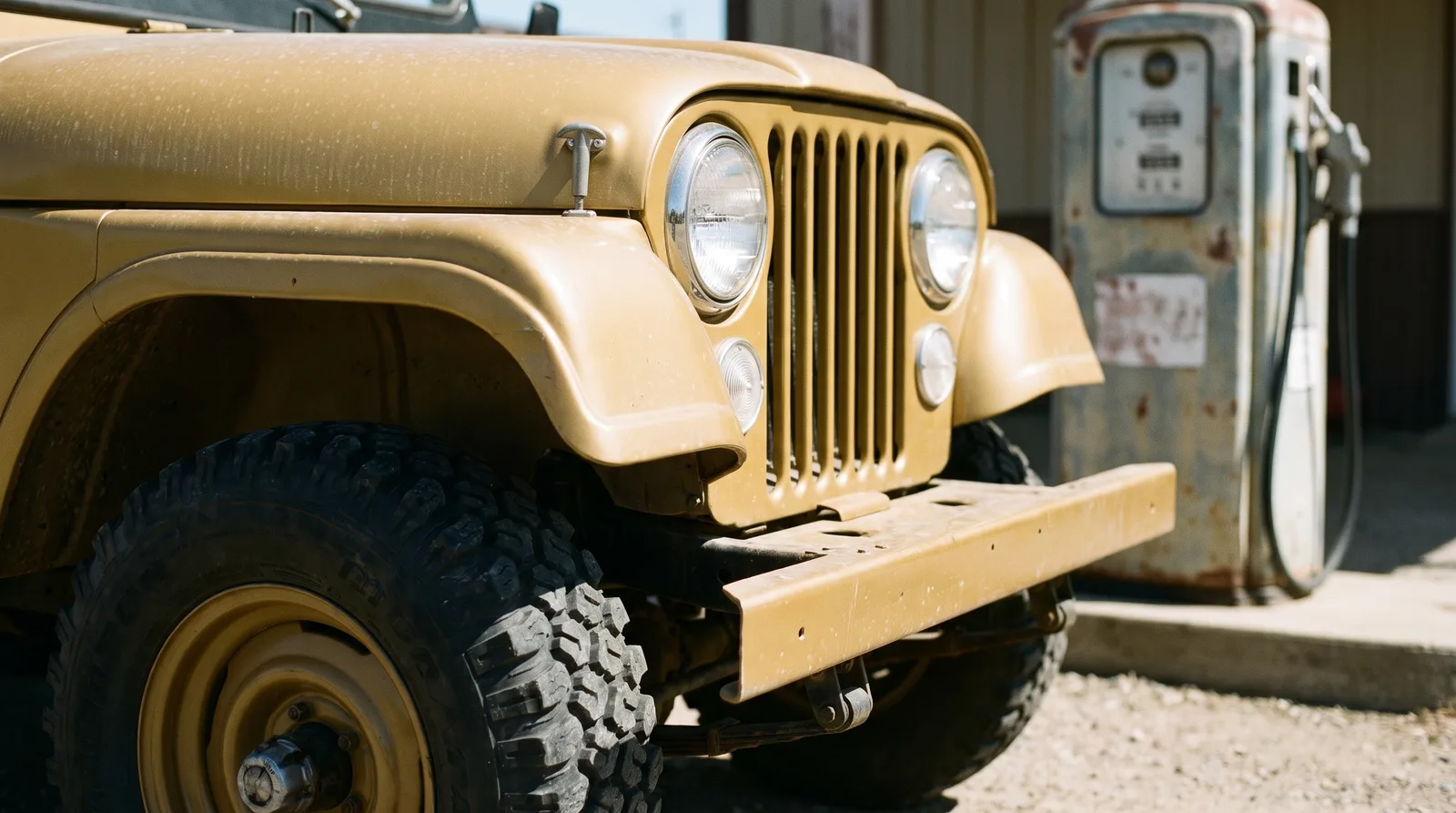
The Jeep CJ-5: The Model That Defined the Civilian Jeep
Article
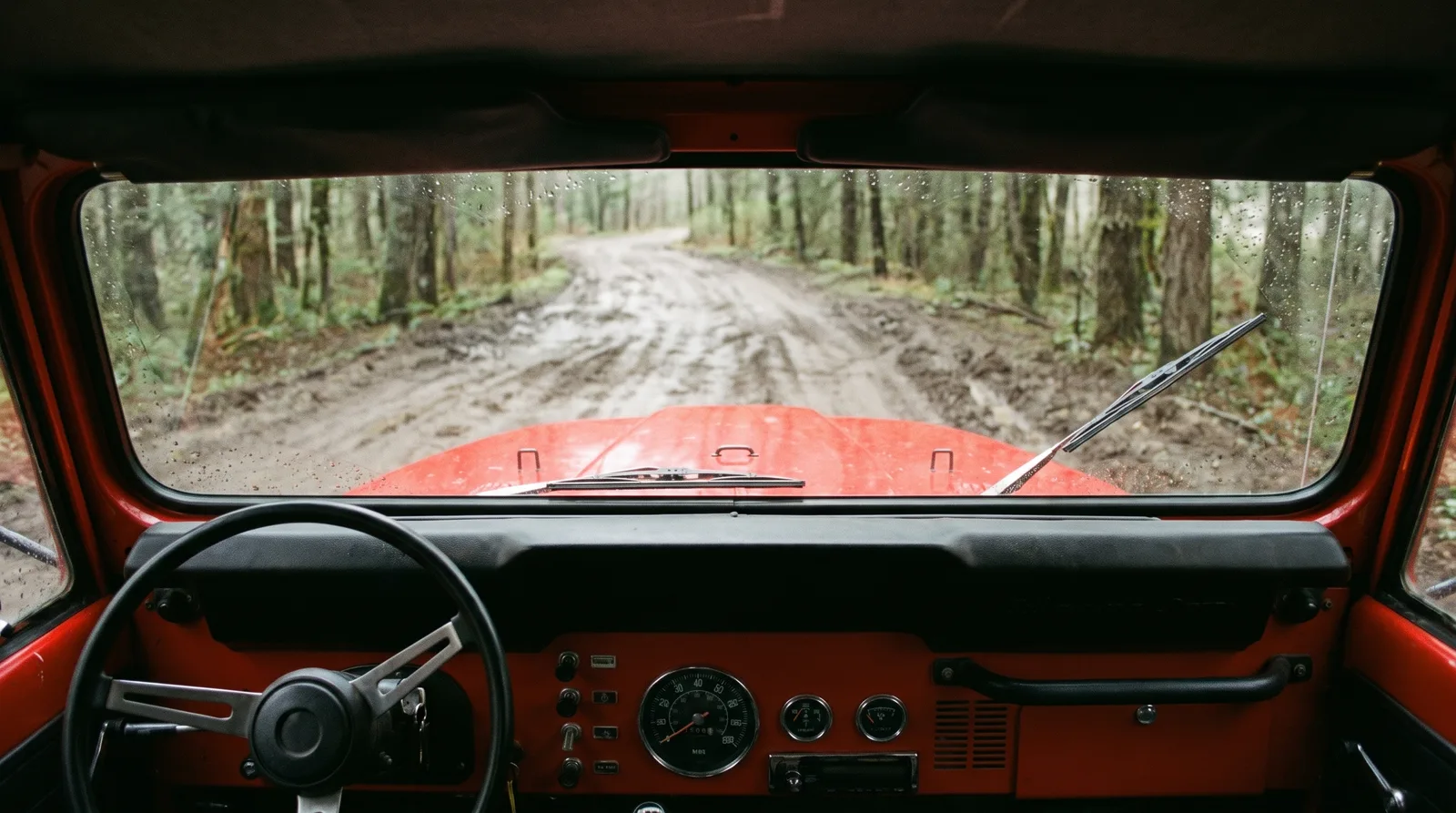
The Jeep CJ-7: The AMC-Era Jeep That Changed Everything
Article
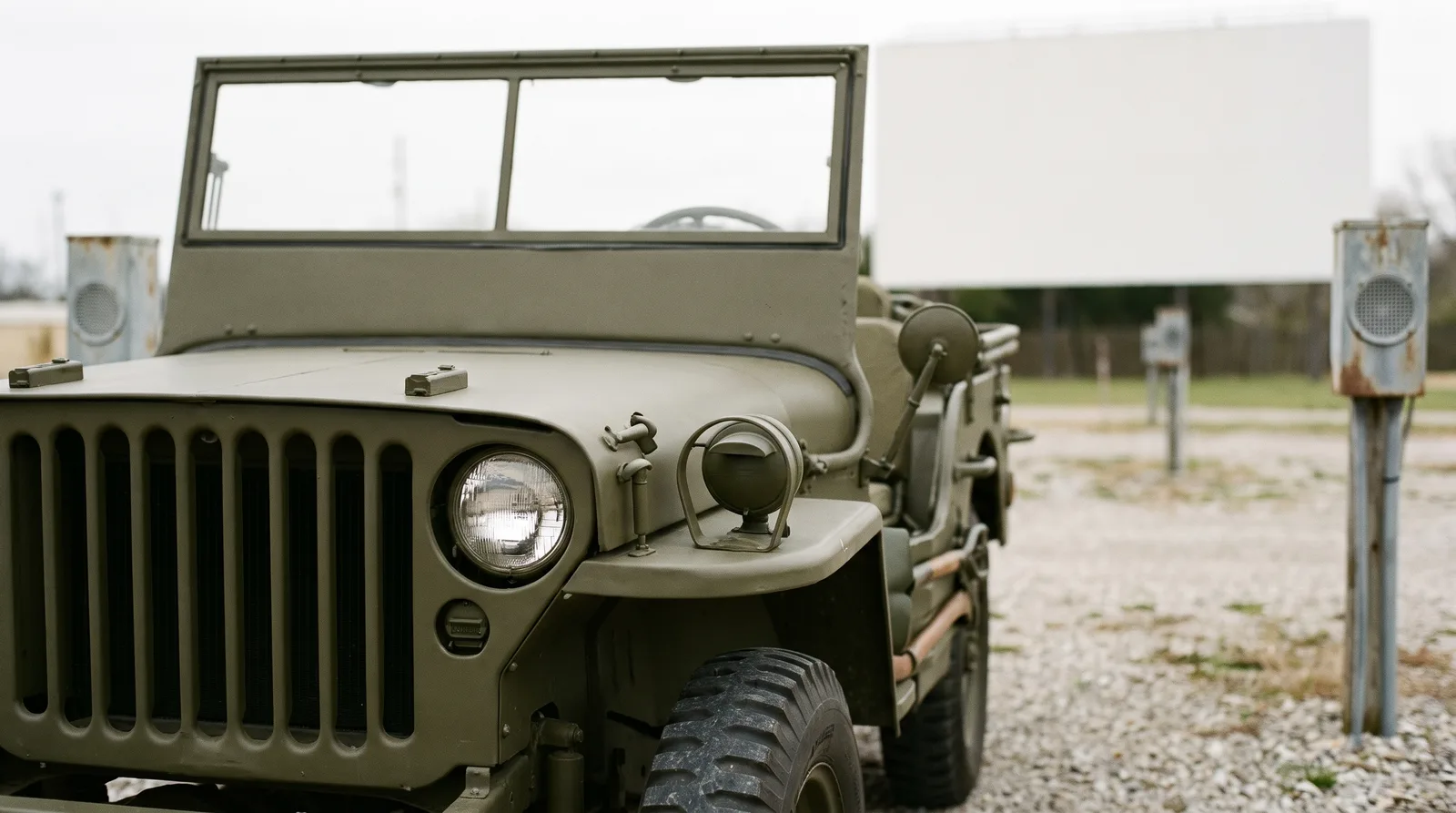
Willys Origins: From the War Jeep to the First Civilian CJ
Article
The 1945 Jeep CJ-2A: The First Civilian Jeep
Article
The Jeep CJ-8 Scrambler: The Pickup CJ
Article
Jeep CJ Engines: Go-Devil, Hurricane, Dauntless and the AMC Years
Article
Jeep CJ Trims and Culture: Renegade, Golden Eagle and the Off-Road Legend

About the author
Patrick Walsh
Automotive journalist covering classic car shows, events, and the enthusiast community across North America.
Related Listings - Jeep CJ







Comments
Be the first to comment on this article.