
There's a fellow at our club's spring meet who shows up every year in a two-tone jeep jeepster commando and spends the first twenty minutes fending off the same question: "Is that a CJ with the top chopped off?" It isn't, and the story of how it isn't tells you almost as much about Jeep's civilian ambitions as the CJ line itself does.
Car Features
7 min read
The Jeepster and Commando: Jeep's Other Civilian Path
The Jeep Jeepster Commando tried twice, in 1948 and again in 1967, to sell buyers on jeep DNA without jeep austerity, and both times the story is stranger than most CJ owners realize.
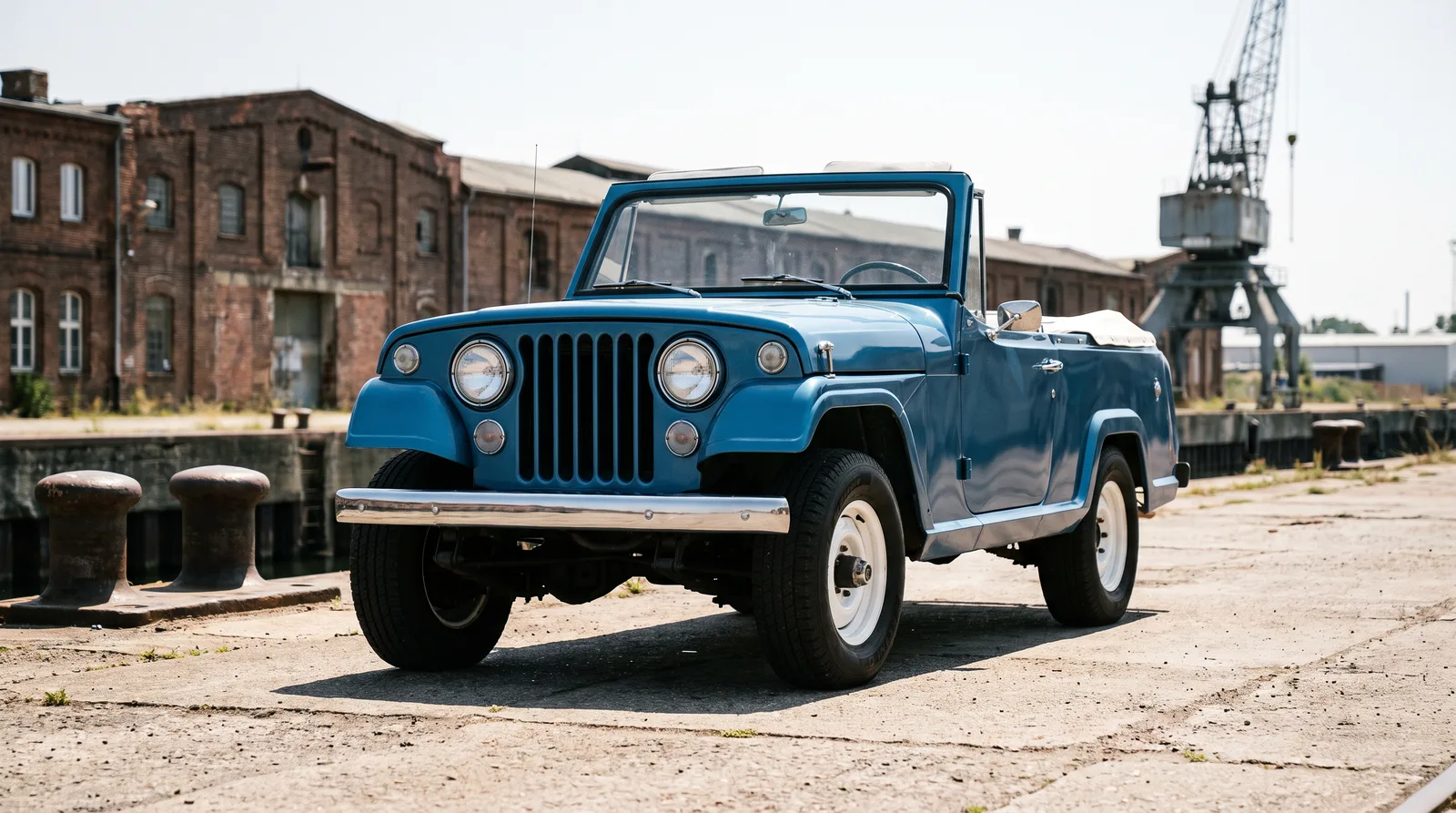
Brooks Stevens and a jeep that wanted to be a car
Willys-Overland introduced the original Jeepster in 1948 as a phaeton, a low-slung, sporty runabout built on jeep mechanicals but styled by the industrial designer Brooks Stevens to look nothing like a farm implement. It had a wraparound windshield, real doors instead of a jeep's stripped-down cutouts, and a soft top that folded down for weekend driving rather than field work. The idea was to catch buyers who liked the jeep's rugged image but had no intention of ever taking one off-road, a customer Willys hadn't really chased before. It sold in modest numbers through 1950 and then quietly disappeared, a casualty of a market that wasn't quite ready for a jeep dressed up as a sports car.
Seventeen years later, a second act
The name went quiet through most of the 1950s and early 1960s while the CJ-5 and CJ-6 carried the company's civilian lineup. Then in 1967, under Kaiser Jeep, the badge came back as the Jeepster Commando, and this time it actually had four-wheel drive on offer along with a real choice of body styles: a convertible, a hardtop wagon, a pickup, and a roadster. It shared floorpans and running gear with the CJ family without pretending to be one, and it filled a gap the CJ never really tried to fill, a jeep for buyers who wanted more comfort and cargo room without stepping all the way up to a full-size wagon.
| Era | Name | Body styles offered |
|---|---|---|
| 1948-1950 | Jeepster (Willys) | Phaeton only, two-wheel drive |
| 1967-1971 | Jeepster Commando (Kaiser) | Convertible, hardtop, pickup, roadster |
| 1972-1973 | Commando (AMC) | Simplified lineup under AMC ownership |
Where AMC took it, and where it ended
When American Motors bought Kaiser Jeep in 1970, the Commando lost the "Jeepster" name and picked up AMC's inline six as an option, giving it real highway manners the earlier four-cylinder versions lacked. AMC also simplified the body lineup and pushed it more directly against the CJ-5 in showrooms, which turned out to be a mistake, since it blurred the exact distinction that had made the Commando useful in the first place. Sales never caught fire, and AMC discontinued the Commando after the 1973 model year, folding its intended buyers back toward the CJ line and, eventually, toward the Wrangler that succeeded it eighteen years later. It's a shame, honestly. A lot of us in the club think the Commando got killed off right around the time it finally had the drivetrain to compete.
"Every Commando owner at a show has to explain themselves twice. Once for the folks who've never heard of it, and once for the folks who think it's just a CJ wagon. It's neither, and that's exactly why I like mine."
- Wayne Coburn
The color and trim choices that give it away
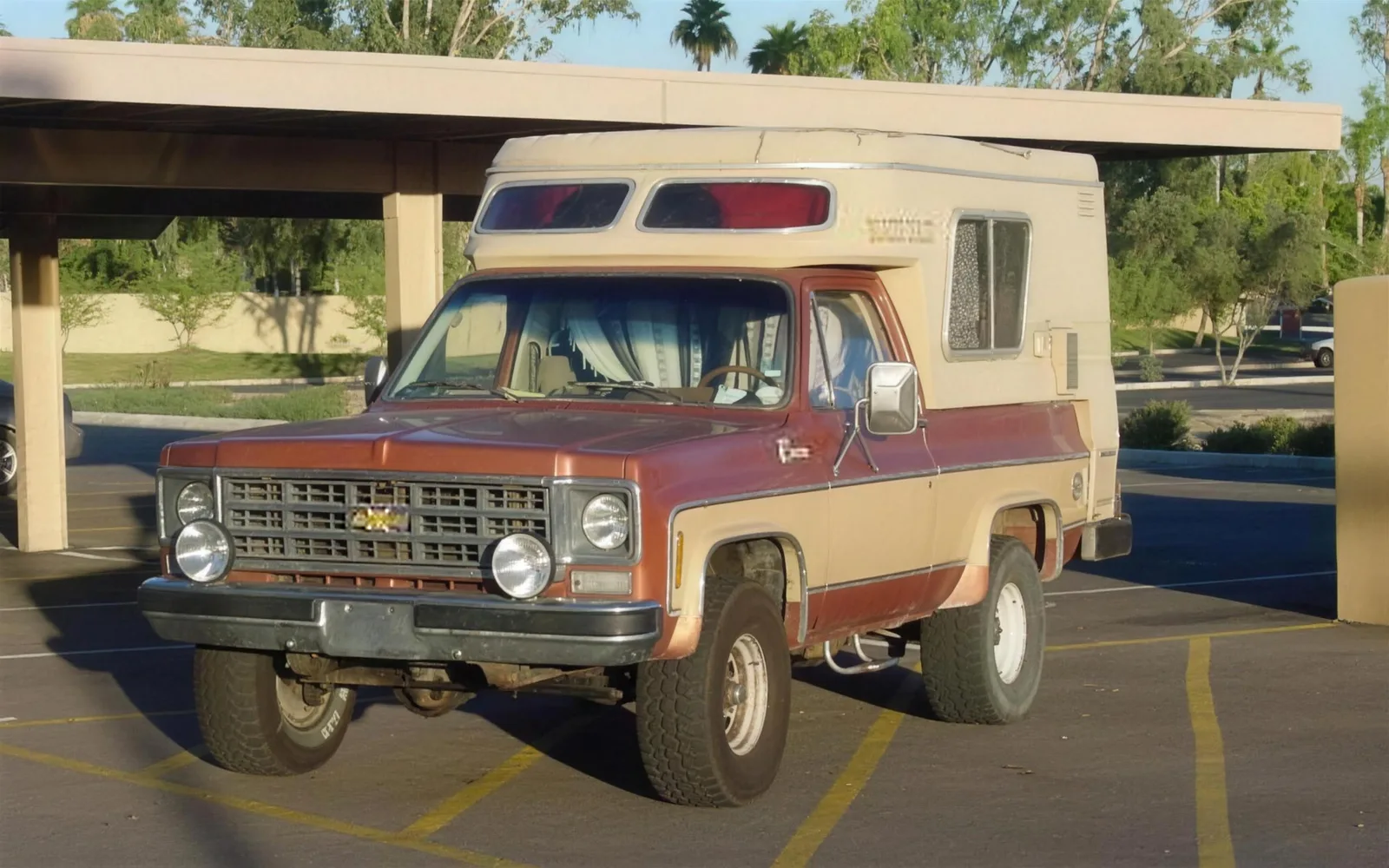
Spend enough time around these trucks and you start spotting a Commando from across a parking lot before you ever get close enough to read a badge. The two-tone paint schemes, popular through most of the Kaiser years, split the body horizontally in a way no standard CJ ever wore from the factory. Interior trim on the higher-spec convertible and hardtop versions ran to genuine upholstery rather than the utilitarian vinyl and painted metal most CJ buyers lived with, another small reminder that this platform was chasing a buyer who wanted comfort alongside the badge. None of that trim work makes a Commando worth more mechanically than a comparable CJ, but it does make one instantly recognizable once you know what you're looking at, and that recognition is half the fun of owning one at a show full of people who assume every flat-fender-adjacent jeep is basically the same truck.
The club's-eye view of a forgotten sibling
Talk to enough owners of the CJ family and you'll hear the Jeepster and Commando dismissed as an also-ran, a badge experiment that never found its footing. That undersells what the platform actually accomplished. It proved twice, in 1948 and again in 1967, that there was a real buyer out there who wanted jeep DNA without jeep austerity, and it gave Willys, Kaiser, and AMC each a testbed for ideas about comfort and body variety that eventually filtered into how the CJ line itself was marketed. For the story of where all of this actually started, before Stevens ever put pencil to paper, where this started covers the original civilian jeep that made a spinoff like the Jeepster possible in the first place.
What owners argue about at every meet
Get three Commando owners together and you will hear three different opinions about which year got it right. The pickup and roadster fans from the early Kaiser years argue that the body variety was the whole point, and that AMC's later simplification stripped away exactly what made the platform interesting. The AMC six-cylinder crowd argues the opposite, that the earlier four-cylinder Commandos were underpowered for a vehicle that heavy, and that the platform only became genuinely usable once AMC's engine finally showed up. Both sides have a point, honestly, and I've come around to thinking the Commando's real problem was never any single model year. It was that Kaiser and then AMC kept changing the recipe every couple of seasons instead of letting one version mature the way the CJ-5 was allowed to.
What it left behind
Even in failure, the Commando left a mark on how Jeep thought about its civilian lineup afterward. The idea that a jeep-based vehicle could offer real weather protection, a proper back seat, and enough cargo room for a family camping trip without sacrificing the badge's rugged reputation did not disappear when AMC pulled the plug in 1973. You can trace a line from the Commando's ambitions straight through to later Jeep wagon and SUV products that took the same basic pitch, comfort without losing the off-road credibility, and finally found an audience big enough to stick. The Commando was arguably just a decade or two early for the market it was actually built for.
Finding one at a show today
Surviving Jeepsters and Commandos are a lot rarer at meets than CJs of the same era, partly because fewer were built and partly because their more car-like trim did not always survive decades of use as well as a jeep's simpler construction did. When one does show up, it usually draws a crowd of people who, like my friend at the spring meet, need the whole story explained before they walk away impressed rather than confused. If the standard CJ lineup is more your speed once you've heard the Commando's story, find a classic CJ is worth a look at what's currently changing hands.
Sources and notes
Related Reading
Have a
Jeep CJ
for Sale?
Reach thousands of serious classic car collectors across the US.
Sell It Here →
Selling a classic? Here's how: the best sites to sell a classic car
Are You a Classic Car Dealer?
List your full inventory and connect with targeted classic car buyers.
Join as a Dealer →

About the author
Wayne Coburn
Longtime Corvette owner, judge and club figure who knows the cars, the records and the people behind them.
Related Listings - Jeep CJ

Comments
Be the first to comment on this article.